












Key takeaways:
-
- To develop an app like Tinder, first understand your audience and market. Then tailor the matching functions to their needs.
- Secure onboarding, user profiles, swipe functionality, real-time chat, and smart matching algorithms are the core features of a Tinder-like app.
- For simplicity and personalization, emphasize intuitive design and fast onboarding to improve user engagement.
- Implement strong encryption, secure authentication, and a tech stack that supports real-time performance and geo-based matching.
Welcome to the era of swiping to find the ‘made for each other’.
The best dating apps in 2026 have become the primary norm to meet new people. Many entrepreneurs and startups are scrambling to develop the next big dating platform. At the core, Tinder is a space where love begins with a simple swipe and ends with finding a potential partner.
If you’re feeling inspired to build an app like Tinder, you’re at the right place. In this blog, we’ll explain the Tinder clone app development process in detail. Along with the process, you’ll learn about its key functions, cost, best alternatives, and monetization strategies. So, let’s start with an overview of what the Tinder app is and how it works.
What Is The Tinder App?
Tinder is one of the most trending online dating platforms, launched in 2012. Based on location, preferences, and mutual interest, it has revolutionized the way people connect.
Tinder allows its users to find their perfect match and exchange thoughts before going on a physical date. The application is widely available in more than 196 countries, making it one of people’s most-liked dating apps.
What Makes Tinder So Popular?
- Swipe-based matching
- Location-based discovery
- Mutual match messaging system
- Super Like for increased visibility
- AI-powered match recommendations
How Do Dating Apps Like Tinder Work?
Tinder transformed the messy, awkward dating process into an addictive thumb-gesturing experience. From profile creation to matching and chatting, there’s a lot going on to make that simplicity feel effortless. Before we jump into the Tinder clone app development process, let’s understand how it works.
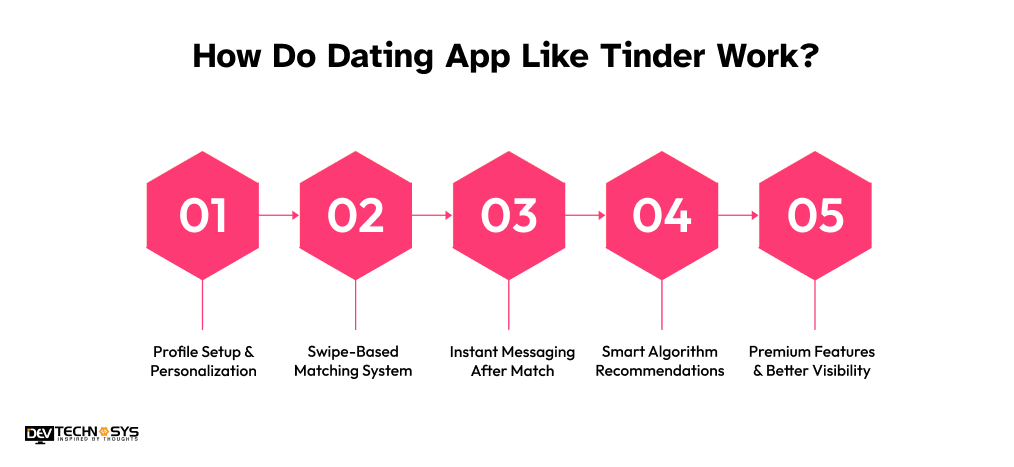
1. Profile Setup & Personalization
The user can create their profile on the application with photos, bio, and preferences. By analyzing user-provided data and personality traits, the app shows relevant profiles based on predefined preferences.
2. Swipe-Based Matching System
As the user starts swiping, they can like or dislike profiles with a simple left or right swipe. Based on compatibility, the app suggests matches. And the user can connect when both express mutual interest.
3. Instant Messaging After Match
After matching with a potential profile, the user can chat instantly within the app. Tinder makes the messaging feel seamless and secure. Users can share media and decide whether to take things further.
4. Smart Algorithm Recommendations
With an AI matchmaking algorithm, the app continues to refine its suggestions by tracking users’ swiping behavior. By learning which types of profiles users are likely to engage with, the app suggests better matches.
5. Premium Features & Better Visibility
The application offers premium features such as boosts and super likes to increase user visibility. The premium version helps users’ profiles stand out from others and improve their chances of getting more matches.
Global Online Dating Services Market Insights
The global online dating industry today stands as a mature yet continuously evolving digital ecosystem. Rapid smartphone adoption and normalized perceptions of finding partners online are driving the growth of dating apps.
Take a look at the 2026 market report by Mordor Intelligence.
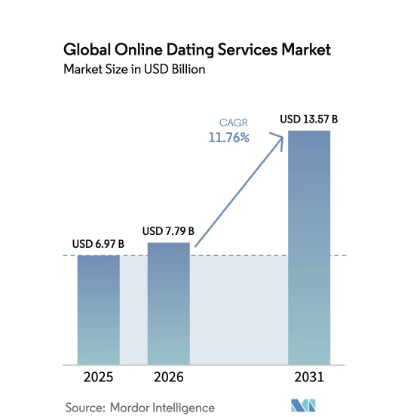
- The market is expected to reach USD 13.57 billion by 2031, with a 11.76% CAGR over 2026-2031.
- Based on the revenue model, a subscription-based model captured 54.35% market share in 2025.
- By platform type, mobile applications accounted for 87.30% in 2025 and will grow at a 12.05% CAGR over the period.
- By age group, Millennials led the market with 34.20% of revenue.
- Generation Z is forecasted to expand at a 13.07% CAGR over the period.
What Is The Process To Build An App Like Tinder?
Now that we have peeked at the online dating market and how Tinder works. Let’s talk about the dating app like Tinder development process. Building a successful Tinder alternative is all about making it simple for people to connect. Below are the steps to build an app like Tinder, along with considerations you should keep in mind.
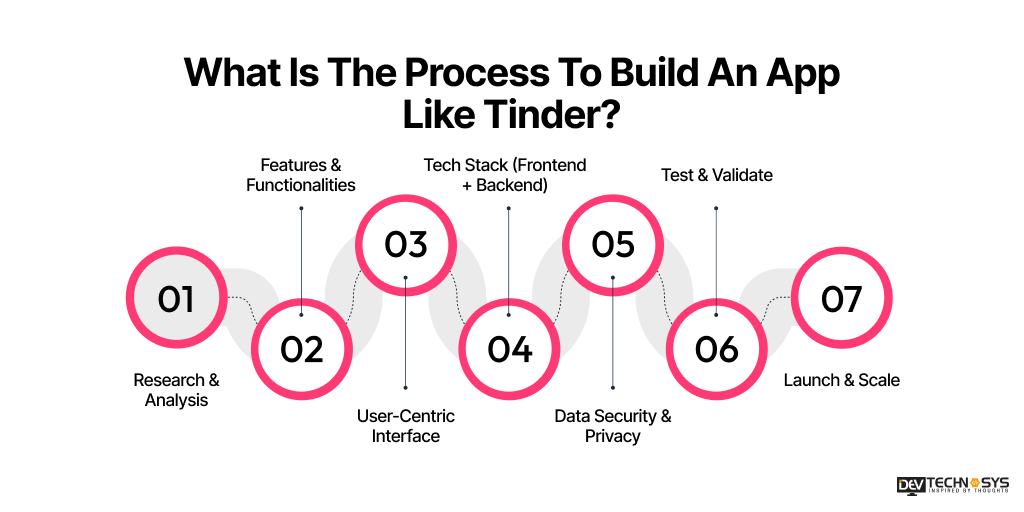
1. Research & Analysis
First things first, the process to 7 Steps to Build a Virtual Dating App in 2026
LGBTQ Dating App Development: An Ultimate Guide
7 Easy Steps to Develop an App Like Badoo: A Dating App
How to Develop Different Types of Dating Apps: Step-by-Step Guide for 2025–26
Frequently Asked Questions
Find answers to the most common questions related to this article.
It usually takes 2 to 6+ months to build an app like Tinder. An MVP online dating app can be built quickly and at minimal cost. While advanced apps with AI matching, video features, and cross-platform compatibility require more development time before a successful market launch.
The tech stack for location-based dating app development includes React Native or Flutter for the frontend, Node.js or Django for the backend, and cloud services like AWS or Firebase. The right tech stack depends on scalability needs and budget.
To make your Tinder alternative stand out in the fast-growing market, focus on niche targeting, unique features, and exceptional user experience. To further differentiate your application, implement strong security, integrate an AI-based matchmaking algorithm, and innovative engagement features.
User acquisition, maintaining engagement, ensuring data security, and balancing monetization with user experience are some of the challenges in Tinder-like app development. Strategic planning, continuous improvement, and a user-focused development approach are necessary to overcome these hurdles.
The cost to create an online dating app like Tinder ranges from $8,000 to $30,000, depending on features, design complexity, and the development team's location. A basic version costs less, while complex and enterprise apps with scalability require a higher investment for long-term growth.