16+
Years of Experience
14-Day Money-Back Guarantee — Not satisfied? Cancel within 14 days for a full refund.Explore Our Money-Back Guarantee
14-Day Money-Back Guarantee — Not satisfied? Cancel within 14 days for a full refund.Explore Our Money-Back Guarantee




Explore AI solutions
AI services & solutions
View AI hubAdvanced AI services
View AI hubRecommended AI reads
View category
From telehealth to pharmacy, EMR to HIPAA — we build it all with security, compliance & innovation at the core.
HEALTH & HEALING
Create next-generation healthcare applications that enable patients, doctors, and medical teams to interact securely via digital channels. With our healthcare app development services, intelligent automation, compliance, integration capabilities, and cloud scalability can be used. These enable faster go-to-market and create exceptional healthcare experiences for your users.

TRUSTED HEALTHCARE DELIVERY
Global teams, secure delivery, and long-term partnerships built on measurable outcomes.
16+
Years of Experience
93%
Happy Client
71+
Countries Served
200+
Experts
2300+
Project Delivery
79%
Retention Rate
100%
NDA Protected
100%
Custom Solutions
4.8
Clutch Rating
Flexible
Hiring Model
AI + EXPERT DELIVERY
AI-assisted execution. Healthcare-focused decisions. Clear, production-ready outcomes.
AI: Analyze requirements, workflows, and product documentation.
Experts: Define healthcare use cases, user roles, and product priorities.
Deliverable: Clear healthcare product roadmap.
AI: Assist with workflow mapping and process analysis.
Experts: Design practical patient, physician, and administrator journeys.
Deliverable: Validated healthcare workflow structure.
AI: Help analyze integration requirements and data flows.
Experts: Connect EHR/EMR, HL7, FHIR, APIs, labs, pharmacies, and devices.
Deliverable: Healthcare data ecosystem that is fully connected.
AI: Facilitate code analysis, security checks, and documentation.
Experts: Apply access controls, encryption, audit logging, and compliance requirements appropriately.
Deliverable: Application foundation becomes more security-focused.
AI: Support testing, code review, error analysis, and troubleshooting.
Experts: Validate healthcare workflows, integrations, performance, and release readiness.
Deliverable: Tested healthcare application ready for deployment.
For medical professionals who should apply better technologies in patient treatment, procedures, or digital healthcare activities.
Unify your patient records, booking process, and treatment operations on one safe digital platform.
For clinics and healthcare providers
Streamline your treatment process, elevate some tasks, and ensure access to key information about patients.
For hospital administrators and medical teams
Unite your medical app with EHRs, telemedicine platforms, and everyday means of providing treatment.
For healthcare IT teams and digital health leaders
Share your healthcare vision and the digital experiences you want to enhance.
Create mobile or web apps related to patient records, appointment booking, treatment plans, and provider access.
Create your healthcare application
Link clinical systems, automate the patient entry process, improve work processes and simplify treatment coordination.
Optimize existing workflows
Develop modern healthcare platforms, provide telemedicine services and incorporate tools with AI, taking into account privacy components.
Modernize your health platform
Dev Technosys, Wipro, Infosys, Palantir Technologies, GlobalLogic, Mindtree, and Capgemini are among the best healthcare software development companies. The companies that you should consider must have an extensive list of live EHR-integrated platforms that are meant for hospitals, clinics, or telemedicine services. Ideally, companies must adhere to the trends and produce end-to-end products, which include patient portals, remote monitoring tools, electronic prescription software, and clinical dashboards instead of creating separate apps only. A respected medical software provider must have a solid track record of the usage of HL7 FHIR standards as well as must be able to develop SaMD-compliant software upon request and provide post-launch compliance support. In evaluating the quality of the provider, you should focus on the referral rate of clients and duration of contracts rather than length of the client list. Build secure and scalable healthcare apps with our healthcare app development services. Enable telemedicine, patient care, appointments, and secure health data management.

DIGITAL HEALTHCARE
A healthcare app is a mobile and web platform designed to support healthcare delivery, patient care, health management, or healthcare operations. Such platforms help patients book appointments, consult a doctor, manage medications, access health records, and monitor health.
Healthcare app development plays a vital role for healthcare providers, hospitals, and clinics. It enables patient communication, care coordination, scheduling, and connected healthcare data. Healthcare apps can range from simple patient engagement to apps connected with EHR/EMR systems.
The type of healthcare app a business needs depends on its users, workflows, and care models. We provide healthcare app development services to patients, doctors, hospitals, pharmacies, and digital health businesses. The healthcare app development solutions we offer cover everything from virtual consultations to healthcare management and remote monitoring.
Businesses need patient apps to make everyday healthcare services easier to access and manage from a smartphone.
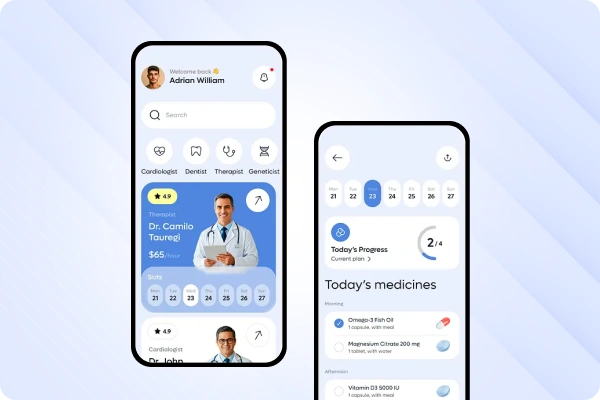
Doctor mobile applications give physicians a single place to manage consultations, patient information, and clinical workflows.
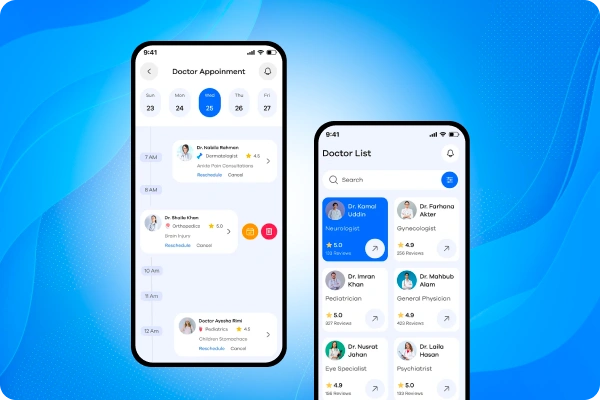
Mobile applications designed for hospitals and clinics help patients, caregivers, and administrators stay connected and reduce paperwork in healthcare settings.
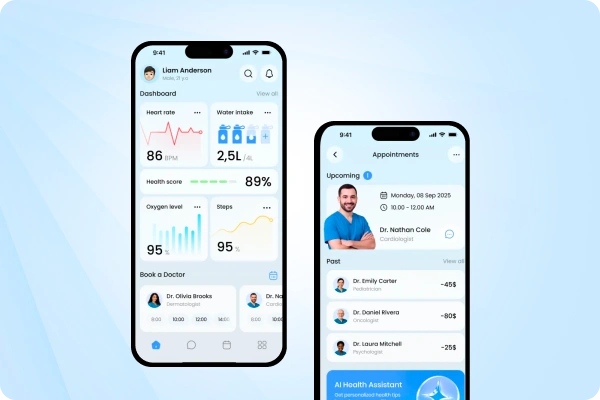
Telemedicine mobile applications let people communicate from a distance without requiring every consultation to take place at a clinic.
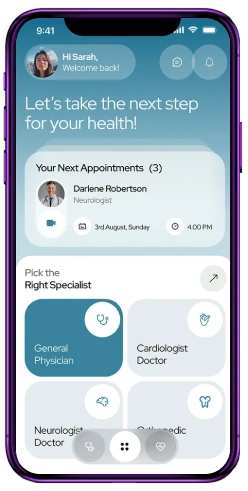
Fitness and wellness mobile applications help users monitor their everyday activities related to maintaining their good health.
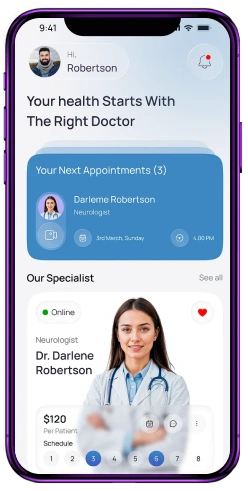
Mobile pharmacy apps connect people with pharmacies for prescription and medicine purchasing purposes.
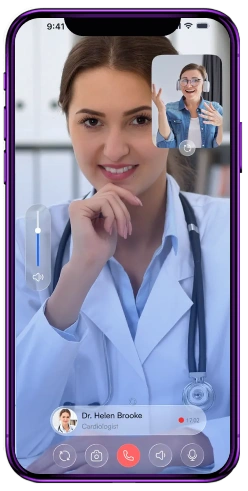
Remote patient monitoring apps collect health data from patients outside clinical settings and help care teams monitor changes remotely.
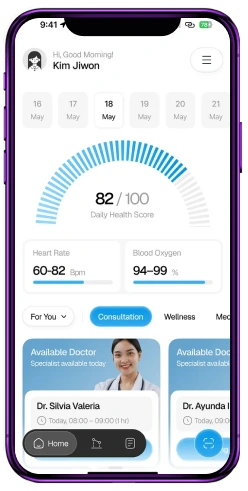
Healthcare management platforms bring multiple operational processes into one connected system for healthcare organizations and digital health businesses.
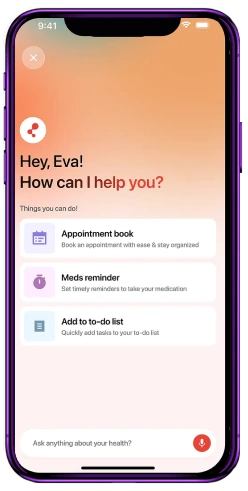
Healthcare app development services
Extend your digital healthcare ecosystem through healthcare app development services that focus on elevating patient engagement, optimizing operational efficiency, and enabling compliant, scalable growth. The cutting edge healthcare applications empower the organizations to carry out the delivery of accessible care, automation of the workflows, and secure integration of data across systems that not only guarantee long lasting efficiency but also yield tangible business results on several platforms and user groups.
Our services
A strategic healthcare solution rests on having a detailed plan that takes clinical workflows, regulatory requirements, and user needs into account. Business consulting is about setting up business goals, recognizing the target market, choosing the technology stack properly, and preparing for compliance (e.g., HIPAA, GDPR). The latter helps companies minimize risks, make the best use of their money, and create healthcare platforms that are ready for the future.

The custom healthcare software is newly developed based on the actual requirements of the healthcare facilities. Multitude of purposes, including telemedicine, patient management, wellness programs, or hospital systems. Modular and scalable features like appointment scheduling, medical records, secure communication, and analytics dashboards integration can also be incorporated keeping in mind a flexible architecture. Besides that, businesses enjoy working with solutions that are built around their workflows, instead of being forced to work with generic software that has certain limitations.

User experience is the biggest determining factor of healthcare adoption. Getting the right look and feel, simple navigation, and easy to understand patients dashboards increase engagement and also lessen human errors and the necessity to train staff for that matter. A great healthcare app empowers both patients and caregivers to have a simple, smooth and pleasant interaction.

Virtual care platforms are nowadays the first choice of health professionals if they want to offer consultations, check ups, or chronic disease management services to their patients regardless of the patients location. The array of features offered by these platforms such as, secure video conferencing, e, prescriptions, instant messaging, and patient monitoring tools enables healthcare providers to serve more patients while enhancing the level of convenience and continuity of care.

Healthcare organizations often use several different systems such as EHR, EMR, pharmacy, and billing software. Integration services facilitate a smooth data exchange through the use of interoperability standards such as HL7 and FHIR. Through connected ecosystems, decision making is improved, redundancies are eliminated, and better coordination is achieved among the departments and with external partners.

Advanced technologies like cloud computing, artificial intelligence, and predictive analytics are capable of facilitating more intelligent healthcare operations. Such solutions provide healthcare organizations with real time data, automated processes, tailored treatment plans, and flexible infrastructure that can be scaled up or down, thus enabling them to work more efficiently while securely handling large amounts of health data.

Monitoring the system continuously, updating it, and managing compliance are all crucial components when it comes to healthcare technology. Providing services continuously ensures that the applications remain secure, work efficiently, and are able to change with the evolving regulations and needs of the users. Proper maintenance that can be counted on lowers the risk of breakdowns, safeguards sensitive information, and supports the overall operational stability in the long run.

A healthcare app should have features that support the different needs of patients, doctors, and administrators. These features must keep healthcare workflows simple, connected, and secure. Also, they make healthcare services, patient information, and communication manageable through a centralized platform. The right feature set ultimately depends on the app’s users, healthcare model, and business requirements.
Patient features make healthcare more accessible by managing appointments, communication, payments, and personal health information.
Enable patients to register and securely access healthcare services.
It stores personal, medical, insurance, and preference information in one easy-to-access profile.
Search for appropriate doctors based on the following filters: specialization, location, availability, experience, etc.
Lets patients book, reschedule, or cancel appointments based on provider availability.
Allows virtual healthcare consults between patients and healthcare providers without needing to go to the clinic.
Provides secure communication between patients and healthcare providers for questions, updates, and follow-up discussions.
Enables physicians to provide e-prescriptions that patients can securely view and retrieve at any time.
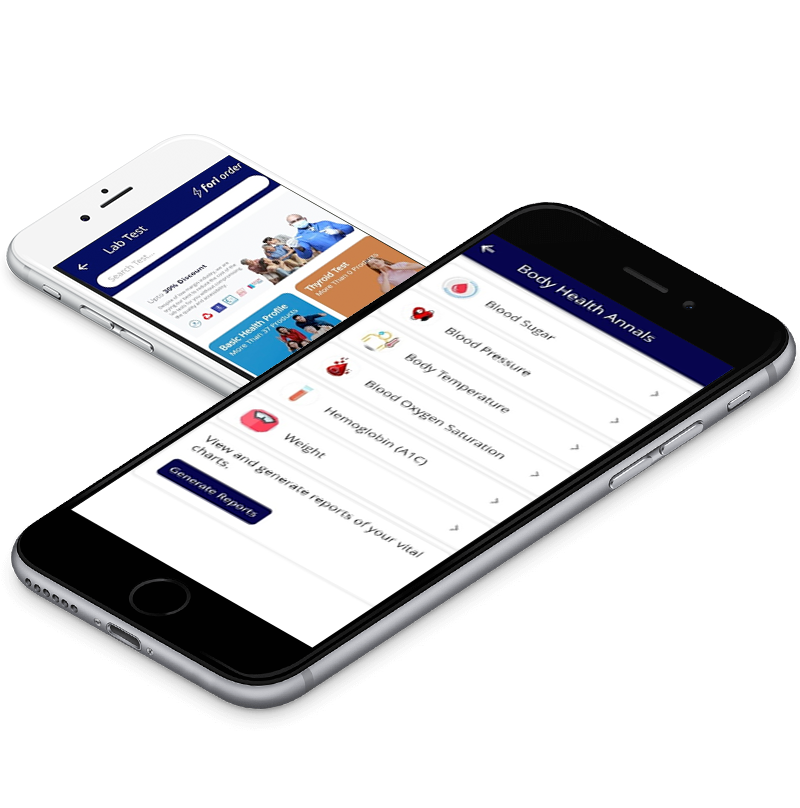
Provides patients with access to their medical records, lab results, diagnoses, prescriptions, and more.
Facilitates safe payment of services such as consultations, appointments, medicine, subscriptions, and other health care services.
Notifies about appointments, prescriptions, consultations, payments, and other important health-related events.
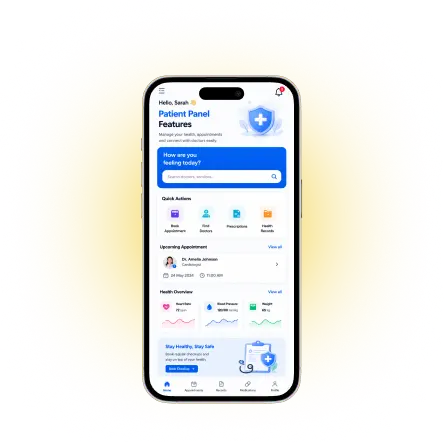
The doctor-centric features enable doctors to schedule visits, track patients, record consultations, recommend medicines, and manage their daily interactions effectively.
Enables doctors to control their specialty, qualifications, expertise, consultation fee, and doctor information.
Allows doctors to schedule their consultation time, available time slots, breaks, and preferred appointment times.
Supports doctors to see, confirm, reschedule, cancel, and track future appointments.
Allows authorized users to access patient histories, reports, diagnoses, prescriptions, and other clinical information.
Allows doctors to conduct secure video consultations and communicate with patients remotely.
Enables doctors to electronically write, view, and safely distribute prescriptions to patients.
Supports healthcare providers in recording patient symptoms, diagnoses, treatments, observations, and consultations during patient visits.
Allows for secure messaging with patients for follow-up, instructions, updates, and non-emergency communication.
Provides alerts for doctors when appointments are scheduled, canceled, receive patient messages, make prescription requests, and receive other alerts.
Supports doctors with tracking of consultation earnings, finished consultations, revenue patterns, and performance reporting.
The admin can view and control users, healthcare providers, appointments, payments, reporting, and operations of the platform from a centralized view.
Allows administrators to oversee patient accounts, access privileges, profiles, verification, and account activity.
Lets administrators check out, confirm, approve, update, suspend, and manage healthcare provider profiles.
Offers a centralized view of bookings, cancellations, schedules, consultations, and appointment status.
Lets administrators create, update, organize, and publish healthcare content across the platform.
Supports the secure tracking of payments, reimbursements, consultations, invoices, and more.
Gives you user, appointment, revenue, engagement, provider, and platform performance insights.
Helps organizations monitor healthcare data practices, access controls, privacy requirements, and compliance-related activities.
Restricts permissions by assigning suitable system access to users like administrators, staff, doctors, and more.
Lets administrators manage automated notifications, reminders, messages, and communication workflows across the platform.
Monitors platform activity, technical problems, integrations, and operational events to ensure reliable healthcare services.
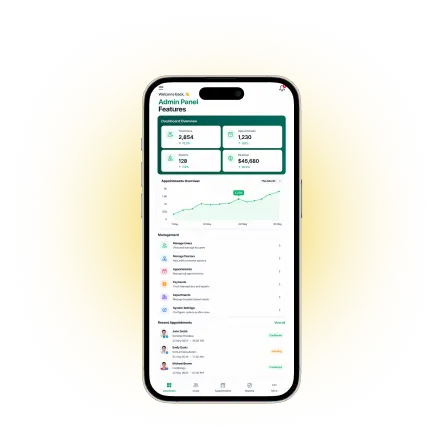
At Dev Technosys, the creation of innovative healthcare applications is a complex process that involves bringing together creativity, regulatory compliance, and human centered design.
Our healthcare app development process is all about conceptualizing secure, scalable, and highly efficient digital health solutions that are capable of enhancing patient engagement and streamlining the operational workflow.
From early concept all the way through post, launch optimization, all steps have been thoughtfully crafted to mitigate risks, shorten the time, to, market and, most importantly, deliver a sustainable business value for healthcare providers.
Based on analyses of the business goals, user needs, compliance requirements and technical scope, we produce a strategic roadmap that links healthcare workflows with technology solutions.
Hire healthcare app developers to create user-friendly, accessible interfaces and interactive prototypes that significantly boost usability, engagement, and adoption among patients, providers, and administrators.
The development team creates modern, secure, scalable solutions integrating EHR, EMR, APIs, and payment systems that allow continuous interoperability, high trust performance, and architecture ready for the future.
Our healthcare application development company is conducting an extensive series of tests for functionality, security, usability, and compliance to make sure that our healthcare solutions perform consistently, protect data, and are ready for deployment in a risk-free environment.
We continue to be responsible for compliance alignment, scalability, and long, term operational success by means of monitoring, updating, optimizing, and extending the healthcare solution capabilities on the technical side.
Healthcare organizations are increasingly using various digital platforms to enhance the quality of care, optimize the operations, and increase patient engagement.
Only advanced healthcare app development solutions can help businesses build a connected ecosystem where the clinical workflows, patient services, and data intelligence are integrated into one environment. These solutions not only support scalability, regulatory compliance, and long term growth but also enable healthcare providers to offer more efficient and accessible services.
Comprehensive healthcare management systems consolidate patient information, operational activities, and care coordination into one platform, thus greatly enhancing efficiency, cutting down on the administrative paperwork, and giving a clearer picture of the healthcare operations at various levels.

Patient Record Management

Appointment & Scheduling Systems

Workflow Automation

Multi-User Access Control

Billing & Insurance Integration

Analytics Dashboards
Patient-centric applications not only facilitate communication between healthcare providers and patients but also lead to an increase in patient satisfaction and loyalty. Besides, digital engagement tools play a significant role in lowering patient no, shows and improve compliance with the treatment plan.

Patient Portals & Dashboards

Secure Messaging & Notifications

Appointment Reminders

Health Tracking Tools

Feedback & Surveys

Educational Content Modules
Telehealth platforms support healthcare providers in offering consultations and monitoring services remotely, thus increasing the availability of healthcare facilities even beyond the conventional ones. Telehealth lowers the costs of operations and at the same time expands the scope of care, making these solutions highly integrated parts of present day healthcare models.

Video & Audio Consultations

E-Prescriptions

Remote Monitoring Integration

Digital Health Records Access

Session Scheduling

Secure Data Transmission
Integration services provide the means to link various healthcare systems like EHR, EMR, laboratories, and pharmacy platforms to facilitate the exchange of information without any hiccups and to coordinate the care delivery process efficiently.

EHR/EMR Integration

HL7 & FHIR Compliance

Third-Party API Connectivity

Data Synchronization

Automated Reporting

Cross-Platform Accessibility
Artificial intelligence facilitates advanced analytics, automation, and the generation of personalized care insights that contribute to enhanced clinical decisions and operational effectiveness. AI driven systems support healthcare organizations in making the most of data for improved results.

Predictive Health Analytics

AI Symptom Assessment

Workflow Automation

Personalized Treatment Insights

Behavioral Pattern Analysis

Decision Support Tools
Healthcare platforms have to place equal emphasis on security, compliance, and the generation of insights that are not only usable but also actionable. This is achieved by combining security and analytics solutions that protect the data and at the same time enable the formulation of data- driven business strategies.

HIPAA/GDPR Compliance Tools

Role-Based Access Control

Data Encryption

Audit Trails & Monitoring

Performance Analytics

Real-Time Reporting Dashboards
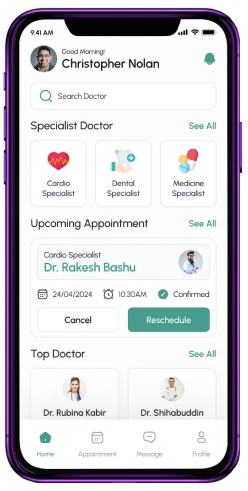
CONNECTED HEALTH DATA
Healthcare apps often need to exchange information with existing clinical systems. EHR/EMR, HL7, and FHIR integrations help connect patient data, healthcare providers, laboratories, pharmacies, devices, and other systems without creating isolated data silos.
EHR/EMR integration connects your app to electronic health records to provide access to relevant clinical information.
Healthcare apps may need to integrate with different systems to create a connected digital healthcare environment.
HL7 Integration allows different systems within the healthcare industry to exchange information using standards. It is widely used when integrating healthcare applications with various hospitals, laboratories, pharmacies, and clinical systems.
FHIR is a modern way to exchange healthcare information between applications using APIs that share structured healthcare data across apps, EHR systems, patient portals, and other digital health platforms.
Secure API Integration guarantees healthcare data security while allowing different systems to communicate. We develop integration solutions that account for all necessary security measures, such as authentication, authorization, and encryption.
Have a look at the example journey for AI-powered healthcare workflows:
Step 1
Patient Request Data & Context Checks Relevant Health Data Retrieved
Step 2
Patient submits a symptom, question, document, or request. AI checks available context, permissions, and data quality.
Step 3
Approved patient or clinical data is retrieved from connected systems.
Step 4
AI recalls patient information, catches patterns, or presents a response as per the approved data.
Step 5
Healthcare experts review, approve, update, and act on the output assisted by AI.
Task examples: Patient query support, clinical note summarization, appointment triage, medical document extraction, and patient-record search.
With our healthcare mobile app development services, integrate AI into your existing healthcare ecosystem without disrupting core workflows.
EHR/EMR systems, FHIR APIs, patient records, lab systems, appointment platforms, and approved healthcare data sources.
Define data ownership, access permissions, source quality, and how frequently information is updated.
Healthcare provider / clinical or product owner.
Establish a clinical owner, technical owner, review process, and escalation path for AI-assisted decisions.
A healthcare app is handling actual patient records, diagnostic data, and identity information. There is no lighter version of security here. Compliance determines whether your app can legally store and process patient health data in the first place.
Healthcare apps operate under some of the strictest oversight in software. It is different from general consumer apps as they directly handle protected health information. A gap in consent management, a missed HIPAA requirement, or an unencrypted data flow isn’t just a bug. This can lead to regulatory penalties or loss of provider trust.
Healthcare partners and regulators expect:
The exact requirements depend on your business model, users, data flows, and operating region. We identify the applicable requirements during project discovery and design the application accordingly.
For U.S. healthcare products, applicable requirements can include:
Healthcare applications operating in India may need to consider:
For healthcare products serving European users, requirements can include:
Healthcare platforms operating in the UK may need to consider:
Canadian healthcare applications may need to address different requirements depending on where they operate:
For Australian healthcare applications, applicable requirements may include:
We align architecture, integrations, and security controls with widely adopted healthcare and trust frameworks so your app can exchange data safely and scale across providers and regions.
Healthcare data exchange between systems
Modern API-based healthcare interoperability
Medical images such as X-rays, CT, and MRI
Electronic clinical and medical records
Information security management
Quality management for medical devices
Controls around security and other trust-service criteria
Not necessarily. Many healthcare apps launch by integrating with existing EHR/EMR providers rather than building a proprietary system. This lets the app operate within a provider’s existing clinical data infrastructure.
Using end-to-end encryption, biometrics, multi-factor authentication, role-based access control, and real-time anomaly detection and tracking. These are all typical features of a well-developed healthcare application.
Yes, HIPAA applies only to applications that handle patients’ protected health information in America; other regions use their own data protection regulations.
SYSTEM DESIGN
The architecture of a healthcare app covers how the application handles users, authentication, business logic, healthcare data, integrations, storage, and monitoring. All layers should work together to ensure safe, reliable data transfer and support future scalability.
This layer is responsible for controlling access to the healthcare application and the data/functions that each of the users can access.
Healthcare APIs link different components of the application and external services and therefore require proper mechanisms for the protection of the data during all transfers.
Healthcare apps deal with sensitive information that must be stored in a structured way and accessed and protected appropriately.
Cloud infrastructures provide the environment for computation, storage, networking, and deployments of healthcare applications.
Monitoring helps development and operations teams identify technical issues, unusual activity, integration failures, and performance problems across the application.
Every strong doctor on-demand app architecture requires a four-layer architecture. The first layer is the presentation layer; it includes separate patient and doctor apps. The second layer is an API gateway that handles OAuth 2.0 authentication and routes requests. The microservices layer, the third layer, consists of independent modules for video calls (WebRTC with SRTP encryption), appointment scheduling, e-prescriptions, chat, and payments. The fourth layer is a HIPAA-compliant data layer. It comes with encrypted databases for medical records and Redis caching for real-time availability status.
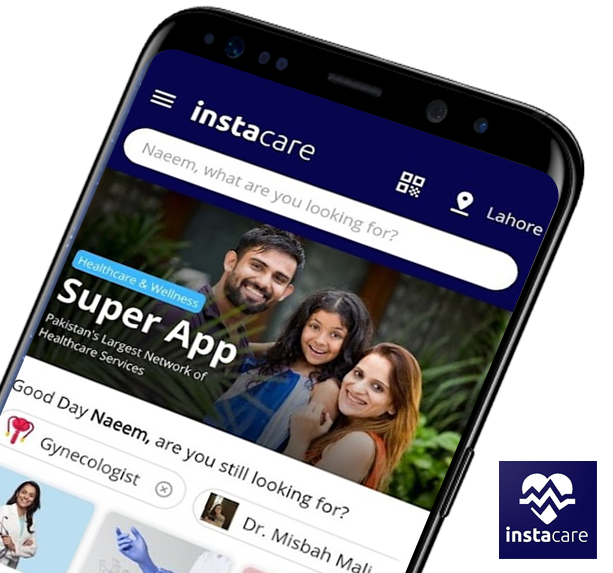
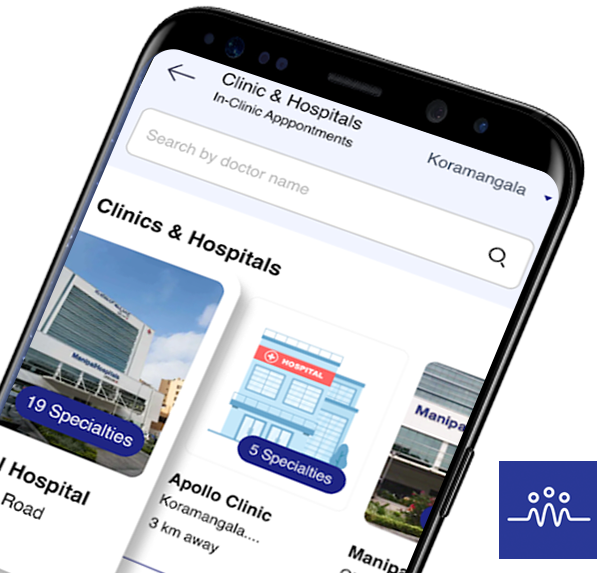
Our healthcare app development company collaborates with healthcare organizations, startups, and enterprises to develop secure, scalable, and user-centric healthcare applications designed for modern care delivery. Our portfolio reflects experience across telemedicine platforms, patient engagement solutions, hospital management systems, and wellness applications. Each project demonstrates a commitment to intuitive user experiences, regulatory compliance, and technology-driven innovation that supports better clinical outcomes and operational efficiency across diverse healthcare ecosystems.
TECHNOLOGY STACK
Healthcare mobile app development demands more than just a standard tech stack. A defined healthcare tech stack supports data security, EHR/EMR, healthcare APIs, connected devices, and scalable infrastructure. Our healthcare app development company selects technologies that are suitable for the platform type, clinical workflow, security requirements, and target users.
Build apps for patients, doctors, caregivers, and healthcare staff on iOS and Android.


Create responsive interfaces for patient portals, provider dashboards, admin panels, and healthcare platforms.


Develop secure server-side systems that manage healthcare workflows, business logic, APIs, users, and integrations.


Structured healthcare information is stored while supporting performance, scalability, backups, and controlled data access.


Deploy healthcare platforms on scalable infrastructure with automated deployment, monitoring, backup, and disaster-recovery capabilities.


Connect healthcare applications with existing clinical and business systems for reliable healthcare data exchange.


Use healthcare data to support automation, analytics, personalization, and decision-support workflows where appropriate.


Connect healthcare apps with medical devices and wearables for continuous health-data collection and remote monitoring.


Protect sensitive healthcare information with strong identity, access, encryption, and security controls.


Support secure communication between patients, providers, pharmacies, and healthcare organizations.


The cost to develop a healthcare app will range from $4,999 to $120,000. The final development budget is influenced by the platform's infrastructure, features & workflows, depth of interoperability, and compliance needed. A healthcare app built with an MVP structure is less expensive than a fully-functional app with advanced integrations.
It might look like all healthcare applications are alike, having a dashboard, a booking functionality, and some messaging functionality. But it is actually in the backend where the real costs of developing a healthcare application are hidden. Two very similar-looking applications can differ substantially in cost due to their backends.
Connecting to existing Electronic Health Record or Electronic Medical Record systems significantly changes cost, since every provider network runs different systems.
Real-time video, virtual waiting rooms, and secure clinician-patient messaging add infrastructure, latency, and compliance work.
Pulling data from wearables, remote monitoring devices, or lab equipment adds data-mapping, syncing, and validation logic.
Patients, doctors, nurses, admins, and insurers each need their own permissions, screens, and workflows.
Operating across multiple countries means meeting each region's health data and privacy regulations separately.
Healthcare app development takes from 3 months for limited-feature development to 5+ months for full-stack development. The development timeline is highly influenced by discovery and regulatory scoping, user interface and experience design, and platform choice. Integrations with EHR systems, telemedicine, compliance testing, and security audit also impact the development time.
Understanding how much it costs to build a healthcare app depends on the app's scope, compliance needs, and integration complexity. The average healthcare app development cost ranges from $4,999 to $120,000. Developing a simple MVP with limited integrations and features starts from $4,9999. An advanced solution with EHR integration, telemedicine, e-prescription service, and HIPAA compliance costs significantly more. User roles, APIs used, and the platform selected are the key aspects affecting the overall healthcare app development cost.
The decision of whether to adopt a custom healthcare application or a white-label healthcare app depends on multiple factors. It depends on your business goal, your budget, and the project's time frame. The latter offers you the advantage of full control over all aspects, while in the former you get to use existing functionality. It is important to understand the differences between the two for your own benefit.
Built around your own clinical workflows and data architecture
Licensed telehealth/EHR platform, launched under your brand
Custom healthcare app development services are recommended to have control over clinical processes, data ownership, and integration of the platform with your provider system. White-label healthcare platform development is preferred for starting quickly, avoiding the need to build all the infrastructure, and leveraging ready-to-go EHR integration.
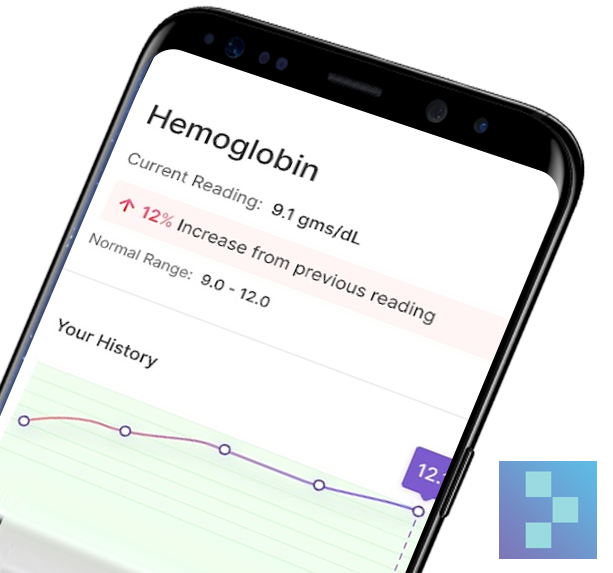
Revolutionizing AI-Powered Patient Engagement
The conventional model of healthcare management was based on extensive paperwork, disconnected patient records, and manual management of appointments. The medical staff also faced challenges in delivering personalized treatment and seamless communication. Also, managing information at all touchpoints is complicated.
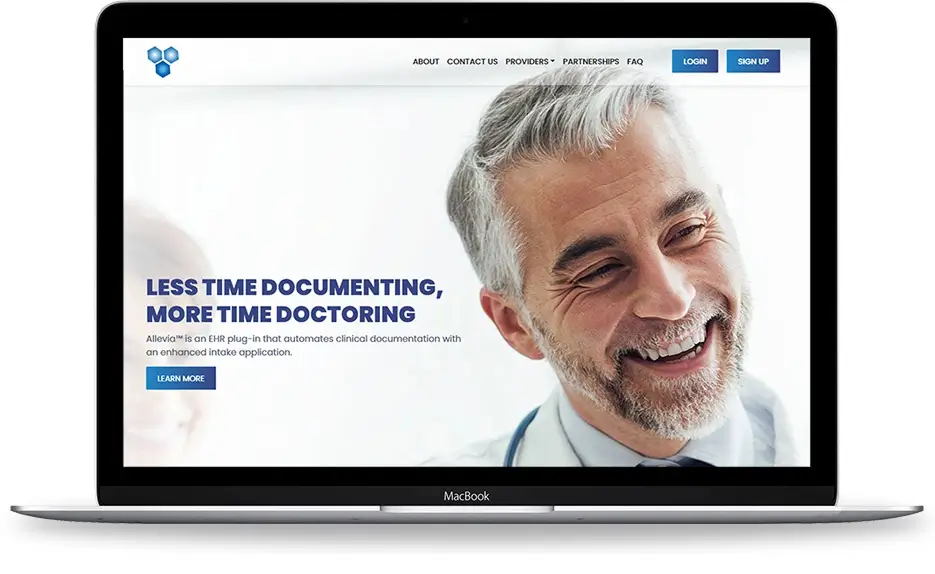
Our healthcare mobile app development team developed Allevia, a platform for patient engagement powered by artificial intelligence. This app is seamlessly integrated with EHR platforms. The solution automated pre-appointment questionnaires, provided online appointment booking, and offered secure communication between the doctor and patient. It also helped in clinical documentation powered by AI and provided a mobile-first experience for the patients.
Doctor On-Demand App for Connected Patient Care
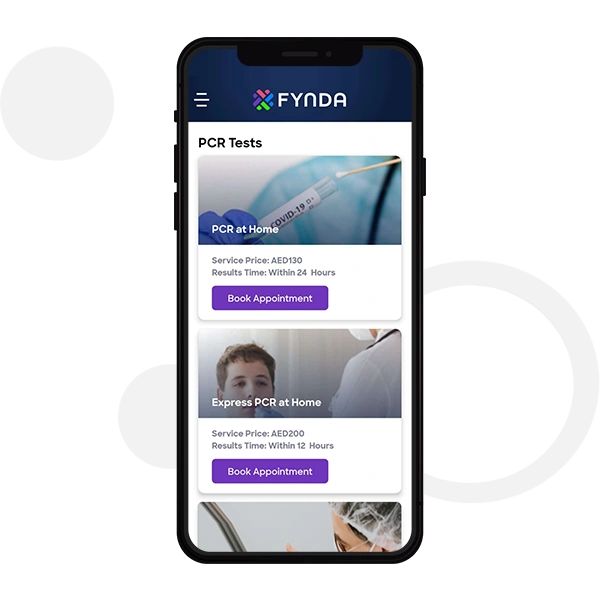
Patients asked for an easy way to get connected to doctors by booking different consultations. Similarly, doctors, clinics, and hospitals need a platform that manages appointments, patient information, and prescriptions. Both want a single platform for their respective services. Considering security risks, protecting healthcare data and connecting third-party services were also important parts of the project.
As a solution, Dev Technosys built Fynda Pro, a doctor-on-demand platform. It is available on iOS, Android, and web. This app helps patients find doctors and book video, audio, home, or clinic consultations easily. The platform offers other services like appointment management, medical history, medicine reminders, digital prescriptions, doctor profiles, dependents, and consultation reporting.
On-Demand Pharmacy & Medicine Delivery Platform
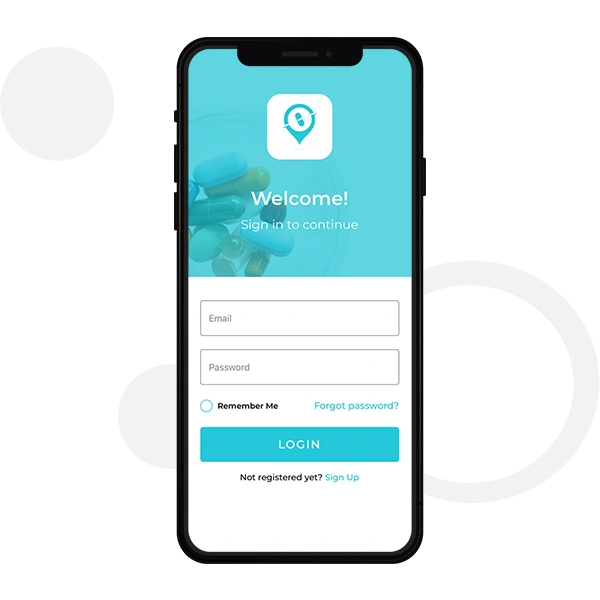
Highly digitalized customers need a convenient way to search medicines, place orders, make payments, and get them delivered to their doorstep. For pharmacists and pharmacy business owners, the platform must have prescription handling, location tracking, and third-party integrations. They require prescription handling, location tracking, third-party integrations, and secure data exchange across the pharmacy delivery process.
We created Pharma Go, a web and mobile pharmacy platform. It seamlessly connects customers, pharmacists, and delivery partners. Through this platform, users can search medicines, view product details, upload prescriptions, place orders, make payments, and track deliveries. The platform also includes pharmacy and stock management features.
WHY DEV TECHNOSYS
More than 16 years of experience in mobile app and software development in healthcare.
Delivered over 2300 projects in 71+ countries and almost serves nearly all major tech-driven industries.
Our healthcare app development solutions cover patient apps, telemedicine, pharmacy, healthcare management, and connected care platforms.
Our healthcare projects are especially guided by healthcare IT expert Narayan Das. He brings practical insights and years of experience in development decisions.
Experience with EHR/EMR, HL7, FHIR, healthcare APIs, AI, cloud platforms, and connected healthcare systems.
CMMI Level 3 certification to support structured software development and quality processes.
Clutch 4.8/5 rating from 203 reviews, providing an external reference for client experience.
Development strategy is focused on ISO 27001, ISO, SOC 1, SOC 2, GDPR, and CCPA considerations.

Tyn Magazine
September 2026 recognition for innovative digital healthcare solutions.

PC Tech Magazine
National coverage highlighting scalable healthcare app delivery for U.S. providers and startups.

NerdBot
June 2026 healthcare feature on connected care, compliance-ready platforms, and modern patient experiences.
Security & compliance alignment
The average healthcare app development cost ranges from $4999 to $120,000. The overall development expenses are determined by the platform features, integrations, platforms, security requirements, and customization. A basic MVP is less expensive due to limited but important features and integrations. Whereas an app with EHR/EMR integration, telemedicine, AI, wearable connectivity, or advanced compliance is expensive.
Developing a healthcare app takes approximately 4 to 7+ months. The final timeline depends on its complexity, platforms, UI/UX, security & compliance needs, integrations, and testing. A simple healthcare app is generally developed in less time. Whereas a connected healthcare platform with EHR, APIs, and advanced workflows takes longer.
Making a healthcare app HIPAA-compliant is something more than just adding security features. It demands HIPAA-supporting architecture, data handling, access controls, audit logs, encryption, authentication, backups, vendors, and workflows.
For covered entities and business associates, appropriate policies, risk assessments, safeguards, and Business Associate Agreements should also be addressed.
Yes, a healthcare app can be significantly integrated with EHR and EMR systems. To integrate these hospital healthcare systems, businesses use available APIs, HL7, FHIR, or other supported integration methods. The integration approach depends on the healthcare system, vendor capabilities, data requirements, and interoperability needs. Proper authorization, data mapping, validation, and security controls are important throughout the integration process.
The commonly used technologies in healthcare apps include:
Apart from these technologies, PostgreSQL, cloud platforms, healthcare APIs, HL7, FHIR, AI, and wearable integrations also play an important role.
Protecting patient data in a healthcare app is critical to maintaining user trust. To protect data, businesses use:
Security should be considered from the beginning of development. It should be planned from planning to ongoing maintenance.
Yes, we can develop healthcare applications for both iOS and Android. For this, we use native or cross-platform technologies based on your product requirements. The selection between iOS, Android, and cross-platform depends on performance needs, device capabilities, development scope, budget, and maintenance plans. You can also include web and tablet experiences when your healthcare workflow requires multiple access points.
To maintain a healthcare app, it takes around 15 to 20% of the initial development expense annually. The actual healthcare app maintenance cost is determined by the application and support scope. Ongoing expenses usually include:
Before launch, healthcare apps should go through functional, integration, performance, usability, security, and compatibility testing. We can test authentication, APIs, EHR/EMR connections, healthcare workflows, data handling, and device behavior while reviewing potential vulnerabilities. Post-launch monitoring also helps identify errors, unusual activity, and performance issues that require attention.
Dev Technosys combines healthcare technology expertise with software development experience across:
Projects can involve EHR/EMR, HL7, FHIR, AI, cloud, and connected-device integrations. Our approach also includes security, testing, deployment, and ongoing support based on the agreed product requirements and scope.
Discover how our clients have achieved success, watch their authentic video testimonials and see the results for yourself
“Dev Technosys delivered a secure, user-friendly medical app for us. Their technical expertise, clear communication, and commitment to healthcare compliance truly exceeded our expectations.”
CEO


“Dev Technosys transformed our business idea into a powerful mobile app. Their strategic approach, reliability, and on-time delivery helped us scale smoothly and confidently.”
Managing Director


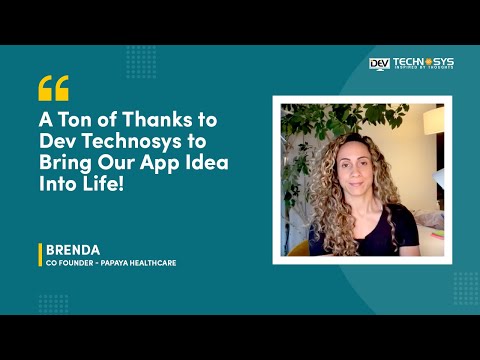
“Working with Dev Technosys felt like a true partnership. Their care, dedication, and understanding of our healthcare goals made the entire journey smooth and rewarding.”
CEO, Papaya

“Dev Technosys brought our carpet information project to life with clarity and precision. Their professionalism, responsiveness, and commitment to quality made the collaboration truly valuable.”
Director - Satar Carpet GmbH


“Dev Technosys played a key role in shaping our project into a viable business. Their problem-solving mindset, technical strength, and consistent support delivered real results.”
Founder at Best.AZ


“Dev Technosys handled our healthcare project with care and precision. Their thoughtful approach, strong collaboration, and attention to detail gave us confidence at every stage.”
CEO - InspireWebApp


205 Reviews on Clutch

UK

Europe

UAE

Japan


Our innovation and technology expertise have earned a feature in respected media platforms and industry publications across the world.
Featured by EIN Presswire for delivering innovative software development services that help startups and enterprises accelerate digital transformation with confidence.
ViewHighlighted by Barchart for building scalable digital products that combine modern technologies, exceptional performance, and measurable business value.
ViewAcknowledged by The Hindu for creating reliable web, mobile, and enterprise software solutions that drive long-term business growth.
ViewShowcased by Entrepreneur for empowering startups with innovative product development strategies and high-quality software engineering expertise.
View
Celebrated by Hindustan Times for delivering custom technology solutions that help businesses innovate, scale efficiently, and stay competitive.
ViewWe Proudly Shines Globally, Featured by Renowned Publishers!

B-11-12, Lal Bahadur Nagar, Sector 9, Malviya Nagar, Jaipur, Rajasthan 302017, India

5668 e 61st street ste 2000 #360 commerce, california 90040, USA



188 Quay Street Auckland, AUK 1010

United States (USA), United Kingdom (UK), Singapore, Germany, Canada, Australia, Ireland ,New Zealand , Netherlands, Norway, United Arab Emirates (UAE) , Saudi Arabia , Qatar, Finland, Mexico, Switzerland, Spain, France, etc


by 800+ customers for 2300+ Web and Mobile App Development Projects.