















Quick Summary:
The loan lending app development cost ranges from $4,999 to $25,999, depending on project scope, features, and technical requirements. An MVP-based loan lending app costs around $4,999 to $9,999, while a fully featured or AI-powered loan lending app can cost between $18,000 and $25,999 or more, depending on complexity.
Cost Affected by Project Complexity
-
- MVP-Based or Basic Apps ($4,999–$9,999): Basic loan lending apps include essential features such as user registration, loan eligibility checks, loan applications, approval workflows, and flexible loan options.
- Mid-Premium Apps ($10,000–$17,999): Mid-level loan lending apps offer advanced features, including pre-approved loan offers, digital KYC verification, e-signatures, and automated document processing.
- Fully Featured or Complex Apps ($18,000–$25,999): Advanced loan lending apps incorporate AI-based credit scoring, customizable EMI plans, automated repayment scheduling, fraud detection, and real-time loan tracking.
Cost Based on Loan Lending App Types
-
- Personal Loan Apps: $6,999–$12,999
- Payday Loan Apps: $7,999–$14,999
- Business Loan Apps: $8,999–$15,999
- Gold Loan Apps: $12,999–$19,999
- Buy Now, Pay Later (BNPL) Apps: $15,999–$25,999
Country or Region-Wise Cost
-
- San Francisco, USA: Loan lending app development costs approximately $14,999–$25,999, depending on customization, developer rates, integrations, and project complexity.
- Sydney, Australia: Building a loan lending app typically costs $10,999–$21,999, depending on the required features, technical integrations, and development team.
- Bristol, UK: Loan lending app development generally ranges from $11,999–$23,999, depending on the developers’ expertise, project scope, and functionality.
Additional or Extra Costs
-
- Maintaining a loan lending application typically costs around 10%–20% of the initial development cost annually. These expenses cover bug fixes, security patches, regular updates, performance optimization, and compatibility improvements.
- To protect sensitive financial information, implement robust security measures such as two-factor authentication, data encryption, biometric authentication, firewalls, fraud prevention, and applicable regulatory compliance.
Building a loan lending app can seem daunting when you consider how many different platforms, features, and technologies there are that have to be incorporated into it while complying with the regulations set forth.
Every part of the loan lending app, such as having an effective user interface, being able to process payments safely, and using artificial intelligence in budgeting and lending services.
This will vary in cost, causing there to be questions on where your money goes when developing the app. Whether you are a new startup entering the fintech sector or an existing company looking to digitize your services.
This blog will address some of the things that will affect how much it costs to build an app like this, including complexities of building the app, the platforms you choose to build on, how you integrate with other services, and costs associated with maintaining the application.
What is the Loan Lending App?
A loan lending app is a digital platform where users can receive, manage, and apply for loans without visiting a bank. Users can get instant loan approval, eligibility checks, fast disbursement, minimal documentation, and more.

Features of money lending app include tracking loan repayment, viewing EMIs, making payments within the app, and checking loan details. These applications for loan lending make it easy for users to borrow quickly and efficiently.
Why Businesses Want to Invest in Loan Lending App Development?
Businesses want to invest in fintech software development services because of several benefits, such as growing demand, data-driven insights, gaining a competitive advantage, monetization opportunities, and many more. Mainly, these applications help users get instant loan services, such as instant approval, check eligibility criteria, personalized offerings, and more.
Entrepreneurs or businesses can generate higher revenue by using techniques such as subscription-based models, processing fees, interest-based revenue, and commission-based income. By develop an instant loan approval app, it can be a lucrative opportunity to enter the fintech market.
Service Options
Who Can Benefit from Custom Loan Lending App Development?
For lenders who are hoping to optimize the procedures involved in lending, obtain quick credit assessments, and provide a better borrowing experience.
Managing Loan Applications Manually?
The process of onboarding clients, collecting relevant documents, and keeping track of applications can be made much easier.
For lending startups and loan officersStruggling With Slow Loan Approvals?
Application processing can take time, but once automated, you will no longer encounter delays in the approval process.
For banks and lending operations teamsUsing Disconnected Lending Systems?
It is possible to integrate loan processing operations comfortably within a single system.
For NBFCs and lending managers
What is the Average Cost to Build a Loan Lending App in 2026?
The cost to develop a loan lending app in Houston, USA is around $10,000 to $30,000, cost can be influenced by several major factors. It involves a wide variety of factors, such as project size, backend infrastructure, development team, platform choice, number of integrations, emerging technologies, design UI/UX, and more.
Additional factors also exist, such as security measurements, maintenance & support services, testing, features, functions, and project complexity.
| Loan Lending App Type | Estimated Cost | Key Features |
| Basic Loan Lending App (MVP) | $4,999 – $9,999 | User registration, loan applications, eligibility checks |
| Mid-Level Loan Lending App | $10,000 – $14,999 | Digital KYC, loan tracking, e-signatures |
| Advanced Loan Lending App | $15,000 – $19,999 | Automated approvals, EMI management, repayment reminders |
| AI-Powered Loan Lending App | $20,000 – $23,999 | AI credit scoring, risk assessment, fraud detection |
| Fully Featured Loan Lending App | $24,000 – $25,999 | Advanced analytics, automated workflows, comprehensive admin dashboard |
Industry Insights:
According to the GlobeNewswire, AI and machine learning are transforming credit scoring by using alternative data like transactions and behavior for more accurate risk assessment.
5 Different Types of Loan Lending Applications: Cost Breakdown
Do you think that there is only one cost for an online borrowing platform? No, there are different types of loan lending apps available in the market, and each application has different features and services, which is why each type has a unique cost for development. Consider the pricing of each loan leading app type:
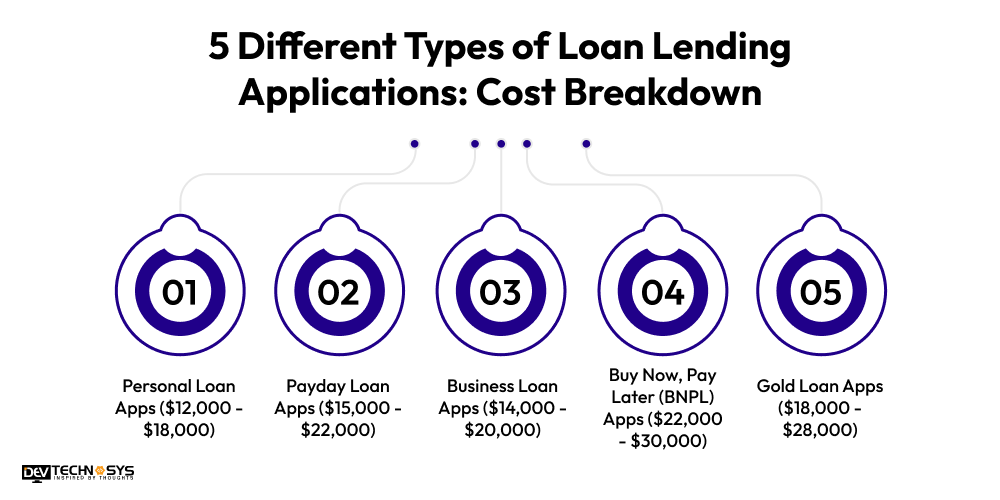
1. Personal Loan Apps ($6,999–$12,999)
The personal loan app provide unsecure loans for individual users with a simple check of eligibility and instant or quick approvals. It includes many advanced or basic features such as credit scoring, repayment checking or tracking, KYC, advanced analytics, AI underwriting, and integrations.
These P2P lending app development solutions are suitable or ideal for salaried and self-employed users to get a loan easily and quickly with minimum documentation.
2. Payday Loan Apps ($7,999–$14,999)
The payday loan applications offer short-term loans or advance cash and are mainly designed to bridge financial gaps until the next paycheck. These applications provide quick access to funds without any traditional credit check.
Charge higher fees or interest and automate repayment on the next payday. It includes many advanced features, such as employer verification, fast onboarding, minimal documentation, repayment reminders, automated risk checks, and more.
3. Business Loan Apps (($8,999–$15,999)
A business loan app is a platform where entrepreneurs and SMEs apply for loans and manage their loan amounts. With the help of a business cash advance app, entrepreneurs can get an instant loan with minimal paperwork within a few minutes. It involves various types of features, such as cash flow analysis, financial document uploads, GST/income verification, and more.
4. Buy Now, Pay Later (BNPL) Apps ($15,999–$25,999)
BNPL app development solutions allow the consumer to pay for their purchases either upfront or via an easy installment plan at checkout without the necessity of a full payment at that time. The features required to develop a Buy Now Pay Later application include merchant integration, instant credit decision-making, and repayment tracking.
5. Gold Loan Apps ($12,999–$19,999)
Gold Loan Application features the ability for an individual or organization to pledge gold in exchange for a fast, secured loan through using an application with very little paperwork.
The additional features include gold valuation, integration with a branch locker, and secured tracking of pledged assets. The financial software development services costs are moderate; however, they will increase with the addition of real-time gold price and verification systems.
| Loan Lending App Type | Description | Estimated Cost |
| Personal Loan Apps | Unsecured loans with a simple application process | $6,999 – $12,999 |
| Payday Loan Apps | Short-term loans with quick approval workflows | $7,999 – $14,999 |
| Business Loan Apps | Loans for SMEs and business financing needs | $8,999 – $15,999 |
| Buy Now, Pay Later (BNPL) Apps | Split purchases into manageable installments | $15,999 – $25,999 |
| Gold Loan Apps | Loans secured against gold assets | $12,999 – $19,999 |
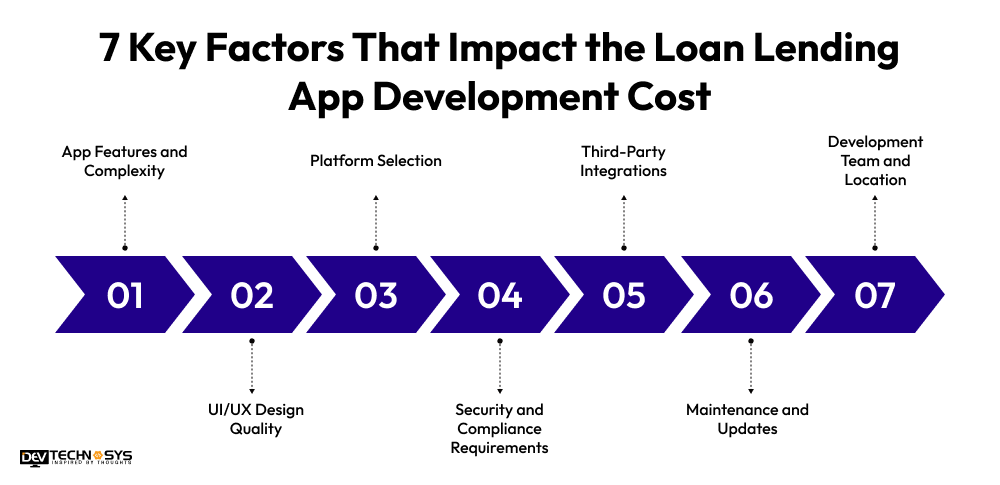
7 Key Factors That Impact the Loan Lending App Development Cost
There are several factors that can impact the overall cost to build an instant loan app in 2026, which will affect the overall budget. Creating a loan management software will involve many different costs. So it’s important to consider each of the factors that will affect the overall instant loan app development cost.
1. App Features and Complexity
App characteristics include the type and amount of features in the app, which affect the price of development. Basic apps that offer little more than simple loan application functionality will usually be less expensive than the development of advanced functionality.
More features will result in more design, coding, testing, and maintenance time required to develop a digital credit app, which will increase the overall cost of fintech app development services.
Level |
Description |
Cost Impact |
| Basic | Simple loan application, login, EMI calculator | +$2,000 to $4,000 |
| Medium | KYC, credit scoring, repayment tracking | +$4,000 to $6,000 |
| Advanced | AI underwriting, analytics dashboard, automation | +$6,000 to $8,000 |
2. UI/UX Design Quality
The design of the credit lending platform must be easy to use and visually appealing to the user. UI/UX design services will require a skilled design team, a good amount of user research, and several iterations to create a quality user experience.
Any added functionality, such as custom animation, intuitive user navigation, and accessibility, will contribute to additional costs due to additional design and development time needed to develop those features.
Level |
Description |
Cost Impact |
| Basic | Standard templates, minimal customization | +$1,000 to $2,000 |
| Custom | Branded design, better user flows | +$2,000 to $4,000 |
| Premium | Advanced animations, high-end UX research | +$4,000 to $6,000 |

3. Platform Selection
The other area that affects cost is the decision regarding the platform (Apple, Android, or both). The payment app development cost is greater for developing separate applications for Apple and Android than it is for a single cross-platform app.
However, both approaches will have development costs based on the development tools, development requirements, and testing requirements of the individual platforms. This will create differing development timelines, effort, and costs.
Platform |
Description |
Cost Impact |
| Single Platform | Android or iOS only | +$2,000 to $5,000 |
| Cross-Platform | Flutter/React Native | +$4,000 to $7,000 |
| Native Both | Separate Android + iOS apps | +$6,000 to $8,000 |
4. Security and Compliance Requirements
Money transfer apps manage sensitive data such as financial and personal details; therefore, strong security implementations such as encryption, secure APIs, multi-factor authentication, and ensuring compliance with legal standards.
This will increase the amount of work being completed on each product. As legislation continues to increase the amount of money required, both during initial development and continued maintenance.
Level |
Description |
Cost Impact |
| Basic | SSL, authentication, data encryption | +$500 to $1,000 |
| Moderate | KYC, AML compliance, secure APIs | +$1,000 to $2,000 |
| High | Advanced fraud detection, regulatory audits | +$2,000 to $3,000 |
5. Third-Party Integrations
Cost is greatly influenced by integration with third parties such as payment processors, credit bureaus, KYC, and banking API’s. Each integration will require further development and testing, and may have licensing fees that need to be paid, facilitating the partners. Conversely, coordination of seamless communication between systems increases the money transfer app development cost.
Type |
Description |
Cost Impact |
| Basic | Payment gateway, SMS/email APIs | +$500 to $800 |
| Medium | Credit bureaus, KYC APIs | +$800 to $1,000 |
| Advanced | AI scoring, banking integrations | +$1,000 to $1,400 |
6. Maintenance and Updates
To keep your application secure and performing well after it’s launched, you must invest in ongoing post-launch maintenance. Continuous improvement through ongoing bug fixes, feature upgrades, and adapting to new technologies or regulations requires you to make a continual investment in your application.
Failure to continue to make this investment may result in high long-term costs due to system failure or vulnerability to security breaches.
Level |
Description |
Cost Impact |
| Basic | Bug fixes, minor updates | +$500 to $800/year |
| Standard | Performance improvements, updates | +$1,000 to $1,300/year |
| Advanced | Feature upgrades, scaling support | +$1,300 to $1,600/year |
7. Development Team and Location
The stage at which you will engage each developer, designer, and tester is the largest factor in determining the total costs of mobile banking app development services.
The greater your developers’ experience level and the region from which you hire fintech software development company, the higher your hourly rate will be. Most businesses looking to outsource their development to a lower-cost region will find that the cost is lower.
Team Type |
Description |
Cost Impact |
| Freelancers | Low-cost, limited scalability | +$3,000 to $5,000 |
| Mid-Level Agency | Balanced cost and quality | +$5,000 to $7,000 |
| Top Agency | High expertise, premium delivery | +$7,000 to $10,000 |
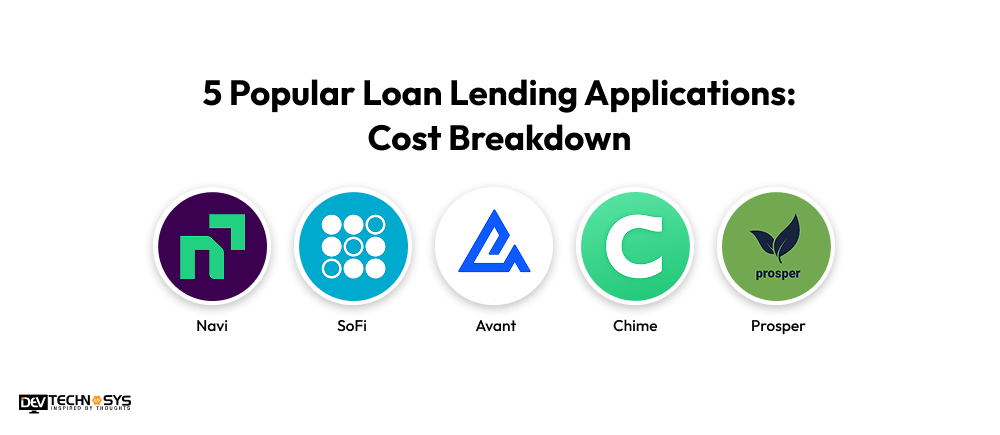
5 Popular Loan Lending Applications: Cost Breakdown
Before building your own loan lending app, you must observe the existing loan lending applications that have reached wider audiences. But what’s their estimated cost of development? This section explores the popular loan lending applications and their development cost:
1. Navi
Navi is a financial super application that offers various services like digital lending, UPI payments, mutual funds, health insurance, and more. This digital lending platform allows users to check their eligibility to apply for an instant loan and transfer it to their account. The cost to make a loan lending app like Navi ranges from $14,000 to $28,000, it mainly based on the specific requirements and demands.
2. SoFi
SoFi is an all-in-one financial application that is basically designed to help users such as manage money, loans, investments, and credits. A neobank app like SoFi acts like a virtual bank; users do not need to visit a branch, and they can access all financial services online.
It allows users to apply for personal loans and monitor their credit score. The SoFi clone app development cost is around $15,000 to $30,000; this can go higher because of API integrations, features, and functions.
3. Avant
Avant is a digital financial platform in Chicago, USA, and offers a wide range of financial services, such as credit, loans, investments, money transfers, and many more.
This application enables users to apply for instant loans and manage Avant credit cards. The cost to build a loan lending app like Avant lies between $10,000 and $22,000, depending on project complexity and specific or custom project needs.
4. Chime
Chime is a mobile app for offering financial services and is basically designed for users who want to access a wide range of banking services without visiting a branch.
It involves various services such as early payday access, an optional overdraft feature, automatic savings, fee-free banking, and more. The cost to make a loan lending app like Chime starts from $15,000 to $26,000, rely on client demands and customization level.
5. Prosper
Prosper is a US-based peer-to-peer lending application, which is widely known for personal loans. Users can apply for instant loans and get loans of around $2,000 to $50,000.
The loan amount is based on the user’s credit score. This application enables existing borrowers to manage their loans. The cost to create a loan lending app like Prosper is around $12,000 to $24,000, based on app complexity and its size.
Industry Insights:
In accordance with Capgemini, lenders are focusing on omnichannel platforms combining mobile, web, and APIs to ensure a consistent borrowing experience across touchpoints.
Want a chatbot demo or pricing? Fill the form and talk to our experts today.
Pick what you need below — you can select more than one — then tap Get detail to continue.
-
Chatbot demo dashboard
-
Cost to develop an app
-
Industry report
-
Case study
What are the Hidden Costs of Loan Lending App Development?
There may be hidden costs when developing an online loan app that can affect your budget. Compliance, third-party services, security, maintenance, and marketing expenses are often overlooked.
If you identify these costs earlier in your process, you can adequately plan your business, avoid unexpected financial issues, and keep your app up and running for an extended period.
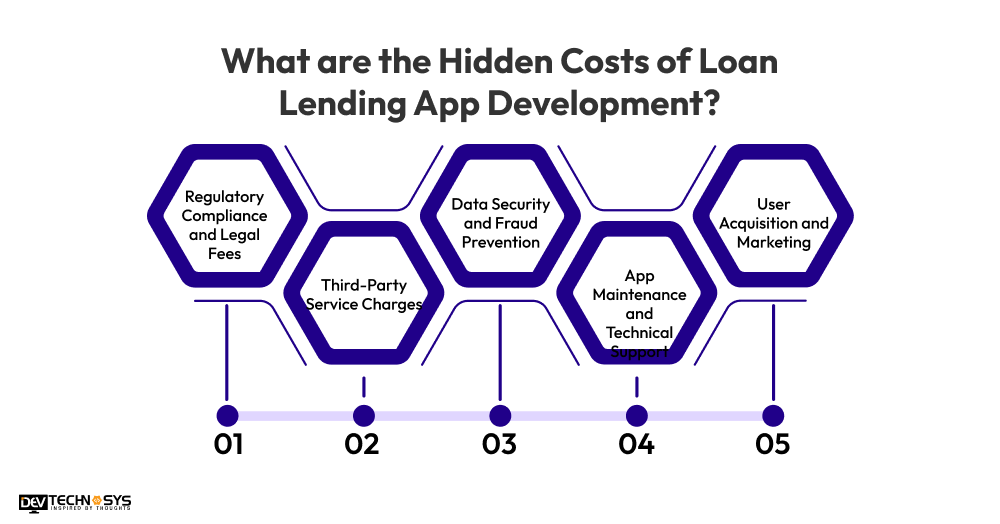
1. Regulatory Compliance and Legal Fees
Financial services compliance software offered through an app must comply with financial regulations, data protection laws, and local licensing laws. Legal consultation, documentation, and audits add costs that can be considered unplanned, and that may require multiple updates if compliance-related issues occur during the product lifecycle.
Therefore, compliance is often one of the highest hidden costs during the loan lending app development.
2. Third-Party Service Charges
Although all the services required for integrating a loan lending service application are planned prior to launch, the ongoing costs for payment gateway providers, credit scoring API providers, KYC verification, and cloud service providers are typically underestimated. As the number of users increases, these continuing costs may materially increase.
3. Data Security and Fraud Prevention
Advanced security features require a significant budget allocated to regularly audit security, & as cybercriminals develop new ways of getting around current security measures, security measures must be continuously invested in to keep user data safe.
Most people do not consider initial prices as a business owner, but they are ultimately critical to build trust from users, and also legal compliance.
4. App Maintenance and Technical Support
Once launched, regular maintenance, bug fixing activities, application performance optimization, and use of customer service are necessary. All of these activities require enough dedicated staff resources to support these activities; as not providing an ongoing level of maintenance to your site could cause system failures, making it more difficult to feeling having to pay for major fixes.
5. User Acquisition and Marketing
Marketing your application and acquiring users will incur costs related to digital marketing, advertising campaigns, and costs associated with onboarding users.
Digital marketing expenses for user acquisition are typically under-anticipated and represent significant capital that will be required for your application’s growth. Even if your application is well-developed, without investing in proper marketing resources, it will be difficult to attract and retain users.
4 Tips to Reduce the Loan Lending App Development Cost
If you want to build a loan lending app in 2026, doing so cost-effectively is possible if you have a good strategy. Using an MVP approach, ready-to-use APIs, and going the cross-platform route while working with experienced fintech teams can all significantly reduce your digital loan app development costs.
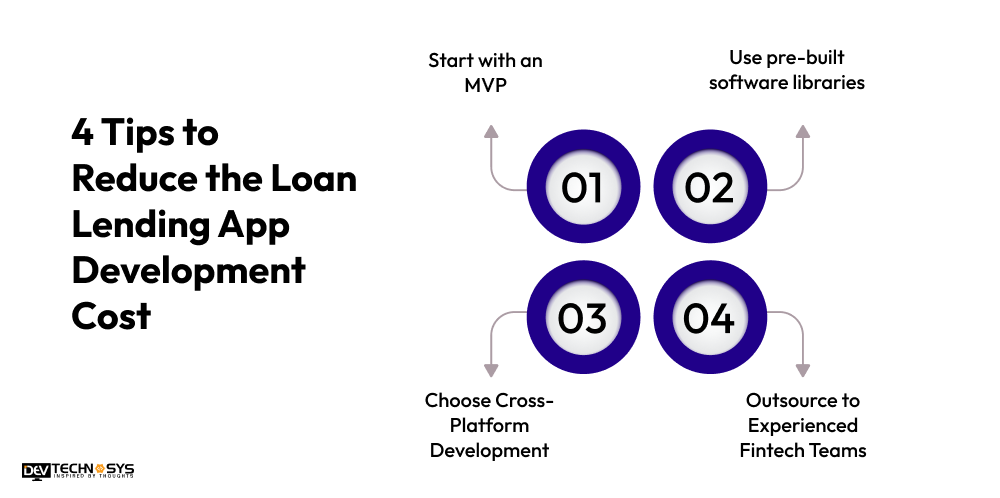
1. Start with an MVP
You’ll want to launch your MVP with just the very basics: user registration, loan application, basic KYC, and loan repayment tracking. Prioritize core functions and do not worry about advanced artificial intelligence or analytics for your first version.
This will help keep the cost, complexity, and time to complete of on-demand app development solutions lower and allow you to confirm that this is a valid business case before you invest in creating an entirely new feature set.
2. Use pre-built software libraries
Instead of building or integrating KYC, payment gateways, credit scoring, and notification functionality yourself, use existing third-party products so that you don’t have to worry about building these features yourself.
This will lower your fintech lending app development cost significantly, as well as decrease infrastructure costs while providing you with dependable and compliant software solutions.
3. Choose Cross-Platform Development
If you decide to create separate native applications for both iOS and Android, you will have to maintain 2 separate codebases. This makes it more expensive and time-consuming to maintain than if you utilize a cross-platform tool like Flutter or React Native.
By leveraging the same code for both platforms, you will significantly lower your iOS and Android app development costs and have much faster development cycles.
4. Outsource to Experienced Fintech Teams
Significantly reduce labor expenses by hiring specialized financial technology software developers or utilizing offshore teams. Technology development has a base level of experience, allowing for lower errors and less rework due to the team’s prior knowledge regarding regulatory requirements, safety, and lending processes. Because of this, firms will also receive an increased quality of an application that is secure and scalable.
Why is Fixing the Project Budget Important?
Establishing a budget is essential for all projects as it sets boundaries on expenditures and provides clear financial guidelines to enable project managers to efficiently utilize resources. A good budget allows the team to plan activities properly, allocate funds accordingly, and avoid overspending on a particular task.
A loan management app development cost creates a framework within which a project manager can make decisions, assess risks, and hold parties accountable.
This is critical because it ensures that a project is aligned with an organization’s strategic goals and creates a level of trust among stakeholders by displaying financial assurance. Which will increase the likelihood of completing the project within the established constraints.
Industry Insights:
As reported by Accenture, advanced data and automation can reduce lending decision cycle times by up to 75% in modern banking systems.
What is the Development Timeline of the Loan Lending App?
The development timeline of the international money transfer application takes around 3 to 6 months. The timeline is based on several major factors, such as the number of premium features, functions, project complexity or size, API integrations, design UI/UX, and many more.
There are many additional elements or reasons that can influence the development time, such as integrating security methods, ongoing updates, and payment system follow-up, and more.
Phase |
Duration |
Key Activities |
| Requirement Analysis | 2–3 weeks | Market research, feature planning, and compliance study |
| UI/UX Design | 3–5 weeks | Wireframes, user interface design, prototype creation |
| Development | 2–4 months | Frontend, backend, database, API integration |
| Integration | 2–4 weeks | KYC, payment gateways, credit scoring APIs |
| Testing & QA | 3–6 weeks | Bug fixing, security testing, performance checks |
| Deployment | 1–2 weeks | App store launch, server setup |
| Maintenance | Ongoing | Updates, security patches, feature upgrades |
5 Monetization Models for Loan Lending Applications
The various ways of making money in loan lending include interest, fees for processing things, fees for penalties, fees for subscriptions, and commission fees from partners. Finding the right combination of these types of income will provide the greatest return on your investment and also help to maintain user trust.
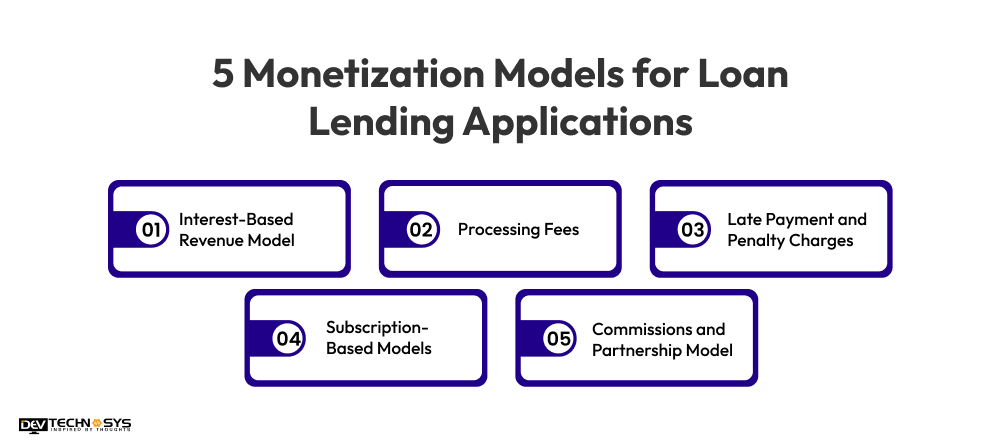
1. Interest-Based Revenue Model
The main strategy for making money is interest from the loans that are distributed via the app. When a loan is given by a lender, there is a percentage charge to the borrower that is above the amount of the loan. This allows for a repeatable, reliable source of income, as both new users and repeat users of the app will be using the app often.
2. Processing Fees
A one-time processing fee charged to users for processing and issuing loans can be charged to a user. This fee is used to cover both operational and administrative costs.
A small fee on each transaction can create a large revenue stream if the app approves a large volume of mobile loan applications. Connect with a professional mobile app development agency to integrate this type of revenue system into your finance application.
3. Late Payment and Penalty Charges
In addition to creating an additional revenue stream, penalties can serve as an incentive to make payments on time. In addition to bringing in new revenue from the late payment penalties, users will see value in the late payment penalties, thus creating additional trust with the organization through transparency.
4. Subscription-Based Models
One way to enhance both the user’s experience and the business’s revenue stream is to provide a subscription-based fee structure that allows users to access higher-quality benefits for a recurring fee through a subscription model.
According to the ewallet app development company, creating a subscription base will create recurring revenue for the business and lead to greater user engagement and loyalty over time.
5. Commissions and Partnership Model
By partnering with banks, insurance companies, and credit unions, apps can make a commission off third-party products and services. This will provide additional revenue to the business and also increase the value of the app by providing additional financial products and services to its customers.
Service Options
What Can We Build or Enhance for Your Lending Business?
Start by stating your loan objectives and specifying the loan management processes you want to refine.
Bespoke Loan Lending Application
A tailored web or mobile loan lending platform with borrowing profiles, loan requests, payment timelines, and account supervision.
Your full lending platformLoan Integration and Automation
Integrate payment gateways, verification facilities, and bank methods. Automate the process of confirming eligibility, giving approval, and sending repayment reminders.
Making loan processes easierLoan app modernization and artificial intelligence
Upgrade legacy lending systems, optimize existing features, and introduce AI-powered credit scoring with secure review workflows.
Transform your lending app
Conclusion
Various factors determine how much it will cost to develop a loan lending application, including its features, platform, security, and integrations, as well as its ongoing maintenance. In addition to the initial build costs of the application, hidden costs and the application’s monetization strategy play a vital role in the application’s long-term success.
Therefore, by properly planning out and budgeting for development and having a good understanding of the main factors influencing P2P lending app development cost.
Consult with Dev Technosys, a loan lending app development company in San Francisco with 15+ years of experience in creating customized fintech solutions at a lower or affordable cost.
Frequently Asked Questions
Find answers to the most common questions related to this article.
The cost to build a loan lending app in Houston, USA, ranges from $4,999 to $25,999, or based on unique project requirements. The project budget can be influenced by major factors, such as features, functions, complexity, backend infrastructure, deployment platforms, tech stacks, API integrations, and security measures.
To create a loan lending app with a simple or MVP-based approach, it usually takes around 1 to 2 months. Developing an AI-powered or fully functional loan management system mainly takes around 2 to 4 months or longer. The development time is based on several factors, such as project complexity, number of features and integrations, and many more.
The loan lending app maintenance cost lies between 10% to 20% of the total custom loan app development cost. It includes various maintenance services, such as fixing bugs or glitches, performance optimization, upgrading to the latest OS version, regular updates, solving security issues, and more.
The cost to hire loan lending app developers in USA is around $15 to $25 per hour; it can fluctuate because of several major factors. It involves developers' living location, experience level, skill set, project complexity & size, onboarding cost, hiring model, and many more.
There are many different types of factors that can highly affect the total loan lending app development cost.
Development team & location
Project complexity & size
Backend infrastructure
Platform choice
Third-party integrations
Security measurements