



-
Step 1: Food Tracking
Users can log inventory or surplus food into the app via POS sync, manual entry, or smart sensors, thereby creating real-time visibility into available items.
-
Step 2: Smart Analysis
The AI system considers expiry dates, demand trends, and storage conditions to forecast waste and recommend timely actions.
-
Step 3: Redistribution Matching
The platform automatically matches surplus food with nearby consumers, NGOs, or buyers based on urgency and location.
-
Step 4: Pickup & Delivery Coordination
Integrated logistics tools plan quick pickups or discounted sales.
-
Step 5: Reporting & Insights
Waste reduction, savings, and sustainability impacts are monitored through dashboards.

Build a Food Waste Management App: An Extensive Guide
Every week, you buy groceries. Every week, some of that food goes bad before you eat it. That banana turns brown. The bread gets moldy. The vegetables sit in your fridge until they're no good anymore.
This happens to everyone. According to the USDA, most families throw away about $1,200 worth of food every year. That's a lot of money!
But there's good news. A simple app on your phone can help fix this problem. Food waste management apps remind you what's in your fridge, tell you when food will expire, and even suggest meals you can make with what you already have.
These apps are becoming super popular because they work. They help you save money and waste less food at the same time.
Want to learn how to build one? Maybe you're a developer with a great idea, or you're just curious about how these apps work. Either way, this guide will show you everything step-by-step on food waste management app development.
Let's dive in!
What is the Food Waste Management App?

A food waste management app is a digital platform that helps businesses and households track surplus food, reduce waste, and redistribute edible items. The best food donation applications incorporate innovative inventory tools, analytics, and donation networks to avoid spoilage, improve efficiency, and encourage sustainable consumption while also supporting environmental and social impact goals.
How Does the Food Management App Work?
Here’s the step-by-step guide on how the food management app works, so if you want to start using the app in 2026:
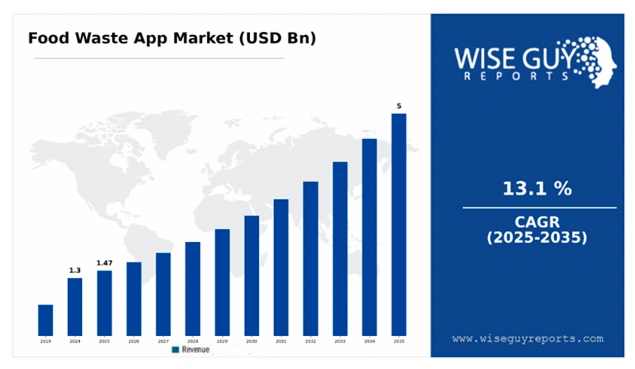
Market Stats on Food Waste Management App
-
According to Wiseguyreport The global food waste app market was valued at around USD 1.3 billion in 2024 and is projected to grow to ~USD 5 billion by 2035 at a CAGR of ~13.1%.
-
WorldWideMarketReports estimates the food waste app market at around USD 1.2 billion in 2026, rising to USD 3.8 billion by 2033 with a 17.5% CAGR.
-
The food waste management software market was valued at about USD 1.5 billion in 2024 and is expected to reach USD 4.2 billion by 2033, growing at around 10.8% CAGR.
-
The broader food waste management market (including services and tech) is expected to grow from approximately USD 78.2 billion in 2025 to ~USD 101.2 billion by 2030 at a ~5.3% CAGR stated by IMARGroup.
-
Some forecasts project that the food waste management system market will reach ~USD 132 billion by 2034, driven by sustainable solutions and technology adoption.
Why Are Food Waste Apps Becoming a Global Necessity?
Food waste apps are becoming a global necessity as cities and businesses seek smarter, data-driven solutions to reduce waste, cut costs, and meet sustainability goals while supporting circular economies worldwide. Here, we have covered more reasons that will make you understand the necessity of food management apps in 2026.
-
Rising Global Food Waste Crisis
Globally, food waste has reached such insane levels that millions of tons are being thrown away every year, while hunger still exists. Food donation apps like Olio build organized redistribution systems, making it easier for businesses and communities to reduce landfill waste and increase food availability.
-
Growing Environmental Pressure
As a major source of greenhouse gas emissions and a driver of climate change, decomposing organic waste is a major offender. Food waste prevention apps not only help keep track of surplus food but also prevent it from being thrown away, redirecting it for other uses. Assisting in the attainment of sustainability goals and reducing the carbon footprint of supply chains.
-
Economic Losses Across Industries
Every year, restaurants, retailers, and households lose billions of dollars due to surplus food that is not properly managed. A food donation app like Karma facilitates forecasting, inventory control, and resale opportunities, helping businesses turn their losses into financial savings and operational efficiency.
-
Shift Toward Responsible Consumer Behavior
More and more consumers nowadays prefer to purchase from brands that reflect their sustainability values. A food waste app in the USA enables both individuals and businesses to be transparent and responsible in their consumption, by increasing brand trust and fostering community-driven environmental accountability.
-
Smart Cities & Policy-Driven Sustainability Goals
Waste reduction has become a top priority for governments and urban planners in their climate action. Food delivery app development solutions help policymakers and planners obtain data-driven insights that result in better policies, improved reporting frameworks, and a sustainable city program supported by real-time analytics.
Who Actually Needs a Food Waste Management App?
Businesses, households, NGOs, and cities worldwide adopt food waste apps to cut losses, improve sustainability, and optimize logistics. Here’s who benefits most and why these platforms are becoming essential in 2026.
-
Restaurants & Cloud Kitchens
Restaurants and cloud kitchens face surplus food production due to fluctuating demand, menu experimentation, and bulk preparation. By engaging with an app to collect leftover food, these players can become smarter about their inventory and operate sustainably without compromising profitability or service quality.
Key Benefits:
- Reduce food wastage.
- Real-time inventory tracking
- Surplus food donation or resale
- Sustainability branding
-
Grocery Stores & Supermarkets
Grocery retailers carry perishable inventory that expires quickly. They thus face financial losses, and their activities also have an environmental impact. A food waste management application is designed to track food shelf life, allowing operators to automate product discounting and efficiently redirect excess stock to minimize food spoilage.
Key Benefits:
- Smarter stock forecasting
- Reduced spoilage losses
- Discount resale channels
- ESG compliance
-
Households & Individual Consumers
Food waste in households is most often due to over-purchasing, poor storage planning, and forgotten leftovers. An innovative food waste monitoring system can be your family assistant. It will help with reminders, meal suggestions, and consumption tracking, gradually building the family’s daily sustainable habits while saving money.
Key Benefits:
- Expiry reminders
- Meal planning suggestions
- Grocery optimization
- Budget savings
-
NGOs & Food Redistribution Organizations
Nonprofits and redistribution networks often struggle to put in place structured systems for connecting donors with communities in need. A food waste reduction platform is invaluable because it simplifies logistics, making coordination easier and enabling surplus food to be safely and timely delivered to communities, thereby achieving the maximum social impact.
Key Benefits:
- Faster food matching
- Logistics coordination
- Volunteer management
- Impact reporting
-
Hotels, Catering Services & Event Companies
Large hospitality and event businesses usually tend to overproduce to be sure that their guests will be satisfied, and this is one of the primary reasons why there is so much waste. A management application can be invaluable in such situations, as it can be used for forecasting whether it will be necessary. These parts of the recipes can be controlled, and redistribution can be managed in a well-structured manner. Operations can be done efficiently, and surplus can be handled responsibly.
Key Benefits:
- Event-based demand forecasting
- Portion optimization
- Waste analytics dashboard
- Donation scheduling
-
Municipalities & Smart Cities
Governments and city administrations need reliable waste data to develop more sustainable policies. A food waste app in the Netherlands features analytics, reporting tools, and community integration to help determine the most effective measures for formulating environmental policies and planning for a long-term healthy environment.
Key Benefits:
- Waste data analytics
- Sustainability reporting
- Community engagement
- Policy planning support
What Does the Food Waste Management App Solve?
A food waste management app solves surplus tracking, smart inventory control, donation logistics, and compliance challenges. It helps businesses and households reduce waste, cut costs, and promote sustainable, regulation-ready food ecosystems. Let's dive more to each of the reasons in depth:
-
Reduces Surplus Food Waste
The food ordering app detects and records surplus food at different levels, including restaurants, households, and retailers. Thus, such food can be redistributed or sold promptly, and hence, no edible food is thrown away unnecessarily.
-
Optimizes Inventory & Stock Management
With real-time inventory monitoring and AI demand prediction, the app can help companies reduce overproduction, spoilage, and operational costs.
-
Streamlines Food Donation & Redistribution
It brings together donors, NGOs, food banks, and consumers to efficiently and safely deliver surplus food to those in need while reducing logistical challenges.
-
Promotes Sustainable Consumer Behavior
To elevate specific consumption and responsible shopping habits on a larger scale, along with eco-friendly practices, homes and businesses. These are informed about waste through household energy analytics and save alert notifications, and they receive recipes based on the ingredients at home.
-
Supports Regulatory & Compliance Needs
To reduce legal and operational risks, the app assists with tracking compliance with food safety standards, producing audit-ready reports, and ensuring that all requirements are met, whether local laws or international sustainability regulations.
How to Build a Food Waste Management App?
Building a food waste management app requires structured planning, expert development, and scalable architecture. Here’s a step-by-step guide covering discovery, design, integration, testing, and deployment for sustainable, compliant solutions.
-
Discovery & Requirement Planning
The initial phase involves a thorough consultation with a food waste management app development company. During this phase, your goals, target users, business model, and technical requirements will be clarified. A team of experts will carry out market research, competitor analysis, and feature mapping in order to come up with a scalable roadmap. Planning well in advance prevents unnecessary spending, minimizes the risks involved in the development process, and ensures the app is ready to meet the operational needs of the real world right from the start.
-
UI/UX Design & Prototype Creation
After completing the strategy, the designers move on to wireframes and interactive prototypes. A mobile app development company Food donation app development with expertise in creating user-friendly dashboards for various stakeholders, such as restaurants, NGOs, and consumers. The main objective is to make it easier for everyone to track food, contribute to food donations, and manage the logistics. With the help of early-stage prototypes, stakeholders can get a glimpse of the workflows, provide their input, and test the usability. It helps to save food waste management application development time and cost.
-
Core Development & System Integration
This phase focuses on the development of the frontend, backend, and database for the restaurant food waste application. The chosen food donation app development team will develop a secure architecture that combines AI forecasting, payment gateways, GPS logistics, and inventory management. APIs by our team in UK will serve as the glue that will bring together the various stakeholders, such as restaurants, charities, and suppliers, into one unified network.
-
Testing, Compliance & Optimization
To achieve their objectives, the professional food donation app development teams use agile methods and break work into milestones. At the same time, they also maintain performance, scalability, and data security standards. To ensure the platform works as intended and there are no bugs that could inconvenience users, a round of testing is conducted. Through test cases, developers determine the performance, safety measures, and compatibility with different devices. Moreover, the regulations on food safety and privacy, along with the standard procedures for secure payments, are being reviewed against the product.
-
Deployment & Post-Launch Support
Having your food waste reduction apps monitored continuously, updated with the latest features, and overhauled periodically cannot be overlooked after launch. Maintenance, analytics tracking, and scalability are among the services the company dedicated to food waste management app development can provide to you. With your ongoing support, your food waste solutions will continue to evolve in line with user behavior, regulatory changes, and business growth.
Real-World Examples of Successful Food Waste Apps
Real-world food waste apps demonstrate how technology reduces surplus, saves money, and promotes sustainability globally. These successful platforms show practical models businesses can follow to build impactful food rescue solutions.
-
Too Good To Go
An app like Too Good To Go connects restaurants, bakeries, and grocery stores with customers who are ready to buy surplus food at lower prices. That app has rescued millions of meals worldwide by turning food that would have gone to waste into low-priced items for consumers.
-
OLIO
OLIO is a local community-sharing app that lets neighbors and businesses share or give away surplus food. By focusing on hyperlocal (very close) redistribution, it helps households reduce waste while deepening community engagement, social interaction, and sustainability awareness.
-
Flashfood
Flashfood works with grocery stores and offers their near-expiry foods at discounted prices to customers through its mobile app.This way, it benefits retailers, consumers, and the environment. Retailers avoid losses, consumers have access to affordable food, and landfill waste is prevented.
-
Karma
If businesses build a food-sharing app like Karma, restaurants and cafes can offer their leftover meals for sale at discounted rates before closing time. The app promotes responsible consumption and helps the business to generate revenue from what would otherwise be thrown away.
-
NoWaste
NoWaste is a user-friendly app devoted to the domestic sphere. It helps consumers by faithfully checking their shopping lists, noting grocery expiration dates, and helping them meal-plan. Thus, it is effective in reducing food waste at home by encouraging people to shop wisely and manage their food supplies efficiently.
Essential Features That Make a Food Waste App Scalable
Scalable food waste apps rely on smart automation, AI forecasting, and real-time coordination. These essential features help restaurants reduce waste, optimize inventory, and efficiently redistribute surplus food while improving operational sustainability.
-
Real-Time Inventory Tracking
The app for food waste restaurants continuously monitors food quantities, expiration dates, and usage patterns across restaurants, retailers, and supply networks. Real-time inventory tracking allows for overstock and spoilage prevention.
-
AI-Based Demand Forecasting
Based on past data and seasonal patterns, AI forecasting can predict demand with great accuracy, enabling businesses to reduce excess production, improve procurement, and keep operations running efficiently.
-
Surplus Food Matching System
Without delay, surplus food is matched to charities or consumers by an automated matching engine, thereby redistributing the remaining edible food in time to be used rather than thrown away.
-
Expiry Date Alerts
A smart notification system helps users remember when food is close to its expiration date, so they can either use it on time, sell it at a discount, or donate it to avoid unnecessary waste.
-
Analytics & Reporting Dashboard
An app to prevent food waste provides a comprehensive, interactive view of waste patterns, cost losses, and sustainability KPIs, thereby facilitating better strategic and operational decisions.
-
Multi-User Role Management
Role-based access management is an efficient way to bring together stakeholders such as restaurants, donors, NGOs, and administrators on a single platform for collaboration without compromising security, while keeping processes transparent and well-organized.
-
Logistics & Pickup Scheduling
The food waste app development solutions include various functions, such as pickup and delivery of food items, which can be scheduled and coordinated through a well-integrated set of tools that ensure minimal waiting time and safe transportation of surplus food products.
-
Payment & Discount Integration
By equipping food waste apps with secure payment gateways, a company can offer discounted surplus sales that not only help businesses recover costs but also attract consumers to buy products close to their expiry date.
Advanced Smart Features Powered by AI & IoT
AI and IoT-driven food waste apps use predictive analytics, smart sensors, and automation to reduce spoilage, optimize redistribution, and improve sustainability, turning surplus management into a data-driven, cost-saving ecosystem.
-
Predictive Waste Analytics
By studying historical trends of consumption and waste disposal, AI systems will be able to efficiently forecast the amount and types of waste that will occur in the future. This will enable organizations to take the necessary preventive measures to reduce surplus beforehand.
-
Smart Shelf-Life Monitoring Sensors
IoT devices equipped with temperature, humidity, and other environmental sensors continuously monitor storage conditions and raise alarms locally or remotely when deviations from the norm occur, helping maintain food safety.
-
Dynamic Pricing Automation
A food waste delivery app automatically adjusts the prices of products nearing their expiry date, maximizing revenue and minimizing losses while reducing waste.
-
Automated Donation Matching
Machine learning automatically finds the best match between excess food and local charities, considering quantity, urgency, and logistics to maximize redistribution efficiency.
-
Computer Vision Food Recognition
With AI-powered image recognition, food and portion sizes are identified, enabling accurate inventory updates without manual data entry.
-
Smart Route Optimization
IoT logistics systems determine the best delivery routes asynchronously, enabling redistribution operations to use less fuel and experience fewer delays and lower carbon emissions.
-
Voice-Activated Inventory Logging
The food waste tracker app helps staff make stock update entries without using their hands, reducing mistakes and increasing operational speed, even when the kitchen is crowded.
-
Predictive Maintenance for Storage Equipment
Small changes in the refrigeration system that can lead to food spoilage on a large scale are spotted very early by IoT sensors.
How Technology Is Reshaping Sustainable Food Ecosystems?
Technology is transforming sustainable food ecosystems through AI, IoT, blockchain, and smart apps that reduce waste, improve transparency, and optimize distribution answering how digital innovation drives global, eco-friendly food systems.
-
AI-Powered Demand Forecasting
Artificial intelligence helps restaurants, retailers, and suppliers forecast consumption patterns with greater accuracy. Without a doubt, businesses analyze historical sales and seasonal trends to reduce overproduction, improve purchasing decisions, and prevent unnecessary food waste on a large scale.
-
Smart Inventory & IoT Monitoring
IoT-enabled sensors, along with innovative inventory systems, track temperature, shelf life, and stock movement, simultaneously exposing hidden waste in these fruits of technology. This visibility into perishables' condition reduces spoilage, improves storage efficiency, and enhances overall food safety in supply chains and distribution networks.
-
Data-Driven Redistribution Networks
Through digital platforms, surplus foods from different sources can be linked to NGOs, charities, and consumers in a flash. Live-matching algorithms make logistics easier, so edible food is sent to communities first rather than going to landfills or being disposed of.
-
Blockchain for Transparent Supply Chains
By recording the entire food journey, blockchain technology enhances traceability. With the transparency enabled by technology, businesses can reduce fraudulent activity, account for their actions, and thus earn their customers' trust through ethical, sustainable sourcing practices.
-
Consumer-Focused Smart Apps
Mobile apps enable people to navigate food waste by providing expiry reminders, recipe suggestions, and consumption insights. Equipped with such tools at their convenience, people are encouraged to purchase only what they really need, thus generating less waste while becoming more aware of their personal role in sustainable food behaviors.
What is the Right Business Model for a Food Waste Platform?
Choosing the right food waste platform model depends on revenue goals, scalability, and impact. Here’s a clear breakdown of profitable, sustainable models businesses use to reduce waste while generating measurable value.
-
Hybrid Marketplace Model
A hybrid model can use the sale of discounted surplus food alongside coordinated food donation. By doing so, businesses can find innovative ways to recover their costs partially, consumers can access affordable meals, and NGOs can be supported to a greater extent. This set of interactions and transactions forms a cycle that mitigates losses and generates profit, serving as a seed for social impact through food donation and thus tightly integrating social and business objectives.
-
Subscription-Based SaaS Model
Restaurants, retailers, and supply partners pay a recurring subscription fee to access an analytics dashboard, forecast toolset, and compliance tracker. This steady income model not only funds platform evolution but also helps enterprises minimize waste and enhance operational efficiency.
-
Impact-Driven Partnership Model
The revenue stream is derived from collaborations with Environmental, Social, and Governance (ESG) partners, government grants, and corporate sponsorships centered on sustainability initiatives. Through the platform, organizations can financially support redistribution programs, enabling monetization without imposing additional costs on small businesses or vulnerable communities.
How Does Food Waste Management App Integration Work With Restaurants, NGOs, & Supply Chains?
Food waste management apps integrate restaurants, NGOs, and supply chains through real-time tracking, AI matching, logistics automation, and compliance tools to reduce surplus, enable donations, and streamline safe redistribution efficiently.
-
Restaurant Inventory Sync
The waste food management & donation app automatically tracks surplus food, sales patterns, and expiry dates for accurate redistribution or resale, as it links directly to the restaurant's POS systems or inventory software.
-
Real-Time Donation Alerts
Restaurants could notify NGOs or food banks instantly when they have surplus food so the latter can make a timely pickup, minimizing food spoilage.
-
NGO Profile & Matching System
The food waste prevention software tracks verified, detailed NGO profiles that capture capacity, location, and demand preferences, thereby facilitating AI-enabled food matching to the proper organization.
-
Supply Chain Coordination
The platform works in concert with suppliers, warehouses, and logistics providers to monitor storage conditions, inventory movement, and delivery schedules, thereby reducing food loss throughout the supply chain.
-
Automated Pickup & Delivery Scheduling
Restaurants and NGOs can arrange pickups only through the app. The smart route optimization is designed to ensure that transport is fast, cost-effective, and environmentally friendly.
-
Data Analytics & Reporting
By being integrated, restaurants and supply chain partners can monitor waste patterns, track the impact of donations, and generate reports for sustainability compliance or internal decision-making.
-
Payment & Incentive System
Through a restaurant, consumers or NGOs could be offered discounted surplus items. App functionalities include managing transactions, donations, and credits, and it also creates a transparent environment that encourages participation.
-
Feedback & Quality Assurance Loop
NGOs and supply chain partners control the entire process for providing feedback on food quality and delivery efficiency, so the restaurant can continually improve portioning, storage, and distribution.
-
Multi-User Collaboration
It is made possible by a platform that enables restaurants, NGOs, and supply chain workers to securely communicate, exchange information, and track their tasks and the entire accountability chain in food redistribution.
-
Regulatory & Safety Compliance
Integration ensures that all stakeholders comply with food safety, hygiene, and legal regulations. Additionally, the system maintains detailed records of all operations for audit purposes and automatically generates compliance reports.
How Much Does it Cost to Build a Food Waste Management App?
Food waste management app development costs vary based on multiple factors, but the basic MVP could cost $8000, while a fully featured platform for enterprise-level use can cost $30,000. Here are 5 main factors that explain the food donation app development cost:
-
Development Team Composition
The type of experts you engage has an immediate impact on the cost to build a food waste management app. A small developer group (1–2 developers plus a designer) is more economical. Still, it can be slower to deliver. A complete team (project manager, UI/UX designer, frontend & backend developers, QA, DevOps) guarantees quality and scalability, increasing the food management app development cost.
-
Geographic Location of the Team
Programmer rates depend on the country. For example, programmers from North America or Western Europe charge a higher hourly rate than those from Eastern Europe, Latin America, or South Asia. Outsourcing to offshore teams can reduce costs, but it may also require more robust project management.
-
App Complexity & Feature Set
Basic apps that offer only inventory tracking and notifications are more budget-friendly. However, incorporating features like AI for demand prediction, cameras for live inventory, GPS-enabled logistics, secure payments, and a dashboard for all stakeholders exponentially increases the waste management software development cost.
-
Platform Choice (iOS, Android, Web)
It is more expensive to develop iOS, Android, and a web dashboard than to develop an app on just one platform. Using cross-platform frameworks (React Native, Flutter) keeps initial investment down while the product has a broad reach. On the other hand, fully native apps frequently cost more but deliver top performance.
-
Third-Party Integrations & Backend Infrastructure
Moreover, the cost to develop a mobile app rises with integrations such as POS systems, payment gateways, mapping and route-optimization APIs, AI/ML services, cloud hosting, and real-time databases. Scalable backend infrastructure and security compliance also contribute to the increased final food waste management app development cost.
| App Type | Estimated Cost |
|---|---|
| Basic MVP (core features) | $8,000 – $16,000 |
| Mid-Level App (analytics, integrations) | $16,000 – $30,000 |
| Advanced Platform (AI, IoT, multi-role dashboards) | $30,000+ |
How Food Waste Management App Makes Money: Without Compromising Social Impact
This section explains how food waste management apps generate revenue using ethical, scalable monetization models balancing profitability, sustainability, and social impact while answering how anti-food-waste platforms stay financially viable.
-
Commission on Discounted Surplus Sales
The anti-food-waste app development solution is a bit greedy, as it earns a commission whenever restaurants or retailers sell surplus food at discounted prices. However, this model not only allows the app to earn money but also keeps food affordable and prevents wastage.
-
Subscription Plans for Businesses
Restaurants, supermarkets, and hotels pay monthly subscription fees for advanced analytics, forecasting tools, and waste-tracking dashboards that help them reduce operational losses and improve sustainability performance.
-
Logistics & Service Fees
Platforms may impose a small coordination or delivery fee for pickup and redistribution services. The fees help cover the platform's operating costs while also facilitating the effective transfer of food to NGOs and consumers.
-
ESG & Corporate Partnerships
Through the app, brands can invest in sustainability partnerships and sponsorship programs. According to the software development services provider, the platform can scale its social mission by funding redistribution initiatives as part of companies' ESG commitments.
-
Data Insights & Reporting Services
The app could offer its aggregated, anonymized, non-personally identifiable waste data to cities, research institutions, and enterprises as sustainability intelligence. This is a way to finance the platform without exploiting users or compromising ethics.
Tech Stack Utilized for High-Performance Food Waste Management App
| Layer / Module | Technology / Tools |
|---|---|
| Frontend | React Native / Flutter / Angular |
| Backend | Node.js / Django / Ruby on Rails |
| Database | PostgreSQL / MongoDB / MySQL |
| Cloud Hosting / Infrastructure | AWS / Google Cloud / Azure |
| AI / Machine Learning | TensorFlow / PyTorch / Scikit-learn |
| IoT Integration | Raspberry Pi / Arduino / AWS IoT / Google Cloud IoT |
| Payment Gateway | Stripe / PayPal / Razorpay |
| Push Notifications / Messaging | Firebase Cloud Messaging / OneSignal |
| Mapping & Route Optimization | Google Maps API / Mapbox / OpenStreetMap |
| Analytics & Reporting | Tableau / Power BI / Google Analytics / Mixpanel |
| Security & Compliance | OAuth 2.0 / JWT / SSL / GDPR Compliance |
| CI/CD / DevOps | Jenkins / GitHub Actions / Docker / Kubernetes |
Final Thoughts: Building a Profitable App With a Purpose
Turning your food waste management app idea into a reality is quite a matter for an eco-friendly initiative. Besides the environmental benefits, social engagement, waste reduction, and cost savings, the advantages are definitely quantifiable and measurable. Whatever its features, the app will certainly be able to revolutionize the way community food management is used if combined with smart technologies and user-friendly interfaces.
If you wish to build your brand around sustainability and lead the pack, go ahead and contact a food donation app development company for a consultation on developing your eco-friendly food waste application without a hitch.
People Most Searched Questions!
-
Why Is Food Waste Management Important For Businesses?
Reducing food waste lowers costs, streamlines operations, and creates a more sustainable image for the brand. Moreover, food businesses can carry out social programs through responsible food waste redistribution.
-
How Can A Food Waste App Support Sustainability Goals?
The app monitors the excess food and delivers valuable data, facilitating donations and redistribution. In this way, food waste sent to landfills is reduced, carbon emissions are reduced, and the company’s image is enhanced through environmental responsibility.
-
Can A Food Waste App Integrate With Existing Systems?
Absolutely! The latest applications can be effortlessly synchronized with inventory, POS, or ERP systems, ensuring seamless data exchange. By integrating, the whole process can be made more efficient, with less manual work, supporting smart decisions and initiatives in food management.
-
How Long Does It Take To Create a Food Waste Management App?
To create a food waste management app can take up to three months. In contrast, a complex project with AI may need a complete 6-to-9-month redo.
-
How Much Does It Cost To Develop a Food Waste Management App?
The cost to develop a food waste management app depends mainly on the features included, the platform on which it is launched, and the extent of AI integration. A strong app generally costs between $8,000 and $30,000, depending on the level of difficulty, scalability, and the number of third-party integrations.