










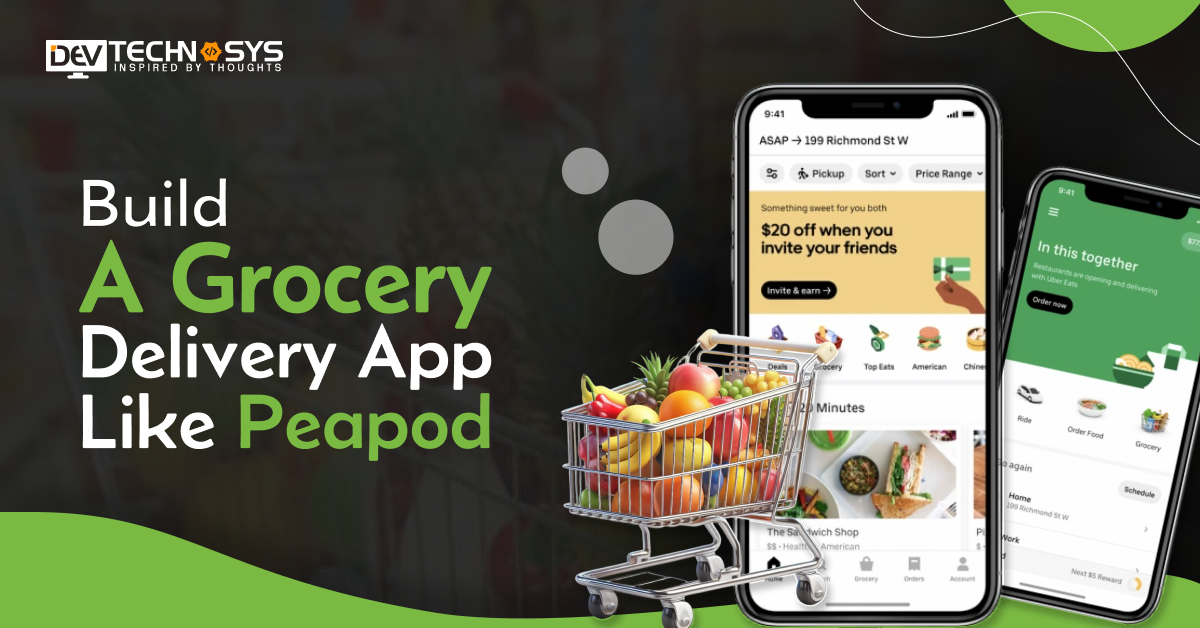
Want to buy groceries without getting up from your couch? It is completely changed the way we do our weekly shopping thanks to Peapod. But what if you build a grocery delivery app like Peapod that fit your needs and the needs of the people in your area? Well that’s great!
The market for grocery delivery will grow at a rate of 11.81% per year. It is going to get to $1,347 billion by 2029. Does this make you want to build a grocery delivery app like Peapod?
If so, read this blog all the way through. It will go over the steps, costs, features, and other parts of grocery delivery app development solution.
So, let’s begin!
What is Peapod App?
Peapod is an app for grocery delivery that lets people use their phones to easily buy groceries from home. It is one of the oldest online grocery stores, and many newcomers to the business look up to it and set examples. Peapod is different from most grocery delivery apps because it owns its own inventory.
This means it can pass on the best prices to its customers and avoid extra moving costs. So, if you are impressed with the idea to build a grocery delivery app like Peapod, it is best to first consult with an Android app development company about your app idea.
Future Predictions and Projections of Grocery Delivery Market
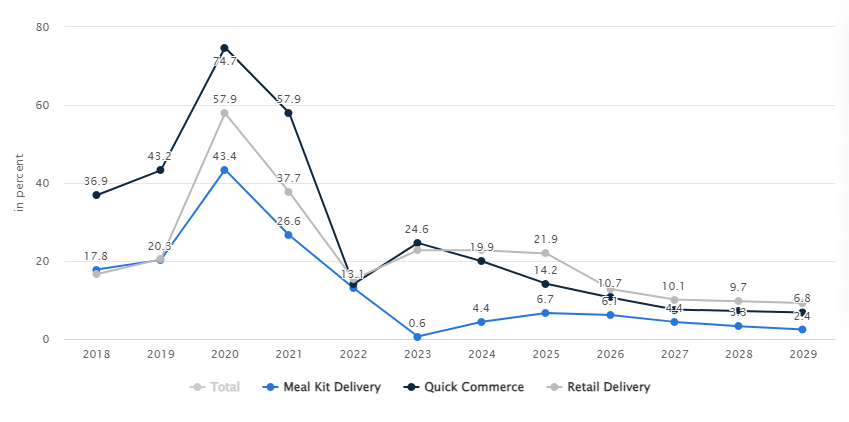
Source: Statista
- The market for cheap food delivery apps will be worth an amazing $770.90bn by 2029 if everything goes as planned.
- This market is also expected to grow at a rate of 11.81% by 2029 and it is likely to be worth $1,347 billion.
- If everything goes as planned, Retail Delivery will make up the biggest part of this market, worth $586.80bn.
Steps To Build a Grocery Delivery App Like Peapod
Do you want to develop an app like Peapod? Well, it requires a thorough planning and expertise for an amazing grocery delivery app development solution. Below is the step-by-step process to build a grocery delivery app like Peapod. So, let’s have a look at mobile app development process:
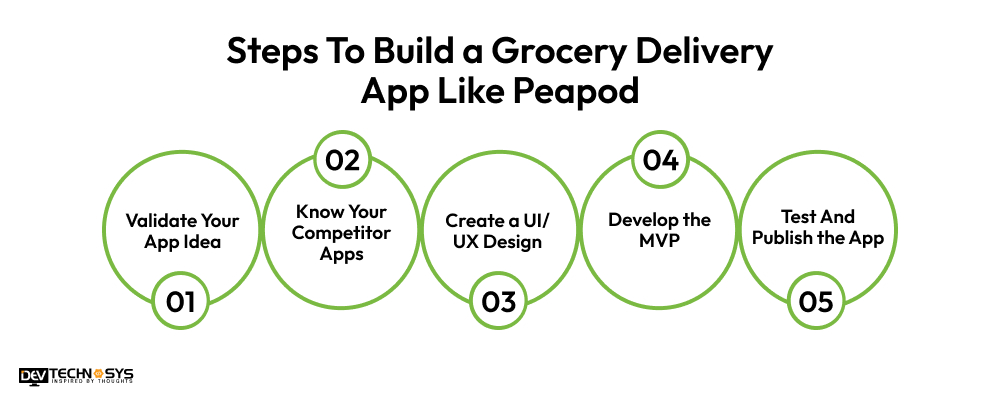
1. Validate Your App Idea
Before you start the Peapod app development, it is essential to validate your grocery delivery app idea with an IT consulting services provider. You need to check to see if people really want your possible app idea. Also, you need to study the market to find out what users want, what bothers them, and who your competitors are. This will help you build a grocery delivery app like Peapod.
2. Know Your Competitor Apps
Once you know your idea is good, you need to look at the apps that your competitors have made. Be different in the market by learning about their strengths and weaknesses. For example, you can do a SWOT analysis and find out how they make money.
You should also check each and every part of the instant grocery delivery apps to make sure people will trust yours. After you have looked at your competitors, it is time to make the user interface.
3. Create a UI/UX Design
Create a wireframe for an app that finds grocery delivery services like Peapod with your grocery delivery app development company. Do not forget to keep the user interface, icons, screen layouts, and other parts of it simple and easy to use as you work on them.
It will be much worse for users in general if the UI is crowded. To build a grocery delivery app like Peapod, it is best to hire designers who can sketch a lot of different kinds of things.
4. Develop the MVP
If you want to build a grocery delivery app like Peapod, you will need to hire mobile app developers once the design work is done. Starting with an MVP app allows you to make changes to the app quickly and without wasting time.
With the help of your team, build both the server and the front end. You and the best grocery delivery app development company must work together at the same time to make sure the growth goes well. After you have made your MVP, it is time to test it.
5. Test And Publish the App
You can now start testing your grocery delivery app to find any bugs or other problems. Unit testing, beta testing, and alpha testing are some of the different types of testing that the testers do. After your grocery store delivery app passes all of its tests, you can put it on the app stores. Also, you can promote the grocery delivery app, and do not forget to keep it up to date.
Free App Idea Reality Check: Let's Stress-Test Your Concept
Share your app idea with us. Within 3 business days, we'll uncover UX gaps, feature opportunities, and potential development challenges, so you can build with confidence. No strings attached.
Must-have Features To Develop a Grocery Delivery App Like Peapod
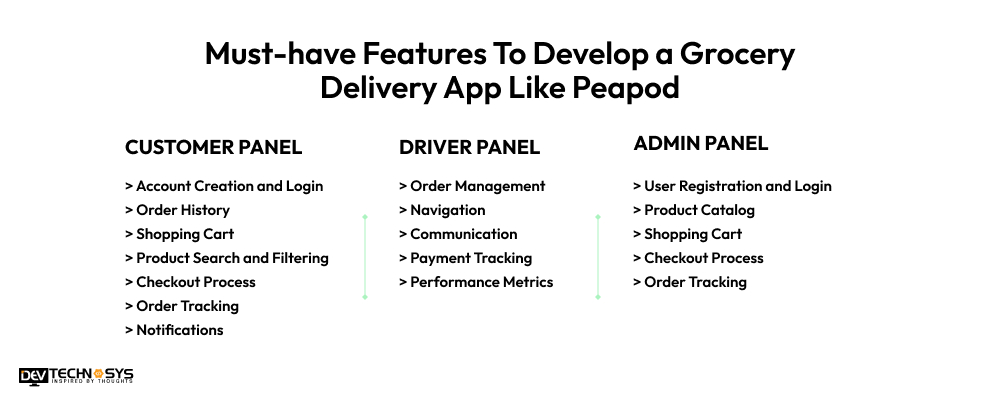
Features is essential in making your grocery delivery app successful. So, here are the best features our mobile app development expert mentioned that you should integrate when you build a grocery delivery app like Peapod.
1. Customer Panel
Feature |
Description |
| Account Creation and Login | Simple options for signing up and logging in, possibly with social media integration. |
| Order History | A full list of past orders, with status, date, and items being shown. |
| Shopping Cart | You can add and remove items from the virtual basket, figure out the total cost, and apply discounts. |
| Product Search and Filtering | Filters for categories, brands, dietary needs, and more make the search function work well. |
| Checkout Process | Multiple payment gateway methods (cards, digital wallets) are accepted, and the checkout process is safe and easy. |
| Order Tracking | Updates on the status of your order in real time, including an estimate of when and where it will arrive. |
| Notifications | Get updates on your orders, deliveries, sales, and new grocery app development features with alerts. |
2. Driver Panel
Feature |
Description |
| Order Management | You can see, accept, or turn down orders. See how your order is doing and when it will be delivered. |
| Navigation | Real-time GPS directions to where customers are. Make routes more efficient for delivery. |
| Communication | When you build a delivery service app, chat with or call customers to get answers or information. |
| Payment Tracking | When you build a grocery delivery app like Peapod, check on the payment status and any problems. |
| Performance Metrics | Keep track of the rate of completion, speed of delivery, and customer satisfaction ratings. |
3. Admin Panel
Feature |
Description |
| User Registration and Login | Users can make accounts and safely log in. |
| Product Catalog | Shows many grocery items, with their categories, brands, and prices. |
| Shopping Cart | In an app like Blinkit, users can view, add, and remove items they want to buy. |
| Checkout Process | Makes the checkout process easy by giving you choices for payment, delivery address, and delivery times. |
| Order Tracking | Users can keep track of their orders from the time they are placed until they are delivered. |

Best Grocery Delivery Apps Like Peapod
Before you build a grocery delivery app like Peapod, you must be well-versed of your competitor apps. It helps you in knowing their strengths and weaknesses. So, let’s have a look at the best grocery delivery apps in the market.
Top Grocery Delivery Apps Like Peapod |
Available Platform |
Downloads |
Ratings |
| Zepto | Android | iOS | 50M+ | 4.6 |
| Blinkit | Android | iOS | 50M+ | 4.3 |
| Getir | Android | iOS | 10M+ | 4.6 |
| Publix | Android | iOS | 1M+ | 4.8 |
| Kibsons | Android | iOS | 1M+ | 4.5 |
Cost To Build A Grocery Delivery App Like Peapod
The total cost to build a grocery delivery app like Peapod will depend on a lot of things, like the platform, the tech stack, the list of features, the cost of the grocery delivery app developer, and more. These days, cost to build a grocery delivery app like Peapod will be around $30,000 to $150,000.
This lower limit is usually for ready-made apps, where features are already built in and there is not much room for customization. But custom apps cost more because all of their features are made and added based on what the client wants. Let’s have a look at the table of cost to build a grocery delivery app.
App Complexity |
Estimated Development Cost |
Typical Scope |
|---|---|---|
| Basic Grocery Delivery App | $30,000 – $50,000 | Customer app, grocery catalog, search & filters, cart, checkout, basic payment integration, order tracking, push notifications, and admin panel |
| Mid-Level Grocery Delivery App | $50,000 – $90,000 | Everything in Basic + multiple stores, delivery scheduling, coupons, multiple payment options, driver app, real-time order tracking, ratings & reviews, inventory management, and analytics |
| Advanced Grocery Delivery App | $90,000 – $150,000 | Everything in Mid-Level + AI-powered recommendations, personalized offers, advanced inventory synchronization, route optimization, real-time delivery management, loyalty programs, subscription options, and advanced analytics |
| Enterprise-Level App Like Peapod | $150,000+ | Multi-store/multi-region operations, sophisticated logistics, AI/ML capabilities, scalable cloud architecture, automated inventory management, advanced fraud prevention, third-party integrations, enterprise analytics, and high-traffic optimization |
Note: This is simply a cost estimate. The final price depends on the discussion of the project with our project manager.
Besides, you can measure the Peapod app development cost with the below given formula:
Total Peapod App Development Cost = Developers Hourly Rate * Development Time
Now that you know the grocery app delivery development cost, it is time to share your idea with a leading mobile app development company. Now is a great time to start a grocery store business. If you keep waiting for a better time, someone else might find a better way to do things, and your idea might become useless over time.
Factors Affecting Grocery Delivery App Development Cost
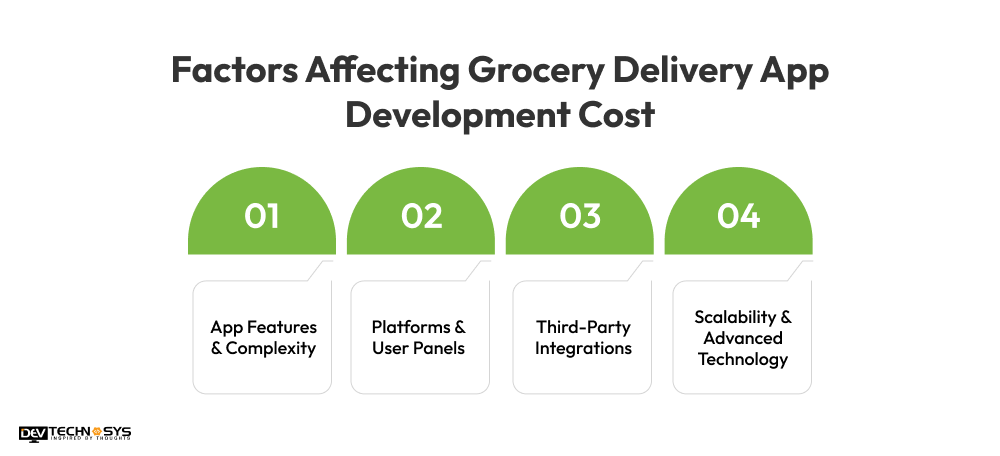
Businesses might wonder whether the total project budget is determined solely by grocery delivery app features, but app complexity, platform choice, third-party integrations, and security also add up. Understanding these cost drivers helps businesses to plan a long-term investment strategy.
Cost Factor |
Estimated Cost (USD) |
What Impacts the Cost |
| App Features & Complexity | $30,000–$60,000 | Product catalog, search, cart, checkout, delivery scheduling, substitutions, loyalty, subscriptions, AI recommendations, etc. |
| Platforms & User Panels | $40,000–$80,000 | Customer app, delivery partner app, store/vendor panel, and admin dashboard increase development effort. |
| Third-Party Integrations | $40,000–$90,000 | Payment gateways, maps/GPS, POS, inventory, CRM, notifications, analytics, and shipping/logistics APIs. |
| Scalability & Advanced Technology | $80,000–$150,000+ | Real-time inventory sync, route optimization, AI personalization, cloud infrastructure, multi-store support, security, and high-volume order processing. |
Planning a Grocery Project?
Get a tailored development cost estimate in a few simple steps.
- 3 quick steps
- 100% free
- Reply in 1 business day
2 Minutes Read
How to Monetize a Grocery Delivery App?
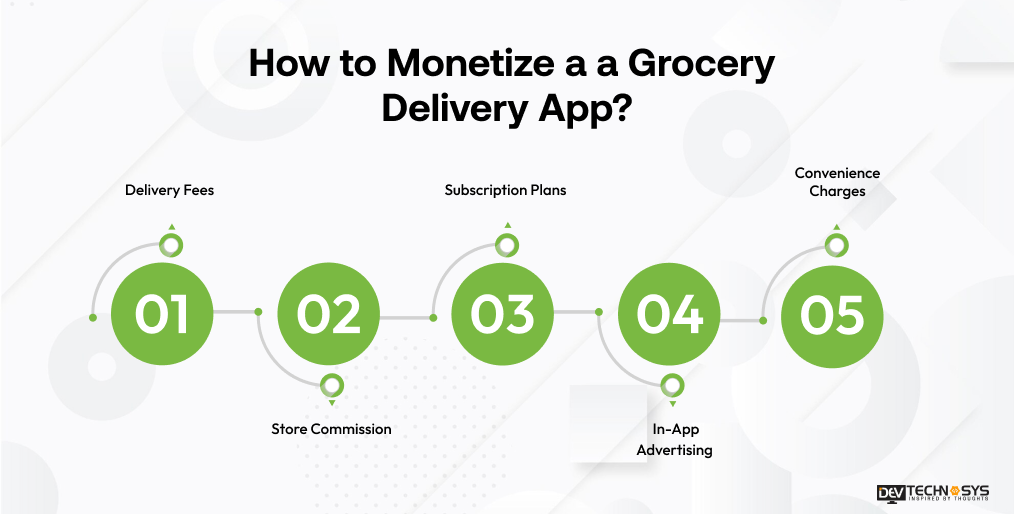
The main purpose of a U.S. business should be to earn recurring revenue from the grocery app. The growing importance of quick commerce and a mobile-first approach has influenced businesses to invest in building a scalable mobile app. A business can either partner with a CMMI Level 3-certified company or hire developers to work strategically on a project. Below are some monetization models businesses can implement to increase revenue.
1. Delivery Fees
This is the most common method to earn recurring revenue. For every delivery, businesses can charge a certain fee. This depends on order value, delivery distance, and time slot. Also, businesses can set a fee based on a minimum order value to earn good delivery fees.
2. Store Commission
Growing businesses or enterprises can charge a commission for a marketplace with multiple branches. The amount can be based on the store agreements. The commission has to be charged on every completed order.
3. Subscription Plans
Most customers prefer to buy a premium plan to avoid delivery charges and to gain access to priority delivery slots. Subscription models encourage repeat purchases, helping businesses to generate better revenue.
4. In-App Advertising
It is important to showcase more products/services in an ad within the grocery delivery application to encourage customers to purchase them. This is an additional revenue stream for growing businesses, and even startups can use this strategy.
5. Convenience Charges
Last but not least, the best option is to add charges at delivery. Most customers prefer express or late-night delivery, which businesses can charge a fee for. This model is even helpful to earn money during peak shopping hours.
Why is It Important To Fix A Budget For Your Project?
Now you are well-versed with the cost to build an app like Peapod, it is crucial to set a budget before investing in grocery delivery app development. Thus, before you jump to the Peapod mobile app development, let’s get to know some essential factors that helps you in setting the budget explained by an on demand app development company.
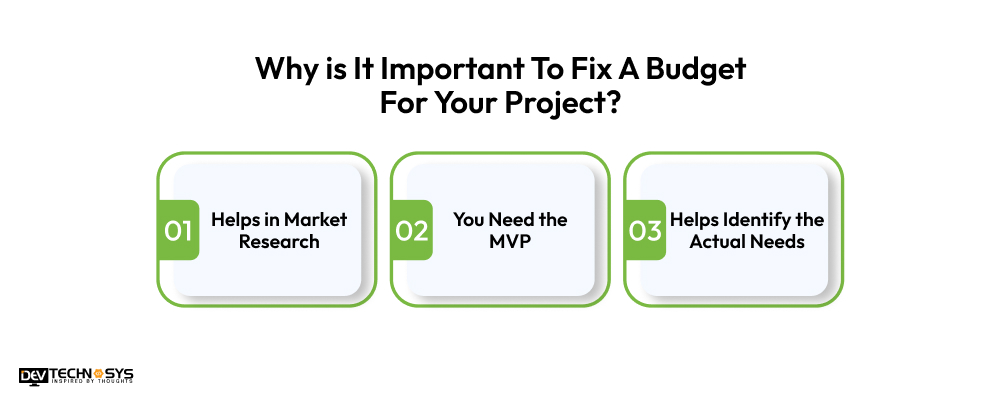
1. Helps in Market Research
The moment you think about your budget, you have to go out and do a lot of research on the market to find out what the going rates are.
2. You Need the MVP
That meeting with the investors will only happen if you have a minimum viable product. To know how much and how long an MVP will take, you need to have a budget.
3. Helps Identify the Actual Needs
Setting a budget for your Peapod app development helps you think about what the end users want, so you can give them what they need right now. This will make it easy for you to understand what features your app like Getir or Peapod needs and help you make the right choices.
Compliance Requirements of a Grocery Delivery App
The biggest mistake most businesses make is ignoring security best practices and compliance requirements. This part must be included in the architecture to protect business information and user data. Applications like grocery apps might experience intrusion activity due to the large volume of data they process.
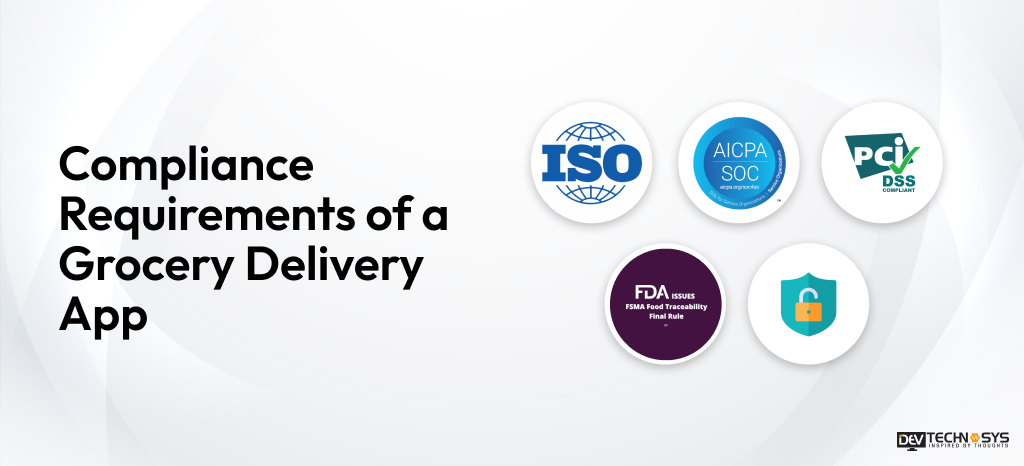
1. ISO
ISO is a framework to establish an Information Security Management System for a grocery delivery platform. This helps to identify security risks over the network. Businesses can then work on vulnerabilities and secure the system for the future.
2. SOC 2
If a business is working on cloud-based grocery applications, then SOC 2 is implemented. Since multiple users access the network, data might be accessed by unauthorized users.
3. PCI DSS
Some businesses include PCI DSS as part of grocery delivery app maintenance costs because it is required to secure the cardholder data. This compliance hides the sensitive information from unauthorized users.
4. FSMA Food Traceability
This rule was created by the U.S. grocery department to maintain the quality of the products sold by the particular seller. Following these rules means that a business has credibility to manage a large customer base.
5. Security Best Practices
API security, data encryption, role-based access control, and incident response procedures are among the measures developers implement to protect the application.
Let’s Create a Grocery Delivery App Like Peapod!
Now you understand why grocery delivery online is so popular in the digital world. You should hire an app development company to make your app if you want build a grocery delivery app like Peapod.
It would let you focus on running your business instead of having to worry about writing the code yourself. Dev Technosys’s mobile app development company has already made grocery delivery apps for a lot of different companies. We can help you keep the cost of your grocery delivery app low.
Frequently Asked Questions
Find answers to the most common questions related to this article.
The cost to make a grocery delivery app like Peapod is not always the same. It keeps on changing with different factors. Generally, the cost of developing a Peapod app is between $30,000 and $150,000+.
The time to build a grocery delivery app like Peapod is between 2-6 months depending on your project requirements.
The online grocery app development benefits are mentioned below:
Enhanced customer reach
Boost profit and sales
Cost-effective solution
Enhanced user engagement
To create a grocery delivery app like Peapod, you need to follow the below development steps:
Perform market research
Know your competitor apps
Create a feature list
Design UI/UX
Develop the app’s backend
Test and publish
You can make money from an app like Zepto or Peapod in the following ways:
In-app purchase
In-app advertisement
Subscription model
Sponsorship model
Freemium model