



















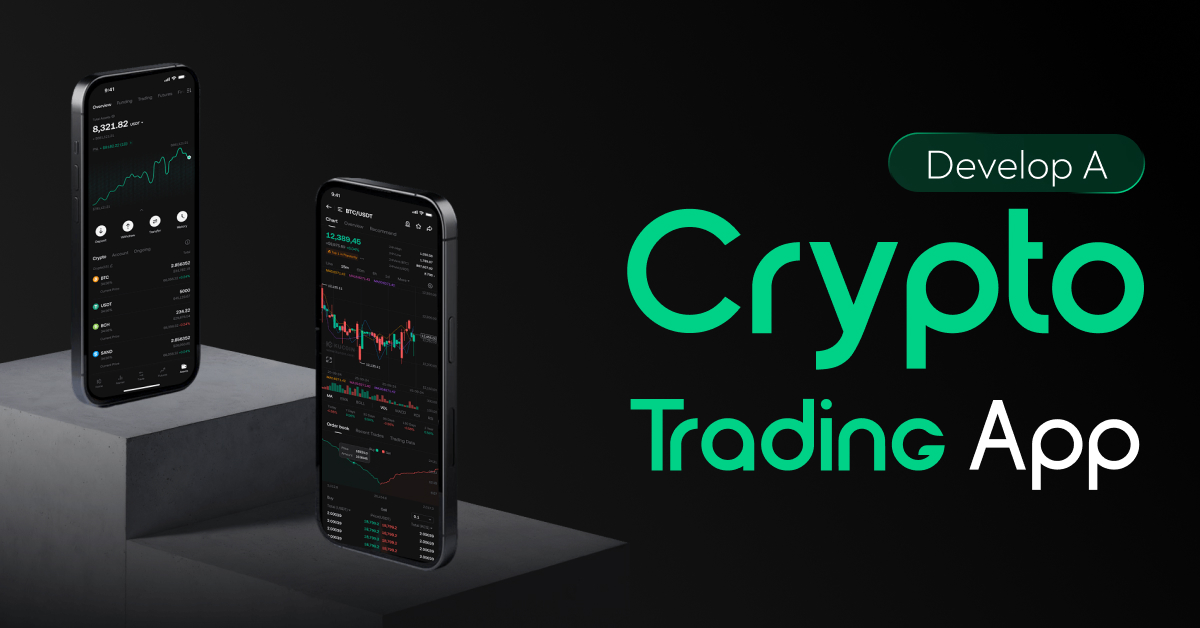
Getting involved in one of the fastest-growing digital markets in the world starts with developing a cryptocurrency trading application. The increased interest in trading cryptocurrencies has created a need for fast, user-friendly, and safe digital blockchain trading platforms.
Building a trading application takes more than just coding, though. Users need a digital platform that provides a sense of trust and confidence in the ability to safely complete transactions and manage digital assets.
“With a multi‑billion dollar market capitalization, crypto is here to stay.” – Ritchie Torres
Users depend on polished interfaces and comprehensive security systems, and every single feature is important to the overall user experience.
In this blog, we will provide detailed information about how to develop a crypto trading app and how it can be beneficial for entrepreneurs.
Scroll More!
Global Market Statistics of Crypto Trading Applications
- The worldwide crypto trading market is valued at around $54.1 billion in 2025; it is projected to increase to around $200.5 billion by the end of 2035.
- As per the segment-wise, the we-based secure crypto trading platforms hold the revenue share around 58.0% in 2025.
- North America is one of the highest revenue-generating regions in the crypto trading market in 2024, expected to raise in the upcoming years.
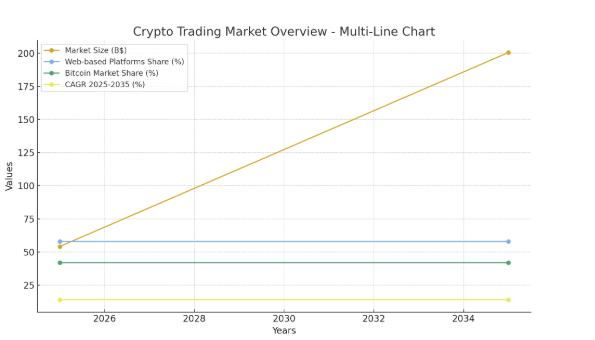
- The Bitcoin segment dominates the crypto trading industry by holding a market share of around 42.0% in 2025.
- According to the global market, the cryptocurrency trading apps market is expected to increase with a CAGR of 14.0% from 2025 to 2035.
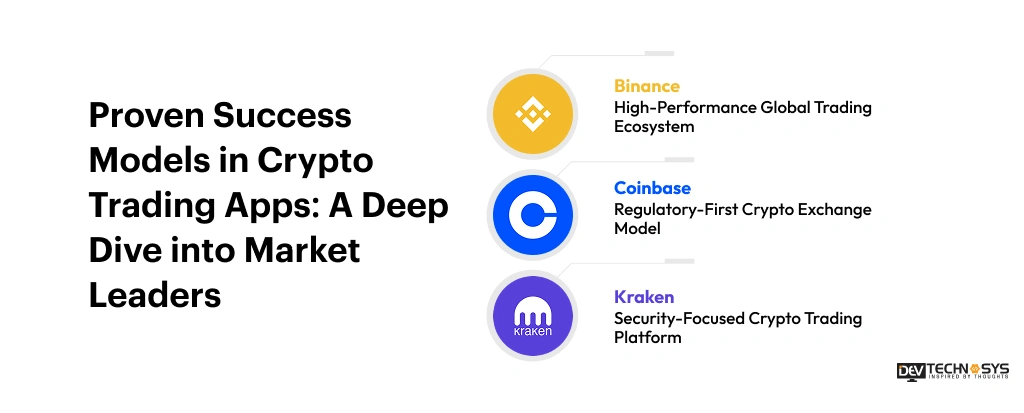
Proven Success Models in Crypto Trading Apps: A Deep Dive into Market Leaders
Understanding the leading, real-world example of crypto exchange and crypto arbitrage bot development is necessary. It helps newcomers to validate architecture decision-making, money-making strategies, and scalability approaches. We have explained some leading, real-world crypto trading apps as a benchmark for modern crypto exchange app development.
1. Binance – High-Performance Global Trading Ecosystem
Binance is one of the most influential crypto exchange platforms known globally. It offers high liquidity, fast trading infrastructure, and a multi-product ecosystem. It also offers futures, staking, and launchpad services.
Aspect |
Insight |
| Market Position | Largest global crypto exchange by trading volume |
| Core Strength | High-speed trading engine with deep liquidity |
| Key Model | Multi-revenue ecosystem (spot, futures, staking, launchpad) |
| Insight | Demonstrates scalability and ultra-low latency architecture |
2. Coinbase – Regulatory-First Crypto Exchange Model
Coinbase is a US-based cryptocurrency trading app development that focuses on compliance-first trading. It offers a secure platform for retail and institutional investors. It supports a broad range of cryptocurrencies, ensuring user asset protection.
Aspect |
Insight |
| Market Position | Leading US-based regulated crypto exchange |
| Core Strength | Strong compliance and institutional trust |
| Key Model | Subscription + transaction fee-based revenue |
| Insight | Shows the importance of licensing, KYC/AML compliance |
3. Kraken – Security-Focused Crypto Trading Platform
Kraken is among the most popular long-standing exchanges of all time. It is recognized for offering strong security architecture, advanced trading tools, and institutional-grade reliability. It even provides margin trading, futures, and staking services.
Aspect |
Insight |
| Market Position | Established global exchange with a strong reputation |
| Core Strength | Advanced security infrastructure |
| Key Model | Spot, margin, futures, staking services |
| Insight | Highlights enterprise-grade security and reliability focus |
Why Businesses Want to Invest in Crypto Trading App Development?
As digital currencies reshape global finance, firms have developed top trading apps to meet skyrocketing demand. Allow businesses to penetrate untapped revenue streams and foster competitive advantages in FinTech while sustaining brands to meet future demands.
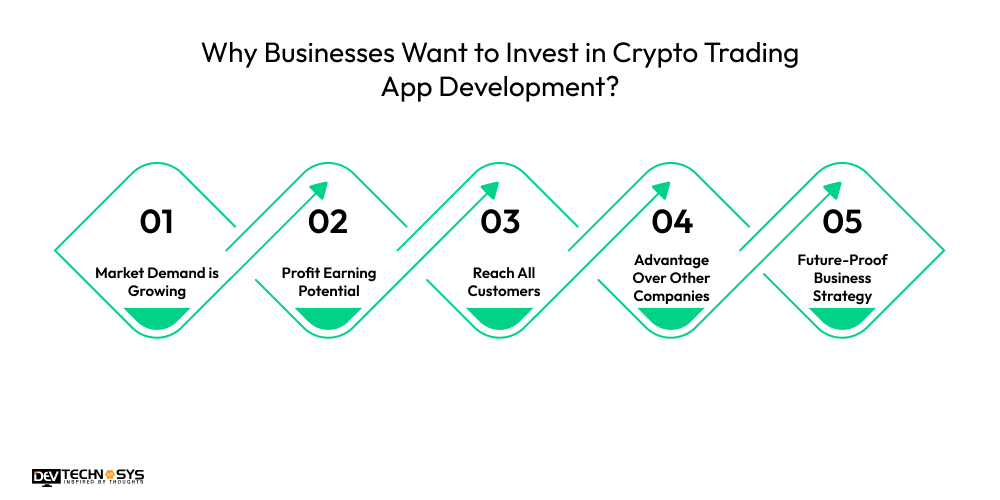
1. Market Demand is Growing
The market for cryptocurrency is continuously growing. Each year, thousands of people get involved in cryptocurrency. Companies build and invest in cryptocurrency trading applications to meet this market demand. With the global adoption of cryptocurrency app development growing, firms can capitalize on the opportunity for market expansion and high user retention.
2. Profit Earning Potential
Stock trading app development solutions profit in a number of different ways. They can earn revenue through trading fees, fees for crypto withdrawal, offering a premium version of the app, and ads. The apps can generate high revenue if the volume of trading in the app is large. According to the crypto exchange app development company, this profit-earning potential in the growing digital finance market makes the apps attractive to investors.
3. Reach All Customers
Distributed ledgers used in the trading of cryptocurrency create no geographical limit. The potential to reach a global client base is large and can quickly expand. The potential to increase brand visibility and build a large user base in the growing global digital finance market is significant by a crypto app development company.
4. Advantage Over Other Companies
The crypto market is a rapidly growing, evolving market. A company can show potential investors and users that it is an innovator in the market by launch a crypto exchange platform. A trading app positioned the companies as leaders in the crypto market. This strategic move enhances market relevance and opens doors to future blockchain-based opportunities.
5. Future-Proof Business Strategy
As digital currencies become mainstream, businesses investing in custom cryptocurrency decentralized exchange development prepare themselves for the future of finance. These platforms align with evolving consumer preferences for decentralized financial services. According to an p2p crypto exchange development company, by entering the crypto space early, companies gain a stronger foothold and remain competitive as blockchain adoption continues to grow.
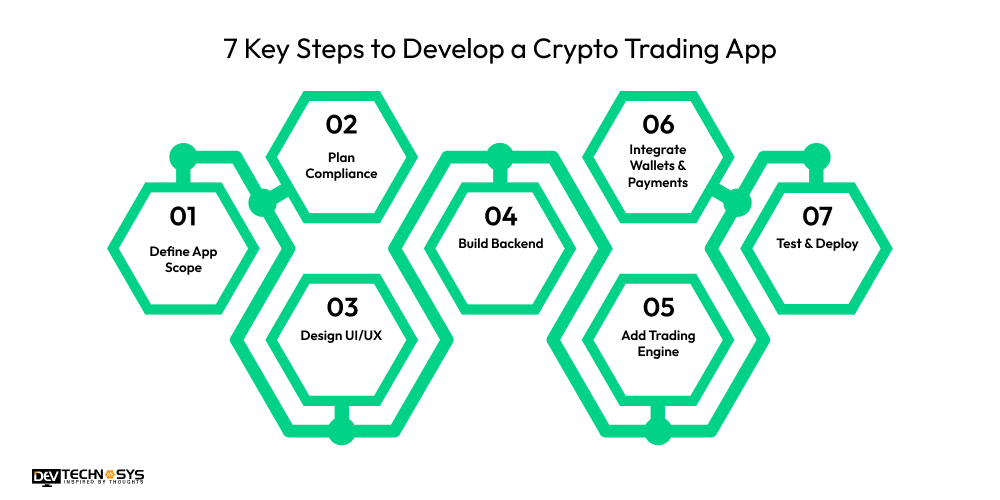
7 Key Steps to Develop a Crypto Trading App
To create a crypto trading app requires resource planning, market analysis, selecting technologies, finding the best features, deployment, and post-launch maintenance services. The steps below help to understand each process in detail. So, here we provide the robust AI crypto trading app development process:
1. Define App Scope
In the first stage to develop a crypto arbitrage trading bot, businesses must first clear the app’s scope and what they will integrate into their application. Create a structured outline for MVP, and after that, an outline for advanced requirements. Properly defining the app scope can lead to accuracy, budgeting, planning, and team structure, and ensure that the development is going in the right direction.
2. Plan Compliance
Let’s connect to the second step to build a Bitcoin trading app, identify regulatory requirements in your target regions, including KYC/AML rules, crypto licensing, and data-protection laws. Involve legal experts to create compliant workflows from day one. Proper compliance planning prevents operational risks, builds user trust, and supports partnerships with banks, payment processors, and liquidity providers essential for sustainable platform growth.
3. Design UI/UX
Moving to the third stage, to develop a crypto trading app, design a user-friendly interface for crypto trading to make it easy for the user to quickly navigate all functionalities. You need to make sure that layouts are clearly shown, responsive, optimized, and accessible for market charts and graphs. The robust UI/UX increases the conversion rates, retention, and user engagement.
4. Build Backend
After designing the frontend, it’s time to begin the backend services. You need to hire crypto app developers from a blockchain development company to start the real coding. Developers need to manage a high number of servers, authentication, wallet services, admin tools, balance management, and APIs. The robust backend can easily handle a large volume of trading without any performance issues.
5. Add Trading Engine
In the fifth stage to develop a cryptocurrency trading platform, integrate a low-latency trading engine that supports instant order execution, market/limit orders, and high throughput. Connect real-time market data streams using WebSockets or external APIs for accurate charts and pricing. Reliability and minimal lag are critical for user trust, especially during volatile market conditions where execution speed determines performance.
6. Integrate Wallets & Payments
Hire a professional cryptocurrency development services provider to implement secure custodial or non-custodial wallets for smooth deposits, withdrawals, and blockchain app development. A secure crypto payment integration will build trust in long-term transactions.
Add fiat gateways where required and connect to liquidity sources to maintain trading depth. Fast transaction processing, transparent fees, and strong asset protection increase user confidence and enable scalable, compliant workflows that support diverse trading needs.
7. Test & Deploy
Before deployment, you will need to test the app and understand various testing techniques, such as unit testing, functional testing, security testing, and integration testing, to find bugs or errors. After the testing, hire crypto trading bot development company to launch the mobile crypto trading app on the specific platforms, such as Android or iOS, and also conduct marketing techniques to promote the app globally.
You can reach out anytime; we are available 24/7. Our team provides a quick response.

Case Study: PayCoinz
“PayCoinz is a blockchain based cryptocurrency payment gateway built by Dev Technosys for US based client Robert. A team of 12 specialists in blockchain and fintech delivered the project in 32 weeks.
The platform supports secure worldwide crypto transactions, real-time settlement, multi-currency transactions, AI-powered fraud detection, and a scalable blockchain architecture with a 99.5% secure transaction success rate.”
Mohit Nag – CTO
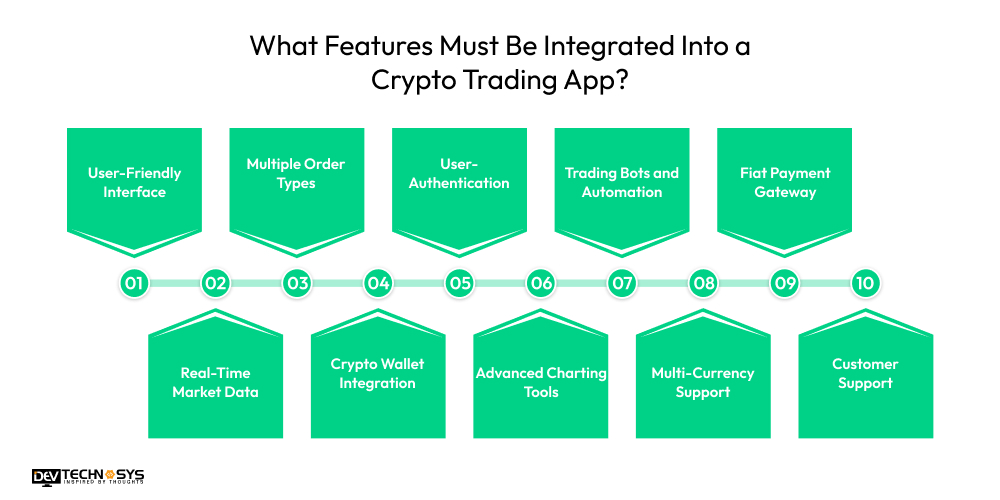
What Features Must Be Integrated Into a Crypto Trading App?
There are various types of features that have to be installed in a mobile crypto trading app, and also integrate some unique functionalities to gain a competitive advantage. So, here we provide the list of features:
-
User-Friendly Interface
A simple, intuitive interface enables traders to navigate charts, crypto portfolio management, and trading actions quickly, this can enhance the user’s experience and improve accessibility.
Bonus Read: Cost to Develop Trading Software
-
Real-Time Market Data
Live price feeds, order book updates, and market depth visuals allow traders to react quickly. Accurate, real-time data is essential for executing profitable trades during rapidly changing market conditions.
-
Multiple Order Types
The mobile crypto trading apps offer multiple order types, such as conditional orders, stop losses, and limits. This can enable users to automate strategies, secure profits, and reduce losses.
-
Crypto Wallet Integration
A secure crypto wallet integration helps users to store, send, and receive cryptocurrencies, and offers a seamless asset transfer between trading and wallet sections.
-
User-Authentication
The crypto trading app provides a secure login or signup using two-factor authentication, biometrics, encrypted techniques, and many more.
-
Advanced Charting Tools
Comprehensive charts with indicators, drawing tools, multiple timeframes, and customizable overlays enable technical analysis. These tools help traders identify trends, patterns, and optimal entry or exit points accurately.
-
Trading Bots and Automation
Automated trading tools allow predefined strategies to execute around the clock. Bots following rules for indicators, signals, or price triggers help users trade efficiently without constant manual monitoring.
-
Multi-Currency Support
Offering a wide range of multi-currency crypto app and stablecoins enables users to diversify portfolios. Support for many assets attracts diverse traders and expands trading possibilities within the ecosystem.
-
Fiat Payment Gateway
Enabling bank transfers, card payments, and alternative methods supports easy onboarding. Smooth fiat on-ramps and off-ramps allow users to convert between cryptocurrencies and traditional money quickly and reliably.
-
Customer Support
The crypto trading apps offer customer support services to solve concerns and issues, and provide instant responses to any query. Connect with an crypto arbitrage bot development company to integrate this feature in your crypto trading app.
What is the Cost To Develop a Crypto Trading App?
The cost to build a crypto trading app lies between $8,000 and $25,000 or higher. When building a modern crypto trading platform, businesses need to integrate premium features like real-time market data, portfolio, and many more.
Bonus Read: Cost To Build Crypto AI Agents
These can impact the fixed project budget. It can also include many other factors such as features, functions, project complexity, backend infrastructure, deployment platforms, and more. So, here we provide the detailed cost table:
Feature / Development Component |
Estimated Cost (USD) |
| User Registration & Authentication | $800 – $2,500 |
| Trading Engine (Buy/Sell, Order Matching) | $1,500 – $5,000 |
| Crypto Wallet Integration | $1,000 – $4,000 |
| Real-Time Market Data & Charts | $1,200 – $4,000 |
| Admin Dashboard & App Management | $1,000 – $3,000 |
| Security & Compliance Modules | $1,000 – $4,000 |
| UI/UX Design & Frontend Development | $4,500 – $8,500 |

5 Key Factors That Affect Crypto Trading App Development Cost
Are you aware of key factors that impact the development cost? If not, then you must know about these factors to maintain your overall project budget. Let’s explore the crucial factors that you must avoid:
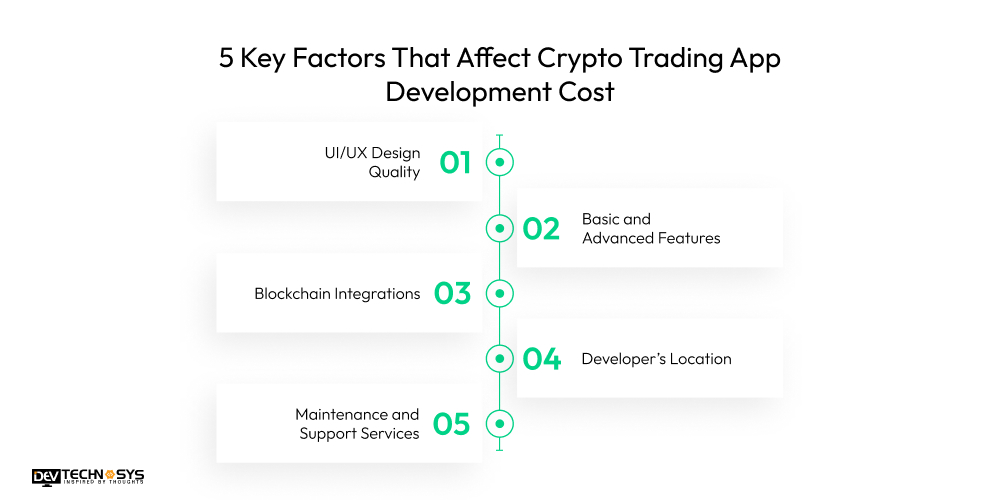
1. UI/UX Design Quality
In the first cost-affecting factor, the UI/UX design can make a difference in the overall cryptocurrency exchange software development cost. It includes various premium UI elements such as templates, themes, layouts, fonts, styles, colors, textures, built-in plugins, and more. Some of these elements are highly expensive, this can directly raise the cost to develop crypto asset management software.
UI/UX Elements |
Description |
Impacted Cost |
| Complexity of Screens | Number of screens & custom layouts | $800 – $3,000 |
| Interactive Elements | Basic animations, transitions, charts | $500 – $2,000 |
| Wireframing & Prototyping | User flow, testing, revisions | $300 – $1,200 |
2. Basic and Advanced Features
Moving to another cost-impacting factor, features are one of the most common factors that can change the overall project budget. It includes advanced features such as multiple order types, user authentication, trading bots, a fiat payment gateway, multi-currency support, advanced charting tools, real-time market data, and more. These features have a high impact on the cost to build a crypto trading app.
Feature Area |
Description |
Impacted Cost |
| Core Trading Features | Buy/sell UI, order placement, charts | $2,000 – $6,000 |
| Security Features | 2FA, encryption, basic KYC module | $1,000 – $3,500 |
| Advanced Add-ons | Price alerts, watchlists, simple analytics | $800 – $3,000 |
3. Blockchain Integrations
Integrating one or multiple blockchains affects costs based on complexity, protocols, and interoperability requirements. Supporting Bitcoin or Ethereum alone is simpler, but multi-chain support, adding autonomous AI agents in Blockchain, smart contract integration, DeFi modules, and cross-chain bridging increase technical workload.
Bonus Read: Crypto Exchange Development Cost
Each additional blockchain app development demands specialized expertise, node setup, security checks, and ongoing synchronization, raising the crypto trading app development cost.
Integration Type |
Description |
Impacted Cost |
| Single Blockchain Integration | One chain like BTC or ETH | $1,200 – $4,000 |
| External API usage | Third-party price feeds, wallets | $300 – $1,500 |
| Basic Smart Contract Setup | Simple wallet/transaction interactions | $500 – $2,500 |
4. Developer’s Location
Come to the fourth cost-affecting factor, hiring developers from different locations must be different because every region has different living costs. If businesses hire developers from the USA and the UK, it results in a higher cost, and hiring developers from the Asia-Pacific region is cost-effective. These hiring cost can impact the overall Binance app development cost.
Region |
Description |
Impacted Cost |
| North America / Western Europe | Higher hourly rates | $15,000 – $25,000+ |
| Eastern Europe / LATAM | Mid-range rates | $10,000 – $20,000 |
| Asia / Africa | Lower hourly rates | $8,000 – $15,000 |
5. Maintenance and Support Services
In the last cost-impacting factor, maintenance and support services are necessary after the development to keep your application up-to-date. There are various maintenance services, such as fixing bugs or glitches, regular updates, upgrading OS versions, adding new enhancements, applying security patches, and more. Some of the maintenance services are time-consuming, and this can also affect the cost to build a crypto trading app.
Service Area |
Description |
Impacted Cost |
| Monthly Maintenance | Bug fixes, minor updates | $200 – $800/month |
| Server & Hosting | Basic cloud infrastructure | $50 – $300/month |
| Security Checkups | Small audits or patch updates | $300 – $1,200 per audit |
How Crypto Trading Apps Stay Compliant: KYC, AML, and Global Regulations Explained
In 2026-2027, regulatory compliance is not just an option for crypto trading app development. It has become a necessity to decide whether your platform,
- Operates legally
- Scale globally, or
- Gain user trust
Strict financial regulations make compliance mandatory for the architecture, not an afterthought.
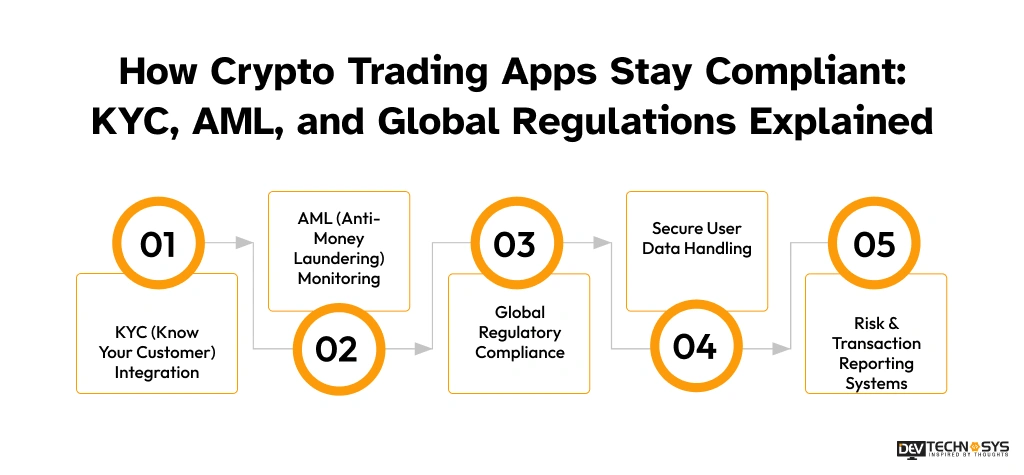
● KYC (Know Your Customer) Integration
KYC (Know Your Customer) guarantees that every user gets verified before starting trading on the platform. KYC helps in preventing fraud, finding out identity theft, and accounts that are created illegally. It includes:
- Identity verification using government ID
- Facial recognition or selfie verification
- Address proof validation
- Risk-based user classification
● AML (Anti-Money Laundering) Monitoring
AML (Anti-Money Laundering) tracks transactions immediately and tracks suspicious activities. It prevents fraud by reporting high-risk behavior, stopping illegal funds, and predicting other financial crimes. It offers:
- Monitoring large or unusual transactions
- Detecting wallet-linked risk behavior
- Blocking suspicious accounts automatically
- Reporting flagged activity to authorities
● Global Regulatory Compliance
Modern cryptocurrency exchange development usually corresponds to th regional crypto licensing laws depending on target markets. It ensures the platform works legally in targeted jurisdictions.
- US: FinCEN registration + state-level licensing
- EU: MiCA compliance framework
- UAE/Singapore: Virtual asset service provider licenses
● Secure User Data Handling
Sensitive and secure user data must be encrypted and stored securely. It is essential that the latest crypto wallet app development meets data protection laws securely. It includes laws like GDPR and ensures privacy compliance.
- Real-time transaction monitoring systems
- Suspicious activity reports (SAR filing)
- Audit trails for every trade
This is an important step to maintain transparency and regulatory accountability.
- Real-time transaction monitoring systems
- Suspicious activity reports (SAR filing)
- Audit trails for every trade
● Risk & Transaction Reporting Systems
Built-in risk & transaction reporting tools are mandatory to flag, log, and audit transactions. It is essential for regulatory inspections and internal risk control. It even maintains transparency and regulatory accountability. It includes:
- Real-time transaction monitoring systems
- Suspicious activity reports (SAR filing)
- Audit trails for every trade
Tech Stacks Required to Develop a Crypto Trading App
For a successful or reliable crypto trading software development, you will need to choose to best tech stacks that can complete your specific requirements. Here we provide the fully-structured table of tech stacks:
Component |
Technologies/Tools |
Purpose/Notes |
| Frontend | React.js, Angular, Vue.js; Flutter, React Native (for mobile) | User interface, responsive design, real-time updates |
| Backend | Node.js, Python (Django, Flask), Go, Java, Ruby on Rails, Spring Boot | Core logic, order matching, and real-time data handling |
| Database | PostgreSQL, MongoDB, other SQL/NoSQL databases | Store user data, transactions, and order books |
| APIs/Integration | Binance API, Coinbase API, Kraken API, Web3.js, Ethereum APIs | Exchange connectivity, blockchain interaction |
| Security | SHA-256 encryption, Two-factor authentication (2FA), SSL/TLS, AES encryption, secure key vaults | Safeguard user data and funds, authentication |
| Real-time Communication | WebSockets | For live price feeds, notifications, and trades |
| AI/ML (Optional) | TensorFlow, PyTorch | For algorithmic trading and market trend analysis |
| Cloud and Hosting | AWS, Microsoft Azure, Google Cloud | Scalable infrastructure |
Which is Better? Coinbase vs Binance
Choose Coinbase or Binance as the best crypto trading app. Are you confused? Yes, it happens. Let’s clear all your confusion. We provide a detailed explanation and comparison table that makes you comfortable choosing a secure crypto trading platform.
Feature |
Coinbase |
Binance |
| User Interface | Simple, clean, beginner-friendly | Feature-rich, suitable for advanced users, but can be complex |
| Trading Fees (Spot) | Higher, around 0.5% to 1.5% depending on volume and method | Lower, around 0.1% with discounts using BNB (Binance coin) |
| Cryptocurrency Selection | Supports about 260+ cryptocurrencies | Supports 350+ cryptocurrencies globally |
| Security | Strong, with 98% cold storage, insurance, and regulated in the U.S. | Also strong, with cold storage, SAFU insurance fund, 2FA |
| Trading Options | Basic spot trading, no margin/futures on Coinbase standard | Advanced trading, including margin, futures, and options, with high leverage |
| Staking | Supports staking for about 9 coins | Supports staking for 60+ coins |
| Customer Support | 24/7 phone, chat, and email support | 24/7 chat & AI bot support, no phone support |
| Regulatory Compliance | Fully regulated in the U.S. | Binance faces more regulatory scrutiny, and Binance. US for U.S. users |
| Ideal For | Beginners, U.S. traders, and users wanting simplicity and compliance | Experienced traders, global users, low-fee focused |
How to Make Money From Crypto Trading Applications?
After the successful crypto trading platform development, one work remains, which is to make money from them. It is necessary for every entrepreneur to generate revenue from their own digital platform. So, here we provide the legal ways to make huge money:
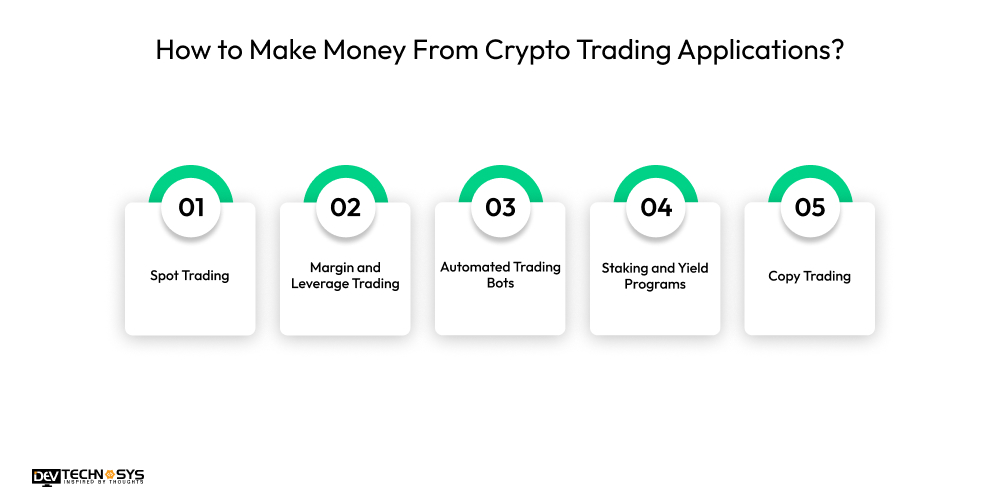
1. Spot Trading
Spot trading lets you buy crypto at a low price and sell it at a higher price. By analyzing market trends, using chart indicators, and following news, traders look for profitable entry and exit points. Success depends on timing, risk management, and avoiding emotional decisions. Many crypto wallet development solutions provide charts and alerts to help.
2. Margin and Leverage Trading
Some apps offer margin trading, allowing you to trade with borrowed funds. This can significantly increase profits with small price movements. However, it also increases risk, so traders must use stop-loss orders and strict risk controls. Leverage works best for disciplined, experienced traders who understand volatility and liquidation risks.
3. Automated Trading Bots
If businesses build a cryptocurrency exchange app like Coinbase, it allows integration with automated bots that execute trades based on predefined strategies. Bots can scan markets faster than humans, capitalize on tiny price changes, and trade 24/7. Profits depend on well-designed strategies, proper back-testing, and constant monitoring to ensure the bot adapts to changing market conditions.
4. Staking and Yield Programs
Cryptocurrency exchange app development solutions often offer staking, where you lock coins to support network operations and earn rewards. Some platforms also provide yield farming or interest accounts. These methods generate passive income without active trading. Returns depend on the token, duration, and platform, with lower risk than high-volatility trading strategies.
5. Copy Trading
Copy trading lets beginners automatically mirror the trades of experienced traders. White-label crypto exchange software displays trader performance, risk levels, and strategies.
Bonus Read: Automated Crypto Trading Bot Cost
By choosing reliable traders with consistent records, users can earn profits while learning. It reduces the need for complex analysis but still requires monitoring, diversification, and selecting reputable platforms.
White-Label vs Custom Crypto Trading App Development: Which Model Is Right for Your Business?
The selection between white-label and custom crypto exchange app development relies on the business’s goal and budget. While white-label development is faster with lower cost, in contrast, custom development offers full control and advanced security. We have differentiated both the options, making it easier for businesses to select one for their business type.
Factor |
White-Label Crypto Exchange |
Custom Crypto Exchange Development |
| Development Time | 2–6 weeks (rapid deployment) | 3–9+ months (full-cycle build) |
| Initial Cost | Low setup cost | High upfront investment |
| Ownership Rights | Limited (vendor-controlled core system) | Full IP ownership |
| Customization Level | Pre-defined features & UI | Fully tailored architecture |
| Scalability Potential | Moderate, depends on provider | High scalability for global growth |
| Security Architecture | Standard security protocols | Advanced, enterprise-grade security design |
| Regulatory Flexibility | Limited compliance adaptability | Fully customizable KYC/AML compliance |
| Liquidity Integration | Pre-integrated or shared liquidity | Custom liquidity provider integration |
| Time to Market Advantage | Very high | Moderate to slow |
| Technical Control | Restricted backend access | Full backend & infrastructure control |
| Maintenance Responsibility | Handled by the vendor | Managed internally or via a dev partner |
| Long-Term Cost Efficiency | Higher recurring fees | Cost-efficient at scale |
| Best Suited For | Startups & MVP testing | Enterprises & scalable crypto businesses |
Final Words!
Yes, this is our last conversation on this blog. We hope that you have cleared all your doubts regarding how to develop a crypto trading app. Also, provide the features that are must to integrate in a crypto trading platform and offering monetization strategies.
Development steps include market analysis, identifying features, tech stacks, designing UI/UX, backend development, testing and QA, and publishing and post-maintenance services. Do you want to create a crypto trading app? Share your project requirements with a leading crypto exchange development company to receive budget-friendly crypto trading solutions.
Frequently Asked Questions
Find answers to the most common questions related to this article.
The cost to build a crypto trading app is around $8,000 to $25,000 or depending on the project complexity and requirements. There are also additional factors that can affect the cost, such as features, functions, backend infrastructure, deployment platforms, and more.
To develop a crypto trading app with basic functionalities, it takes around 5 to 10 weeks. The crypto exchange MVP development with premium features can take around 20 weeks or more. The timeline is based on the various factors such as developer working hours, third-party integrations, and more.
There are various types of robust technologies that are used to make a crypto trading app:
Java
Python
C++
PHP
Flutter
Kotlin
Different types of challenges occurred during the crypto trading app development services. Here is the list of challenges:
Higher Development Cost
Security and Privacy Concerns
Offer Real-Time Market Data
Scalability Issues
Integration with Multiple Exchanges
Here, we provide the list of core features that must be integrated into the crypto trading app:
Multiple order types
Real-time market data
Advanced charting tools
User-friendly interface
Crypto wallet integration
Fiat payment gateway