


















Key Takeways:
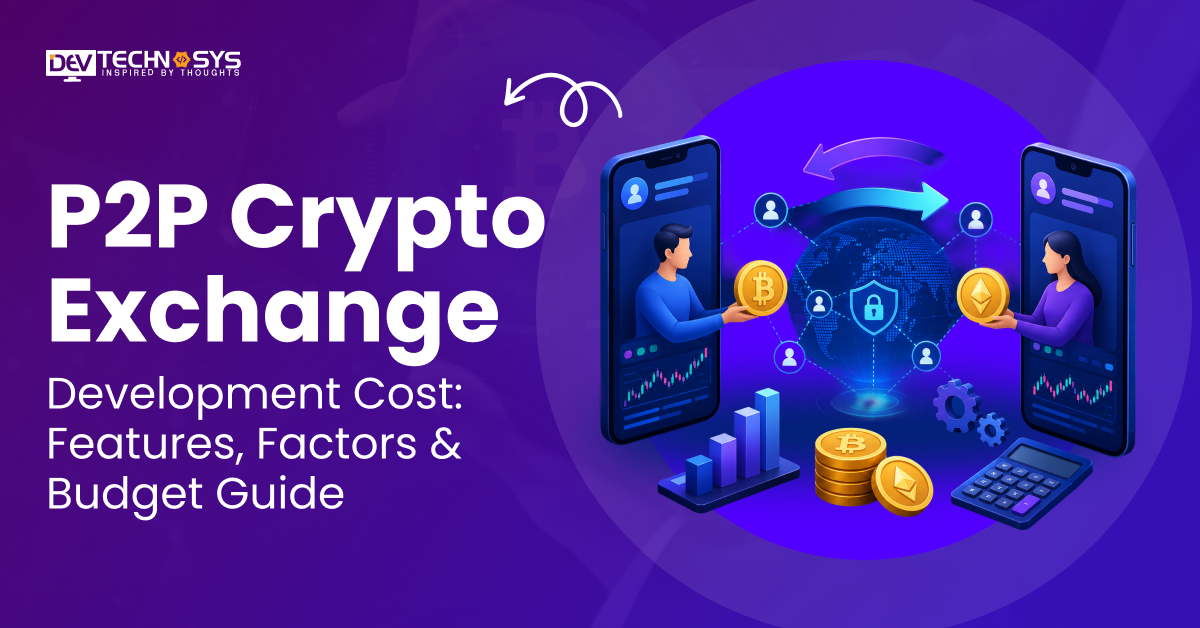
P2P crypto exchange platforms generate revenue through multiple streams such as trading fees, escrow charges, listing fees, premium subscriptions, API access, and advertising, depending on the platform model and user base. Overall, the P2P crypto exchange development cost in 2026 ranges from $30,000 to $150,000+, depending on features, scalability, security architecture, and blockchain complexity.
Cost Breakdown Based on Complexity:
-
- Basic MVP ($30,000 to $60,000): Basic P2P crypto exchange development cost 2026 differs depending on user registration, crypto wallet integration, basic P2P trading engine, escrow system, and a simple UI with limited backend functionality.
- Standard Platform ($60,000 to $100,000): Adds KYC/AML integration, multi-payment gateways, dispute management system, order matching engine, notifications, and improved UX/UI design with better system stability and performance.
- Advanced Platform ($100,000 to $150,000+): The advanced crypto exchange development cost in India / USA / UK ranges higher due to multi-chain support, AI-based fraud detection, liquidity integration, and advanced trading features. It also includes real-time analytics, cloud scalability (AWS/Firebase), microservices architecture, and high-level security compliance.
Cost Based on Countries:
-
- USA & Canada:$90 to $150/hour
- Western Europe: $70 to $130/hour
- Eastern Europe: $50 to $90/hour
- India & Southeast Asia: $25 to $60/hour
Development Timeline:
-
- MVP P2P Exchange: 3 to 5+ months
- Mid-Level Exchange Platform: 5 to 8+ months
- Advanced Enterprise Exchange: 8 to 14+ months or more
Additional Costs:
Maintenance & Security Upgrades: Around 15% to 25% of the initial P2P cryptocurrency exchange development cost annually for system updates, bug fixes, security patches, and performance improvements.
The market for peer-to-peer cryptocurrency exchanges is skyrocketing. It is great news for business owners who want to get into the Web3 space. Statista says that the global cryptocurrency market will hit $95.1 billion in 2026, growing at a steady CAGR of 11.01%. This shows that there is a strong demand for digital asset platforms around the world.
However, one this that stands in the way of development is the cost. Before investing, it’s important to understand the P2P crypto exchange development cost, from MVPs for startups to enterprise-level systems.
Typically, the P2P crypto app development cost ranges from $30,000 to $1,50,000, but it can vary based on a range of factors. This guide tells you everything you need to know to make smart budget decisions and build a P2P exchange that makes money in the current crypto market.
What is a P2P Crypto Exchange?
A Peer-to-Peer cryptocurrency exchange is a platform that helps users buy and sell cryptocurrencies without any middleman involved. As it is a decentralized software-based platform, it does not involve any third-party monitoring of crypto transactions; hence, users do not have to pay additional fees.
P2P exchanges typically have lower fees than traditional exchanges, making them a more affordable investment option. The ever-rising popularity of P2P crypto exchanges has increased the demand for P2P crypto exchange development companies.
Why Businesses Must Invest in P2P Crypto Exchange Development?
Is the concern of investment stopping you from custom P2P crypto exchange development? Don’t worry, the benefits of P2P cryptocurrency exchange development mentioned below will help you make better decisions.
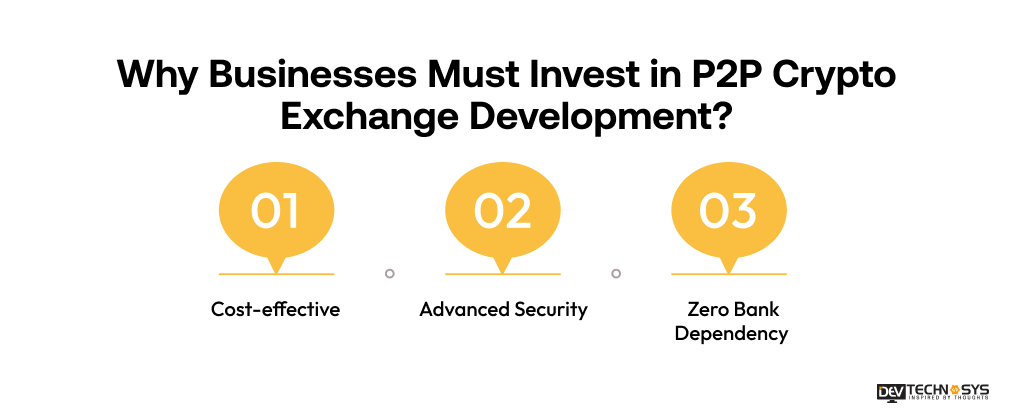
1. Cost-effective
The elimination of an intermediary or third party in P2P crypto exchange platforms made transactions cheaper, as there is no additional fee involved. Enterprises or businesses that own the P2P crypto platforms experienced a major drop in operational fees. This is one of the reasons why businesses go for peer-to-peer payment apps.
2. Advanced Security
In this world full of cybercrime, every user is concerned about security and data confidentiality, and hence looks for a P2P crypto exchange development company to create P2P apps that offer completely safe and secure services. P2P exchange platforms offer 100% security assurance of all transactions while keeping the data confidential.
3. Zero Bank Dependency
Peer to peer exchange platforms do not rely on any third party to make cryptocurrency transactions. They allow users to buy cryptocurrencies via PayPal, Gift Cards, etc. This is another great perk of investing in the P2P crypto marketplace and proves to be advantageous for the users as well.
What is the Average Cost to Develop a P2P Crypto Exchange Platform?
Are you a startup wondering how much does it cost to build a P2P exchange? Well, the cost to develop a P2P crypto exchange platform starts from $30,000 to $1,50,000+. The final crypto exchange development cost varies based on factors like P2P trading features, crypto payment gateway integration, multi-currency wallet integration, regulatory compliance, and third-party API integrations.
The basic cost to build a P2P crypto exchange app lies between $30,000 to $60,000. The mid-level P2P crypto exchange platform is around $60,000 to $110,000. The advanced features and functionalities will exceed the crypto exchange development cost to $1,50,000+
Platform Type |
Estimated Cost (USD) |
Development Timeline |
Best For |
| Basic P2P Exchange (MVP) | $30,000 – $60,000 | 2 – 4 months | Startups, MVP launch, early-stage crypto businesses |
| Mid-Level P2P Exchange | $60,000 – $110,000 | 4 – 7 months | Growing businesses, regional exchanges, feature-rich platforms |
| Advanced P2P Exchange | $110,000 – $150,000+ | 7 – 12+ months | Enterprise-grade platforms, global exchanges, and high-security trading systems |
Cost Breakdown by P2P Crypto Exchange Components (2026)
Businesses wondering how much does it cost to start a P2P crypto exchange should know that a P2P crypto exchange platform is built using multiple interconnected modules. Each component contributes differently to the total P2P crypto wallet development cost. Below is a clear component-wise breakdown of peer to peer crypto exchange development cost:
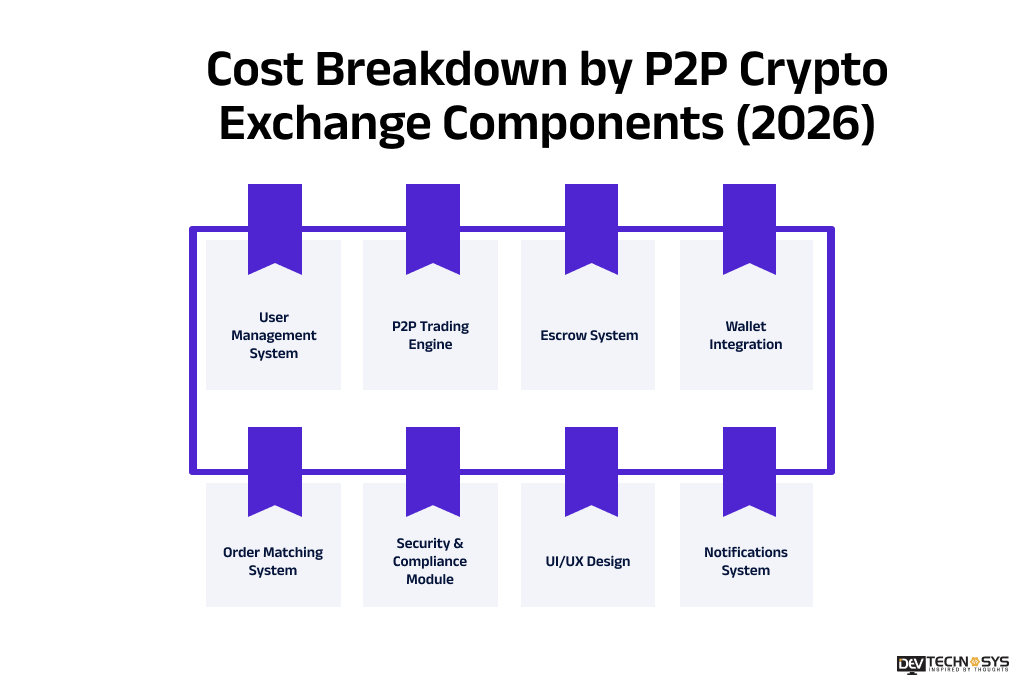
- User Management System (10% to 15%): Handles user registration, login, KYC verification, and profile management. It ensures secure onboarding and identity verification.
- P2P Trading Engine (15% to 25%): Core system for matching buyers and sellers and executing trades in real time. It is one of the highest-cost components due to its complexity.
- Escrow System (10% to 20%): A decentralized P2P exchange platform securely holds funds during transactions until both parties confirm. Includes dispute handling and auto-release logic.
- Wallet Integration (10% to 20%): Manages crypto deposits, withdrawals, cold storage hot wallet exchange development, and blockchain interactions with high security.
- Order Matching System (10% to 20%): Enables real-time matching of buy/sell orders using a low-latency backend architecture.
- Security & Compliance Module (10% to 20%): A two-factor authentication crypto platform includes KYC AML integration cost, encryption, fraud detection, and regulatory compliance systems.
- UI/UX Design (5% to 10%): Covers trading interface, dashboards, and responsive design for better user experience.
- Notifications System (3% to 8%): The cost to build a P2P crypto exchange is also influenced by notifications, but this component is necessary for handling email, SMS, and push notifications for transactions and alerts.
P2P Exchange Component |
What It Includes |
Cost Impact |
Estimated Cost (USD) |
| User Management System | Registration, login, KYC verification, profile management | 10% – 15% | $3,000 – $22,500 |
| P2P Trading Engine | Buyer-seller matching, trade execution logic | 15% – 25% | $4,500 – $37,500 |
| Escrow System | Fund locking, release mechanism, dispute handling | 10% – 20% | $3,000 – $30,000 |
| Wallet Integration System | Hot wallet, cold wallet, crypto transfers | 10% – 20% | $3,000 – $30,000 |
| Order Matching System | Real-time order processing and trade settlement | 10% – 20% | $3,000 – $30,000 |
| Admin Dashboard | User control, transaction monitoring, analytics | 5% – 10% | $1,500 – $15,000 |
| Security & Compliance Module | KYC/AML, encryption, fraud detection, MFA | 10% – 20% | $3,000 – $30,000 |
| UI/UX Design | Trading interface, dashboards, and mobile responsiveness | 5% – 10% | $1,500 – $15,000 |
| Notifications & Communication System | Email, SMS, push notifications | 3% – 8% | $900 – $12,000 |
Industry Insights
Statista estimates that the global cryptocurrency user base could reach 750–900 million users, creating a rapidly expanding customer base for crypto exchanges, wallets, and blockchain-powered financial services.
Planning a Cryptocurrency Project?
Get a tailored development cost estimate in a few simple steps.
- 3 quick steps
- 100% free
- Reply in 1 business day
2 Minutes Read
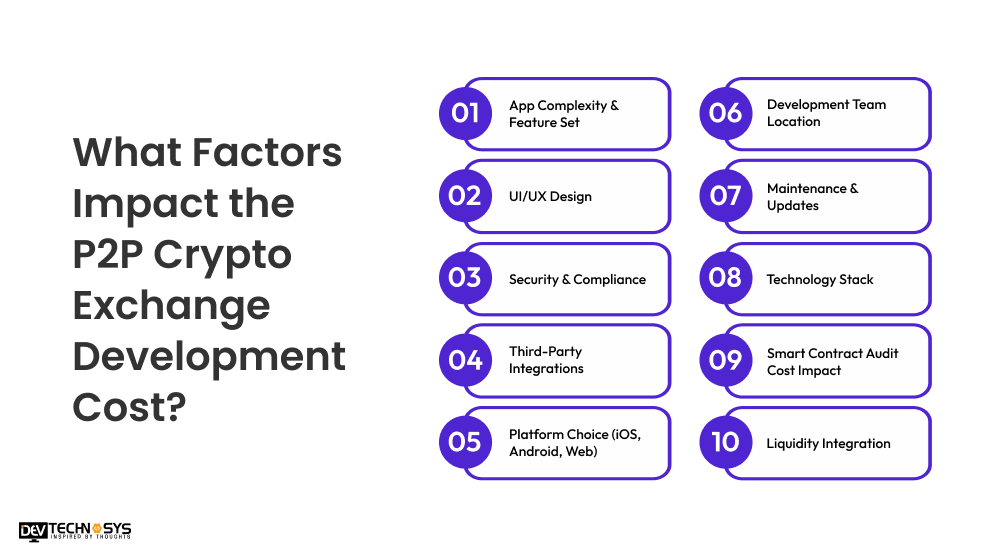
What Factors Impact the P2P Crypto Exchange Development Cost?
There are many technical, functional, and business-related factors that affect how much it costs to build a P2P crypto exchange site. Each part is important for determining the cost to develop a P2P crypto exchange, the platform’s ability to grow, and its overall performance.
1. App Complexity & Feature Set
Whether it’s crypto arbitrage bot development ot blockchain platform development, the amount and complexity of features directly impact the total budget. Backend development, third-party tools, and testing are additional functions required for features like multi-wallet support, KYC/AML verification, dispute management, and liquidity systems. The addition of advanced features makes the total cost to build app like Binance P2P go higher.
Complexity Level |
Features Included |
Cost Impact |
Estimated Cost |
| Basic (MVP) | Login, dashboard, basic transactions | 15% – 25% | $4,500 – $37,500 |
| Mid-Level | Payments, notifications, APIs | 30% – 50% | $9,000 – $75,000 |
| Advanced | AI, automation, real-time analytics | 50% – 70% | $25,000 – $105,000 |
2. UI/UX Design
UI/UX Designers from a top crypto exchange development company require more time and skills to develop an interface that is highly intuitive, responsive, and aesthetic. Pre-built UI solutions and templates cost way less than custom designs with advanced user flows. However, adding custom designs keeps users more interested and engaged, ensuring an increased retention rate.
Design Level |
Features |
Cost Impact |
Estimated Cost (USD) |
| Basic UI | Templates, simple screens | 5% to 10% | $1,500 – $15,000 |
| Custom UI/UX | Branding + UX flows | 10% to 15% | $3,000 – $22,500 |
| Premium UX | Animations, dashboards | 15% to 25% | $4,500 – $37,500 |
3. Security & Compliance
Legal and compliance needs include checking for KYC/AML, getting licenses, and following different regulatory systems in different areas. Putting these systems in place requires constant updates and legal alignment, which makes it a very important cost factor that protects the legitimacy of the platform, user trust, and long-term operating stability.
Security Level |
Features |
Cost Impact |
Estimated Cost (USD) |
| Standard | SSL, login security | 10% – 15% | $3,000 – $22,500 |
| Advanced | MFA, encryption, fraud detection | 15% – 25% | $4,500 – $37,500 |
| Enterprise | KYC/AML, PCI-DSS, GDPR | 25% – 40% | $7,500 – $60,000 |
4. Third-Party Integrations
Adding regulatory standards like Know Your Customer (KYC), Anti-Money Laundering (AML), and license compliance increases the project’s complexity as well as the P2P crypto exchange development cost. Every Integration requires a different approach, and they need to be updated often, which drives up the cost to build a P2P crypto exchange.
Integration Level |
Features |
Cost Impact |
Estimated Cost (USD) |
| Basic APIs | Payment gateway, email, SMS | 5% – 10% | $1,000 – $3,000 |
| Standard APIs | KYC, blockchain APIs, analytics | 10% – 20% | $3,000 – $6,000 |
| Advanced APIs | Multi-chain, liquidity APIs | 20% – 30% | $6,000 – $10,000+ |
5. Platform Choice (iOS, Android, Web)
According to a top OTC crypto exchange development company, a basic MVP with only the most important trade features will cost a lot less than a full-fledged P2P exchange. More complicated platforms with automation, analytics dashboards, matching engines, and real-time trading engines need more work, time, and resources for time and cost to start a P2P exchange.
Platform Type |
Description |
Cost Impact |
Estimated Cost (USD) |
| Single Platform | iOS or Android | 15% – 25% | $4,500 – $37,500 |
| Cross Platform | Flutter / React Native | 25% – 40% | $7,500 – $60,000 |
| Multi Platform | iOS + Android + Web | 40% – 60% | $12,000 – $90,000 |
6. Development Team Location
The Geographic location of developers highly affects the develop a crypto trading app. American or European developers or an app-making company charge more per hour, but if you manage your project well, outsourcing to Asia or Eastern Europe can save you money on development without lowering quality.
- USA/Canada: compliance + senior blockchain architects
- Europe: regulatory-heavy fintech experience (MiCA compliance)
- Eastern Europe: strong backend + crypto trading systems
- India: scalable MVP + cost-efficient smart contract dev
Region |
Hourly Rate |
Cost Impact |
Estimated Project Cost |
| India | $20 – $50/hr | Low | $30,000 – $70,000 |
| Eastern Europe | $40 – $90/hr | Medium | $60,000 – $110,000 |
| USA/UK | $100 – $200/hr | High | $90,000 – $150,000 |

7. Maintenance & Updates
Continuous investment is required for work after product launch,h such as fixing bugs, improving the performance of the app, providing user support, and rolling out new features. Usually, yearly maintenance fees are 15% to 25% of what the initial crypto exchange development cost for startups was, contingent on factors such as app complexity and potential for scalability.
Maintenance Type |
Includes |
Annual Cost |
| Basic Support | Bug fixes | $4,500 – $10,000 |
| Regular Updates | Feature upgrades | $8,000 – $20,000 |
| Full Maintenance | Security + scaling | $15,000 – $35,000 |
8. Technology Stack
When you opt for modern tech like blockchain, AI, or cloud-based architecture, the cost to develop crypto asset management software will jump upfront, but you will also ensure the system can be scaled and is highly performant. A simple tech stack is less expensive initially, but you may have to do some upgrades further down the line as the app becomes more popular.
Tech Level |
Stack |
Cost Impact |
Estimated Cost (USD) |
| Basic Stack | PHP, Laravel | 10% – 20% | $3,000 – $30,000 |
| Modern Stack | Node.js, React, AWS | 20% – 35% | $6,000 – $52,500 |
| Advanced Stack | AI, Blockchain, Microservices | 35% – 50% | $10,500 – $75,000 |
9. Smart Contract Audit Cost Impact
Smart contract audits ensure blockchain-based logic is secure, error-free, and resistant to vulnerabilities. These audits involve thorough code reviews, penetration testing, and validation by third-party experts. Although smart contract development costs are generally high, they are essential for preventing financial risks and ensuring trust in decentralized exchange operations.
Audit Level |
Scope |
Cost Impact |
Estimated Cost (USD) |
| Basic Audit | Code review | 5% – 10% | $1,500 – $15,000 |
| Standard Audit | Security testing | 10% – 15% | $3,000 – $22,500 |
| Advanced Audit | Formal verification | 15% – 25% | $4,500 – $37,500 |
10. Liquidity Integration
A leading P2P crypto exchange development company uses liquidity integration to ensure smooth trading by connecting the hybrid crypto exchange platform with external liquidity providers or internal order books. It reduces price slippage and improves trade execution speed. However, implementing liquidity systems requires advanced infrastructure, API connections, and constant optimization, increasing overall development complexity and cost.
Liquidity Level |
Features |
Cost Impact |
Estimated Cost (USD) |
| Basic Liquidity | Manual matching support | 10% – 15% | $3,000 – $6,000 |
| Standard Liquidity | External liquidity APIs | 15% – 25% | $6,000 – $12,000 |
| Advanced Liquidity | Deep order book + aggregation | 25% – 35% | $12,000 – $20,000+ |
How Feature Implementation Impacts P2P Crypto Exchange Development Cost?
Features play a crucial role in developing a P2P crypto exchange development cost. From trading engines to escrow systems, each feature contributes differently to development effort, scalability needs, and budget allocation. Below, we have discussed the P2P crypto exchange platform features and cost in a simple table format.
Core Feature Implementation Cost:
Feature |
Description |
Implementation Complexity |
Cost Impact (% of Total Budget) |
Estimated Cost Contribution |
| User Registration & Authentication | Signup, login, 2FA security | Low–Medium | 5% – 8% | $1,500 – $12,000 |
| Crypto Wallet Integration | Hot/cold wallet setup for deposits & withdrawals | Medium | 8% – 12% | $3,000 – $18,000 |
| P2P Trading Engine | Buyer-seller matching system | High | 10% – 15% | $5,000 – $25,000 |
| Escrow System | Secure fund holding until trade completion | High | 8% – 12% | $4,000 – $18,000 |
| Basic UI/UX Dashboard | User panel, trade history, orders | Medium | 5% – 10% | $2,000 – $15,000 |
| Admin Panel (Basic) | User management, transaction monitoring | Medium | 5% – 8% | $2,000 – $10,000 |
Advanced Feature Implementation Cost:
Feature |
Description |
Implementation Complexity |
Cost Impact (% of Total Budget) |
Estimated Cost Contribution |
| KYC/AML Integration | Identity verification & compliance checks | Medium–High | 10% to 18% | $5,000 – $20,000 |
| Multi-Payment Gateway | Fiat + crypto payment integration | High | 8% to 15% | $4,000 – $18,000 |
| Real-Time Order Matching Engine | Instant trade execution system | Very High | 15% to 25% | $8,000 – $35,000 |
| Dispute Management System | Automated/manual trade dispute handling | Medium | 5% to 10% | $3,000 – $12,000 |
| Multi-Chain Support | Ethereum, BNB, and Solana integration | Very High | 20% to 35% | $10,000 – $50,000 |
| AI Fraud Detection System | Behavioral analytics & anomaly detection | High | 10% to 20% | $6,000 – $25,000 |
| Liquidity Integration | Market makers & liquidity pools | High | 15% to 30% | $8,000 – $40,000 |
| Advanced Analytics Dashboard | Trading insights, revenue analytics | Medium–High | 6% to 12% | $3,000 – $15,000 |
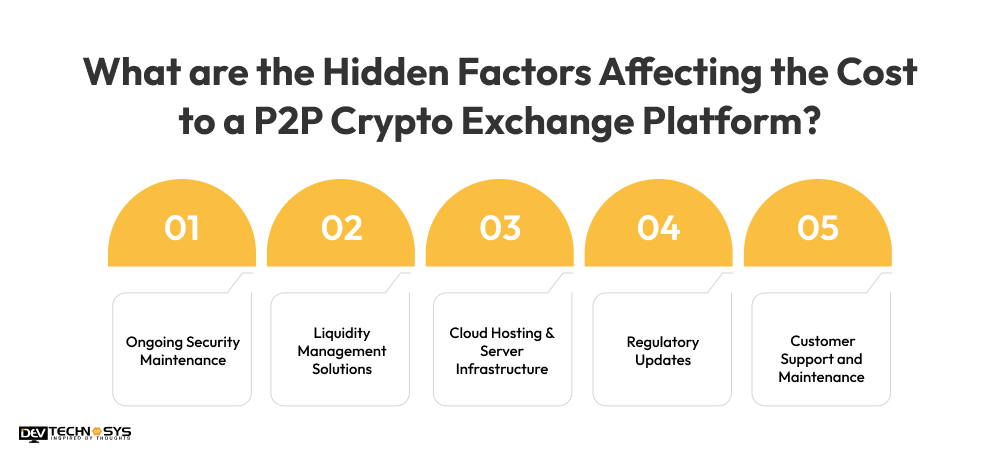
What are the Hidden Factors Affecting the Cost to a P2P Crypto Exchange Platform?
While core development costs are important, many hidden costs of building a crypto exchange can significantly impact the overall budget of a P2P crypto exchange platform. These hidden factors often emerge during scaling, maintenance, security upgrades, and long-term platform operations.
1. Ongoing Security Maintenance
Launching the platform is only the beginning, as regular security audits, penetration testing, anti-fraud monitoring, and vulnerability fixes are required continuously. Your Dapp development company has to provide ongoing updates to protect user funds and sensitive data. Ongoing security maintenance also increases long-term operational and maintenance expenses significantly.
2. Liquidity Management Solutions
A P2P exchange needs enough liquidity to make sure that users can make trades quickly and easily. There are often ongoing costs when integrating liquidity providers, market-making services, and trading APIs. This is especially true when the platform needs to be scaled up to handle more trades and more coin pairs.
3. Cloud Hosting & Server Infrastructure
Real-time crypto trading platforms need strong cloud hosting, safe servers, and technology that can be expanded. The cost of cloud-based crypto trading bot development services increases with the number of users. It leads to the addition of more resources for data storage, processing transactions, managing uptime, and improving the general performance of the platform.
4. Regulatory Updates
Different countries have different rules about cryptocurrency exchange. Businesses should frequently update their compliance systems to avoid trouble with legal laws. Besides that, they also need to ensure compliance with licensing standards, KYC/AML frameworks, and legal documents. It means that platform operations have to pay more for legal and technical costs all the time.
5. Customer Support and Maintenance
24 hours a day, seven days a week, you need to have customer service for problems with transactions, payment disputes, and account issues. A lot of money can be spent on hiring support staff, keeping up with multilingual help, and managing dispute settlement tools over time.
Hidden Factor |
Why It Increases Cost |
Impact on Total Cost |
| Ongoing Security Maintenance | Continuous audits, bug fixes, and fraud monitoring | 10% – 20% extra annually |
| Liquidity Management Solutions | Market-making services, liquidity providers, and API costs | 15% – 25% ongoing cost increase |
| Cloud Hosting & Server Infrastructure | Scalable servers, storage, and uptime management | 10% – 30% based on user growth |
| Regulatory Updates & Compliance | KYC/AML updates, legal changes, licensing | 10% – 20% recurring cost |
| Customer Support & Maintenance | 24/7 support, dispute handling, tools | 5% – 15% operational cost |
Did you know!
Cross-border stablecoin payments are accelerating, particularly in emerging markets where traditional remittances remain expensive and slow. According to the Bank for International Settlements (BIS), this trend is creating strong growth opportunities for P2P crypto exchanges focused on fast, low-cost international transfers.
P2P Crypto Exchange Development Timeline Explained
p2p crypto exchange development typically takes anywhere from a few weeks to several months, depending on the platform’s complexity, security requirements, blockchain integrations, and customization level. The P2P exchange development timeline for basic MVP can be launched quickly, while enterprise-grade exchanges require additional time for advanced features, testing, and compliance implementation.
Development Phase |
Estimated Timeline |
| Discovery & Planning | 1 – 2 Weeks |
| UI/UX Design | 1 – 3 Weeks |
| Frontend & Backend Development | 3 – 6 Weeks |
| Blockchain Integration | 2 – 4 Weeks |
| Security Implementation | 1 – 3 Weeks |
| Testing & QA | 1 – 2 Weeks |
| Deployment & Launch | 3 – 5 Days |
| Post-Launch Support | Ongoing |
Case Study: METACADE
- Client: Alex Thompson,(United Kingdom)
- Project: ICO Token Ecosystem Platform: Metacade
- Timeline: 32 Weeks
- Budget: Estimated $60,000–$140,000
- Challenge: Build a secure and scalable Web3 gaming platform with MCADE token creation, ICO launch, staking, multi-chain support, and audited smart contracts while ensuring high performance and security.
- Solution: Developed a complete Web3 ecosystem featuring MCADE token development, ICO platform, staking and governance, wallet integration, multi-chain support, secure smart contracts, and a scalable cloud-based infrastructure.
Results Client Achieved:
- 97.8% player engagement growth
- 40% lower development cost
- Launched in 32 weeks
- 4.2★ on App Store (2000+ downloads)
- Secure MCADE token and ICO platform deployed
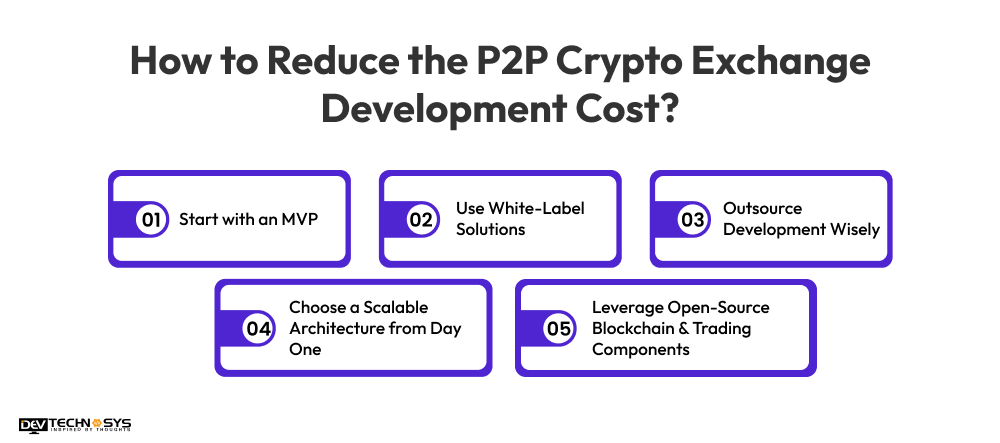
How to Reduce the P2P Crypto Exchange Development Cost?
There are multiple methods to reduce the P2P crypto exchange development cost. It includes smart planning, the right technology choices, and focusing only on essential features instead of going big from the beginning stages.
1. Start with an MVP
Hire mobile app developers to launch a minimum viable product with only essential features like trading, wallet, and escrow wallet integration. Launching MVP first reduces the initial P2P crypto exchange development cost and timeline.
2. Use White-Label Solutions
It is way less costly to build with white-label platforms because they come with exchange systems that are already set up. Instead of starting from scratch, entrepreneurs can change the look and basic features of their products. This saves them time and technical resources.
3. Outsource Development Wisely
If a company wants to cut costs without lowering quality, the best thing to do is hire skilled overseas development teams. If you hire experienced fintech developers from a top mobile app development company, you can be sure of a quick release without having to pay more for in-house resources.
You can reach out anytime; we are available 24/7. Our team provides a quick response.

4. Choose a Scalable Architecture from Day One
By only using a modular or microservices-based design when it’s needed, you can avoid having to do expensive work over again later on. A lot of new businesses over-engineer their early processes, which makes them much more expensive.
Start with a flexible monolith (which is good for MVPs) and only switch to microservices when you need to. It cuts down on hardware and DevOps costs that aren’t needed in the beginning.
5. Leverage Open-Source Blockchain & Trading Components
Businesses can use trusted open-source frameworks and libraries instead of creating everything from scratch. It includes:
- Open-source order matching engines
- Blockchain SDKs (Web3.js, Ethers.js)
- Pre-built wallet integration modules
This reduces development time, crypto exchange penetration testing cost, and smart contract engineering effort. It can reduce overall development cost by 15% to 30%, depending on the scope.
Cost Reduction Strategy |
Potential Cost Reduction |
| Start with an MVP | 30% – 50% |
| Use White-Label Solutions | 40% – 70% |
| Outsource Development Wisely | 20% – 50% |
| Choose a Scalable Architecture from Day One | 10% – 20% |
| Leverage Open-Source Blockchain & Trading Components | 15% – 30% |
Top 5 Crypto Exchange Apps to Explore in 2026?
It’s more competitive, and new ideas are being used in crypto trading in 2026 than ever before. P2P exchange apps make dealing faster, safer, and more flexible. These platforms are changing the way people around the world buy and sell digital assets by offering DeFi trading, low fees, and multiple payment choices.
1. The Binance P2P
Binance P2P app is still the biggest cryptocurrency exchange, and it offers a lot of payment choices. It has fast transactions, low dealing fees, and a reliable escrow system to keep trades safe. It is used by many types of users because it is available all over the world and supports many cryptocurrencies.
- Estimated Development Cost: $80,000 to $150,000+
- Best For: Global-scale exchanges, high-liquidity trading platforms, enterprise-level crypto businesses.
- Complexity Level: Very High
2. KuCoin P2P
It is well known that KuCoin P2P has low costs and strong support for fiat currencies. It’s good for both new and experienced users because it has a simple design and is becoming more popular around the world. The site also makes trading easy by having a lot of liquidity and advanced tools. To build a similar platform, contact top experts who provide custom application development services in USA
- Estimated Cost: $70,000 to $150,000
- Best For: Mid-to-large scale exchanges, fiat-crypto trading platforms, global user base expansion.
- Complexity Level: High
3. Bybit P2P
Because it is safe to trade on Bybit P2P and easy to buy crypto, it is growing very quickly. It protects users with trust accounts and helps people who live in places where banks are hard to reach. Its quick trades and easy-to-use interface make it popular with crypto traders all over the world.
- Estimated Cost: $50,000 to $110,000
- Best For: High-frequency trading users, emerging markets, secure P2P platforms
- Complexity Level: High
4. LocalCoinSwap
LocalCoinSwap is a non-custodial P2P app that is all about privacy and openness. Users don’t have to store their money in central wallets in order to trade. It also lets you pay in a number of different ways and gives you more power over your digital assets. Users of decentralized finance like it because it is built with privacy in mind.
- Estimated Cost: $60,000 to $140,000
- Best For: Decentralized exchanges, privacy-focused platforms, DeFi trading ecosystems.
- Complexity Level: Medium–High
5. HODL HODL
HODL HODL focuses mainly on Bitcoin P2P trading and doesn’t hold users’ funds. Its non-custodial approach makes transactions safe and privacy-focused. The site is perfect for people who want to trade Bitcoin in a decentralized and low-KYC way. It also lets Bitcoin users give and borrow money directly from each other.
- Estimated Cost: $50,000 to $120,000
- Best For: Bitcoin-only platforms, privacy-first exchanges, decentralized lending ecosystems.
- Complexity Level: Medium
Crypto Exchange App |
Estimated Development Cost |
Best For |
Complexity Level |
| Binance P2P | $80,000 to $150,000+ | Global enterprise exchanges, high-liquidity trading platforms | Very High |
| KuCoin P2P | $70,000 to $150,000 | Mid-to-large scale exchanges with fiat support | High |
| Bybit P2P | $50,000 to $110,000 | Fast-growing trading platforms, emerging markets | High |
| LocalCoinSwap | $60,000 to $140,000 | Decentralized P2P exchanges, DeFi-focused platforms | Medium–High |
| HODL HODL | $50,000 to $120,000 | Bitcoin-only, privacy-focused P2P exchanges | Medium |
Industry Insights
According to McKinsey & Company, tokenized cash and stablecoins are reshaping global payments by enabling faster, cheaper, and more secure settlements.
CEX vs DEX vs P2P Crypto Exchange Cost Comparison
The cost variation between CEX, DEX, and P2P crypto exchanges is mainly driven by architecture complexity, security needs, and trading system design. CEX platforms are the most expensive due to centralized infrastructure and strict compliance requirements. DEX platforms also require high investment because of smart contracts, blockchain integration, and security audits. P2P exchanges are the most cost-efficient option, making them suitable for MVP and startup-level development.
Factor |
CEX (Centralized Exchange) |
DEX (Decentralized Exchange) |
P2P Exchange |
| Estimated Development Cost | $80,000 to $150,000+ | $60,000 to $120,000 | $30,000 to $90,000 |
| Complexity Level | Very High | High | Medium–High |
| Core Architecture | Central order book system | Smart contract-based trading | Escrow-based peer matching |
| Key Cost Drivers | Trading engine, liquidity system, compliance, security | Smart contracts, audits, and blockchain integration | Escrow system, wallet integration, dispute system |
| Security Requirements | Enterprise-grade security infrastructure | Smart contract security + audits | Moderate security with escrow protection |
| Liquidity System | Advanced centralized liquidity management | Liquidity pools (AMM model) | Optional/partner-based liquidity |
| Regulatory Compliance | High (KYC/AML mandatory) | Low–Medium (depends on region) | Medium (basic KYC optional) |
| Best For | Large-scale global exchanges | DeFi platforms, Web3 projects | Startup-friendly crypto platforms |
Security & Compliance Requirements for P2P Crypto Exchange Development
A P2P cryptocurrency exchange needs a strong security design and to follow all the rules. This is because the platforms handle direct financial transactions between users, protecting the funds in an escrow account and settling fiat/crypto settlement risks.
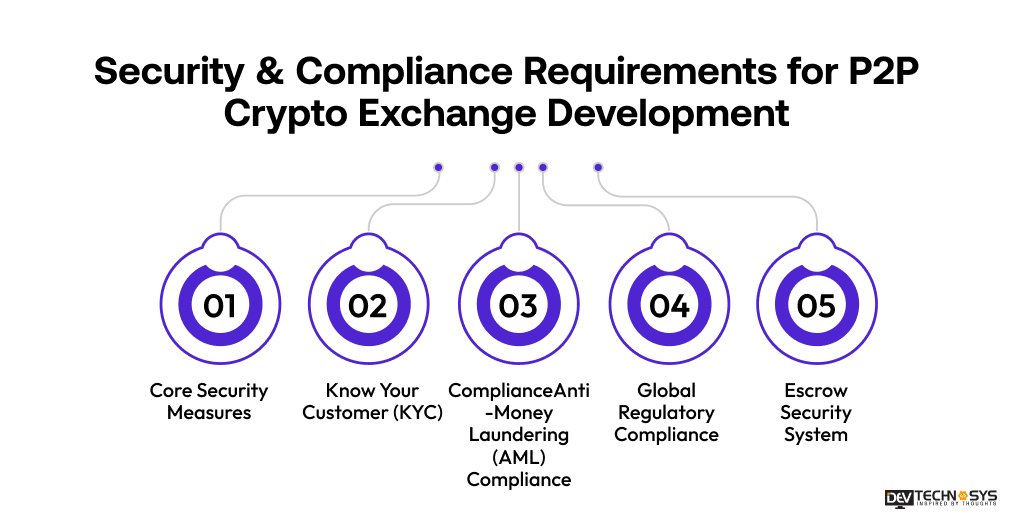
The safety of peer-to-peer cryptocurrency exchanges depends on a multi-layer compliance framework that includes encryption, KYC/AML systems, escrow protection, and strict adherence to global regulations. This makes sure that dealing is safe, clear, and legal.
Area |
Key Requirements |
| Core Security Measures | SSL (Secure Sockets Layer) / TLS (Transport Layer Security) encryption, Multi-Factor Authentication (MFA), Hot Wallet & Cold Wallet architecture, Escrow-based transaction system, DDoS (Distributed Denial of Service) protection with Web Application Firewall (WAF) |
| Know Your Customer (KYC) Compliance | Government ID verification (passport, national ID, driving license), facial recognition-based liveness detection, automated onboarding and verification workflows |
| Anti-Money Laundering (AML) Compliance | Real-time transaction monitoring systems, suspicious activity reporting (SAR) alerts, user risk scoring models, blacklist wallet screening using blockchain analytics tools |
| Global Regulatory Compliance | Financial Action Task Force (FATF) Travel Rule compliance, General Data Protection Regulation (GDPR), California Consumer Privacy Act (CCPA), and regional cryptocurrency licensing requirements |
| Escrow Security System | Smart contract-based escrow system or centralized escrow wallet, fund locking mechanism until trade confirmation, automated dispute resolution system, time-based auto-release mechanism |
Why Budgeting for Your P2P Crypto Exchange Project is Crucial?
Budgeting for your P2P crypto exchange project is crucial because it helps you control the crypto and blockchain app development cost. avoid unexpected expenses, and ensure smooth project execution from start to finish. A clear budget allows you to:
- Prioritize essential features over unnecessary ones
- Choose the right development model (MVP, white-label, or custom)
- Allocate resources for security, compliance, and scalability
- Plan marketing and post-launch operations effectively
- Prevent delays caused by financial constraints
Without proper budgeting, projects often face scope creep, delays, or quality compromises. For entrepreneurs, a well-planned budget ensures faster market entry, better ROI, and long-term sustainability in the highly competitive crypto exchange industry.
How to Monetize a P2P Crypto Exchange Platform?
People who wonder how does a P2P crypto exchange make money should read this section carefully. A P2P crypto exchange platform gives many ways to make money besides trading, which makes it a very profitable way to run a fintech business. Entrepreneurs can make steady money from user activity, services, and platform involvement if they have the right monetization strategy.
1. Trading Fee Method
Trading fees, which are a small percentage charged on every successful transaction, are the most common way to make money. Due to high trading rates, even small fees bring in a lot of money. This makes it a reliable and scalable way to make money.
- Revenue Potential: 40% to 60% of total revenue
- Implementation Cost: Low
2. Listing Fees
Crypto projects or users can be charged by platforms to add new tokens or trade pairs. In addition to keeping quality high, this P2P crypto exchange monetization method helps make money because only serious, checked-out projects are willing to pay for publicity and visibility.
- Revenue Potential: 10% to 20% of revenue
- Implementation Cost: Low–Medium
3. Withdrawal & Deposit Fees
By adding small fees to crypto deposits or transactions, you can make steady money. Most of the time, these fees are low to stay competitive, but they still make a big difference when applied to large groups of users who make a lot of transactions.
- Revenue Potential: 10% to 15% of revenue
- Implementation Cost: Low
4. Premium Membership Plans
Users can get benefits like lower crypto exchange trading fees, faster transaction handling, and faster customer service with subscription-based plans. This approach makes a steady monthly or yearly income and increases platform loyalty and user retention.
- Revenue Potential: 15% to 25% of revenue
- Implementation Cost: Medium
5. Escrow Service Fees
You can charge a small fee to provide safe escrow services during peer-to-peer transfers. People are ready to pay extra for escrow-based P2P crypto exchange development because it makes trading safer and lowers the risk of fraud.
- Revenue Potential: 15% to 30% of revenue
- Implementation Cost: Medium
Mistakes That Can Increase P2P Crypto Exchange Development Cost
When building a P2P cryptocurrency exchange, it’s important to avoid common mistakes in planning, design, or compliance, as these can greatly increase costs, delay launch, and make the platform less scalable.
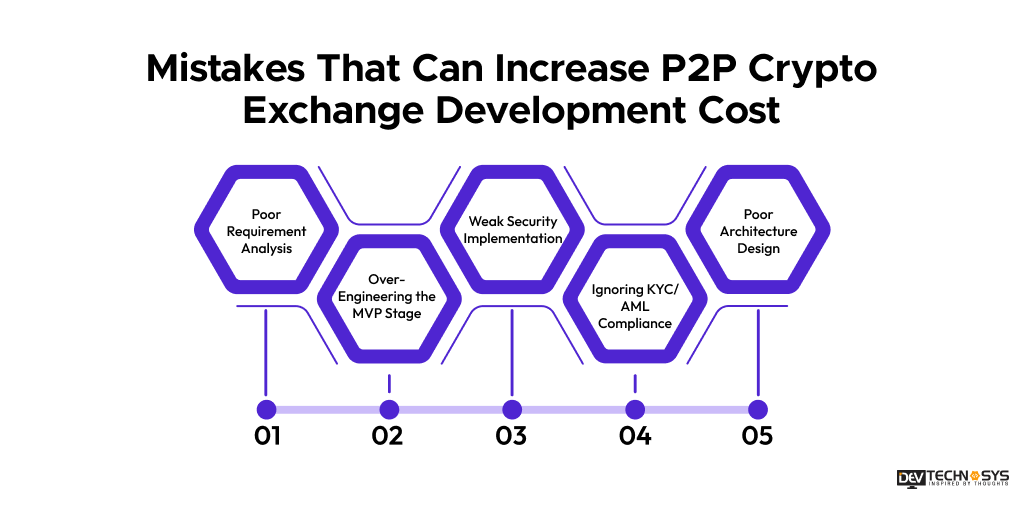
1. Poor Requirement Analysis (Increases Cost by 15%–30%)
One of the biggest mistakes is not planning the project well or not fully understanding the requirements. If features aren’t properly outlined, there will be a lot of changes, redesigns, and rework during development, which will raise the total cost by 20% to 40%.
2. Over-Engineering the MVP Stage (Increases Cost by 20%–40%)
Adding complicated features like AI-based trading, multi-chain integration, or microservices design during the MVP stage makes things more difficult than they need to be. This can add 25% to 60% to the cost of growth without making the early-stage ROI better.
3. Weak Security Implementation (Increases Cost by 15%–35%)
Vulnerabilities happen when important crypto exchange security features like multifactor authentication (MFA), encryption, or safe wallet architecture are not used. Later, fixing these problems will cost a lot of money in the form of patches, reports, and redevelopment.
4. Ignoring KYC/AML Compliance (Increases Cost by 10%–25%)
When regulatory needs like FATF guidelines, KYC verification, or AML monitoring aren’t planned for, key modules often have to be redesigned. Due to legal retrofitting, this can make costs go up by as much as 30%.
5. Poor Architecture Design (Increases Cost by 20%–45%)
Performance problems happen when you choose a service that isn’t scalable or an order matching system that isn’t very good at what it does. In the long run, the system will need to be rebuilt or heavily optimized, which will raise the cost of growth.
Buy Vs White Label Vs Custom P2P Crypto Exchange Development Partner: Which Option is the Best?
Your budget, schedule, and long-term business goals will help you decide between building from scratch, White Label vs Custom P2P Crypto Exchange Development. Each method saves money in its own way, but they are better for certain types of businesses than others.
Factor |
Buy Ready-Made Solution |
White-Label Solution |
Custom Development Partner |
| Estimated Cost | $10,000 – $30,000 | $20,000 – $60,000 | $30,000 – $150,000+ |
| Development Time | 1–3 weeks | 1–2 months | 3–12+ months |
| Customization | Low | Medium | High |
| Scalability | Limited | Moderate | Excellent |
| Security | Basic | Good | Enterprise-grade |
| Ownership | Limited | Partial | 100% Source Code Ownership |
| Best For | Startups testing an idea | SMBs and fast market entry | Enterprises and long-term crypto businesses |
According to our Crypto Exchange Development Expert Narayan Das, you can:
- Buy a Ready-Made Solution if you need the lowest upfront cost and the fastest launch.
- Choose a White-Label Solution if you want quicker deployment with moderate customization and lower development costs. We suggest discussing the white-label P2P crypto exchange cost with professional developers before making a decision.
- Build a Custom P2P Crypto Exchange if you need complete ownership, advanced security, unlimited scalability, and unique features to compete in the long term.
Conclusion
The P2P cryptocurrency exchange development cost relies on many things, like how complicated the platform is, how many security features it has, how well it works with blockchain, and how many customizations are needed. For entrepreneurs, the most important thing is to have a clear plan, start with an MVP to see if there is a market, and then add more advanced features over time.
If you are a business looking for a top cryptocurrency exchange development company in USA, contact Dev Technosys. With 15+ years of expertise and support of 500+ technology specialists, we create secure, scalable, and high-performance crypto exchange solutions tailored to your business needs.
Frequently Asked Questions
Find answers to the most common questions related to this article.
The cost to build A P2P crypto exchange platform usually ranges from $8,000 to $15,000 for a basic MVP. The cost to build a P2P cryptocurrency exchange will be $22,000 to $30,000+ for the advanced enterprise-level platforms with full customization, high security, and scalable infrastructure.
Key cost to create a P2P crypto exchange gets influenced by platform complexity, security systems, blockchain integration, UI/UX design, compliance requirements, third-party APIs, and the geographic location of the development team.
Yes, white-label solutions are much cheaper and faster to launch. However, they offer limited customization, while custom development provides full control, scalability, and long-term flexibility.
White-label platforms take around 2 to 6 weeks to launch, while custom-built exchanges may require 2 to 6 months, depending on features, security layers, and development complexity.
Yes, profitability comes from trading fees, listing charges, escrow services, subscriptions, and ads. With high user activity, these revenue streams can generate consistent long-term income.
During a trade, the escrow system safely holds the money until both the customer and the seller confirm that the deal is complete. Technically, it handles wallet integration, controls the state of transactions, and automatically releases funds. This helps stop fraud and makes sure that peer-to-peer transfers are safe.
KYC and AML compliance check the identities of users and keep an eye on activities to stop fraud and money laundering. Using Know Your Customer (KYC) methods, Anti-Money Laundering (AML) tools, and following FATF rules ensures that operations are legal and safe in all areas.