
















Quick Summary:
Crypto wallet development costs generally range from $8,000 to $30,000+, depending on wallet type, blockchain integrations, security architecture, and feature complexity. A basic MVP crypto wallet may cost around $8,000 to $15,000+, while mid-level wallets range between $15,000 to $22,000+. Advanced wallets with DeFi, NFT, and multi-chain support can exceed $22,000 to $30,000+.
Cost Breakdown by Development Complexity
-
- Basic/MVP Wallet ($8,000 to $15,000+): Includes core features such as user registration, crypto storage, QR code payments, transaction history, and basic blockchain integration.
- Mid-Level Wallet ($15,000 to $22,000+): Adds multi-currency support, biometric authentication, push notifications, API integrations, advanced UI/UX, and enhanced encryption mechanisms.
- Advanced Crypto Wallet ($22,000 to $30,000+): Includes DeFi integration, NFT support, staking functionality, multi-chain compatibility, AI-powered fraud detection, cold wallet support, and enterprise-grade security systems
Key Cost Drivers
-
- Wallet Type: Custodial wallets are generally less expensive than non-custodial or hardware-integrated wallets that require advanced private key management and blockchain interaction.
- Blockchain Integrations: Supporting multiple blockchains like Ethereum, Solana, Bitcoin, and BNB Chain increases backend complexity and development effort.
- Security Features: Features such as multi-signature authentication, biometric login, encryption, 2FA, and anti-phishing systems significantly impact development costs.
- Platform Choice: Native iOS and Android wallet apps cost more compared to cross-platform development using Flutter or React Native.
Development Timeline:
-
- MVP Crypto Wallet: 2 to 4+ months
- Mid-Level Wallet App: 4 to 6+ months
- Advanced Crypto Wallet Platform: 6+ months
Cost Based on Countries:
-
- USA & Canada: $80 – $100/hour+
- Western Europe: $45 – $80/hour
- Eastern Europe: $35 – $75/hour
- India & Southeast Asia: $15 – $25/hour
Additional Costs:
-
- Maintenance & Upgrades: Ongoing maintenance generally costs around 15% to 20% of the initial development budget.
“If you don’t want people to know you’re a scumbag, don’t be one.” Satoshi Nakamoto (Creator of Bitcoin)
Crypto wallet app development has been gaining momentum since the 2020s, and by 2025, it will have become even more prevalent. The development of crypto wallet apps has stood out as one of the most promising and profitable business ideas for entrepreneurs and startups.
Ambitious startups can leverage the growing market demand and build high-performing crypto wallet apps. However, before diving into development, you need to know about the cost. Businesses that are entering this industry for the first time wonder about the crypto wallet app development cost and how to create a crypto wallet app effectively.
Many ask, Can you estimate the expenses involved in making a custom crypto wallet? Yes, in fact, in today’s guide, we will discuss the crypto wallet development cost. Let’s break down the real cryptocurrency wallet app cost estimation and how it varies based on features, tech stack, and business goals. So, let’s begin!
Crypto Wallet Market Stats
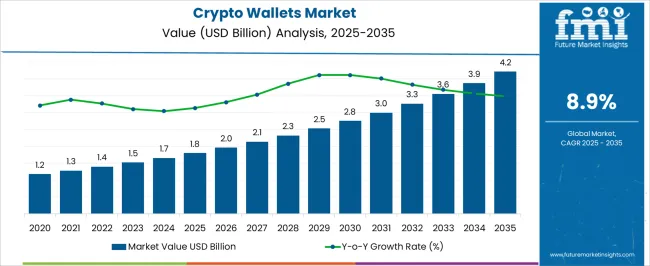
- The Crypto Wallets Market is estimated to be valued at USD 1.8 billion in 2026
- The market is projected to reach USD 4.2 billion by 2035, registering a compound annual growth rate (CAGR) of 8.9% over the forecast period.
- The Hot wallet segment is projected to account for 61.50% of the crypto wallets market revenue.
- The Trading segment is expected to hold 44.20% of the crypto wallets market revenue, solidifying its position as the leading application.
- The cold wallet segment by type is set to grow at a steady CAGR of around 10.6% during the forecast period.
What is a Crypto Wallet?
A cryptocurrency wallet is a digital tool that provides a secure way to manage cryptocurrencies using a private key to access them. You need to have a wallet before you start investing in digital currencies. There are two major types of crypto wallet software (like mobile, desktop, or web) and hardware wallets.
They offer different security levels and features for managing digital assets. The type of crypto wallet you choose depends on your personal needs when it comes to security, fees, supported cryptocurrencies, and customer support.
Planning a Blockchain Project?
Get a tailored development cost estimate in a few simple steps.
- 3 quick steps
- 100% free
- Reply in 1 business day
2 Minutes Read
Top 10 Crypto Wallet Apps to Explore in 2025
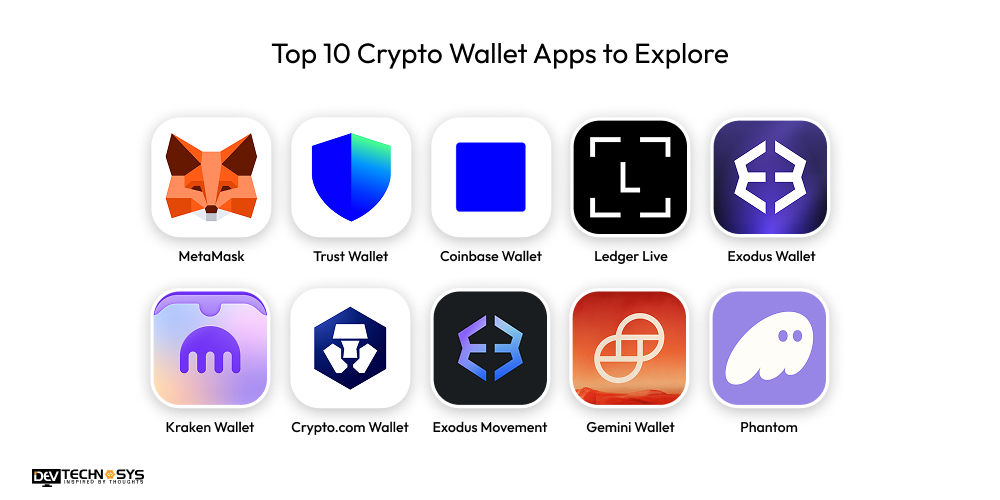
Before learning about crypto wallet development cost, let’s explore the top 10 crypto wallet apps to consider in 2025:
Wallet App |
Launch Year |
Downloads (Approx.) |
Rating |
Platforms |
| MetaMask | 2016 | 20M+ | 4.7 | Android, iOS, Web |
| Trust Wallet | 2017 | 200M+ | 4.7 | Android, iOS, Web |
| Coinbase Wallet | 2017 | 10M+ | 4.6 | Android, iOS, Web |
| Ledger Live | 2018 | 5M+ | 4.5 | Android, iOS, Desktop |
| Exodus Wallet | 2016 | 3M+ | 4.6 | Android, iOS, Desktop |
| Kraken Wallet | 2013 | 2M+ | 4.5 | Android, iOS |
| Crypto.com Wallet | 2016 | 150M+ | 4.4 | Android, iOS |
| Exodus Movement | 2015 | 3M+ | 4.6 | Android, iOS |
| Gemini Wallet | 2014 | 1M+ | 4.5 | Android, iOS |
| Phantom | 2021 | 15M+ | 4.8 | Android, iOS, Web |
Case Study: PAYCOINZ
Metacade is a blockchain-powered gaming and crypto ecosystem developed by Dev Technosys for a Web3 gaming client seeking community-driven engagement and decentralized rewards. The project was delivered by our 12 member team of blockchain developers, designers, and QA experts within 5 months. The platform features token staking, GameFi integration, NFT support, and scalable architecture, boosting achieving 97.8% player engagement and ecosystem growth.
– Narayan Das (Develivery Manager)
How Much Does Crypto Wallet Development Cost?
Typically, the crypto wallet development cost will be around $8,000 to $25,000, depending on various factors and business requirements. The cost to develop a cryptocurrency wallet involves features, security protocols, UI designs, API integrations, and integrations with third-party crypto providers for services such as custody, liquidity, on/off-ramp operations, and blockchain connectivity.
The cost of a cross-platform crypto wallet app development will be higher than that of a native crypto wallet app. If you are an entrepreneur who’s just tapping into the industry, then no need to start big, start with minimal crypto wallet features and functionalities.
The cost to develop a crypto wallet app with basic features and functionalities is less than building a multi-platform crypto wallet app with advanced features. Here’s the table showcasing the cost to build a crypto wallet app based on app type:
App Type |
Estimated Cost (USD) |
Timeline |
| Basic Wallet App | $8,000 – $12,000 | 2 – 3 months |
| Multi-Currency Wallet | $12,000 – $18,000 | 3 – 5 months |
| DeFi Wallet App | $15,000 – $22,000 | 4 – 6 months |
| NFT Wallet App | $18,000 – $25,000 | 5 – 7 months |
Your keys, your bitcoin. Not your keys, not your bitcoin.”Andreas M. Antonopoulos (Bitcoin & Security Expert)
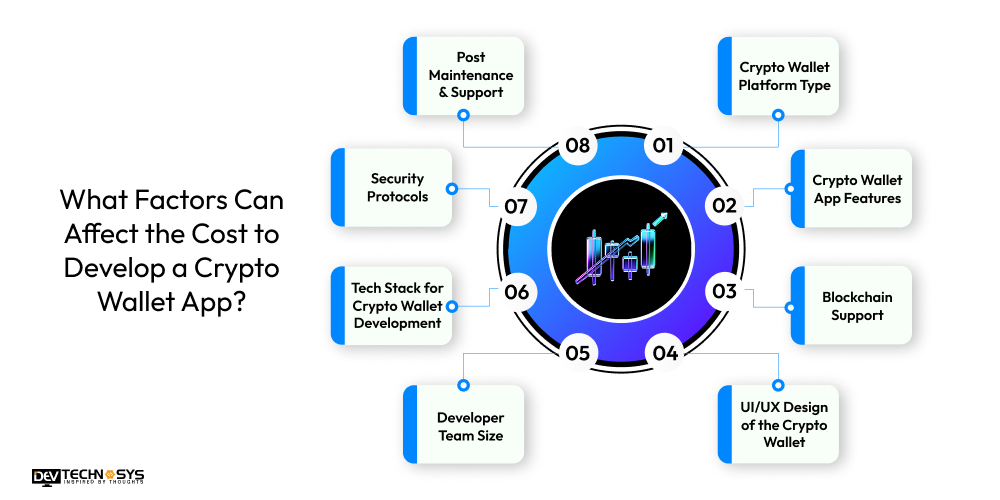
What Factors Can Affect the Cost to Develop a Crypto Wallet App?
Now that we have learned about the crypto wallet development cost, let’s move further and talk about the main factors influencing the cost to create a crypto wallet. Here are the significant factors that affect the final cost to develop a crypto wallet app.
1. Crypto Wallet Platform Type
The cost for crypto exchange development services can depend on the crypto wallet platform. The cost to build a crypto wallet for only the Android or iOS platform is generally less.
Whereas the crypto wallet development cost for both iOS and Android platforms will be much higher. This. OS preferences may also differ depending on geographic locations. This factor is reflected in the business’s successful operation.
Type |
Estimated Cost (USD) |
Timeline |
| Web Wallet | $8,000 – $12,000 | 2 – 3 months |
| Mobile Wallet | $10,000 – $18,000 | 3 – 5 months |
| Desktop Wallet | $12,000 – $20,000 | 4 – 6 months |
| Hardware Wallet | $18,000 – $25,000 | 5 – 7 months |
2. Crypto Wallet App Features
Features and functionalities also impact the cost to create a crypto wallet app. The number of features you add to your crypto wallet increases the total white label crypto wallet cost.
If you want to develop a crypto wallet app like Metamask, then expect the total cost for crypto wallet project to be much higher, due to the addition of advanced features. Adding multi-currency wallet app features can definitely affect the total development cost of a crypto wallet
Feature Level |
Estimated Cost (USD) |
Timeline |
| Basic Features | $8,000 – $12,000 | 2 – 3 months |
| Advanced Features | $15,000 – $20,000 | 4 – 6 months |
| Premium Features | $20,000 – $25,000 | 5 – 7 months |
3. Blockchain Support
The cost to build a crypto wallet rely on blockchain networks to manage private keys. This made multi-chain support essential. Traders prefer wallets that can interact with multiple blockchains, like Ethereum, BNB, or Solana.
So, if you’re planning a multi-chain support, be aware that it can increase the development cost. The more chains you support, the more resources and integration efforts are required.
Type |
Estimated Cost (USD) |
Timeline |
| Single Blockchain | $8,000 – $13,000 | 2 – 4 months |
| Multi-Blockchain | $15,000 – $25,000 | 4 – 6 months |
4. UI/UX Design of the Crypto Wallet
The overall frontend design can affect the cost to build a crypto wallet. The visual and user experience of a crypto wallet can determine the cryptocurrency wallet development cost.
A simple UI/UX might be cheaper, but it may not appeal to your target audience. But a sleek, intuitive design might increase the cost of web crypto wallet development, but help in customer retention. So, plan your budget accordingly.
Design Type |
Estimated Cost (USD) |
Timeline |
| Basic Design | $8,000 – $10,000 | 2 – 3 months |
| Custom UI/UX | $12,000 – $18,000 | 3 – 5 months |
5. Developer Team Size
Choosing crypto wallet developers from a top Web app development company will cause an impact on the cost to create a crypto wallet. The more complex the project, the more developers are needed.
So, it’s best to choose a packaged service from a leading multi-currency crypto wallet development company. Rather than hiring a blockchain developer, designer, or project manager, this will help in balancing team size and budget effectively.
Team Type |
Estimated Cost (USD) |
Timeline |
| Small Team (3–5 members) | $8,000 – $12,000 | 2 – 3 months |
| Medium Team (6–10 members) | $12,000 – $18,000 | 3 – 5 months |
| Large Team (10+ members) | $18,000 – $25,000 | 5 – 7 months |
6. Tech Stack for Crypto Wallet Development
Your chosen tech stack will affect the cost to make a crypto wallet app. Modern tech stacks provide better scalability and security. But they also increased the cryptocurrency wallet app development cost.
For example, Java and Kotlin are preferred for Android, while Swift is generally used in ifor OS. Here’s the table showcasing the cost breakdown of a crypto wallet app based on the tech stack.
Tech Type |
Estimated Cost (USD) |
Timeline |
| Basic Stack | $8,000 – $12,000 | 2 – 3 months |
| Advanced Stack | $12,000 – $18,000 | 3 – 5 months |
| Enterprise Stack | $18,000 – $25,000 | 5 – 7 months |
7. Security Protocols
Security is a non-negotiable factor when developing a crypto-based wallet app. Implementing advanced security measures will impact the crypto wallet app pricing accordingly.
Incorporating 2FA, biometric access, encrypted tech, multi-signature support, and other protocols can increase the development cost. If you skip any of these to save up the cost of a crypto wallet, then it might cost you huge security breaches and scams.
Security Level |
Estimated Cost (USD) |
Timeline |
| Standard Security | $8,000 – $12,000 | 2 – 3 months |
| Advanced Security | $15,000 – $22,000 | 4 – 6 months |
8. Post Maintenance & Support
For a successful crypto wallet development, both post-launch support and maintenance are required, but they also have an impact on cost. According to experts who provide crypto wallet app development services, maintenance is crucial to ensure smooth performance, handle bugs, push updates, and keep up with trends and upgrades. It adds to the crypto wallet development cost, but also saves you from costly breakdowns in the future.
Service Type |
Estimated Cost (USD) |
Timeline |
| Basic Support | $1,000 – $3,000/year | Ongoing |
| Comprehensive Support | $3,000 – $6,000/year | Ongoing |
Types of Crypto Wallets and Their Development Costs
Crypto wallets are digital tools that allow users to store, manage, send, and receive cryptocurrencies securely. They are mainly categorized based on connectivity, storage method, and accessibility.
1. Hot Wallets
Hot wallets are cryptocurrency wallets that are tied to the internet and are made for quick transactions and easy access to digital assets. A lot of people use them for trade, payments, and other everyday crypto activities, but cyber threats are more likely to target them.
These wallets are best suited for users who frequently trade cryptocurrencies and require instant access to funds through mobile, desktop, or web-based applications.
Development Level |
Estimated Cost |
Timeline |
|
Basic Hot Wallet |
$8,000 – $10,000 | 1 to 2 Months |
| Mid-Level Hot Wallet | $10,000 – $16,000 |
2 to 4 Months |
| Advanced Hot Wallet | $16,000 – $24,000 |
4 to 6 Months |
2. Cold Wallets
Cold wallets store cryptocurrencies offline, providing enhanced security against hacking and online attacks. These wallets are ideal for long-term investors and businesses seeking safe storage solutions for large amounts of digital assets.
They are commonly used for secure crypto storage because private keys remain disconnected from internet-based threats and unauthorized access attempts.
Development Level |
Estimated Cost |
Timeline |
| Basic Cold Wallet | $10,000 – $14,000 | 2 to 3 Months |
| Mid-Level Cold Wallet | $14,000 – $21,000 | 3 to 5 Months |
| Advanced Cold Wallet | $21,000 – $30,000+ | 5 to 7 Months |
3. Custodial Wallets
Custodial wallets are managed by third-party platforms or crypto exchanges that control users’ private keys. They offer convenience, backup recovery, and simplified access, making them suitable for beginners entering the cryptocurrency ecosystem.
These wallets are widely adopted by crypto exchanges and fintech platforms that prioritize ease of use, customer support, and centralized asset management.
Development Level |
Estimated Cost |
Timeline |
| Basic Custodial Wallet | $9,000 – $13,000 | 2 to 3 Months |
| Mid-Level Custodial Wallet | $13,000 – $20,000 | 3 to 5 Months |
| Advanced Custodial Wallet | $20,000 – $28,000 | 5 to 7 Months |
4. Non-Custodial Wallets
Non-custodial wallets provide users complete ownership and control over their private keys and crypto assets. These wallets improve privacy, decentralization, and security but require users to manage recovery phrases responsibly.
Non-custodial wallets are highly preferred in decentralized finance ecosystems where users seek direct control over digital assets without relying on intermediaries.
Development Level |
Estimated Cost |
Timeline |
|
Basic Non-Custodial Wallet |
$11,000 – $15,000 | 2 to 4 Months |
| Mid-Level Non-Custodial Wallet | $15,000 – $23,000 |
4 to 6 Months |
| Advanced Non-Custodial Wallet | $23,000 – $30,000+ |
6 to 8 Months |
5. Multi-Signature Wallets
Multi-signature wallets require multiple approvals before completing a transaction, enhancing asset security and reducing fraud risks. They are commonly used by enterprises, crypto startups, decentralized organizations, and teams managing shared funds.
These wallets are particularly useful for organizations that require collaborative fund management, transaction verification, and higher operational transparency.
Development Level |
Estimated Cost |
Timeline |
| Basic Multi-Signature Wallet | $12,000 – $16,000 | 3 to 4 Months |
| Mid-Level Multi-Signature Wallet | $16,000 – $25,000 | 4 to 6 Months |
| Advanced Multi-Signature Wallet | $25,000 – $30,000+ | 6 to 8 Months |

Are There Any Hidden Costs in Crypto Wallet App Development?
Yes, there is. Here are the hidden costs that can affect the total budget of crypto wallet app development. Before diving into cross-chain wallet development, consult with your cryptocurrency development company about the hidden costs.
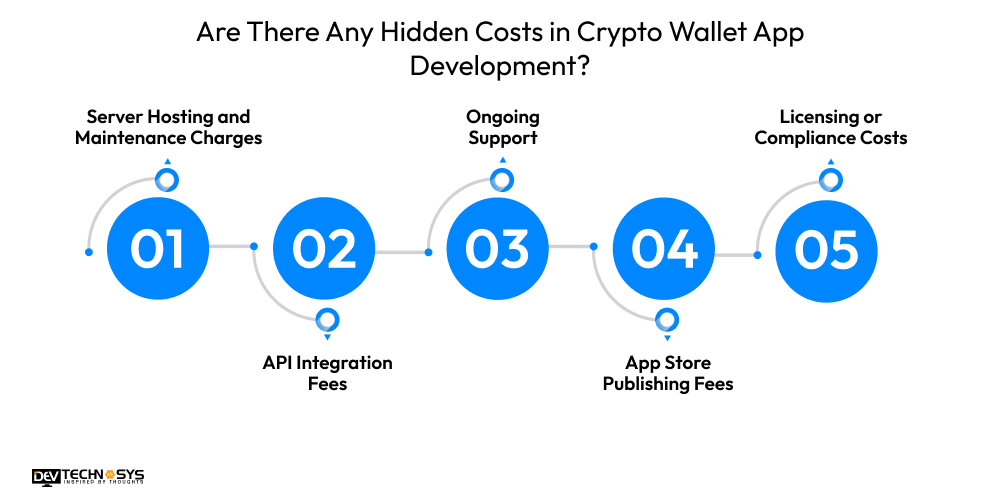
1. Server Hosting and Maintenance Charges
Regular expenses for secure cloud hosting, data storage, and server performance optimization ensure smooth operations, scalability, and uninterrupted accessibility of your crypto wallet app.
2. API Integration Fees
The crypto wallet app development cost may arise due to third-party API integration. APIs can be added for crypto exchanges, payment gateways, or real-time market data. Crypto wallet API integration enhances performance, user experience, and overall functionality within your best crypto wallets.
3. Ongoing Support
Continuous updates, bug fixes, and security enhancements are part of ongoing support, which can increase the budget. However, ongoing maintenance is essential to maintain good app performance, user trust, and protection against evolving cybersecurity threats.
4. App Store Publishing Fees
One-time or annual charges are also a hidden cost that impacts the crypto MVP app development. Annual charges may apply when publishing instant crypto transfer apps on the Android and iOS stores, including the setup of the developer account and compliance with platform-specific requirements.
5. Licensing or Compliance Costs
The cost to create a mobile app to manage cryptocurrency also relies on regional laws. So you may need to pay additional fees for acquiring licenses, ensuring KYC/AML compliance, and meeting government or financial regulations related to crypto operations.
Crypto Wallet Security: What Should You Budget For?
When it comes to crypto wallet security, one must ensure the protection of private keys, seed phrases, user authentication, transaction signing, and sensitive information. Ensuring financial allocation for security testing, penetration testing, audits, secure storage, and advanced measures improves the risk management process throughout the entire development process.
1. Private Key Protection
Private keys give access to crypto assets, so their protection is important. Safe generation, encryption, access control, and trustworthy key management mechanisms can stop unwanted transactions, theft, and asset loss.
2. Seed Phrase Security
Seed phrases make it possible to retrieve wallets, so they should be well protected. Safe generation of seed phrases, tips on backup, and recovery methods stop unwanted access and help users restore their wallets when necessary.
3. Encryption
Encryption takes care of private keys, authentication details, and other important wallet information while storing and transferring. Powerful cryptography and proper key management minimize the chances of unauthorized access and exposure of information.
4. Multi-Factor Authentication
Multi-factor authentication is more secure than just passwords. Now, an authenticator app, security key, or any other verification tool can limit account takeover, credential theft, and unauthorized access to the wallet.
5. Biometric Authentication
Biometric authentication allows users to access their wallets via fingerprint or facial recognition technology. The safe implementation of biometrics at the device level enhances security and user convenience. There should also be a backup authentication method in place to provide reliable protection for users’ accounts.
6. Secure Transaction Signing
Secure transaction signing makes sure that users intend to sign transactions on the blockchain. It is carried out with transparent information about the commitment, signing credentials, and validation of the request to prevent cybercrimes, phishing, and unauthorized transactions.
7. Hardware Security Module
Hardware Security Modules allow for the secure generation, storage, and management of cryptographic keys. It is beneficial for custodial wallets and enterprise wallets since it enhances key protection, access control, compliance, and operational security.
How to Reduce the Cost of Crypto Wallet App Development?
You have learned the factors affecting the cost of crypto wallet development; now, let’s see the factors that help reduce the development cost. In this section, we will explain how to reduce the cost of eWallet app development.
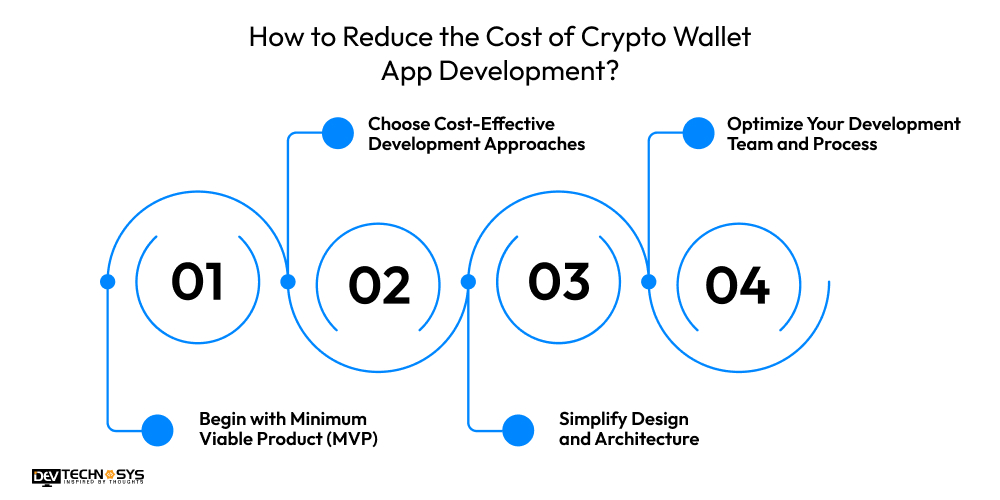
1. Begin with Minimum Viable Product (MVP)
Start the process of mobile crypto wallet development by making an MVP with all essential wallet features like user authentication, transactions, and security. This approach minimizes upfront investment, allows quicker market entry, and helps gather user feedback for future improvements.
Aspect |
Estimated Cost (USD) |
Timeline |
| Core Feature Development | $8,000 – $12,000 | 2 – 3 months |
| Incremental Updates | $2,000 – $4,000 | After the MVP launch |
| Total Savings | Save up to 30% |
2. Choose Cost-Effective Development Approaches
Ask your web3 development company to use cross-platform frameworks, such as Flutter or React Native, to create a single app that works with both iOS and Android. This reduces development time, minimizes coding efforts, and lowers overall project expenses without compromising performance or user experience.
Aspect |
Estimated Cost (USD) |
Timeline |
| Cross-Platform Development | $10,000 – $15,000 | 3 – 4 months |
| Native Development | $18,000 – $25,000 | 5 – 6 months |
| Total Savings | Save up to 40% |
“The point of crypto is not to play games with million-dollar pictures; it’s to build systems that empower people.” Vitalik Buterin (Co-founder of Ethereum)
3. Simplify Design and Architecture
To reduce development costs, opt for a simple, clean, and user-friendly interface, along with a straightforward architecture. If you want to make apps like Exodus, then avoid adding unnecessary features or complex integrations.
whether hot and cold crypto wallets, extra features can increase costs and maintenance. A decentralized wallet app architecture with a simple design ensures better usability and faster, more cost-friendly app deployment.
Aspect |
Estimated Cost (USD) |
Timeline |
| Basic UI/UX | $8,000 – $11,000 | 2 – 3 months |
| Complex UI/UX | $15,000 – $20,000 | 4 – 5 months |
| Total Savings | Save up to 25% |
4. Optimize Your Development Team and Process
Hire a cost-efficient team by outsourcing reputable developers. To develop a Bitget wallet app, you need to implement agile practices to reduce delays, streamline workflow, and maintain transparency. Efficient crypto transaction management helps minimize rework and keeps the crypto asset tracking app within budget.
Aspect |
Estimated Cost (USD) |
Timeline |
| Outsourced Development | $8,000 – $14,000 | 3 – 5 months |
| In-House Development | $18,000 – $25,000 | 4 – 6 months |
| Total Savings | Save up to 35% |
Planning a Crypto Exchange Project?
Get a tailored development cost estimate in a few simple steps.
- 3 quick steps
- 100% free
- Reply in 1 business day
2 Minutes Read
How Long Does It Take to Develop a Crypto Wallet?
The development period of a crypto wallet relies on its nature, the blockchain platforms it supports, level of security needed, functionality, and integrations.
If we are talking about a simple wallet, the time for its development can be counted in months. However, building advanced enterprise or multi-chain wallets takes longer due to various development and testing processes, including security audits.
Development Stage |
Estimated Timeline |
Description |
| Research & Planning | 1–2 weeks | Define wallet requirements, target users, supported assets, and project scope. |
| UI/UX Design | 2–4 weeks | Design intuitive screens, user flows, dashboards, and transaction experiences. |
| Architecture | 1–3 weeks | Plan wallet infrastructure, security architecture, APIs, blockchain connectivity, and data flow. |
| Core Development | 5–10 weeks | Build wallet functionality, authentication, transactions, asset management, and core interfaces. |
| Blockchain Integration | 3–6 weeks | Connect supported blockchain networks, APIs, nodes, tokens, and transaction systems. |
| Security Testing | 2–5 weeks | Perform vulnerability testing, penetration testing, security reviews, and transaction validation. |
| QA & Deployment | 2–4 weeks |
Test functionality, performance, compatibility, fix issues, and prepare the wallet for production launch. |
Build vs White-Label vs Custom Crypto Wallet
The section aims to provide a comparison of whether to create a crypto wallet from scratch, go for a white-label option, or proceed towards custom development. The three options differ with respect to various aspects like cost, time to launch, customization capability, scalability, security controls, ownership, and maintenance.
Factor |
Build From Scratch |
White-Label Wallet |
Custom Wallet Development |
| Initial Cost | High | Lower | Medium–High |
| Development Time | Long | Short | Moderate |
| Customization | Very High | Limited | Very High |
| Scalability | High | Provider-dependent | Very High |
| Security Control | Full | Vendor-dependent | Full |
| Blockchain Support | Flexible | Predefined | Flexible |
| Feature Flexibility | Very High | Limited | Very High |
| Ownership | Full | Provider-dependent | Full |
| Maintenance | Your responsibility | Usually provider-supported | Your responsibility |
| Best For | Large-scale projects | Fast market entry |
Businesses needing tailored solutions |
What Monetization Strategies Are Used For Crypto Wallet Development?
Here are some of the widely used strategies to generate income from crypto wallet apps. Take a look:
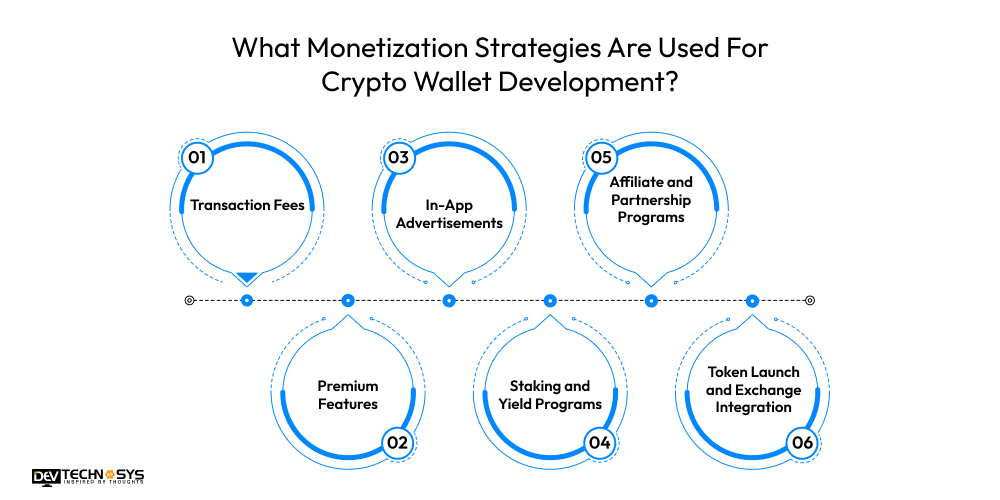
- Transaction Fees: Users need to pay a small amount to send, receive, or exchange cryptocurrencies. Even the smallest amount of fee paid per transaction helps in generating substantial revenue with large user bases.
- Premium Features: Businesses can generate revenue through advanced tools like multi-currency support, priority transactions, or detailed analytics as part of a paid subscription or premium plan.
- In-App Advertisements: Display relevant crypto ads, exchange offers, or partner promotions within the wallet interface to earn ad-based revenue.
- Staking and Yield Programs: This model allows users to stake cryptocurrencies or take part in yield farming through the wallet directly. It earns them a percentage of profits from staking rewards.
- Affiliate and Partnership Programs: Partner up with exchanges, payment gateways, or DeFi platforms to earn commissions through referrals, integrations, or in-app promotions.
- Token Launch and Exchange Integration: Earn revenue by supporting token listings, facilitating ICOs, or integrating exchange APIs that charge listing or transaction fees.
Conclusion
In the above blog, we discussed the cost to create a crypto wallet app. Developing a secure cryptocurrency app involves balancing innovation, security, and cost efficiency. We hope it cleared any lingering doubt regarding crypto wallet app development.
By selecting the right tech stack, launching with an MVP, and optimizing resources, businesses can significantly reduce expenses while delivering a secure and user-friendly decentralized wallet solution. If you are in search of a top crypto wallet app development company, then turn to Dev Technosys, and stay tuned for more insightful updates.
Frequently Asked Questions
Find answers to the most common questions related to this article.
The average cost to develop a new crypto wallet ranges between $8,000 and $25,000, depending on the wallet type, features, security level, and blockchain integrations included in the project.
Yes. A custom crypto wallet app with advanced features like multi-currency support, staking, and NFT integration can cost around $15,000 to $25,000, while a basic wallet with essential functionalities may cost $8,000 to $12,000.
On average, it takes around 3 to 6 months to develop a fully functional crypto wallet app, including design, development, testing, and deployment.
Common monetization methods include transaction fees, premium subscriptions, affiliate programs, staking rewards, and in-app advertisements.
A professional company ensures robust security, blockchain integration, and compliance while delivering a scalable and user-friendly app that meets market and business needs.
Yes, provided your app includes advanced encryption, multi-signature authentication, biometric security, and KYC/AML compliance to protect user data and assets.