16+
Years of Experience
14-Day Money-Back Guarantee — Not satisfied? Cancel within 14 days for a full refund.Explore Our Money-Back Guarantee
14-Day Money-Back Guarantee — Not satisfied? Cancel within 14 days for a full refund.Explore Our Money-Back Guarantee


Explore AI solutions
AI services & solutions
View AI hubAdvanced AI services
View AI hubRecommended AI reads
View category
From telehealth to pharmacy, EMR to HIPAA — we build it all with security, compliance & innovation at the core.
Develop CRM systems for hospitals, clinics, health insurers, and life sciences organizations with our healthcare CRM software development company. With these systems, healthcare businesses can seamlessly manage patients, their communication, follow-ups, and administrative workflows. Our highly skilled developers support businesses when manual processes, disconnected systems, or limited reporting affect patient relationships. The custom healthcare CRM software development services we offer cater to specific workflows and business needs. We also offer AI-powered features that automate communication and support patient insights. Our healthcare CRM software development solutions integrate HL7 FHIR to connect CRM workflows with electronic health record (EHR) systems.

Custom healthcare CRM development backed by security-focused practices, integration expertise, and long-term technical support.
16+
Years of Experience
250+
In-House Professionals
71+
Countries Served
2,300+
Projects Delivered
4.8/5
Clutch Rating
ISO 27001:2022
Certified Security Management
100%
NDA-Protected Engagements
Flexible
Hiring Models

The process of building software that helps healthcare organizations manage patient relationships, communication, and engagement is healthcare CRM software development. Under single roof, this development links:
Custom healthcare CRM software provides hospitals, clinics, payers, and life sciences with tools to:
Patient relationship management (PRM) software concentrates on enhancing communication, patient involvement, and long-term relationships.
Market statistics help healthcare organizations understand the demand for digital healthcare platforms, patient engagement tools, and connected systems. The following figures highlight the market opportunities and technology trends relevant to healthcare CRM software development.
The global healthcare CRM market is expected to reach USD 23.15 billion in 2026, compared with USD 20.61 billion in 2025.
Source: Mordor Intelligence
Gartner forecasts global enterprise IT spending in healthcare and life sciences to reach USD 326 billion in 2025. Software spending is projected to grow by 13.2%.
Source: Gartner
The global digital health market is projected to grow at a compound annual growth rate of 21.60% from 2026 to 2034. Its estimated value is USD 491.62 billion in 2026.
Source: Fortune Business Insights
In 2025, 76% of U.S. non-federal acute care hospitals engaged in all four measured interoperability activities: sending, receiving, finding, and integrating electronic health information.
Source: ONC Health IT Research & Analysis
An American Medical Association survey published in March 2026 found that 81% of physicians reported using AI professionally.
Source: American Medical Association
More than 35 million individuals were affected by large healthcare data breaches. This is reported to the U.S. Department of Health and Human Services' Office for Civil Rights in 2025. A report published in December 2025 analyzes it.
Source: TechTarget
Healthcare organizations that need healthcare CRM software development for patient communication, appointment management, or data integration.
Build a custom healthcare CRM to organize patient communication, automate appointment reminders, and simplify follow-up management.
For hospitals, clinics, and healthcare startups
Extend your CRM with patient relationship management, healthcare-specific workflows, role-based access, and reporting capabilities.
For healthcare administrators and operations teams
Connect your CRM with EHR/EMR software, appointment systems, labs, pharmacies, and third-party healthcare applications through APIs and HL7 FHIR.
For healthcare providers, payers, and IT leaders
Our healthcare CRM development services help healthcare organizations develop and manage CRMs aligned with their workflows. We emphasize patient engagement, connectivity, and efficient operations throughout the process. See our healthcare CRM development services that provide custom CRM development based on your business needs.
Our experts analyze your business objectives, patient engagement, current software, and operational issues. We identify key features, user roles, required integrations, and other details before starting development.
Deliverable: Project scope, requirements, and development roadmap.

We develop a CRM for the healthcare industry that includes patient profiles, scheduling, referral tracking, and communications functionality. The development can be web-based, mobile app development, and even include custom APIs.
Deliverable: A healthcare CRM tailored to your workflows and user roles.

We develop cloud-based CRM solutions, which provide secure access, centralized data management, and scalable processes. The architecture can handle increasing workloads, a distributed healthcare workforce, and integration with certified third-party systems.
Deliverable: A scalable cloud-based CRM solution tailored to your access and infrastructure needs.

We integrate healthcare CRMs with EHR/EMR systems, patient portals, billing applications, laboratory systems, and scheduling systems. We use APIs and HL7 FHIR, wherever appropriate, to enable data transfer between integrated applications.
Deliverable: Integrated healthcare IT systems with efficient data transfers.

We migrate patient interaction history, contact data, appointments, and referrals from your legacy systems. Our engineers map fields, clean data, detect duplicates, and validate migrated data prior to the CRM going live.
Deliverable: Structured and validated CRM data.

We test CRM workflows, integrations, performance, and security controls before deployment. After launch, our team can provide bug fixes, software updates, performance monitoring, and feature enhancements to support changing business needs.
Deliverable: A tested healthcare CRM with ongoing technical support.

We develop custom healthcare CRM solutions for organizations launching new platforms, connecting existing systems, or improving current patient engagement workflows.
Develop a tailored healthcare CRM with patient 360 profiles, appointment scheduling, referral management, communication tools, and analytics.
Build Your CRMIntegrate your CRM with EHR/EMR systems, patient portals, billing software, and third-party applications to improve data exchange and reduce manual work.
Connect Your SystemsImprove CRM performance, strengthen security controls, add AI-powered features, and modernize outdated workflows as your healthcare operations grow.
Upgrade Your CRMHealthcare CRM development solutions help manage patient relationships, coordinate provider networks, and improve operational workflows. We develop three different types of CRM capabilities:
| Solution | Built for | Core modules |
|---|---|---|
| Hospital CRM | Hospitals and healthcare networks | Patient records, appointments, referrals |
| Clinic CRM | Clinics and specialty practices | Patient scheduling, reminders, follow-ups |
| Patient Engagement CRM | Patient-focused healthcare providers | Patient portal, messaging, campaigns |
| Provider Relationship CRM | Hospitals and referral networks | Referral tracking, provider directories |
| Payer and TPA CRM | Insurers and third-party administrators | Member engagement, claims communication |
| Life-Sciences CRM | Pharma, biotech, and medical device companies | HCP engagement, field activity tracking |
Here is how each healthcare CRM solution supports your organization:
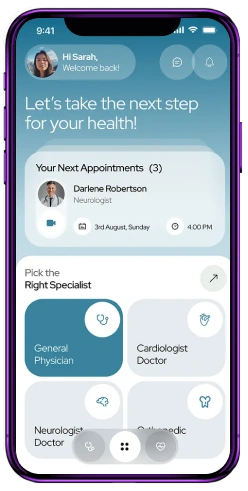
Integration of CRM in hospitals helps coordinate all activities. This includes managing patient queries, appointments, referrals, and interdepartmental communication. Hospital CRM allows healthcare teams to keep track of patient interactions and coordinate administrative tasks. It also supports maintaining consistent communication throughout the patient journey.

Patient Records

Appointments

Referrals
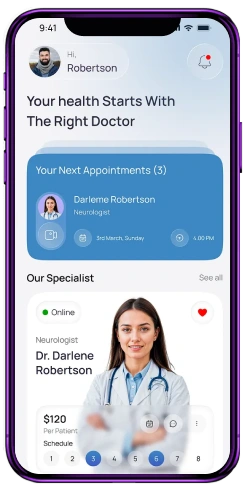
Clinic CRM software is highly recommended and helps independent practices and specialist clinics. It manages patient scheduling, automated reminders, follow-ups, and communication history. Clinical CRM reduces repetitive administration-related tasks. It also helps staff maintain organized patient relationships throughout routine visits.

Patient Scheduling

Reminders

Follow-Ups
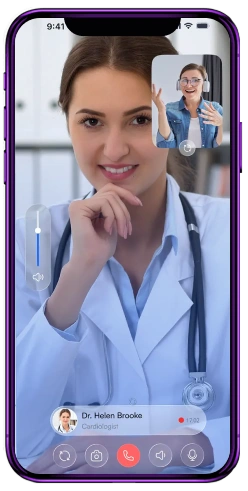
With patient engagement CRM solutions, healthcare providers can communicate with patients via email, SMS, and other channels. It supports campaign management, feedback collection, and personalized outreach. All of these help providers enhance communication continuity and encourage appropriate follow-up.

Patient Portal

Messaging

Campaigns
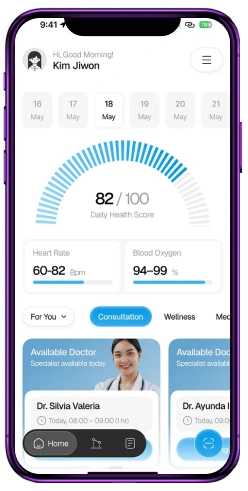
Provider relationship CRM software is beneficial for healthcare networks and hospitals. It allows them to manage physician relationships, referral management, and referral tracking. With provider relationship CRM, teams can seamlessly monitor referral progress and maintain provider directories. It even identifies opportunities to strengthen professional collaboration.

Referral Tracking

Provider Directories
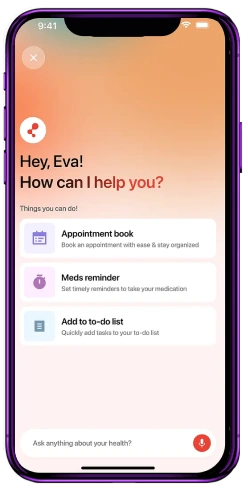
CRM for payers and third-party administrators organizes member inquiries, service requests, claims-related communication, and case histories. This CRM helps service teams coordinate responses and monitor unresolved issues. Payer and TPA CRM improves member engagement across insurance and benefits workflows.

Member Engagement

Claims Communication
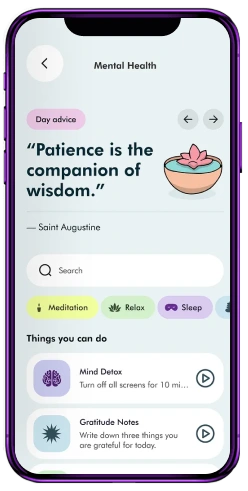
Life-sciences CRM software supports pharmaceutical, biotechnology, and medical device companies in managing healthcare professional (HCP) engagement. It organizes professional profiles, field interactions, communication histories, and outreach activities while supporting applicable privacy and industry requirements.

HCP Engagement

Field Activity Tracking
Healthcare CRM software includes features that help providers manage patient relationships, coordinate appointments, automate communication, and protect sensitive information. The must-have features in a patient CRM should support three groups: patients who access care, staff who manage daily operations, and healthcare organizations that need advanced automation and integrations.
Patient-facing features make it easier for people to book appointments, access information, and communicate with healthcare providers.
Allows patients to access profiles, medical information, appointments, and care instructions from one place.
Lets patients book, reschedule, or cancel appointments based on provider availability.
Sends appointment alerts and follow-up notifications to help reduce missed visits.
Enables private communication between patients and authorized healthcare staff.
Lets patients submit personal details and intake forms before their appointments.
Records patient permissions for communication, data use, and other approved activities.
Gives patients access to authorized prescriptions and post-visit instructions where supported by clinical integrations.
Helps patients review invoices, outstanding balances, and available payment options.
Collects patient feedback to identify service issues and improve care experiences.
Allows patients to choose supported contact channels and manage notification preferences.

Features of the admin and staff panel allow healthcare professionals to maintain patient information and efficiently manage daily operations.
Keeps patient contact details, communication history, and relevant relationship information in one place.
Gives staff a shared view of provider availability, bookings, and schedule changes.
Helps teams receive, assign, process, and manage referrals between providers or departments.
Shows referral status and highlights pending actions or follow-ups.
Organizes outreach for preventive screenings, appointment follow-ups, and patient education.
Coordinates patient communication across supported channels, including email, SMS, phone, and messaging platforms.
Assigns responsibilities and tracks deadlines for patient-related administrative tasks.
Restricts patient information access according to staff responsibilities and permissions.
Records relevant system activities and data changes to support accountability and security reviews.
Tracks appointment trends, referral completion, campaign results, and patient engagement.

With advanced features, healthcare CRM software gets connected with intelligent automation and digital health technologies. These features support more coordinated patient engagement.
Identifies engagement patterns to help staff prioritize appropriate patient outreach.
Highlights patients who may need follow-up based on defined data patterns and validated criteria.
Answers routine administrative questions and guides patients through registration or scheduling.
Connects appointment workflows with compatible video consultation platforms.
Imports permitted data from connected devices into supported monitoring workflows.
Exchanges relevant information with clinical systems to reduce duplicate data entry.
Supports structured data exchange with compatible healthcare applications and services.
Initiates approved tasks and notifications when events such as bookings or referral updates occur.
Groups patients by relevant criteria to support targeted and appropriate communication.
Helps authorized teams identify suspicious access patterns and investigate potential security incidents.

See how AI can support patient engagement and everyday CRM workflows:
Step 1
Patients submit appointment requests, questions, or follow-up queries through connected channels.
Step 2
AI checks available patient information, permissions, and communication history.
Step 3
The healthcare CRM retrieves approved data from connected EHR/EMR systems and patient records.
Step 4
AI drafts responses, summarizes interactions, or identifies follow-up needs for staff review.
Step 5
Healthcare teams review outputs, approve actions, and update CRM records.
Task examples: Patient query support, appointment reminders, no-show prediction, patient segmentation, call summaries, and follow-up automation.
Practical AI features. Healthcare-focused decisions. Human-reviewed patient engagement.
AI: Answer patient queries and support appointment scheduling through a healthcare chatbot.
Experts: Configure conversation flows, escalation rules, and staff handoffs.
Deliverable: Faster responses and smoother patient scheduling.
AI: Use predictive analytics to identify patients at risk of missing appointments.
Experts: Validate predictions and plan timely reminders.
Deliverable: Fewer missed appointments and better scheduling.
AI: Group patients by engagement history and relevant data.
Experts: Define patient segments for personalized communication and follow-ups.
Deliverable: Targeted patient relationship management.
AI: Identify suitable contact times and analyze patient feedback for negative sentiment.
Experts: Set communication preferences and complaint escalation rules.
Deliverable: Timely outreach and faster complaint handling.
AI: Automate routine CRM tasks, including patient intake, follow-ups, and task assignments.
Experts: Configure permissions, approval steps, and workflow limits.
Deliverable: Efficient CRM workflows with human oversight.
AI: Use LLM CRM integration to draft patient messages, call summaries, and follow-up reminders.
Experts: Review drafts for accuracy, privacy, and appropriate language.
Deliverable: Faster communication with staff approval.
For advanced automation, our artificial intelligence development services support practical AI use cases, including predictive analytics and intelligent CRM workflows.
Integrate AI into your healthcare CRM software without disrupting essential patient management workflows.
Connect patient profiles, appointment histories, referral records, communication logs, and approved external data sources.
Define data ownership, access permissions, source quality, and update frequency before enabling AI workflows.
Healthcare provider / CRM product owner
Assign clinical and technical owners, define staff approval requirements, and establish escalation procedures for sensitive patient interactions.
Healthcare CRM platform development demands a tech stack that makes the platform scalable, secure, and high-performing. It supports patient relationship management, secure data access, EHR/EMR integration, and AI-powered engagement. Our team selects technologies based on your CRM features, user roles, integration requirements, security needs, and expected growth.
Build responsive healthcare CRM dashboards for patient engagement teams, doctors, administrators, and care coordinators.


Develop CRM business logic, patient workflows, appointment management, referral tracking, and secure communication services.


Manage patient profiles, communication history, appointment records, referrals, and CRM activity logs with appropriate access controls.


Deploy scalable healthcare CRM platforms with controlled environments, automated deployments, monitoring, and backup capabilities.


Connect healthcare CRM software with clinical systems and third-party applications to support healthcare data exchange.


Add intelligent patient engagement, automated communication, CRM workflow assistance, and reporting capabilities.


Protect patient information through controlled access, secure authentication, and traceable system activity.


Support appointment reminders, patient follow-ups, secure messaging, and communication across approved channels.


Validate CRM functionality, integration reliability, performance, and security before and after deployment.


Healthcare CRM architecture seamlessly connects patient profiles, communication tools, appointment workflows, analytics, and clinical systems. Each layer supports secure data exchange, efficient patient relationship management, and scalable operations.
Controls who can access healthcare CRM data and which actions each user can perform.
Protects data exchanged between the CRM, EHR/EMR systems, and third-party applications.
Stores patient profiles, appointment details, and referral records with appropriate security controls.
Provides scalable hosting, reliable backups, and separate environments for development and production.
Tracks CRM performance, integration errors, security events, and uptime to support reliable operations.
Healthcare CRMs handle patient records, appointment history, billing details, and clinical communication. One breach can harm patients and bring heavy penalties. This is why we build security into every layer of your CRM from day one.
A healthcare CRM needs HIPAA and HITECH compliance for US patient data. It also needs GDPR for EU and UK patients, and CCPA for California residents. Dev Technosys builds to all of these standards.
OAuth 2.0 authentication, single sign-on, and multi-factor login. Role-based access control for doctors, nurses, front desk staff, billing teams, and admins. Every user sees only the minimum data their role needs.
OWASP-based code reviews, dependency scanning, and penetration testing. Every release is checked before it reaches production.
AES-256 encryption for patient data at rest. TLS 1.2 or higher for data in transit. Field-level encryption for PHI, plus encrypted backups.
HIPAA, GDPR, and CCPA controls built into the workflow. Complete audit logs track who viewed or changed each patient record. Regular internal audits keep controls current.
Unauthorized access to medical records
Encryption, role-based access, audit logs
Data exposure during record exchange
Secure FHIR APIs, signed requests, scoped keys
PHI leakage through SMS, email, or chat
Secure messaging, consent tracking, patient portals
Exposure of card or insurance data
PCI DSS-compliant gateways, tokenization
Records retained beyond required periods
Retention policies, access controls, applicable privacy safeguards
Staff accessing records without authorization
Minimum-necessary access, access monitoring, alerts
Data leakage through external vendors
Business Associate Agreements (BAAs), vendor risk assessments
Stolen credentials leading to account takeover
Multi-factor authentication (MFA), suspicious-login alerts
Our healthcare CRM software development company follows a structured approach to build healthcare CRM software. We follow the development process around patient engagement goals, operational needs, and the existing technology ecosystem. Each stage of development focuses on making the platform practical for healthcare teams. This CRM healthcare software development process is also secure for sensitive data and adaptable to changing workflows.
Initially, we assess patient communication, appointment coordination, referral workflows, user roles, and existing systems. This helps us find out requirements and define a clear implementation roadmap. In this stage, the feature list is prioritized, and project plans are aligned.
We design intuitive interfaces for healthcare staff and administrators, using prototypes. It simplifies patient record access, follow-up management, appointment coordination, and daily CRM tasks. At this phase, user-friendly screens and validated workflows are defined before development begins.
We develop custom features for patient profiles, referrals, communication, and reporting. Our team connects EHR/EMR platforms and third-party applications through suitable APIs and HL7 FHIR standards where supported. A connected CRM supports patient relationship management and reduces disconnected workflows.
We test core CRM functions, integrations, performance, and access permissions before deployment. Security checks and requirements reviews help identify vulnerabilities and support applicable privacy and regulatory obligations. It presents a tested platform with verified workflows and documented issues addressed before launch.
We deploy the platform in the selected environment and monitor its performance after launch. Ongoing support covers bug fixes, security updates, integration maintenance, and feature enhancements as healthcare workflows change. Continued technical support keeps the CRM reliable and aligned with evolving operational needs.
The healthcare CRM solutions portfolio includes advanced, secure systems designed to meet the evolving needs of healthcare providers. These solutions offer data-driven patient insights, seamless system integrations, and automated workflows to manage patient interactions, improve care coordination, and enhance overall operational efficiency across healthcare environments.


The custom CRM software development cost starts from $4,999. The overall development cost is determined by the platform’s complexity. The app becomes more complex with the number of features, integrations, and security requirements. Several other factors influencing development expenses are platform choice, UI/UX design, tech stack, backend infrastructure, and many others.
$4,999+
For startups, small businesses, and teams replacing spreadsheets with centralized customer management.
Contact management, lead tracking, task management, and basic reporting.
Custom Quote
For growing businesses needing tailored workflows, sales automation, and third-party integrations.
Custom dashboards, workflow automation, API integrations, and advanced reporting.
Custom Quote
For large organizations managing multiple teams, business units, and complex operational processes.
Role-based access, multi-team workflows, advanced analytics, and enterprise integrations.
Custom Quote
For hospitals, clinics, healthcare networks, and organizations managing patient relationships.
Patient engagement, appointment workflows, referral management, and healthcare system integrations.
Get a quote after a free discovery call. Scope, features, and milestones are discussed upfront to help avoid unexpected costs.
Healthcare CRM development is more than just building contact management software. It includes understanding the patient’s journey, provider relationships, and data exchange. A healthcare CRM also supports the workflows that healthcare teams depend on. Dev Technosys develops tailored CRM solutions around these operational needs.
In hospitals, clinics, insurance companies, and life science organizations, we develop CRM in healthcare systems to meet specific client needs.
We have expertise in healthcare integration with EHR/EMR, HL7, FHIR, and healthcare-oriented APIs.
Our extensive project portfolio includes more than 2,300 projects completed in over 71 countries.
Expert in healthcare technologies, Narayan Das advises on tech solutions in the healthcare sector.
We use automated follow-ups, patient communication, artificial intelligence, and data analytics features to support healthcare business processes.
We have CMMI Level 3 certification, confirming that we follow structured software development processes in our work.
We use safeguards such as encryption, access control, and audit logs. We also comply with ISO 27001, SOC 1, SOC 2, GDPR, and CCPA regulations.
Our Clutch rating of 4.8 out of 5 is based on 203 reviews, so you can see client opinions independently.
We have 16 years of experience in software development. We can build your healthcare CRM solutions according to the business objectives and technical requirements of your project.
When the working procedures, data requirements, or integrations go beyond what the already available platforms can provide. Building a custom CRM is important when your current operational processes can be organized according to a proven CRM system. Analyze the complexity of the implementation, licensing, integration constraints, data ownership, and future support prior to making a decision.
Contact healthcare managers, particularly practice directors, patient experience managers, and operations departments. This helps you know the issues that they would like to have addressed by the new CRM. Ensure demand for the future product at the stage of developing the workflow prototype or during the pilot implementation stage.
Choose one of the most valuable workflows to work on instead of constructing a comprehensive system at once. It would be sensible to develop a basic version (MVP) of the referral management system. It might include a provider database, referral status monitoring system, task assignments, and some reports.
Determine which system is going to manage each data type before starting the development cycle. For instance, the EHR might be treated as the source of truth when it comes to clinical records. Whereas the CRM is to take care of engagement activities. Rules for synchronization, record-matching logic, management of errors, and reconciliation procedures should be established to prevent conflicting or duplicated information.
Implement integrations that will locate failures instead of just ignoring incomplete records. Utilize retry policies, idempotency, validation rules, error queues, and reconciliation reports. It is also necessary to assign accountability for resolving failed exchanges and follow up on data freshness. This allows employees to recognize issues before they cause disruption in patient-related processes.
Create metrics connected to the workflow being improved by the CRM. This may encompass, for example, referral conversion rates, no-show appointment rates, or customer response rates. It is important to establish a baseline before the launch and compare it with the outcomes after the launch.
Begin by implementing the system in a single department or location, ensuring it works well with existing processes. Create a staff responsibilities map, migrate the required data, and train targeted kinds of users. After establishing usability and data accuracy, as well as workflow efficiency, launch the system in more departments. This ensures proper rollback solutions in case of key operational issues.
Explain in the contract who owns the source code, patient data, configuration, documentation, and custom-built apps. Define which types of exported data should be used while mentioning the third parties who will be granted access. It should comply with licensing agreements and offer transition assistance.
Identify what should be part of the system launch and describe acceptance criteria for every element provided in the system. The implementation should be conducted based on milestones, while proper budget estimation needs to be performed. Consider external integration, migration, the cost of infrastructure, and security assessment.
Choose an architecture that supports configurable workflows, organization-specific permissions, and clear separation of customer data. Test performance under projected usage and define how new locations, users, integrations, and reporting requirements will be added. Plan for multi-tenant isolation early if you intend to sell the CRM to multiple organizations.
Discover how our clients have achieved success, watch their authentic video testimonials and see the results for yourself
“Dev Technosys delivered a secure, user-friendly medical app for us. Their technical expertise, clear communication, and commitment to healthcare compliance truly exceeded our expectations.”
CEO


“Dev Technosys transformed our business idea into a powerful mobile app. Their strategic approach, reliability, and on-time delivery helped us scale smoothly and confidently.”
Managing Director


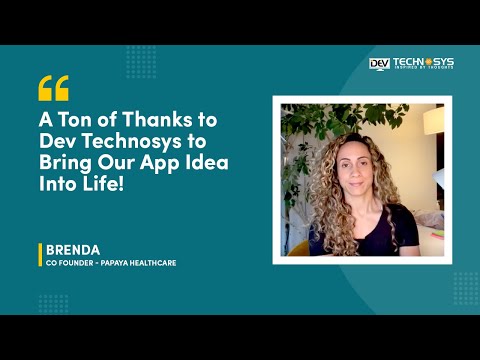
“Working with Dev Technosys felt like a true partnership. Their care, dedication, and understanding of our healthcare goals made the entire journey smooth and rewarding.”
CEO, Papaya

“Dev Technosys brought our carpet information project to life with clarity and precision. Their professionalism, responsiveness, and commitment to quality made the collaboration truly valuable.”
Director - Satar Carpet GmbH


“Dev Technosys played a key role in shaping our project into a viable business. Their problem-solving mindset, technical strength, and consistent support delivered real results.”
Founder at Best.AZ


“Dev Technosys handled our healthcare project with care and precision. Their thoughtful approach, strong collaboration, and attention to detail gave us confidence at every stage.”
CEO - InspireWebApp


205 Reviews on Clutch

UK

Europe

UAE

Japan


Our innovation and technology expertise have earned a feature in respected media platforms and industry publications across the world.
Featured by EIN Presswire for delivering innovative software development services that help startups and enterprises accelerate digital transformation with confidence.
ViewHighlighted by Barchart for building scalable digital products that combine modern technologies, exceptional performance, and measurable business value.
ViewAcknowledged by The Hindu for creating reliable web, mobile, and enterprise software solutions that drive long-term business growth.
ViewShowcased by Entrepreneur for empowering startups with innovative product development strategies and high-quality software engineering expertise.
View
Celebrated by Hindustan Times for delivering custom technology solutions that help businesses innovate, scale efficiently, and stay competitive.
ViewWe Proudly Shines Globally, Featured by Renowned Publishers!

B-11-12, Lal Bahadur Nagar, Sector 9, Malviya Nagar, Jaipur, Rajasthan 302017, India

5668 e 61st street ste 2000 #360 commerce, california 90040, USA



188 Quay Street Auckland, AUK 1010

United States (USA), United Kingdom (UK), Singapore, Germany, Canada, Australia, Ireland ,New Zealand , Netherlands, Norway, United Arab Emirates (UAE) , Saudi Arabia , Qatar, Finland, Mexico, Switzerland, Spain, France, etc


by 800+ customers for 2300+ Web and Mobile App Development Projects.