Trusted Across 3 Major Markets · 700+ Businesses · USA · UK · Canada
Warehouse Management Software Development Company
Build a connected WMS with AI capabilities allowing avoidance of mistakes in picking, offering straight answers to problems, and enabling faster decision-making in the warehouse. Connect operational information from stock, orders, scanners, and workflows, preserving supervision from specialists in the key tasks.
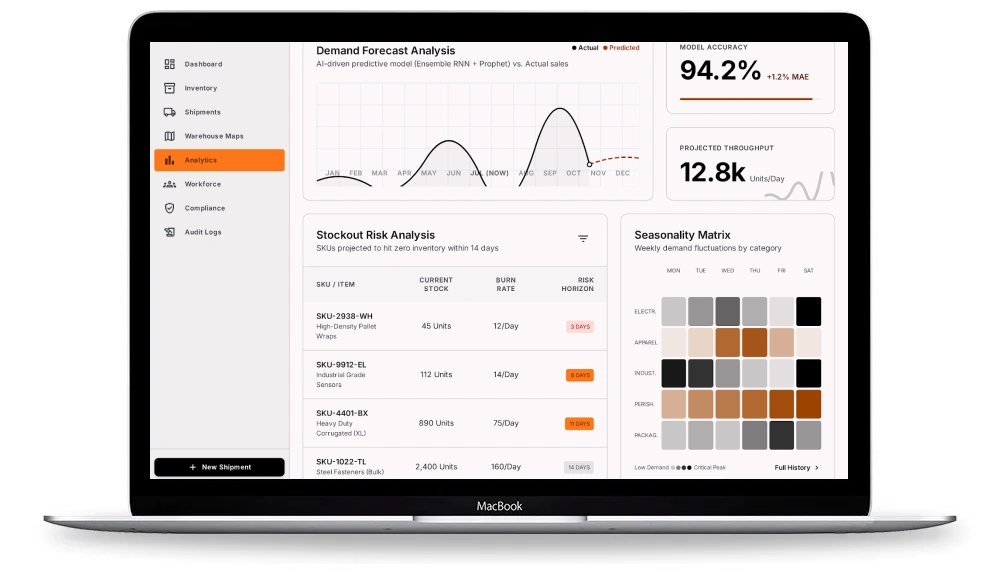
Support demand forecasting, inventory replenishment, warehouse slotting, anomaly detection, and smarter operational decisions.
Understanding the basics
What is WMS?
A Warehouse Management System (WMS) is software that manages and enhances physical processes that occur in a warehouse. While
inventory management software development
solutions is primarily responsible for tracking the amount of stock, availability of goods, and their movements through a warehouse, WMS not only tracks the movement of goods but also helps goods move from the point of receiving through to shipping.
Thus, WMS can perform functions such as receiving, putaway, managing locations and bins, picking, packing, replenishment, cycle counting, dispatch, and shipping. WMS connects various warehouse functions with ERP, TMS, e-commerce, barcode, RFID, and other business processes.
In other words, inventory systems answer the question: “How much stock do we have?” while WMS answers: “Where the stock is, how it should move, and what the next action is?”
WMSReceive · Store · Pick · Ship
Receiving & Putaway
Locations & Bins
Picking & Packing
Replenishment
ERP, TMS & RFID Integration
WMS Architecture: How Warehouse Management Software Works
The present-day warehouse management system makes use of a structure built on several levels used in linking users in the warehouse with business systems, operational processes, and data in real-time. Every layer has its own functions and is capable of transferring information thanks to secure APIs and processes driven by events occurring in the warehouse systems.
This module provides dashboards and operational screens for warehouse managers, supervisors, pickers, packers, and drivers. Mobile technologies and barcode/RFID monitors help to capture warehouses’ real-time activities.
This component acts as the controlled entry point for applications and external systems. API requests, authentication, routing, rate limits, and secure communication are processed via this element.
This element is responsible for the management of stock levels, product locations, purchase orders, sales orders, transfers, receiving, picking, packing, and shipping.
This component automates warehousing processes based on the adjustable business rules and priorities, inventory conditions, user role, and order requirements.
The Integration Layer connects the WMS with ERP, TMS, CRM, e-Commerce, accounting systems, marketplaces, carriers, IoT devices, and automation systems.
The Database & Event Processing deals with the storage of inventory, order, user, warehouse, and transaction data and the processing of real-time events that occur during warehouse activities.
The component converts the operational information into dashboards, forecasts, inventory data, demand forecasting, anomaly detection, and recommendations on
warehouse slotting optimization.
Secures warehouse information using role-based access controls, encryption, and continuous monitoring.
Users / Scanners
Web, mobile and scanner interfaces for warehouse teams and devices.
API Gateway
Manages requests, authentication, routing and secure access.
Inventory & Orders
Handles stock, locations, orders, receiving, picking, packing and shipping.
Workflow & Rules
Automates processes with business rules, priorities and conditions.
Integrations
Connects with ERP, TMS, CRM, eCommerce, carriers and other systems.
Database & Events
Stores data and processes real-time events from warehouse operations.
Analytics & AI
Provides insights, forecasting, optimization and anomaly detection.
Security • Audit • Monitoring
Ensures data protection, access control, logs, alerts and compliance.
How the AI Workflow Fits Your WMS System?
A systematic approach to developing warehouse management systems that incorporates information derived from warehouse operations, supplemented by both artificial intelligence and human intervention.
Warehouse Data Capture
Gather information regarding inventory details, ordering patterns, and warehouse operations.
Data Validation
Validate approved information sources and assess the reliability of data quality with relevant context about the operations.
AI Analysis And Recommendations
Generate forecasts, summaries of inconsistencies, and standard operating procedures (SOP).
Manager Review
Approval of actions by a supervisor, who verifies the information before suggesting approvals.
Approved Workflow Update
Documentation of managerial actions and amendments made to the systems.
Warehouse Management Software Development
Services
Enhance warehouse functionalities with scalable warehouse management software development services that help optimize inventory, automate processes, and improve visibility. Starting with custom WMS development, integrations, mobile services, and operational support. We offer
supply chain digital transformation with effective, intelligent warehouse features where efficiency, precision, and productivity receive a whole new meaning.
The customization of WMS programs is valuable for creating warehouse management solutions that meet your requirements in terms of business processes, warehouse stock, and procedures. Professionals develop the necessary features like tracking stock, processing and monitoring orders, using barcodes for sorting goods, and performing the operations of packing, sending, and reporting.
Consultation services for WMS are useful for enabling businesses to observe their warehouse-related failures, find the requirements for specialized software, and discover necessary technologies and features. Professionals carry out the analysis of the operating processes, recommend improvements, and set the plan for future
manufacturing software development.
The integration services for warehouse management software with ERP systems, eCommerce, accounting, CRM, transportation, and other business systems. API and integration technologies help in bringing the synchronization of order, inventory, shipment, and customer data. Thus, it is achieved how the information flows among the platforms, and as a result, the number of manual data entries.
Maintenance and Support of WMS/Maintenance and Support of WMS/Maintenance and Support of WMS/Maintenance and Support of WMS/Maintenance and Support of WMS/Maintenance and Support of WMS/Maintenance and Support of WMS/Maintenance and Support of WMS/Maintenance and Support of WMS/Maintenance and Support of WMS/Maintenance and Support of WMS/Maintenance and Support of WMS/
004
Maintenance and Support of WMS
WMS support and maintenance services are aimed at ensuring the reliable operation of warehouse management software even after its launch. The services of the
supply chain software development team include timely identification of issues, fixing bugs, security updates, performance improvements, constant monitoring, and updates of the system.
By recruiting warehouse management software engineers, companies obtain the services of specialists who are skilled in designing, developing, implementing, adjusting, and servicing warehouse management applications. The chosen programmers could operate together with your existing workforce or work on one specific task. Being experts in their area allows them to move the process of implementation forward and get dependable functionality of the warehouse.
WMS Data Migration Services/WMS Data Migration Services/WMS Data Migration Services/WMS Data Migration Services/WMS Data Migration Services/WMS Data Migration Services/WMS Data Migration Services/WMS Data Migration Services/WMS Data Migration Services/WMS Data Migration Services/WMS Data Migration Services/WMS Data Migration Services/
006
WMS Data Migration Services
WMS data migration services assist any company in the secure transfer of its data concerning its warehouse, inventory, products, suppliers, and orders into a new warehouse management system. The developers ensure that the data is cleaned, processed, and validated while being migrated. This keeps the data accurate and prevents it from being disrupted.
Are you planning to develop warehouse management software for your business?
Include user-friendly warehouse software panels that can add more worth to your business
application while keeping the users engaged at the same time. Here are our three different
panels for warehouse management software.
Keeping the customers happy is crucial for all businesses. Hence,
a user-friendly customer panel is necessary during the warehouse management
software development panel. Here are the features you can include in the user
panel.
The owner panel of warehouse management software helps business
owners by offering a comprehensive overview of their warehouse operations. It
further helps them to make informed decisions and optimize business operations.
This warehouse management software panel allows administrators to
manage the warehouse system, including security, user access, and configuration.
Here are the key features of the admin panel of WMS software solutions.
Best Warehouse Management Software Development Solutions
Established in 2010, Dev Technosys delivers the industry-best mobile and web
development services to all-scale businesses. Our team offers future-proof warehouse management
software development solutions that can bring your small business to the next level. Here is a
glimpse of our unique WMS software solutions. Let’s explore the solutions one by one.
Enterprise Resource Planning WMS
ERP systems with warehouse management system modules provide
multiple features streamlining the supply chain and inventory management
processes.
Inventory Tracking
Order Management
Auto Data Collection
Module Integration
Analytics & Reporting
Quality Control
Cloud Warehouse Management Software
Cloud-based WMS is hosted on the cloud and can be accessed from
anywhere with a stable internet connection. It offers real-time updates and can
be adjusted accordingly.
Inventory Tracking
Auto Data Collection
Analytics & Reporting
Secure Payment
Easy Mobile Access
Reviews & Ratings
E-commerce WMS Software Solutions
Our customized WMS solutions offer a smooth and pleasant customer
experience. The software automates workflows and provides complete visibility of
all sales channels.
Inventory Management
Order Processing
Multi-channel Integration
Shipping Integration
Analytics & Reporting
Pick and Pack Optimization
Warehouse Inventory Management Solutions
Manage your warehouse inventory in a hassle-free manner. Now track
down delivery vehicles and keep an eye on warehouse inventory in just a go with
our inventory management solutions.
Inventory Tracking
Auto Data Collection
Order Management
Multi-location Management
Stock Location Management
Reporting & Analytics
Warehouse Order Tracking & Management
Seamless pick, pack and track multiple warehouse orders within
just a few simple taps. Get warehouse order tracking and management solutions
from us.
Order Prioritization
Automated Pick and Pack
Order Splitting
Setup Picking Rules
Tracking Orders
In-app Notifications
Shipping Management Solutions
Large-scale businesses have to deal with bulk shipping or orders.
Shipping management software allows them to easily manage the bulk of orders
online.
Schedule Shipping
Shipment History
Shipping Time and Rates
Merge orders
Manage Payments
In-app Messaging
Advanced AI And Warehouse System Integrations
WMS integrations with other software such as ERP, e-commerce, TMS, robots, IoT, barcodes, RFID, and CRM systems as a result of sophisticated AI-based technologies. AI uses operational information to enhance demand forecasts, improve inventory management, prioritize orders, optimize warehouse processes, and improve shipment visibility and instant decision-making throughout the supply chain.
Warehouse integrations and the data exchanged with each system
Integration
Data Exchanged
ERP
SKUs, POs, invoices
E-commerce
Orders, stock, returns
TMS/Carriers
Shipments, tracking, labels
Barcode/RFID
Items, bins, movements
CRM
Customers, orders, preferences
Robotics/IoT
Tasks, sensor, equipment data
AI/ML Systems
Forecasts, demand signals, recommendations
AI Warehouse Planning and Exception Assistance
Aiding the workforce in anticipating disruptions, improving inventory movement, and overcoming operational problems with the help of connected supply chain data.
Forecasting Low Stock Availability
Evaluate levels of stock, consumer trends, and supply data to spot possible shortages beforehand.
Client Outcome
A verified process that helps pinpoint inventory hazards and ensures proper replenishment.
Warehouse Workload Forecasting
Utilize past data on orders received and staff availability, as well as on incoming shipment schedules, to determine expected changes in workload and support planning.
Client Outcome
Quantifiable planning process for aligning warehouse capabilities and operational needs.
Warehouse Operations Copilot
Empower teams to look for authorized SOPs and obtain instruction on processing actions needed for making the most common warehouse decisions.
Client Outcome
Controlled knowledge-assistance process with professional supervision to provide guidance in operations.
AI Warehouse Assessment
Explore AI for smarter warehouse operations
Identify where AI can optimize inventory, automate warehouse decisions, and improve fulfillment performance. Tell us about your current warehouse setup and one operational challenge. Our team can help uncover practical AI opportunities across your workflows.
AI Inventory Intelligence
AI Workflow Automation
Smart WMS Integration
Book Free Consultation
Tell us how to reach you.
Warehouse Management Software Development Process
At Dev Technosys, we follow a streamlined warehouse management software
development process to craft unique business applications and websites. From development to
optimization, our team works effectively to adhere to businesses' needs and help them scale
up their presence in the market. Here’s the development approach we follow.
Properly analyze the project scope and make a strategy
Step 2
UX/UI Designing
Create unique and user-friendly design for every app
Step 3
App Development
Start the actual development process using documentation
Step 4
Test the App
Conduct in-depth testing to eliminate errors before launch
Step 5
Release the Project
Finally launch the application on the desired platform (Android or
iOS)
Modern Technologies Used For WMS Development Services
Make use of new technologies to
develop a barcode reader application
that is smarter, faster, and more efficient. Utilizing technologies such as AI, IoT, RFID, barcodes, cloud computing, etc. may result in enhanced accuracy of the inventory, automation of warehouse processes, improvement of real-time visibility, increased productivity, and efficiency of the supply chain.
Artificial Intelligence and Machine Learning are capable of gathering data from WMS systems and turning it into actionable insights. These technologies help identify patterns in operations that significantly decrease discrepancies in stock, make it easier to process warehouse tasks, and enable companies to use their resources efficiently.
IoT is a communication technology that connects various devices such as sensors and scanners with warehouse management systems (WMS) and gives access to real-time operational information.
IoT development services monitor how the inventory moves, how it is stored, how the equipment works, and the warehouse’s total activities. The introduction of IoT technology into the WMS improves visibility, making it possible to respond quickly.
RFID and barcode technologies help in robotics by allowing WMS systems to automate the identification and tracing of items, pallets, bins, and dispatches in warehouses. This in turn enables workers to easily document their inventory changes while receiving, selecting, packing, and sending items. As a result, warehouse operations become more efficient.
Cloud computing technology provides
warehouse automation software with the ability to store and access warehouse information securely via the internet. The cloud allows WMS to receive real-time updates from several warehouses while providing required scalability and easy access, as well as integration with other systems.
Tech Stacks for Warehouse Management Software Development Services
Select a robust technology stack for developing reliable, scalable, and high-performance Warehouse Management Software. By selecting the perfect combination of frontend technologies, backend technologies, databases, cloud services, APIs, and
asset tracking software development tools, the software can offer seamless integration, real-time inventory tracking, automation services, and high performance. This benefits users and helps organizations manage warehouse operations efficiently while supporting future expansion.
React.js
Angular
Vue.js
HTML5
CSS3
JavaScript
TypeScript
Node.js
Python
Java
.NET
Go
PHP
Spring Boot
PostgreSQL
MySQL
MongoDB
Microsoft SQL Server
Oracle Database
Redis
Elasticsearch
OpenAI
TensorFlow
PyTorch
Scikit-learn
Hugging Face
OpenCV
Google Vertex AI
AWS
Microsoft Azure
Google Cloud
Docker
Kubernetes
Jenkins
Terraform
REST APIs
GraphQL
SOAP
Webhooks
Apache Kafka
RabbitMQ
gRPC
RFID
Barcode Scanning
IoT Sensors
GPS
BLE (Bluetooth Low Energy)
Computer Vision
Robotics APIs
SECURITY & COMPLIANCE FOR WAREHOUSE MANAGEMENT
Securing Warehouse Operations with Robust Security & Compliance
We create supply chain management software that has the protective features needed to secure its data about inventory status, activities, user accounts, and information about itself in connected warehouse systems.
01
Role-Based Access & User Permissions
Our solutions have fine-grained access control that enables instructors to assign permissions according to roles, job duties, warehouse locations, and other activities to limit any unauthorized access to the system.
02
Data Encryption & Secure Communication
The solutions used in our warehouses protect sensitive operations and inventory information through encryption, secure APIs, database connections, among others, and safe data transmission via warehouses and connected systems.
03
Audit Trails & Activity Monitoring
We make sure that every activity log is systematically stored, including all inventory movements, operations done by users, inventory modifications, authorization processes, and system events. This will help create evidence for any eventual audit or inquiry about operations within the company.
04
Compliance-Ready Data Management
We create warehouses with a configurable approach to data storage and retention, data safety controls, access management, documentation processes, and backup methods to comply with various data protection and privacy laws.
05
Backup, Recovery & Business Continuity
We install automated backup systems, recovery techniques, backup options, and disaster recovery procedures in order to ensure the availability of warehouse data and minimize disruption to operations when there are system failures.
Warehouse Management Security & Compliance
Our team designs warehouse management systems that include protection of data such as inventory records, employee accounts, operational data, connected devices, and integrated business systems. This protection is implemented in accordance with warehouse operations and is associated with basic principles such as workflow, employees' roles, third-party integrations, data sensitivity, and specific regulations.
Techs Slaash – Warehouse Management Software Development Company
Featured for creating intelligent warehouse management platforms that simplify inventory control, optimize daily operations, and support scalable business growth worldwide.
Investor Weekly News – Best Warehouse Software Development Company
Dev Technosys is bringing a new approach to warehouse technology with scalable systems designed to connect critical operations, improve visibility, and support evolving business demands.
OCNJ Daily – Listed Supply Chain Software Development Company
Dev Technosys is transforming supply chain technology with scalable software solutions built to streamline operations, connect complex processes, enhance real-time visibility, and help businesses adapt to evolving supply chain demands.
Generally, warehouse management software development costs fluctuate between $4,999 and $100,000. The final
cost to build warehouse management software
differs according to factors like features, integrations required, or project complexity. A simple WMS, like the basic version, is easier to create compared to the advanced systems that use AI, automation, IoT, ERP, and real-time inventory tracking. The whole process is also affected by the project team location, security needs, testing, and follow-up maintenance.
MVP WMS ($4,999-$15,000)
Basic warehousing management software provides inventory management, order processing, barcode scanning, stock replenishing, user management, and basic reporting for the first stages of business.
Medium Complexity WMS ($15,000-$50,000)
Medium complexity WMS projects offer functionalities for multi-warehouse operations, integration of enterprise resource planning, automated processes, advanced inventory management, data analysis, and barcode techniques.
Advanced WMS ($50,000-$100,000)
Advanced WMS systems cover modern technologies, real-time warehouse management solutions, forecasting of goods movement, robotics solutions, advanced automation, ERP systems, advanced security systems, and intelligent reporting functions.
Real-World WMS Solutions We Have Developed
We create our warehouse management software projects according to real operational problems, such as order fulfillment, inventory control, or warehouse automation. We develop
smart warehouse management systems that are fully customized and flexible, which features intelligent workflows, seamless integration, and specific dashboards for multiple users.
The distribution industry in the UK was confronted with the problem of inefficient operations due to the presence of multiple warehouses. The company sought a solution to the inventory discrepancies between warehousing operations and aimed to improve the visibility of stock. Notable challenges included the need for real-time synchronization of stock, dealing with the high volume of transactions, the integration between the ERP system and
logistics software development
solutions, and minimizing delays in stock updates.
Solution
The team presented a feasible solution by means of the creation of an advanced inventory monitoring platform that comprises information about warehouses in one unified system. The new approach would allow obtaining real-time stock synchronization, barcode scanning, moving stock across the warehouse via the warehouse management system, sending notifications regarding stock replenishment automatically, and managing purchase orders.
A logistics and freight company in the US has to get the best centralized platform in a bid to automate complicated supply chain operations coupled with improving visibility in logistics. This was not possible due to some big challenges, including tracking shipments via various networks of transportation, coordination of the fleet and warehouses, coordination of different ERP and TMS systems, and automating the dispatching process.
Solution
In order to resolve the issues with the operation of the logistics process, the WMS developers offered for use a unique, scalable automated logistics process that is based on the centralized dashboard concept, ensuring complete integration of logistics operations with the help of real-time communication. The solution features functions such as shipment tracking, fleet monitoring, route planning, warehouse coordination, dispatching, and freight documentation.
Stack: Inventory Management | Barcode Verification | Batch Tracking | Stock Control | Warehouse Management | Production Tracking | Supplier Records
Challenge
A manufacturing business located in the UK sought to resolve inconsistencies in its inventories. The use of separate records made it impossible to keep track of the activities carried out concerning material usage, units processed, stock movement, and stock counting. As well as acquiring the right inventory data necessary for planning manufacturing.
Solution
The warehouse management software development services team created a central inventory control system that was able to connect the warehouse and production activities via a single system. This system facilitated the implementation of digital processes for stock movements, verification by barcodes, tracking of batches and numbers, conducting cycle counts, and keeping the database of suppliers. It also used the historical data regarding transactions and enabled the identification of variance.
For years Dev Technosys has delivered Websites and Applications that have worked as the text
books for other to follow in the tech domain. Some of these highly precious products- the fruits
of our exceptional acumen in technology and breakthrough solutions are:
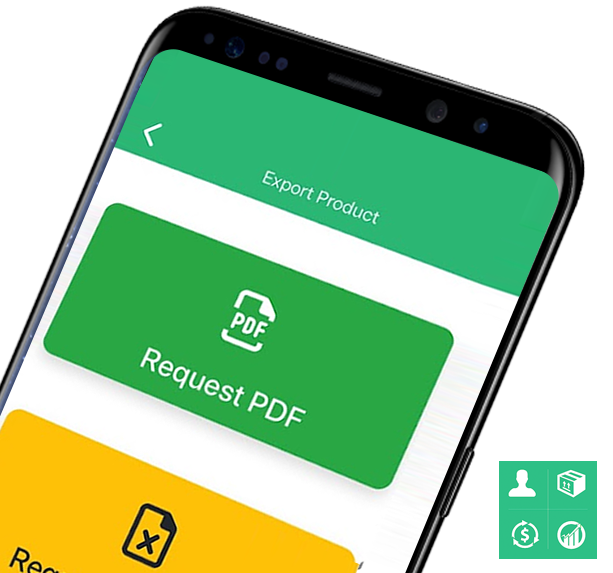
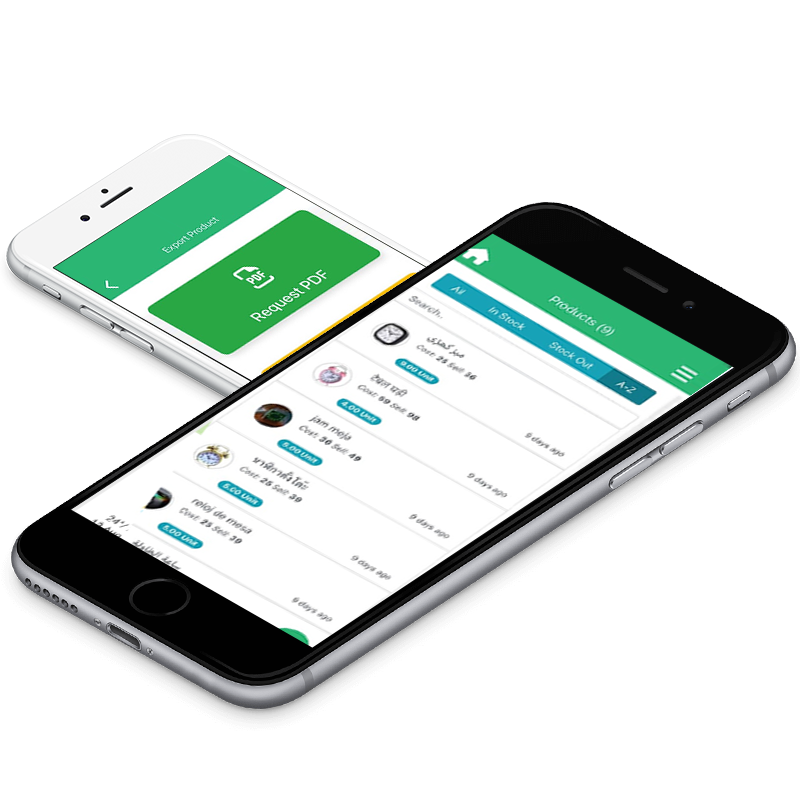
Inventory Management Simplified: BoxHero makes inventory management easier than ever. A powerful app that boasts a simple, intuitive user interface, BoxHero suits all businesses and industries for inventory tracking. Here’s a comprehensive ov...
Inventory Management Simplified: BoxHero makes inventory management easier than ever. A powerful app that boasts a simple, intuitive user interface, BoxHero suits all businesses and industries for inventory tracking. Here’s a comprehensive overview of all the features to manage your stock and optimize your inventory.
The best app for your business is the one that saves your time & money without any technical knowledge. A simple way to Track Unlimited Sales, Profit, Stock, Generate Invoice, CRM, POS & much more for FREE.
...
The best app for your business is the one that saves your time & money without any technical knowledge. A simple way to Track Unlimited Sales, Profit, Stock, Generate Invoice, CRM, POS & much more for FREE.
Why Select Dev Technosys as the Best Warehouse Management Software Development Company?
Dev Technosys offers secure, AI-driven, and scalable goods management software customized to fit your business requirements. With NDA-guaranteed confidentiality, advanced integrations, industry-related knowledge, and full development assistance. We are able to help you improve your stock flow, create transparency, and accomplish efficiency in your warehouse.
Customized WMS Development Expertise
Our skilled WMS software development professionals offer custom WMS solutions that are designed to accommodate your inventory operations, targets, industry regulations, and growth objectives.
AI-Powered Warehouse Automation
We make use of AI technologies to incorporate smart forecasting, smart inventory management, automated processes, and data analysis into your warehouse operations.
NDA-Based Project Confidentiality
We safeguard your data by signing a Non-Disclosure Agreement (NDA) with you at the beginning of your project.
Advanced Security & Data Protection
Our WMS offers secure logins, role-based access control functions, encryption, and data storage, which prevent data breaches and make your warehouse operations secure.
Seamless ERP & Third-Party Integrations
We connect WMS to ERP software and third-party products, which allows operations to be faster and with fewer errors.
Scalable Cloud-Based Architecture
We create versatile warehousing systems that can absorb the increasing volumes of inventory storage, cope with different warehouse locations, and handle changes in operational processes without excessive complications.
End-to-End Development & Support
All the way from our first meeting and user interface design to system creation, testing, launch, and ongoing support, we provide a unified warehouse management system under one roof.
Frequently Asked Questions
How Much Does Warehouse Management Software Development Cost?
Developing warehouse software is similar to other types of mobile app development processes. On average, the cost to develop warehouse
management software is somewhere between $4,999 and $100,000 or more. Consult warehouse management software development company professionals
to get an exact cost estimate.
Why Choose Us As Your Warehouse Management Software Development Company?
Established in 2010, Dev Technosys delivers top-notch mobile app development and web
development solutions to businesses worldwide. With our assistance, businesses can expect
improved business growth and success in no time. So, get in touch with our warehouse
software development company and let your business reach heights.
Do You Sign An NDA?
Yes, we sign NDA (Non-disclosure agreement) before working on any project. At Dev
Technosys, we value every customer’s business idea and put in our best efforts to turn it
into growth-driven business solutions. So, you can seek our warehouse management software
development services without worrying about data confidentiality.
How Long Does It Take to Develop A WMS System?
YThere is no fixed time to develop warehouse management software. The time depends on the
type of warehouse management software developed. So first, finalize your warehouse
software solutions requirements, share it with the mobile app developers, and they will
tell you the time required.
How to Hire Dedicated Developers for Warehouse Software Development?
To hire software developers on demand, you can choose from the suitable hiring models
available, i.e. –
Hire developers full-time
Hire developers part-time
Hire dedicated developers hourly
What is the Difference Between WMS and Inventory Management Software?
Inventory tracking software is mainly concerned with tracking inventory quantities, movements, purchasing, and stock levels. In contrast to this, the WMS also deals with many aspects of warehouse operations such as receiving goods, putting them away, placing them in the bins, picking and packing orders, shipping them, and managing labor and inventory. WMS systems offer additional automation and provide better visibility than inventory management systems.
Can WMS Integrate With SAP, Oracle, Microsoft Dynamics, or Odoo?
Definitely, the WMS can work with various production and business management systems thanks to the possibility of establishing a connection through APIs, middleware, webhooks, or connectors. Integrating WMS with business management systems makes it possible to synchronize data about products, purchase orders, sales orders, and shipment details and products.
Can WMS Integrate With Barcode And RFID Systems?
Yes, WMS software is compatible with devices such as barcode reader equipment, RFID devices, mobile devices, printing devices, and other identification systems. The integration of barcode and RFID technology can help to automate the receiving of goods, recognizing goods, transferring inventory, planning picking operations, counting inventory, and pushing the products to shipment.
Does WMS Support Multiple Warehouses?
Yes, WMS makes it possible to manage multiple warehouses and distribution centers from a single platform. Users of WMS have an opportunity to gain visibility into stock in certain locations, manage transfers, replenish stock, plan picking of goods, assign permissions for system usage, and generate warehouse reports.
What Modules Should a Warehouse Management System Include?
A good warehouse management system should incorporate inventory management, receiving, put away, picking, packing, shipping, barcode scanning, order management, warehouse reporting, and analytics. More sophisticated systems can add functions such as labor management, slotting, cycle counting, automation, and multi-warehouse monitoring.
Can AI Be Integrated Into Warehouse Management Software?
Of course! Artificial Intelligence can improve WMS solutions by enabling demand forecasting, optimizing inventory, slotting, improving picking, detecting anomalies, and optimizing routes. Advanced AI tools also allow warehouse managers to analyze the data and identify patterns, leading to better usage of resources and faster response times.
What Does WMS Maintenance Cost?
The cost of maintaining WMS systems can vary according to different factors such as the complexity of the warehouse automation software , the number of integrations, the hosting type, the number of users, security level, type of coverage, and many other aspects. You can expect to spend around 10-20% of the total cost on annual maintenance, which includes fixing bugs, monitoring, updating, security patching, and other processes.
Video Testimonials
Discover how our clients have achieved success, watch their authentic video testimonials and see the results for yourself
“Dev Technosys delivered a secure, user-friendly medical app for us. Their technical expertise, clear communication, and commitment to healthcare compliance truly exceeded our expectations.”
Brad Ryba
CEO
“Dev Technosys transformed our business idea into a powerful mobile app. Their strategic approach, reliability, and on-time delivery helped us scale smoothly and confidently.”
Lisa Dott
Managing Director
“Working with Dev Technosys felt like a true partnership. Their care, dedication, and understanding of our healthcare goals made the entire journey smooth and rewarding.”
Brenda
CEO, Papaya
“Dev Technosys brought our carpet information project to life with clarity and precision. Their professionalism, responsiveness, and commitment to quality made the collaboration truly valuable.”
Abdul Wahad Rasul
Director - Satar Carpet GmbH
“Dev Technosys played a key role in shaping our project into a viable business. Their problem-solving mindset, technical strength, and consistent support delivered real results.”
Arif Alakbarov
Founder at Best.AZ
“Dev Technosys handled our healthcare project with care and precision. Their thoughtful approach, strong collaboration, and attention to detail gave us confidence at every stage.”
Mbuih Zukane
CEO - InspireWebApp
Testimonial
2300+
Countless Transformative Experiences with Dev
Technosys
205 Reviews on Clutch
Meditation App
"Building a meditation app that truly soothes the mind was our
dream, and this team made it a reality. From immersive audio features to
personalized mindfulness journeys, everything is top-notch. Our users love the
experience, and retention rates have never been better!"
Emma Lewis
UK
Fintech App
"Security and speed are critical in fintech, and our app
excels in
both. The team built an intuitive, high-performance platform with advanced
encryption and instant transactions. We've gained the trust of thousands of
users,
and our growth in the financial sector has been remarkable!"
Luca Moretti
Europe
NFT Marketplace Platform
"Our NFT marketplace is now a game-changer in the digital
asset
world. The team delivered a highly secure, scalable, and visually stunning
platform.
The smart contract integration is seamless, and user engagement is at an
all-time
high. Couldn't have asked for a better partner!"
Aisha Al-Farsi
UAE
Generative AI
"AI innovation requires precision, and this team nailed it.
Our
generative AI app produces stunning, realistic results with lightning-fast
processing. The algorithm customization exceeded our expectations, and we've
seen a
massive increase in user adoption. Truly a cutting-edge development team!"
Our innovation and technology expertise have earned a feature in respected media platforms and industry publications across the world.
Mobile Development Services Excellence
Featured by EIN Presswire for delivering innovative software development
services that help startups and enterprises accelerate digital transformation with
confidence.
Highlighted by Barchart for building scalable digital products that combine
modern technologies, exceptional performance, and measurable business value.
United States (USA), United Kingdom (UK), Singapore, Germany, Canada, Australia,
Ireland ,New Zealand , Netherlands, Norway, United Arab Emirates (UAE) , Saudi Arabia ,
Qatar, Finland, Mexico, Switzerland, Spain, France, etc
4.8 / 5.0
by 800+ customers for 2300+ Web and Mobile App Development Projects.
Meditation App
"Building a meditation app that truly soothes the mind
was our dream, and this team made it a reality. From immersive audio
features to personalized mindfulness journeys, everything is top-notch.
Our users love the experience, and retention rates have never been
better!"
Emma Lewis
UK
Fintech App
"Security and speed are critical in fintech, and our
app excels in both. The team built an intuitive, high-performance
platform with advanced encryption and instant transactions. We've gained
the trust of thousands of users, and our growth in the financial sector
has been remarkable!"
Luca Moretti
Europe
NFT Marketplace Platform
"Our NFT marketplace is now a game-changer in the
digital asset world. The team delivered a highly secure, scalable, and
visually stunning platform. The smart contract integration is seamless,
and user engagement is at an all-time high. Couldn't have asked for a
better partner!"
Aisha Al-Farsi
UAE
Generative AI
"AI innovation requires precision, and this team
nailed it. Our generative AI app produces stunning, realistic results
with lightning-fast processing. The algorithm customization exceeded our
expectations, and we've seen a massive increase in user adoption. Truly
a cutting-edge development team!"
Hiroshi Tanaka
Japan
Generative AI
"AI innovation requires precision, and this team
nailed it. Our generative AI app produces stunning, realistic results
with lightning-fast processing. The algorithm customization exceeded our
expectations, and we've seen a massive increase in user adoption. Truly
a cutting-edge development team!"
Hiroshi Tanaka
Japan
Healthcare App
"Partnering with Dev Technosys for our healthcare app
was a game-changer. Their team understood HIPAA compliance and delivered
a secure, intuitive solution that doctors and patients love. Their
expertise in healthcare IT really stands out. We appreciate their timely
communication and proactive approach. Highly recommend them!"
Emily Johnson
USA
eCommerce App
"We hired Dev Technosys to develop a multi-vendor
eCommerce platform, and they nailed it! Their UI/UX team brought our
vision to life, while the developers ensured seamless functionality.
From product management to payment gateway integration, everything works
perfectly. A dependable IT partner!"
James Carter
United Kingdom
Logistics App
"Dev Technosys helped us digitize our logistics
business with a powerful web and mobile solution. From live tracking to
route optimization, their custom features improved efficiency and
reduced costs. We are very impressed with their technical strength and
customer-centric mindset."








 GDPR
GDPR
 PCI-DSS
 ISO 27001
 SOC 1
SOC 1
 SOC 2
SOC 2
 ISO 9001
 CMMI-3








 React.js
 Angular
 Vue.js
 HTML5
HTML5 CSS3
CSS3 JavaScript
 TypeScript
 Node.js
 Python
 Java
Java .NET
.NET Go
Go PHP
PHP Spring Boot
 PostgreSQL
 MySQL
MySQL MongoDB
 Microsoft SQL Server
 Oracle Database
 Redis
Redis Elasticsearch
 OpenAI
 TensorFlow
 PyTorch
 Scikit-learn
 Hugging Face
 OpenCV
 Google Vertex AI
 AWS
AWS Microsoft Azure
 Docker
 Kubernetes
 Jenkins
 Terraform
 REST APIs
 GraphQL
 SOAP
SOAP Webhooks
 Apache Kafka
 RabbitMQ
 gRPC
gRPC