
















Key takeaways:
-
- The Mental Health Apps Market size is expected to grow at a CAGR of 14.76% during the forecast period (2026-2031).
- The cost to build an artificial Intelligence project for mental well-being is estimated at €6744 to €21076.
- Best AI chat therapy apps must prioritize features like robust safety and data privacy (HIPAA compliance).
- An AI-powered mental health chatbot must include AI conversation support, 24/7 empathetic chatbots that provide instant, personalized responses, coping strategies, and guided exercises.
For the people of France, 2025 was the year filled with increasing mental health concerns. According to a 2025 Iflop survey, 55% of French people reported suffering from mental health issues or psychological distress in the past year. In such situations, AI-powered therapy apps are a boon.
When physical therapy waitlists seem endless, AI therapy apps can take over within seconds. An AI app for therapy is an innovative, accessible, and convenient solution.
Artificial intelligence therapy platforms use AI-driven tools to develop treatment plans and provide cognitive-behavioral therapy exercises. Additionally, they offer personalized mental wellness support, track mood, and offer guided self-help programs.
For businesses, this is a lucrative opportunity. With the French market for mental wellness apps continuing to grow, investing in the best AI chat therapy apps is a well-thought-out strategy.
But what does it take to develop AI therapy app in France? Let’s find out together! Read the blog to the end to learn how to build an AI therapy app in France from scratch. From the development process and features to benefits and costs, we leave no stone unturned.
Keep scrolling!
What is an AI Therapy App?
An AI therapy app is a mobile platform that uses Artificial Intelligence, mainly chatbots, to provide mental health support through automated conversations.
Digital mental health apps include guided journaling, mood tracking, and personalized CBT exercises. AI-powered therapy apps help with mild to moderate distress, delivering in-depth, long-term therapy.
Mental Health App Market Stats
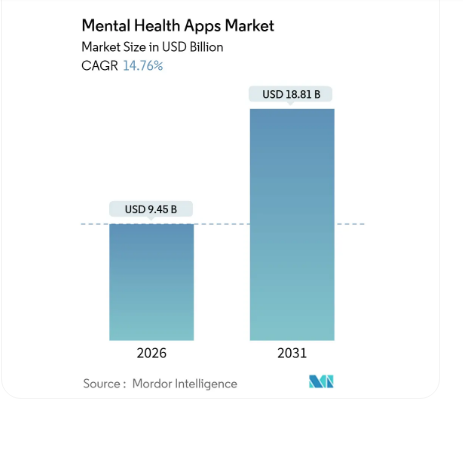
- The Mental Health Apps Market size is estimated at USD 9.45 billion in 2026, and is expected to reach USD 18.81 billion by 2031, at a CAGR of 14.76% during the forecast period (2026–2031).
- By platform, iOS led the mental health apps market with 52.63% market share in 2025, while Android is forecast to expand at a 17.45% CAGR through 2031.
- By age group, adults accounted for 68.78% of the mental health apps market share in 2025, and the children and adolescent segment is poised for a 16.07% CAGR to 2031.
- According to application type, depression and anxiety tools captured 30.13% of the mental health apps market share in 2025, and stress management apps are set to grow at a 16.34% CAGR to 2031.
- By end user, homecare and individuals held 62.44% of the mental health apps market share in 2025, whereas employer programs are projected to advance at a 17.02% CAGR during the forecast period.
- In the subscription model, freemium plans commanded 31.34% of the mental health apps market share in 2025, while paid plans are expected to grow at a 15.77% CAGR through 2031.
How AI Therapy Platforms Operate: a Step-by-Step Process
Before diving into mental health app development, let’s see how these apps operate. The AI therapist app uses advanced algorithms, ML, and mental health expertise to offer personalized support for users suffering from mental health issues. Here’s how AI-based therapy apps function:
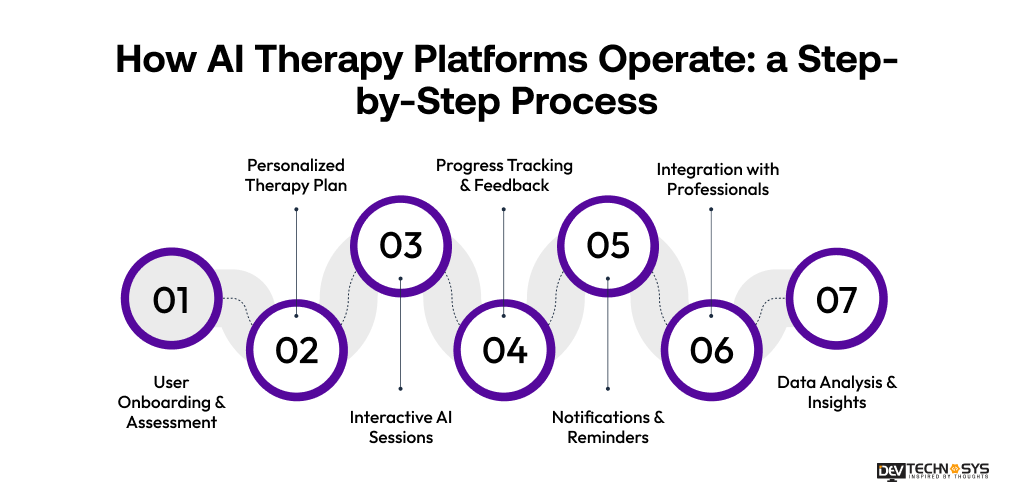
1. User Onboarding & Assessment:
Users need to first create an account and answer a mental health assistant questionnaire. AI analyzes the answers to understand the behavioral patterns, mood, and stress levels of users.
2. Personalized Therapy Plan:
Based on the analysis of the assessment, the AI develops a custom therapy regimen, recommending exercises, coping strategies, and sessions tailored to the distinct user needs.
3. Interactive AI Sessions:
A free AI therapy app offers guided exercises, chat-based therapy, or speech therapy and voice-based interactions. Cognitive behavioral therapy (CBT), meditation, or mindfulness sessions are also available for users.
4. Progress Tracking & Feedback:
AI tracks user engagement, mood changes, and improvement over time. Real-time feedback is provided, and adjustments in therapy sessions are made according to that.
5. Notifications & Reminders:
The AI psychologist app sends notifications to remind users of daily exercises, session schedules, and mood check-ins. Notifications maintain consistency and improve adherence.
5. Integration with Professionals:
Some AI therapy apps tie up with licensed therapists and offer professional consultation or supervision, combining AI support with human guidance. It helps increase user trust in the app.
6. Data Analysis & Insights:
Aggregated user data helps improve the AI model, enhance personalized recommendations, and optimize app performance, thereby improving mental health outcomes.
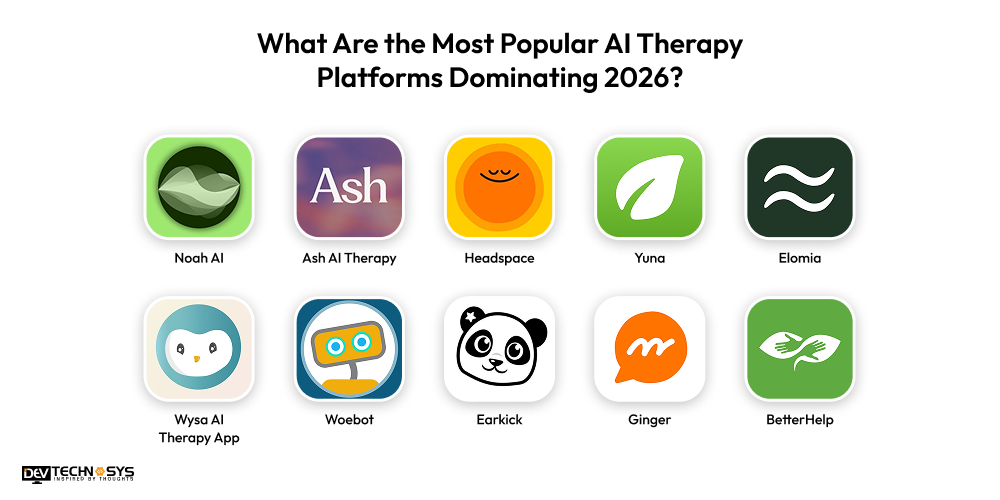
What Are the Most Popular AI Therapy Platforms Dominating 2026?
Looking for the best AI therapy apps in France? No ned to search further. Here are the 10 best AI therapy apps you can download. All the AI-powered mindfulness app mentioned in the list below provides personalized therapy, interactive chats, and live sessions with licensed therapists.
Platform |
Launch Year |
Rating (Approx.) |
Best Used For |
Platform Availability |
| Noah AI | 2024 | 4.5 | 24/7 AI emotional support | iOS, Android |
| Ash AI Therapy | 2025 | 4.8 | AI-guided self-help & chat therapy | iOS, Android |
| Headspace | 2010 | 4.6 | Mindfulness & meditation | iOS, Android, Web |
| Yuna | 2023 | 4.5 | AI mental wellness companion | Web, Mobile |
| Elomia | 2020 | 4.3 | Text-based emotional support | iOS, Android |
| Wysa AI Therapy App | 2016 | 4.6 | CBT-based AI + coaching | iOS, Android |
| Woebot | 2017 | 4.2 | CBT chatbot support | iOS, Android |
| Earkick | 2021 | 4.7 | Real-time mood tracking | iOS, Web |
| Ginger | 2017 | 4.0 | Coaching + clinical therapy | iOS, Android |
| BetterHelp | 2013 | 4.5 | Licensed online therapy | iOS, Android, Web |
1. Noah AI
People who want to know what is the best AI therapy app, then you should check out Noah App. Noah AI (heynoah.ai) is an AI-based mental health app that provides calm, evidence-based psychological therapy. On-demand app development like Noah’s offers 24/7 access to therapy, encrypted storage, and proven methods.
This AI-powered app was created with the help of licensed psychologists. If you want to develop an app like Noah, consider contacting a top AI therapy app development company in France.
2. Ash AI Therapy
Ash is considered an AI-powered anxiety management app that provides mental health support and therapy sessions. Experts who build an AI therapy app created Ash AI using specialized training in psychology to offer 24/7, confidential, and non-judgmental chat support to help users experiencing stress, anxiety, and relationship issues.
As a top AI psychologist app, it helps users track patterns and set goals; it is not a replacement for professional, person-to-person therapy. Hire professional developers for Ash like AI therapist app development in France.
3. Headspace
Headspace is a comprehensive AI therapy app delivering guided meditation, mindfulness tools, sleep resources, and on-demand, expert-led coaching and therapy. Designed by a top AI chatbot development company, Headspace aims to reduce stress, improve sleep, and support overall mental well-being.
It is used by millions worldwide, with options for individuals and organizations. Headspace also partners with employers and organizations to provide employee mental health support. If you wish to create an chatbot as amazing as Headspace, then approach trusted app development providers.
Industry Fact:
According to Business of Apps, Headspace generates an estimated $195 million to over $348 million in annual revenue (as of 2023–2024), with roughly 2.8 million subscribers and 80 million app downloads.
4. Yuna
Yuna is a digital mental health platform that uses AI technology to provide therapy and support. It helps users manage stress and anxiety and supports emotional well-being. Yuna provides 24/7, confidential, and empathetic CBT and mindfulness support.
The app offers personalized, interactive coaching, mood tracking, and tools to build resilience. Professionals who design the Yuna CBT therapy app aim to make mental wellness accessible to all. To build an AI Therapy app in France, such as Yuna, contact top developers from a renowned company
Industry Insights:
Yuna operates within the rapidly growing wellness management app sector, which is projected to reach $21.95 billion by 2033, according to Yahoo Finance.
5. Elomia
Elomia is trained by real therapists to engage in natural, non-scripted conversations. It identifies user needs to suggest exercises for calming, reducing anxiety, grounding, breathing, and improving self-esteem.
It is widely used by individuals, but it also offers solutions for universities and workplaces. Elomia is available as an app on iOS and Android, as well as via web/SMS interfaces. Want to develop an app like Elomia? Contact a Generative AI development services provider now!
You can reach out anytime; we are available 24/7. Our team provides a quick response.

Planning to Build an AI Therapy App in France? Follow the Step-by-Step Roadmap
Do you want to build an AI Therapy app in France? Great! To make it easier for you to understand, we have explained the entire procedure for AI mental health app development in France in simple steps. Follow these steps and learn to develop an AI therapy app from scratch.
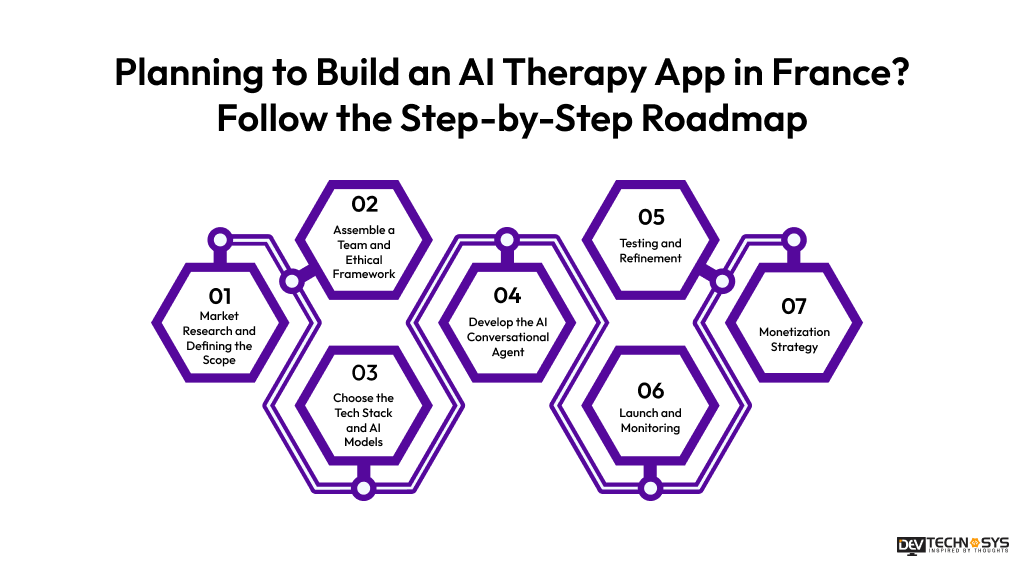
1. Market Research and Defining the Scope
The first step towards the digital mental health app development in France is conducting in-depth Market research. To identify your niche, focus on specific areas like anxiety, Stress, burnout, relationship issues, or mindfulness to stand out in the competitive market.
It is also crucial to define your core functionalities to build an AI therapy app in France. In this stage, finalize the main features like conversational chatbots, guided journaling, and mood tracking. Study the existing apps like Wysa, Replika, and Woebot to understand their strengths and loopholes.
2. Assemble a Team and Ethical Framework
Reaching out to a professional AI software development company should be your next step. Take help from licensed therapists and clinical psychologists from the start to ensure.
Don’t forget to add “human-in-the-loop” safety protocols if you want to build an AI therapy app in France from the ground up. It enables AI to recognize crisis language and immediately connect people to human-level resources (e.g., suicide hotlines).
3. Choose the Tech Stack and AI Models
The healthcare app development company you choose should incorporate an AI/NLP Engine. It’s best to use powerful NLP models like GPT-4, BERT, or specialized tools. It analyzes sentiment and interprets emotional cues.
Another crucial aspect is backend and frontend development. For backend, use Node.js or Python, like robust languages, and Flutter and React Native for cross-platform mobile development.
Ensuring data security is also crucial. Implement high-level encryption to protect sensitive mental health data. It ensures HIPAA (US) or GDPR (Europe) regulatory compliance.
4. Develop the AI Conversational Agent
This step concludes training your AI chatbot with therapeutic data. To develop an AI therapy app in the USA, it is crucial to train the AI on established CBT or Dialectical Behavior Therapy (DBT) techniques.
Besides that, make sure it has contextual memory, meaning the AI remembers the details of the conversation and provides personalized and relatable support for a long period of time.
5. Testing and Refinement
Release the app to a controlled group of real users to evaluate conversational quality, emotional intelligence, usability, and overall experience. experts test the app to find any bugs, response gaps, and areas that call for improvement.
Work closely with licensed therapists and mental health professionals to review AI responses. Ensure conversations follow therapeutic best practices, ethical standards, and align with evidence-based methods like CBT.
Your hybrid app development services provider will continuously refine AI models with the help of user feedback, engagement data, and therapist input. It improves accuracy, personalization, and emotional responsiveness.
6. Launch and Monitoring
After the process to build an AI therapy app in France is done, publish the app on both iOS and Android platforms, ensuring compliance with French healthcare regulations, GDPR, and App Store policies.
Experts who provide AI counseling app development in France frequently track AI performance, user engagement, data privacy compliance, and security measures. They offer updates to improve stability, algorithms, and ensure user trust.
7. Monetization Strategy
Ask your mobile app development company to provide essential features for free while offering premium content. It may include advanced therapy modules, personalized plans, or access to human therapists through subscription plans.
Collaborate with healthcare providers, insurance companies, corporate wellness programs, and mental health institutions to expand reach and generate additional revenue streams.
Which Must-Have Features Should Every AI Mental Health App Include?
Best AI chat therapy apps must prioritize features like robust safety and data privacy (HIPAA compliance). They also involve evidence-based therapeutic techniques like Cognitive Behavioral Therapy (CBT). Essential features for a successful AI mental health app include:
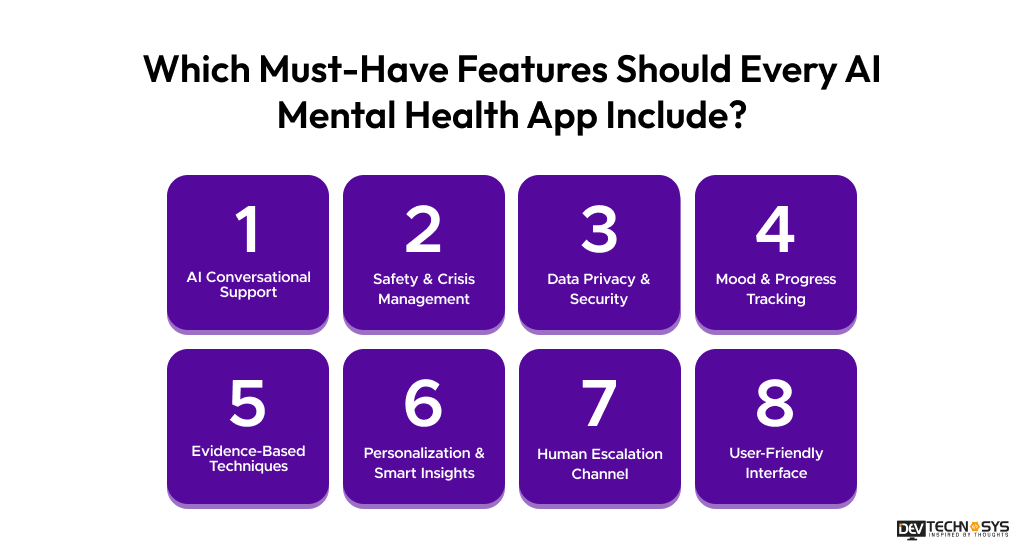
1. AI Conversational Support
An AI-powered mental health chatbot must include AI conversation support. 24/7 empathetic chatbots provide instant, personalized responses and coping strategies. Besides that, it should provide guided exercises and positive affirmations to support users anytime they need help.
2. Safety & Crisis Management
The app detects high-risk or self-harm language in real time and immediately directs users to helplines, emergency contacts, or crisis intervention resources. Advanced sentiment analysis flags urgent situations within seconds. Adding this feature is crucial if you want to build an
3. Data Privacy & Security
Strong encryption, secure data storage, transparent privacy policies, and compliance with regulations like GDPR or HIPAA ensure sensitive mental health data remains protected. Multi-factor authentication and regular audits add an extra layer of account security..
4. Mood & Progress Tracking
Free ai therapy app has built-in journaling tools, daily mood logs, and visual progress charts. It helps users identify emotional triggers and monitor their mental wellness journey. Trend reports allow users to see patterns over weeks or months.
5. Evidence-Based Techniques
The app integrates scientifically supported approaches such as Cognitive Behavioral Therapy (CBT), mindfulness practices, breathing exercises, and guided meditation. Structured therapy modules guide users step-by-step through practical exercises.
6. Personalization & Smart Insights
AI analyzes user behavior and inputs to deliver tailored recommendations, goal reminders, and insights into emotional patterns over time. Adaptive algorithms adjust content based on mood trends and engagement levels. This creates a more customized and effective therapy experience.
7. Human Escalation Channel
When needed, users can seamlessly connect with licensed therapists or human counselors for deeper support. The transition from AI to human assistance is smooth and confidential. AI app development services provide this feature to ensure users receive both immediate and professional care.
Want a chatbot demo or pricing? Fill the form and talk to our experts today.
Pick what you need below — you can select more than one — then tap Get detail to continue.
-
Chatbot demo dashboard
-
Cost to develop an app
-
Industry report
-
Case study
What are the Business Benefits of Investing in AI Therapy App Development in France?
Investing in AI therapy app development in France offers significant business advantages. The key benefits include improved personalized care, reduced operational costs, enhanced patient engagement, and high regulatory trust. Let’s learn about these benefits in more detail:
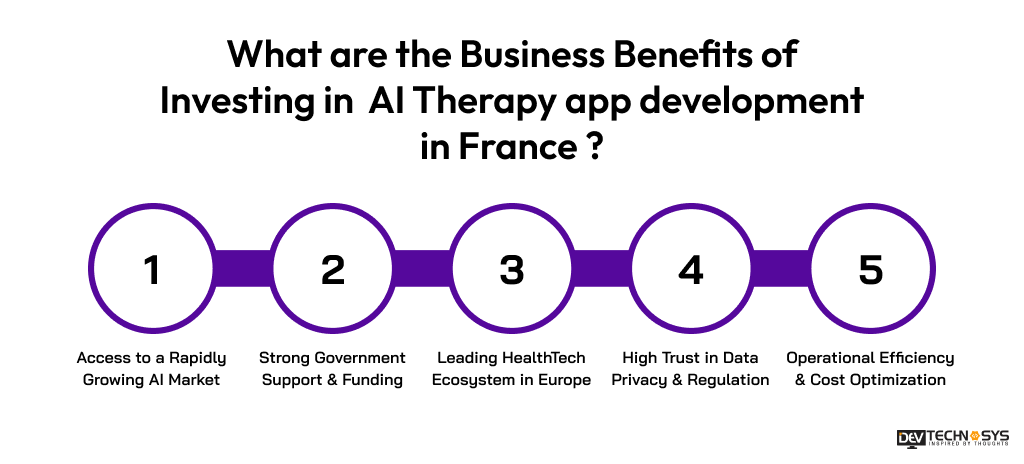
1. Access to a Rapidly Growing AI Market
France’s AI market is projected to grow from $12.12 billion in 2025 to $77.68 billion by 2032, reflecting massive expansion and increasing enterprise adoption. This rapid growth creates strong opportunities for AI-driven healthcare startups to capture a large and evolving consumer base.
2. Strong Government Support & Funding
Through initiatives like France 2030 and the €7.5 billion Health Innovation Plan, the government is heavily investing in AI and digital health. This financial backing reduces risk for startups and encourages innovation in AI-powered healthcare solutions.
3. Leading HealthTech Ecosystem in Europe
France is Europe’s second-largest HealthTech hub, with over 2,600 companies, including 200+ specializing in digital health and AI. This mature ecosystem fosters collaboration, partnerships, and faster product development.
4. High Trust in Data Privacy & Regulation
French businesses view strict data protection laws and regulatory frameworks as growth enablers rather than obstacles. Strong compliance standards increase public trust, critical for AI therapy apps handling sensitive mental health data.
5. Operational Efficiency & Cost Optimization
AI-powered therapy platforms streamline processes, reduce administrative workload for clinicians, and automate routine support tasks. This leads to lower operational costs, improved scalability, and enhanced productivity.
How Much Does It Really Cost to Develop an AI Therapy App in 2026?
The cost to build an artificial Intelligence project for mental well-being is estimated at €6,744 to €21,076. The cost to build an AI therapy app with basic features like login, mood, and an emotion tracker will be around €6744 to €10116.
Whereas the advanced AI therapy app with features like Evidence-Based Techniques and a Human Escalation Channel may increase the cost to develop an AI therapy app to €21076 or more.
App Version |
Estimated Cost |
| Basic MVP | €6,744 – €10,116 |
| Standard App | €10,116 – €15,175 |
| Advanced App | €15,175 – €21,076 |
Various factors can influence the cost to build an AI therapy app. Let’s take a look at some major ones one by one, and see why and how they impact the AI therapy app development cost.
1. App Complexity & Feature Set
The number and sophistication of features, such as 24/7 AI conversational support, crisis detection, mood tracking, wearable integration, personalization engines, and human escalation channels, directly influence the cost to build an AI therapy app.
More advanced capabilities require more development time, AI training, and testing, increasing expenses. Here’s the table explaining the cost to make an AI therapy app in France acoding to the complexity level of features.
Complexity Level |
Estimated Cost |
| Basic (MVP) | €1,686 – €3,372 |
| Medium | €4,215 – €5,901 |
| Advanced | €6,744 –€8,430 |
2. Platform Choice (iOS, Android, Web)
Developing for multiple platforms (iOS, Android, and Web) elevates the cost to develop a chatbot compared to building a single version. Cross-platform tools like Flutter or React Native can help reduce overall development time and cost while supporting multiple devices. However, platform-specific optimization, UI adjustments, and app store compliance requirements can still increase testing and refinement efforts.
Industry Insights:
According to a report by Sqare Infotech, Generally 30% or more cost-effective than building separate native apps.
Platform Strategy |
Estimated Cost |
| Single Platform | €1,686– €4,215 |
| Cross-Platform | €3,372–€6,744 |
| Multi-Platform + Web | €5,058 – €8,430 |
3. AI & Machine Learning Integration
Implementing NLP, machine learning, sentiment analysis, predictive modeling, and adaptive conversational logic requires specialized expertise, which can impact the cost to build an AI therapy app.
Licensing third-party AI tools or training custom models adds to the budget. Continuous AI training, dataset refinement, bias reduction processes, and performance tuning also contribute to long-term development investments.
AI Level |
Estimated Cost |
| Basic AI Chatbot | €1,686 – €3,372 |
| Custom NLP Model | €3,372 – €6,744 |
| Advanced AI System | €6,744 – €10,116. |
4. UX/UI Design and Accessibility
Custom, intuitive, and accessible interfaces, designed for users in emotional distress, take more time and skill than basic layouts. Usability testing and inclusive accessibility features add to the cost to build an AI therapy app. Design psychology, calming color palettes, microinteractions, and user journey mapping require expert research and iterative prototyping.
Design Level |
Estimated Cost |
| Basic UI | €674– €1,264 |
| Custom UX | €1,264 –€2,529 |
| Advanced UX | €2,529 –€5,000 |
5. Testing & Quality Assurance (QA)
Thorough testing (functional, usability, performance, security, edge-case behavior) ensures reliability for real users. Clinical validation and therapist-reviewed content also add to QA time and the cost to create an AI therapy app. Beta testing programs, real-world scenario simulations, and AI response audits further extend quality assurance timelines.
Testing Level |
Estimated Cost |
| Basic Testing | €421 – €843 |
| Standard QA | €843 – €1,686 |
| Advanced QA | €1,686 – €3,372. |
6. Maintenance, Updates & Support
Post-launch AI therapy app development costs include bug fixes, AI model refinement, server hosting, content updates, compliance updates, and customer support.
These recurring costs for On demand app development are often 15% to 25% of the initial build annually. Feature upgrades, performance improvements, and ongoing cybersecurity enhancements are essential to remain competitive and trustworthy.
Industry Insights:
North America currently leads in application maintenance, but Asia-Pacific is expected to grow at the fastest rate. Source: Allied Market Research.
Support Level |
Estimated Cost (Yearly) |
| Basic Maintenance | €716 – €843 |
| Standard Support | €843 –€2,107 |
| Advanced Support | €2,529 –€3,372 |

How Do AI Mental Health Apps Generate Revenue in the French Market?
AI mental health apps in the French market generate revenue through a mix of B2C subscriptions, B2B corporate, and reimbursement through national digital health frameworks. Here are the top monetization strategies for AI therapy apps.
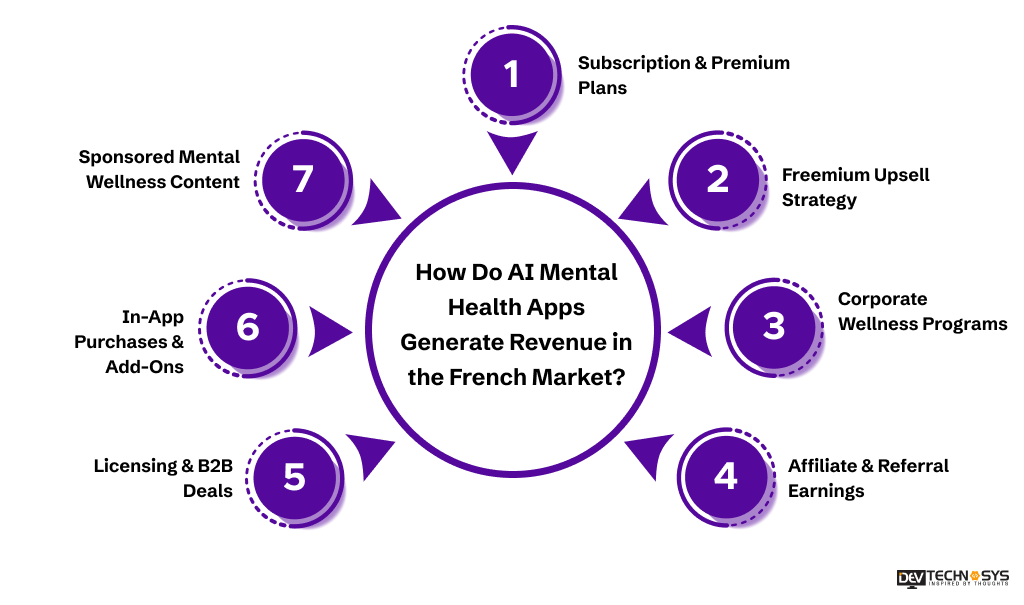
1. Subscription & Premium Plans
Most AI therapy apps use subscription models where users pay monthly or yearly fees for access to advanced features. Basic emotional support might be free, while premium plans unlock deeper insights, personalized content, extended sessions, and more frequent check-ins.
Tiered pricing structures help target different user segments. Recurring subscriptions create predictable revenue and improve long-term financial stability.
2. Freemium Upsell Strategy
AI mental health apps developed by a top AI chatbot development company offer free access to basic tools and encourage upgrades to premium tiers for full features such as unlimited AI sessions, advanced CBT modules, or access to a human counselor.
This creates a steady funnel of paying users. In-app prompts and progress milestones can strategically encourage upgrades. This model lowers entry barriers and increases user acquisition rates.
3. Corporate Wellness Programs
Partnering with French companies and HR departments allows AI mental health platforms to offer employee wellness solutions. Corporations pay per employee or via enterprise subscriptions, tapping into the growing demand for workplace mental health support. Businesses benefit from improved productivity and reduced burnout.
4. Affiliate & Referral Earnings
AI therapy apps can earn commissions by referring users to partnered services, such as licensed therapists, meditation platforms, wellness products, or digital self-care programs. Each referral delivers incremental revenue. Strategic collaborations increase brand credibility and service offerings.
5. Licensing & B2B Deals
AI therapy technology can be licensed to healthcare providers, clinics, or health insurers. French health tech organizations may adopt the AI engine for their platforms, creating B2B revenue streams.
White-label solutions allow institutions to customize the platform under their brand. B2B licensing typically generates higher margins than individual subscriptions.
6. In-App Purchases & Add-Ons
Users may buy specialized therapy modules, mental health courses, premium content packs, or additional guided programs directly within the app, boosting monetization beyond standard subscriptions.
Seasonal or targeted content packages can increase purchase frequency. Microtransactions provide flexible pricing options for different user budgets.
7. Sponsored Mental Wellness Content
Targeted partnerships with wellness brands, mindfulness coaches, or healthcare providers can enable sponsored content or featured wellness guides, generating additional income while maintaining relevance. Carefully curated sponsorships ensure credibility and user trust. Native advertising formats can blend naturally within the user experience.
Are There Any Challenges & Risk Factors to Consider While Developing an AI Therapy App?
Building an AI therapy app in France offers significant opportunities, but it also presents critical challenges that you need to address strategically. Here are some of the major challenges to be aware of:
1. Regulatory & GDPR Compliance Risks:
Handling sensitive mental health data requires strict adherence to GDPR and French health data regulations. Non-compliance can lead to heavy fines, legal action, and reputational damage.
2. Data Privacy & Security Threats:
AI therapy apps are prime targets for cyberattacks due to the sensitive nature of user data. Weak encryption, poor access controls, or security gaps can severely impact user trust.
3. Ethical & Clinical Responsibility:
AI must provide safe, evidence-based responses. Inaccurate guidance, biased outputs, or failure to detect crisis language can create serious ethical and legal consequences.
4. AI Accuracy & Bias Issues:
Training models on incomplete or biased datasets may lead to culturally insensitive or inappropriate responses, especially important in a diverse French population.
5. User Trust & Adoption Barriers:
Some users may hesitate to share personal emotions with AI. Overcoming skepticism requires transparency, strong branding, and clear communication about data protection.
Conclusion
Building an AI therapy app in France offers a strong opportunity to combine innovation with meaningful social impact. With great strategy and support of a skilled app development team, businesses can build a trustworthy, profitable, and future-ready AI therapy platform in the French market.
If you’re looking for a top provider of AI agent development services in France, contact Dev Technosys. With 850+ skilled AI app developers, they turn your AI mental health app vision into reality.