


















Key takeaways:
-
- The demand for online counseling app development is rising as people show concern for their mental and emotional health.
- According to Mordor Intelligence, the market of digital therapy platforms can reach USD 32.16 billion by 2031.
- A therapy app development for startups can be a great opportunity to enter this competitive and dynamic market.
- Generally, the cost to create an online therapy application can range somewhere between $8,000 and $30,000.
Mental health suffering usually starts quietly, because people don’t find the courage to say, “I need to talk.” This overwhelming situation comes on suddenly, but it leads you to a clinic or a waiting room. So, in 2026, online therapy platforms have become a saviour in such situations.
Online therapy apps are not just simple video call tools, but an intelligent, always-available mental health ecosystem. These apps are redefining the mental healthcare structure by making people take their mental and emotional well-being seriously.
But do you know, behind such platforms, there is a carefully built system. This system ensures safety, trust, and human empathy with technological advancement. When you develop an online therapy app in 2026, you will build a comforting experience.
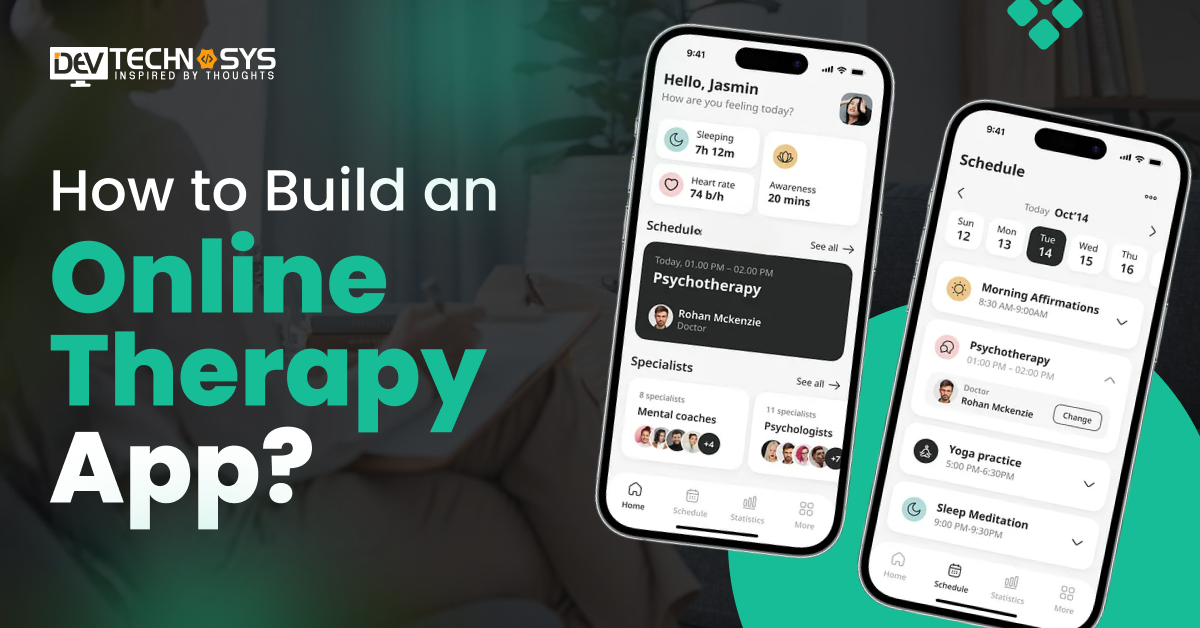
Whether you are an entrepreneur or an established healthcare firm, stepping into the digital mental wellness world can be scalable. This guide covers everything on how to build an online therapy app in 2026.
What is an Online Therapy App?
An online therapy app is a mobile or web platform that connects people to a professional counselor. These counselors are experienced and licensed mental health experts. They offer therapies through video calls, live chat, or messaging.
Mental health app development is an outstanding alternative to in-person counseling. These apps eliminate the time and effort of traveling. It even gives people the flexibility to allow therapy in their extremely hectic schedules.
Essential Aspects of Online Therapy Apps include:
- User matching system
- Convenience and accessibility
- Cost-effective
- Treats multiple conditions
- Modilities of care
Popular Online Therapy App Types Driving Mental Health Innovation
Teletherapy, AI chatbot therapy, meditation, peer support, and group therapy are among the popular types of online therapy. Through these types of apps, users can connect with professionals, peers, and self-help tools. This makes mental wellness more personalized, scalable, and convenient. Here, we will learn about some mental health types pioneering cognitive wellness innovations.
1. Teletherapy Platforms
Teletherapy platforms make people connect with licensed therapists via voice & video calls and secure messaging. Such apps support:
- Remote Councellng
- Appointment Scheduling
- Session management
- Confidential communications
Teletherapy apps make professional mental healthcare more accessible and convenient for users.
2. AI Chatbot Therapy Apps
AI chatbot therapy platforms are renowned for integrating AI to offer patients conversational mental wellness support. These chatbots offer:
- Mood tracking
- Coping strategies
- Guided exercises
- Instant responses
This helps users in managing stress, anxiety, and emotional challenges anytime without scheduling appointments.
3. Meditation and Self-Care Apps
The primary focus of medication and self-care therapy apps is to enhance the emotional well-being of users. For that, it guides though:
- Meditation
- Breathing exercises
- Sleep support
- Mindfulness programs
The stress-management tools this app helps develop healthy habits and maintain mental well-being.
4. Peer Support and Community Apps
A peer support and community app offers a safe digital space to share experiences and challenges to gain encouragement. The common features of the app include:
- Discussion forums
- Anonymous interactions
- Moderated groups
- Real-time peer matching
All these features foster meaningful connections and emotional support.
5. Group Therapy Platforms
In a group therapy platform, multiple participants can join together for therapist-led counseling sessions online. These applications encourage:
- Secure video conferencing
- Participant management
- Scheduling
- Collaborative discussions
This makes therapy more affordable while encouraging shared learning and community-based healing experiences.
How Does an Online Therapy App Work?
Moving ahead, we will now understand the workflow of an online therapy application. From digital onboarding to progress tracking, this workflow offers a seamless user experience. It enables clear communication, personalized sessions, and regular monitoring to improve mental health.
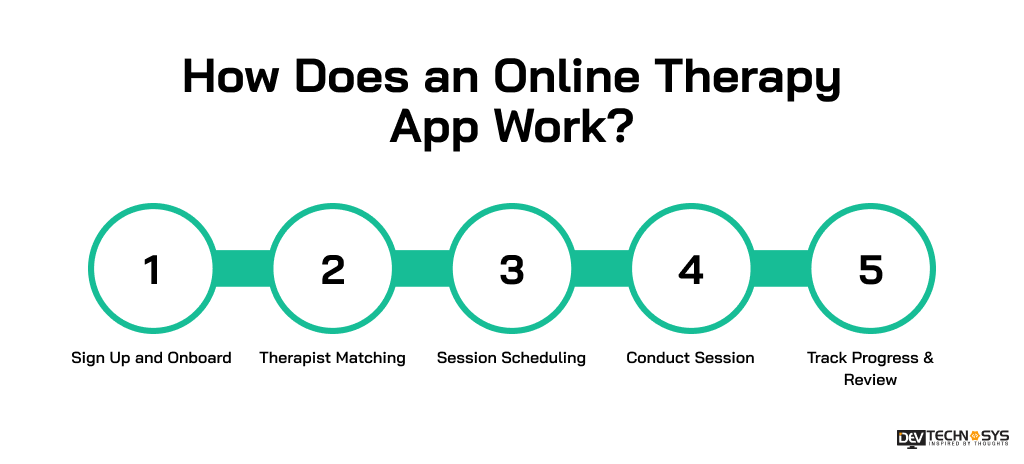
Step 1: Sign Up and Onboard
First, users must download the app and create an account by adding personal details and mental health issues. Then they have to complete a questionnaire, which helps the doctor understand the user’s problems clearly.
Step 2: Therapist Matching
According to the questionnaire responses, the app offers a list of suitable therapists. To match, the app considers some factors to offer effective and comfortable therapy sessions.
Step 3: Session Scheduling
The user can check the availability of the therapists and book a session. The flexible scheduling, reminders, and calendar of the app ensure seamless appointment management.
Step 4: Conduct Session
Conduct the therapy session through video or voice call, and users can communicate through chat. The communication remains secure and comfortable for both therapists and people.
Step 5: Track Progress & Review
The app also allows users to monitor their mental health through session summaries. They should give feedback and review to improve therapy outcomes and evaluate their experience.
Planning a Mobile App?
Get a tailored development cost estimate in 3 simple steps — app basics, features, timeline, and your contact details.
- 3 quick steps
- 100% free
- Reply in 1 business day
2 Minutes Read
Market Predictions on Online Therapy Applications
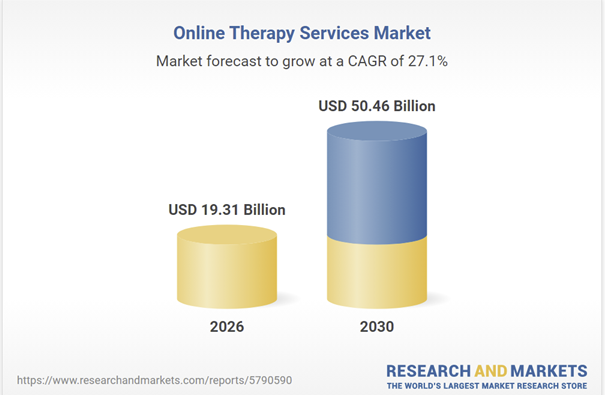
The online therapy service market is growing remarkably as people are becoming aware of their mental health. This has raised the demand for accessible, affordable, and convenient virtual counseling solutions. We will now understand the market predictions examined by Research and Markets.
- The global online therapy services market reached $15.16 billion in 2025, reflecting increasing demand worldwide.
- Market revenue is projected to grow to $19.31 billion in 2026, indicating strong annual expansion.
- The industry is expected to register a 27.4% CAGR between 2025 and 2026.
- By 2030, the online therapy services market is forecasted to achieve a value of $50.46 billion.
- From 2026 to 2030, the market is anticipated to expand at a 27.1% CAGR.
Industry Insight:
Mental health services represent 63.9% of all telehealth claims in the U.S., proving that therapy apps are a core part of digital healthcare ecosystems- Mediex Health
What is the Roadmap to Build an Online Therapy App?
Learning about the online counseling app development process is the next important thing an entrepreneur should know. The development involves proper planning and strategic steps to be followed. Have a look at the teletherapy app development guide explained below.
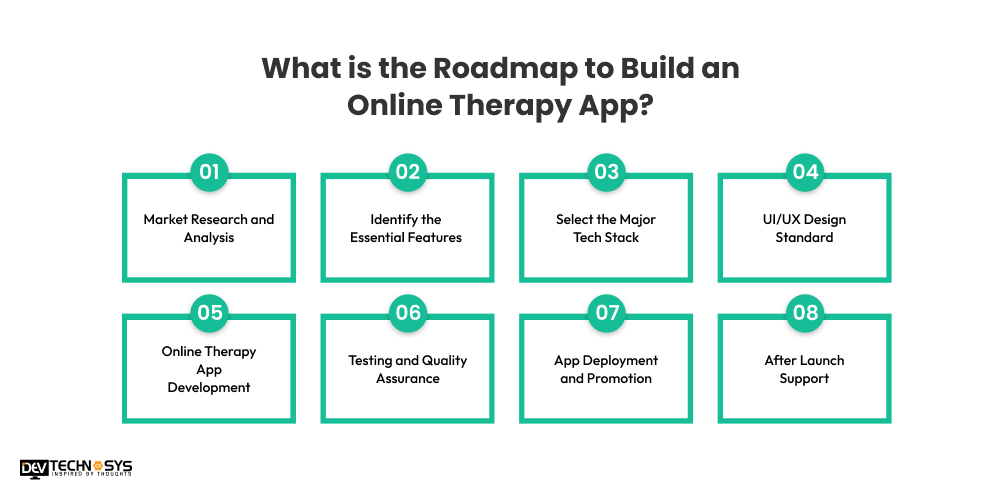
1. Market Research and Analysis
At the first stage, entrepreneurs should analyze the market to validate their idea. It includes examining market trends, competitors, the targeted audience, user demand, and expectations.
To develop a healthcare app like HealthTap, identifying pain points and finding their solution is also really important. All this helps businesses define their app’s unique value proposition and create what users actually want.
2. Identify the Essential Features
Enterprises should list the core and advanced features that should be added to the online therapy app. The main focus of the developer is to streamline onboarding, therapist matching, communication tools, and payment systems.
Therefore, prioritizing features as per the user demand, needs, and budget can help make an online therapy app. A well-defined feature set can enhance user experience and retention.
3. Select the Major Tech Stack
A healthcare app development company helps in selecting the right technologies for the application. These technologies support the app’s frontend, backend, database, and integrations.
This even includes the APIs for video calls, chat, and payment. When the selected tech stack is strong, it can lead to smooth functionality and faster development. It also brings long-term scalability to the app in this highly competitive market.
4. UI/UX Design Standard
Make sure the design of the online therapy platform is simple, intuitive, and user-friendly. This makes it easier to navigate the app for both patients and therapists.
While designing the platform, the focus should be on accessibility and clean layouts that build user trust. A perfectly designed UI/UX improves user satisfaction and engagement, while increasing retention in mental health apps.
5. Online Therapy App Development
It’s time to move forward with online therapy app development, inspired by the Doctor On Demand app development. Begin by developing the frontend and backend, then move to features, while following agile methodology.
This methodology helps developers in fast iterations and improvements. This is the step where the idea gets transformed into a fully functional solution. Here, performance, scalability, and compliance are also ensured.
6. Testing and Quality Assurance
As the app is developed, proper testing should be conducted to ensure quality assurance. This involves bug fixes, performance issues, and security instability across devices, platforms, and user scenarios.
The things that are mainly addressed and ensured at this stage are data privacy and compliance standards. If the app gets quality assurance, it guarantees stability, security, and reliability while improving user trust.
7. App Deployment and Promotion
Entrepreneurs can effortlessly launch the app on platforms like Google Play Store and Apple App Store. To optimize app listings with relevant keywords and visuals, the focus should be on App Store Optimization (ASO).
Promoting the app is necessary to make it reach the targeted audience. For this, digital marketing strategies like SEO, social media, and paid ads should be implemented for more visibility and downloads.
8. After Launch Support
An experienced and top mobile application development company supports the app continuously. This includes thorough updates, bug fixes, adding security patches, and feature enhancements.
Ongoing monitoring and new feature upgrades of the app should be according to user feedback and evolving market needs. This enhances trustworthiness and user satisfaction while enabling the app to remain competitive and scalable.
Best Technology Stack to Build a Scalable Online Therapy App
To build an online therapy app, start by selecting the right and reliable technologies. The selected tech stack can directly influence the app’s performance, security, scalability, and compliance. Below is a proven tech stack used by top-performing therapy apps like BetterHelp and Talkspace:
| Layer | Technology | Purpose |
| Frontend | React Native, Flutter | Build iOS & Android apps from a single codebase — saves time and cost |
| Backend | Node.js, Python (Django) | Handle server logic, APIs, user authentication, and data processing |
| Video & Audio SDK | Twilio, Agora, WebRTC | Power real-time video/audio therapy sessions with low latency |
| Database | PostgreSQL, MongoDB | PostgreSQL for structured data (users, sessions); MongoDB for flexible data (chat logs, notes) |
| Cloud Hosting | AWS, Google Cloud | HIPAA-compliant hosting with high availability, auto-scaling, and data encryption |
| Payment Gateway | Stripe | Secure subscription billing, pay-per-session, and refund management |
| Push Notifications | Firebase (FCM) | Session reminders, appointment alerts, and re-engagement messages |
| Authentication | OAuth 2.0, JWT | Secure login, multi-factor authentication, and session management |
| Encryption | AES-256, SSL/TLS | End-to-end encryption for all data in transit and at rest — required for HIPAA |
| DevOps & CI/CD | Docker, GitHub Actions | Faster deployments, version control, and consistent testing environments |
Online Therapy App vs Traditional Therapy: A Comparison
It is evident that online therapy apps are highly accessible, flexible, and affordable. Whereas traditional therapy is more personal, deeply connecting, and a bit uncomfortable for reserved people.
Selecting the right option entirely relies on people’s preferences, comfort level, and specific mental health needs. Here we are with the comparison between online therapy apps and traditional therapy.
Aspect |
Online Therapy Apps |
Traditional Therapy |
| Accessibility | Accessible anytime from any location with internet | Limited to physical clinic location and hours |
| Convenience | No travel needed, sessions from home | Requires travel and in-person visits |
| Cost | More affordable with flexible pricing models | Higher cost per session and fixed pricing |
| Communication | Chat, audio, and video session options | Mainly face-to-face interaction |
| Scheduling | Flexible booking with on-demand options | Fixed schedules with limited flexibility |
| Privacy | Private sessions from personal space | Less privacy due to clinic visits |
| Therapist Options | Access to global licensed therapists | Limited to local therapist availability |
| Technology Use | Includes AI tools, tracking, and integrations | Minimal use of digital technologies |
| Session Flexibility | Real-time and asynchronous communication | Only real-time, scheduled sessions |
| User Experience | Seamless, digital, and user-friendly interface | Traditional, in-person experience |
Which Features Does an Online Therapy App Must Have?
Adding strong virtual therapy platform features ensures seamless communication, user engagement, and secure data handling. Features like easy onboarding, session management, chat/video communication, and more enhance user experience. We will discuss some features that enhance the overall efficiency and scalability of the online therapy platform.
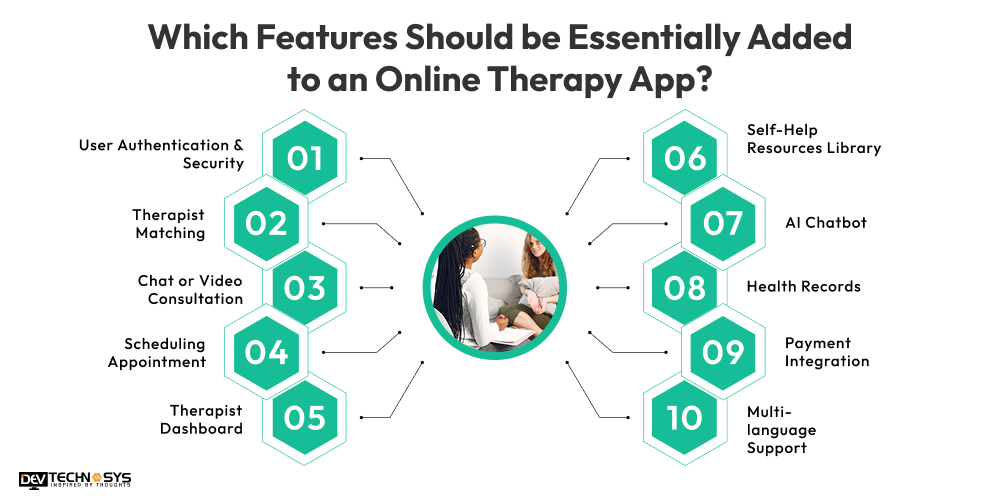
1. User Authentication & Security
User authentication has to be really strong with encrypted data handling and privacy controls. A scalable healthcare app architecture offers safe access to users and protects sensitive information. This builds user and therapist trust in the app as it also maintains compliance.
2. Therapist Matching
An advanced on-demand therapist app development must integrate an online therapist matching system. This connects with suitable counselors as per user preferences and therapist expertise. This ensures personalized care and improves user satisfaction with therapy effectiveness.
3. Chat or Video Consultation
The therapy platform must have in-app chat therapy functionality and secure video consultation integration. This allows users to connect with suitable therapists in real-time. They can also go for asynchronous therapy for a more flexible and convenient healing session.
4. Scheduling Appointment
The next important feature is an appointment scheduling system for therapy apps. This enables users to book, reschedule, and manage sessions easily. It also offers reminders and calendar integration that deliver a smooth, comfortable, and timely therapy session.
5. Therapist Dashboard
A therapist dashboard functionality helps experts streamline their workflow. It includes managing their appointments, tracking patient progress, and accessing session history. This mainly enhances efficiency and helps patients get better care.
6. Self-Help Resources Library
One of the important features of online therapy apps includes a self-help resource library. It provides articles, guided meditations, coping exercises, and mental wellness programs. To explore it, there is no need for a therapist; a user can independently access these between therapies.
7. AI Chatbot
An AI chatbot for mental health support can be a great option in therapy apps. It provides instant assistance, answers common queries, and offers basic guidance. This also helps in enhancing user engagement while supporting therapists with preliminary interactions.
8. Health Records
Electronic health records (EHR) integration streamlines the way patients’ data is stored, managed, and accessed. It is important to maintain continuity of care without any disruptions. It also provides compliance with healthcare data regulations.
9. Payment Integration
Payment gateway integration for healthcare apps allows transactions to remain seamless and secure. It also supports subscriptions, session payments, and multiple payment methods for a smooth user experience. It reduces administrative workload by automating billing, invoicing, and refunds.
10. Multi-language Support
Multi-language support allows users to get therapy in different or their preferred language. It is a beneficial feature for people from diverse regions. This becomes easier for users from different regions to understand and use the platform comfortably.
Is Online Therapy App Development a Profitable Opportunity for Entrepreneurs?
Definitely, teletherapy app development is considered a profitable opportunity for entrepreneurs. It is due to high demand, increased accessibility, revenue-generating models, lower overhead costs, and more. By understanding these points, we can justify why it is a great option for entrepreneurs.
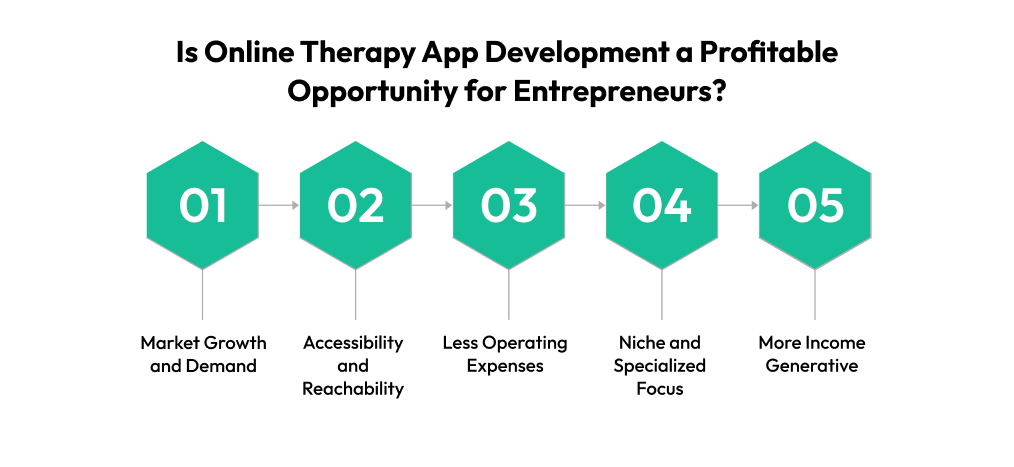
1. Market Growth and Demand
People are getting aware of the importance of mental and emotional health, but don’t have time for therapy. This has ignited the demand for mental health platform development in 2026. The online therapy apps help reduce the stigma and uneasiness of traditional, face-to-face therapy.
2. Accessibility and Reachability
These apps remove geographical barriers and allow people to access therapy anytime, anywhere. This way, the therapists offer their services anywhere in the world. This not only improves reach but also broadens the customer base more than local clinics.
Industry Insight:
Over 65% of users prefer digital therapy platforms due to accessibility and convenience- GlobalNewswire
3. Less Operating Expenses
As the therapy apps work digitally, they decrease the unnecessary costs. It eliminates the requirement of physical office space, utilities, and front-desk staff because everything in the app is automated. Operational costs get reduced with improved efficiency and scalability for therapy providers.
4. Niche and Specialized Focus
Online therapy apps specifically target anxiety, depression, couples therapy, or youth counseling. This helps in attracting a dedicated audience base who genuinely need support. This way, entrepreneurs can create a strong brand positioning while enhancing user engagement and less competition.
5. More Income Generative
Digital therapy platforms can make huge profits by integrating multiple money-making strategies. These models include subscription services, pay-per-session, corporate wellness partnerships, and premium features like AI chat and personalized self-help. This is the most essential aspect considered when you build an online therapy app.
How Much Does it Cost to Build an Online Therapy App?
The average cost to develop a mental health app for online therapy can be estimated from $8,000 to $30,000. However, the final development budget is determined by the complexity of the app’s features.
- A simple app, following the MVP strategy, has fewer or basic feature integrations. It lowers the app’s complexity, leading to a development price range between $8,000 and $16,000.
- A mid-level app blends basic and advanced features, keeping complexity moderate. This way, the final healthcare app development cost ranges from $16,000 to $23,000.
- A high-level or enterprise-grade application is built with modern features, which makes the development complex. It can lead to a development budget ranging between $23,000 and $30,000.
| Feature | Basic | Mid-Level | Full-Featured |
| User Registration & Login | $300–$500 | $500–$900 | $900–$1,500 |
| Therapist Profile & Matching | $500–$900 | $900–$1,500 | $1,500–$2,500 |
| Video/Audio Sessions | $800–$1,500 | $1,500–$2,500 | $2,500–$4,000 |
| Chat & Messaging | $400–$800 | $800–$1,300 | $1,300–$2,000 |
| Appointment Scheduling | $300–$600 | $600–$1,000 | $1,000–$1,800 |
| Payment Integration | $300–$600 | $600–$1,000 | $1,000–$1,500 |
| HIPAA Compliance Setup | $600–$1,200 | $1,200–$2,000 | $2,000–$3,000 |
| Push Notifications | $200–$400 | $400–$700 | $700–$1,200 |
| Admin Dashboard | $300–$600 | $600–$1,000 | $1,000–$1,500 |
| AI Chatbot / Mood Tracking | $400–$800 | $800–$1,500 | $1,500–$3,500 |
| Progress Tracking & Reports | $300–$500 | $600–$1,000 | $1,000–$2,000 |
| Wearable / Third-party Integration | $500–$900 | $900–$1,500 | $1,500–$3,000 |
| Total Estimate | $8,000–$16,000 | $16,000–$23,000 | $23,000–$30,000 |
Despite complexity, there are multiple other factors affecting the therapy app development cost 2026. These factors include choice of platform, backend infrastructure, developer’s location, UI/UX design, tech stack, and others. We are addressing some of these factors by explaining them with separate cost breakdown tables.
1. Platform Choice
Selecting whether to launch your online therapy app on Android, iOS, or both affects the development expense. Developing an app on different platforms requires separate codebases, resources, experienced developers, and a timeline. This can influence the overall online therapy app development cost.
Platform Option |
Estimated Cost |
Description |
| Android App Development | $8,000 – $15,000 | Cost-effective option for startups targeting Android users only. |
| iOS App Development | $10,000 – $18,000 | Slightly higher cost due to iOS-specific development standards. |
| Android + iOS App Development | $18,000 – $30,000 | Dual-platform development needs more time, resources, and budget. |
2. UI/UX Design
The UI and UX of an app should be easy to use, intuitive, and interactive. This makes it easy for anyone to operate the app. If more customization and innovation are added to the design, it will increase the cost to develop an online therapy app.
Design Level |
Estimated Cost |
Description |
| Basic UI/UX Design | $2,000 – $4,000 | Simple layouts with essential design and usability features. |
| Custom UI/UX Design | $4,000 – $7,000 | Personalized interface with better branding and user flow. |
| Advanced Interactive UI/UX Design | $7,000 – $10,000 | Rich visuals and interactions increase design complexity. |
3. Developer’s Location
The development cost also depends on the region from which businesses hire dedicated developers. Developers from regions like North America or Western Europe have higher per-hour prices. While developers hired from regions such as Asia or Eastern Europe are less expensive.
| Region | Hourly Rate |
| USA / Canada | $100–$150/hr |
| Western Europe | $80–$120/hr |
| Eastern Europe | $40–$70/hr |
| India | $20–$40/hr |
4. Backend Infrastructure
The backend of an app plays a vital role in supporting key functions of an application. A strong backend even handles sensitive healthcare data and compliance requirements. So, developing a reliable, compliance-ready, and scalable backend can elevate the final development budget.
Backend Level |
Estimated Cost |
Description |
| Basic Backend Setup | $3,000 – $6,000 | Supports login, scheduling, and data storage functions. |
| Scalable Backend Infrastructure | $6,000 – $10,000 | Handles growing users and secure app performance. |
| Advanced Secure & Compliance-Ready Backend | $10,000 – $15,000 | Includes security, compliance, and complex backend integrations. |
5. Development Team
The choice of development team, like freelancers, in-house teams, or development agencies, influences the development price. Hiring freelancers will cost less, and an in-house team works on a salary basis. Whereas a development company is expensive but offers broader expertise.
Team Type |
Estimated Cost |
Description |
| Freelancers | $2,500 – $5,000 | Affordable choice for smaller and simpler app projects. |
| In-House Team | $5,000 – $10,000 | Better control, but adds operational and staffing costs. |
| Development Agency | $10,000 – $15,000 | Higher cost with full expertise and project support. |
HIPAA Compliance for Online Therapy Apps: Key Requirements Explained
The therapy apps online can handle sensitive data of users related to their mental health. That makes compliance with regulations like HIPAA and GDPR extremely essential. If the app has strong security and is protected legally, it ensures data protection. This can build patients’ trust while guaranteeing lawful digital healthcare operations.
1. What PHI Means in This Context
PHI stands for Protected Health Information, which refers to the user data linked to mental health identity. It includes therapy notes, diagnosis, session history, or personal details shared during consultations. In online therapy apps, PSI is stored and encrypted with utmost security. Also, only an authorized healthcare provider can access it.
2. End-to-End Encryption Requirements
To ensure the messages, video calls, and therapy notes stay private between patients and therapists, end-to-end encryption is required. Through this security measure, even the app provider cannot access the data. It is really mandatory to maintain confidentiality and meet HIPAA-grade security standards of mental health apps.
3. BAA Agreements with Cloud Providers
A BAA, Business Associate Agreement, is a legalized contract between therapy apps and cloud service providers. This is especially to make sure the HIPAA rules are strictly followed by providers like AWS and Google Cloud. BAA is really important to securely and responsibly store and process the private data of the patients.
4. GDPR for EU Users
GDPR compliance is required and mandatory if the online therapy apps serve users in the European Union. It necessitates the user’s consent for:
- Data collection
- Right to data deletion
- Transparent data usage policies
- Strict protection of personal information
It rigorously ensures complete control of users over the data.
5. Consequences of Non-Compliance
If the online therapy platform fails to comply with HIPAA and GDPR, it can result in:
- Heavy financial penalties
- Legal action
- Loss of user trust
- Data breach risks
Non-compliance can even lead to platform shutdown and render the platform unable to work in the regulated healthcare market.
Most Popular Online Therapy Apps in the Digital Health Market
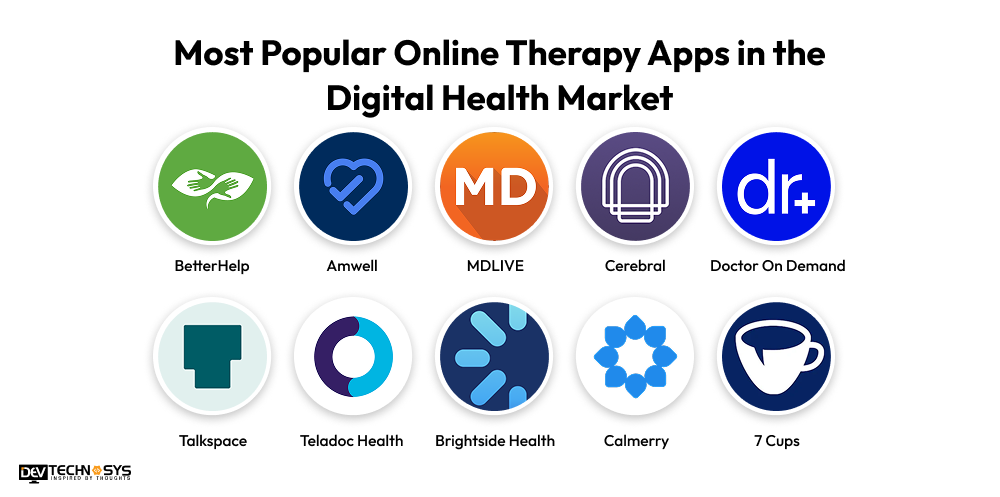
The demand for online therapy apps in USA and worldwide is rising rapidly. That’s why people are searching for an accessible, convenient, and affordable therapy app like BetterHelp. Apart from this, there are multiple therapy apps with licensed professionals, mentioned in the table.
App Name |
Launch Year |
Downloads |
Ratings |
Platform Availability |
| BetterHelp | 2013 | 5M+ | 4.6 | Android, iOS, Web |
| Talkspace | 2012 | 1M+ | 4.8 | Android, iOS, Web |
| Amwell | 2006 | 1M+ | 4.7 | Android, iOS, Web |
| Teladoc Health | 2002 | 1M+ | 4.8 | Android, iOS, Web |
| MDLIVE | 2009 | 1M+ | 4.7 | Android, iOS, Web |
| Brightside Health | 2017 | 100K+ | 4.7 | Android, iOS, Web |
| Cerebral | 2020 | 1M+ | 4.6 | Android, iOS, Web |
| Calmerry | 2020 | 100K+ | 4.5 | Android, iOS, Web |
| Doctor On Demand | 2013 | 1M+ | 4.7 | Android, iOS, Web |
| 7 Cups | 2013 | 1M+ | 4.6 | Android, iOS, Web |
We are now going to describe the best apps that offer something beyond just consulting. The apps we will discuss are popular for their affordability, clinical care, or structured therapy programs.
1. BetterHelp
Betterhelp is the top telehealth app development that provides users with subscription-based online therapy. This app is extremely accessible and has a number of professional and licensed therapists. At BetterHelp, patients can connect with doctors through chat, audio, and video.
2. Talkspace
Talkspace offers a structured therapy program by partnering with employers and insurance providers. The best thing about this app is that it offers asynchronous messaging therapy. This way, users can communicate with the doctors anytime without scheduling a session.
3. Teladoc Health
Teledoc Health is another popular platform that offers great therapy sessions. Also, it helps in general healthcare and other mental health services. The large provider network of Teledoc Health, with an integrated care model, becomes a one-stop solution for people.
4. Brightside Health
Brightside Health is renowned for using a data-driven approach to treat anxiety and depression. It combines therapy with medication management by incorporating analytics. This helps Brightside Health in providing personalized treatment plans and improving outcomes.
5. Doctor On Demand
Doctor On Demand offers immediate support for both mental as well as physical healthcare services. It offers video consulting that is always quick and on demand. Here, patients can get in contact with highly experienced and licensed professionals.
Industry Insight:
The online therapy industry is rapidly adopting AI chatbots, predictive analytics, and personalized care models- Towards Healthcare

What Monetization Models are Used in an Online Therapy App?
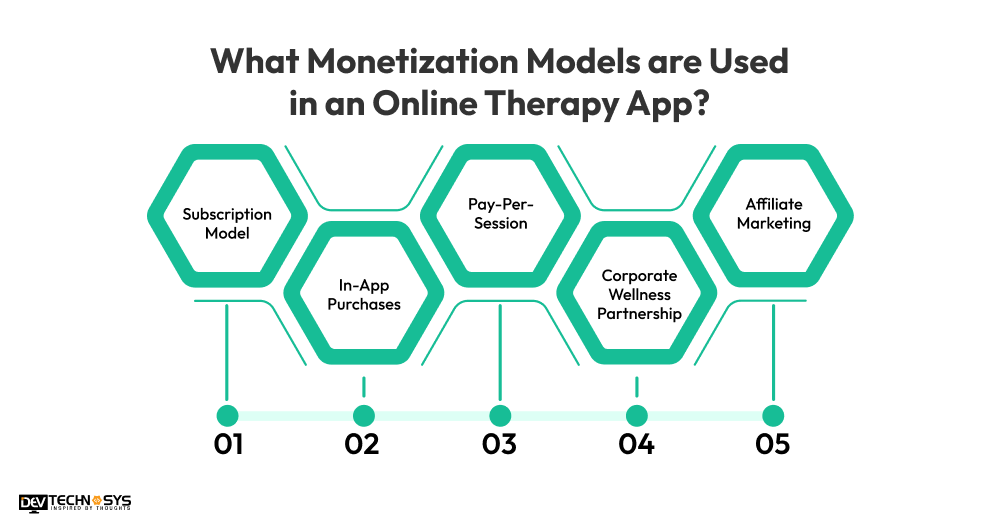
One thing that comes to mind when we build an online therapy app is its profitability. By integrating subscription, pay-per-session, corporate partnerships, and other models, therapy apps can create recurring revenue. In this section, we will be learning about some of these monetization strategies.
1. Subscription Model
The AI-powered therapy app development solutions usually make money by offering a subscription to users. They buy a monthly or yearly subscription to access therapy sessions, self-help tools, and chat support. This model guarantees predictable revenue generation and long-term engagement.
2. In-App Purchases
Through this model, users can buy additional features within the app. This includes features like meditation packs, advanced therapy modules, or AI chatbot upgrades. The top on-demand app development company often suggests this model for great revenue generation and user satisfaction.
3. Pay-Per-Session
Another preferred monetization model for the best mental health app development company is pay-per-session. Through this model, users are only charged for the therapy session they book. This is a good option for those who prefer flexibility over subscription.
4. Corporate Wellness Partnership
Many companies collaborate with therapy apps to offer their employees mental health services. It is a great measure taken by multiple organizations to improve workforce productivity and well-being. This is a perfect way for the app owners to have a continuous income stream.
5. Affiliate Marketing
Entrepreneurs can make money by promoting ads on the app and earn commission on referrals. The advertisements in an AI therapy app development can feature relevant wellness products, courses, or services. It can add value to users while expanding revenue streams.
Common Challenges When Building a Therapy App and How to Solve Them
While developing a digital therapy application, businesses might have to go through some challenges. These include difficulties related to regulations, operation, and security. These problems need to be addressed soon to ensure user trust, compliance, and long-term scalability. We will now discuss some essential challenges.
1. Therapist Onboarding and Verification
The biggest challenge in therapy app development is to ensure that the therapists are licensed and qualified. To verify a therapist’s qualifications manually can be a lengthy and error-prone process. This can potentially affect the platform’s credibility and user trust.
Solution: Businesses should use automated credential verification systems, license validation tools, and periodic compliance checks. It is beneficial to maintain accuracy while reducing onboarding time.
2. Data Privacy and Breach Risks
Online therapy apps have to handle the patient’s sensitive information, and that’s why cybersecurity is highly prioritized. If user data is not maintained properly, it can lead to data breaches, unauthorized access, regulatory penalties, and reputational damage.
Solution: Businesses should implement end-to-end encryption, secure cloud infrastructure, multi-factor authentication, and regular security audits. This can protect user data and ensure compliance.
3. Getting Licensed Professionals on the Platform
Getting highly qualified therapists can be challenging at the early stage. Also, offering them flexible scheduling options and competitive revenue-sharing models can be challenging. Startups often struggle to compete with established healthcare providers and private practices.
Solution: Businesses must offer competitive revenue-sharing models, flexible schedules, and a seamless onboarding experience. It highlights access to a wider patient base to attract qualified professionals.
Case Study: CareU Healthcare Platform
The highly proficient developers at Dev Technosys have built CareU, a scalable healthcare and wellness platform. This app focuses on improving patient engagement and digital care delivery. CareU is developed to seamlessly connect users or patients with experienced practitioners for consultation. The initial budget to build CareU was estimated at $23,000, but it has increased over time. The cost rises due to advanced features like secure messaging, appointment scheduling, and real-time communication tools.
Challenge Faced: The biggest problems that appear during development are ensuring data privacy, HIPAA-compliant security, and smooth third-party integrations. With all these, we skillfully managed to maintain platform scalability and performance across devices.
Project Highlights
- Project Name: CareU Healthcare Platform
- About Client: Moath AbuSara
- Industry: Healthcare / Digital Wellness
- Client Location: Egypt
- Development Timeline: 3 Months
- Team Size: 7 Developers
- Platform Type: Online Healthcare & Patient Support App
Final Words
People are showing interest in tackling their mental or emotional health issues without any shame or guilt. This has given a nice advantage to entrepreneurs searching for an opportunity to enter the digital landscape.
We have tried to cover almost all the information that is needed to build an online therapy app. From knowing what an online therapy app is to how it makes recurring revenue, the blog covers everything. But what makes an app perfect is the right development strategy and a mental health app development company.
A reliable development team can build an online therapy app that is scalable, secure, and user-friendly. It ensures faster delivery, better compliance, and long-term success.
Frequently Asked Questions
Find answers to the most common questions related to this article.
The overall development cost to create an online therapy app can be somewhere between $8,000 and $30,000. This price range is determined by the app’s complexity and other factors. A simple app with MVP development is less costly than an advanced one. The factors that affect the development cost include platform choice, UI/UX, security, third-party integrations, backend, and others.
Some of the essential features an online therapy platform must include are:
Therapist Matching
Chat or Video Consultation
Scheduling Appointment
Therapist Dashboard
Health Records
Payment Integration
Multi-language Support
These features become the reason for the app’s scalability and long-term stability in the competitive market.
Yes, online therapy app development is a profitable business due to the rising awareness of mental and emotional well-being. People want to work on themselves but feel uncomfortable about confronting or openly speaking with a therapist in person. They prefer online therapy applications instead of going for traditional therapies. This becomes a golden chance for startups or mental healthcare departments to get established digitally.
If you are developing a simple therapy app with an MVP approach, the app will have lower complexity. Due to this, it gets developed within 4-6 months. Whereas developing a full-fledged, highly advanced therapy application makes the app development complex. So, the advanced app can take 6+ months for development.
Important technologies used to make an online therapy app include:
Frontend: React Native, Flutter, or Swift
Backend: Node.js or Python
Video APIs: WebRTC or Twilio
Cloud Services: AWS, Google Cloud, or Azure
Database: MongoDB or PostgreSQL
Security: SSL encryption and OAuth
Such technologies become the reason for the app’s scalability and stability.
Yes, you need HIPAA compliance as it is mandatory for the apps that collect, store, and transmit health information. The compliance includes therapy notes, session history, and personal health data. If the app is not compliant, it can result in heavy fines, legal action, and permanent platform shutdown.
The minimum budget to build an MVP online therapy app can range from $8,000 to $16,000. This amount covers basic but essential features that lower the development complexity. However, cost may vary as per the platform choice, backend, APIs, UI/UX, security, and so on
To find licensed therapists, you can reach out to professional directories like Psychology Today, national licensing boards, and mental health associations. Even multiple platforms collaborate with therapy networks or run referral programs directly. Before onboarding a therapist, always verify credentials, licenses, and malpractice insurance.
Yes, you can build an online therapy app without a technical background by partnering with an experienced app development company. They handle architecture, coding, compliance, and deployment while you focus on the business side. Clearly defining your requirements, features, and budget upfront ensures the development team delivers exactly what your platform needs.