

















Quick Summary:
-
- Create a medical record app, which consists of various steps such as market research, identifying needs, tech stacks, designing UI/UX, app development, testing, QA, publishing, and post-maintenance services.
- Integrating unique features in a medical record app, such as patient registration, prescription management, appointment scheduling, insurance management, doctor dashboard, telemedicine support, and more.
- Benefits for businesses when investing in electronic health record app development include improved patient care, data-driven insights, reduced operational costs, data security, and support for remote health.
- Offering various monetization techniques to generate higher revenue streams, such as subscription plans, freemium model, transaction fees, advertising, collaborations, and partnerships.
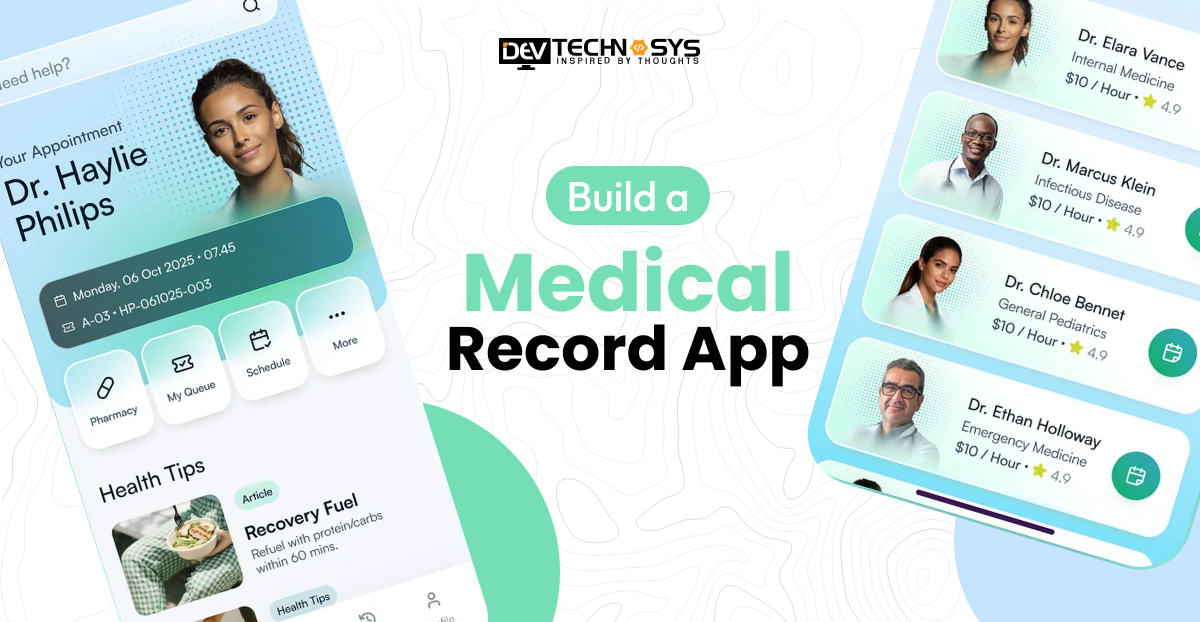
Do you remember a time when patients took their medical records to a doctor’s consultation? Now everything has changed with digital transformation; there is a medical record app. Where patients can record all their health-related reports, and there is no need to take physical reports.
According to Market Research Future, the medical record applications market was valued at around 11.15 USD billion in 2025. Expected to increase at a faster speed around $20.3 USD billion by 2035.
This data shows how quickly the market is growing and clearly indicates that investing in medical record app development is a profitable opportunity.
In this information blog, we will explore how to build a medical record app, business benefits, development cost, features, monetization techniques, and more useful data.
Market Analysis of Medical Record Applications
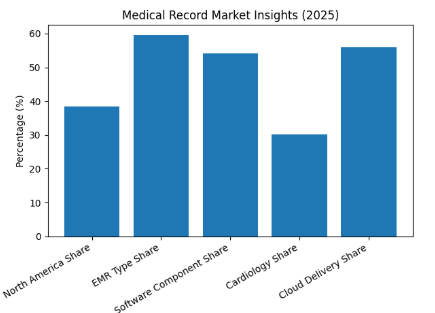
- As per the data of Grand View Research, North America dominates the medical record market with a share of 49% in 2025.
- According to the Mordor Intelligence, the EMR type segment led the market with a revenue share of around 55% in 2025 with a CAGR of 6.49%.
- Looking at the component-wise, the medical record software holds the market share of around 22% in 2025.
- Application-wise, cardiology accounts for a share of around 12% in 2025, and neurology is projected to grow with a CAGR of 5.98% during the forecast period.
- Observing as a delivery type, cloud solutions hold the highest market revenue share, around 90%, in 2025.
What is Medical Record App?
A medical record application is a digital tool where users can store, organize, and manage their personal health information. These applications include various advanced features such as real-time health tracking, medical reports, tracking symptoms, storing medication schedules, and more.
It mainly helps patients to view their reports in real-time, and doctors can easily upload the reports, such as lab results, events, prescriptions, and more.
How Does the Medical Record App Work?
Before developing a medical record app, one must understand the working criteria and what steps to follow when starting the application. This section provides the step-by-step working process of the medical record app:
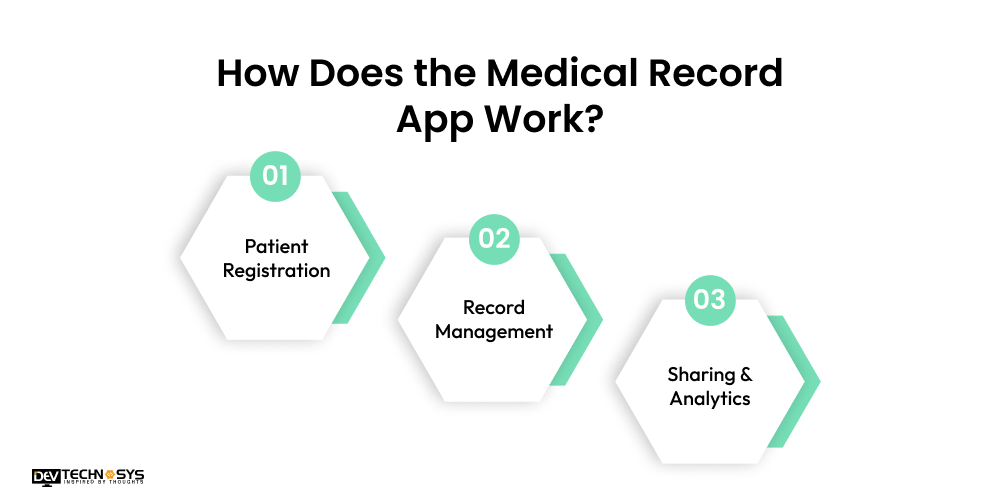
1. Patient Registration
The medical record app collects the patient’s health data, such as symptoms, medical history, personal information, and living location. It is stored in a secure database with proper security measures.
2. Record Management
The healthcare staff and providers update the patient’s health data in real time, such as diagnosis, prescription, treatment plans, lab results, and more. The app organizes the data systematically and ensures seamless coordination with departments.
3. Sharing & Analytics
Authorized users can access and share records across systems or facilities. Advanced analytics provide insights for better decision-making, improving patient care, treatment outcomes, and overall healthcare efficiency.
Planning a Mobile App?
Get a tailored development cost estimate in 3 simple steps — app basics, features, timeline, and your contact details.
- 3 quick steps
- 100% free
- Reply in 1 business day
2 Minutes Read
4 Types of Medical Record Apps: Know the Difference Before You Build
The four major classes of medical record applications are EMR systems, EHR platforms, patient portal applications, and personal health record applications (PHR). These application categories will have a unique function or purpose in today’s digital healthcare ecosystem and its associated development.
1. Electronic Medical Records (EMR) Apps
The EMR applications digitize patient records within a single organization. It helps doctors and physicians to track patients’ medical history, document treatment, streamline clinical workflows, and manage prescriptions. EMR platforms reduce physical documents and papers, and they can improve efficiency and limit data accessibility outside the organization.
2. Electronic Health Records (EHR) Apps
An EHR app provides a single point of access for a patient’s health history from multiple providers and facilities. They enable data exchange in a secure manner, via improved coordination of care, have the ability to meet the Interoperability standards, and allow providers to use complete health records to make better-informed decisions.
Industry Insights:
According to The Wall Street Journal, startups are increasingly integrating AI into patient care to automate and enhance service delivery, including using AI for tasks like prescription refill workflows and personalized care pathways.
3. Patient Portal Apps
A Patient Portal app allows an individual to securely access their medical record, results, prescriptions, and appointments at any time. These apps help to increase patient participation, facilitate communication with providers, enable online payment, and allow the patient to take an active role in their health care experience.
4. Personal Health Record (PHR) Apps
A Personal Health Record (PHR) app allows the individual to create, maintain, and control their own health record in one location. Users are able to store their complete medical history, medications, allergies, vaccinations, and other wellness data in one app. They promote self-management, portability of one’s personal health record, and ownership of one’s own health records.
Why do the Healthcare Industry or Entrepreneurs Want to Build a Medical Record App?
The demand in the healthcare industry is increasing day by day due to its operations. Around 58% of mobile phone users in the US have used medical record applications. Investing in a secure medical record app development is one of the profit-generating opportunities for entrepreneurs.
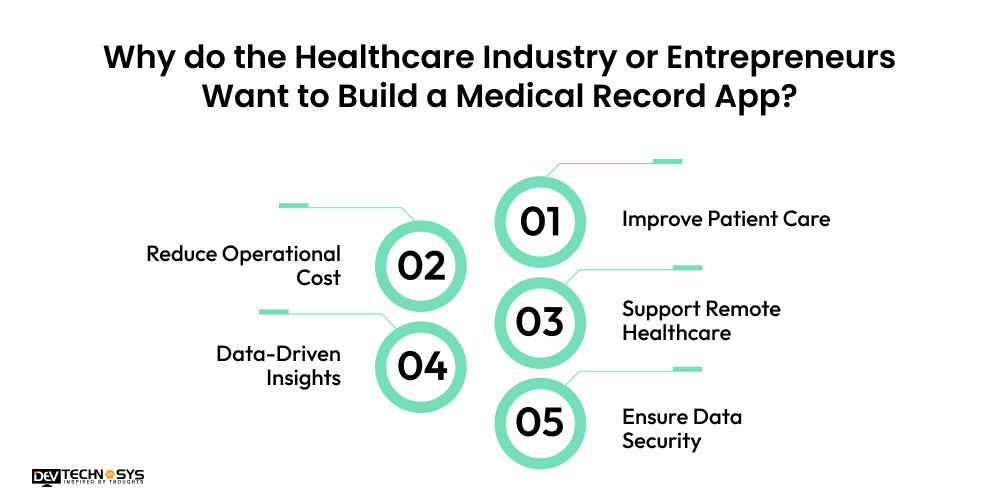
1. Improve Patient Care
The healthcare departments need medical record applications to offer accurate and faster real-time health information. With the help of these platforms, they can easily access patients’ medical history, diagnosis, treatment plans, prescriptions, and much more. This can help to personalize the treatment and allow doctors to make better-informed decisions.
2. Reduce Operational Cost
When entrepreneurs develop a healthcare app like HealthTap, it performs various administrative tasks and operations such as appointment scheduling, medical documentation, staff management, and billing.
It mainly reduces the manual errors and paperwork, and it can save the healthcare staff time. This can allow them to focus more on patient care instead of admin tasks.
3. Support Remote Healthcare
With the transformation of the healthcare industry, telemedicine applications enable doctors to consult with their patients remotely and share health data.
Patients and healthcare providers connect via video conferencing and can easily access the medical record anytime and from anywhere. Improving accessibility for rural or distant populations and supporting continuous care without physical visits.
4. Data-Driven Insights
The medical record applications have the ability to analyze or observe the patient’s useful data. It includes medical history, predictions, demographics, behaviours, habits, and more. With the help of patient data, entrepreneurs can offer them personalized recommendations, identify areas, and develop innovative healthcare solutions.
5. Ensure Data Security
Moving to the last benefit, the medical record apps implement strong security measures to protect the patient’s sensitive health data. It involves various end-to-end encryption techniques, two-factor authentication, biometrics, HIPAA-compliant, GCI, and many more. With these robust security methods, increase user trust among other apps and avoid legal risks.
Look What HHS.gov Says:
“The U.S. Department of Health and Human Services’ Office for Civil Rights (OCR) has received more than 374,000 HIPAA complaints and conducted over 1,100 compliance reviews.”
What are the Key Steps to Build a Medical Record App in 2026?
Create a medical record app in 2026 requires strategic planning and following various development processes. Begin from market research and gathering project requirements to post-deployment maintenance services. Consider the step-by-step process of the doctor-on-demand app development:
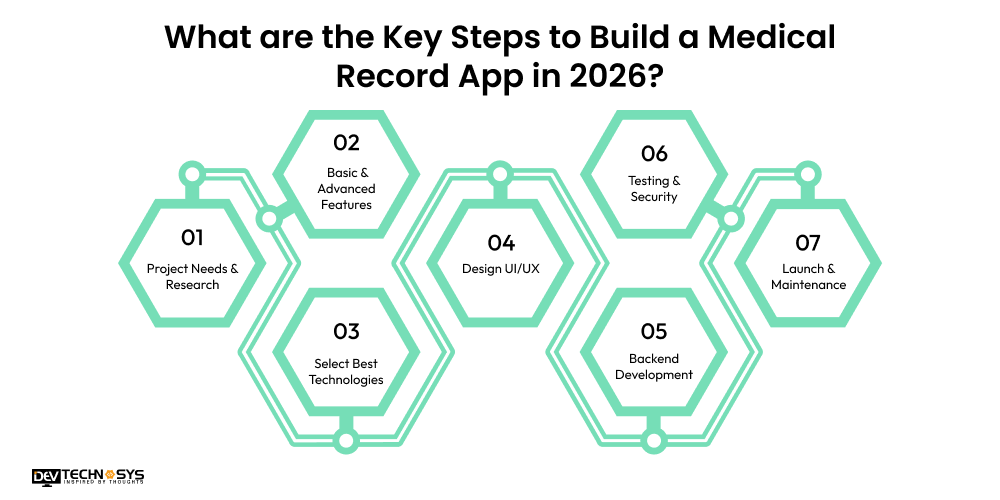
1. Project Needs & Research
In the first stage to build a medical record app, identify the project requirements and needs that you actually want to add. Prepare a sheet of project requirements to reduce duplicate data and misunderstandings. Research in the market about the latest trends in the healthcare industry and observe the existing applications to understand their working criteria.
2. Basic & Advanced Features
Talk about the second stage of the healthcare app development process, and find out the basic and advanced features for your app. It involves various types of features such as patient registration, billing & invoicing, prescription management, appointment scheduling, medical history, insurance management, and more. Businesses can also observe the popular medical record apps’ features to integrate into their own app.
3. Select Best Technologies
Moving to the third process, hire dedicated developers to choose the best or right technologies for building a medical record application. It involves various types of technologies:
- Frontend: Angular, Vue.js, React
- Backend: .NET, Spring Boot, Node.js, Django
- Cloud Services: Google Cloud, AWS, Azure
- Authentication & Security: OAuth 2.0, JWT, SSL/TLS
- Database: SQL, MongoDB, Oracle, PostgreSQL
4. Design UI/UX
After choosing the technologies, design the user interface of the medical record app with different UI elements such as layouts, templates, colors, fonts, textures, and more.
Developers use popular design tools such as Figma, Sketch, Farmer, Zeplin, Marvel, Adobe XD, and more. A user-friendly interface helps users to easily use each feature, and quickly, it can increase user engagement.
5. Backend Development
Now, it’s time to begin the real coding for backend processes. Businesses need to hire backend programmers from a professional medicine delivery app development company to manage servers, third-party APIs, the database, and more.
There are various third-party tools to integrate, such as payment gateways, communication tools, reporting & analytics, social media platforms, and more. Developers need to interlink the frontend and backend processes.
6. Testing & Security
Completion of backend development, now it’s time to check each feature or service is working correctly and perfectly. Conduct the testing techniques such as unit, functional, integration, and security testing.
Fix the errors and glitches that are found during the testing phase. Add security measures such as multi-factor authentication, biometrics, encryption techniques, firewalls, HIPAA-compliant, and more.
7. Launch & Maintenance
Hire a premier mobile application development company to publish the app on various stores such as the Play Store(Android) and the App Store(iOS). After publishing, you will need to monitor the performance of the app and check its daily traffic.
Start the maintenance services to keep up-to-date, such as backups, regular updates, fixing bugs or errors, adding design enhancements, updating to the latest OS versions, authentication updates, and more.
Want a chatbot demo or pricing? Fill the form and talk to our experts today.
Pick what you need below — you can select more than one — then tap Get detail to continue.
-
Chatbot demo dashboard
-
Cost to develop an app
-
Industry report
-
Case study
What Features Must Be Integrated in Medical Record Applications?
Do you want to know which features are best to integrate into a medical record app? There are various types of features of medical record apps available. It includes user registration, appointment scheduling, and many more.
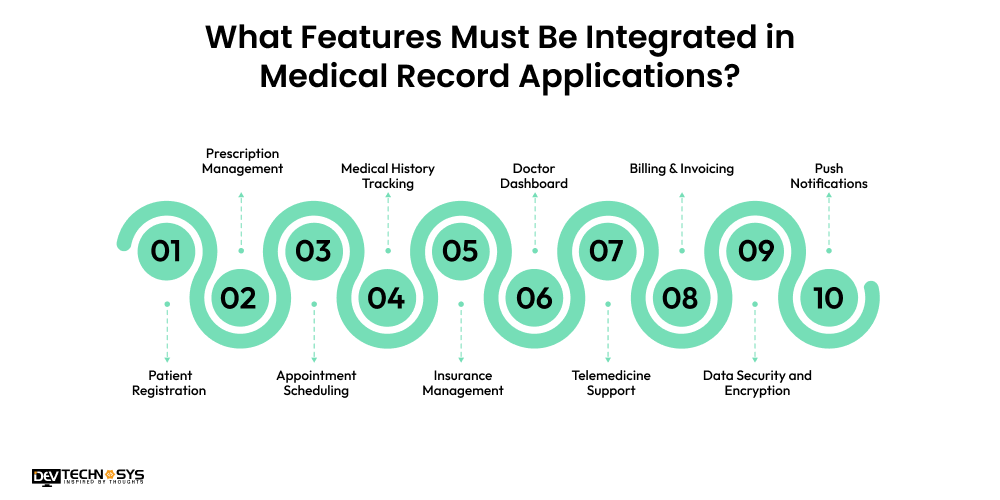
1. Patient Registration
The medical record apps enable patients to register their accounts by entering personal information, medical history, diagnosis, and contact details.
2. Prescription Management
A cloud-based medical record system manages prescriptions, such as refill management, dosage tracking, checking drug interactions, and offers digital prescribing to improve treatment plans.
3. Appointment Scheduling
An electronic health record app allows patients to book an appointment with a doctor and schedule as per availability and flexibility, and healthcare staff can also reschedule the appointment.
4. Medical History Tracking
The health record management system enables healthcare providers to track the patient’s medical history, illness, and treatments, allowing them to make informed decisions.
5. Insurance Management
An electronic patient record system manages the insurance processes such as claim submission, insurance verification, approvals, reimbursements, and can reduce the insurance rejections.
6. Doctor Dashboard
The clinical record system provides a dashboard for healthcare providers where they can quickly access the appointments, patient summaries, alerts, and critical information.
7. Telemedicine Support
Digital medical record platform supports telemedicine via video, chat, call, and more to access advanced patient care, and it can reduce travel.
8. Billing & Invoicing
The patient health management app offers an automated billing and invoice-generating system. It can reduce the administrative work and ensure transparency in the billing system.
9. Data Security and Encryption
Protects sensitive health information using encryption, secure storage, and compliance with standards, ensuring confidentiality, integrity, and protection against unauthorized access or breaches.
10. Push Notifications
Sends automated alerts for appointments, medications, lab results, and follow-ups via SMS, email, or app notifications, improving adherence and reducing missed visits.
Industry Insights:
“According to the Grand View Research, the U.S. ambulatory EHR market is expected to reach $7.6 billion by 2030, fueled by the shift toward outpatient care, urgent care centers, specialty clinics, and value-based healthcare models.”
AI Features to Build Into Your Medical Record App in 2026
Intelligent diagnostics, predictive analytics, automated documentation/support for personal treatments will be types of AI features that you should incorporate into your medical record applications in 2026.
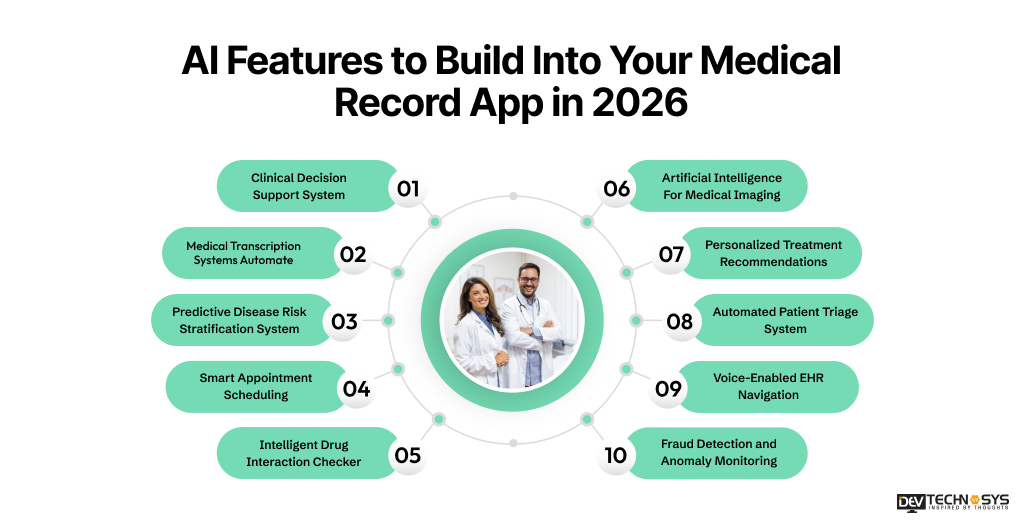
1. Clinical Decision Support System
Uses artificial intelligence to enhance patient care through enhanced diagnostic capabilities via previous health information, current medical guidelines, and predictive analytics.
2. Medical Transcription Systems Automate
The process of converting a conversation between doctor and patient into a structured format through automation, specifically using voice recognition technology and natural language processing.
3. Predictive Disease Risk Stratification System
provides the ability to generate patient data to assess the likelihood of developing a specific condition for the purpose of providing early intervention and reducing future expense associated with patient care.
4. Smart Appointment Scheduling
provides tools to improve appointment scheduling by optimizing the use of technology to reduce patient wait time, prevent double bookings, and improve the efficiency.
5. Intelligent Drug Interaction Checker
automatically notifies health care providers in real-time should a drug interaction or allergy status exist for a patient to improve patient safety and accuracy of treatment.
6. Artificial Intelligence For Medical Imaging
enhancing the work of radiologists by identifying abnormal findings in radiographs, mris and ct scans securely and reliably, and providing accurate interpretation reports with increased speed.
7. Personalized Treatment Recommendations
helps provide recommended therapeutic solutions based on an individual’s genetics and health history, as well as their lifestyle data.
8. Automated Patient Triage System
Automate the method by which patients are assigned a severity of symptoms when presenting for care using artificial intelligence, thus allowing for immediate attention of those patients presenting with potentially life-threatening conditions.
9. Voice-Enabled EHR Navigation
Doctors can access and update patient records using their voice commands, allowing for an increase in workflow efficiency and a reduction in the amount of time spent manually updating or entering data.
10. Fraud Detection and Anomaly Monitoring
AI can help identify suspicious activity within a doctor’s patient record system as well as in the doctor’s billing system, thus reducing the opportunities for fraud, error, or tampering within either of these databases.
HIPAA Compliance in 2026: What Your Medical Record App Must Follow
To comply with HIPAA by 2026, all medical record applications will have to enforce the security of patient health records by implementing mechanisms such as encryption, establishing user access controls, maintaining audit logs, and having policies or procedures that govern how they notify patients in the event of a data security breach.
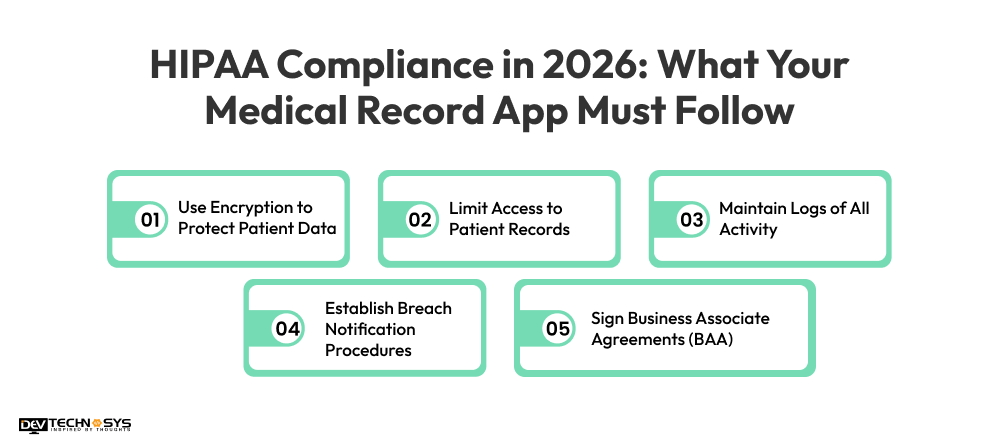
1. Use Encryption to Protect Patient Data
Medical record apps must utilize encryption to protect both electronic protected health information (ePHI) that is transmitted or stored. The use of strong encryption reduces the chances that sensitive patient data will be accessed by an unauthorized user, reduces the chance of a data breach, and maintains compliance with HIPAA security regulations.
2. Limit Access to Patient Records
Access to patient records must be limited to authorized users only. Because of this, it is important to use role-based permissions, utilize two-factor authentication, and have secure login methods to limit the unauthorized viewing and/or changing of patient information and to ensure that healthcare staff access only what they need to do their job.
3. Maintain Logs of All Activity
Organizations are required by HIPAA to keep a record of access and activity related to ePHI. In order to comply with this requirement, detailed logs should be kept and include all access activity to patient records (i.e., login, views, edits, downloads) so that compliance investigations can occur, and all activity will be able to be accounted for.
4. Establish Breach Notification Procedures
Clear procedures should be established for identifying, reporting, and responding to data breaches in healthcare organizations. This includes providing timely notice to the appropriate individuals and regulators to meet HIPAA standards and reduce potential harm.
5. Sign Business Associate Agreements (BAA)
A third-party service provider that processes or handles protected health information (PHI) must enter into a business associate agreement. The business associate agreement outlines the responsibilities of each party for the security of PHI, each party’s compliance responsibilities, and each party’s data protection requirements. These agreements ensure that all parties comply with HIPAA.
10 Best Medical Record Apps in 2026
Are you still confused about which medical record apps are best? There are various medical record apps available in the market to offer different features and services. Take a look at the table below with downloads, ratings, launched year, and platform availability:
| App Name | Downloads (Approx.) | Rating | Launched | Platforms |
| MyChart (Epic) | 50M+ | 4.6 | 2010 | Android, iOS, Web |
| HealthTap | 1M+ | 4.5 | 2011 | Android, iOS, Web |
| FollowMyHealth | 5M+ | 4.6 | 2012 | Android, iOS, Web |
| Practo | 10M+ | 4.5 | 2009 | Android, iOS |
| Teladoc Health | 5M+ | 4.6 | 2023 | Android, iOS |
| Ada | 10M+ | 4.6 | 2016 | Android, iOS |
| NH Care | 1M+ | 4.7 | 2020 | Android, iOS, Web |
| healow | 10M+ | 4.6 | 2013 | Web, Android |
| HealtheLife | 1M+ | 4.3 | 2013 | Android, iOS |
| Kaiser Permanente | 1M+ | 4.6 | 2012 | Android, iOS |
1. MyChart
MyChart is a patient portal that enables people to connect with hospitals and clinics. Patients have access to their medical records and can see test results and medications.
Users can make appointments, manage their family’s health data, and communicate directly with healthcare providers through MyChart. MyChart stores the patient’s health records securely and improves communication with the healthcare team.
2. HealthTap
HealthTap is one of the best-known health apps, where users can connect directly to a licensed physician. Patients can communicate with a physician in real-time about their health concerns and schedule a consultation.
In essence, HealthTap aims to create an accessible method of connecting to medical personnel or health service providers 24/7 while minimizing the chances of having to visit a doctor’s office.
3. FollowMyHealth
FollowMyHealth is an internationally recognized app designed to connect to multiple healthcare organizations for an extensive view of care. Users can share all lab results, appointments, medications, and conditions they have experienced by using only one app and can easily connect to their physician and family members. Having access to this information can enhance the quality of care received by patients by allowing physicians to provide more informed choices.
4. Practo
Practo is a well-known health care service provider that allows you to schedule an appointment with a physician, view your medical records, request a video consultation with a provider, and more.
Practo also provides access to health check-up packages, diagnostic test results, pharmacy orders, real-time updates, and many other services related to healthcare. With Practo, you can coordinate all of your healthcare needs using a single platform without having to visit multiple websites.
5. Teladoc Health
Teladoc Health is a telemedicine application that allows patients to communicate with physicians or specialists via telephone or videoconference from their homes.
Patients can receive treatment for general medical problems, receive mental health support, and manage chronic illnesses through video consultations. Through the use of Teladoc, patients can access customized care plans, prescriptions, and health information.
What is the Cost to Build a Medical Report App in 2026?
The cost to develop a medical report app in 2026 is around $8,000 to $25,000 or based on project requirements and demands. The total HIPAA-compliant app development cost can fluctuate due to various crucial factors such as features, medical report app types, security measurements, functions, project complexity, size, and more.
There are many additional factors like testing, designing UI/UX, quality assurance, and more. Consider the healthcare app development cost table with detailed information:
| App Type | Features Included | Estimated Cost (USD) |
| Basic (MVP) | Login, upload/view reports, simple dashboard | $8,000 – $15,000 |
| Mid-Level App | Report sharing, doctor access, notifications, cloud storage | $15,000 – $20,000 |
| Advanced App | AI analysis, EHR integration, analytics, multi-role system | $20,000 – $25,000+ |

What Factors Affect the Medical Record App Development Cost?
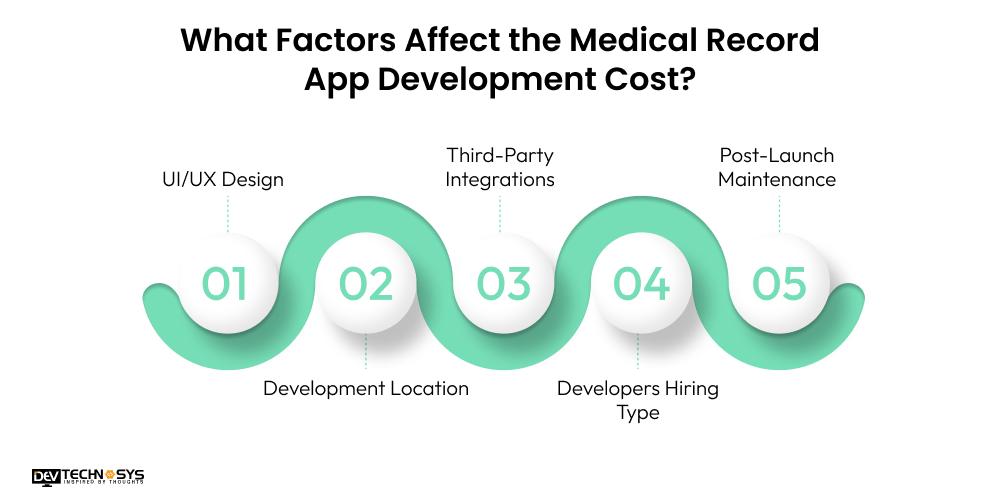
There are various types of factors that can highly impact the final medical record app development cost. It involves basic and premium features, developers’ location, developers’ experience level, third-party integrations, backend infrastructure, deployment platforms, and many more.
1. UI/UX Design
When designing a medical record app, there are various design styles that exist, and some of them are highly expensive. A premium design quality can easily increase user engagement, but it can also raise the cost to build a medical record app. It includes different UI elements such as templates, textures, styles, fonts, colors, layouts, prototyping, wireframing, and many more.
| Level | Cost Impact (USD) |
| Basic (templates, minimal design) | +$500 – $1,500 |
| Standard (custom UI, responsive design) | +$1,500 – $3,500 |
| Advanced (animations, user testing, accessibility) | +$3,500 – $6,000 |
2. Development Location
Developing a medical record app from various regions or countries. Each region has a different cost for mobile application development. Regions like North America and Europe charge a higher cost due to the expensive living costs as compared to other regions. Choose the Asia-Pacific on-demand app development company for cheaper development costs because it has lower living costs.
| Location Type | Cost Impact (USD) |
| Low-cost regions (India, SE Asia) | +$0 – $2,000 |
| Mid-cost regions (Eastern Europe) | +$2,000 – $5,000 |
| High-cost regions (USA, UK) | +$5,000 – $7,000 |
3. Third-Party Integrations
Integrating third-party tools and applications in the medical record app is necessary to increase the users’ accessibility and flexibility. It involves various types of integrations such as lab integration, payment gateways, IoT & wearable devices, clinical decision support, and communication tools. Some of the integrations have higher licensing fees, and developers consume extra time to complete them. It mainly affects the overall cost to develop a medical record app.
| Integration Level | Cost Impact (USD) |
| Basic (cloud storage, email APIs) | +$500 – $8000 |
| Moderate (payment, notifications, APIs) | +$800 – $1,000 |
| Advanced (EHR, wearable, AI APIs) | +$1,000 – $1,300 |
4. Developers Hiring Type
The type of developer businesses hire is one of the common factors that can impact the cost. Freelance developers are cheaper to hire, but they can lack reliability and scalability in a complex medical record app. An in-house team is a better option, but it can incur a higher cost. Outsourcing agencies are a balanced option to offer high-quality development within a fixed project budget.
| Hiring Model | Cost Impact (USD) |
| Freelancers | +$0 – $2,000 |
| In-house Team | +$5,000 – $7,000 |
| Development Agency | +$3,000 – $5,000 |
5. Post-Launch Maintenance
After building an application, maintenance services are important to maintain the actual speed and performance of the app. It includes various services such as regular updates, performance optimization, backups, updating outdated features, adding new enhancements, implementing security measures, and more. These maintenance services are time-consuming, and developers charge extra fees, which can directly affect the medical record app.
| Maintenance Level | Cost Impact (USD / year) |
| Basic (bug fixes, minor updates) | +$500 – $1,000 |
| Standard (updates, monitoring) | +$1,000 – $1,300 |
| Advanced (security, scaling, new features) | +$1,300 – $1,500 |
Medical Record App vs. EHR vs. EMR: What’s the Difference?
EMR(Electronic Medical Record) stores information or data within one organization. EHR(Electronic Health Record) shares patients’ and other information across the organizations.
The medical record apps offer various tools to manage, interact with, and access healthcare information. The table below helps to choose the best platform that fits your requirements and demands.
Feature |
Medical Record App |
EMR (Electronic Medical Record) |
EHR (Electronic Health Record) |
| Meaning | App for managing healthcare records and services | Digital version of paper charts | Comprehensive digital health record |
| Scope | Broad healthcare management | Single clinic or hospital | Multiple healthcare organizations |
| Users | Patients, doctors, and staff | Doctors and clinical staff | Healthcare providers and patients |
| Data Sharing | Depends on integrations | Limited to one organization | Easily shared across providers |
| Patient Access | Usually available | Limited | Commonly available |
| Interoperability | Moderate to high | Low | High |
| Features | Scheduling, billing, telehealth, and records | Clinical documentation | Care coordination and record sharing |
| Accessibility | Mobile and web access | Mostly provider access | Provider and patient access |
| Main Purpose | Complete healthcare management | Track patient treatment internally | Improve coordinated healthcare delivery |
| Best For | Modern healthcare platforms | Individual practices and clinics |
Connected healthcare networks |
Medical Record App Security Best Practices
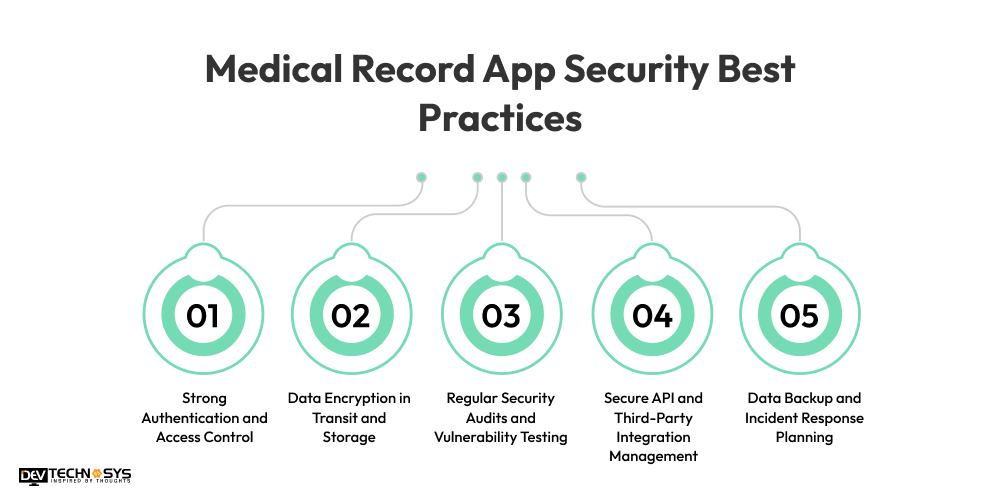
Best practices for medical record app security: ensure sensitive patient data is secure through strong authentication, encryption, regular security audits, secure APIs, and strong backup methods.
To protect against unauthorized access, decrease breach risks, ensure there is compliance with regulations, and maintain trust, integrity, and ongoing availability of the healthcare information system.
1. Strong Authentication and Access Control
Multi-Factor Authentication (MFA) and Role-Based Access Control (RBAC) must be put in place to secure all medical records data against unauthorized access. Access will only be granted on an as-needed basis to individuals with an appropriate job description, and regular audits will be performed to ensure no unauthorized access to data will take place.
2. Data Encryption in Transit and Storage
Sensitive medical records data must be protected from unauthorized access through encryption. While being stored and during the transfer, use effective encryption protocols like AES-256 and TLS. If the data is intercepted or compromised, no third party will be able to utilize the data.
3. Regular Security Audits and Vulnerability Testing
Regularly perform Security Audits, Penetration Tests, and Vulnerability Assessments on your systems to find any vulnerabilities that could allow access to application data. If any vulnerability is discovered, apply patches immediately, and if applicable, upgrade your system.
This will assist you in remaining compliant with the regulations and protect you against possible data breaches and exploitation due to prior software vulnerabilities.
4. Secure API and Third-Party Integration Management
Your integration of third-party services into your medical record applications must be treated as an extension of your application, meaning every API that you use must validate users, rate-limit, and encrypt access to that data.
You must also verify that all of your 3rd party services meet the requirements of complying with regulatory standards for safeguarding the information you hold as a healthcare provider.
5. Data Backup and Incident Response Planning
Establish a secure, periodic schedule to create encrypted copies of all medical records to avoid experiencing data loss. Create an incident response plan that specifies how to detect, contain, recover from, and communicate about potential data breaches. Quick response to incidents reduces the amount of damage done, maintains ongoing delivery of health care, and meets any applicable regulations.

Top Challenges When Building a Medical Record App
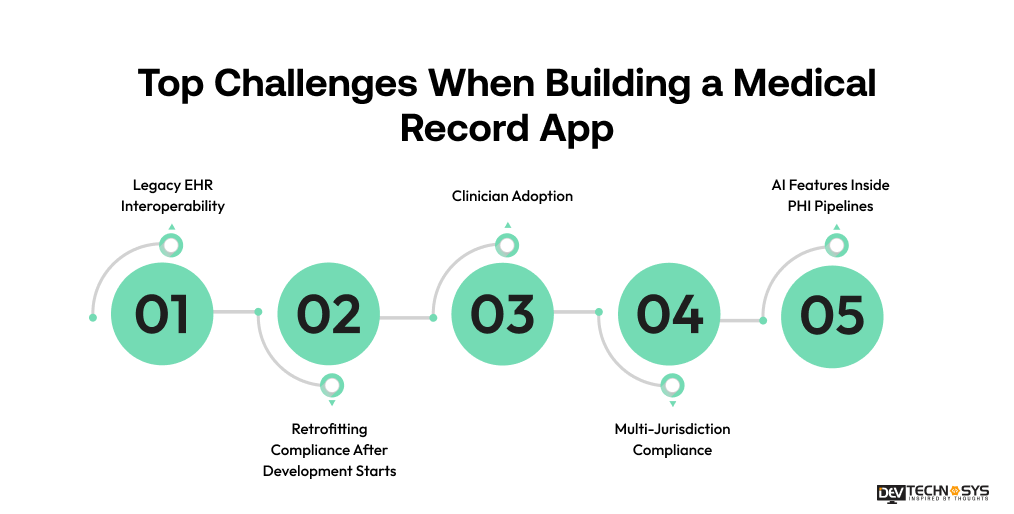
Developing a medical record app comes with many obstacles. These include meeting HIPAA requirements, incorporating old EHR systems, securely storing patient data, getting physicians to use your app, and having the app work with other systems.
Those major challenges, developers must also address issues such as building a scalable architecture for the app, adhering to regulations, and providing real-time access to data.
1. Legacy EHR Interoperability
There are still many healthcare organizations using older EHRs with limited APIs and inconsistent data formats, which makes it hard to integrate these systems.
The answer is to build a middleware data hub that is HIPAA compliant and allows for secure, bi-directional sync between the new apps and legacy systems without altering the existing workflows for clinicians or data integrity.
2. Retrofitting Compliance After Development Starts
Designing for HIPAA compliance after the product has been developed is one of the most expensive mistakes that can be made in the development of healthcare software products.
Compliance must be built into the product from day one. Therefore, you must define your encryption standards, role-based access control, audit logging, and data governance on Sprint 1 before you start developing the features.
3. Clinician Adoption
Even the most technically advanced systems will not be used by clinicians if their workflows are impeded or their cognitive load is increased. Clinicians prefer ease of use and speed to complex functionality.
The solution is to co-design with real clinicians during the UX design stage, with the goal of reducing clicks, minimizing the amount of data entry required, and seamlessly integrating into clinicians’ current workflows.
4. Multi-Jurisdiction Compliance
To be compliant with multiple regulations when developing a healthcare app that will be used in many different geographic areas ( GPS/Geography), you should start your project from the most restrictive jurisdiction.
For example, HIPAA (federal) and GDPR (EU), and any telehealth regulations that exist in the states where you intend to offer services. Building your app with the strict regulatory requirements in mind will allow you to create a scalable system across all of the applicable jurisdictions.
5. AI Features Inside PHI Pipelines
Whenever an AI system has access to PHI, it requires additional controls to ensure compliance with regulations. Examples of additional controls are: Data Minimization and de-Identification.
AI diagnostic tools may also require compliance, as they may be classified by the FDA as Software as a Medical Device (SaMD). In addition to needing to comply with specific controls, using AI diagnostic tools will result in additional time, cost, and validation requirements before they can be deployed.
Medical Record App Trends Shaping 2026: Build for What’s Coming Next
With the increase in connectivity and artificial intelligence in healthcare, medical record applications will need more than simply records intended to support providers in documenting services provided to patients.
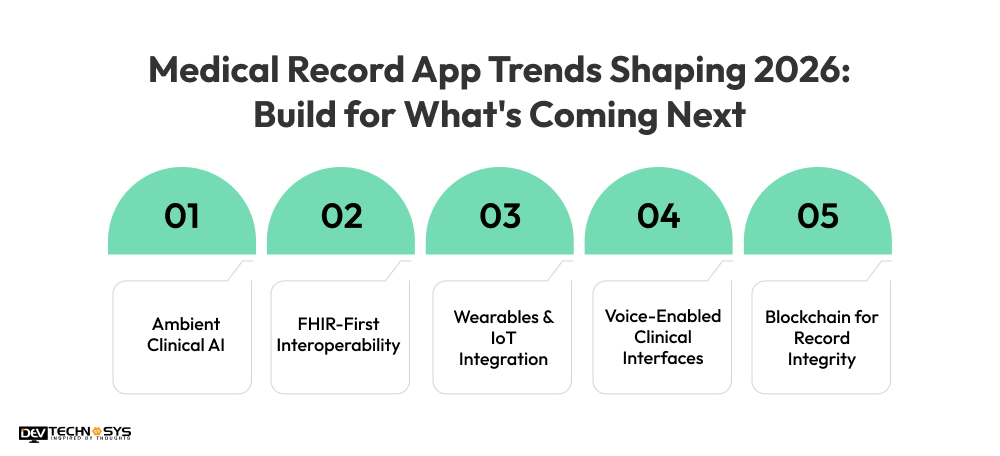
Trends such as FHIR R4 interoperability, ambient clinical AI, predictive analytics, and patient-centered automation will determine how platforms will maintain a competitive, compliant, and trusted status with providers moving into 2026.
1. Ambient Clinical AI
Real-time clinical AI allows clinicians to capture interactions with patients, automatically generating structured clinical notes at the time of interaction.
The adoption of real-time clinical AI within health systems across the country is growing rapidly due to advancements in speech recognition, large-language models, and EHR integration, increasing accuracy, efficiency, and overall clinician satisfaction.
2. FHIR-First Interoperability
Upon the FDA’s implementation of FHIR R4 as a requirement of the 21st-century Cures Act, it is now mandatory for all healthcare applications to have the ability for standardized data exchange.
As a result, organizations that prioritize a FHIR-first architecture will easily integrate with hospital systems, enhance access to patient data, and comply with new interoperability mandates.
3. Wearables & IoT Integration
With the evolution of healthcare platforms, organizations are able to aggregate data generated from multiple consumer-facing sources (i.e., Apple HealthKit, Google Fit, continuous glucose monitoring devices, smartwatches, and remote cardiac devices).
This enables continuous monitoring of patients and the delivery of proactive care, earlier interventions, deeper clinical insights, and more personalized treatment plans through connected care ecosystems.
4. Voice-Enabled Clinical Interfaces
Voice-enabled clinical workflows allow clinicians to create documentation through hands-free creation of notes and execution of commands. Additionally, advanced dictation tools and ambient clinical AI have reduced the administrative burden on clinicians and increased the speed of completing charts, allowing for greater focus on patient interactions and the actual delivery of care.
5. Blockchain for Record Integrity
Using Blockchain as a secure means for verifying records will provide tamper-evident audit trails, security for consent management, and proof of medical history for all types of healthcare records.
A decentralized database can facilitate trust among providers, make compliance reporting easier, maintain a safe way to share data, and provide transparency and accountability in the operation of healthcare services.
The Best Tech Stack to Build a HIPAA-Compliant Medical Record App in 2026
The ideal technology stack for an application that does not violate HIPAA laws will feature: React Native or Flutter for the front end; Node.js or Java as a server backend, PostgreSQL and MongoDB as database choices.
AWS or Azure as a cloud provider, and utilizing FHIR standards to protect patient record data and enable it to be exchanged securely, at scale, within the larger healthcare ecosystem while remaining compliant.
Layer |
Recommended Tech Stack |
Purpose / Why It’s Used |
| Frontend (Mobile) | React Native, Flutter | Cross-platform apps with fast development and strong UI performance |
| Web Frontend | React.js, Angular | Clinician dashboards with complex data views and workflows |
| Backend | Node.js, Python (FastAPI/Django), Java (Spring Boot) | Real-time features, AI/ML integration, and enterprise-grade stability |
| Architecture | Microservices | Separates auth, records, billing, and notifications for scalability and security |
| Database | PostgreSQL, MongoDB, Redis | Structured PHI storage, flexible clinical notes, caching & real-time speed |
| Managed Cloud DB | AWS RDS, Azure SQL | HIPAA-eligible managed databases with encryption and audit logs |
| Interoperability Layer | HAPI FHIR, AWS HealthLake, Azure Health Data Services | Standardizes healthcare data exchange (FHIR/HL7 compliance) |
| Messaging / Legacy Support | HL7 v2/v3 middleware | Connects older hospital systems with modern apps |
| Cloud Infrastructure | AWS, Microsoft Azure, Google Cloud Healthcare API | HIPAA-eligible cloud hosting with BAAs for PHI handling |
| Authentication & Security | AWS Cognito, Auth0 (HIPAA), Okta | Secure login, MFA, role-based access control |
| Video Consultations | Twilio Video, Agora, Vonage | HIPAA-eligible telehealth video communication |
| Payments | Stripe (HIPAA-ready with BAA) | Secure healthcare billing and subscription payments |
| Compliance & Monitoring | Vanta, Drata | Automated HIPAA/SOC 2 compliance tracking and auditing |
| Security Layer | TLS 1.3, AES-256, OAuth 2.0, JWT |
Encryption, authentication, and secure data transmission |

How to Make a Profit From Medical Record Applications in 2026?
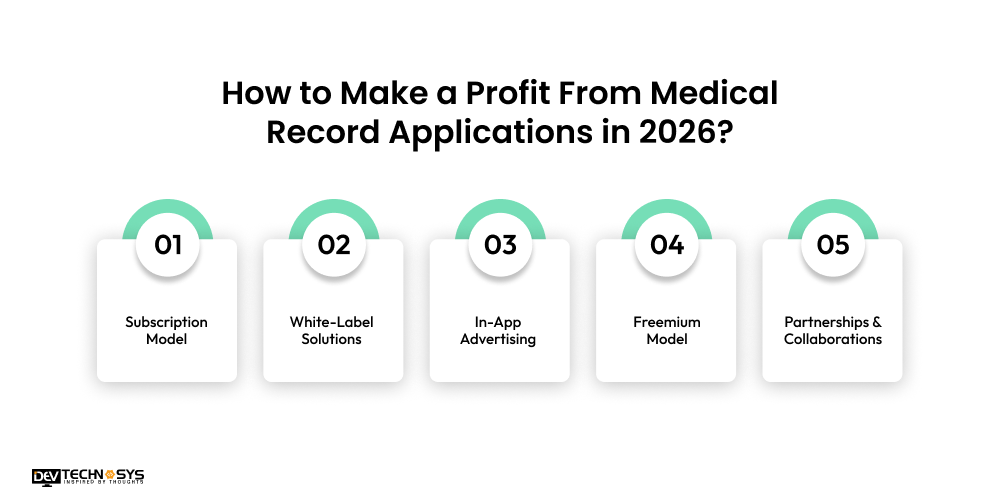
Generating profit from a medical record application is one of the most important sections for every business and entrepreneur. To get revenue from a medical record app, it involves various monetization techniques such as subscription plans, advertising, partnerships, white-label solutions, and many more.
1. Subscription Model
The patient record apps offer subscription plans to users to access the premium functionalities of the app, such as unlimited patient record storage and advanced search. It includes various plans such as basic, premium, and enterprise. Users can purchase the plans on a monthly or annual basis. This is mainly a steady cash flow and increases the overall valuation of the app.
2. White-Label Solutions
Businesses can develop a customized medical record app that can be rebranded according to the needs of other hospitals and clinics. Businesses can charge licensing and setup fees from them, and it can be a higher revenue stream that can also reduce the marketing efforts. It enables organizations to promote their own branded products.
3. In-App Advertising
Move to another revenue-generating technique. A medical data management system allows third-party organizations such as medical firms, pharmacies, and insurance companies to show their products and services as advertising inside the app. You can charge an acceptable fee for every advertisement; it can be another legal income source.
4. Freemium Model
The health information system offers basic features such as patient registration and notifications for freemium users. To access the advanced or premium features, users need to convert their plan into a premium plan.
Users can also purchase specific features to access for a limited time. This freemium model can easily increase user engagement and connect most paying users to the app.
5. Partnerships & Collaborations
In the last money-making technique, the healthcare management system allows healthcare organizations and research center to showcase their services and products in the app. You can charge a commission on each sale of a third-party organization inside the app. Charges around 10% to 15%, it is mainly called commission-based revenue.
Conclusion
We are going to end this blog with final remarks. This blog discusses in detail how to build a medical record app in 2026 and why it is lucrative or beneficial for today’s entrepreneurs. By reading this blog, we hope that you have cleared all your confusion and doubts regarding the development process.
Do you want to build your own custom medical record app to streamline your healthcare operations? What are you waiting for? Connect with an experienced healthcare app development company in New York to receive high-quality healthcare solutions at an affordable budget.
Frequently Asked Questions
Find answers to the most common questions related to this article.
The cost to develop a medical record app in Dallas is around $8,000 to $25,000, or higher. It can fluctuate due to several factors such as features, functions, project complexity, development team, platform choice, backend infrastructure, third-party integrations, tech stacks, and many more.
To create a medical record app with basic features in San Diego can take around 2 to 4 months. Building an AI-powered or complex medical record app takes around 6 months or longer. The timeline can be influenced because of higher project complexity, the number of features, the design UI/UX, and more.
There are various types of technologies used to make a medical record app in Houston. Here is the list of technologies:
Java
Python
C++
.NET
React Native
JavaScript
Angular
Yes, you can integrate your medical record app with hospitals and labs using APIs and healthcare data standards. This allows automatic report syncing, real-time updates, and seamless data exchange. Such integration improves user convenience, reduces manual uploads, and enhances accuracy, but requires secure protocols and compliance.
To generate monetization from a medical record app, it consists of various types of money-making techniques:
Subscription plans
Freemium Model
Advertisements
White-label solutions
Collaborations and partnerships
If your app will store, process, or transmit Patient Health Information (PHI) as defined by the United States Department of Health and Human Services (HHS), then you will usually have to be compliant with HIPAA regulations. You can demonstrate that you are complying with HIPAA regulations by implementing specific safeguards such as encrypting all data being transmitted, implementing access control, audit logging, and securely transferring data to a central repository.
The Fast Healthcare Interoperability Resources (FHIR) standard, developed by HL7, is the current standard for exchanging healthcare data. By adding support for FHIR R4 to your application, you can integrate with hospitals, electronic health records (EHRs), and other healthcare systems seamlessly. Such integration will improve your application's ability to share data with other systems, making it easier for organizations to meet procurement and regulatory compliance requirements.
Violations of HIPAA regulations can result in healthcare organizations being exposed to data breaches, fines for failure to comply with HIPAA's regulatory requirements, liability as a result of violating patient confidentiality, and damage to their reputation. As such, healthcare organizations are hesitant to adopt solutions that are not HIPAA-compliant, thereby reducing the number of available listings in your target market.
Your app's functionality plays a major role in determining if it needs to be cleared by the FDA. Generally speaking, most record-keeping and administrative applications do not require FDA clearance. However, apps that diagnose a medical condition, recommend treatment options, or are classified as a medical device will likely require oversight by the FDA and undergo a review process before being released to the public.
A Business Associate Agreement (BAA) is a legal contract between an organization and its vendors who handle health data (PHI). If your application (Application) processes, stores, and accesses health data, then you will most likely be required by HIPAA to have one.