Birlingo: Learn Languages Through Fun & Interactive Challenges
Birlingo makes language learning fun with interactive challenges. Start mastering new languages today!...
14-Day Money-Back Guarantee — Not satisfied? Cancel within 14 days for a full refund.Explore Our Money-Back Guarantee
14-Day Money-Back Guarantee — Not satisfied? Cancel within 14 days for a full refund.Explore Our Money-Back Guarantee




Explore AI solutions
AI services & solutions
View AI hubAdvanced AI services
View AI hubRecommended AI reads
View categoryOur ERP software development services provide flexible, scalable, cloud-enabled, and data-driven solutions for all your business needs. Allowing you to run your business efficiently and improve all aspects of its operations. We create and build customized ERP systems that offer integrated modules, real-time analytics, automated workflows, integrated APIs, and an extensive security architecture. It enables businesses to improve their resource planning, operational efficiency, and decision-making capabilities.

Years of Experience
Happy Client
Countries Served
Experts
Project Delivery
Retention Rate
As firms look for ways to consolidate their processes, grow production, and make sound decisions, the ERP software development industry is witnessing rapid growth. Digital transformation projects combined with the need for high-quality business intelligence are driving interest in these systems.

The global ERP software market is valued at around $83.2 billion in 2026, and it is expected to grow to around $157.1 billion by the end of 2033. .

As per global comparison, North America holds the largest market share of ERP software, around 37.6% in 2026.

According to segment-wise, the cloud segment led the ERP software market and holds a revenue share of around 54.4% in 2026 .

The worldwide market of ERP software is projected to grow with a CAGR of 9.5% during the forecast period from 2026 to 2033.
With our ERP solutions for logistics and supply chain management, organizations can streamline their complex operations with intelligent automation and centralized data management. We also provide you with your own specific ERP system that is scalable, secure, and industry-specific, enhancing productivity and improving decision-making, optimizing resources, and long-term organizational growth through digital transformation.
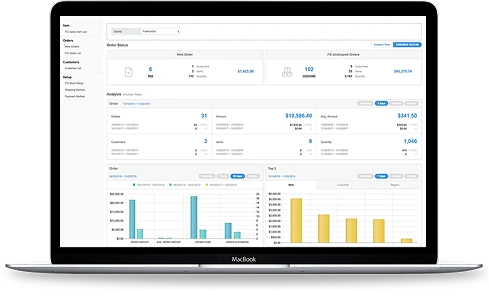
Businesses use manufacturing software development services to organize their manufacturing processes, like production planning, inventory management, procurement, quality control, shop management, and operational event processes. It assists with the manufacturing process by improving workflow management and operational efficiency, reducing waste, and maximizing resources.

Production Planning ERP

Inventory Management ERP

Quality Control ERP

Material Requirements Planning ERP

Shop Floor Management ERP

Manufacturing Execution System ERP
Retail ERP systems allow businesses to integrate inventory management with sales tracking, customer management, purchasing, and financial management. Retail ERP software development solutions also give businesses a clear understanding of their stock levels, improve the customer experience, and optimize their supply chain for multiple channels.

Omnichannel Retail ERP

Point of Sale (POS) ERP

Inventory & Warehouse ERP

E-commerce ERP

Customer Relationship Management ERP

Retail Supply Chain ERP
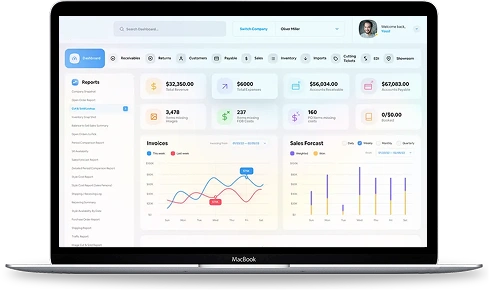
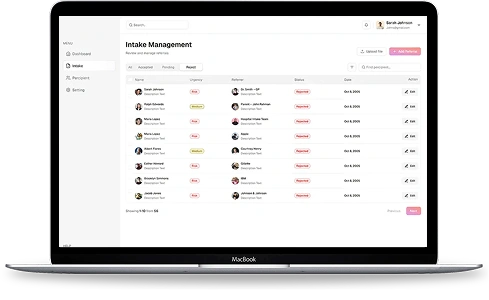
Healthcare ERP systems combine patient data management, billing, staffing, inventory management, regulatory compliance monitoring, and financial management into a single system. Healthcare ERP improves administrative operations within organizations, enhances patient care, decreases operating costs, and provides organizations with the ability to comply with regulations.

Hospital Management ERP

Clinic Management ERP

Patient Information ERP

Healthcare Billing ERP

Pharmacy Management ERP

Medical Inventory Management ERP
HR ERP systems automate employee recruitment, payroll, time and attendance tracking, new hire orientation, personnel performance evaluation, and personnel analytics. HR ERP systems improve HR operations, promote employee engagement, support compliance with HR policies, and provide data for making informed decisions when managing an organization’s workforce.

Payroll Management ERP

Recruitment Management ERP

Attendance & Leave Management ERP

Performance Management ERP

Employee Self-Service ERP

Learning & Development ERP
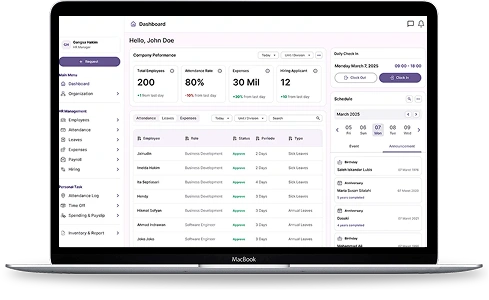
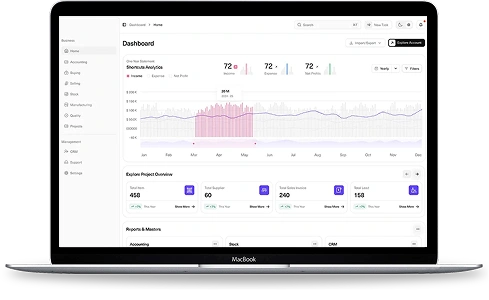
Financial ERP Software provides financial records management for each aspect of your business, including accounts payable and receivable, budgeting, tax compliance, invoicing, financial reporting, and cash flow monitoring. With this type of software, you will have access to accurate information about your financial position. Therefore, you can minimize the number of errors associated with the manual entry of data into financial systems.

Accounting Management ERP

Budgeting & Forecasting ERP

Tax Management ERP

Accounts Payable ERP

Accounts Receivable ERP

Financial Reporting ERP
Supply chain management software development solutions provide a single platform to manage the entire supply chain process, including procurement, inventory, logistics, warehouse, and operations. By implementing Supply Chain ERP Software, you will increase visibility into all aspects of supply chain operations, optimize your inventory levels, speed up order fulfillment, and improve overall operational performance.

Procurement Management ERP

Warehouse Management ERP

Logistics Management ERP

Inventory Control ERP

Vendor Management ERP

Demand Planning & Forecasting ERP
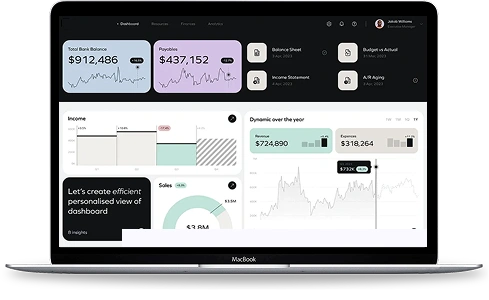
Contemporary ERP systems provide the foundational support for an entity looking for improved efficiency, visibility, and scalability. Through integrating core business processes into a single platform, ERP systems allow an organization to reduce redundant processes, enhance decision-making ability, and increase its rate of digital transformation.
By integrating production, inventory, purchasing, and quality control into one ERP system, manufacturers gain greater control of their operations and are able to monitor their production in real time, optimize resources, and predict future demands. In order to reduce operational costs, improve productivity, cycle time to deliver products to the marketplace, and enhance cross-departmental and cross-supply chain coordination.
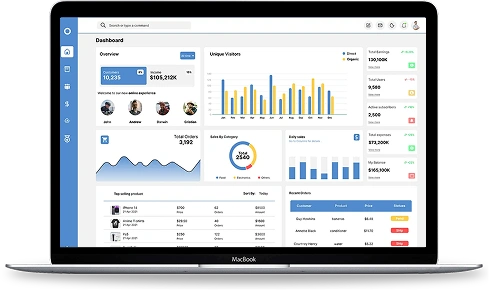
By utilizing a single ERP platform to manage inventory, sales, customer data, and financial operations, retailers can efficiently fulfill customer orders and maintain real-time visibility of their stock levels. As a result, organizations provide better services to their customers, operate more efficiently, and have access to valuable data-driven insights that allow them to grow their business in a sustainable manner.
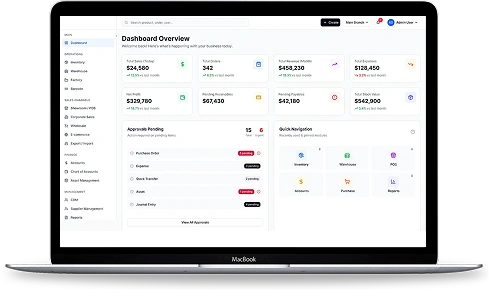
Through an ERP system, professional services, consulting firms, and enterprise service providers can effectively streamline their project management, employee utilization, invoicing, and client management. By bringing all business data together and automating many repetitive processes, organizations gain improved visibility into their performance, deliver better quality of service, and increase profitability across all areas of their business.
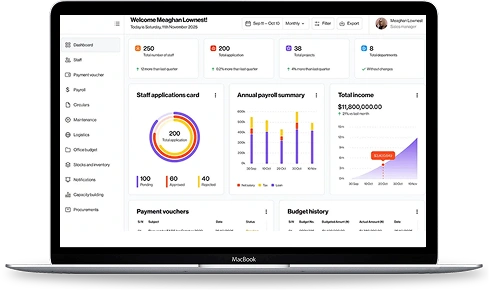
We develop and deploy applications that look and feel like other enterprise software solutions and have a rich set of features through our use of an enterprise-class architecture, modular design, and full cloud-native capability. Our customized ERP solutions work together to provide seamless data exchange, automate business processes, and provide real-time visibility into operations.

Epicor ERP, developed for the manufacturing and distribution businesses, provides production planning, supply chain management, and operational visibility to help enhance efficiencies and support complex industrial operations.

Oracle provides Intelligent financials, procurement, risk management, and analytics through a single platform accessible on a Cloud-based environment, which enables businesses to improve their performance and agility.

Workday provides real-time analytics, workforce management, and planning tools as part of its comprehensive Cloud-based ERP solution for financial and human resource management, helping businesses improve their operational effectiveness and make better decisions.

Sage provides a Cloud-based ERP system for financial data management, including the automation of accounting, the automatic generation of financial reporting, and the management of multiple entities, helping businesses achieve greater financial accuracy, transparency, and compliance.

Provides capabilities of ERP in asset-heavy industries by providing one solution for enterprise resource planning, field service, and asset lifecycle control, providing businesses with the tools to improve and enhance their operational performance.

Flexible and scalable cloud-based ERP solution for small and medium-sized businesses that enables businesses to manage their finances, distribution, manufacturing, and CRM with integrated workflows that can be adjusted to meet business needs.
Companies that develop ERP software provide an integrated, scalable, and automated business management solution. The ERP solutions unify their core business processes, increasing the quality of their data, enhancing their ability to make decisions, and streamlining their workflows to achieve greater productivity. The capabilities of an ERP offer real-time visibility into all areas of the company and help support seamless digital transformation.

ERP software development solutions enhances business processes through the integration of many different functions into one cohesive solution. Adding new functionality reduces the manual effort required to perform certain tasks, eliminates double-entry of data, and automates many of the workflow processes.

ERP systems provide organizations with a single point of reference to access their entire set of data, as well as provide the ability to easily obtain real-time access to their financial, sales, operations, and inventory information. This provides organizations with the ability to make faster, more accurate decisions.

Custom-developed ERP Solutions provide support for business growth through the creation of scalable architectures and the ability to add modules to those architectures. This allows organizations to make changes without impacting their current process or the performance of the application.

Using our strong ERP software development services in USA, we deliver scalable, secure, and powerful ERP solutions that allow businesses to simplify complex operations. Our integrated solutions automate workflows, increase data quality, provide real-time insight, and facilitate cross-departmental collaboration. We help to increase efficiencies, create productivity, and continue digital transformation within our companies.
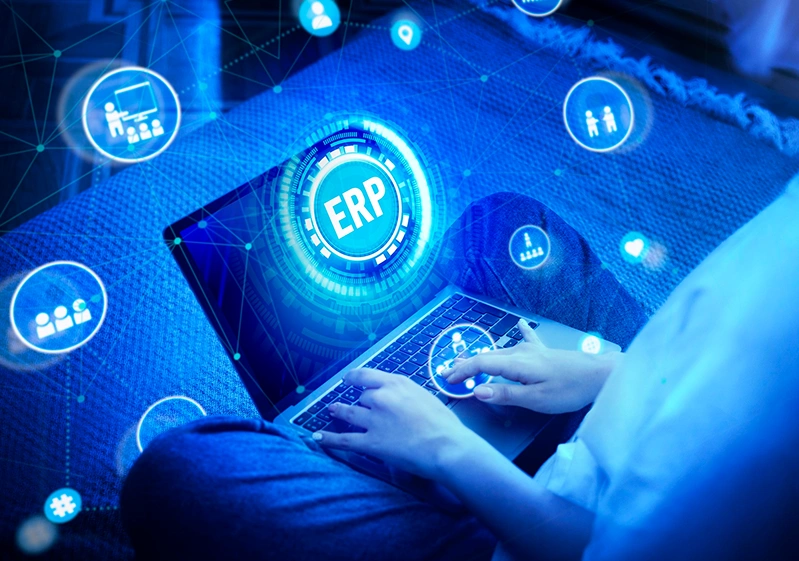
Our team is skilled at creating and implementing ERP Modules to enhance any business function from Finance and HR to inventory management, manufacturing, and sales. ERP Modules integrate into your current environment in a way that promotes workflows. Allows for better data governance, enhances the scalability of the system, and offers options for growth as you evolve and change your operational needs.

We help clients with the analysis of their needs for ERP, selecting the correct ERP architecture, and implementing that architecture. By evaluating the current processes, discovering the gaps, and suggesting optimized solutions. We ensure that each client has a successful digital transformation and significantly reduces risk while enjoying the full benefits of their ERP investment. Therefore, having the highest level of efficiency and long-term success.

We develop Custom ERP Solutions that fit the specific workflow of your business and the industry you operate in. We combine your organization’s core operations into one solution for improved automation, data accuracy, and improved decision-making. Every Custom ERP System we design is built on a scalable foundation that will accommodate growth and provide the flexibility to collaborate seamlessly between departments.

Hire dedicated developers to create, customize, and maintain ERP software solutions that greatly enhance business processes. As specialists in the latest technology trends, our ERP software developers build and implement ERP solutions that are powerful in performance, secure, and scalable. By collaborating with you as your flexible partner, our developers will create customized ERP applications to help streamline your operations.

Our ERP integration services help connect your ERP with your Customer Relationship Management (CRM), eCommerce platform, Human Resource (HR) software, and other third-party applications. This allows for seamless flow of data within your organization by removing data silos, reducing manual errors, and improving the visibility of your operations.

We provide professional support and maintenance services for your ERP solutions to guarantee uninterrupted performance. Our ERP support team provides monitoring, technical assistance, bug and issues, upgrade implementation, performance, and enhancing the security enhancements for your ERP. By providing monitoring and technical assistance, we will guarantee that your ERP continues to perform reliably and securely.
The ERP software development cost usually range between $10,000-$30,000. Depending on your module configuration, how complex your business is, whether you will need any integrations, how many users you have, and which deployment method you choose. There may be higher costs associated with more advanced classes of enterprise ERP solutions that incorporate AI, extensive customization, and provide support for long-term scalability.
Basic ERP software is suitable for small businesses and startups and has typical pricing between $10,000 and $15,000. Basic ERP software has accounting, inventory, and sales management.
Mid-level ERP solutions are aimed at growing businesses, with typical pricing ranging between $15,000 and $25,000, and include features like HR management processes and automated processes.
Enterprise ERP software is intended for large organizations and generally costs between $25,000 and $30,000 or more and typically includes advanced analytics and automated processes.

Our powerful ERP systems are created through extensive knowledge of the industry and can be depended on as a consistent, reliable stream of professional systems development.
Your ERP system will be fully customized to fit your unique business processes and workflow, resulting in improved efficiency, increased automation, and the accurate operation of your business.
Our ERP systems have been designed with a scalable architecture to allow seamless growth and ease in adding new modules as they become necessary to your business.
Our custom ERP software development company develops and implements an ERP that utilizes modern technologies, resulting in a secure, high-performance system with real-time processing and analysis capabilities.

We will offer complete ERP services, from consulting to implementation, to provide the support you need for effective implementation of your ERP solution and long-term success.
The dedicated team of professionals who will be available to assist you with the ongoing support, maintenance, and upgrades of your ERP System will be experts in their field.
Our extensive experience with successful ERP Projects will provide you with the confidence that our solutions will result in improved business performance and productivity.
At our ERP software development company, we develop customized ERP systems and applications for the manufacturing, retail, healthcare, finance, and transportation industries. Our ERP Software Portfolio features many industry-specific, scalable, secure, and integrated enterprise solutions that provide automation, real-time analytics, and seamless collaboration.


The proper technology stack is important when developing scalable, secure, and performant ERP solutions. Our ERP software development company uses current front-end frameworks and back-end technology, cloud infrastructure, databases, and integration tools to create ERP systems. With a high degree of seamless functionality, real-time data processing, enterprise-quality security, and scalable business models over the long term.


Advanced technology has been used for new ERP system development to improve automation, scalability, and security, along with efficiency in operations. ERP systems today can incorporate many of these technologies, such as cloud computing, artificial intelligence, machine learning, Internet of Things (IoT), big data analytics, and modern development frameworks. It provides businesses and their employees with the capability to use intelligent ERP systems to help streamline workflow.

ERP systems can utilize Artificial Intelligence (AI) technologies to automate repetitive tasks, analyze large amounts of data (e.g., transactions), and provide predictive insights. AI-based ERP products will increase demand forecasting capabilities, Resource Planning capabilities, Customer Service capabilities, and decision-making capabilities to create operational efficiency and reduce costs.

IoT (Internet of Things) connected ERP systems connect IOT devices, sensors, and equipment to capture real-time operational data. This connectivity enables organizations to use their assets more effectively by providing timely, accurate information about their assets, inventory, production processes, and maintenance planning activities. IoT-driven insights can improve the visibility of the business's operations by reducing the amount of time.

ERP systems can use Blockchain technologies to provide a secure, transparent, and immutable record of all transactions. This transparency improves supply chain traceability, provides greater assurance of data integrity, streamlines contract management, and reduces the risk of fraud. Blockchain technology allows organizations to build greater trust, adherence to regulations, and accountability with all business-related parties throughout a company's supply chain.

Chatbots connected to an ERP system allow users to interact with their business information, reports, and system functions instantly. These chatbots also help automate repetitive inquiries, provide employees with assistance for operational tasks, provide customers with better support, and increase productivity by providing conversational interfaces that provide immediate, accurate, and personalized responses.
Our ERP software development process includes all of the steps necessary to efficiently plan, execute, and deploy ERP software. There are several phases of this process, which include requirement analysis, system design, development, integration & testing, and ongoing support. We follow a methodical manner to deliver scalable, secure, and business-focused ERP solutions.
We analyze business needs, workflows, and challenges to define ERP objectives and create a clear project roadmap.
Develop the ERP architecture, database structure, and user interface to ensure future scaling, performance, and seamless integration.
During the development of ERP modules, we utilize the latest technologies to ensure the modules have all functionality, can provide a high level of security, and operate as designed.
We conduct comprehensive testing to detect any defects in the ERP system and ensure that the system is stable; validate all performance requirements; and meet our high-quality assurance standard.
We implement ERP systems in an efficient manner and provide ongoing care and service, including ongoing maintenance, upgrades, and technical support to maintain optimum performance of the system.

The Economist recognized Dev Technosys as an ERP software development company due to their ability and track record of delivering innovative, scalable, and enterprise-level ERP Solutions. This award reflects the company’s commitment to the development of customized ERP systems that improve business processes, increase automation, and enable real-time data-driven decisions effectively. Dev Technosys develops ERP solutions utilizing advanced technology and empowers enterprises on a global basis to share their digital transformation strategy and build the next generation of ERP Systems in all industries. This recognition further cements Dev Technosys’ commitment to delivering quality products, innovative services, and supporting our customers' success as a leading global partner for digital transformation and next-generation ERP software development services.
ERP software is an integrated software solution for managing a business’s core business functions, such as finance, human resources (HR), inventory, sales, and operations from a single platform. An ERP solution increases productivity and efficiency by enhancing the accuracy of data, automating processes, and enabling companies to make real-time decisions.
The cost of developing an ERP system generally varies from $10,000 to $30,000 according to the features included, the complexity of the application, the total number of users, and the amount of customization required. Prices for these projects start somewhere between $10,000 and $15,000 for basic functionality and grow significantly as each of these components increases in value.
Yes, ERP Software is completely customizable to meet the specific business processes and functional requirements of an organization. Custom ERP solutions enable businesses to gain greater control over their operations, as well as process improvements, enhanced user satisfaction, improved data integrity, and the ability to scale their business systems.
The core components of ERP software include modules for finance, human resources, inventory, sales, customer relationship management, purchasing, and supply chain management. Integrating these modules allows for a central place for all your business data, automating processes, and providing real-time visibility into all your business activities.
No. ERP software systems are built to be user-friendly with simple dashboards and user interfaces, so no special technical skills are needed. Your employees will be able to easily use the various modules, create reports, and manage their part of the business efficiently. Any advanced configurations will be handled by your technical administrators or support staff.
Cloud ERP is hosted online in a data center; therefore, you can access the system from anywhere and automatically receive system updates as they become available. On-premises ERP systems are installed on your company's servers and are accessible only from your company’s network. Because cloud-based ERP is supported by a cloud service provider, it has more options for scaling and lower costs associated with using underlying technology infrastructures.
The time taken to build an ERP system is usually between 2 and 6 months, but may be longer depending on the project complexity, number of modules, integrations, customization, etc. A large enterprise-level ERP may require more time for development, testing, deployment, and training users on how to use the new system.
When developing ERP software, various technologies and platforms will be used, including React, Angular, Node.js, Java, .NET, and Python. Many ERP solutions will build on top of the major cloud platforms such as AWS, Azure, or Google Cloud. There are also many databases that can be used with ERP solutions, including MySQL, PostgreSQL, and MongoDB.
ERP software has a wide array of usage across many industries, but some of the top industries that use ERP are: manufacturing, retail, healthcare, logistics, finance, education, and e-commerce. The majority of these industries use ERP systems to improve efficiency, manage resources more effectively, and enhance the overall productivity of their organization, along with helping improve decision-making ability.
Before discussing any client project ideas, our ERP software development company will require all parties involved to sign a Non-Disclosure Agreement (NDA) in order to maintain complete confidentiality regarding any potential projects. As well as protect sensitive business information and establish trust through the safeguarding of each company’s intellectual property rights throughout the full course of ERP system software development.
Custom ERP software development services in the USA are designed to provide options tailored to the unique processes of each business so that greater levels of efficiency can be achieved through automation and scalability. Custom ERP development allows businesses to eliminate unwanted features from their systems and create a user-friendly experience, improve the accuracy of data, and allow for seamless integration with existing systems.
Absolutely! Because many ERP systems are now cloud-based, they provide full support for remote working by allowing employees secure access to company data from anywhere. Employees can collaborate, complete tasks, and monitor their work in real time from wherever they may be located, resulting in increased productivity and continued communication and collaboration across a distributed workforce.
ERP systems use multiple layers of security through encryption, two-factor authentication, access management, updates, and regular security assessments to ensure the confidentiality and integrity of your business data against unauthorized access, cyber threats, and data breaches. ERP system security also involves compliance with social, legal, industry standards, and regulations.
Yes, along with providing high-quality support for your ERP system. Our ERP development company offers complete support and assistance with all aspects of ERP maintenance services. It includes fixing bugs, optimizing performance, upgrading software and hardware, applying security updates, and providing 24/7 technical support. Ongoing ERP system maintenance will ensure the reliability, performance, security, and alignment of your ERP system.
Discover how our clients have achieved success, watch their authentic video testimonials and see the results for yourself
“Dev Technosys delivered a secure, user-friendly medical app for us. Their technical expertise, clear communication, and commitment to healthcare compliance truly exceeded our expectations.”
CEO


“Dev Technosys transformed our business idea into a powerful mobile app. Their strategic approach, reliability, and on-time delivery helped us scale smoothly and confidently.”
Managing Director


“Working with Dev Technosys felt like a true partnership. Their care, dedication, and understanding of our healthcare goals made the entire journey smooth and rewarding.”
CEO, Papaya


“Dev Technosys brought our carpet information project to life with clarity and precision. Their professionalism, responsiveness, and commitment to quality made the collaboration truly valuable.”
Director - Satar Carpet GmbH


“Dev Technosys played a key role in shaping our project into a viable business. Their problem-solving mindset, technical strength, and consistent support delivered real results.”
Founder at Best.AZ


“Dev Technosys handled our healthcare project with care and precision. Their thoughtful approach, strong collaboration, and attention to detail gave us confidence at every stage.”
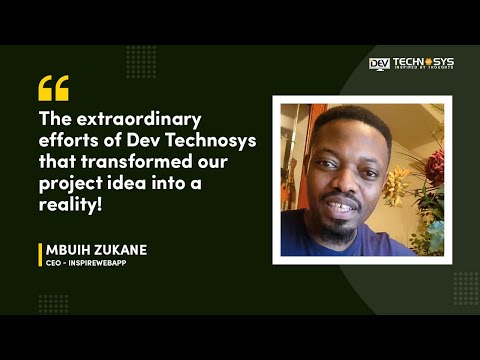
CEO - InspireWebApp

205 Reviews on Clutch

UK

Europe

UAE

Japan


Our innovation and technology expertise have earned a feature in respected media platforms and industry publications across the world.
Featured by EIN Presswire for delivering innovative software development services that help startups and enterprises accelerate digital transformation with confidence.
ViewHighlighted by Barchart for building scalable digital products that combine modern technologies, exceptional performance, and measurable business value.
ViewAcknowledged by The Hindu for creating reliable web, mobile, and enterprise software solutions that drive long-term business growth.
ViewShowcased by Entrepreneur for empowering startups with innovative product development strategies and high-quality software engineering expertise.
View
Celebrated by Hindustan Times for delivering custom technology solutions that help businesses innovate, scale efficiently, and stay competitive.
ViewWe Proudly Shines Globally, Featured by Renowned Publishers!

B-11-12, Lal Bahadur Nagar, Sector 9, Malviya Nagar, Jaipur, Rajasthan 302017, India

5668 e 61st street ste 2000 #360 commerce, california 90040, USA



188 Quay Street Auckland, AUK 1010

United States (USA), United Kingdom (UK), Singapore, Germany, Canada, Australia, Ireland ,New Zealand , Netherlands, Norway, United Arab Emirates (UAE) , Saudi Arabia , Qatar, Finland, Mexico, Switzerland, Spain, France, etc


by 800+ customers for 2300+ Web and Mobile App Development Projects.