14-Day Money-Back Guarantee — Not satisfied? Cancel within 14 days for a full refund.Explore Our Money-Back Guarantee

14-Day Money-Back Guarantee — Not satisfied? Cancel within 14 days for a full refund.Explore Our Money-Back Guarantee

Logistics AI Development Company

AI Development Services for Logistics and Supply Chain

Late trucks, empty miles, and surprise stockouts cost logistics teams money every day. Our AI development services for logistics and supply chain catch these problems early and fix them inside your current systems.

Dev Technosys is a logistics AI development company. We design and build custom AI logistics solutions for route planning, fleet care, warehouses, and demand forecasting.

Explore AI services
Book Free Consultation

Complete the form, and our specialists will contact you within 24 hrs.

✅ Your ideas are fully protected under our NDA.

Dev Technosys awards and recognitions
  • Certified Quality & Security

    CMMI Level 3 ISO 9001:2015 ISO 27001:2022
  • Experience

    16+

    Years of software engineering experience since 2010.

  • Team

    200+

    Experts across engineering, design, and AI development.

  • Delivery

    2,300+

    Projects delivered across diverse business domains.

  • Global Reach

    71+

    Countries served with technology solutions.

  • Client Trust

    4.8/5

    Clutch rating backed by client feedback.

  • Data Protection

    100%

    NDA-protected engagements with privacy-focused development.

  • Client Retention

    79%

    Client retention rate reflecting ongoing partnerships.

  • Data Privacy

    GDPR

    Privacy-focused development and personal data protection practices.

  • Privacy Standards

    CCPA

    Data access, transparency, and privacy controls aligned with applicable requirements.

  • Control Assurance

    SOC 1

    Controls relevant to financial reporting processes, where applicable.

  • Security Controls

    SOC 2

    Security, availability, confidentiality, and related control considerations.

What is changing

How AI Is Reshaping Logistics and Supply Chain Operations

AI is transforming logistics by turning fixed plans into live decisions. Earlier, logistics teams had to plan once and then work on it all day. But with AI in logistics and supply chain software development, this workflow gets reversed. This intelligent automation manages multiple tasks like orders, vehicles, stock, traffic, and weather together. It even suggests the best next move to avoid a delay becoming a missed delivery.

AI in supply chain and logistics allows companies to build and optimize their workflow using a variety of technologies. These include machine learning, computer vision, and language modeling. The main purpose of logistics AI development solutions is to provide companies with the ability to track their transportation processes. The implementation of AI guarantees improved supply chain efficiency by minimizing delays, decreasing costs, and keeping customers informed.

Gartner's 2026 outlook points the same way. It predicts that AI will resolve 60 percent of supply chain disruptions without human intervention by 2031. For now, it advises full automation only for low-risk decisions.

AI decision log · Ops

Live
  • 07:40RouteTruck T-42 skipped a blocked bridge. New ETA: 10:55.
  • 07:43ForecastWinter jackets will sell 28% faster in Pune next week. Move 350 units from Delhi.
  • 07:46RiskOrder 7731 has a high chance of arriving late. The buyer received a new time slot.
  • 07:50Agent12 delayed orders were grouped by cause. The night shift lead got the list.
  • 07:54RouteFive small loads heading to Zone 4 merged into one truck. Two trips saved.
  • 08:01FleetTruck T-18 shows rising brake wear. A service slot is booked for 17:30.
  • 08:05SupplierVendor 114 missed 3 of its last 5 deliveries. A backup vendor is suggested.
  • 08:09VisionDock 2 camera caught 5 wrong labels. Lane C received a re-sort alert.

Illustrative example of an AI operations log.

Alert board

Which Operational Challenges AI Helps Logistics Businesses Overcome

Most of the time, logistics losses come from the five repeated problems. They include route delays, forecasting errors, poor visibility, high operating costs, and warehouse bottlenecks. These problem separately looks small but can drain margin and customer trust. Here is how each problem appears on a daily basis and what AI in logistics and supply chain does for it.

01
ALR-01

Inefficient Route Planning and Delivery Delays

Delayed

If the routes are fixed, it ignores live traffic, truck capacity, and customer time windows. Due to this, drivers' time is wasted, and deliveries are missed.

AI fix · Resolved

The AI route optimization software rebuilds routes during the day as conditions change. Dispatchers approve or let it run automatically.

02
ALR-02

Poor Inventory Forecasting

Stockout

Simple averages without considering seasons, promotions, and local buying habits can be wrong. Businesses might end up having too much of one item and none of another.

AI fix · Balanced

Demand forecasting software runs per product and per location. It triggers reorders and stock transfers.

03
ALR-03

Lack of Real-Time Supply Chain Visibility

No signal

The status of the shipment lives within carrier portals, spreadsheets, and phone calls. There is no one who can access the full picture.

AI fix · Tracked

One tracking layer pulls it together. It also predicts which shipments will run late.

04
ALR-04

High Transportation and Operational Costs

Over budget

Mismanagement like half-empty trucks, wasted fuel, and unplanned repairs can lead to increased expenses.

AI fix · Optimized

Load consolidation, fuel-aware routing, and predictive maintenance cut each of these leaks.

05
ALR-05

Warehouse Management Inefficiencies

Bottleneck

Picking and storage layouts set by habit break down in peak season. Errors and overtime follow.

AI fix · Flowing

Cameras check labels, warehouse automation re-slots fast movers, and labor forecasts match shifts to demand.

Our AI Development Services for Logistics and Supply Chain

AI solutions for logistics cover seven key areas. They are logistics software, route optimization, fleet management, inventory management, warehouse management, transport management systems, and supply chain analytics. Each module may be developed separately or within a comprehensive solution.

AI-Powered Logistics Software Development

Our logistics software development services build a logistics framework with AI embedded into it initially, as opposed to adding it later. Thus, the dispatching, tracking, inventory, and reporting processes utilize the same data layer. The demand forecast can influence all the other processes without any data replication.

Includes

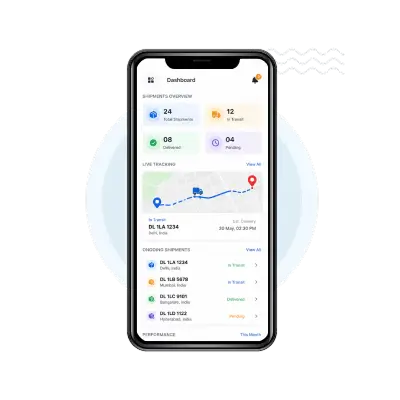
  • Dispatch console
  • Driver app
  • Customer tracking portal
  • Admin dashboards
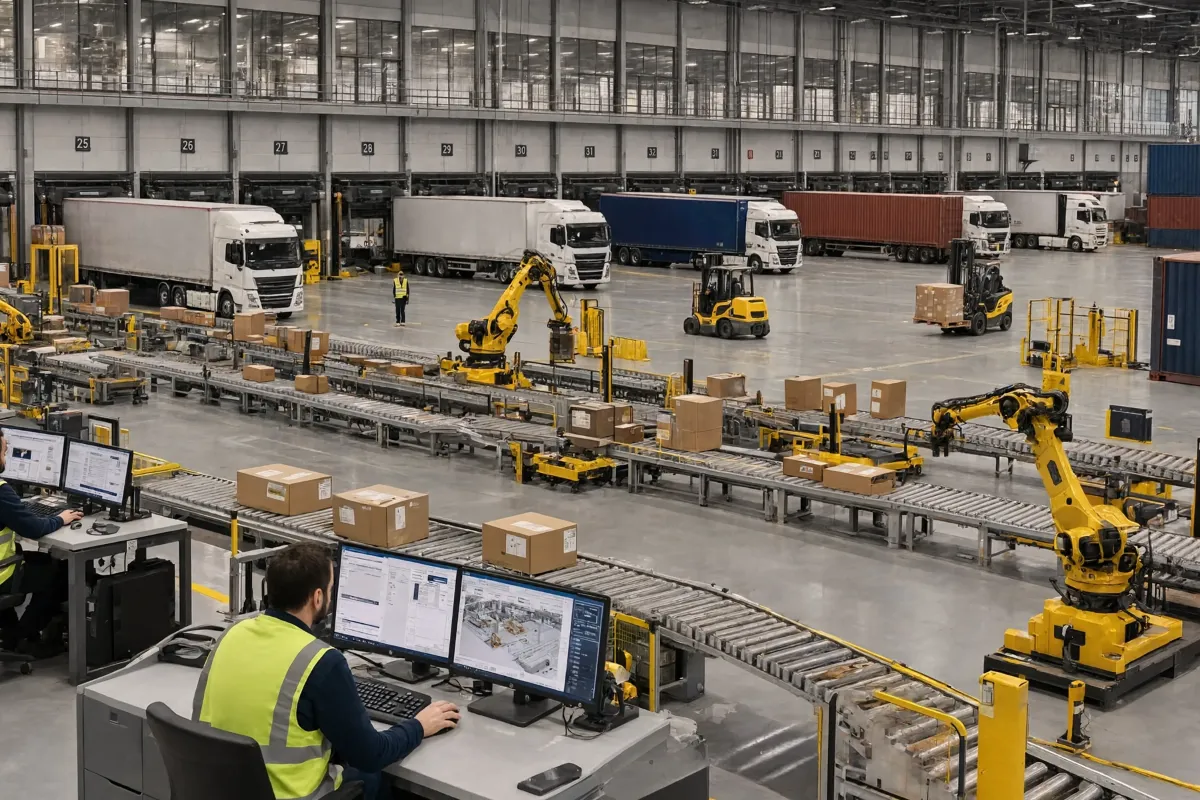
AI-powered logistics software connecting dispatch, delivery trucks and warehouse operations
Container yard

AI Use Cases Across Logistics and Supply Chain Operations

Common use cases include demand forecasting, route optimization, predictive fleet maintenance, warehouse automation, shipment tracking, supplier management, freight management, and AI agents. Each one of these tasks links a data input to a clear business decision.

DTAU 210457FCST

Predictive Demand Forecasting

Machine learning studies demand forecasting data. It reads past orders, seasons, promotions, and market signals to estimate what will sell.

orders + season → forecast per SKU → stock plan

EXAMPLE

An online distributor sees a festival-season spike coming. It moves stock to the right warehouses two weeks early.

DTAU 210462ROUTE

Intelligent Route and Delivery Optimization

The system weighs traffic, time windows, capacity, and priority together. It re-plans as the day changes.

orders + traffic → best sequence → live reroute

EXAMPLE

A last-mile courier loses a main road at noon. Last-mile delivery AI rebuilds routes in minutes, and drivers see the update at once.

DTAU 210478FLEET

Predictive Fleet Maintenance

Sensor and trip data show wear before a part fails.

telematics → risk score → service ticket

EXAMPLE

A transport company tracks engine heat and mileage. It books workshop time in quiet hours, not after a roadside breakdown.

DTAU 210481WH-OPS

Automated Warehouse Operations

Receiving, sorting, slotting, and picking decisions are guided by data and checked by cameras.

camera + WMS → recognize → sort lane

EXAMPLE

A distribution center scans parcels at the dock. Each one goes to the right outbound lane without manual sorting.

DTAU 210493TRACK

AI-Based Shipment Tracking and Visibility

GPS, IoT, and carrier data come together in one view, with ETA prediction and delay alerts on top.

GPS + sensors → delay risk → alert

EXAMPLE

A freight forwarder sees a shipment slipping based on road and lane history. The customer gets a new arrival time before they ask.

DTAU 210506PROC

Intelligent Supplier and Procurement Management

The system scores suppliers on delivery history and predicts what to buy and when.

PO history → vendor score → sourcing

EXAMPLE

A manufacturer finds two vendors that are often late. It shifts part of the order to a backup source.

DTAU 210512FREIGHT

AI-Powered Freight Management

Freight AI runs load planning, carrier choice, and cost checks across all your lanes.

loads + capacity → consolidate → book

EXAMPLE

A logistics company merges several part-loads going to one region into a single truck.

DTAU 210527AGENT

Generative AI and AI Agents for Logistics Operations

As an agentic AI development company, we build assistants that read documents, answer questions in plain language, and run set workflows.

question → query TMS/WMS → action

EXAMPLE

An ops manager asks, "Which orders are late today?" The assistant lists them, shows the cause, and alerts the team.

Core AI Technologies Driving Intelligent Supply Chain Operations

Generally, logistics relies on several AI technologies. These technologies are machine learning, deep learning, natural language processing, computer vision, generative AI, and IoT analytics. They handle forecasting, routing, warehouse checks, and strengthen voice assistants.

  • Machine Learning

    Learns from past and live data. Our machine learning development covers demand forecasts, route scoring, and spotting odd patterns in operations.

  • Deep Learning

    Works with chaotic data like images, sensor data, and long-term series that simple systems cannot handle.

  • Natural Language Processing

    Document AI processes emails, invoices, and bills of lading and converts them into neat order and support data.

  • Computer Vision

    Cameras check labels, count items, spot damage, and watch dock activity in real time.

  • Generative AI and LLMs

    Powers assistants that notify about delays, retrieve shipment information, and prepare messages for customers.

  • IoT and Predictive Analytics

    Processes signals sent by GPS, temperature, and load sensors into alarms, for example, on a rise in temperature in a refrigerator system.

From Business Assessment to AI Deployment: Our AI Development Process

We follow a seven-stage process to develop AI in logistics and supply chain. The steps include workflow analysis, data preparation, model and architecture planning, training & validation, build & integration, testing & optimization, and deployment with continuous improvement. Each stage of AI and generative AI development in logistics and supply chain ends with a deliverable you approve.

  1. Step 1

    Business and Logistics Workflow Analysis

    On the first, we plan how the operation runs today. After that, we choose the idea where AI can save time and money.

    Output: Scope and success metrics

  2. Step 2

    Data Collection and Preparation

    Our skilled team then fetches the data from ERP, TMS, WMS, and telematics. We clean it, fix gaps, and segregate a pipeline that keeps it fresh.

    Output: Clean datasets and pipeline

  3. Step 3

    AI Model Selection and Architecture Planning

    For each problem, we choose the right model. Our AI development company also plans the complete architecture and integration for it.

    Output: Solution architecture

  4. Step 4

    AI Model Development and Training

    We train models on your data. We test them against metrics agreed up front, such as forecast error or on-time rate.

    Output: Validated models

  5. Step 5

    Logistics Software Development and Integration

    We build the web and mobile apps your teams will use. Then we connect them to your existing systems.

    Output: Working, integrated software

  6. Step 6

    Testing and Performance Optimization

    We test functionality, load, security, and model accuracy. Then we tune speed and results.

    Output: Release candidate

  7. Step 7

    Deployment and Continuous Improvement

    We launch with monitoring in place. As data and needs change, we retrain models and ship updates.

    Output: Live system and improvement roadmap

Industries

Industries We Serve With AI Logistics Solutions

We develop AI logistics solutions for multiple industries. The industries are freight & transportation, e-commerce, manufacturing, 3PL, cold chain, and food & pharma. We train each model on its own data, routes, and compliance needs, according to the industry. The AI is shaped around how each industry actually works, from data to its compliance rules.

Freight and Transportation

Load planning, carrier selection, lane pricing, and accurate arrival estimates.

E-commerce and Retail

Demand forecasts, stock balanced across warehouses, and faster last-mile delivery.

Manufacturing and Distribution

Material planning, supplier risk scoring, and distribution schedules tied to production.

Third-Party Logistics (3PL)

Multi-client warehousing, accurate billing, and visibility portals for each customer.

Cold Chain Logistics

Temperature monitoring, early warning on excursions, and safer route choices.

Food and Pharmaceutical Logistics

Batch traceability, expiry-aware stock rotation, and compliance records that are ready for audits.

Plugs into what you run

How We Connect AI Solutions with Your Existing Logistics Systems

Our AI development company can seamlessly integrate AI with your existing ERP, TMS, WMS, IoT, and carrier systems. We connect them with the help of APIs, middleware, and data pipelines. Businesses can keep their current platform. The AI layer adds forecasts, routes, and alerts inside them.

ERP System Integration

AI processes information for purchase planning, stock planning, and reports based on ERP data. We integrate via your ERP's API, so nothing is replaced. The ERP implementation remains with your ERP partner.

Transportation Management System Integration

TMS integration makes suggested routes, carriers, and ETAs available in your TMS interface. The planner works within the interface and either approves or rejects each recommendation that comes through the AI.

Warehouse Management System Integration

Our AI integration services push suggested slotting and picking instructions through to the WMS system. The movement information becomes available in return to update the models. The pickers have optimized picking paths and locations, while stock is always accurately recorded.

IoT and GPS Integration

Real-time streams of location, temperature, and load status are processed by the AI. This makes it possible for the AI to provide alerts like late trucks or warming reefers.

Third-Party API and Cloud Integration

The third-party services are integrated via RESTful API, EDI integration, and authentication services. Order and rate information, as well as tracking data, can be transferred without additional workarounds.

Security

Our Approach to Secure and Compliant Logistics AI Development Services

Dev Technosys, one of the top AI logistics development companies, secures logistics AI. For this, they use encryption, role-based access, protected model endpoints, GDPR-aligned data handling, audit trails, monitoring, and tested recovery plans. All of it runs under an ISO 27001:2022-certified management system, with SOC 1, SOC 2, and CCPA compliance.

  1. Secure Data Management

    Data is highly encrypted, whether it is in transit or at rest. Access is role-based; that's why each person only sees what is needed for their job. Also, we only gather the data that a model requires. We also sign an NDA before the development begins.

  2. AI Model and Infrastructure Security

    We secure the model endpoints through authentication and rate limits. AI model security testing against prompt injection and data poisoning is our smart move. Cloud environments are hardened, patched, and reviewed on a schedule; therefore, your AI systems stay secure over time.

  3. Regulatory Compliance and Data Protection

    We create an AI logistics platform to GDPR, CCPA, the EU AI Act, and other regional data protection rules. Audit logs showcase who accessed what and when. Records are kept ready for audits, and customer data requests are handled on time.

  4. Monitoring and Disaster Recovery

    We log activity, set alerts, and monitor systems continuously. Backups are taken on a schedule. Recovery plans are tested regularly, so a failure leads to a short, planned restoration instead of lost data or long downtime. Model governance keeps every AI decision traceable.

Scope your build

How Much Does AI Development for Logistics and Supply Chain Cost?

The overall AI logistics software development cost depends on AI complexity, integrations, features, infrastructure, and customization. Pick what you need below to see where your project sits; we confirm the estimate after a requirements analysis.

Estimated logistics AI development cost: configure your solution

Choose your AI logistics solution

Your project starts at

Focused MVP

A focused solution for one major logistics challenge, with selected AI capabilities and essential system integration.

Suggested first phase:

Start with one high-impact AI use case, validate it using your operational data, and expand into additional logistics workflows.

From $4,999 Indicative starting investment · final cost subject to requirement analysis

Your project requirements remain protected under NDA.

What Factors Influence the Cost of AI Development?

  • AI complexity: rules and pre-trained models are cheaper than custom vision and forecasting.

  • Data availability: data cleaning and access reduce preparation time.

  • Connections: each integration with ERP, TMS, WMS, and carriers broadens the project scope.

  • Technical infrastructure: cloud, GPU requirements, and amount of real-time data.

  • Platforms and user roles: web app, iOS, Android, and users.

Why Dev Technosys

What Makes Dev Technosys a Trusted Logistics AI Development Partner?

Dev Technosys is a reliable logistics & supply chain, last-mile delivery, logistics CRM, and fleet management app development company. We have been delivering seamless, compliant, scalable, secure, and high-performing digital products for 16+ years. We have offices in India, the UK, the UAE, and Australia. Our credentials include CMMI Level 3, ISO 9001:2015, and ISO 27001:2022. We build logistics AI from data prep to deployment.

  • 16+Years of software engineering
  • 4Countries with our offices: India, UK, UAE, Australia
  • CMMI Level 3Appraised delivery processes
  • ISO 9001:2015Quality certified
  • ISO 27001:2022Security certified
  • 16+ Years of Software Engineering Experience

    We have worked in custom software for logistics, retail, manufacturing, etc. for more than 16 years.

  • Projects Delivered Across Industries

    Our projects include everything from single-feature minimum viable product versions to enterprise solutions.

  • AI-Powered Development Expertise

    Our engineers alone have knowledge in machine learning, deep learning, natural language processing, and computer vision. You can hire logistics AI developers from this team to extend your own.

  • Industry-Focused Software Solutions

    We design based on real logistics processes, such as dispatch cut-off, dock scheduling, and transfer of goods from carrier to carrier.

  • Scalable Software Architecture

    Our systems are cloud-based, modular, and API-based. They grow together with an increase in orders, vehicles, and locations.

  • Secure Development Practices

    We follow secure coding standards, strict access control, and an ISO 27001:2022-certified security system.

  • End-to-End Development Support

    We cover AI consulting services, data, models, software, integration, launch, and ongoing improvement.

FAQs

Frequently Asked Questions

Answers to common questions about AI development services for logistics and supply chain.

Should A Logistics Startup Invest In Custom AI Or Use Off-The-Shelf Software?

Utilize custom AI when your workflows, data, pricing strategies, or service models present requirements that off-the-shelf software cannot meet. Feature-rich solutions tend to benefit from ease of use when addressing standard tasks and a quicker validation process. Compare the constraints of the configuration, integration price tag, accessibility of data, scalability, and boundaries of ownership. It is important when deciding on the approach for your specific operation model.

Which Logistics Process Should A Business Automate With AI First?

Begin with processes that should be simple but are frequent and can cost a lot if gone wrong. These are ETA prediction, demand forecasting, document AI, route planning, and others. Ensure that available data can be transformed into actionable insights. It is less complicated to validate a small, yet valuable use case than to implement an automation strategy across the entire enterprise.

Can AI Be Implemented If Our Logistics Data Is Incomplete Or Spread Across Systems?

Yes, AI can be implemented, but the project must be started with a data-readiness assessment. Developers can discover available records, identify gaps, and standardize formats. Later on, it connects relevant systems before training or configuring models. If essential and critical data is missing, start with data capture and a limited pilot. It can be a better option than expecting reliable predictions from incomplete information across the supply chain.

How Can Founders Measure The ROI Of A Logistics AI Solution?

Before beginning the implementation phase, establish a benchmark. With this, monitor a few operational and financial indicators post-launch. Identify the most relevant KPIs based on the specific use case. This might include delivery cost, reliability rates, forecast accuracy, stock turnover speed, picking precision, fuel costs, or manual processing time.

How Long Should We Run An AI Pilot Before Expanding It Across Operations?

Run the pilot long enough to cover representative operating conditions, including demand peaks, route variation, and exception cases where relevant. Agree on success thresholds and a review period before launch. Expand only when the solution performs consistently, users trust its recommendations, and the business case remains positive after operating costs.

Will AI Replace Logistics Planners, Dispatchers, And Warehouse Employees?

Generally, artificial intelligence is most useful when it provides people with predictions, priorities, and routine actions. Planners and dispatchers will be able to assess the advice provided by AI. This helps them make decisions taking contextual information into account. It is essential to identify which procedures are going to be automated and which require the involvement of an operator.

How Do We Prevent An AI System From Making Costly Routing Or Inventory Decisions?

Use operational constraints, approval thresholds, exception alerts, and human review for high-impact decisions. Test models against historical and live scenarios before relying on their recommendations. Monitor performance after deployment, keep fallback procedures available, and log decisions so teams can investigate errors and adjust rules or models during unexpected operating conditions.

Who Owns The Data, AI Model, And Custom Software Developed For Our Company?

Clarify ownership and usage rights in the development agreement before work begins. Specify who owns business data, custom source code, model configurations, trained model artifacts, and documentation. Also define rights to third-party models, libraries, and APIs, plus access, portability, confidentiality, and handover obligations if the partnership ends during or after delivery.

What Should We Evaluate Before Selecting A Logistics AI Development Partner?

Look beyond general AI expertise. Ask for relevant logistics experience, a clear discovery process, data and integration capabilities, model evaluation methods, security practices, and post-launch support. Request a proposed pilot scope, measurable acceptance criteria, team responsibilities, and references or case studies that can be independently verified before signing a development contract.

How Do We Keep A Logistics AI Solution Accurate As Routes, Demand, And Suppliers Change?

Plan for ongoing monitoring rather than treating deployment as the finish line. Track prediction errors, data quality, usage, and operational outcomes; investigate changes in demand, routes, supplier behavior, or external conditions. Set review and retraining triggers, validate updates before release, and retain human overrides for unusual situations as business requirements evolve.

Video Testimonials

Discover how our clients have achieved success, watch their authentic video testimonials and see the results for yourself

“Dev Technosys delivered a secure, user-friendly medical app for us. Their technical expertise, clear communication, and commitment to healthcare compliance truly exceeded our expectations.”

Brad Ryba

CEO

Brad Ryba, CEO — Dev Technosys video testimonial client
Video testimonial thumbnail: Brad Ryba on Dev Technosys medical app project

“Dev Technosys transformed our business idea into a powerful mobile app. Their strategic approach, reliability, and on-time delivery helped us scale smoothly and confidently.”

Lisa Dott

Managing Director

Lisa Dott, Managing Director — Dev Technosys video testimonial client
Video testimonial thumbnail: Lisa Dott on Dev Technosys mobile app project

“Working with Dev Technosys felt like a true partnership. Their care, dedication, and understanding of our healthcare goals made the entire journey smooth and rewarding.”

Brenda

CEO, Papaya

Brenda, CEO at Papaya — Dev Technosys video testimonial client
Video testimonial thumbnail: Brenda, CEO at Papaya, on healthcare app partnership

“Dev Technosys brought our carpet information project to life with clarity and precision. Their professionalism, responsiveness, and commitment to quality made the collaboration truly valuable.”

Abdul Wahad Rasul

Director - Satar Carpet GmbH

Abdul Wahad Rasul, Director at Satar Carpet GmbH — Dev Technosys video testimonial client
Video testimonial thumbnail: Abdul Wahad Rasul on Satar Carpet information project

“Dev Technosys played a key role in shaping our project into a viable business. Their problem-solving mindset, technical strength, and consistent support delivered real results.”

Arif Alakbarov

Founder at Best.AZ

Arif Alakbarov, Founder at Best.AZ — Dev Technosys video testimonial client
Video testimonial thumbnail: Arif Alakbarov on Best.AZ business project

“Dev Technosys handled our healthcare project with care and precision. Their thoughtful approach, strong collaboration, and attention to detail gave us confidence at every stage.”

Mbuih Zukane

CEO - InspireWebApp

Mbuih Zukane, CEO at InspireWebApp — Dev Technosys video testimonial client
Video testimonial thumbnail: Mbuih Zukane on InspireWebApp healthcare project
Testimonial
2300+
Countless Transformative Experiences
with Dev Technosys

205 Reviews on Clutch

Meditation App

"Building a meditation app that truly soothes the mind was our dream, and this team made it a reality. From immersive audio features to personalized mindfulness journeys, everything is top-notch. Our users love the experience, and retention rates have never been better!"

Emma Lewis, UK client - Meditation App testimonial
Emma Lewis

UK

Fintech App

"Security and speed are critical in fintech, and our app excels in both. The team built an intuitive, high-performance platform with advanced encryption and instant transactions. We've gained the trust of thousands of users, and our growth in the financial sector has been remarkable!"

Luca Moretti, Europe client - Fintech App testimonial
Luca Moretti

Europe

NFT Marketplace Platform

"Our NFT marketplace is now a game-changer in the digital asset world. The team delivered a highly secure, scalable, and visually stunning platform. The smart contract integration is seamless, and user engagement is at an all-time high. Couldn't have asked for a better partner!"

Aisha Al-Farsi, UAE client - NFT Marketplace Platform testimonial
Aisha Al-Farsi

UAE

Generative AI

"AI innovation requires precision, and this team nailed it. Our generative AI app produces stunning, realistic results with lightning-fast processing. The algorithm customization exceeded our expectations, and we've seen a massive increase in user adoption. Truly a cutting-edge development team!"

Hiroshi Tanaka, Japan client - Generative AI testimonial
Hiroshi Tanaka

Japan

Our Offices

We Proudly Shines Globally, Featured by Renowned Publishers!

LET'S COLLABORATE
LET'S WORK
TOGETHER
Dev Technosys
Serving in 71+ countries for software development

United States (USA), United Kingdom (UK), Singapore, Germany, Canada, Australia, Ireland ,New Zealand , Netherlands, Norway, United Arab Emirates (UAE) , Saudi Arabia , Qatar, Finland, Mexico, Switzerland, Spain, France, etc