16+
Years of Experience
14-Day Money-Back Guarantee — Not satisfied? Cancel within 14 days for a full refund.Explore Our Money-Back Guarantee
14-Day Money-Back Guarantee — Not satisfied? Cancel within 14 days for a full refund.Explore Our Money-Back Guarantee




Explore AI solutions
AI services & solutions
View AI hubAdvanced AI services
View AI hubRecommended AI reads
View category
From payments to lending, insurance to trading — we build it all with security, compliance & innovation at the core.
Designed around your business model, we develop secure, scalable, and high-performing financial products. With our fintech app development services, we build seamless banking and payment platforms to lending and investment solutions. The solutions we create handle secure transactions, API integrations, KYC/AML workflows, and scalable architecture. Being a custom fintech app development company, we help businesses turn their idea into reliable digital experiences.

FINTECH DELIVERY
Secure fintech products, scalable architecture, and financial experiences built for real-world use.
16+
Years of Experience
93%
Happy Client
71+
Countries Served
200+
Experts
2300+
Project Delivery
79%
Retention Rate
100%
NDA Protected
100%
Custom Solutions
4.8
Clutch Rating
Flexible
Hiring Model
AI + EXPERT DELIVERY
AI-assisted execution. Fintech expertise. Secure, production-ready outcomes.
AI: Evaluate product needs, financial processes, and business rules.
Experts: Identify user journeys, financial use cases, product priorities, and technical requirements.
Outcome: A transparent fintech product roadmap, centered around business objectives.
AI: Optimize workflows, transaction logic, and process analysis using AI.
Experts: Design realistic journeys for customers, vendors, lenders, and finance teams.
Deliverable: Validated workflows for streamlined financial processes.
AI: Assist in the analysis of API needs, data flow, and dependencies.
Experts: Integrate banking systems, payment gateways, KYC providers, financial APIs, and third-party systems.
Deliverable: Connected financial system enabling secure data exchange.
AI: Help to perform code analysis, check vulnerabilities, and compliance documentation.
Experts: Perform authentication, access control, encryption, audit logs, KYC/AML, and required regulations.
Deliverable: Fintech app created according to security and compliance best practices.
AI: Assist in testing, code review, error analysis, and troubleshooting.
Experts: Verify transactions, integrations, financial workflows, performance, and production readiness.
Deliverable: Tested fintech application.

FINANCIAL PRODUCTS
Fintech app development is the process of building a financial digital platform that helps businesses and users manage, borrow, invest, and monitor money. These mobile and web apps include:
Financial app development primarily includes mobile apps, websites, and backend systems that can work with each other. These parts are connected in scalable fintech software development and make financial transactions easy to manage across different digital platforms.
Every financial product we develop differs based on the way money, users, transactions, and risks are handled. Our fintech applications are created around their specific use cases. From everyday banking and payments to lending, investing, insurance, and financial planning, each product is built for its own purpose.
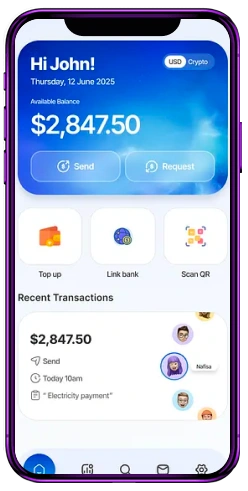
Digital banking platforms offer a convenient way for customers to manage their finances through their phones or browsers.

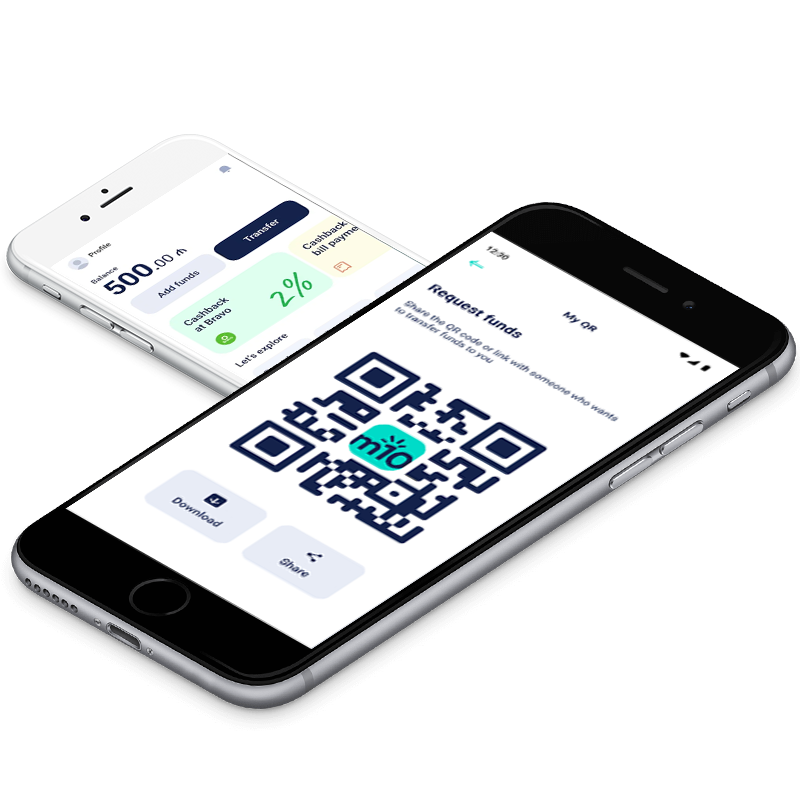
Payment apps allow users to send and receive money in a fast and secure way, supporting payment processing, P2P transfers, and QR-based transactions.
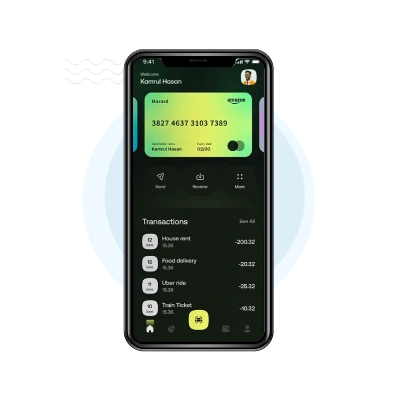
Digital wallet solutions make a central hub for users to store funds and manage day-to-day transactions.
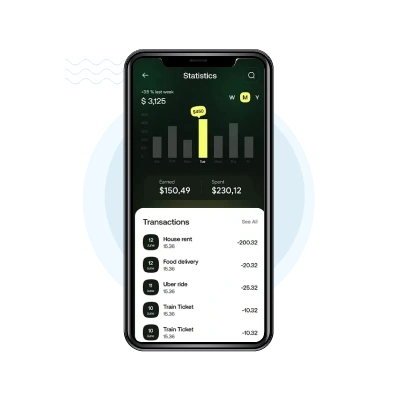
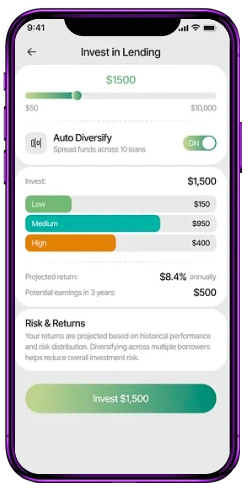
Lending apps make borrowing easier for users from application to repayment, including applying for a loan, credit assessment, scheduling repayments, and collection workflows.
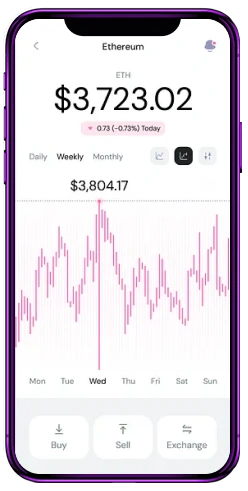
Trading apps provide traders with significant tools that help them monitor markets and manage orders.
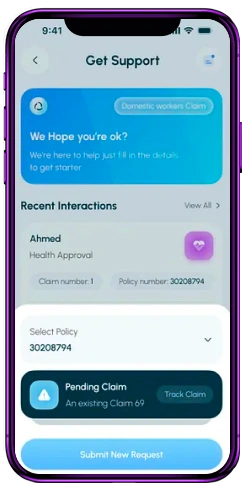
Insurance applications have simplified the way customers manage their insurance policies and payments.
Personal finance apps help users understand where they spend money and make better day–to–day financial decisions.
Support flexible payment options for customers while giving merchants tools to manage installment-based purchases. Customer eligibility checks
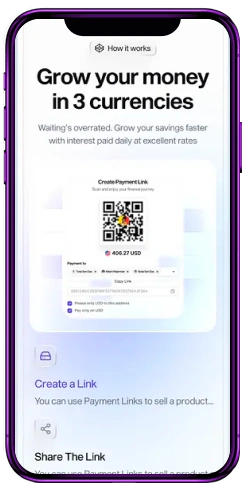
Success in highly regulated digital finance markets requires intelligent architecture, scalable infrastructure, secure integrations, and continuous optimization across these areas to enable growth. Our fintech app development solutions are crafted to keep up with changing user habits, help financial app developers protect customer identities (KYC/AML), and facilitate the smooth functioning of financial transactions across digital platforms worldwide.

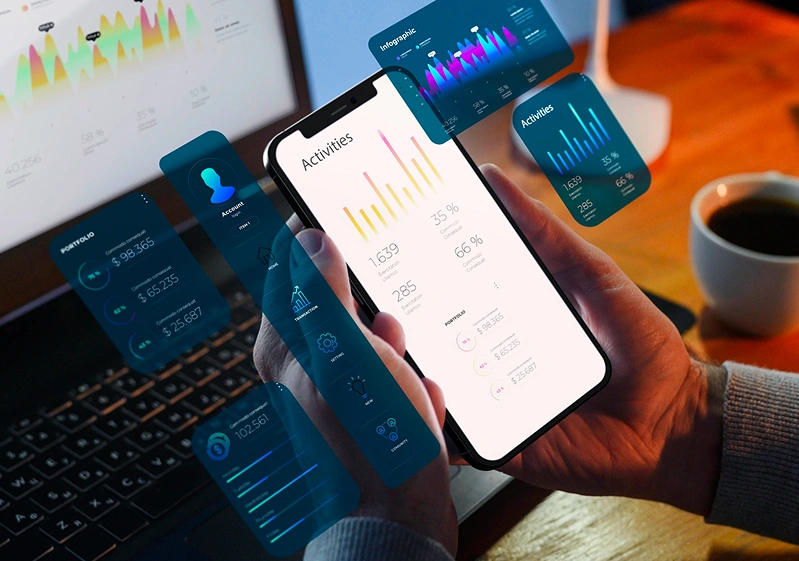




The right fintech app features depend on the financial product, but most successful platforms need functionality that makes money movement, account management, security, and operational control simple to handle.
These fintech application features help create a connected platform where users can manage finances while businesses maintain control over transactions, security, and compliance. The exact financial app features can then be tailored to the product type and target users.
Fintech software development in this modern world is more than just creating screens and connecting APIs. At Dev Technosys, every stage accounts for financial workflows, security, compliance, integrations, and future growth.
The development process we follow brings these pieces together with a structured and strategic approach. This will help you move from an initial idea to a secure, tested, and scalable financial product.
We know your business model, your target audience, your money flow, and your product objectives, and we know what the app needs to do.
Prior to development, we determine relevant regulations, KYC/AML, data requirements, and security expectations.
We plan the technical foundation based on transaction volume, integration, scalability, data flow, and the financial product's future development.
We build easy and intuitive experiences for account setup, payments, account management, lending, investing, or other financial activities.
We develop the back end, transaction logic, databases, APIs, and core logic of your fintech application to ensure its smooth operation.
We integrate payment gateways, banking systems, KYC providers, financial APIs, third-party tools, and much more that your product requires.
Testing transactions, authentication, integrations, performance, edge cases, and security to find problems early before they impact real users.
We check the application for security controls and compliance requirements in accordance with specific requirements, with a special focus on gaps, until the product nears launch.
We deploy the application to the necessary environments, set up production infrastructure, and test critical workflows before deployment.
We track performance after launch, fix bugs, enhance features, and expand the platform as transaction volume grows and needs evolve.
Dev Technosys is a BNPL app development company that creates state-of-the-art fintech ecosystems. ones that are powered by API-first architecture, cloud scalability, and compliance-ready frameworks. Through real-time financial processing, secure transactions, and seamless integrations, our solutions help launch innovative, scalable, and digitally grown platforms for long-term financial success.
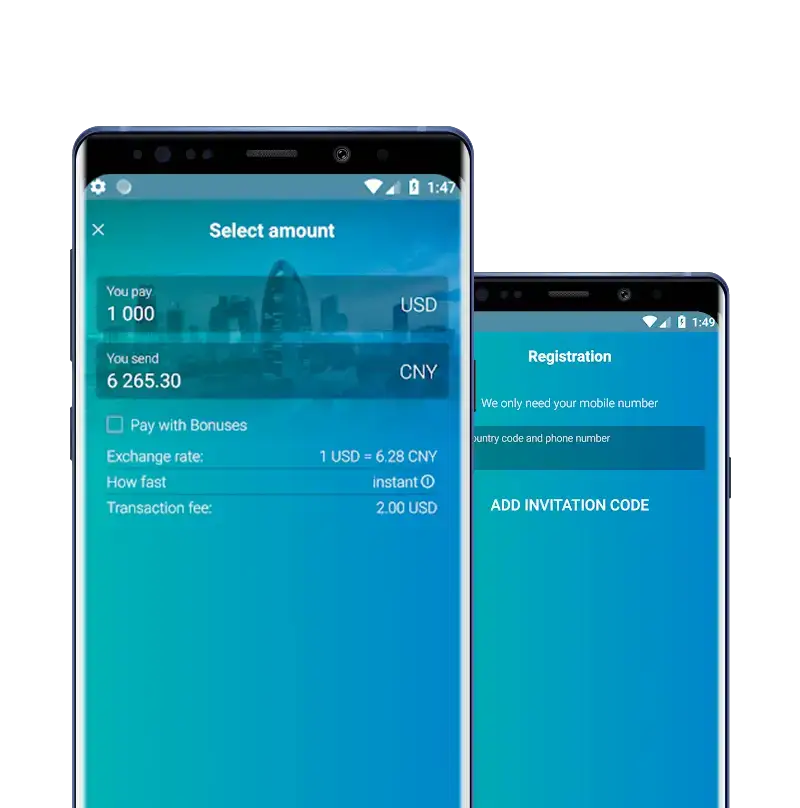
Payment and transaction solutions give firms the possibility to handle massive amounts of safe, real-time monetary transactions and different channels. These systems offer a seamless payment experience, support global transfers, enhance transaction success rates, and enable scalable monetization through digital payment ecosystems and integrated financial infrastructures.

Mobile wallet solutions

Payment gateway systems

UPI-based applications

Cross-border payment platforms

Contactless payment systems

Recurring payment solutions
Money transfer app development solutions are essential for banks and financial institutions to provide a smooth, end-to-end user experience in banking through secure, scalable, and customer. Such platforms bring about the modernization of legacy systems, enable support for instant transactions, provide better customer interaction, and allow omnichannel banking experiences in line with changing regulations and digital transformation needs.

Neobanking platforms

Mobile banking applications

Core banking modernization

Open banking solutions

Digital onboarding systems

Multi-channel banking systems
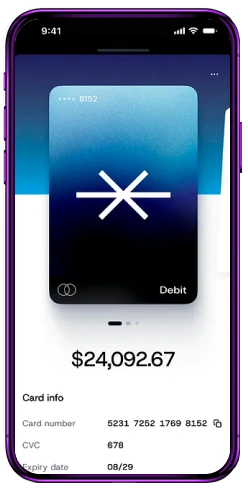
Lending and credit solutions help to move through each stage of a loan lifecycle faster by automating workflows, using data for risk assessment, and making the whole operation digital. These platforms improve loan processing efficiency, enable faster approvals, reduce manual intervention, and deliver enhanced borrower experiences while supporting scalable lending models and financial inclusion initiatives.

Peer-To-Peer Payment Apps

Loan Management System

Credit Scoring System

Buy Now Pay Later (BNPL) solutions

Microfinance applications

Debt management systems
Investment and wealth management systems give sophisticated instruments for portfolio management, trading, and financial planning. These platforms enable real-time market access, data-driven decision-making, and personalized investment experiences, helping businesses improve user engagement, optimize asset performance, and build long-term financial growth strategies.

Stock trading applications

Robo-advisory platforms

Portfolio management systems

Crypto trading platforms

Asset management solutions

Wealth tracking applications
InsurTech solutions transform insurance business by automating policy management, underwriting, and claims processing. These platforms play a role in making business operations more efficient, lowering the time it takes to handle a process, elevating the accuracy of risk assessments, and ultimately providing a better customer experience. They also serve as a backbone for scalable and data-driven insurance service delivery models.

Policy management systems

Claims processing platforms

Digital insurance marketplaces

Risk assessment solutions

Underwriting automation systems

Insurance aggregator apps
RegTech and compliance solutions take the burden of regulatory process automation off the shoulders of businesses, giving them peace of mind about running a financial operation securely and within the law. It helps reduce compliance risks but also enhance transparency, audit readiness, and overall operational efficiency in highly regulated environments.

KYC verification platforms

AML monitoring systems

Fraud detection solutions

Identity verification systems

Compliance management platforms

Transaction monitoring systems
CONNECTED FINANCIAL SYSTEMS
Essential standards and APIs such as Open Banking, ISO 20022, ACH, and SWIFT are commonly integrated in modern fintech apps. These integrations are important because they allow fintech apps to communicate with banks, payment networks, financial institutions, and third-party platforms. They help applications exchange financial information and process transactions across different systems.
Open banking APIs connect fintech apps with bank accounts in a secure way. It also allows apps to access permitted financial information.
ISO 20022 presents a common messaging framework to exchange structured financial data between banks and financial institutions.
ACH integration connects fintech applications with electronic bank payment networks for processing account-to-account transactions.
SWIFT integration supports secure financial messaging between institutions involved in international payments and cross-border transactions.
Financial APIs connect your application with banking, payment, identity, investment, and other financial platforms.
Financial integrations must protect sensitive account and transaction data throughout the exchange. We implement appropriate authentication, authorization, encryption, access controls, monitoring, and secure API practices to support reliable communication between connected financial systems.
INTELLIGENT FINANCE
As per a reliable fintech app development firm, you don’t always need a new creation to benefit from AI. We work with the goal of making your platform more intelligent, responsive, and automated. Understand how essential AI integrations upgrade your fintech app.
| AI Capability | What It Adds to Your Fintech App |
|---|---|
| Fraud Detection | Identifies unusual transaction patterns and potential fraud faster. |
| Predictive Analytics | Forecasts financial trends, customer behavior, demand, and risk. |
| LLM Integration | Adds conversational intelligence to customer and internal applications. |
| AI Customer Support | Handles routine questions and assists support teams with faster responses. |
| Document Intelligence | Extracts useful information from applications, statements, invoices, and documents. |
| Personalized Insights | Provides relevant financial recommendations based on permitted customer data. |
| AI Agents | Automates multi-step tasks across customer service and financial operations. |
| AI + Financial APIs | Connects AI capabilities with banking, payment, and financial systems. |
From smarter fraud monitoring to automated workflows, AI becomes part of the fintech product rather than a separate technology layer.
Old fintech systems may contain valuable information stored for many years and important logic. So you don't have to replace everything at once. We figure out what can be saved, modernized, and where AI can be introduced in a safe manner.
Legacy Application → AI Readiness → Data & API Assessment
We assess your legacy applications, infrastructure, data, integrations, and processes to find out which ones are ready for AI and what can be improved before implementing AI.
Legacy APIs → Cloud Infrastructure → AI-Ready Architecture
We modernize old parts, APIs, data platforms, and infrastructure to build an AI-ready architecture.
Financial Data → AI/ML Models → LLMs → Cloud AI
We migrate financial data, existing AI/ML models, LLM workloads, and other services while keeping the operation of financial processes uninterrupted.
Security → Compliance → Performance → Scalability
We optimize the migrated environment through additional security, compliance controls, and performance to handle growing transaction volumes and AI workloads.
Instead of migrating an old fintech system to modern technology, we prepare it for further development of its financial product.
The problem with a fintech app is that it isn’t just one login screen to protect. It is a set of experiences, from opening an account to navigating the application and making transactions. Each of them requires its own level of security. And here’s how we do it at every step.
Step 1: Create the Account
Each new user session begins with authentication. We create access controls that will ensure user authentication without compromising performance.
Stage 2: Actions within the App
Once inside, users make dozens of API calls each session. Each call may be an entry point; therefore, you must verify and monitor every call.
Stage 3: Storing Information
Information is either at rest or in transit at all times. These require individual security measures.
Stage 4: Transfers Money
The stage with the highest stakes is where we monitor all transactions for unusual activity.
Stage 5: Under the Hood
But all of this does not mean anything without constant testing. We incorporate security testing into development, not just the release process.
Security is not a feature. It’s a combination of various measures protecting your users, financial information, transactions, and all systems involved in your application.
Every fintech product needs to answer the same three questions, regardless of its target audience or market. Your product’s requirements are mapped against those questions. As a result, they are translated into your business workflows and technologies tailored to the market you’re working in.
You should always know to whom your service is provided. This is the responsibility of KYC. But AML stays on top of it to keep an eye.
Different models of payments require different regulations. This framework is built into payment and banking workflows in your app.
A lot of personal information is used by financial products. Where relevant, we build compliance around the following.
Depending on the market, the same fintech product will have to comply with different regulatory obligations. The solution we build will cover your particular footprint, rather than some standard region.
Expert Insight
According to our fintech IT expert Pramod Jangid, there is no universal fintech compliance checklist. Requirements shift by product, country, and business model. We design applications with the applicable requirements in mind, and integrate the right controls for your target market from day one, not after the product is already built.
SYSTEM DESIGN
Fintech software development architecture defines how it handles users, business logic, integration, monitoring, financial data, storage, and authentication. Every layer of fintech architecture works together to transfer funds securely and support future scale.
The authentication and authorization layer supervises access to the fintech application. It also controls the data and functions each user can access.
The role of fintech APIs is to connect the app components with banks, payment processors, and card networks. Basically, every transfer requires its own protection.
Fintech apps handle sensitive financial information that must be stored in a structured way and protected at every access point.
Cloud infrastructure provides the environment for computation, storage, networking, and deployment of fintech applications.
Monitoring helps development and operations teams catch technical issues, unusual activity, integration failures, and performance problems across the application.
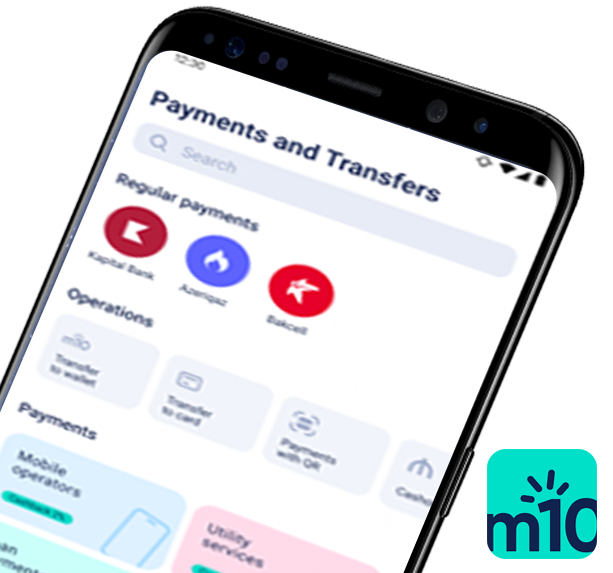
See our portfolio of scalable fintech applications in banking, payments, lending, and wealth management that have been delivered for international markets. A case study showcases how financial organizations secure their IT infrastructures, ensure transaction speed, rely on KYC/AML regulations for their compliance, and implement user-friendly financial interfaces designed to keep pace with digitally evolving finance requirements.
TECHNOLOGY STACK
A fintech technology stack supports secure transactions, financial data processing, banking integration, compliance, and scalable architecture. Being a trusted fintech mobile app development company, we choose supreme technologies. This selection is based on your app’s type, transaction volume, financial workflows, integration requirements, and regulatory needs.
Build fintech apps that are safe to use for banking, payments, loans, personal finance, and investments.


Design responsive UI/UX for portals, dashboards, financial applications, and administrative systems.




Design the server-side part of fintech products that will handle transactions, workflows, API, authentication, and the business logic layer.





Keep customer, financial accounts, transactions, and other financial data stored and processed efficiently.


Deploy and run fintech apps on a scalable infrastructure with automated deployment, monitoring, backup, and high availability.






Integrate fintech products with banks, payment systems, financial organizations, and third-party providers of financial services.









Secure fintech accounts, financial transactions, and customer data by using authentication, authorization, encryption, and monitoring.









Perform analysis of financial data to detect fraud, risks, personalize fintech products, automate processes, and make decisions based on the data.






Enable real-time updates and notifications about transactions and payments in fintech applications.








Use blockchain technology if it is required by the fintech product due to digital assets, tokens, settlement, and transaction verification.


The average cost to develop a fintech app in 2026-2027 ranges from $4,999 to $105,000. The overall development budget depends on what the app actually does, not just what category it falls into. Every estimate below builds AI into the development process itself, from code generation to testing. This is the reason why the ranges run leaner than a traditional build.
$4,999 – $7,999
Best for Startups & MVPs
$7,999 – $9,999
Best for Growing Fintech Products
$9,999 – $105,000
Best for Complex Financial Platforms
Two apps in the same tier will not necessarily fall at the same end of the spectrum. Here’s what raises cost, and what lowers it.
The more screens and workflows that go beyond the basics, the longer the build process.
iOS, Android, and web each add development time, unless you’re building cross-platform from the start.
The complexities of bank, card network, and payment gateway integrations vary greatly.
PCI DSS, GDPR, or RBI compliance means added design and testing work upfront.
Encryption, fraud protection, and audit logging are not optional extras but must be built into the app.
Integrations with core banking, KYC providers, and third-party financial tools each increase scope.
Original UI/UX design is more expensive than customization.
Real-time transactions cost more than mere record-keeping.
Scalable architecture right from the start costs more than a bare minimum viable product approach.
Fraud, analytics, and notification services increase both development time and ongoing cost.
Generally, it takes 3 to 5+ months to develop a fintech app. The final timeline is determined by the platform’s type, complexity, security requirements, and features. AI-assisted development compresses the timeline without cutting corners on testing or compliance. Most fintech builds, across all three tiers, land between three and five months.
| Fintech App Level | Timeline | Core Scope | Key Timeline Drivers |
|---|---|---|---|
| Basic | ~3 Months | Core features, dashboard, APIs, basic AI | Features, UI/UX, testing |
| Mid-Level | 3–4 Months | Advanced workflows, integrations, analytics, AI | APIs, security, AI, testing |
| Advanced | 4–5 Months | Real-time transactions, AI/ML, compliance | Integrations, security, scalability |
The budget, business goals, and long-term growth plans help in selecting the right development approach. Both custom and white-label development options are compared below to help you choose one. Businesses should choose the option that offers them the best value, flexibility, and scalability for a payment platform. Here's the side-by-side, factor-by-factor comparison between custom payment app development vs. white-label solutions.
See how our custom fintech app development expertise has helped businesses modernize financial services, boost user engagement, ensure secure transactions, and scale rapidly.
Digital Wallet & Payment Solution
Stack: React Native | Node.js | AWS | MongoDB
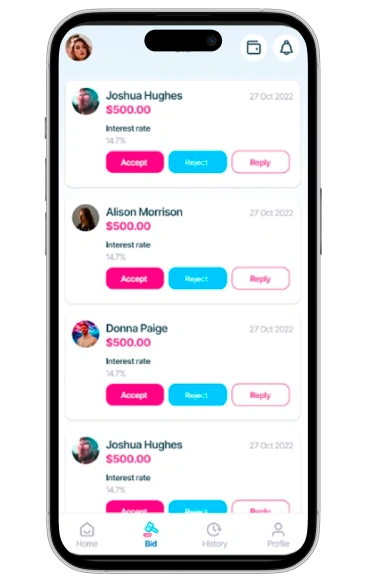
The client needed a secure and scalable digital wallet platform capable of enabling instant payments, supporting multiple currencies, and offering real-time expense visibility. Maintaining transaction speed while ensuring strong security across regions was a key concern.
We designed and developed a high-performance fintech application using React Native and Node.js, deployed on AWS cloud infrastructure. The platform includes multi-currency wallet functionality, real-time expense tracking dashboards, secure authentication layers, and instant peer-to-peer payment capabilities with built-in fraud detection.
Smart Trading & Investment Platform
Stack: React.js | Node.js | AWS | PostgreSQL
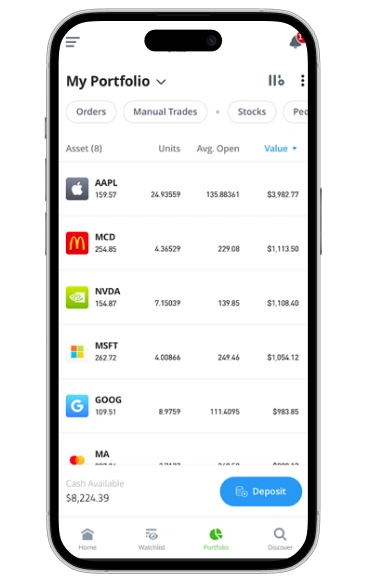
The client aimed to build a dynamic trading platform where users could monitor stocks, manage investments, and earn rewards in real time. Ensuring platform stability and performance during high trading volumes was a critical challenge.
We created a scalable trading solution with a React.js front-end and Node.js backend, powered by AWS infrastructure. The platform delivers real-time stock updates, seamless portfolio tracking, reward-based engagement features, and secure transaction processing with optimized performance for heavy user activity.
Simplifying Digital Payments & Financial Management
Users needed a simpler way to manage everyday financial activities. It includes money transfers, bill payments, mobile recharges, and cash transactions. The platform needed to make financial management more convenient while maintaining a smooth and secure user experience.
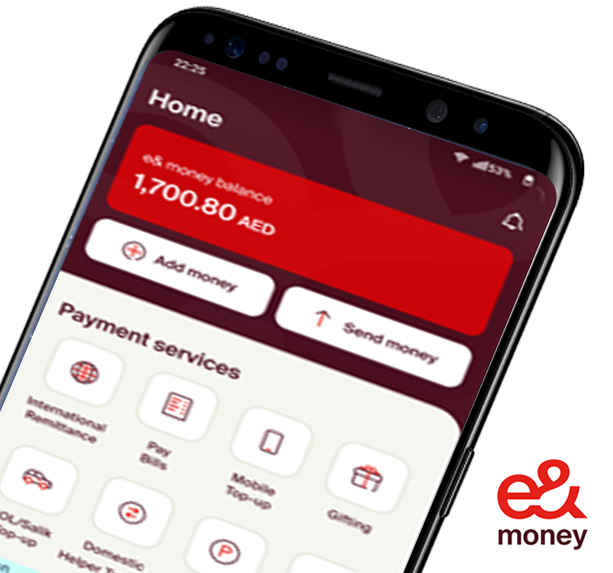
Our fintech software development company developed UABPay as a mobile financial platform supporting fund transfers, cash-in/cash-out, bill payments, QR-based payments, mobile top-ups, and online shopping. The app also provides financial dashboards to help users track spending and manage their virtual money.

WHY DEV TECHNOSYS
Dev Technosys has been developing mobile and web applications and software across industries, including fintech, for 16+ years.
Including fintech apps and financial platforms, we have delivered over 2300 projects throughout 71 countries and worked in 30+ industries.
Considering our fintech app development experience, we have created digital wallets, payment platforms, lending, investment, financial management, and transaction-based applications.
We are certified for CMMI Level 3, which means we can support structured software development and quality processes.
Whatever fintech projects we work on are guided by Pramod Jangid, our fintech IT head. His knowledge brings practical expertise into financial workflows.
Our rating on Clutch is 4.8/5 rating from 205 reviews, showcasing our dedication, commitment, and honesty toward our clients and their ideas.


PC Tech Magazine
September 2026 recognition.

AI Journal
AI & fintech industry coverage.
We develop fintech apps throughout digital banking, payments, digital wallets, lending, investment, trading, insurance, BNPL, and personal finance. The right fintech app development architecture depends on business goals, users, transaction flows, regulatory market, and integration requirements. The best part is we never force your idea into a standard model; we always develop custom platforms.
The average cost to build a fintech app ranges from $4,999 to $105,000. The overall development budget is determined by the platform’s complexity, integration, security levels, development approach, and compliance scope.
A basic MVP fintech app involves limited but important integrations, security, and features, making it cheaper to develop than an advanced one.
To create a fintech app, it takes approximately 3 to 5+ months. The final timeline is influenced by integrations, compliance requirements, custom financial workflows, testing, and approval processes. An MVP with limited functionality can be developed faster. Whereas a production-ready platform may require additional time for security testing and regulatory readiness.
Rather than adding security after the application is built, it is always better to add it throughout the development stages. It must include:
Weaknesses outside your core application can create significant exposure. That’s why we also review third-party integrations and access permissions.
Financial services, countries served, customer types, and applicable regulations determine the requirement for KYC and AML in a fintech app. We usually integrate:
Compliance requirements are mapped during planning so they influence architecture and user flows instead of becoming expensive additions later.
Yes, fintech applications can be connected to:
Integration choices depend on your target markets and provider availability. We also consider authentication, data handling, failure scenarios, webhooks, transaction reconciliation, and API reliability.
Yes, we can design a fintech MVP around the smallest set of workflows needed to validate your business model with real users. Instead of building every planned feature upfront, we prioritize the core transaction or financial journey. It requires integrations, security foundations, and compliance considerations. This helps you test demand before committing to full-scale development.
Yes, we can significantly modernize your existing fintech platform without rebuilding everything from scratch. Firstly, we assess legacy code, architecture, APIs, infrastructure, security gaps, performance issues, and technical dependencies. According to the findings, we involve targeted refactoring, API upgrades, cloud migration, database changes, or gradual replacement of legacy components.
Yes, we can build, but a multi-currency fintech platform involves more than just interface translation. Currency, payment methods, identity requirements, tax rules, data protection obligations, financial regulations, and local providers can differ market to market. We design the architecture to support market-specific configurations where appropriate. This allows your product to expand without rebuilding core financial workflows for every new country.
Yes, an NDA is signed to establish confidentiality around your fintech product idea, business model, technical requirements, documents, and other shared information. Before development discussions begin, you can request the appropriate NDA process. Specific confidentiality terms, permitted disclosures, ownership provisions, and obligations should be reviewed and agreed upon by both parties.
Discover how our clients have achieved success, watch their authentic video testimonials and see the results for yourself
“Dev Technosys delivered a secure, user-friendly medical app for us. Their technical expertise, clear communication, and commitment to healthcare compliance truly exceeded our expectations.”
CEO


“Dev Technosys transformed our business idea into a powerful mobile app. Their strategic approach, reliability, and on-time delivery helped us scale smoothly and confidently.”
Managing Director


“Working with Dev Technosys felt like a true partnership. Their care, dedication, and understanding of our healthcare goals made the entire journey smooth and rewarding.”
CEO, Papaya


“Dev Technosys brought our carpet information project to life with clarity and precision. Their professionalism, responsiveness, and commitment to quality made the collaboration truly valuable.”
Director - Satar Carpet GmbH


“Dev Technosys played a key role in shaping our project into a viable business. Their problem-solving mindset, technical strength, and consistent support delivered real results.”
Founder at Best.AZ


“Dev Technosys handled our healthcare project with care and precision. Their thoughtful approach, strong collaboration, and attention to detail gave us confidence at every stage.”
CEO - InspireWebApp


205 Reviews on Clutch

UK

Europe

UAE

Japan


Our innovation and technology expertise have earned a feature in respected media platforms and industry publications across the world.
Featured by EIN Presswire for delivering innovative software development services that help startups and enterprises accelerate digital transformation with confidence.
ViewHighlighted by Barchart for building scalable digital products that combine modern technologies, exceptional performance, and measurable business value.
ViewAcknowledged by The Hindu for creating reliable web, mobile, and enterprise software solutions that drive long-term business growth.
ViewShowcased by Entrepreneur for empowering startups with innovative product development strategies and high-quality software engineering expertise.
View
Celebrated by Hindustan Times for delivering custom technology solutions that help businesses innovate, scale efficiently, and stay competitive.
ViewWe Proudly Shines Globally, Featured by Renowned Publishers!

B-11-12, Lal Bahadur Nagar, Sector 9, Malviya Nagar, Jaipur, Rajasthan 302017, India

5668 e 61st street ste 2000 #360 commerce, california 90040, USA



188 Quay Street Auckland, AUK 1010

United States (USA), United Kingdom (UK), Singapore, Germany, Canada, Australia, Ireland ,New Zealand , Netherlands, Norway, United Arab Emirates (UAE) , Saudi Arabia , Qatar, Finland, Mexico, Switzerland, Spain, France, etc


by 800+ customers for 2300+ Web and Mobile App Development Projects.