













Quick Summary
The laundry app development cost in 2026 typically ranges from $25,000 to $150,000+, depending on the business model, number of user panels, features, integrations, AI capabilities, and overall technical complexity.
Cost Based on Development Complexity
-
- Basic Streaming App ($25,000–$40,000)
- Mid-Level Streaming Platform ($40,000–$80,000)
- Advanced OTT Platform ($80,000–$120,000)
- When evaluating the security of mobile applications, use OWASP MASVS and MASTG as useful benchmarks.
- Enterprise Streaming Platform ($120,000+)
Cost Based on App Type
-
- On-Demand Laundry App: $25,000–$50,000
- Subscription-Based Laundry App: $35,000–$70,000
- Laundry Marketplace App: $50,000–$100,000
- AI-Powered Laundry App: $80,000–$130,000
- Enterprise Laundry Management Platform: $120,000–$150,000+
Cost Based on Development Complexity
-
- Maintenance Expenses: This irregular expense runs at 15%- 20% of the original cost of development in the form of bug fixes, updates, security patches, and improvements in performance.
- Cost Incurred on AI Integration: Based on the nature of work rendered, AI can inflate budget costs as it comes with capabilities such as intelligent scheduling, optimized routing, demand forecasting, and other functions.
- Cost of Third-party Integration: Payment processes, cloud services, maps, GPS tracking, notifications, and CRM are not free of cost and are part of the total amount.
The final laundry app development cost estimate can also increase because of third-party integrations, ongoing maintenance, security requirements, cloud infrastructure, and advanced automation.
The conventional laundry service is evolving with time into a more tech-adaptive enterprise. Nowadays, there is no need to go to a laundromat or dry cleaner; all one needs to do is to make his/her order through the app on their phone, make payments, track the order, and receive fresh laundry right to his/her door.
Thus, the startups have an opportunity to establish a comfortable and tech-oriented service based on a recurrent demand. However, one of the first questions entrepreneurs ask is, “How much does it cost to build a laundry app?”
In this guide, we break down the laundry app development cost 2026, along with app types, features, development stages, AI capabilities, monetization strategies, and practical ways to control your startup budget.
What is a laundry App?
Basically, a laundry app can be defined as a software platform that allows users to order laundry and dry cleaning services through mobile phones or web browsers. Different laundry apps can operate in a number of different ways, including some that might involve getting users to one specific laundry service provider or allowing them to select from a number of laundry services in their locality.
A laundry platform usually provides features, such as:
- Choice and price of services
- Scheduling of pickups and deliveries
- Tracking of orders
- Notifications
- Online payment service
- Subscription-based plans
- Management of delivery drivers
- Simplified control panel for service providers.
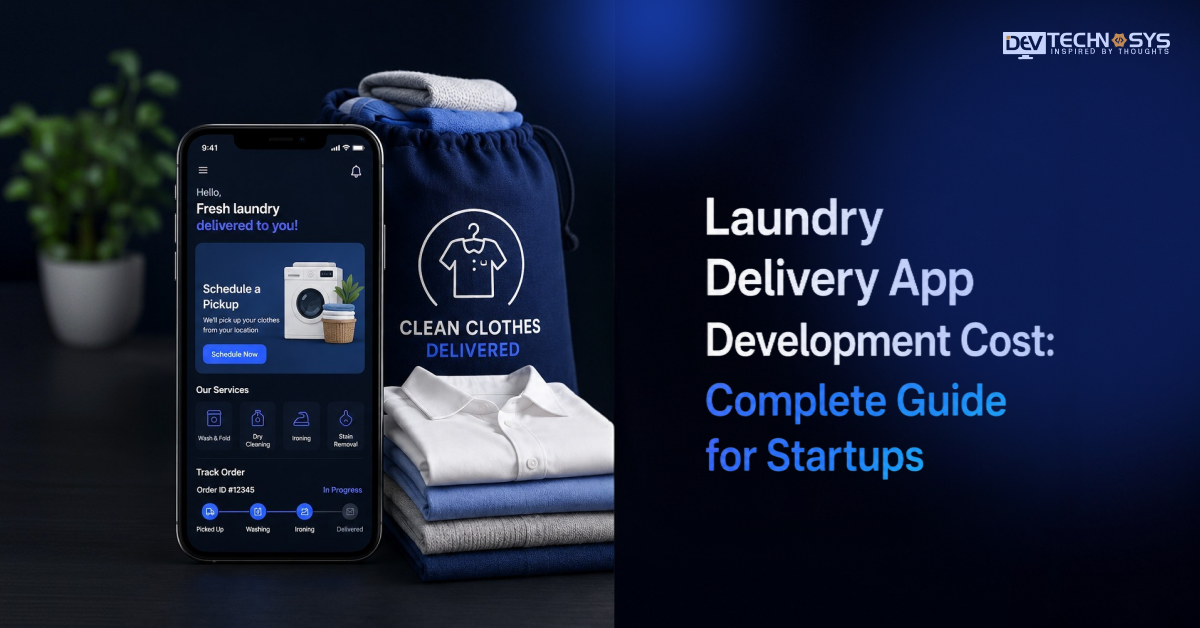
Most laundry platforms usually comprise a set of application interfaces which include a customer-facing app, a delivery partner app, a laundry provider dashboard, and an admin control panel. The number of application interfaces is a relatively important factor that can also determine the laundry pickup and delivery app development cost.
laundry App Development Cost based on Complexity
The development cost of a laundry app is usually found between $25,000 and $150,000 or more, based on a few factors including its complexity, features, and the place of development.
The cheapest option that can be created includes an MVP that contains the basic features such as registering users, booking, scheduling, and managing payments and orders. The more expensive options are full-scale and advanced platforms that have features like real-time tracking, AI-based automation, dashboards, supporting several panels of users, and integration with other services.
App Complexity |
Development Cost |
Core Features |
| Simple MVP (Basic App) | $25,000 – $50,000 | Booking, scheduling, payments, and order tracking |
| Mid-Level App | $50,000 – $100,000 | Real-time tracking, notifications, vendor management, and basic analytics |
| Advanced / Enterprise App | $100,000 – $150,000+ | AI automation, advanced analytics, multi-vendor architecture, scalable cloud infrastructure, and multiple user roles |
Planning a Mobile App?
Get a tailored development cost estimate in 3 simple steps — app basics, features, timeline, and your contact details.
- 3 quick steps
- 100% free
- Reply in 1 business day
2 Minutes Read
laundry App Cost based on Development Region
Development costs can vary according to the region, complexity of the project, and team experience.
Development Region |
Approximate Hourly Rate |
Estimated Project Cost |
| USA & Canada | $100-$200/hour | $80,000-$200,000+ |
| Western Europe | $80-$150/hour | $70,000-$180,000 |
| Eastern Europe | $40-$80/hour | $45,000-$120,000 |
| Australia | $70-$140/hour | $60,000-$160,000 |
| India | $25-$60/hour | $25,000-$100,000+ |
The provided figures clearly display the role of development location in evaluating the laundry app development price. Regions such as India and Eastern Europe offer more affordable options, while other countries, such as the USA, Canada, and Western Europe, offer high prices because of high labor costs.
Types of laundry Apps & Their Cost
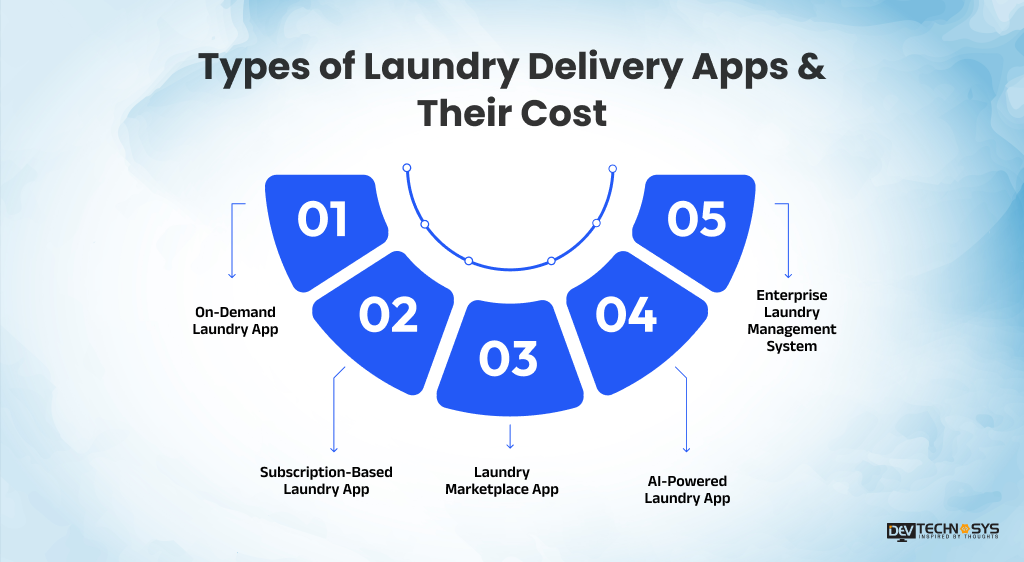
Different business models require different workflows, user roles, and technical capabilities. As a result, the laundry service app development cost can vary considerably. In this section, we have provided the major types of laundry apps and their estimated development costs:
Laundry App Type |
Estimated Cost |
Timeline |
| On-Demand Laundry App | $25,000-$50,000 | 3-5 Months |
| Subscription-Based App | $35,000-$70,000 | 4-6 Months |
| Laundry Marketplace App | $50,000-$100,000 | 5-8 Months |
| AI-Powered Laundry App | $80,000-$130,000 | 6-10 Months |
| Enterprise Laundry Platform | $120,000-$150,000+ | 9-12+ Months |
On-Demand Laundry App
In this model, customers can place an order at their convenience when they need laundry or dry cleaning. The app takes care of service choice, pickup, order status tracking, and delivery. This is a good approach for starting your business in a particular city or area.
The on demand laundry app development cost increases when real-time driver tracking and automated dispatching are added.
Subscription-Based Laundry App
In this model, the customers are charged on a weekly or monthly basis for a fixed amount of pick-ups, washes, and other services. The development is more costly since the app must be capable of handling subscriptions.
Laundry Marketplace App
A marketplace creates an opportunity for the users of the app to connect with a number of independent laundries or dry cleaners. Every selected supplier may require their own dashboard, which will be responsible for managing services and pricing, making orders, and checking availability.
The laundry booking app development cost is higher because the system must support multiple vendors, commissions, payouts, provider onboarding, and marketplace management.
AI-Powered Laundry App
A platform powered by artificial intelligence offers advanced customer service features, market analysis and projections, solutions tailored to the specific interests of clients, smart scheduling systems, and optimized logistics. The actual price will depend on whether AI is implemented based on ready solutions or needs to be custom-built.
Enterprise Laundry Management System
Enterprise solutions are appropriate for companies like chain laundries, franchises, or firms operating in multiple locations. This type of solution can provide centralized operations, secure access, management of multiple locations, reporting, integrations, and flexible cloud infrastructure.
Key Features Affecting Laundry Delivery App Development Cost
The amazing features of laundry apps have a direct impact on the laundry app development price. A basic app could only include the booking and payment systems, while a sophisticated app could include all the advanced features such as tracking, multi-vendor management, automated dispatching, subscription management, and anything else powered by artificial intelligence.
Because a laundry platform accommodates multiple users at the same time, such as customers, delivery representatives, laundry services, and administrators, your laundry app development budget can go higher.
Key Feature |
Estimated Cost |
| User Registration & Secure Login | $2,000–$5,000 |
| Service Selection & Pricing | $2,000–$5,000 |
| Pickup & Delivery Scheduling | $3,000–$7,000 |
| Real-Time Order Tracking | $4,000–$10,000 |
| GPS & Route Integration | $4,000–$10,000 |
| Online Payment Integration | $3,000–$8,000 |
| Push Notifications | $2,000–$5,000 |
| Subscription & Membership Plans | $4,000–$10,000 |
| Laundry Provider Dashboard | $5,000–$12,000 |
| Delivery Partner Management | $5,000–$12,000 |
| Admin Dashboard & Analytics | $5,000–$15,000 |
| AI Chatbot & Smart Automation | $5,000–$20,000 |
Laundry App Development Cost by Development Stage
There are many stages involved in developing a laundry app, from validating the idea to building different user panels, designing the platform, testing the app, and then launching it. Hence, the cost can vary for each stage.
Development Stage |
Estimated Cost |
Timeline |
| Discovery & Requirement Analysis | $2,000–$5,000 | 1–2 Weeks |
| UI/UX Design | $3,000–$8,000 | 2–4 Weeks |
| Customer App Development | $5,000–$15,000 | 4–8 Weeks |
| Backend Development | $8,000–$25,000 | 6–10 Weeks |
| Delivery & Provider Modules | $5,000–$15,000 | 4–8 Weeks |
| Third-Party Integrations | $3,000–$12,000 | 2–6 Weeks |
| Testing & Quality Assurance | $3,000–$8,000 | 3–5 Weeks |
| Development & DevOps | $2,000–$5,000 | 1–2 Weeks |
| Total | $25,000–$150,000+ | 2–12+ Months |
This laundry app development cost breakdown helps startups understand where their investment goes. The exact amount depends on the number of platforms, integrations, user roles, and level of customization.

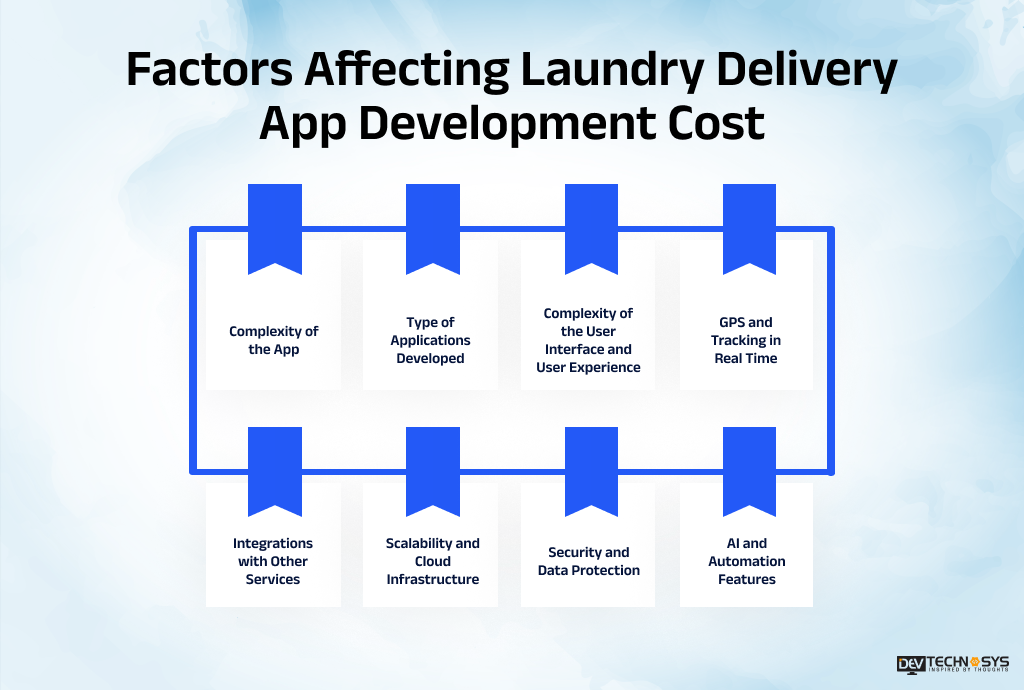
Factors Affecting Laundry App Development Cost
Laundry app maintenance cost can also affect the overall project budget after launch. The costs incurred in creating a laundry service application depend upon multiple factors, such as:
1. Complexity of the App
An application that does basic functions like payment and booking, for instance, will be less costly than a complex multi-vendor platform equipped with tracking capabilities and efficient dispatching of orders via a subscription scheme, data analytics, and features based on artificial intelligence.
Therefore, if you want your app to incorporate several user roles, processes, and levels of automation, you should be prepared to pay more for its development.
2. Type of Applications Developed
Creating only a customer-facing application is more affordable than developing applications for customers and delivery partners, along with online dashboards for service providers and administrators.
The launch on both iOS and Android platforms can further increase the laundry mobile app development cost. However, this issue can be solved through the utilization of cross-platform solutions, such as React Native or Flutter, that allow reusing a significant amount of code.
3. Complexity of the User Interface and User Experience
An ordinary booking application necessitates fewer design efforts than a customized solution that includes a user-friendly order tracking system, changing pricing, various loyalty programs, customized recommendations, and multiple dashboards.
A high-quality user experience is very important because there are multiple stages in the service process, like booking, picking up the clothes, processing, and delivering the washing.
4. GPS and Tracking in Real Time
Real-time tracking of the drivers requires the use of mapping options for GPS purposes, permission for location identification, constant tracking, route management, and status synchronization.
Features like estimated time of arrival, tracking drivers, and intelligent routing also add to the technical difficulties and the price of this technology.
5. Integrations with Other Services
Most laundry software solutions rely on external services to fulfill certain functions, including:
- Payment processing
- Google Maps or similar mapping technologies
- SMS and push notification
- Cloud storage services
- Analytical systems
- Customer relationship management system
- Customer support systems
Thus, in case there are specific APIs available for these functions, their implementation and costs need to be taken into consideration while planning a startup budget.
6. Scalability and Cloud Infrastructure
A fresh startup in a single neighborhood doesn’t require the same infrastructure as a multi-city service. With the growth of the audience, you may be in need of scalable databases, cloud services, monitoring and backup systems, and better performance infrastructure.
7. Security and Data Protection
Laundry apps process customers’ personal information, including their names, addresses, order history, and payments. For this reason, efforts should be made to embed reliable authentication means, access control, encryption, reliable APIs, and periodic security testing into the development process.
8. AI and Automation Features
Using AI-enabled customer service, demand prediction, personalized advertising, automated order assignment, and route optimization could help improve the efficiency of your application, although it might make the initial development and infrastructure costs significantly higher.
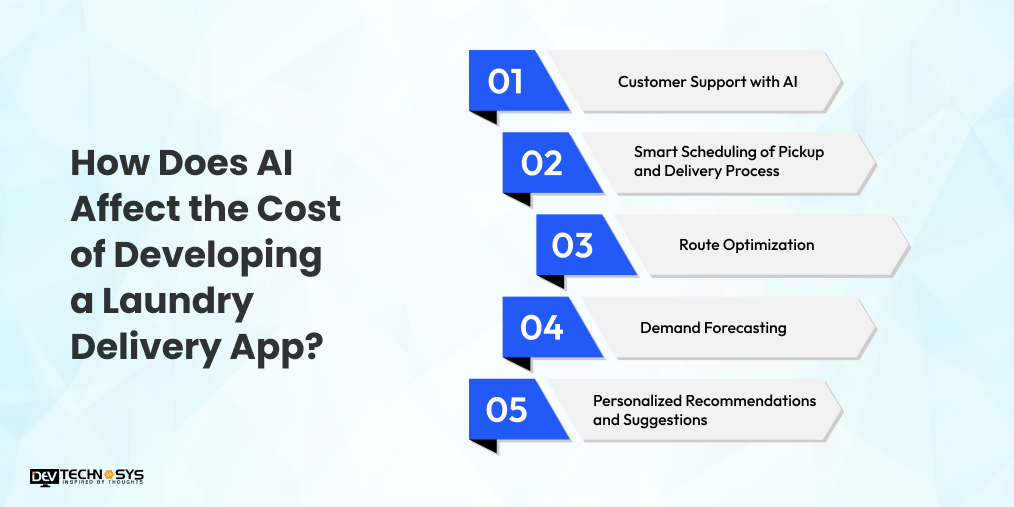
How Does AI Affect the Cost of Developing a Laundry App?
Although AI may raise the cost of development initially, it can also take care of repetitive tasks in addition to improving working efficiency.
1. Customer Support with AI
AI-powered chatbots are capable of answering frequently asked questions about pricing, pickup, delivery status, or services. Using an already existing AI service might be a more cost-efficient solution than developing a custom solution from scratch.
2. Smart Scheduling of Pickup and Delivery Process
AI-based scheduling can help with the assignment of orders based on delivery capabilities, location, and other priorities. To be implemented, this solution needs to be complemented with a higher level of data integration workflow, which makes it a more complex system.
3. Route Optimization
Optimizing the delivery route can help reduce unnecessary transport costs and make operations more efficient. For companies dealing with larger numbers of shipments, this feature will also bring more benefits as things grow.
4. Demand Forecasting
The ability to predict what will happen is possible due to the use of predictive analytics techniques. For instance, this allows them to predict the number of people needed for work and the delivery capacities.
5. Personalized Recommendations and Suggestions
The software generates recommendations for its users by analyzing their previous orders and customer behavior. In order to be able to provide great suggestions, it is very important to understand how it processes customer data.
Depending on implementation requirements, these features can increase the initial laundry app development charges, especially when custom models, large datasets, or additional cloud infrastructure are required.
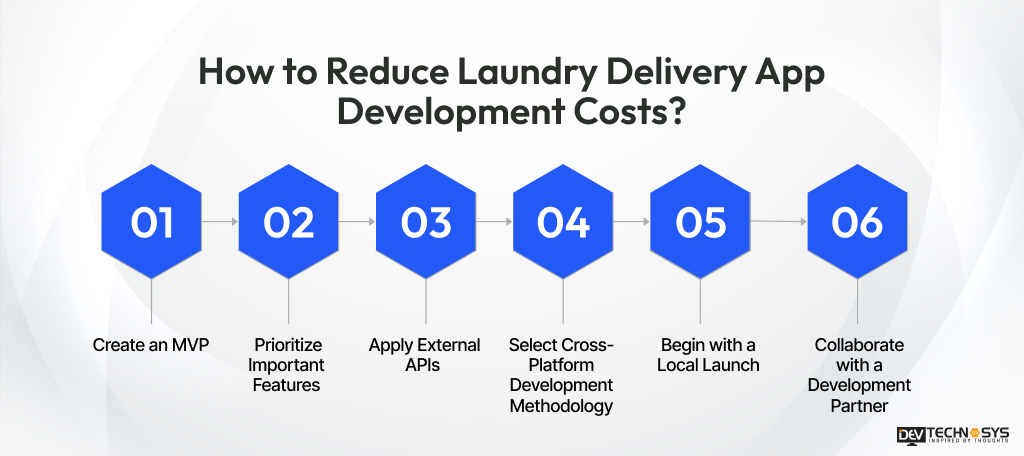
How to Reduce Laundry Delivery App Development Costs?
Creating a laundry application does not require you to include all the available functionalities at the start. Companies can cut their initial costs if they focus on the right business model and functionalities.
1. Create an MVP
Starting the process with a minimum viable product (MVP) can be a good way to cut costs on the development of the laundry software. Instead of creating a complete app with a full set of features, it is a better idea to start with the main functions, which will enable you to launch your service and test your business concept.
The MVP can contain options such as client registration, choosing laundry services, scheduling pickup and delivery, managing orders, making payments online, getting notifications, and using a simple admin panel.
2. Prioritize Important Features
While adding functions, do not add them just because the competition has these functions.
Make sure to consider the major problems your business wants to solve and add functionalities accordingly. If your startup is targeting local laundry pickup, you do not need complicated artificial intelligence systems, a multi-vendor marketplace, and big data analytics.
3. Apply External APIs
Creating various systems, including mapping functionalities and payment processing solutions, requires significant time and resources, making it essential to consider external APIs to streamline development and reduce costs.
4. Select Cross-Platform Development Methodology
Cross-platform tools enable developers to develop a laundry app like Cleanly that runs on both Android and iOS platforms, thus requiring the maintenance of just one codebase. This can save developers time, especially during the initial development stage and the maintenance of the MVP.
5. Begin with a Local Launch
Instead of designing an application that will serve all clients from the very beginning, stay focused on a particular geographic location.
A city-based introduction of a product will let you understand:
- The demand of customers.
- The cost and efficiency of deliveries and pick-ups.
- The pricing strategy.
- The overall quality of services delivered.
- The cost of delivery.
- The likelihood of clients choosing to place repeat orders.
Once the product proves successful, the company may expand its reach.
6. Collaborate with a Development Partner
An experienced development partner will help you avoid unnecessary expenses related to mistakes and redesigning during further development. This can make the laundry app development company cost more predictable over the complete project lifecycle.
Your partner should assist you in obtaining information on the definition of MVP, selecting the best technology stack, budgeting for future growth, and guaranteeing the quality of work delivered.
How to Monetize a laundry App?
There are multiple ways a laundry app can earn money depending on whether one operates one’s own laundry business, collaborates with others, or creates a marketplace. The monetization strategies are further described below and explained in action:
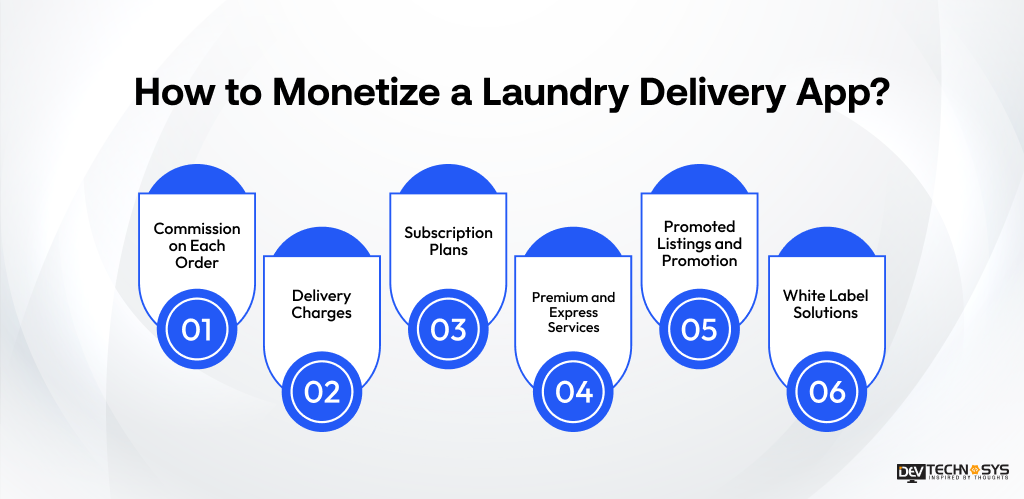
1. Commission on Each Order
In this model, the app works as a marketplace connecting customers to third-party laundries. The app earns a certain percentage commission for every order placed and completed through it.
This model is quite popular because it is scalable without the need to have any laundry facilities at hand. Your earnings will depend on the number of orders coming through your app, but also on the success of your partners.
2. Delivery Charges
Delivery charges are the fee charged to customers for taking their laundry to their homes. This is perhaps one of the simplest ways to earn. The model covers such expenses as drivers, fuel, routing, etc.
3. Subscription Plans
Subscription models offer a subscription laundry service for clients, which they can pay for weekly or monthly. This guarantees businesses a steady source of income.
Subscriptions work best for busy professionals, families, students, and individuals needing to use laundry services regularly. It also ensures client retention and prevents churn since users are on a subscription model.
4. Premium and Express Services
You can introduce premium services and charge clients a premium price for the service offered. This increases the average value of the order and serves customers who need urgent service or specialized care.
The service is highly profitable since it involves little cost in modifying your existing business plan.
5. Promoted Listings and Promotion
In a marketplace model, laundry service providers compete for prominence. This can be exploited by providing advertised placements on your app.
Moreover, you can let brands from outside (detergent manufacturers, fabric care product producers, or local firms) advertise in your app. This allows you to create an additional advertising income stream.
6. White Label Solutions
Once your platform has reached stability and credibility, you can offer it as a white label product to other companies. This means selling your technology to laundry service providers, franchises, or entrepreneurs interested in their own branded product.
This model is very scalable because you are no longer confined to end users only; you are also addressing other companies who wish to enter the laundry market quickly.
Build vs Buy vs Hire a Development Partner: Which Option is Best?
The development approach you choose affects the laundry business app development cost, timeline, customization options, and long-term scalability.
Factor |
Build In-House |
Buy Ready-Made Solution |
Hire a Development Partner |
| Initial Cost | High | Low-Medium | Medium-High |
| Development Time | 8-15 Months | 1-3 Months | 3-12 Months |
| Customization | Very High | Limited | High |
| Scalability | High | Moderate | High |
| Technology Ownership | Full | Vendor Dependent | Depends on Agreement |
| Integrations | Fully Custom | Limited | Fully Custom |
| Maintenance | In-House Team | Vendor | Development Partner |
| Best For | Large Companies | Small Businesses | Startups and Growing Businesses |
For most startups, it is recommended to hire dedicated developers because it can provide a balance between cost and customization.
Conclusion
The laundry app cost in 2026 is likely to fall in the range of $25,000 to $150,000+, contingent on factors such as chosen business model, technical complexity, required features, and scalability of the platform.
For startups, it is advisable to go with an MVP option rather than an extensive enterprise product from the very beginning. This allows them to test their product in the market and then expand based on actual data.
If you intend to design a customized, scalable laundry platform, make sure to get assistance from a reliable laundry app development company, like Dev Technosys. This helps determine an appropriate MVP and select the most suitable technology for your future project.
Frequently Asked Questions
Find answers to the most common questions related to this article.
Developing a laundry application will typically cost between $25,000 and $150,000 or more. The cost depends on many factors like the complexity of the application, features, panels, the functions of the marketplace, integrations, AI capabilities, and where the development team is located.
The simplest MVP will take about 2-4 months, while developing a regular application might take 4-6 months. Developing a complicated marketplace or an enterprise application that requires multiple pages, real-time tracking, and AI capabilities can take from 6 to 12 months and even longer.
Essential features consist of registration, service selection, scheduling for the pickup, order tracking, payment processing, notifications, delivery management, customer support, and an admin board. Marketplace applications may even need onboarding of the providers and commission and payout management.
Yes. The MVP inevitably proves beneficial for startups. You can start with the booking, payment, and order management features, thus checking the interest in your services in small markets.
AI can aid customer service departments, optimize routes, schedule jobs, forecast needs, and suggest tailored offers. Its worth will depend on the scale of the firm and data available.