


ERP Integration Services
We deliver full-service ERP integration solutions that connect an ERP platform with applications across an enterprise, cloud environments, and third-party systems. Our team specializes in all areas of API development, middleware implementation, ETL processing, EDI integration, microservices architecture, as well as real-time sync of data. We facilitate the secure interconnection of multiple systems by creating efficient workflows between enterprises.

-
16+
Years of Experience
-
93%
Happy Client
-
71+
Countries Served
-
200+
Experts
-
2300+
Project Delivery
-
79%
Retention Rate
Key Advantages of Enterprise ERP Integration Services
Business-critical applications can be connected using ERP software development services via secure, scalable, and intelligent integration frameworks. Organizations will have access to improved operational efficiency, improved data accuracy, improved decision-making timeframes, and will also have the ability to build a unified digital ecosystem.

Seamless Data Synchronization
By using enterprise-level ERP system integration services, companies create automated methods of syncing data in real-time across ERP systems, CRM solutions, financial applications, and other third-party software systems. Eliminating any potential for siloed data, ERP integration ensures consistent and current data throughout every business unit so that all departments work from the same set of firm facts when making decisions.

Optimized Business Process Automation
Integrating enterprise applications through ERP system integration services allows an organization to automate repetitive workflow processes, shorten the time it takes to complete cross-functional business processes, and eliminate any manual data entry methods. As a result, this not only increases overall operational efficiency but also speeds the ability to make business-related decisions, reduces errors in processing data, and frees employees.

Secure and Scalable Enterprise Connectivity
Organizations use custom ERP integration services to create secure methods for connecting applications to other applications either via API's, middleware, microservices, or cloud technologies. Therefore, businesses can easily add new applications as they grow without compromising the data security of their enterprise systems or interrupting current business operations.
Our Business-Centric ERP Integration Services
Our software development company provides specialized ERP integration solutions focused on helping your organization achieve more consistent integration of its enterprise applications by providing additional levels of consistency in your workflow processes through the ability to share data between systems in real-time. Our integration services will provide improved operational efficiency, better decision-making capabilities, and less complex integrations.

Our API integrations allow your organization to securely exchange information directly with any application. Whether it is your ERP, CRM, HRM, accounting solution, eCommerce site, or third-party system. The result is real-time data sharing, enhanced interoperability (i.e., one process works with another), reduced manual entry of data, and consistent information flow throughout your entire enterprise ecosystem.
Our cloud ERP integration services enable organizations to integrate their Cloud-based ERP platforms with all their SaaS business applications, enterprise systems, and other enterprise databases. We provide scalable integration architectures that create access to your critical business data, synchronize critical business processes, and enable safe, secure collaboration among distributed teams and in the Cloud.
By combining ERP middleware integration, APIs, and custom connectors, we modernize your existing IT infrastructure by integrating your legacy applications with new, modern ERP platforms. Hire dedicated developers to ensure uninterrupted data flow, the protection of your valuable business data, and minimal disruption to your operations. While increasing the life of your mission-critical enterprise systems.
With our EDI and B2B integration services, data can be exchanged seamlessly between your ERP, vendors, suppliers, distributors, freight companies, and others. By automating these processes, you will improve procurement, inventory control, order fulfillment, invoicing, and supply chain operations while decreasing transaction times and increasing accuracy.
Our ERP data migration and real-time synchronization services will provide secure migration and maintain business-critical data across multiple applications. With our integration strategies, you can achieve consistency, eliminate duplicate records, lower migration risk, as well as maintain business continuity during your digital transformation initiatives.
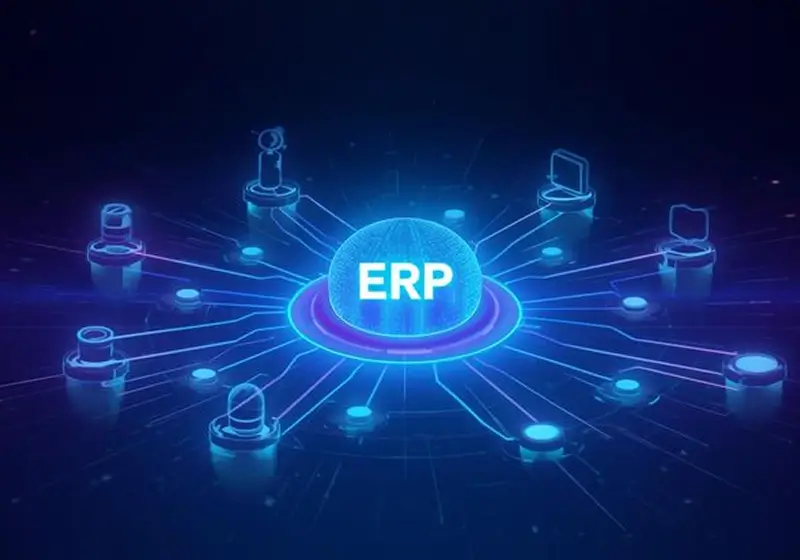
No two companies are alike, so neither are their integration needs. Our custom ERP integration solution offers a tailored architecture, middleware implementation, and workflow automation. Hire software developers to align with your current business processes, enhance connectivity among system components, improve overall business performance, and leave you room to grow with future business opportunities.
Connect All Business Applications with Powerful ERP Integration Solutions Now!

Our Industry-Oriented ERP Integration Services for Enterprise Connectivity
Our services cater to ERP integrations, customizable to connect enterprise applications across manufacturing, retail, healthcare, finance, and logistics. The seamless flow of data, real-time synchronization of the systems, operational visibility, secure, API-based connectivity, and scalable architecture are factors responsible for deploying such an integrated corporate environment. This advances business efficiency with the potential to drive overall digital transformation in varied industries.
Manufacturing Industries
We connect your manufacturing ERP systems to production, inventory, and supply chain applications to improve visibility, automate workflows, reduce downtime, and improve the overall efficiency of your operations.
Retail Industries
With our retail integration services, we will connect your POS system to your eCommerce site, your inventory system, and your CRM system to provide real-time stock updates, streamline order processing, and improve customer experience.

Healthcare Industries
We will connect your healthcare ERP platform to EHRs, billing systems, and lab systems to ensure that your data is secure when exchanged, improve patient management, and improve the overall efficiency of hospital operations.

Finance Industries
Our finance integration services will connect your accounting, banking, and reporting systems to provide accurate tracking of financial transactions, automated reconciliation, and greater compliance with regulatory requirements.

Logistics Industries
By integrating ERP systems with transportation, warehouse, and logistics systems, we will provide you with real-time tracking capabilities, optimize the supply chain, and improve delivery time.

Education Industries
We can connect your ERP system to your learning management system, admissions system, and administration system for a seamless flow of data, improved operations within academic settings, and improved management of students.

E-Commerce Industries
We integrate ERP systems with stores, marketplaces, and payment gateways to allow for automated order processing, updates to inventory, and synchronization of customer data.
Real Estate Industries
Our real estate ERP integrations connect property management, customer relations, and finance software together to facilitate operational efficiency and provide better tracking of transactions while improving client interaction processes.

Energy & Utilities Industries
We offer integration of ERP systems with an energy and utility system to allow for real-time visibility into operations; thus, aiding in managing the assets and optimally allocating resources through the real-time view of asset status reporting.

Why Are We a Trusted ERP Integration Services Provider?
Expertise in Integrating Systems
Using APIs, Middleware, and Cloud-based solutions to connect multiple systems together. This allows for a seamless flow of information between systems.
Synchronizing Data Instantly
With these ERP integration consulting services, your applications can communicate in real-time with each other. This allows you to have accurate information on hand when making business decisions faster.
Designing Scalable Integration Architecture
We build integration frameworks that will scale as your business grows, adding new applications and changing requirements.
Connecting Systems Securely
Our integrations are built using stringent security practices to ensure the secure exchange of data, compliance with regulations, and protection against unauthorized access or data breaches.
Custom Integration Solutions
We can develop custom ERP integration solutions that match your company's unique workflows, allowing systems from different vendors to work together seamlessly.
Increasing Operational Efficiency
Automating enterprise processes improves productivity across functional business areas by reducing manual work and human errors.
Technical Support
Our team of integration specialists provides ongoing monitoring, maintenance, and support for any issues preventing your integrated ERP systems from functioning as intended.
Tools and Technologies Used in ERP Integration Services
We utilize a combination of advanced tools and technologies, such as middleware platforms, ETL pipelines, microservices architecture, and cloud integration solutions that allow seamless connectivity between ERP systems. Our technology platform provides secure data exchange, real-time synchronization, system interoperability, scalability, and efficient integration of multiple complex enterprise applications and digital ecosystems.
-

REST APIs -

SOAP APIs -

GraphQL -

Webhooks -

OData -

gRPC
-

MuleSoft Anypoint Platform -

Dell Boomi -

Apache Camel -

IBM App Connect -

Microsoft BizTalk Server -

TIBCO Cloud Integration
-

Amazon Web Services (AWS) -

Microsoft Azure -

Google Cloud Platform (GCP) -

Oracle Cloud Infrastructure (OCI) -

IBM Cloud -

Salesforce Platform
-

Informatica PowerCenter -

Talend -

Apache NiFi -

Azure Data Factory -

AWS Glue -

Pentaho Data Integration
-

MySQL -

PostgreSQL -

Microsoft SQL Server -

Oracle Database -

MongoDB -

MariaDB
-

Java -

Python -

C# -

JavaScript -

Node.js -

Go

Tap into a USD 15.24 Billion ERP Integration Growth Opportunity with Expert Consulting Services!
Our Simple ERP Integration Services Process
Our ERP integration company utilizes an organized ERP integration strategy comprising the following activities: requirements gathering, system design, ERP integration development, testing, deployment, and ongoing maintenance. By developing a systematic ERP configuration process, we can provide our customers with seamless integration between their enterprise applications and secure communication of sensitive data with minimal disruption to current day-to-day business operations.
-
Analysis of Requirements
Businesses have needs that must be analyzed, in addition to evaluating current systems and defining how they will be integrated. Our ERP consulting services will create a plan for a clear ERP integration effort.
-
Planning of the System
Structured architectures are developed for the integration process with clear guidance as to which APIs, middleware, and tools to use for integration with ERP systems.
-
Development
Integration workflows will be developed and configured so that businesses can exchange data between their ERP systems and enterprise applications securely and efficiently.
-
Validation and Testing
All integrations will undergo extensive testing to verify that they can provide accurate data, are dependable, and perform reliably when integrated with external ERP systems.
-
Implementation and Deployment
Integrations will be deployed in a live environment to minimize business disruption during the transition from one system to another.
-
Ongoing Monitoring and Support
ERP Systems will be supported with continuous assessment of system performance, ongoing support, and updated hardware and software to meet business needs over time.

Dev Technosys Featured as a Best ERP Integration Services Provider By The PC Tech Magazine
Dev Technosys, a premier provider of ERP and CRM integration services as rated by the PC Tech Magazine, has established itself as an industry leader because of its proven ability to deliver reliable, effective, and efficient solutions to meet the demands of both its customers and their users. This recognition is based on Dev Technosys’s commitment to providing seamless connections between ERPs and other software applications using API-based architecture, middleware, and cloud integration solutions. By focusing on real-time data synchronization, process ERP automation services, and digital transformation. Dev Technosys continues to help businesses around the world with dependable ERP integration web services that increase operational efficiency and improve interoperability within their systems, leading to greater productivity across diverse industries.
Frequently Asked Questions
What are ERP Integration Services?
ERP Integration Services are services that connect ERP Systems with other business applications such as CRM, HRM, and Finance Tools. By connecting these systems, you can create a seamless flow of data between all of your business applications and automate your daily operations. Because of Oracle ERP Integration Services, you can eliminate manual data entry, improve your decision-making processes, and have real-time visibility into your entire organization.
Which Systems Can Be Integrated With ERP?
You would integrate with multiple sets of applications using your ERP system, including a CRM system, HRM system, e-commerce systems, accounting software, supply chain applications, payment gateways, and third-party API’s to accomplish a unified flow of data between all of your business functions.
What Technologies Are Used in ERP Integration?
Typical technologies for ERP integrations include REST APIs, SOAP APIs, middleware Platforms, Microservices Architecture, ETL Pipelines, and Cloud Integration Tools. These technologies ensure that there is a secure, scalable, and efficient connection between your ERP and other enterprise applications.
What Industries Use ERP Integration Services?
There are many industries that utilize third-party ERP integration services, including Manufacturing, Healthcare, Retail, Finance, Logistics, Education, and eCommerce; the primary reason for doing so is to streamline operations as well as provide departments with the ability to make informed decisions based on the data provided by the ERP.
Can ERP Integrate with Cloud Applications?
Yes, you can integrate your ERP System with cloud applications using either an API or a cloud connector. When you do this, you will have real-time synchronization, you will be able to access your application remotely, and you will have the capability to scale your application easily. You will have improved collaboration with groups that are not located in the same physical location.
Do ERP Integration Services Support Customization?
ERP integration services have a high degree of customization available to them. Integration services can be customized to meet the unique needs of a business, their workflows, and industry standards so that you can receive the most effective integration for your system and the applications connected to it.
How To Choose An ERP Integration Services Provider?
Choose a provider based on their experience with ERP integration, technical knowledge of the field, security standards, integration capabilities, and knowledge of the specific industry. A trustworthy provider will provide a scalable, secure, and efficient way to implement ERP integration that is in alignment with your organization's goals.
How Does ERP Integration Improve Productivity?
By automating repetitive processes, simplifying manual data entry, and allowing for real-time interoperability among all your business systems, ERP software integration increases the efficiency of your company. Integrating ERP systems simplifies the way you work; it helps eliminate errors; it makes it easier to work collaboratively between departments; and it helps provide the data needed to make quicker decisions.
Is ERP Integration Suitable For Small Businesses?
Yes, ERP data integration will provide small businesses with many benefits, such as automating workflows; lowering their operating costs; increasing the accuracy of their data; and providing them with the ability to manage their resources effectively. ERP integration will enable small businesses to grow more efficiently and compete with larger businesses.
What Challenges Occur In ERP Integration?
Common issues that arise with implementing ERP systems include: Data that is not consistent, Legacy systems that are not compatible, IT security issues, the complexity of the integration, and the possibility of experiencing downtime. However, proper development and implementation of your ERP application integration will help to minimize these types of issues.
How Do I Know If My Business Needs ERP Integration?
If you have multiple systems and your teams operate independently, then ERP is something that can help reduce the redundancy of data in your organization. Manual data entry by allowing you access to all your data at once instead of relying on separate sources.
Is ERP Integration Secure For Sensitive Business Data?
Encryption, authentication protocols (like SSL, HTML5), and secure APIs allow for strong security for ERP integrations. Professional integration companies should also be in compliance with applicable regulations as well as implement the use of role-based access to secure sensitive business information (financial, operational, and customer).
How Long Does An ERP Integration Project Take?
There are several variables in determining the length of the integration project, including system complexity, number of applications used, degree of customization required, and the amount of data being transferred. For example, some simple integrations can be completed within a few weeks. Meanwhile, an extremely large enterprise-sized system could take multiple months to be completed due to all the phases involved: planning, development, testing, implementation, and optimization.
How Much Do ERP Integration Services Cost?
The cost is determined by the specifications of the project, the number of systems used, the degree of customization, and the technology stack that has been deployed. The cost for a small integration is less, but enterprise integration takes more resources due to complications such as architecture, security, and scalability issues.
What Is The Difference Between ERP Implementation And Integration?
The process of implementing ERP includes setting up an ERP system, configuring it as per business operations, and launching the ERP system within a business to assist in managing the various core processes of the business. ERP integration works to connect different applications with the ERP system in use. This integration makes use of the existing ERP infrastructure to allow for the exchange of data between different applications.