














Key takeaways:
-
- Healthcare is a widened landscape that includes both medical science and technology. It helps in delivering the fastest and most efficient health care to patients.
- The modern-day health care systems provide telemedicine, EHR (Electronic Health Records), and an electronic prescription system.
- The medical terms that we will study now will help patients and professionals communicate effectively.
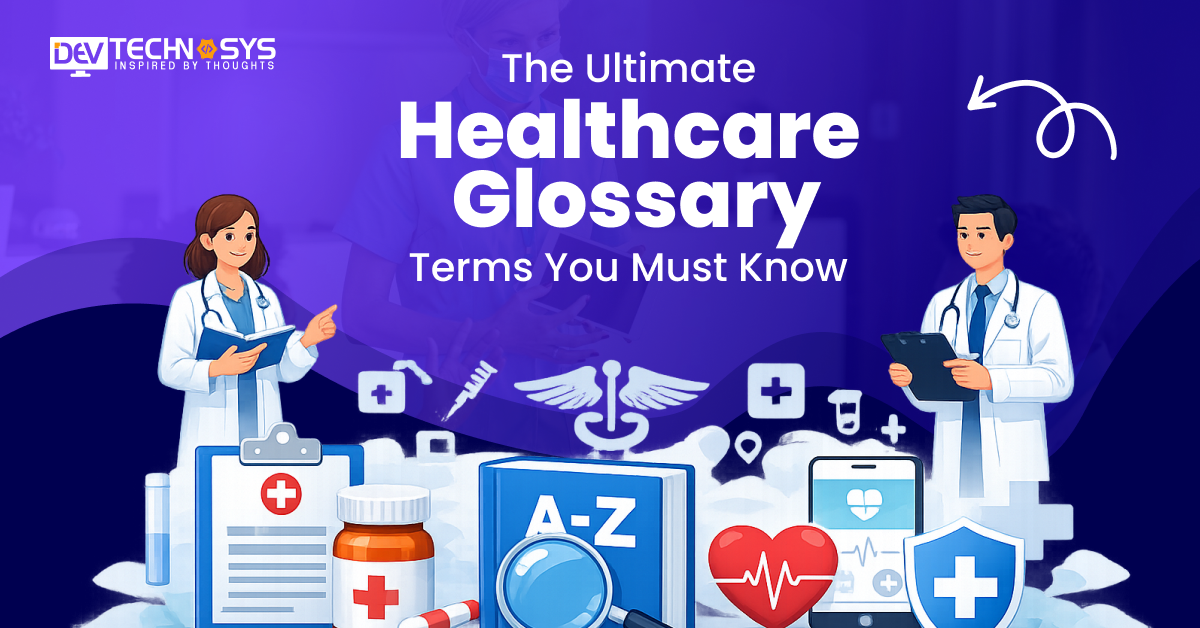
The healthcare ecosystem is growing quickly because of modern medicine and technology. It makes things easier while reducing paperwork, long wait times, and manual efforts. It improves how people access diagnosis, treatment, and other protective services.
These innovations come with some complex medical terms. These can be challenging to understand when spoken by a physician. It usually appears as if they speak a language foreign to you. So, no need to worry, as we have made this healthcare glossary for your convenience.
This medical terminology guide contains commonly used terms, providing patients and caregivers with ease in learning them. It helps in maintaining a level of confidence while communicating with physicians. Without wasting time, let us move towards this A to Z medical terminology list.
Essential Healthcare Terminology Everyone Should Know
1. Core Digital Health Terms
1. What is Digital Health?
Digital health is the deployment of technology, data, and digital tools (like applications, wearables, and platforms) for improving healthcare. It enhances health outcomes and enables more efficient management of our overall health.
2. What is HealthTech?
HealthTech is the term used for innovation, such as technology, software, and devices. These are used to improve healthcare systems, streamline operations, and enhance diagnostics. It provides better treatment options for patients and healthcare providers.
3. What is eHealth?
eHealth means using electronic communications and information technologies for digital records, online platforms together. It operates the delivery of healthcare services, management of data, and provides better care to patients from a distance.
4. What is mHealth (Mobile Health)?
mHealth refers to the delivery of healthcare services and information through devices, like smartphones and tablets. It enables patients to monitor their health, access medical advice, and manage their health easily, anytime, anywhere.
5. What is Telehealth?
Telehealth means the delivery of healthcare services, education, and information digitally. This telehealth app development enables patients to connect with healthcare providers remotely. It is ideal for real-time consultations, health monitoring, and ongoing health-related support.
6. What is Telemedicine?
Telemedicine is specifically focused on providing remote clinical care to patients through video conferencing or messaging. It can easily connect the patient with the doctor and any other relevant parties, like office staff, family, etc.
7. What is Digital Therapeutics (DTx)?
Digital therapeutics are evidence-based software programs designed to prevent, manage, or treat medical conditions. It delivers therapeutic interventions directly to patients through digital platforms like apps or devices.
2. Healthcare Software Systems
1. What is an Electronic Health Record (EHR)?
An electronic health record (EHR) is a digital version of a patient’s health information. It is intended to be shared with many different providers. The EHR contains a patient’s medical history, current diagnosis, medications, and treatment plans.
2. What is an Electronic Medical Record (EMR)?
An electronic medical record (EMR) is a digital version of a patient’s health record that will be maintained in a single provider’s office. The EMR contains information like patient medical history, current diagnosis, and treatment history.
3. What is a Hospital Management System (HMS)?
A hospital management system (HMS) is a software program that is designed to manage the operational functions of a hospital. It includes managing patient records, billing, appointment scheduling, staffing, inventory, and administration.
4. What is a Practice Management System (PMS)?
A practice management system (PMS) is a system that is used by clinics to manage administrative functions. This healthcare glossary term manages functions like appointment scheduling, billing, patient registration, and insurance processing.
5. What is the Laboratory Information System (LIS)?
A laboratory information system (LIS) is a software program that manages the processes associated with the laboratory’s work. An LIS will manage the workflow associated with test orders, collect and track samples, process results, and facilitate reporting.
6. What is a Radiology Information System (RIS)?
A radiology information system (RIS) is used to manage the workflow of the radiology department. An RIS manages image tests ordering for patients, scheduling the order, completing the order, and then providing the results.
7. What is a Pharmacy Management System?
A Pharmacy Management System is a software program that is used to manage a pharmacy’s inventory. It also handles the processing of prescriptions, stock management, and ensures efficient medicine distribution.
3. Interoperability & Data Standards
1. What is Interoperability?
The ability of multiple healthcare systems to share and exchange patients’ data is known as interoperability. Its main purpose is to guarantee a seamless and accurate information flow between healthcare providers.
2. What is HL7?
HL7 stands for Health Level Seven, which is a combination of international healthcare standards. It is highly preferred to exchange medical information of patients between healthcare systems. This helps in communicating patients’ data in a structured manner.
3. What is FHIR?
FHIR (Fast Healthcare Interoperability Resources) is the latest healthcare data standard. It is a fast and easy way to exchange electronic health information. For real-time data access and enhanced system integration, FHIR uses web-based technologies.
4. What is DICOM?
DICOM (Digital Imaging and Communications in Medicine) is a standard that is widely used. It stores, shares, and transmits medical images like X-rays, MRIs, and CT scans. DICOM guarantees the compatibility between healthcare systems and imaging devices.
5. What is SNOMED CT?
SNOMED CT (Systematized Nomenclature of Medicine Clinical Terms) is among the comprehensive healthcare abbreviations that standardize medical terms. It helps medical practitioners record and share patient details accurately in multiple systems and regions.
6. What is the ICD Coding System?
The ICD (International Classification of Diseases) is one of the clinical definitions for a coding system. This system is used throughout the world to classify code diseases, conditions, and causes of death.
7. What are CPT Codes?
CPT (Current Procedural Terminology) codes are integrated to explain medical, surgical, and diagnostic services. They are primarily beneficial for billing and other documentation. CPT codes help doctors communicate the procedure with clarity to insurers.
4. Healthcare Integration & APIs
1. What are Healthcare APIs?
Healthcare APIs are the mechanism that enables different healthcare systems to communicate and share data securely. This healthcare glossary term eliminates the difficulties in smoothing the communication between apps, hospitals, labs, and devices.
2. What is API Integration?
API integration is a common term in the healthcare dictionary. It is a process to connect different software systems with APIs to interchange data automatically. In the healthcare industry, API integration streamlines workflow by reducing manual work.
3. What is Open API in Healthcare?
The interface through which developers build apps and connect them with healthcare systems is known as Open API. Due to this, interoperability increases and allows third-party apps to access medical data securely.
4. What is EHR Integration?
EHR integration is used to bridge electronic health record systems with other healthcare apps. It lets healthcare providers seamlessly share patients’ data like medical history or prescriptions. This helps providers offer fast, accurate, and coordinated care.
5. What is Insurance API Integration?
Insurance API integration helps healthcare systems to get connected with insurance providers. It can automate claims processing, eligibility checks, and policy verification. Due to the insurance API integration, paperwork gets reduced, and the approval rate increases.
6. What is Payment Gateway Integration?
Payment gateway integration in healthcare systems is used for securing online transactions. With this, patients can easily make payments digitally using cards, wallets, or net banking. It guarantees fast, safe, and convenient payment processing.
7. What is Microservices Architecture?
A software design approach where apps for small or independent services are built is known as microservices architecture. This architecture in healthcare enhances scalability, flexibility, and system performance. It also includes easy updates and better integration.
Want a chatbot demo or pricing? Fill the form and talk to our experts today.
Pick what you need below — you can select more than one — then tap Get detail to continue.
-
Chatbot demo dashboard
-
Cost to develop an app
-
Industry report
-
Case study
5. AI & Advanced Technologies in Healthcare
1. What is Artificial Intelligence (AI) in Healthcare?
Artificial Intelligence (AI) in the healthcare industry is an advanced healthcare definition that integrates smart algorithms. These algorithms help in analyzing data, assisting in diagnosis, and automating processes. It is used in upgrading decision-making and patient care.
2. What is Machine Learning (ML) in Healthcare?
Machine Learning (ML) in healthcare lets the system learn from medical data and enhance predictions. This diagnosis terminology helps in detecting diseases and offers personalized treatments. Nowadays, ML is the most essential part of healthcare app development.
3. What is Natural Language Processing (NLP) in Healthcare?
Another name in medical vocabulary is Natural Language Processing. It is prominently used to help computers understand medical texts and speeches easily. This improves healthcare communication by making patients’ data easy to analyze and manage.
4. What is Computer Vision in Healthcare?
Computer Vision is included in the modern treatment-related terms that let machines analyze medical images. This helps in providing users with an accurate diagnosis by detecting abnormalities properly. It is an essential healthcare solution for app development.
5. What is Predictive Analytics in Healthcare?
In the healthcare sector, predictive analytics is used to provide health-related risks and outcomes using patients’ histories. This is really beneficial for doctors to detect diseases early to improve diagnosis with optimized treatment and better decision-making.
6. What is Prescriptive Analytics in Healthcare?
According to the data insights, Prescriptive Analytics offers suggestions for the course of action. This can help healthcare providers to pick the best and most effective treatments. It also enhances patient outcomes and supports the healthcare system.
7. What is Robotic Process Automation (RPA) Healthcare?
Robotic Process Automation (RPA) is the healthcare professionals’ terminology that uses software bots. These bots help in automating repetitive or regular tasks such as billing and data entry. It improves efficiency, reduces errors, and streamlines workflow.
6. Patient-Facing Technologies
1. What is a Patient Portal?
In the list of medical terms in healthcare, the patient portal is a secure digital platform. Here, patients can easily access medical records, test results, and prescriptions. It increases user engagement as it simplifies knowing health conditions.
2. What is an Appointment Booking System?
With an appointment booking system, patients can easily schedule a doctor visit online. Through this, people can even reschedule and cancel their appointments as per their convenience. It removes waiting time while improving efficiency and better understanding.
3. What is ePrescription (eRx)?
ePrescription (eRX) is one of the healthcare system terms that allows doctors to send prescriptions to pharmacies directly. These patient care terms lessen the chances of errors and improve safety. This even helps patients to access medication without unnecessary delays.
4. What are Symptom Checker Apps?
A symptom checker app lets users add symptoms they are having to identify a possible health condition. It is helpful for guidance in early treatment decision-making. This basic medical terminology improves awareness of symptoms and conditions among patients.
5. What are Healthcare Chatbots?
AI-powered tools that answer simple queries of patients are healthcare chatbots. These bots can also help in booking appointments and provide health-related information. For better patient understanding, these bots can simplify health conditions vocabulary.
6. What are Virtual Assistants?
Virtual Assistants in healthcare are AI-driven tools that help patients manage tasks. These tasks include reminders, medication tracking, and health queries. With improved accessibility, the assistants also make nursing terminology basics easier to understand.
7. What are Patient Engagement Platforms?
A healthcare app development company usually focuses on building patient engagement platforms. These are the digital solutions that keep the patients involved in their healthcare journey. It improves communication, education, and outcomes by offering access to a medical glossary.
7. Healthcare CRM & Marketing Tech
1. What is Healthcare CRM?
Healthcare CRM stands for healthcare Customer Relationship Management. It is a system that streamlines patient interaction, communication, and data. It improves providers’ relationships by streamlining services and delivering personalized care.
2. What is Patient Relationship Management (PRM)?
Patient Relationship Management focuses on managing and improving interactions between healthcare providers and patients. It enhances engagement, builds trust, and ensures better communication. It leads to satisfaction, loyalty, and long-term patient care outcomes.
3. What is Marketing Automation for Healthcare?
Marketing automation in healthcare uses software to automate campaigns, patient outreach, and communication. This healthcare glossary term helps caregivers send personalized messages, reminders, and updates. This enhances engagement while saving time and increasing efficiency.
4. What is a Customer Data Platform (CDP)?
A Customer Data Platform collects and organizes patient data from multiple sources into a single system. It helps healthcare providers understand patient behavior and personalize services. It helps them make data-driven decisions for better engagement and care delivery.
5. What are Omnichannel Communication Systems?
Omnichannel communication systems allow practitioners to interact with patients across multiple channels like email, SMS, and calls. They ensure consistent messaging, improve accessibility, and create a seamless communication experience.
6. What are Reputation Management Systems?
Reputation management systems help healthcare providers monitor, manage, and improve their online presence. They track reviews, gather patient feedback, and enhance brand image. It helps build trust and credibility in a competitive healthcare market.
7. What are Patient Retention Tools?
Patient retention tools are solutions designed to keep patients engaged with a healthcare provider. They include reminders, follow-ups, and personalized communication strategies that improve satisfaction. It encourages repeat visits and builds long-term patient relationships.

8. Pharmacy & ePharmacy Systems
1. What are ePharmacy Platforms?
Another popular term in the healthcare glossary is ePharmacy platforms. It is an online system that allows users to order medicines, upload prescriptions, and receive doorstep delivery. They improve accessibility, ensure convenience, and support digital healthcare services.
2. What is the Pharmacy Information System (PIS)?
A Pharmacy Information System is software used to manage pharmacy operations. It manages operations like inventory, prescriptions, billing, and patient records. It improves accuracy, reduces errors, and ensures smooth workflow.
3. What are ePrescription Workflow Systems?
ePrescription workflow systems manage the complete digital prescription process, from doctor entry to pharmacy fulfillment. They reduce manual errors, improve efficiency, and ensure faster, secure communication between healthcare providers and pharmacies.
4. What is Medication Therapy Management (MTM)?
Medication Therapy Management is a service that helps patients manage medications effectively. It includes reviewing prescriptions, preventing drug interactions, and improving treatment outcomes. It ensures safe, appropriate, and optimized medication use.
5. What are Pharmacy Automation Systems?
Pharmacy automation systems use technology to handle repetitive tasks like dispensing, packaging, and inventory tracking. This term in the medical abbreviations list reduces human errors, increases efficiency, and improves accuracy.
6. What are Dispensing Systems?
Dispensing Systems, included in the list of pharmacology terms, are automated or manual tools. These are used to prepare and distribute medications to patients. They make sure the dosage is correct while considering safety and streamlining the medicine delivery process.
7. What are Pharmacy POS Systems?
Pharmacy POS (Point of Sale) systems are used to manage billing, sales, and transactions in pharmacies. They help track inventory, process payments, and maintain records, ensuring efficient and organized pharmacy operations.
9. Healthcare Financial & Billing Systems
1. What is Medical Billing Software?
Medical billing software is used to generate, manage, and track patient bills and invoices. It ensures accurate charge capture, speeds up reimbursements, and reduces errors. This streamlines financial operations within healthcare organizations and clinics.
2. What is Medical Coding Software?
Medical coding software helps transform healthcare services, diagnoses, and procedures into standardized codes. It improves accuracy, supports compliance, simplifies documentation, and ensures smooth billing and insurance claim processing.
3. What is a Claims Management System?
A claims management system is used to handle the entire lifecycle of insurance claims, from submission to settlement. It improves efficiency, reduces errors, and ensures faster processing and reimbursement for healthcare providers.
4. What is the Denial Management System?
A denial management system helps identify, track, and resolve rejected insurance claims in a proper manner. It analyzes denial reasons, improves claim accuracy, and increases revenue by reducing losses and ensuring successful resubmission.
5. What is the Eligibility Verification System?
An eligibility verification system checks a patient’s insurance coverage and benefits before treatment. It helps avoid claim rejections and improves transparency. It also ensures that healthcare providers and patients understand coverage details in advance.
6. What is the Payment Posting System?
A payment posting system records and reconciles payments received from patients and insurers. It guarantees accurate financial tracking and identifies discrepancies. It even helps healthcare providers maintain organized and up-to-date billing records.
7. What is Insurance Claims Processing?
Insurance claims processing is the procedure of reviewing, validating, and approving healthcare claims submitted to insurers. It ensures correct payments, minimizes delays, and helps maintain a smooth financial workflow between providers and insurance companies.
10. Emerging HealthTech Innovations
1. What is Blockchain in Healthcare?
Blockchain in healthcare is a secure, decentralized technology used to store and share medical data. It ensures transparency, prevents data tampering, and improves trust in managing patient records, transactions, and healthcare information systems.
2. What are Digital Twins?
Digital twins are virtual replicas of patients, organs, or healthcare systems created using real-time data. It helps simulate treatments, predict outcomes, and improve decision-making. This allows doctors to test scenarios before actual implementation.
3. What is Metaverse in Healthcare?
The metaverse in healthcare is a virtual environment where patients and doctors interact using digital avatars. It supports remote consultations, training, and therapy, creating immersive and interactive healthcare experiences beyond physical boundaries.
4. What is AR/VR in Healthcare?
Augmented Reality (AR) and Virtual Reality (VR) in healthcare are technologies used for training, diagnosis, and treatment. They provide immersive simulations for surgeries, patient education, and therapy. This can seamlessly improve accuracy and learning experiences.
5. What is 3D Printing?
3D printing in healthcare creates physical models like prosthetics, implants, and organs using digital designs. It enables personalized treatment, reduces costs, and improves surgical planning. It even produces accurate, patient-specific medical solutions.
6. What are Genomics Platforms?
Genomics platforms are systems used to analyze and interpret genetic data. They help in understanding diseases, personalizing treatments, and advancing precision medicine. It is widely used for studying DNA and its impact on individual health outcomes.
7. What is Health Data Tokenization?
Health data tokenization is the process of replacing sensitive patient information with secure tokens. It protects privacy, reduces data breach risks, and allows safe sharing of healthcare data. The data is shared across systems without showing actual personal details.
Final Words
In 2026, understanding healthcare terminologies is essential for the evolving digital healthcare landscape. That’s why this healthcare glossary is made for you to know each complex term clearly. This will help you communicate with the healthcare providers, systems, and technologies.
Are you someone exploring medical terms, learning new terms, or increasing your knowledge in healthcare? This healthcare or disease-related terminology list is definitely for you. It will guide you to have clearer communication and make better decisions.
With the advancing healthcare industry, every mobile app development company builds smart solutions.
Frequently Asked Questions
Find answers to the most common questions related to this article.
The collection of medical and health-related terms, explained with clear and exact definitions, is known as a healthcare glossary. These terms are generally used in healthcare systems during treatment, but can be difficult to understand. Therefore, a glossary helps patients, students, or professionals know these complex terminologies.
Medical terminology is important to make sure people can easily and accurately communicate with healthcare professionals. When someone knows these terms, they can reduce confusion, improve safety, and support proper treatment. With this, people can better understand health conditions and medical instructions.
To learn these medical terms, you need to understand their meanings first. Then, by breaking these words into roots, prefixes, and suffixes. You can also take advantage of flashcards, visual aids, and repetition. You should practice these words regularly and relate them to real-life examples.
Some of the common medical and healthcare terms that everyone should know include:
Diagnosis
Prognosis
Symptoms
Treatment
Prescription
Chronic
Acute
Vital signs
Infection
Immunity
These basic terms are commonly found and used in healthcare conversations and medical documentation.
Generally, you should know basic but important terms such as:
Anatomy
Physiology
Pathology
Symptoms
Diagnosis
Therapy
Infection
Inflammation
Medication
These terminologies help you to understand doctor consultations, prescriptions, and general health information.
Healthcare terminology is a simple system of words that works to describe medical conditions or treatment. It is usually used by doctors to communicate with patients clearly. These terms make it seamless for patients to understand their health, body, and care efficiently.
Healthcare terminology is a combination of medical and healthcare terms. But these terms are used for different purposes. Medical terms are used for clinical aspects such as diseases, anatomy, and treatments. Whereas healthcare terms are vast and used for systems, services, policies, and patient care.