














Key takeaways:
-
- With the right strategy and development approach, your telemedicine app can become a reliable solution that improves healthcare accessibility.
- To make an app like Teladoc on a limited budget, prioritization is key. Start with essential features and avoid building too many advanced features.
- To ensure your telehealth app, like Teladoc, remains profitable and sustainable, implementing an effective revenue model is crucial.
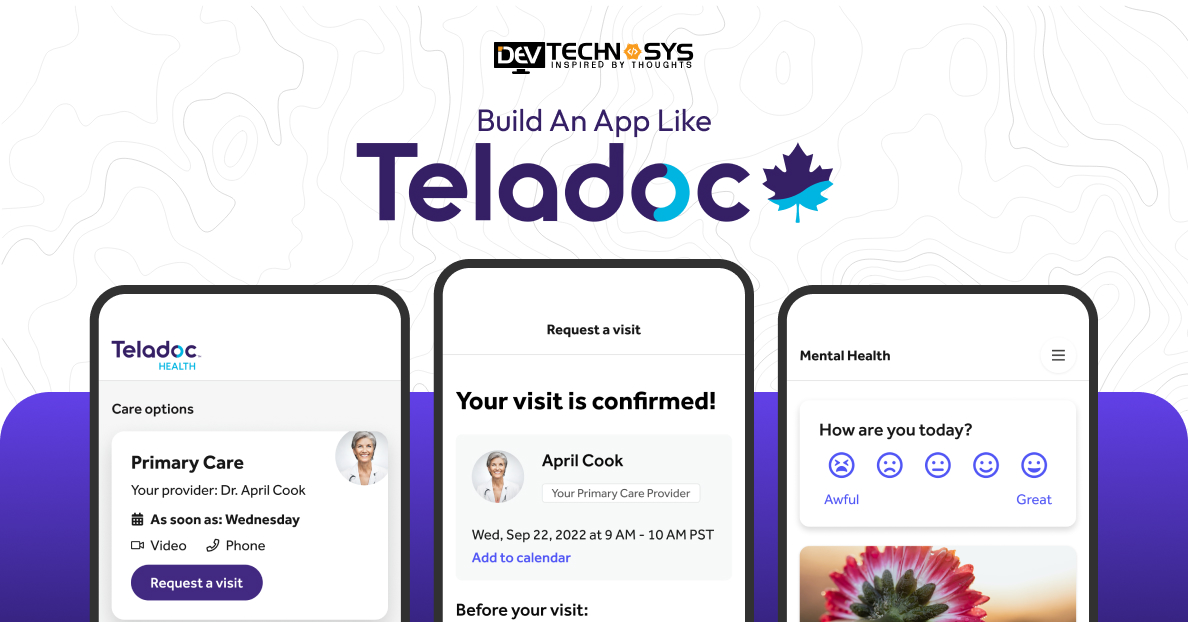
No more rushing to hospitals for emergencies or waiting in long queues for appointments. Telemedicine apps like Teladoc have revolutionized the healthcare industry. Just imagine scheduling appointments with doctors and receiving treatment through an app.
Telehealth applications make medical consultations and treatments more accessible and convenient. In a recent NCDS report, 80% of physicians surveyed believed that telehealth has improved patients’ access to care since its adoption.
If you’re a healthcare startup or a medical professional aiming to build an app like Teladoc, this development guide is for you. We’ll cover everything you need to know, from essential features and development steps to monetization strategies and cost estimation.
What is the Teladoc App?
Before diving into the Teladoc app development process, it is important to understand what Teladoc actually is. Teladoc is a popular telemedicine platform that connects patients with doctors through remote consultations.
It offers medical consultations across general health, mental health, dermatology, and chronic condition management. As the ultimate pioneer, Teladoc is regarded as the benchmark for the telemedicine industry, pushing the boundaries of digital healthcare solutions.
Key Features That Make Teladoc Tick:
- Prescription Handling
- Searchable Doctor Directory
- Appointment Booking
- Video Consultations
- Secure Payment Integration
How Does A Telemedicine App Like Teladoc Work?
Telemedicine apps have streamlined medical services with cutting-edge technology. Understanding how they work is crucial to develop an app like Teladoc that enhances healthcare delivery.
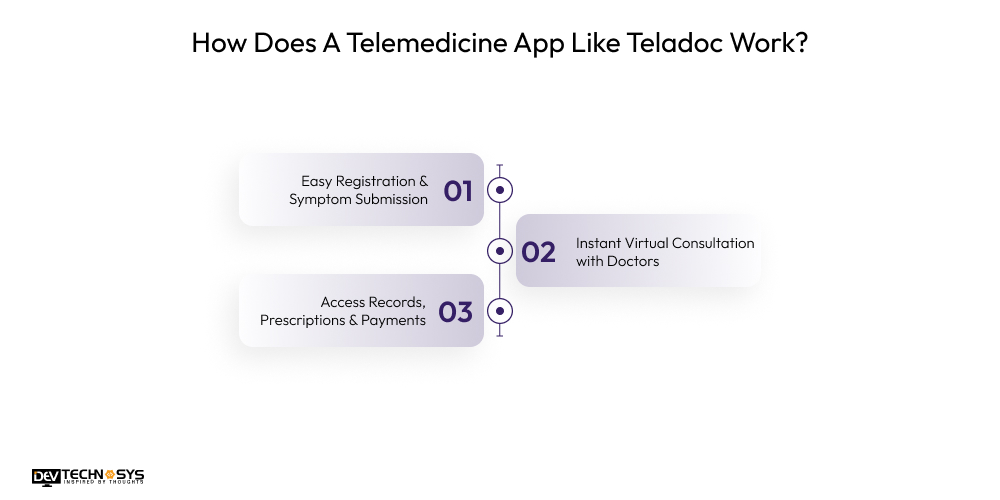
1. Easy Registration & Symptom Submission
Users can download the Teladoc Health app and create a profile. Then describe the symptoms through chat, and the platform will quickly match them with appropriate licensed doctors.
2. Instant Virtual Consultation with Doctors
After finding the right doctor, the patient can schedule an appointment or connect with them instantly via video or audio call. Patients can discuss health concerns, receive diagnoses, and get prescriptions.
3. Access Records, Prescriptions & Payments
Once the virtual consultation is over. The patient can access prescriptions, medical records, and follow-up recommendations. They can track health progress and secure payment gateway integration (Stripe, PayPal).
Global Telemedicine Market Size
The rising digitalization of healthcare is the main growth driver of telemedicine app development. The advent of advanced technologies streamlines the telemedicine process, ensuring wider worldwide access to telehealth services. Let’s have a look at the 2026-2035 report by Precedence Research.
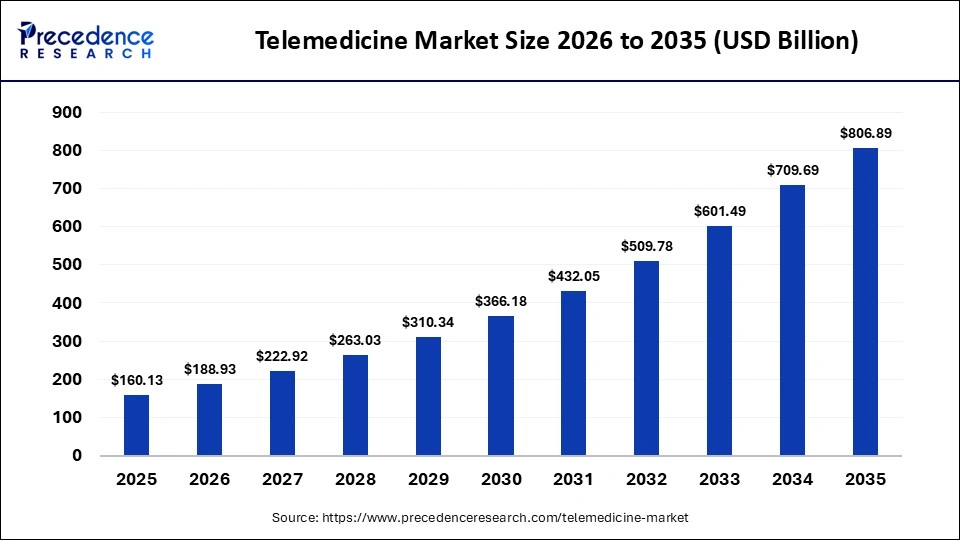
- The market was valued at USD 160.13 billion in 2025 and is projected to grow at a CAGR of 17.55%, reaching USD 806.89 billion by 2035.
- By region, North America accounted for 34% of the revenue share in 2025.
- By type, the tele-hospital segment accounted for the largest market share.
- Teladoc Health’s Integrated Care segment increased by 5% to $360.1 billion in the second quarter of 2025.
- By end user, the patient segment accounted for the largest share of the telemedicine market in 2025.
Step-By-Step Process To Build An App Like Teladoc
Breaking the doctor-on-demand app development process into easy steps makes it manageable. Online healthcare app development involves sophisticated methodologies and extensive research. Here’s a practical roadmap for you.
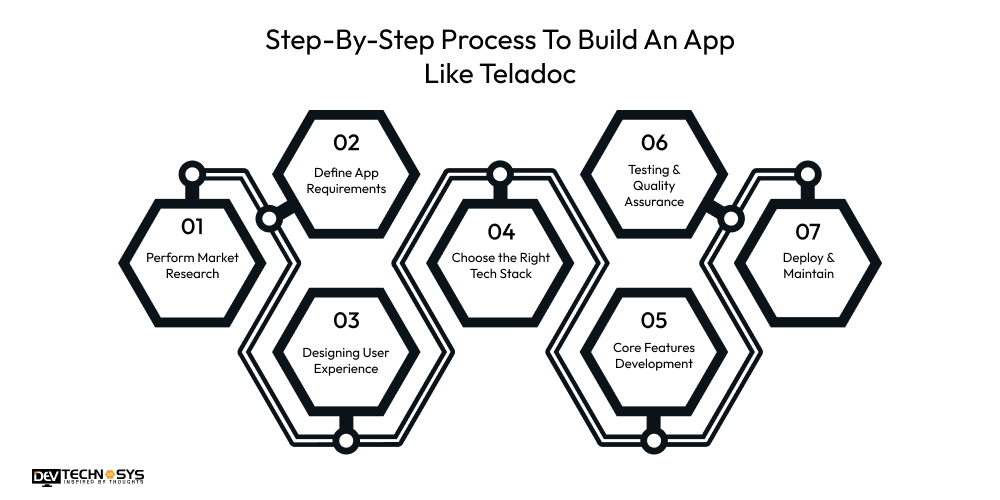
1. Perform Market Research
To build an app like Teladoc, it is critical to understand who you’re building for and what you’re building. This step lays out the roadmap for your remote patient monitoring app. Examine industry trends and user challenges to identify market inefficiencies. This will help you avoid creating an app that doesn’t add value.
2. Define App Requirements
The next step to develop an app like Teladoc is to identify your niche and requirements. Determine your app’s specialization, like general healthcare, chronic illness management, etc.
Also identify technical requirements for Clinical Decision Support Systems (CDSS), Remote Patient Monitoring (RPM), ePrescription / eRx Systems, etc. And don’t forget regulatory compliance, such as End-to-End Encryption (E2EE) and HIPAA compliance for telehealth.
3. Designing User Experience
To build a doctor appointment app, a smooth, accessible, and responsive design is essential. Start with UI/UX design principles and develop wireframes and prototypes to visualize user flows. Make sure patient interactions and doctor appointments are simple and easy. Clear navigation and easy booking build trust among users.
4. Choose the Right Tech Stack
For doctor consultation app development, strategic technology choices play an important role. For the app’s architecture, go for Service-Oriented Architecture (SOA) and Serverless Architecture.
Choose between cross-platform development (Flutter, React Native) and native app development (Swift, Kotlin) accordingly. And for cloud hosting, consider CI/CD Pipeline, AWS, Azure, Google Cloud, Prometheus, and ELK Stack.
5. Core Features Development
Next, incorporate advanced and core features into the Teladoc clone app development. Focus on essential features like patient registration, appointment booking, video calls, etc.
You can also add advanced features such as AI symptom checker integration and ePrescription/eRx Systems. Also, remember that doctors also need teleconsultation tools.
6. Testing & Quality Assurance
For successful telemedicine app development, thorough testing and debugging are the next steps. Remember that as a virtual doctor consultation app, testing is non-negotiable. Adopt automated testing frameworks to ensure everything works smoothly. Beta testing may help you uncover issues that internal teams may miss.
7. Deploy & Maintain
Now it’s time for App Store deployment. You can also consider a soft launch or a beta version. After the final launch, monitor the Teladoc clone app’s performance, resolve any issues, and refine its functionality. Based on real-time user interactions, introduce new features & enhance security measures. For long-term success, gather user feedback regularly.
Industry Insight:
According to the NCDS report, 47% of patients state they would prefer a telehealth appointment if given the option.

Features To Empower Your Teladoc App Development
Understanding the features will help you make an app like Teladoc for a seamless user experience. You will want to pay attention to both patient features and the doctor panel. Partner with a top healthcare app development company to design an application that perfectly balances key features.
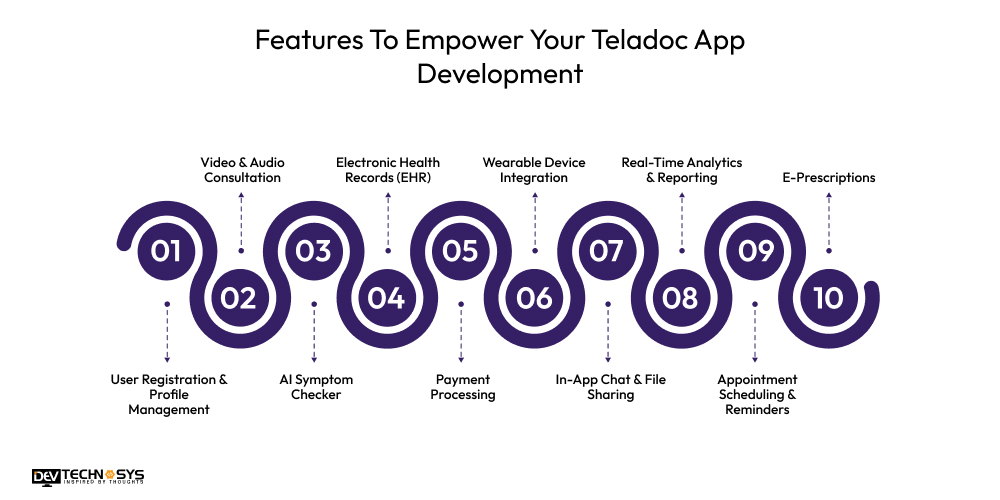
1. User Registration & Profile Management
Allows patients to securely create their profile using personal information. Patients can update and manage their personal and medical information.
2. Video & Audio Consultation
The video consultation feature healthcare allows patients to have face-to-face interactions. Receive secure and encrypted telehealth sessions.
3. AI Symptom Checker
AI symptom checker integration in telehealth app development offers Smart health recommendations. Used for preliminary diagnosis before consultation.
4. Electronic Health Records (EHR)
Electronic Health Records (EHR) integration enables doctors to access patient history instantly. The medical records are securely shared.
5. Payment Processing
The telehealth payment gateway integration supports multiple payment methods, allowing patients to pay for services securely within the app.
6. Wearable Device Integration
Wearable device integration healthcare syncs health data from smartwatches. It provides real-time monitoring of vital health metrics.
7. In-App Chat & File Sharing
In-app chat doctor-patient facilitates confidential communication between patients and healthcare providers. Allows report exchange for efficient communication.
8. Real-Time Analytics & Reporting
Technologies like WebRTC, VoIP, and SIP are used for real-time communication. Provide detailed reports on consultations, trends, and app usage.
9. Appointment Scheduling & Reminders
An appointment scheduling system enables patients to easily book appointments with doctors. Sends reminders and alerts for upcoming appointments.
10. E-Prescriptions
e-prescription app functionality allows doctors to provide digital prescriptions to patients. This simplifies medication purchases, and patients receive their prescriptions quickly.
What Makes Teladoc-Like Apps a Smart Business Move?
Right now, the telemedicine industry is booming. With the growing number of doctor appointment booking apps in USA. You must be wondering why creating a Teladoc clone app is a good idea. Here are the reasons why you must invest in healthcare consultation app development.
1. Improved Accessibility for Remote Patients
The topmost reason to create a telemedicine app like Teladoc is to improve accessibility. The platform bridges the gap between patients and healthcare providers in underdeveloped areas. By building one, you can improve healthcare access and reduce travel barriers.
2. Demand for Digital Healthcare Solutions
In recent years, demand for apps like Teladoc has skyrocketed. More and more people are depending on these platforms, showing on-demand medical access. With healthcare app development, you can easily tap into the rapidly expanding global market.
3. Faster Time-to-Care & Emergency Support
When you develop an app like ZocDoc, you connect patients with doctors instantly, reducing waiting times and delays in treatment. This quick access during urgent situations enhances patient outcomes and strengthens trust in the digital healthcare platforms.
4. Cost-Effective Healthcare Delivery Model
Investing in mHealth app development reduces operational costs for doctors and patients. Clinics and hospitals can minimize infrastructure expenses, while patients can save on travel and consultation costs. This makes the healthcare systems more affordable and efficient.
5. Enhanced Patient Engagement & Retention
Another reason to make an app like Teladoc is to improve patient engagement and retention. With interactive, advanced features, you can build long-term relationships and deliver personalized healthcare experiences. This will enhance satisfaction and trust in your platform.
Want a chatbot demo or pricing? Fill the form and talk to our experts today.
Pick what you need below — you can select more than one — then tap Get detail to continue.
-
Chatbot demo dashboard
-
Cost to develop an app
-
Industry report
-
Case study
How Much Does It Cost To Develop An App Like Teladoc?
The cost to build an app like Teladoc typically ranges from $8,000 to $30,000, depending on the app’s complexity. The doctor-on-demand app development cost is influenced by several factors, including feature complexity, technological trends, UI/UX design, team location, and more. Note that a Minimum Viable Product (MVP) development approach is the most cost-effective way.
Many businesses often struggle with cost-related challenges. Estimating the cost and time of telemedicine app development early helps avoid surprises later. Below is a table that provides a rough cost estimate for building Teladoc alternatives.
App Complexity |
Key Features |
Development Time |
Estimated Cost (USD) |
| Basic Telemedicine App | User registration, doctor listing, appointment booking, chat consultation | 1 – 2 months | $8,000 – $12,000 |
| Mid-Level App | Video consultations, e-prescriptions, payments, user dashboard | 2 – 4 months | $12,000 – $20,000 |
| Advanced Telemedicine App | AI symptom checker, EHR integration, analytics, wearables, multi-language | 4 – 6 months | $20,000 – $30,000 |
A number of factors come together to define the cost to develop an app like Teladoc. Every factor enhances the app’s functionality and performance, but ultimately contributes to the final cost. Below, we’ll discuss those key factors.
1. App Complexity
The number one crucial factor shaping the cost to build an app like Doctolib is the complexity. App complexity includes functionality, core features, and the integration of cutting-edge technologies. Opting for a more complex platform will eventually increase the cost compared to the basic Teladoc app development.
Complexity Level |
Estimated Cost (USD) |
| Basic | $3,000 – $5,000 |
| Moderate | $5,000 – $7,000 |
| Advanced | Up to $8,000 |
2. Development Team Location
The location of your hired Mobile app development company influences the cost and timeline. Different regions have different prices; for instance, locations with higher labor costs usually charge more. Western Europe typically charges higher rates than teams in Eastern Europe. So, carefully choose the location to hire a development team.
Region |
Estimated Cost (USD) |
| Eastern Europe | $1,000 – $3,000 |
| Middle East / Africa | $2,000 – $4,000 |
| Western Europe | $4,000 – $6,000 |
3. Compliance & Security Standards
Compliance & security standards play a huge role in healthcare consultation app development. For a secure telemedicine platform, it is crucial to comply with data privacy laws governing patient data. Healthcare regulations, including HIPAA, Secure Socket Layer (SSL), and secure authentication, increase the cost of developing the Teladoc app.
Compliance Level |
Estimated Cost (USD) |
| Basic | $1,500 – $2,500 |
| Standard | $2,500 – $4,500 |
| Advanced | Up to $6,000 |
4. Third-Party Integrations
Payment gateway, Pharmacy API, and EHR integrations affect the cost of patient portal app development. Integration of these external tools requires additional development time and effort, as well as potential licensing fees and subscription costs. To optimize the cost to build an app like Teladoc, carefully consider third-party integrations.
Integration Level |
Estimated Cost (USD) |
| Basic | $1,000 – $1,500 |
| Moderate | $1,500 – $2,500 |
| Advanced | Up to $3,500 |
5. Development Team
The cost of telemedicine app development depends heavily on the kind of development team you have. Freelancers are cheaper, but they might not be able to grow. In-house teams and agencies, on the other hand, provide higher quality, faster delivery, and better long-term support, which increases the overall development cost.
Team Type |
Estimated Cost (USD) |
| Freelancers | $3,000 – $5,000 |
| In-House Team | $5,000 – $9,000 |
| Offshore Agency | $10,000 – $14,000 |
Industry Insight:
As per Global Growth Insights, around 65% of healthcare providers have already integrated telehealth solutions into their services.
Which Are The Top Telemedicine Apps Like Teladoc?
The Teladoc app offers everything from urgent medical care to mental health support. But as they say, not every virtual care platform fits everyone, and that’s okay.
There are several trusted alternatives to the Teladoc platform that offer excellent care with unique features. The table below showcases the 10 best alternatives to develop a healthcare app.
Rank |
App Name |
Key Features |
Best For |
| 1 | Zocdoc | Doctor discovery, appointment booking, and insurance filters | Finding nearby doctors |
| 2 | Doctolib | Online booking, video consultations, digital health records | European users |
| 3 | myAster | Appointments, e-prescriptions, and lab integration | Middle East patients |
| 4 | Amwell | Video visits, chronic care management, and insurance integration | Enterprises & hospitals |
| 5 | Doctor on Demand | 24/7 video consultations, mental health support | On-demand healthcare |
| 6 | MDLIVE | Virtual doctor visits, therapy, dermatology services | Affordable care |
| 7 | Practo | Doctor booking, e-pharmacy, diagnostics | Indian users |
| 8 | HealthTap | AI symptom checker, virtual consultations | Primary care advice |
| 9 | Doxy.me | Browser-based consultations, secure video calls | Clinics & small practices |
| 10 | Ping An Good Doctor | AI triage, online consultations, pharmacy services | Large-scale ecosystems |
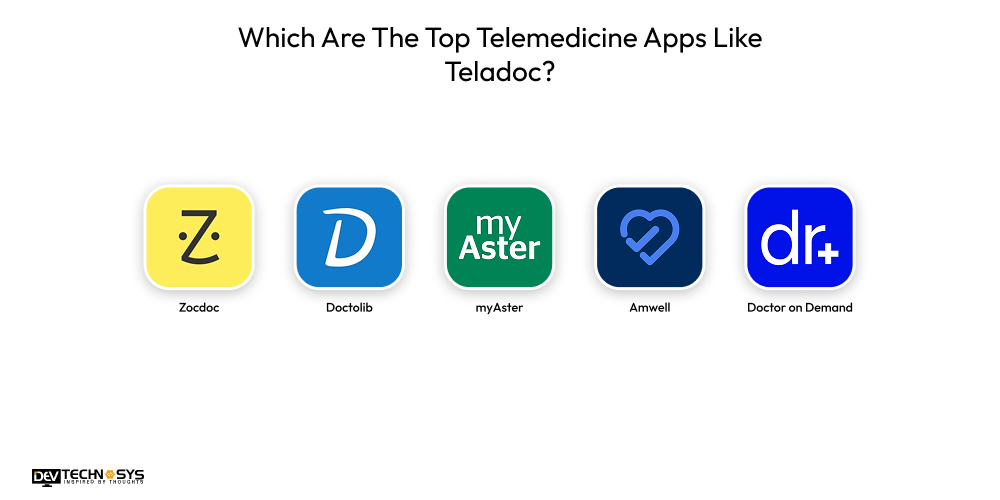
Some popular apps similar to Teladoc include Zocdoc, Doctolib, myAster, Amwell, and Doctor on Demand. These telehealth mobile applications make it easy to get medical treatment from home by offering video consultations, appointment booking, and digital healthcare services.
1. Zocdoc
Zocdoc is a popular example of a Teladoc clone app. With this application, users can instantly book online appointments and find nearby doctors in case of emergencies.
The insurance-based search filter makes it easy for users to find in-network providers and read patient reviews. It simplifies the scheduling process, which reduces waiting times for both patients and healthcare professionals.
2. Doctolib
From the perspective of a doctor-on-demand app development company, Doctolib is the leading telemedicine platform. The app is known for seamless doctor appointments and video consultations.
With digital health records and appointment reminders, the Doctolib application enhances patient engagement. Doctors can manage their schedules efficiently while still offering quick, convenient medical services.
3. myAster
To build an app like myAster, you must offer appointment booking, video consultations, and access to digital medical records. It creates a connected ecosystem by integrating with Aster clinics, pharmacies, and labs. The primary focus of the platform is to provide seamless, patient-centric healthcare service with reliable medical support.
4. Amwell
Amwell is a remote patient monitoring app that is designed for both individuals and enterprises. Its services include video consultations, chronic care management, and behavioral health services.
The platform enables coordinated care by integrating with hospitals and healthcare providers. With a focus on scalability, Amwell is ideal for large healthcare organizations.
5. Doctor on Demand
The Doctor On-Demand app work to provide 24/7 access to healthcare and medical support. Users can access licensed physicians, psychiatrists, and psychologists via video consultations.
Sitting at home, users receive diagnoses, prescriptions, and mental health support. The Doctor On Demand app is suited for individuals looking for immediate medical assistance.
Turning Virtual Care Into Profit: Monetization Ideas For Telemedicine Apps
It’s time to think about how your Teladoc application will generate revenue. The development of telehealth apps offers a wide array of financial benefits. Subscription-based models, pay-per-consultation fees, and in-app purchases are some of the well-known monetization strategies.
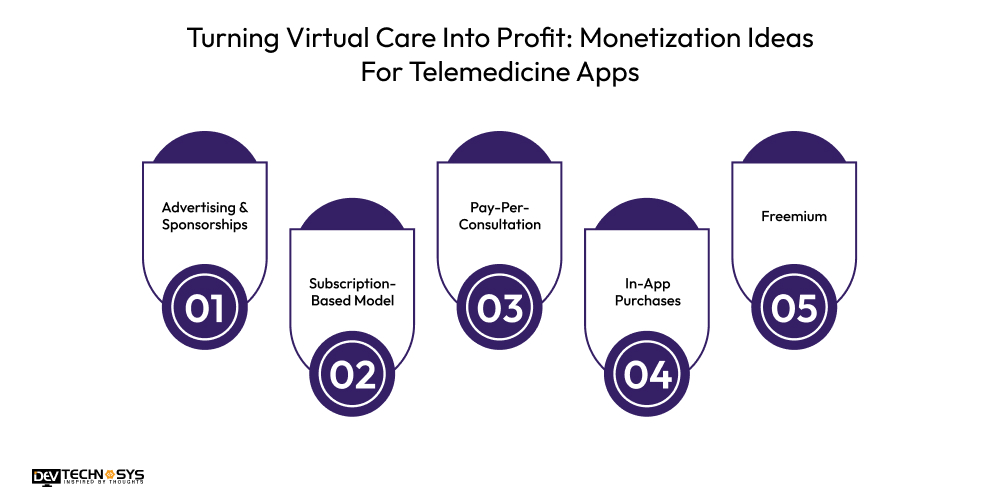
1. Advertising & Sponsorships
Apps similar to Teladoc earn with targeted advertising and sponsorships. It includes displaying appropriate ads and sponsored content within the application.
Collaboration with pharmaceutical companies and healthcare brands to provide valuable information produces revenue. The revenue is mainly generated from clicks, conversions, and views.
2. Subscription-Based Model
Hire an on-demand doctor app development agency to add this model to your Teladoc clone app. The paid subscription approach provides a stable, steady source of income. Under this model, users are encouraged to pay a monthly or annual fee for unlimited consultations, priority scheduling, etc.
3. Pay-Per-Consultation
You can create an app like Teladoc that charges users a one-time fee per doctor’s session or consultation. The fee is charged based on the doctor’s qualifications and location, as well as the type and duration of the consultation. For this approach to work, proper consultation is important.
4. In-App Purchases
Under this monetization strategy, users purchase additional features or services from your Teladoc alternative. The additional services include premium health content, nutritional supplements, prescription refills, personalized health plans, and virtual wellness programs, etc. It is one of the best ways to generate revenue beyond core telehealth services.
5. Freemium
By adopting a freemium model, you can offer basic services and functions for free. And to access premium features, users need to subscribe or pay a fee. With this monetization approach, users can try premium services for free during a trial period, enhancing the overall telehealth experience.
Industry Insight:
Barron’s reports that Teladoc serves 90+ million members globally and generates over $2.5 billion in annual revenue.
Real-Time Challenges & Solutions
To create a mobile app like Teladoc, it must solve real-time challenges. Performance, reliability, and user trust are critical in real-world conditions. Solving these challenges is the key to seamless consultations and a smooth healthcare experience.
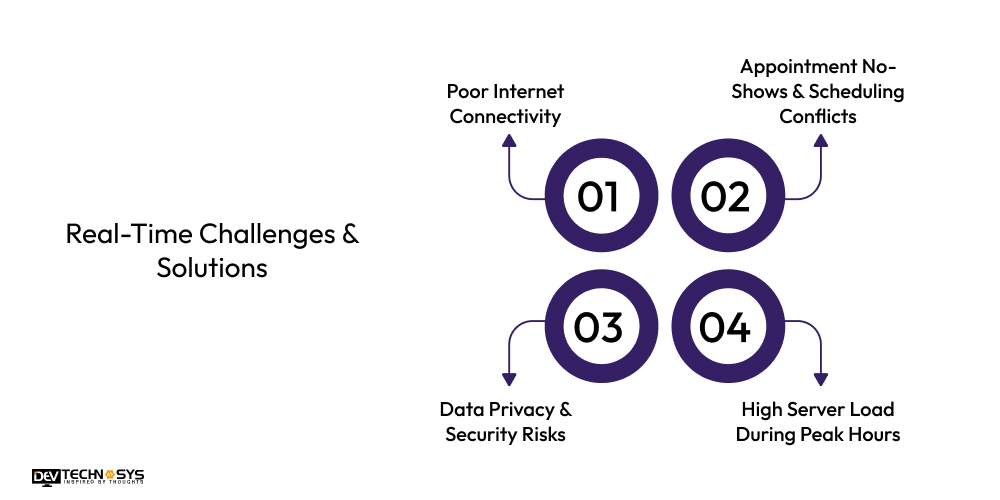
1. Poor Internet Connectivity
Challenge: Unstable, poor internet connections result in disruptions, leading to call drops, lag, and poor communication quality. Making access to telemedicine services very difficult in rural regions.
Solution: Adaptive bitrate streaming optimizes media compression AND seamless fallback to audio or chat modes. Design lightweight interfaces to ensure consistent performance.
2. Appointment No-Shows & Scheduling Conflicts
Challenge: In the real world, there will always be no-shows and overlapping schedules. This reduces doctor productivity, wastes time, and creates inefficiencies in the management of patient consultations.
Solution: Add automated reminders via push notifications, SMS, and email during the API development of the virtual doctor app. Implement smart scheduling systems for easy rescheduling.
3. Data Privacy & Security Risks
Challenge: There is a risk of breaches and unauthorized access in handling sensitive patient health data. Non-compliance with strict healthcare regulations increases the risks.
Solution: Ensure end-to-end encryption, secure APIs, and multi-factor authentication. The app must comply with healthcare standards like HIPAA and conduct regular security audits.
4. High Server Load During Peak Hours
Challenge: Peak consultation hours lead to a sudden spike in user traffic. Server overload leads to slow response times, system crashes, and interruptions to real-time telemedicine services.
Solution: When developing an app like Teladoc, use cloud infrastructure with auto-scaling, load balancing, and a microservices architecture. This ensures stable performance and uninterrupted consultations.
You can reach out anytime; we are available 24/7. Our team provides a quick response.

Ready To Build Your Own Teladoc-Like App?
Telehealth applications have become a crucial part of modern healthcare. The development of apps like Teladoc has proven that medical care can be more accessible, faster, and more convenient for patients everywhere.
The key to successful Android app development for telemedicine is to have a clear plan from the start. Along with this guide, focus on solving real user problems and prioritizing essential functions. Working with a virtual doctor app development partner in the USA can make the journey smoother.
Frequently Asked Questions
Find answers to the most common questions related to this article.
Yes, when creating an app like Teladoc, following healthcare regulations such as HIPAA becomes critical. By complying with it, you protect patient data privacy and security. And if you do not follow, it might lead to legal penalties, loss of user trust, and platform restrictions.
The cost to develop an app like Teladoc ranges from $8,000 to $30,000, depending on features, complexity, and region. A basic MVP may cost less than a full-featured telemedicine platform. Integration of video, security compliance, and scalability significantly increases development costs.
Yes, you can build a telemedicine app for specific niches such as mental health, dermatology, or chronic disease management. Applications with a specific niche allow better user experience and stronger market positioning. These apps can achieve higher engagement as they face less competition.
The process for onboarding doctors to your telehealth application involves collecting credentials, verifying licenses, and conducting background checks. Ensure that your app offers an easy registration process, dashboard training, and flexible scheduling tools. This will encourage more doctors to join your platform.
Telehealth apps like Teladoc use e-prescription systems where doctors digitally generate and send prescriptions to patients. The system can be integrated with pharmacies for direct medicine. Ensure proper validation and secure storage of prescriptions.