














Quick Summary:
-
- By building an app like MyChart and investing in the healthcare sector, businesses can tap into a high-revenue market.
- MyChart is a secure and centralized app that connects patients to healthcare professionals. There, they can get prescriptions, manage health records, get test results, and book an appointment.
- The cost to develop an app like MyChart ranges from $8,000 to $25,000. It depends on factors such as app complexity, range of features, design requirements, backend architecture, and third-party integrations.
- Some of the MyChart-like apps are Doctor On Demand, Health Connect, BetterHelp, Practo, Healow, Doctolib, and Teladoc Health.
- Healthcare apps monetize themselves with strategies like freemium & subscription models, healthcare partnerships, in-app purchases, and advertising content.
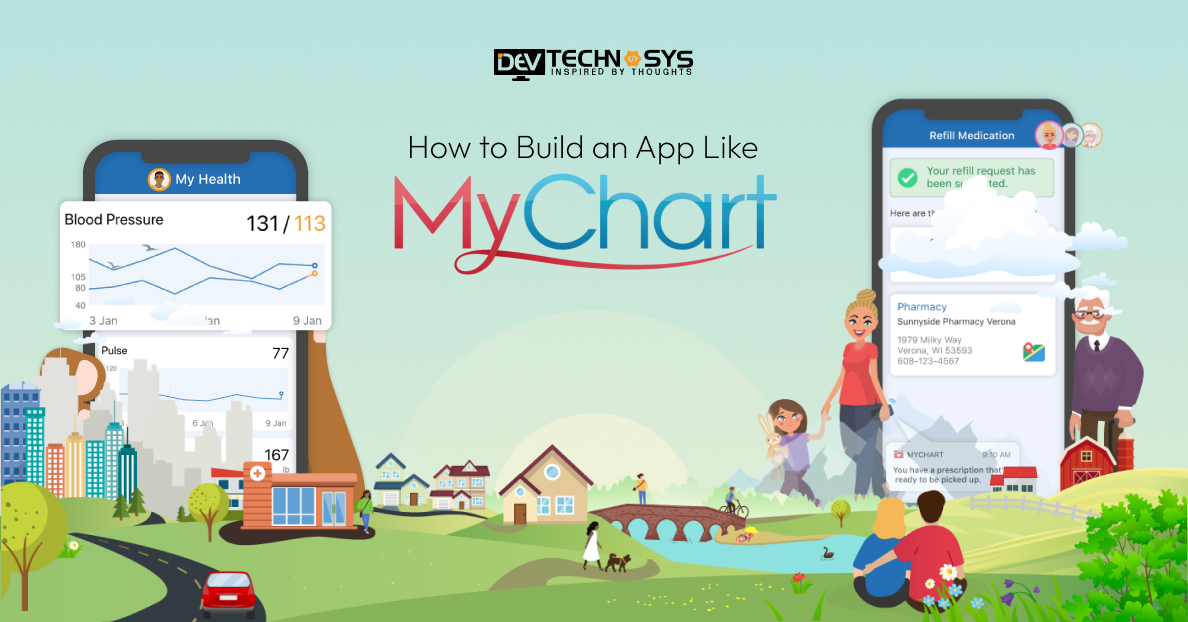
Waiting in long hospital queues, calling multiple departments for reports, and struggling to keep track of medical records? This used to be normal in healthcare. The MyChart app is the solution to all of your troubles. Competing with major healthcare brands in the United States, MyChart offers smart and interactive services throughout the country.
Instead of acting as just another mobile application, MyChart connects patients, doctors, and medical systems in real time. From booking appointments and viewing lab results to communicating with the doctors, everything is now just a few clicks away. Bi
In this blog, we’ll break down how to build an app like MyChart. Developing a MyChart-like app requires several factors, including cost, features, monetization, and top brands.
So, let’s get started!
What is MyChart?
MyChart was developed by Epic Systems. It is a secure patient interface that enables individuals to access and manage their healthcare information digitally. It serves as a link between patients and healthcare professionals, centralizing all the medical and healthcare processes into one place.
MyChart was built to streamline healthcare processes. Instead of using traditional techniques such as phone calls or in-person visits for simple activities, such as reviewing test results or arranging appointments.
How MyChart Works?
An app like MyChart serves as a common digital system between patients and medical professionals. This is easily possible by integrating with hospital databases and EHR systems.
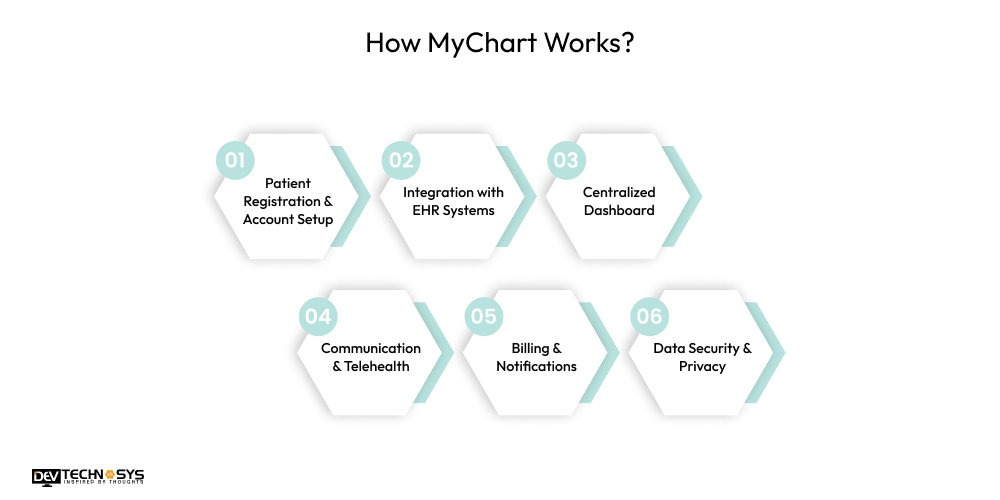
1. Patient Registration & Account Setup
Users first sign up using credentials provided by their healthcare provider or hospital. After adding all the required details, they can log in securely and access the app to personalize it according to their needs.
2. Integration with EHR Systems
MyChart is tightly integrated with backend systems that ensure that all patient data is automatically synced and updated in real time. These data include medical history, lab results, and prescriptions.
3. Centralized Dashboard
After logging in, users can access a dashboard where they can view medical records, check upcoming appointments, get test results, and manage prescriptions in one place. The user does not need to roam here and there for reports and finding prescriptions in the hospitals.
4. Communication & Telehealth
Patients can ask for assistance directly from the doctor by sending messages through the MyChart app. Patients do not need to make unnecessary hospital visits while getting quality medical attention.
5. Billing & Notifications
The app also handles administrative tasks like viewing bills, making payments, and receiving reminders for appointments, medications, or test results.
6. Data Security & Privacy
Since healthcare data is highly sensitive, MyChart uses advanced encryption and follows strict compliance standards like HIPAA to ensure that patient information remains secure and confidential.
What are the Market Stats of Healthcare Apps Like Mychart?
Healthcare apps have become mainstream for businesses to invest in the Doctor On Demand app development. The global market for healthcare apps like MyChart has increased steadily after the introduction of 5G networks and the digitalisation era.
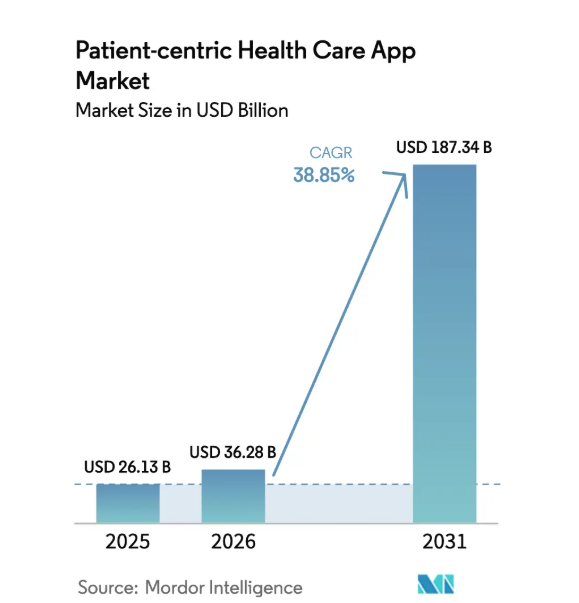
- The global market for telehealthcare apps in 2025 was valued at $26.13 billion and is expected to reach $36.28 billion in 2026.
- The market is projected at $187.34 billion at a CAGR of 38.85% to 2031.
- Phone-based apps controlled 45.12% of the total market in 2025 compared to hybrid apps.
What is the Process To Build an App Like MyChart?
Startups and businesses should know the process to develop a health monitoring app like MyChart. This helps set up a budget, hire developers, and ensure the success of the app. Below is the step-by-step process to make an app like MyChart:
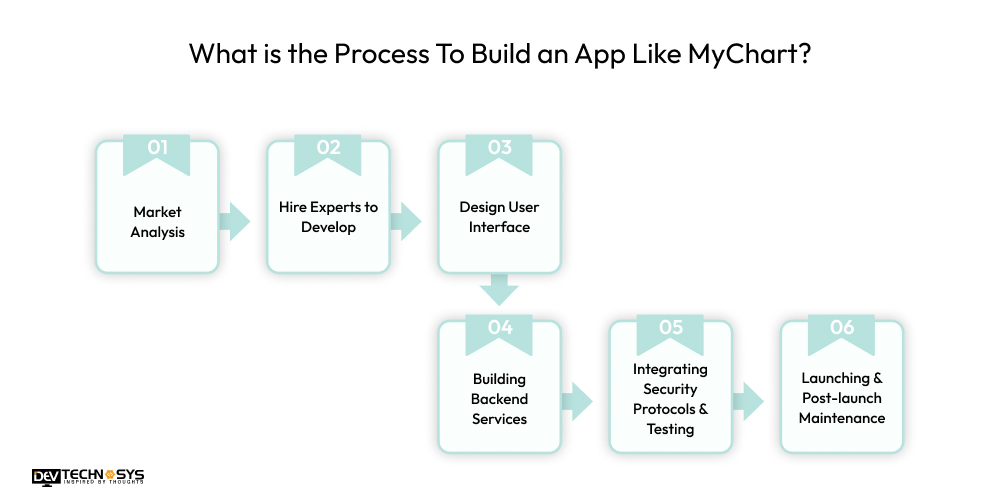
1. Market Analysis
Start by reviewing the healthcare market, analyzing target users, and future projections for health monitoring apps like MyChart. Find out pain points of patients, how to streamline hospital systems, and what laws like GDPR & HIPAA say.
2. Hire Experts to Develop
Hire healthcare developers and experienced designers from an on-demand app development company. Evaluate their experience with medical app development before finalizing the development team. Depending on your budget, you can also hire in-house teams or outsource the project to mobile app development companies.
3. Design User Interface
Your app design should be easy to understand and use for patients. Make a UI that can be used seamlessly without any hitches. Often, the general public uses medical apps in emergencies, so a user-friendly UX design makes people more likely to use and keep using the product in the future.
4. Building Backend Services
To create an app like MyChart, it is required to build a backend that is safe and secure while keeping the quality high and scalable. It is essential to connect to hospital systems, wearables, and patients in a centralized system. Hiring a healthcare app development company can easily solve these issues and help you build an app like MyCart.
5. Integrating Security Protocols & Testing
Medical data is very sensitive as it comprises personal user data, health records, appointments, and communication with doctors. Add end-to-end encryption and 2MFA with GDPR rules to make sure your app is secure. Monitor the app regularly for security risks, which can affect the MyChart clone development.
6. Launching & Post-launch Maintenance
You need to have a solid onboarding campaign when you launch your MyChart clone app. Launch the app once all the aspects are in place. Monitor the app for any performance issues and bugs. Review user feedback regularly and launch updates, new features, and bug fixes on the basis of that feedback.
Industry Insight
According to MedSoftwares, MyChart has surpassed 100 million users globally, making it one of the most widely adopted patient portals.
What Are the Essential Features of An App Like MyChart?
To build an app like MyChart, you need to add certain features that personal healthcare platforms include. Features like a payment gateway, translation, and database are essential to make your app usable to a large number of users throughout the country.
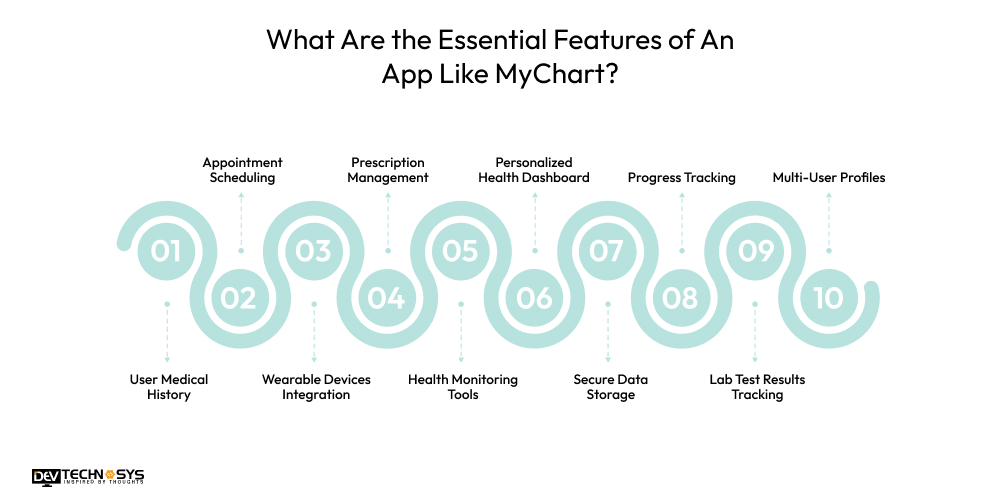
1. User Medical History
MyChart is a patient portal application that enables patients to access their medical history, diagnoses, treatment, and previous visits. This aspect enhances transparency and assists the users in learning about diverse problems with solutions.
2. Appointment Scheduling
The best medical apps enable consumers to reserve, rebook, or cancel medical appointments directly. These customized healthcare services enable patients to handle their healthcare visits more effectively.
3. Wearable Devices Integration
Fitbit is another application that is comparable to MyChart and is famous in terms of wearable and fitness trackers. There are other MyChart alternatives that emphasize the use of multiple devices to monitor heart rate and calories.
4. Prescription Management
The virtual care and telehealth app development provides patients with an opportunity to see their prescriptions, requests, and monitor their medications. They assure superior medication and minimize the probability of forsaking treatment.
5. Health Monitoring Tools
The MyChart-like health apps enable users to monitor their blood pressure, heart rate, glucose levels, and physical activity. It assists in tracking the health trends of the patients and physicians to execute preventive measures.
6. Personalized Health Dashboard
App like ZocDoc is a very interactive dashboard, which shows the information of patients and the rest of the information in the form of graphs. The graph can be customized by the users depending on various themes according to their needs.
7. Secure Data Storage
Health monitoring apps provide various security measures to keep patients’ data safe and secure. Users can apply security locks on their profiles to prevent unauthorized access.
8. Progress Tracking
Customers are able to monitor their progress, meet physicians, and take precautions, respectively. A number of health monitoring applications exist that provide accurate health tracking and consulting services.
9. Lab Test Results Tracking
The connected systems of patient care assist the patient in accessing and monitoring lab test results directly. Also, they enable users to track their health progress on a regular basis and communicate their outcomes with their physicians.
10. Multi-User Profiles
A health app that is similar to MyChart enables users to manage the healthcare records of family members using a single account. The feature can be of assistance to the parent, caregiver, or a volunteer within social care.
Why Businesses Are Looking To Invest in Healthcare App Development?
Building a health monitoring app like MyChart has several advantages for businesses in healthcare. In this section, we are going to discuss the key factors that can drive companies to invest in the development of healthcare apps:
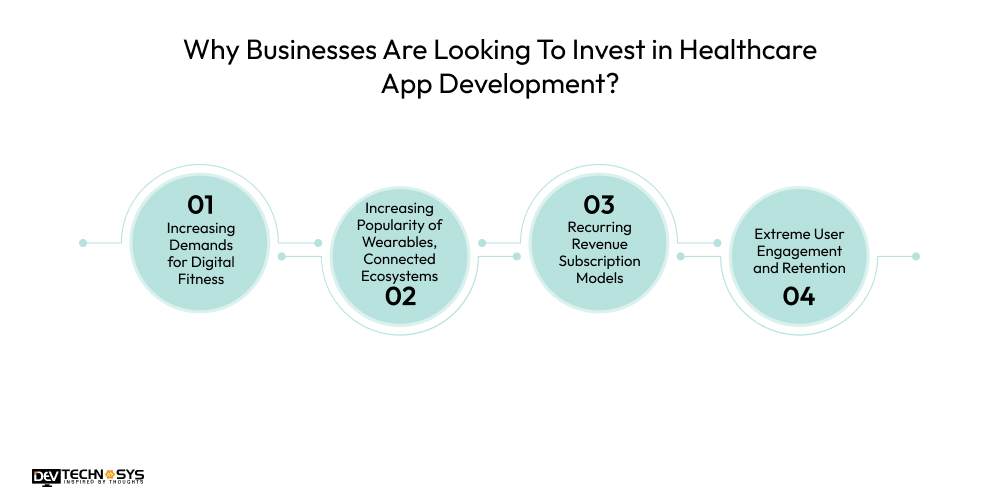
1. Rising Health Awareness
The number of health-related issues has increased significantly after COVID. Therefore, companies in the healthcare industry have the necessity to create a mobile app such as MyChart for the general population. An investment in this sphere has its advantages to consider in the appearance of a health monitoring app development company.
2. Remote Patient Care
The ability to visit the hospital is not universal, nor is it at all times. Therefore, the concept of creating an app such as MyChart turned out to be successful. It is advisable to employ a mobile app development company because it brings the environment that is needed in the development of mobile apps.
3. Data-Driven Healthcare
The healthcare processes have become better since the trade in patients’ data commenced. Medical services are now being provided according to information such as symptoms, age, weight, or blood group. Companies need to come up with a smart health monitoring application, such as MyChart, that is intelligent in its provision of this functionality.
4. Enhanced Patient Engagement
The participation of users has been on the rise in the last couple of years, with certified healthcare experts and trusted medication. We provide different services related to MyChart app development, including consulting and maintenance. We have provided total packages to companies. Therefore, they can come up with easy user-oriented symptom tracking applications.
Industry Insight
According to Epic Media, patient portal users are 21.5% less likely to miss appointments, reducing millions of no-shows annually.
What is the Cost to Build an App Like MyChart?
The cost to develop an app like MyChart starts from $8,000 to $25,000. The cost of development depends upon several factors, such as app complexity, tech stack, development team, etc. MVP app development costs much less as it only consists of essential features such as registration and basic records. An advanced app with an extensive range of features, such as integrations, real-time upgrades, and telemedicine, costs more.
| App Type | Estimated Cost | Key Features Included |
| Basic App (MVP) | $8,000 – $12,000 | Patient registration, appointment booking, basic records, notifications |
| Mid-Level App | $12,000 – $18,000 | EHR access, prescriptions, secure messaging, and payments |
| Advanced App | $18,000 – $25,000 | Telemedicine, wearable integration, real-time updates, and advanced security |
App Complexity & Range of Features
Basic features such as login, profiles, and appointment booking cost less as they do not require extensive coding. They are quick to implement and take less time to build. Whereas advanced features like telemedicine and AI require more development hours with domain experts, leading to higher prices.
| Feature Type | Cost Contribution | Examples |
| Basic Features | $1,000 – $1,500 | Login, profile, appointment booking |
| Core Features | $1,500 – $3,000 | EHR access, prescriptions, notifications |
| Advanced Features | $3,000 – $4,500 | Telemedicine, AI insights, remote monitoring |
Platform Selection
Building for a single platform requires less effort and development, but it is not feasible as it will not cater to a large number of users. While Native apps require separate codebases for iOS and Android, this increases the development time, effort, and healthcare app development cost. But a cross-platform framework can be built on React Native or Flutter and only requires one codebase for both iOS and Android.
| Platform Choice | Cost Contribution | Impact |
| Single Platform | $1,500 – $3,000 | Faster and budget-friendly |
| Cross-Platform | $3,000 – $5,000 | Wider reach with moderate cost |
| Native (iOS + Android) | $5,000 – $7,000 | Best performance but higher cost |
Design Complexity
Basic UI and pre-built templates cost less than advanced UI/UX, which requires custom design elements and navigation features. Healthcare apps require intuitive and accessible designs that can be used by the general public easily. This adds up to the costs, as developers need to pay extra attention to develop a healthcare app.
| Design Level | Cost Contribution | Description |
| Basic UI | $1,000 – $1,500 | Simple layouts |
| Custom UI/UX | $1,500 – $3,000 | User-friendly dashboards |
| Premium UI | $3,000 – $4,500 | Advanced visuals and accessibility |
Backend Infrastructure
Building a backend infrastructure requires time and effort from domain specialists. Basic backend systems need less development and coding, hence they are cost-effective. But building a scalable backend architecture needs more development time. These include the construction of sophisticated cloud settings, load balancing, and the implementation of enhanced security protocols.
| Backend Type | Cost Contribution | Features |
| Basic Backend | $2,000 – $3,500 | Data storage, APIs |
| Scalable Backend | $3,500 – $5,500 | Real-time sync, analytics |
| Advanced Backend | $5,500 – $7,000 | High security, large-scale data handling |
Third-Party Integrations
Third-party integrations involve licensing fees and subscriptions. These integrations have recurring costs and depend on the type of integration you use in your apps. Basic integrations like notifications cost less while advanced integrations like wearables, real-time updates, etc., cost a lot more. Telemedicine patient portal app development requires advanced API development to make the app high-quality.
| Integration Type | Cost Contribution | Integration Example |
| Basic APIs | $500 – $1,000 | Notifications, payments |
| Medium Integrations | $1,000 – $1,200 | EHR systems, pharmacy APIs |
| Advanced Integrations | $1,200 – $1,600 | Wearables, real-time health sync |
How to Monetize Healthcare Apps Like MyChart?
You should make a health monitoring app like MyChart and implement monetization strategies to make revenue. There are several money-making methods, of which the major ones are listed below:
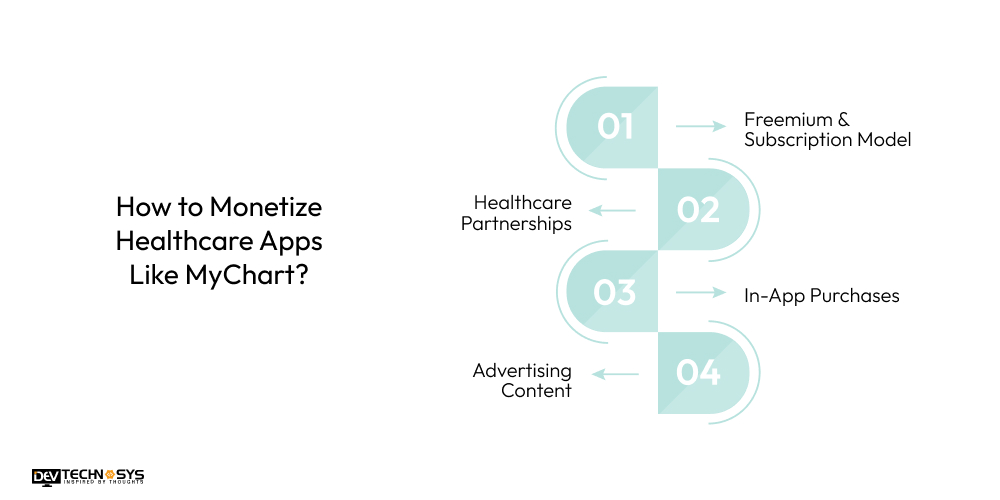
1. Freemium & Subscription Model
For non-subscribed users, you can offer a few services for free. And other advanced features can be used after paying and subscribing. This helps the app to be used by non-paying customers, and once they are accustomed to it, they can pay to use the premium features of the app.
2. Healthcare Partnerships
As a business investor, it is profitable to connect with healthcare experts, medicine vendors, and local dispensaries. So, users get treatment easily and recover on time. You can hire an iOS app development company to make a mobile app or website with such a model.
4. In-App Purchases
Businesses can offer in-built services that require a certain fee before accessing. These in-app purchases performed by users help businesses to balance the cost of building a health monitoring app like MyChart. It includes features like booking wellness sessions and ordering diet meals.
5. Advertising Content
It is a profitable idea to apply ad-based services of different doctors, trainers, and pharmacy shops on fitness tracking apps. You can hire mobile app developers to implement a backend, so ads can flow easily. This is a highly valuable model for businesses seeking to gain big in less time.
What are the top 10 MyChart Alternatives in 2026?
There are several MyChart alternatives available that offer smart and interactive features, which include report analysis and instant appointments. Below is a table listing the top 10 alternatives for MyChart:
| Top MyChart App Alternatives | Supported Devices | Downloads | Top Features |
| Doctor On Demand | Android | iOS | 1M+ | Video consultations, mental health support, prescriptions |
| mySugr | Android | iOS | 5M+ | Diabetes tracking, glucose logging, health reports |
| Health Connect | Android | iOS | 500M+ | Centralized health data, step/activity tracking, device sync |
| BetterHelp | Android | iOS | 1M+ | Online therapy, counselor matching, secure messaging |
| Practo | Android | iOS | 10M+ | Doctor booking, health records, online consultation |
| Healow | Android | iOS | 5M+ | EHR access, telehealth, and appointment scheduling |
| Doctolib | Android | iOS | 10M+ | Appointment booking, telemedicine, and reminders |
| Personify Health | Android | iOS | 1M+ | Care coordination, personalized health plans, patient engagement |
| MyTherapy | Android | iOS | 5M+ | Medication reminders, health tracking, reports |
| Teladoc Health | Android | iOS | 5M+ | Telemedicine, remote monitoring, mental health support |
Doctor On Demand
One of such telehealthcare applications is Doctor On Demand, which enables patients to meet doctors directly through video call. Doctor appointment booking apps help patients with general health problems, therapy, and psychiatric problems.
Health Connect
The Health Connect is an enterprise-level mobile application that can be used as a centralized health data repository for various devices and other applications as well. Patients can monitor the use of several wearable items to monitor heart rate, sleep, and other activities directly.
BetterHelp
BetterHelp is an application-based mobile therapy that matches users with licensed counselors through messaging, video, and audio calls. It provides counseling on a vast spectrum of mental health problems such as stress, anxiety, and depression. Patients are also able to select therapists according to their preferences and stay in constant touch,h irrespective of their location within the globe.
Practo
Practo is a comprehensive healthcare application that consists of doctor booking, telemedicine, and personal health records. The patients can find the doctors according to their specialties, make appointments, and even make video calls online. Advanced API development for Practo has been the key aspect of success in USA.
Healow
Healow is an all-encompassing medical application that provides patients with convenient access to their health history and laboratory reports, as well as appointment times. It is compatible with telehealth consultations, which provide users with an opportunity to contact doctors via the app. The service has medication reminders and custom health insights that can also assist the patients in managing chronic conditions.
How Mobile Healthcare Apps Are Changing Patient Care in 2026?
App like Teladoc is transforming the way patients are attended to by making medical services more appropriate, quicker, and friendlier. These apps will extend much further than merely booking an appointment in 2026 and will serve as an entire health ecosystem. People are now able to consult physicians remotely, check their medical records in real time, and monitor their health. This change lowers the reliance on physical visits and enhances access to healthcare, particularly in rural locations.
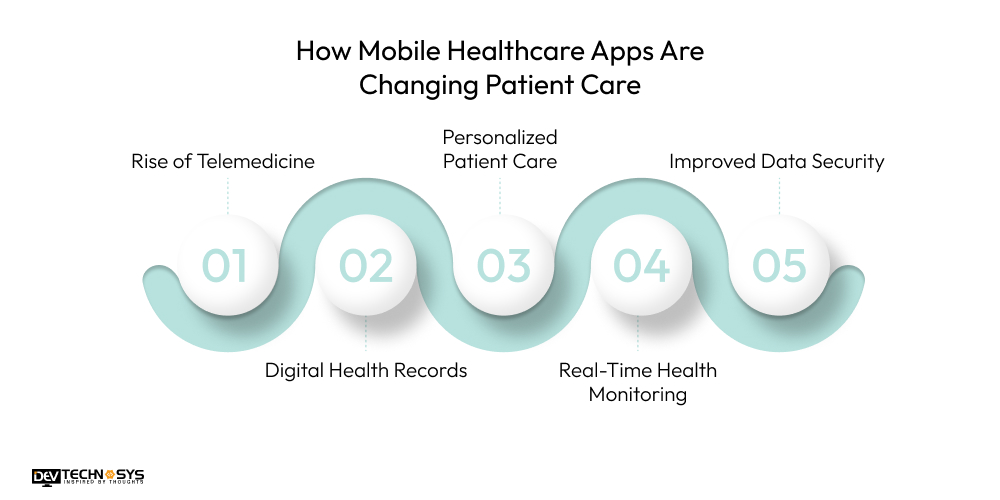
Rise of Telemedicine
Telemedicine has become one of the main elements of healthcare sector, where patients can consult doctors via a video call and chat. This saves the time of long queues and saves the use of physical visits. It is of particular use to those who are in rural or underserved locations. Patients are able to get diagnoses, prescriptions, and follow-ups without leaving their respective homes. This has made it very easy to access good healthcare.
Digital Health Records
Users are now able to store their medical records digitally and access them via tablet applications. This guarantees that these patients and doctors are in possession of correct and up-to-date health information at all times. It will save on paperwork and decrease the possibility of misdiagnosis or treatment. Coordination is also enhanced through the easy sharing of records among the healthcare providers. On the whole, it simplifies the whole healthcare process.
Personalized Patient Care
AI is being embraced by healthcare apps to provide customized recommendations. Apps like Doctolib are personalized to individual health data, as they offer medication notifications and give lifestyle recommendations. This assists the patients in coping with their chronic conditions better. Individualized treatment is also a stimulus in terms of engagement and treatment adherence. It transforms healthcare from reactive to proactive.
Real-Time Health Monitoring
The incorporation of wearable gadgets allows patients to track their vital signs, activity, and sleep patterns. This real-time monitoring aids in the early detection of possible health problems. Physicians may also check on the patients at home and make timely interventions. It helps to avoid hospital visits and cover preventive care. This constant tracking is a revolution in contemporary healthcare.
Improved Data Security
Since healthcare apps deal with sensitive data, the matter of data security has become a priority. High-level encryption and standards of compliance provide the safety of patient data. Information users are now given better control over the sharing of their information. Safe systems create confidence and encourage more individuals to use digital healthcare solutions. This privacy concern is important to long-term development.
Conclusion
The healthcare sector is continuing to grow, and businesses are capitalizing on the opportunity. To create an app like MyChart requires a streamlined strategy from start to end. You need to cater to the essential needs of people by providing features like real-time EHR access, telemedicine, and secure data storage.
By taking mobile app development solutions, you can eliminate worries of developing a digital doctor consultation app. The average cost to build an app like MyChart starts from $8,000 and takes up to $25,000. The cost is influenced by several factors such as the complexity of features, platform choice, backend infrastructure, and third-party integrations.
Frequently Asked Questions
Find answers to the most common questions related to this article.
MyChart clone app development requires extensive knowledge of different technologies. From frontend to backend and cloud service, there is a requirement for domain specialists.
Frontend: React Native, Flutter, Swift (iOS), Kotlin (Android)
Backend: Node.js, Python (Django), Ruby on Rails
Cloud & Hosting: AWS, Google Cloud, Microsoft Azure
APIs & Integrations: FHIR APIs, HL7, REST APIs
Security: SSL/TLS Encryption, OAuth 2.0, JWT
The average time to build a MyChart clone ranges from 2 to 6 months. MVP app development takes 2 to 4 months, whereas building an advanced app requires 4 to 6 months or more. The time taken to build an app like MyChart is greatly influenced by the complexity of the app, the range of functionalities, and integrations.
Major challenges to make an app like MyChart are data security, complying with regulations, integrating with EHR systems, and maintaining app performance. The cost to build an app like MyChart can also pose a challenge if the budget is not allocated properly.
Mobile healthcare apps consist of sensitive data of the patient, from personal data to health records. A robust security architecture is required with features like end-to-end encryption, role-based access control, and multi-factor authentication. MyChart clone app is also required to comply with standards like HIPAA and GDPR.
By using AI and its applications, healthcare apps can offer predictive health insights, personalized treatment recommendations, and automated reminders. This helps get early detection of health issues by analyzing health parameters collected by AI.