

















Key Takeways:
The cost to build a metaverse platform typically ranges from $20,000 to $50,000 for a basic MVP. While a mid-level metaverse experience costs $50,000 to $120,000. A fully scalable, enterprise-grade metaverse ecosystem can exceed $120,000+, depending on 3D complexity, real-time interactions, and backend infrastructure.
Cost Impacted by Project Complexity:
-
- Basic/MVP Metaverse ($20,000 – $50,000): Includes simple 3D environments, avatar creation, basic movement, user login, and limited social interaction features. Suitable for proof-of-concept or small virtual spaces.
- Mid-Level Metaverse ($50,000 – $100,000): Covers multiplayer interaction, customizable avatars, spatial audio, VR/AR compatibility, in-world chat systems, and marketplace integration for digital assets.
- Advanced/Enterprise Metaverse ($120,000+): Includes high-fidelity 3D worlds, blockchain-based asset ownership, AI-driven NPCs, immersive VR support, real-time physics, and scalable cloud infrastructure for large user bases.
Cost Based on Metaverse Use Cases:
-
- Gaming Metaverse: $40,000 to $120,000
- Virtual Social Platform: $30,000 to $90,000
- Enterprise Collaboration Space: $50,000 to $150,000
- Virtual Education Platform: $25,000 to $80,000
- NFT/Blockchain Metaverse: $60,000 to $150,000+
Cost Based on Different Regions/Countries:
-
- The metaverse development cost in USA generally ranges from $60,000 to $150,000+, depending on design complexity and infrastructure needs.
- In Europe, the cost is usually between $50,000 and $130,000, influenced by developer rates and compliance requirements.
- In India, metaverse app development costs $20,000 to $80,000, making it a more cost-effective outsourcing option.
Additional Cost:
- Maintenance & Upgrades: Around 10% to 20% annually of the initial cost to build a metaverse to support updates, bug fixes, and scaling.
- 3D Assets & Design: High-quality modeling, animations, and environment design can significantly increase budget requirements.
- Security & Scalability: Blockchain integration, data protection, and server scaling add extra costs, especially for large-user metaverse platforms.
As per Statista, the metaverse market is valued at around $150.1 billion in 2026, and it is expected to grow to around $507.8 billion by the end of 2035.
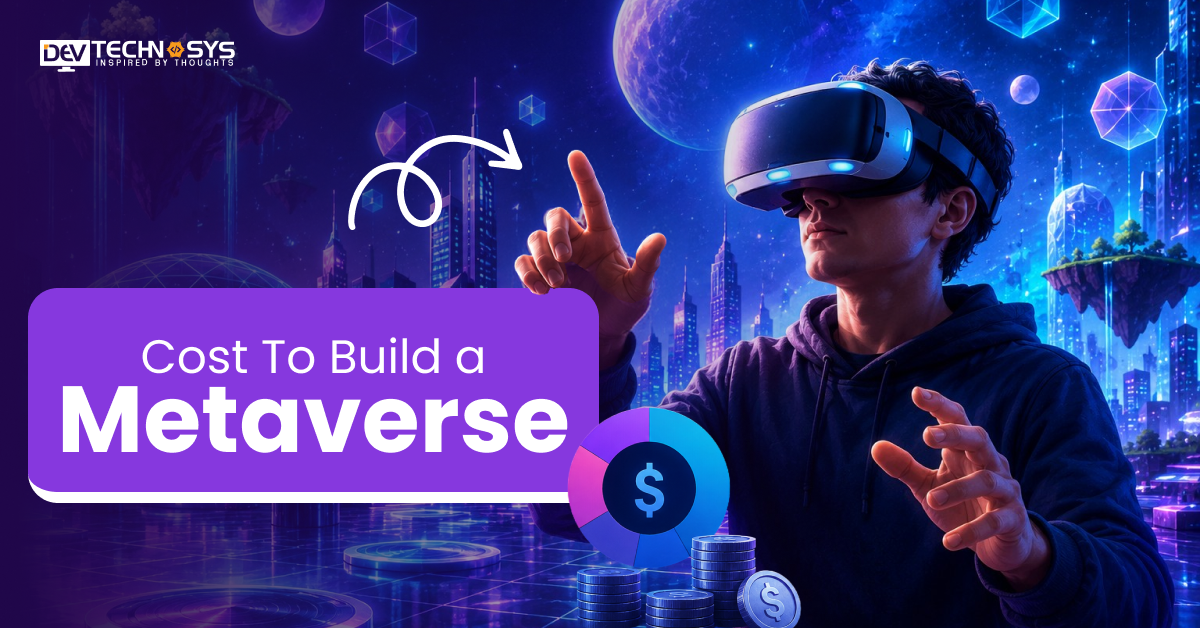
The metaverse is firmly rooted in reality and rapidly developing into a viable medium for interaction, commerce, e-commerce, education, and entertainment. Creation of new ideas and innovation is abundant within the metaverse via the use of various technologies such as immersive 3D virtual worlds, NFT-powered economies, interactive game environments, etc. However, a common question that much of the entrepreneurial community and some businesses continue to face is, ” How much does it cost to build a metaverse?
The answer to this question depends on multiple factors, including the complexity of the platform, 3D asset design specifications, blockchain technology integrations, virtual property ownership, and the variety of user experience features.
It is critical for any business that wishes to build a metaverse.
Whether it be a simple virtual environment or an entire digital ecosystem, having an understanding of both the individual drivers of cost and the overall metaverse MVP cost before making a significant investment and expecting a successful long-term outcome.
What is Metaverse?
A metaverse stands for a collective online reality, where individuals can interact socially, work, and play by using an avatar in an immersive environment. In addition to this shared environment, a metaverse is powered by existing and emerging technologies like VR, AR, Blockchain, and AI.
These technologies merge traditional (real-world) experiences with digital experiences. This allows people to participate in events, explore worlds, and purchase items anywhere in the world while having real-time interactions.
Latest Market Projections of Metaverse
- Statista says the number of users of the metaverse market is expected to increase to around 2.6 billion by the end of 2030.
- In accordance with Technavio, North America dominates the metaverse market and holds a share of around 41% during the forecast period.
- As stated by Statista, the user penetration is around 21.6% in 2026, and it is projected to hit around 39.7% by the end of 2030.
- According to Grand View Research, the software segment in the metaverse market is the highest revenue share holder, around 41.6% in 2026.
- The global metaverse market is expected to grow with a CAGR of 35.63% during the forecast period from 2026 to 2030.
Why Invest in Metaverse Development?
Investing in metaverse development gives you the opportunity to be part of a rapidly expanding digital economy where gaming, socializing, education, and business all exist together in one place. The benefits of Metaverse for Businesses include new revenue streams via virtual assets, NFTs, and various immersive experiences.
By getting in on the ground floor of this incredible opportunity, companies can improve customer connection points, brand positioning, and remote collaboration.
As more advanced technologies such as virtual reality, augmented reality, and artificial intelligence continue to develop and grow in their applicability. It is anticipated that the Metaverse will become the primary platform for the next-generation internet and digital interaction.
What is the Cost to Build a Metaverse in 2026?
The cost to develop a metaverse in 2026 lies between $20,000 and $120,000 or based on the actual demands and requirements of the project. Involves various factors, such as customizable avatars, 3D environments, blockchain integrations, NFTs, real-time interactions, AR/VR capabilities, virtual commerce, multiplayer capabilities, and more. There are many additional factors that exist, such as deployment platforms, maintenance, security, testing, designing, and many more.
Metaverse Type |
Estimated Cost (2026) |
Key Features |
| Basic Metaverse | $20,000 – $40,000 | 3D virtual environment, avatars, chat, basic interactions |
| Standard Metaverse | $40,000 – $80,000 | Custom avatars, multiplayer features, virtual assets, enhanced UI/UX |
| Advanced Metaverse | $80,000 – $120,000 | VR/AR support, blockchain integration, NFTs, virtual commerce, scalable infrastructure |
Note: As per our project manager, we developed around 15+ metaverse-type projects, and with our observation, this is the average estimated cost of development, or based on the customization.
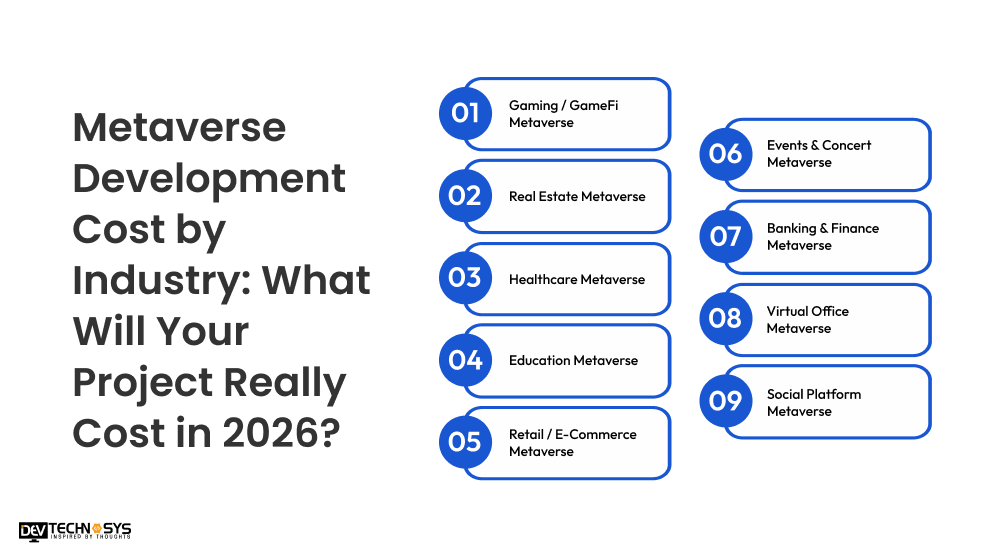
Metaverse Development Cost by Industry: What Will Your Project Really Cost in 2026?
The cost to build a metaverse varies greatly between different industries. Factors like how the application will function, its user engagement level, technology requirements, and skillset needed to develop an application all contribute to an organization’s total cost to create a metaverse application.
1. Gaming / GameFi Metaverse
Cost Range: $30,000 – $140,000+
The gaming industry is one of the most complex virtual environments that requires 3D immersive worlds, NFT integration, tokenomics, multiplayer microservices architecture, real-time interactions, and many more.
These key cost drivers can increase the overall cost to create a metaverse, and it also includes advanced gameplay, a large concurrent user base, and a physics engine.
Real World Example: The Sandbox and Decentraland have invested heavily in virtual land ownership, digital assets, and blockchain-based economies.
2. Real Estate Metaverse
Cost Range: $13,000 – $80,000+
The real estate metaverse includes virtual property tours, property marketplaces, digital twins, interactive navigation, and more. There are many advanced functionalities used to make a customized real estate metaverse, such as 3D replicas of buildings, property visualization, and interactive environments.
Real World Example: Matterport enables immersive digital property experiences through high-fidelity virtual twins.
3. Healthcare Metaverse
Cost Range: $30,000 – $150,000
The healthcare metaverse platforms involve different types of services and features, such as secure patient records, VR treatment simulations, telemedicine tools, and blockchain integration. The healthcare metaverse requires strict security measures like HIPAA/GDPR compliance, privacy techniques, and interoperability.
Real World Example: Mayo Clinic VR training initiatives, Osso VR, XRHealth
4. Education Metaverse
Cost Range: $15,000 – $110,000
The cost to develop an education metaverse is mainly based on the functionalities, such as LMS integration, VR classrooms, student analytics, interactive simulations, assessment systems, and more. Many other factors can impact the total cloud-native metaverse development cost, such as the development team, project complexity, and more.
Real World Example: Harvard University’s virtual and immersive learning projects and Stanford University’s VR education research.
5. Retail / E-Commerce Metaverse
Cost Range: $25,000 – $120,000
The ecommerce metaverse development depends on several factors, like virtual storefronts, product catalog, AR try-ons, inventory synchronization, payment integration, and more. The ecommerce metaverse can be costly compared to other industries because it requires a range of advanced functionalities to show its products.
Real World Example: Nike and Nikeland, Walmart virtual commerce initiatives, Gucci virtual experiences
Look What Accenture Says About Metaverse:
Industrial metaverse uses digital twins, AR/VR, and AI for factories, simulation, and design optimization across industries.
6. Events & Concert Metaverse
Cost Range: $30,000 – $150,000
The cost to create a metaverse for events and concerts will vary based on what features are incorporated within the development. It involves virtual venues, live-streaming capabilities, methods to engage with audiences, digital ticketing, customizable avatars for the audience to utilize within the virtual world, and real-time communications between the performer and audience.
Real World Example: Fortnite, Roblox, Wave
7. Banking & Finance Metaverse
Cost Range: $40,000 – $180,000
The cost to make a metaverse for banking & finance will vary based on what features are incorporated within the development. Involves secure digital transactions, virtual branches where people can do banking, verification of identity, integration of blockchain technology, tools for creating financial dashboards, keeping regulatory requirements and compliance, etc.
Real World Example: JPMorgan Chase, HSBC, Standard Chartered
8. Virtual Office Metavers
Cost Range: $25,000 – $130,000
The cost of creating a virtual office metaverse will vary based on what features are incorporated within the development, such as collaborative workspaces, video conferencing tools, avatars of employees, document-sharing capabilities, project management integrations, and enterprise security features. Digital workplace developers tend to have specific requirements for designing and creating a custom-designed environment.
Real World Example: Microsoft, Meta, Spatial
9. Social Platform Metaverse
Cost Range: $20,000 – $140,000
The cost to build a metaverse as a social platform varies greatly depending on several factors, such as avatar creation, social interaction features, virtual communities, messaging systems, user-generated content, and moderation tools.
It is important to build a strong foundation of infrastructure and interactive experiences that encourage people to engage with each other and contribute to the content they create together.
Real World Example: Meta, VRChat, Rec Room
Planning a Smart Contract Project?
Get a tailored development cost estimate in a few simple steps.
- 3 quick steps
- 100% free
- Reply in 1 business day
2 Minutes Read
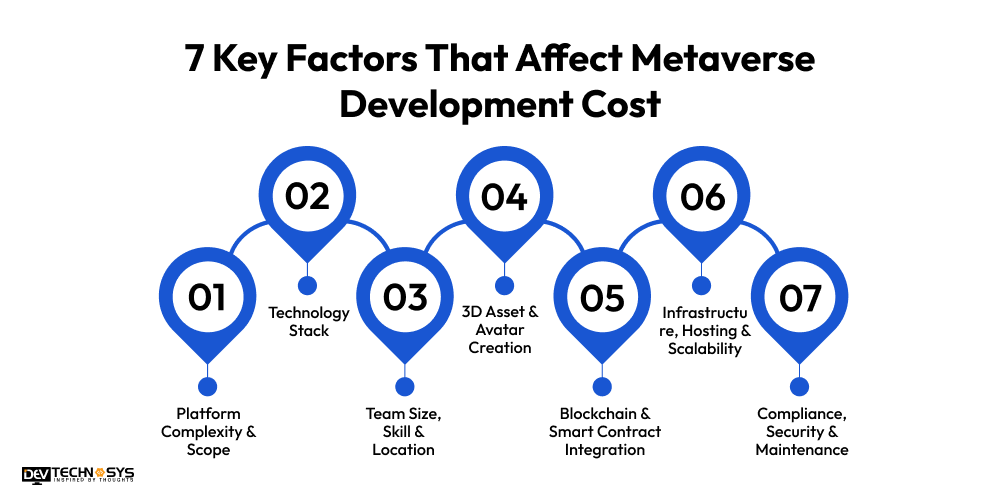
7 Key Factors That Affect Metaverse Development Cost
There are many critical elements that influence the price of the metaverse and the RWA tokenization platform development. These include: platform complexity, design of 3D environments, integration with blockchains, avatar customization, creation of virtual assets, security needs, scalability, etc. By being aware of these factors, a company can better establish its budget, as well as determine the most important aspects.
1. Platform Complexity & Scope
The complexity and size of your metaverse platform will drive the majority of your costs. The more features, functions, and interactions your project has, the more expensive it will be to develop.
For example, building a basic virtual room is much cheaper than creating an expansive, physics-enabled world that has AI-driven NPCs, dynamic environments, and real-time multi-user. Therefore, the number of layers you have to utilize to create the final product will significantly multiply the overall cost to build a metaverse.
Complexity Level |
Features Included |
Affected Cost |
| Basic | Single virtual environment, basic avatars, chat functionality | $3,000 – $10,000 |
| Medium | Multiple virtual spaces, multiplayer interactions, and custom experiences | $10,000 – $25,000 |
| Advanced | Large-scale virtual world, AI features, immersive VR/AR experiences | $25,000 – $50,000 |
2. Technology Stack
When you create a metaverse from scratch, you have complete control; however, this is also the most expensive option. A better option is to use existing game engines, such as the Unity 3D engine and Unreal engine development, because using pre-existing technologies increases efficiency and decreases the amount of time and money needed to complete your project.
Other technologies will also have an impact on the final blockchain app development cost, such as AR and VR SDKs, blockchain protocols, and AI integrations, which will all make your final product much more expensive.
Technology Level |
Components |
Affected Cost |
| Basic | Unity/Unreal Engine, standard backend services | $2,000 – $8,000 |
| Medium | Custom APIs, advanced databases, and real-time networking | $8,000 – $15,000 |
| Advanced | AI integration, digital twins, cross-platform support | $15,000 – $30,000 |
3. Team Size, Skill & Location
The rate charged by developers in North America typically ranges from $80 to $150 per hour, compared to developing teams located in Eastern Europe or Asia that typically charge $25 to $60 per hour.
Aside from developers, you will need support personnel such as 3D artists, blockchain engineers, UX designers, and QA testers. Therefore, the skill level and experience of your team, as well as the location of your team, will all impact the total agile metaverse development cost by many thousands of dollars.
Team Type |
Resources |
Affected Cost |
| Small Team | Developers, UI/UX designers, QA testers | $5,000 – $15,000 |
| Mid-Sized Team | Specialized developers, 3D artists, and project managers | $15,000 – $30,000 |
| Enterprise Team | Senior experts, blockchain engineers, VR specialists | $30,000 – $50,000 |
4. 3D Asset & Avatar Creation
A custom-built avatar, building, and object all need to be created, frequently by very skilled artisans. Building out 3D environments that are unique to you takes a lot more effort than normal, making it a very large line item in any budget for smart contract development. Asset libraries will reduce the cost to make a metaverse. However, creative production still needs to be performed for anything that is unique to you.
Asset Complexity |
Deliverables |
Affected Cost |
| Basic | Standard avatars, simple objects, basic environments | $2,000 – $8,000 |
| Medium | Custom avatars, branded assets, and detailed environments | $8,000 – $15,000 |
| Advanced | Highly realistic avatars, animations, immersive worlds | $15,000 – $25,000 |
5. Blockchain & Smart Contract Integration
In addition to providing security audits for smart contract development, it may add $3,000 to $30,000 to your total virtual reality app development cost, depending on operational requirements.
The complexity gets even larger as you begin to build out your metaverse with NFT/crypto ownership, virtual economies, token transactions, and decentralized governance. Each smart contract’s code needs to be audited in order to mitigate the risk of user financial losses and maintain the integrity of your platform.
Integration Level |
Features |
Affected Cost |
| Basic | Wallet connectivity, simple token support | $3,000 – $8,000 |
| Medium | NFT marketplace, asset ownership, smart contracts | $8,000 – $15,000 |
| Advanced | Multi-chain support, DeFi features, complex tokenomics | $15,000 – $30,000 |
6. Infrastructure, Hosting & Scalability
The cost of hosting your project in the cloud via services such as AWS, Azure, and Google Cloud varies from $500/month for basic setups to $25,000+/month for enterprise-level hosting with Content Delivery Networks.
In order to support a high number of concurrent users, the infrastructure must have the ability to scale & provide this capacity over time as the user base grows.
Infrastructure Level |
Capabilities |
Affected Cost |
| Basic | Shared cloud hosting, limited concurrent users | $500 – $5,000 |
| Medium | Dedicated servers, improved performance, and uptime | $5,000 – $12,000 |
| Advanced | Global cloud infrastructure, auto-scaling, high availability | $12,000 – $25,000 |
7. Compliance, Security & Maintenance
Legal and compliance fees typically cost more than you anticipate and can have a significant impact on the long-term profitability of a project. Post-launch security audits, as well as ensuring compliance with the General Data Protection Regulations (GDPR), and the ongoing cost of managing content moderation systems. It will make up approximately 15-20% of your original cost of NFT token development services each year.
Security Level |
Coverage |
Affected Cost |
| Basic | Standard testing, bug fixes, security patches | $2,000 – $5,000 |
| Medium | Smart contract audits, compliance checks, and monitoring | $5,000 – $10,000 |
| Advanced | Enterprise-grade security, continuous monitoring, and long-term maintenance | $10,000 – $20,000 |
Want a chatbot demo or pricing? Fill the form and talk to our experts today.
Pick what you need below — you can select more than one — then tap Get detail to continue.
-
Chatbot demo dashboard
-
Cost to develop an app
-
Industry report
-
Case study
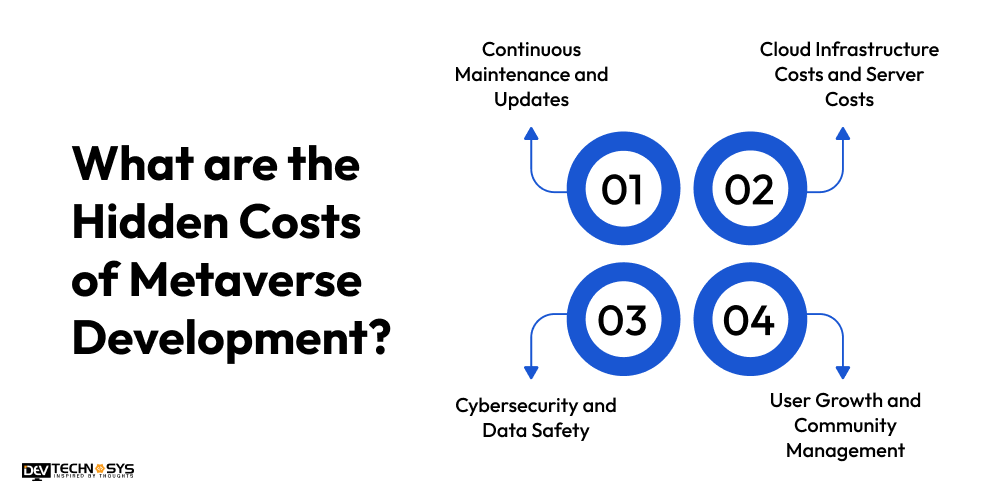
What are the Hidden Costs of Metaverse Development?
Although most attention is usually placed on development costs, other less obvious types of costs can greatly affect the overall budget available for NFT marketplace development services.
Understanding these additional costs early will help companies avoid spending more than they budget and will assist in developing a metaverse platform that will last and be successful.
1. Continuous Maintenance and Updates
The ongoing upkeep of metaverse platforms happens continuously, and this includes repairs to bugs, upgrades for improved operations, enhancements for additional Capabilities, and the continued functioning of the Platform with an ever-changing technology landscape.
Keeping users active on the platform and preventing future security breaches requires regular updates. As per the top metaverse development companies, this can add significantly to your long-term operating costs after the initial development.
2. Cloud Infrastructure Costs and Server Costs
A metaverse platform relies significantly on cloud infrastructure to facilitate real-time interaction, store large amounts of data, and accommodate the large number of users that will be using the Platform.
As the Platform grows, so do server costs, bandwidth costs, and the cloud services used to run the Platform. These create substantial ongoing operating costs and often go unaccounted for.
3. Cybersecurity and Data Safety
The safeguarding of user data, digital assets, and transactions has to include a considerable investment in technical security. Security costs will also likely include encryption mechanisms, assessments of security vulnerabilities, security audits, tools to prevent fraud, and subsequent periods of compliance with data neutrality laws. The failure to adequately secure the Platform could result in a breach that negatively impacts users and damages the reputation of the business.
4. User Growth and Community Management
Building the metaverse is just one component of your investment. Attracting and retaining users typically requires additional investment, such as developing marketing strategies, influencer relationships, customer support staff, community moderation contacts, and ongoing community engagement programs. These recurring costs will have a significant impact on your ability to succeed as a long-term business.
Industry Insights:
According to Accenture, around 89% of C-suite leaders believe the metaverse will impact growth; focus shifting from gaming to enterprise value creation.
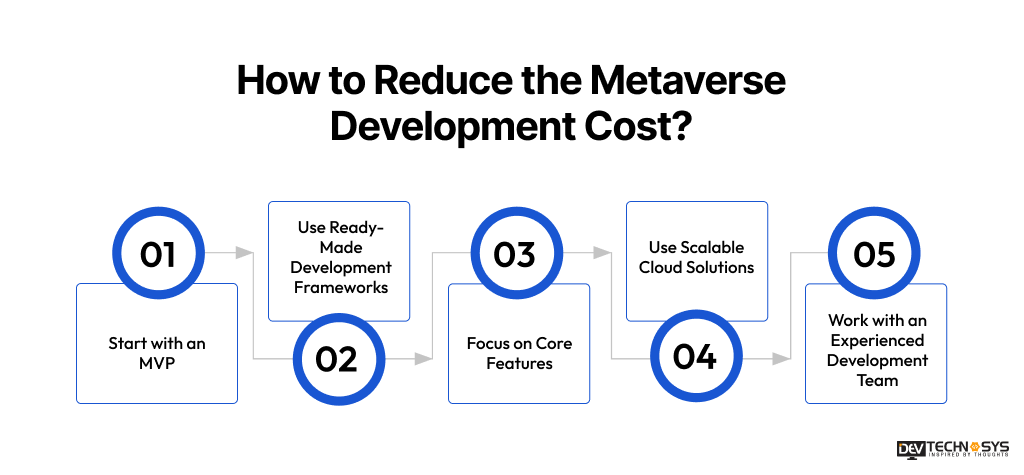
How to Reduce the Metaverse Development Cost?
Developing for the Metaverse can get costly; however, if you have a strategic plan in place, you can have control over your costs while still providing high-quality development.
To cut down the cost to develop a metaverse, companies should create an MVP first, utilize pre-existing frameworks, prioritize their must-have features, invest in scalable infrastructure, and use developers who have previous experience with Metaverse and Solidity development services.
1. Start with an MVP
Begin by creating a basic version of your metaverse that contains only the core features. Doing this will help reduce avatar creation costs, validate your idea, collect user feedback, and gradually expand as demand for your product grows.
2. Use Ready-Made Development Frameworks
Make use of an existing metaverse framework, SDKs, or game engines rather than trying to build everything from the ground up. This speeds up the Dapp development process, reduces overall technical complexity, and substantially lowers the total cost to develop a metaverse.
3. Focus on Core Features
Concentrate on creating features that will provide users with the greatest amount of value to them. Focus on these features in the beginning and do not spend money implementing additional features until you are close to reaching the objectives you established for the business and creating user engagement.
4. Use Scalable Cloud Solutions
Select a cloud infrastructure to which you can easily scale as your user base expands. One way to keep your operational costs low is to pay for only what you use, and this will also help ensure reliable platform performance.
5. Work with an Experienced Development Team
Partnering with a reputable web3 development company will decrease the number of costly mistakes, shorten production timelines, and improve overall project efficiency.
Additionally, the experienced developers at these companies can also help to optimize project resources while ensuring high-quality deliverables are produced within budget constraints.
Build Vs Buy Vs Partner: Which is Best for Metaverse Development?
Build gives full control but is costly and slow, Buy is faster but limited in customization, and Partner balances speed, expertise, and cost for scalable metaverse development success.
Factor |
Build |
Buy |
Partner |
| Cost | High investment in team, tools, and R&D | Low upfront cost, subscription/license-based | Moderate cost, shared with vendor |
| Time to Launch | Slow (long development cycle) | Fast (ready-made solutions) | Medium (co-development timeline) |
| Customization | Fully customizable, complete control | Limited customization within the platform | High customization depending on the partner |
| Control | Full ownership of IP, data, and roadmap | Limited control, vendor dependency | Shared control and responsibilities |
| Technical Effort | Requires strong in-house expertise | Minimal technical effort needed | Requires coordination with experts |
| Risk | High (development and execution risk) | Low (proven platforms) | Medium (depends on partner reliability) |
| Maintenance | Fully in-house responsibility | Handled by vendor/platform | Shared maintenance effort |
| Best Use Case | Large-scale, unique metaverse ecosystems | MVPs, pilots, quick marketing activations | Businesses need a balance of speed and customization |

How Long Does it Take to Create a Metaverse?
To develop a metaverse with basic functionality, it usually takes around 2 to 4 months. Developing a metaverse with additional features, such as avatar creation, 3D assets, hosting virtual events, and more, the metaverse development timeline mainly takes around 3 to 6 months.
Phase |
Activities |
Duration |
| Discovery & Planning | Requirements gathering, market research, and feature roadmap | 1–2 weeks |
| UI/UX Design | Wireframes, user journeys, avatar, and environment concepts | 2–3 weeks |
| 3D Environment Development | Virtual world creation, asset modeling, scene design | 4–6 weeks |
| Core Platform Development | User authentication, avatars, interactions, backend systems | 6–8 weeks |
| Multiplayer & Social Features | Chat, voice, friend system, events | 2–4 weeks |
| Testing & Quality Assurance | Bug fixing, performance optimization, security testing | 2–3 weeks |
| Deployment & Launch | Cloud setup, monitoring, and final release | 1 week |
Note: Our CTO, Mohit Nag, says that we build around 16+ metaverse projects for different industries. So we calculate that the average time of development is around 3 to 6 months, depending on the client’s requirements.
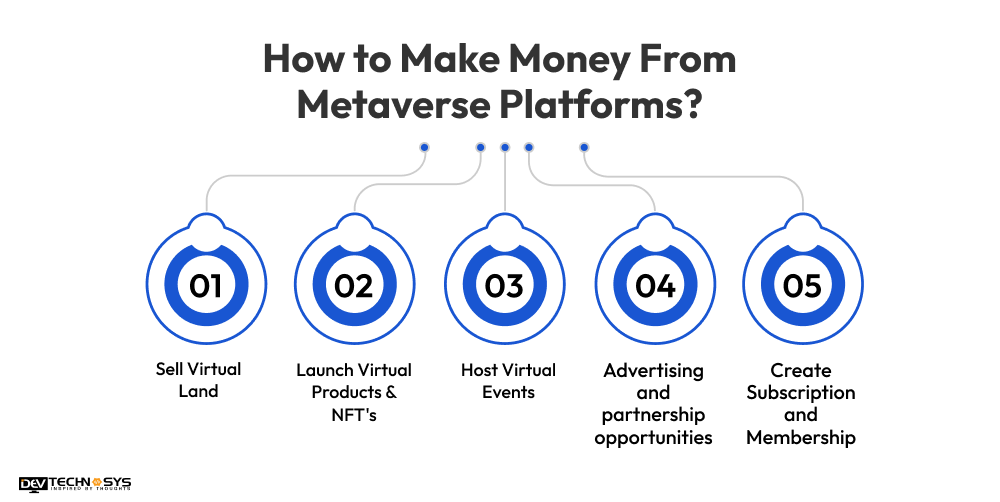
How to Make Money From Metaverse Platforms?
The metaverse affords businesses, creators, and investors numerous ways to generate revenue. These include purchasing virtual land and assets, hosting events, running advertisements, and providing premium memberships. The metaverse provides a host of creative ways businesses can generate revenue that is sustainable over time and will support their growth.
1. Sell Virtual Land
Companies and individuals can buy, develop, and lease out virtual land on the various metaverse platforms. They may also create events to entertain and attract a variety of audiences.
2. Launch Virtual Products & NFT’s
Businesses and creators can create and sell digital products such as clothing, collectibles, and digital artwork. According to the DeFi development company, this can be done through direct sales or through a secondary market.
3. Host Virtual Events
Businesses can make money by creating virtual events such as concerts, conferences, workshops, and gaming tournaments. This revenue can be derived from ticket sales, sponsorships, premium visitor packages, advertisement opportunities, and unique experiences for guests.
4. Advertising and partnership opportunities
Businesses are able to monetize on metaverse platforms through advertising, sponsoring events, and creating experiential products in the metaverse. More and more brands are investing in immersive marketing campaigns in order to connect with consumers and improve brand loyalty.
5. Create Subscription and Membership
Creating subscription and membership offerings also opens up opportunities for platform owners to create recurring revenue by providing paid memberships, exclusive content, advanced customizations, and additional services. Subscription-based models will foster user retention over time.
Conclusion
There is a considerable range in the potential costs associated with developing a metaverse based upon an individual project’s size, functionality, technological infrastructure, and user engagement. The experience of the user when using a virtual environment is determined by the variety of elements constituting that experience.
It follows that there is a continuum of potential monetary investment opportunities, from relatively inexpensive options to millions of dollars for enterprise-level solutions. However, proper planning and choosing the right enterprise blockchain development company can effectively manage the risks of incurred costs.
Frequently Asked Questions
Find answers to the most common questions related to this article.
The cost to develop a metaverse is typically between $20,000 to over $120,000, depending on the type, sophistication, and scale of features for the project being developed. More basic virtual environments will be less expensive than those metaverse platforms targeted at enterprise customers. Those enterprise-type metaverse platforms tend to require far more working dollars in order to develop due to their use of blockchain technology.
Yes, the inclusion of AR and VR technologies does add a significant amount to the cost to create virtual reality platform. Both AR and VR require very specific types of design for each of those technologies, as well as being designed to be compatible with specific hardware, having immersive functions for the end-user, and having advanced levels of testing performed prior to being launched.
The time frame for valuable development; however, the average length of time a project takes to develop is between three months and greater than oneyear. A project could be developed and launched at a faster rate if the complexity of the project is less than that of a project requiring advanced features, blockchain technology, multi-user capabilities, and heavy customization.
The costly aspects of developing a metaverse are often 3D worlds, advanced features, multicharacter functionality, virtual assets, and scaling the platform. You can drive up costs further when a company needs to highly immerse the user, make custom integrations into the metaverse, or provide enterprise-level performance.
Industries that have made heavy investments in metaverse development include gaming, retailing, health care, education, real estate, entertainment, finance, and manufacturing. Each industry has its own specific needs, requirements, and costs associated with developing and implementing metaverse solutions.