













“Buy, Store, Swap, and Earn”
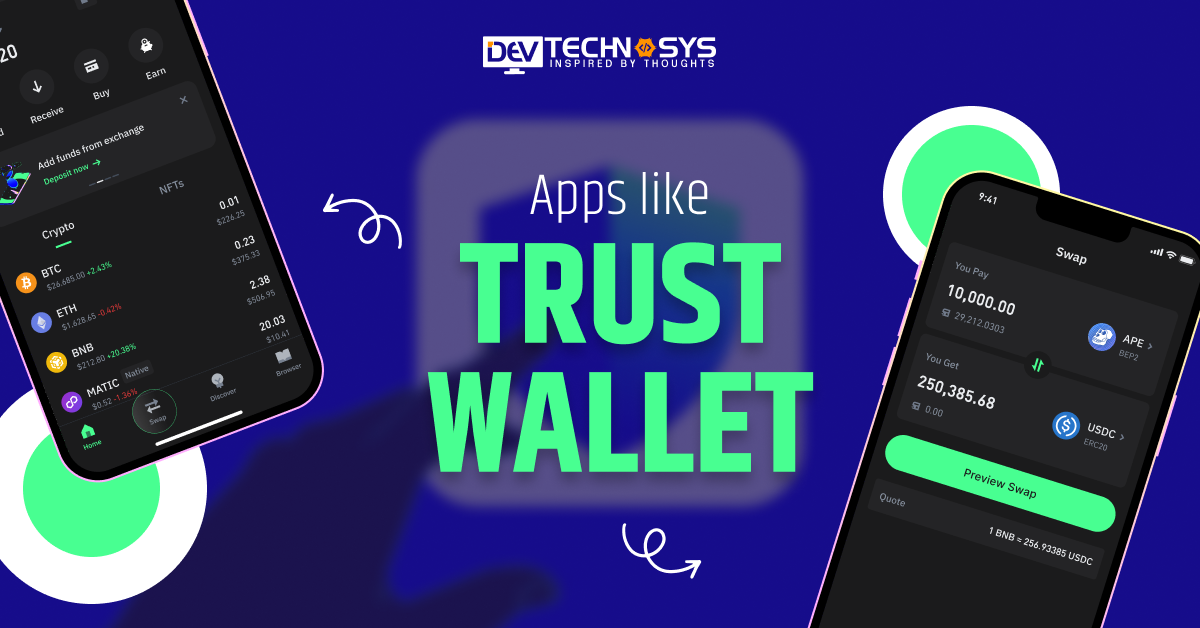
In this digital currency world, the crypto wallet applications are a crucial part to manage the digital currencies such as Bitcoin, Solana, Dogecoin, and others. The Trust Wallet app has gained a lot of success in a very short time, and many people use it for currency swapping, transferring, storing, buying, and selling.
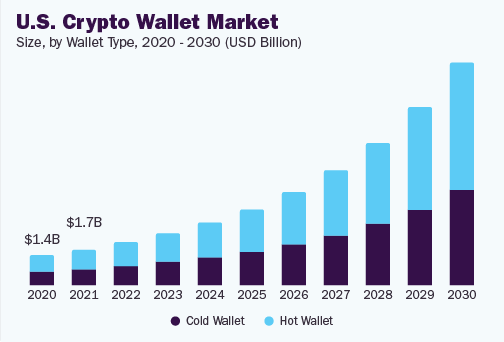
As per the global market, the mobile crypto wallet apps market was valued at around $10.27 billion in 2023; it is projected to grow to around $48.27 billion by the end of 2030.
Investing in cryptocurrency wallet applications is a smart move for business owners looking to tap into the booming digital finance sector.
In this blog, we will explore how to develop crypto wallet apps like Trust Wallet and why businesses are investing in them.
Keep Reading!
What is Trust Wallet?
Trust Wallet is a secure, decentralized mobile cryptocurrency wallet that allows users to store, transfer, receive, and manage a variety of cryptocurrencies, including Ethereum, Bitcoin, and the Binance Smart Chain token.
Cryptocurrency wallet apps like Exodus or Trust Wallet support hundreds of currencies and tokens and offer features such as staking, in-app trading, and access to decentralized programs (dApps). Binance owns Trust Wallet, which allows customers complete control over their private keys and digital assets.
- Multi-Currency Support
- Built-in Web3 Browser
- Staking and Earning
Market Analysis of Global Crypto Wallet Applications
- The market for cryptocurrency wallet applications was estimated to be worth $10.27 billion in 2026 and is expected to reach $48.27 billion by the end of 2030.
- According to a study, the virtual wallet apps is expected to increase with a compound annual growth rate of around 8% from 2026 to 2030.
- With a 83% market share in 2024, North America led the cryptocurrency wallet industry.
- Coinbase Global, Inc., BitGo, Binance, BitPay, SatoshiLabs s.r.o. (Trezor), Ledger SAS, BlockFi Inc., Exodus Movement, Inc., ZenGo Ltd., Crypto.com, and Blockchain.com, Inc. are a few of the major companies in the cryptocurrency wallet sector.
- Growing financial awareness, cryptocurrency use, and corporate adoption of cryptocurrencies are major drivers propelling the growth of the secure crypto wallet industry.
User Case Study: Trust Wallet
- Founded in 2017 by Viktor Radchenko, Trust Wallet began as a Ethereum wallet app and ERC20 tokens.
- Quickly gained traction due to its user-friendly design and non-custodial nature—users fully control their private keys.
- In 2018, Binance acquired Trust Wallet, boosting its development and expanding token support.
- Evolved into a multi-chain wallet, supporting 70+ blockchains, millions of assets, and NFTs.
- Introduced Web3 browser, enabling seamless interaction with DeFi wallet app apps like Uniswap and PancakeSwap.
- Offers in-wallet staking for coins like BNB, ATOM, and TRX, making it a one-stop DeFi hub.
- Launched Trust Wallet Token (TWT) to enhance governance and incentivize usage.
- Today, it serves 80M+ users globally, particularly in emerging crypto markets.
- Recognized for strong security, open-source development, and educational outreach through Trust Wallet Academy.
- Continues expanding features, NFT tools, and multi-chain integrations.
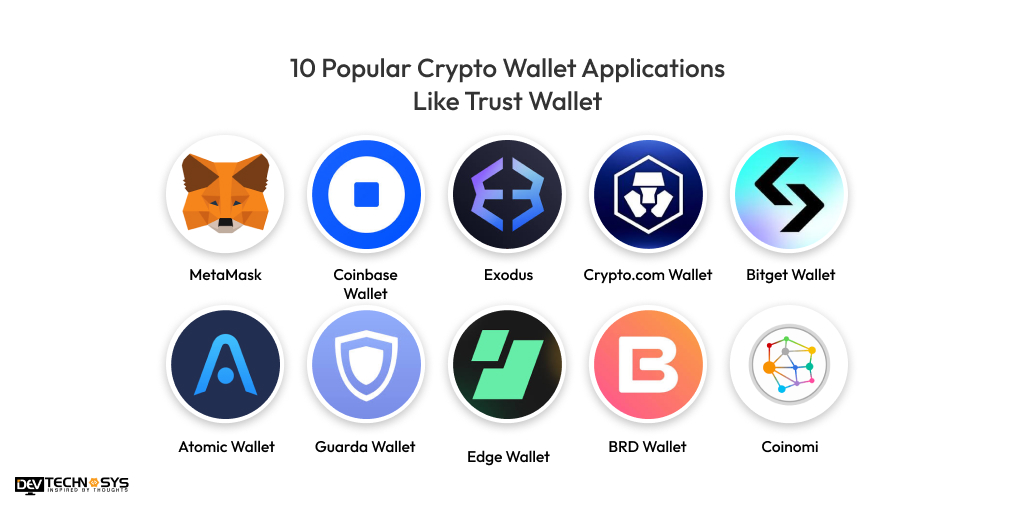
10 Popular Crypto Wallet Applications Like Trust Wallet
Sure! A detailed table of ten best blockchain wallet apps is provided below, along with information on their debut years, platform accessibility, and salient features:
Wallet App |
Downloads |
Stores Ratings |
Launch Year |
Platform Availability |
| MetaMask | 21M+ | 4.6 | 2016 | iOS, Android, Web |
| Coinbase Wallet | 10M+ | 4.5 | 2018 | Android, iOS, Web |
| Exodus | 4M+ | 4.5 | 2015 | Android, iOS, Web |
| Crypto.com Wallet | 100M+ | 4.4 | 2016 | Android, iOS, Web |
| Bitget Wallet | 30M+ | 4.6 | 2024 | Android, iOS, Web |
| Atomic Wallet | 10M+ | 4.5 | 2017 | Android, iOS, Web |
| Guarda Wallet | 5M+ | 4.4 | 2017 | Android, iOS, Web |
| Edge Wallet | 1M+ | 4.6 | 2014 | Android, iOS |
| BRD Wallet | 1M+ | 4.5 | 2014 | Android, iOS, Web |
| Coinomi | 10M+
|
4.4 | 2015 | Android, iOS, Web |
Why Businesses Are Ready to Build Crypto Wallet Apps Like Trust Wallet?
Businesses are creating cryptocurrency wallets at a quick pace in order to take advantage of monetization opportunities, boost consumer confidence, and gain control over the expanding decentralized ecosystem. This is due to the spike in the use of digital assets and Web3 innovation.
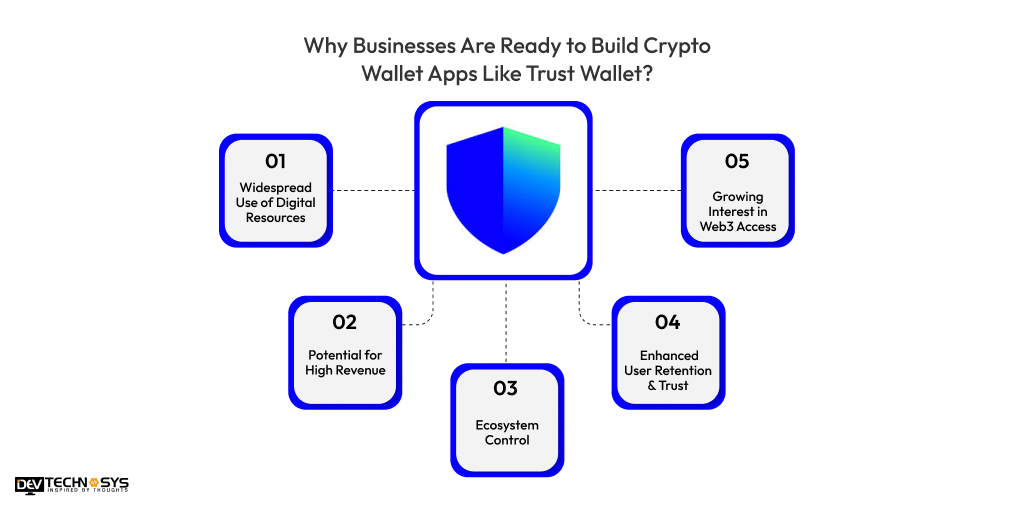
1. Widespread Use of Digital Resources
Users want wallets that are safe and easy to use as cryptocurrencies become more widely accepted. Companies view trust wallet clone app development as a chance to provide cutting-edge technologies, obtain a head start in the market, and satisfy the increasing need for managing cryptocurrency assets across many blockchains, particularly in token-based economies, NFTs, and decentralized finance (DeFi).
2. Potential for High Revenue
Transaction fees, swaps, staking commissions, and connection with DeFi protocols are some of the ways that multi currency wallet apps might make money. As the amount of transactions and the use of digital assets by users worldwide continue to increase, companies may access these revenue streams, lessen their reliance on outside parties, and create long-term value through BRC-20 wallet development.
3. Ecosystem Control
Businesses may keep complete control over security, user experience, and branding by creating their own web3 wallet app. For exchanges, NFT platforms, or DeFi protocols that want to control the whole customer experience, this autonomy is crucial because it enables them to incorporate distinctive features, customize services for particular audiences, and cultivate ecosystem loyalty.
4. Enhanced User Retention & Trust
By offering a smooth, reliable user experience, owning a branded cryptocurrency wallet promotes confidence. Personalized features, safe storage, and customer service are ways that businesses may improve retention. Additionally, investing in non-fungible token development helps companies keep consumers in their ecosystem rather than losing them to rival third-party apps.
5. Growing Interest in Web3 Access
Users are looking for safe, mobile-first wallets that enable decentralized protocols, dApps, and NFTs as Web3 penetration increases. Companies that provide wallets can serve as entry points to Web3 services, drawing in customers who want convenient, mobile access to the decentralized internet. This increases user engagement and establishes the brand as a Web3 pioneer.
How Artificial Intelligence Can Help Crypto Storage Apps?
- Fraud Detection & Security: AI algorithms can monitor transactions in real-time to detect unusual activity, helping prevent hacks, phishing, and unauthorized access.
- Personalized User Experience: AI can analyze user behavior to customize dashboards, suggest frequently used features, and recommend tokens or services tailored to each user.
- Predictive Analytics: AI-driven insights help users forecast market trends, track asset volatility, and make informed investment decisions directly within the wallet.
- Natural Language Support: AI chatbots can provide 24/7 customer support, explain crypto concepts, assist with wallet operations, and guide users through complex DeFi features.
- Automated Portfolio Management: AI can help users automatically rebalance their crypto portfolios based on real-time performance and market data.
- Regulatory Compliance: AI assists in KYC/AML checks, ensuring wallets comply with global regulations by analyzing documents and monitoring transaction patterns efficiently.
7 Powerful Steps to Develop Crypto Wallet Apps like Trust Wallet
To create crypto wallet apps like Trust Wallet, businesses first need to consider the market analysis and understand each process to easily develop high-quality crypto management apps. So, here we provide the cryptocurrency wallet development process:

1. Market Research & Requirement Analysis
Let’s begin the first stage of trust wallet app development, analyze competitors, target audience, and regulatory requirements. Identify essential features like multi-coin support, security protocols, and dApp integration. This sets a strong foundation by aligning business goals with user needs and technical feasibility.
2. Choose Blockchain Platform & Tech Stack
Hire crypto wallet developers to select compatible blockchains (e.g., Ethereum, BNB Chain) and tech stack, including programming languages, APIs, and SDKs. Consider scalability, transaction speed, and support for smart contracts to ensure long-term functionality and compatibility.
3. Design User Interface (UI/UX)
In the third stage of trust wallet app development, create an intuitive, responsive, and secure interface that simplifies wallet operations. Hire a Trust Wallet app development company to focus on ease of navigation, clean design, and accessibility across devices. A well-designed UI builds trust and enhances the user experience.
4. Develop Core Wallet Features
Build essential functionalities like multi-currency support, QR scanning, transaction history, wallet backup, and private key control. Hire a blockchain app development company to use strong encryption techniques and ensure real-time synchronization with blockchain networks for smooth performance.
5. Integrate dApps and Web3 Support
In the fifth stage of the trust wallet clone app development process, add Web3 libraries and a dApp browser to enable users to interact with decentralized applications. Ensure secure transaction signing and wallet connectivity with DeFi, NFT, and staking platforms to enrich user utility.
6. Ensure Security & Compliance
Implement robust security measures including end-to-end encryption, biometric authentication, secure key storage, and anti-phishing protocols. Follow KYC/AML compliance if needed, depending on your operating region and business model.
7. Test, Deploy & Maintain
You can hire cryptocurrency development company to Conduct extensive testing for performance, security, and user experience. Launch the wallet on app stores after ensuring regulatory compliance. Provide regular updates, bug fixes, and feature enhancements based on user feedback and blockchain trends.
Case Study: PayCoinz
10 Basic and Premium Features of a Crypto Wallet Apps like Trust Wallet
Blockchain storage apps like Trust Wallet offer a range of features that make them essential tools for managing cryptocurrencies. Here are the key features of these apps:
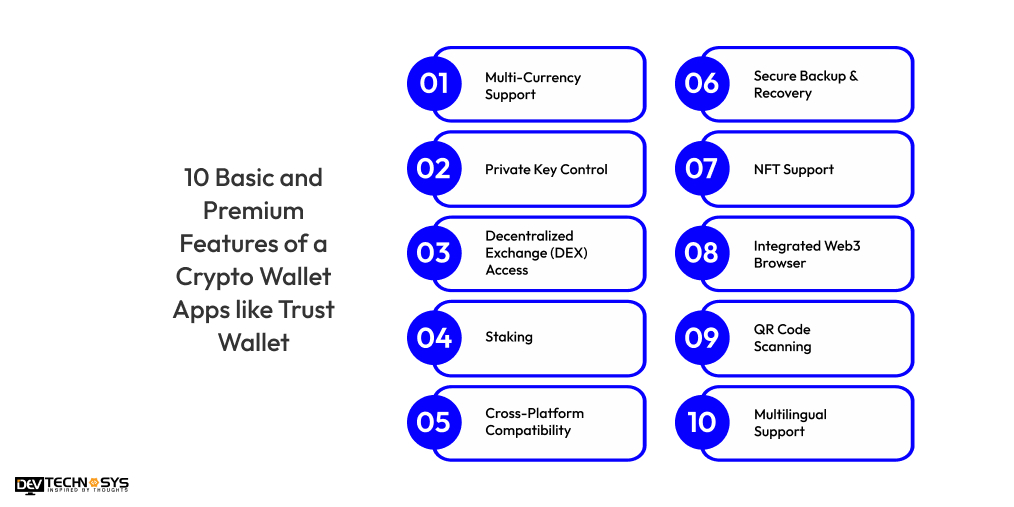
1. Multi-Currency Support
Supports various cryptocurrencies, including Bitcoin, Ethereum, and numerous altcoins, allowing users to manage all their assets within a single, unified wallet.
2. Private Key Control
Users retain complete control of their private keys, ensuring high security and ownership over their funds, without relying on third parties.
3. Decentralized Exchange (DEX) Access
Trust Wallet alternatives enable direct trading of cryptocurrencies on decentralized exchanges within the app, without needing centralized exchanges, and maintaining privacy.
4. Staking
Trust Wallet similar apps allow users to stake certain cryptocurrencies and earn passive rewards directly from the wallet, offering a way to generate interest from holdings.
5. Cross-Platform Compatibility
The Trust Wallet clone script available on both iOS, Android, and desktop, ensuring easy access to assets across devices, keeping funds at users’ fingertips no matter where they are.
6. Secure Backup & Recovery
Minimum Viable Product(MVP) provides a seed phrase for backing up and recovering the wallet in case of device loss, ensuring that users never lose access to their funds.
7. NFT Support
Trust Wallet alternatives enable users to store, send, and receive NFTs, allowing seamless management of digital art and collectibles alongside traditional cryptocurrencies in one wallet.
8. Integrated Web3 Browser
Bitcoin wallet app directly access to decentralized applications (dApps) and smart contracts through the wallet, enhancing interaction with blockchain-based services.

9. QR Code Scanning
A white label crypto wallet app that sends and receives crypto by scanning QR codes, speeding up transactions and improving convenience for users during payments.
10. Multilingual Support
Trust Wallet similar apps offer multiple language options to cater to users worldwide, making the wallet more accessible to a diverse, global audience.
The Cost to Develop Crypto Wallet Apps like Trust Wallet
The cost to build a cryptocurrency wallet app like Trust Wallet varies based on platform (iOS/Android), features, design complexity, and development team location. The cryptocurrency wallet app development cost is between $8,000 and $25,000, with simple wallet functionality being less expensive and additional features such as multi-currency compatibility, biometric security, and blockchain integration pushing up expenses.
Development time might range from 2 to 6 months, depending on complexity. Ongoing maintenance and upgrades are extra expenses to consider for a fully operating cryptocurrency wallet.
Crypto Wallet App Development |
Estimated Cost |
Time Frame |
| Basic App Development | $8000 – $12000 | 2 to 6 Months |
| Mid-Premium App Development
|
$14000 – $19000 | 6 to 8 Months |
| High-Premium App Development
|
$25000+ | 9+ Months |
5 Key Factors That Affect Crypto Wallet App Development Cost
Understanding how back-end development, features, the development team, design, and ongoing maintenance impact the total cost of creating a safe and user-friendly wallet app is one of the key factors that affect the crypto wallet app development cost.
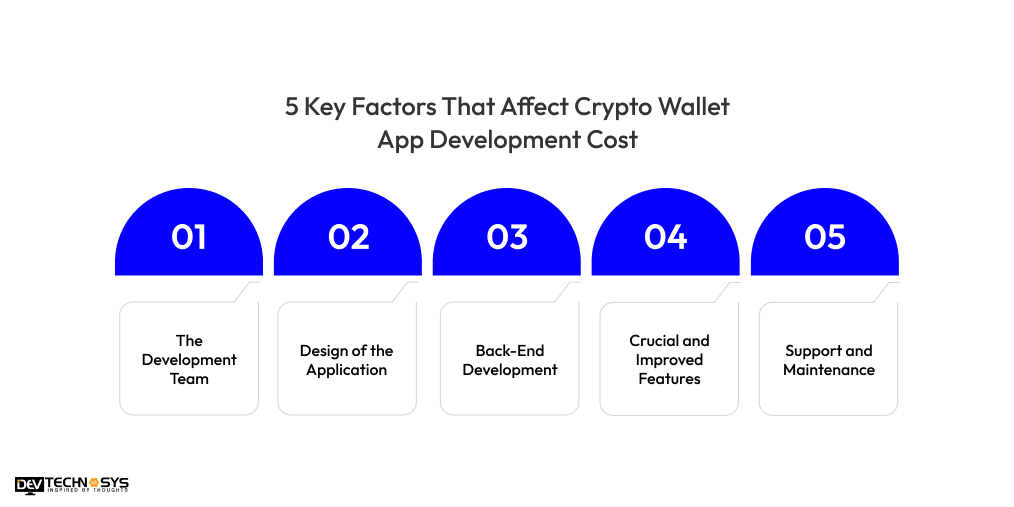
1. The Development Team
Costs are greatly impacted by the caliber and location of the development team. Highly qualified coders are typically more costly, particularly in blockchain and cryptocurrency. Although outsourcing to areas with less labor prices might save costs, communication or quality may suffer.
The crypto wallet development cost is increased by a well-rounded team that includes designers and project managers.
Developer’s Experience Level |
Cost Estimation |
| Entry-Level Developer | $15 – $18/ Per Hour |
| Mid-Level Developer | $18 – $22/ Per Hour |
| Senior-Level Developer | $25+ / Per Hour |
2. Design of the Application
In both user interface (UI) and user experience (UX), design is crucial. Trust Wallet app development cost will be reduced by a straightforward, user-friendly design, but more effort and skill are needed to create a polished, feature-rich design with animations, unique iconography, and seamless navigation.
In order to guarantee an aesthetically pleasing and useful interface, higher design complexity leads to higher expenditures.
Design Quality |
Cost Estimation |
| Basic Design | $8,000 – $12,000 |
| Complex Design | $15,000 – $22,000 |
3. Back-End Development
Any cryptocurrency wallet’s back-end, which manages transactions, security, and blockchain integration, is its foundation. Advanced coding, encryption, and smooth data storage solutions are necessary for a strong back-end.
Because complexity necessitates effective servers, APIs, and interaction with many blockchains, it raises crypto wallet development services cost, particularly for wallets that are cross-platform or multi-currency.
Backend Development |
Cost Estimation |
| Simple Backend Process | $10,000 – $18,000 |
| Advanced Backend Process | $20,000 – $28,000 |
4. Crucial and Improved Features
The price of a cryptocurrency wallet software increases with the number of functions it provides. Wallet creation, safe transactions, and asset management are essential aspects. More development is needed for enhanced features like in-app exchanges, biometric security, and multi-currency compatibility, which raises the Trust Wallet app development cost. The time and resources required for development grow with each additional feature.
Features |
Cost Estimation |
| Core Features(Private Key Management and Biometric Authentication) | $8,000 – $10,000 |
| Advanced Features(In-App Exchange and Blockchain Integration) | $13,000 – $19,000 |
5. Support and Maintenance
Because crypto asset wallets need to be updated frequently for security, blockchain integration, and bug fixes, ongoing maintenance and client support are crucial. Ten to twenty percent of the original development cost may be spent each year on maintenance.
The total blockchain app development cost is further increased by providing dedicated customer assistance for managing transactions and resolving problems.
Maintenance Phase |
Cost Estimation |
| Simple Maintenance Phase | $2,000 – $4,000/year |
| Complex Maintenance Phase | $7,000 – $9,000/year |
How to Make Money From Crypto Wallet Apps like Trust Wallet?
These monetization methods help generate consistent income while enhancing the value and usability of the NFT wallet app. Here are five ways to make money from cryptocurrency wallet applications like Trust Wallet:
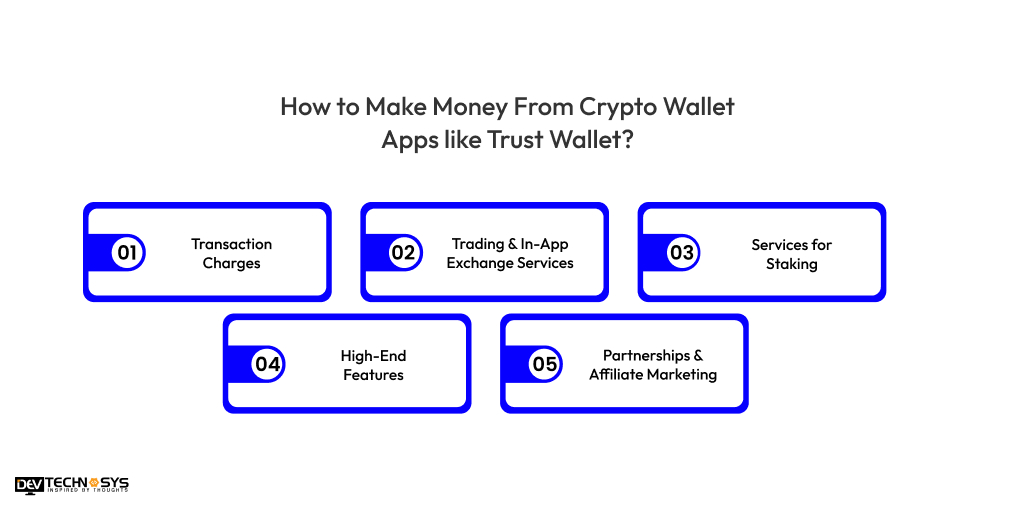
1. Transaction Charges
Small transaction fees are one of the most popular sources of income. Users that transmit or exchange cryptocurrencies may be charged by cryptocurrency wallet applications. These charges may be a percentage of the transaction value or a fixed cost. Users will be more inclined to pay the fees for convenience if the app offers a smooth, safe experience, which will generate a consistent flow of revenue.
2. Trading & In-App Exchange Services
By including a trading platform or in-app exchange, users may exchange cryptocurrencies from within their wallet. You may receive a commission on every trade or transaction by collaborating with outside exchanges or providing internal trading. The more people utilize the site to trade, the more money you may make.
3. Services for Staking
Users can earn rewards over time by locking their bitcoins in their wallets through staking. Applications for cryptocurrency wallets can provide staking services for a range of currencies and tokens, charging a charge to do so. These fees, which provide a steady stream of revenue, are frequently a proportion of the user’s incentives.
4. High-End Features
Another strategy to make money off of a cryptocurrency wallet software is to provide premium features. Users might pay for more sophisticated capabilities like speedier transactions, more security settings, or access to unique currencies by creating a tiered subscription model.
According to the ethereum development company, this business model offers consumers who need more functionality more value while generating recurring income.
5. Partnerships & Affiliate Marketing
Wallet applications can collaborate with other cryptocurrency-related services, such as trading platforms, exchanges, or even websites that provide news about cryptocurrencies. Crypto wallet applications can get referral bonuses or affiliate revenues by telling consumers about these services. Every time a user registers or makes use of a linked service, the app receives payment, generating extra income.

Conclusion
In conclusion, create an app like Trust Wallet involves careful planning, security measures, and seamless integration of features like multi-currency support, biometric authentication, and transaction history. Choosing the right cryptocurrency wallet development company is crucial for ensuring a robust, secure, and user-friendly product.
They bring expertise in blockchain integration, secure key management, and feature development. By focusing on user needs and employing the best technologies, you can create a successful crypto payment wallet that meets the demands of modern cryptocurrency users while also generating revenue.
Frequently Asked Questions
1. How Much Does It Cost To Develop Crypto Wallet Apps like Trust Wallet?
The cost to make crypto wallet apps like Trust Wallet typically ranges from $8,000 to $25,000, depending on features, platform, complexity, and the development team’s location and expertise.
2. How Much Time Does It Take to Create Crypto Wallet Apps like Trust Wallet?
To build an app like trust wallet, it typically takes between 2 and 6 months, depending on the complexity, features, platform, and the development team’s expertise and resources.
3. What Technologies Are Used to Develop an App Like Trust Wallet?
Digital wallet apps are developed using blockchain technologies, encryption protocols, mobile app frameworks (React Native, Swift, Kotlin), secure APIs for transaction processing, and databases for storing user data securely and efficiently.
4. Can I Customize the Wallet for Different Cryptocurrencies?
Yes, you can customize a crypto wallet to support different cryptocurrencies by integrating various blockchain networks and APIs. This allows users to store, send, and receive a wide range of digital assets securely.
5. How Do I Ensure the Security of the Crypto Wallet App?
To ensure security, implement encryption, two-factor authentication (2FA), biometric authentication, multi-signature support, secure key management, and regular security audits. Keeping the app updated with the latest security patches is also crucial.
6. How to Build a Crypto Wallet App Like Trust Wallet?
To build a crypto wallet app like Trust Wallet, focus on secure blockchain integration, multi-currency support, strong encryption, seamless UX/UI design, and implement key features like biometric authentication and backup/recovery options for users.