


















Key Takeways:
End-to-end ICO development costs generally range from $8,000 to $30,000+, depending on project complexity, blockchain technology, legal compliance, and marketing scale. A basic ICO startup cost with standard token creation and limited features will be around $15,000 to $22,000+, while an advanced ICO app development cost with custom tokenomics, exchange integrations, and enterprise-grade security can exceed $30,000+.
ICO Cost Breakdown by Complexity:
-
- Basic ICO ($8,000 to $15,000+): Basic ICO platform development cost factors include token development, simple smart contracts, ICO website, investor dashboard, and basic security implementation suitable for startups and MVP fundraising.
- Mid-Level ICO ($15,000 to $22,000+): Mid -level ICO software development cost factors cover advanced smart contracts, KYC/AML integration, wallet support, whitepaper development, moderate marketing campaigns, and enhanced UI/UX functionality.
- Advanced ICO ($50,000 to $30,000+): Advanced crypto ICO launch cost factors include AI integration, custom blockchain solutions, high-end security architecture, exchange listings, liquidity management, global compliance support, and enterprise-scale infrastructure
Major Factors Affecting ICO Launch Cost:
-
- Blockchain Platform: Launching on networks like Ethereum may involve higher gas fees compared to alternatives like BNB Chain or Solana.
- Security Requirements: ICO security features smart contract audits, penetration testing, cold wallet integration, and anti-fraud systems, significantly increasing development costs.
- Feature Complexity: ICO launch expenses increase with the addition of advanced features such as staking, governance, AI-powered analytics, and DeFi integrations.
- Legal & Compliance: Cost to launch an ICO depends on KYC/AML setup, token classification, and jurisdiction-based legal approvals, which can substantially impact the overall budget.
Cost Based on Countries:
-
- USA & Canada: $80 to $100/hour+
- Western Europe: $45 to $80/hour
- Eastern Europe: $35 to $75/hour
- India & Southeast Asia: $15 to $25/hour+
Estimated ICO Development Timeline:
-
- Basic ICO: 4 to 6+ weeks
- Mid-Level ICO: 2 to 4+ months
- Advanced ICO Platform: 5 to 9+ months
Additional Expenses:
- Exchange Listing Fees: Can range from a few thousand dollars to premium enterprise listing charges.
- Post-Launch Maintenance: Usually 12% to 20% of the initial ICO token creation cost for entrepreneurs annually.
In today’s digital economy, ICO ( Initial Coin Offering) needs no introduction. According to recent market stats by Business Research Insights, the global initial coin offering (ICO) service market is estimated to be valued at approximately USD 6.5 billion in 2026.
As more companies use decentralized technologies, initial coin offerings (ICOs) have become a strong way to raise money, attract investors from around the world, and speed up innovation in the crypto ecosystem, which is changing very quickly.
An ICO can be a fun way for startups to get money and make their blockchain plans come to life. Businesses can just make their own digital tokens rather than depending on banks or investors. Entrepreneurs can avoid shocks, plan better, and launch an ICO that stands out in the growing crypto market if they know about the financial aspects of ICOs early on.
But the question is: how much does it cost to launch an ICO? So, in this guide, we will discuss the cost to launch an ICO for startups. From smart contract development and legal compliance to marketing, security audits, exchange listings, and hidden expenses, we’ll break down everything entrepreneurs need to know before starting their ICO journey.
Overview of An ICO (Initial Coin Offering)
ICO or Initial Coin Offering is a process where investors get coins or tokens at a discounted price in ROI. Token creators further carry out ICOs to boost capital for their businesses.
If the ICOs run well in the crypto market, the investors get rewarded with amazing profits. ICO token development is highly unregulated, and there is no third-party involvement, which is the best thing.
What Are ICO Drops?
ICO Drops offers data and information about initial coin offerings (ICOs) and other token sales in the cryptocurrency sector. It is crucial to know that blockchain-based businesses can raise money through initial coin offerings (ICOs) by developing and trading their tokens or coins with investors.
If you are one of the people who want to take part in ICOs or keep up with the most recent token sales, ICO Drops is a comprehensive resource. The platform provides a range of options and services, like:
1. ICO Calendar
ICO calendar with upcoming ICO, their start and conclusion dates, project specifics, and other pertinent data.
2. ICO Listings
Detailed profiles and data on currently running and previous ico cryptocurrency, including an overview of projects, whitepapers, team members, token specifics, and funding targets.
3. Analysis and Ratings
Based on various factors, including team, technology, token economics, and community participation, ICO Drops rates and assesses ICO ventures. It aids prospective investors in evaluating the legitimacy and potential of various ICOs.
4. Updates and News
Additionally, the portal posts news, analyses, and updates about ICOs and the broader cryptocurrency sector.
5. Token Sale Statistics
ICO Drops provides data and statistics about token sales, which involve the amount of money raised, the breakdown of tokens, and the market performance.
Now the time has come when you must go through some of the incredibly active and upcoming crypto ICO. In this below section, we have covered almost everything you’re looking for.
Active ICO Drops |
||
Project |
Category |
Total Token in $ |
| Brickken | Platform | 150,000,000 |
| Metaverse Kombat | Gaming | 300,000,000 |
| Wistaverse | Platform | 42,000,000 |
| Metapotamians | Blockchain Service | 150,000,000 |
| Tenet | Blockchain | 1,200,000,000 |
| Artyfact | Gaming | 25,000,000 |
| SANGO | Currency | 21,000,000,000 |
| Magical Blocks | Currency | 1,000,000,000 |
| Tectum | Marketplace | 10,000,000 |
| LimeWire | Marketplace | 1,000,000,000 |
Upcoming ICO Drops |
||
Project |
Category |
Total Token in $ |
| CyberConnect | Protocol | 21,000,000,000 |
| Flippin Labs | Platform | 10,000,000 |
| Eldarune | Gaming | 600,000,000 |
| EGO( Paysenger) | Social Network | 500,000,000 |
| SupraOracles | Platform | 200,000,000 |
| Futurent | Blockchain Service | 1,000,000,000 |
| Tagp Verse | Platform | 500,000,000 |
| O-MEE | Network | 800,000,000 |
| Cyber Arena | Gaming | 5,000,000,000 |
| LasMeta | Platform |
800,000,000 |
How Much Does it Cost to Launch an ICO?
The cost to launch an ICO (Initial Coin Offering) lies between $8,000 and $15,000 due to factors like blockchain platform, project complexity, security features, and marketing plan. A basic ICO token development and launch with limited features and minimal promotion costs around $15,000 to $22,000.
To start an ICO that follows all the rules, has advanced smart contracts, is listed on exchanges, and uses global marketing efforts costs more than $30,000+. Advanced ICO platform features like KYC/AML integration and post-launch maintenance increase the overall initial coin offering cost. The table below shows the complete ICO launch cost breakdown, based on type and complexity.
Type of ICO |
Estimated Cost |
Timeline |
| Basic ICO | $8,000 to $12,000 | 4 to 6 Weeks |
| Standard ICO | $12,000 to $20,000 | 6 to 10 Weeks |
| Advanced ICO | $20,000 to $30,000 | 8 to 12 Weeks |
Industry Insights:
According to Business Research Insights, the global Initial Coin Offering (ICO) service market is projected to reach approximately USD 6.5 billion in 2026 and is expected to grow to USD 18.47 billion by 2035, expanding at a CAGR of 12.5%.
What Factors Affect ICO Launch Cost?
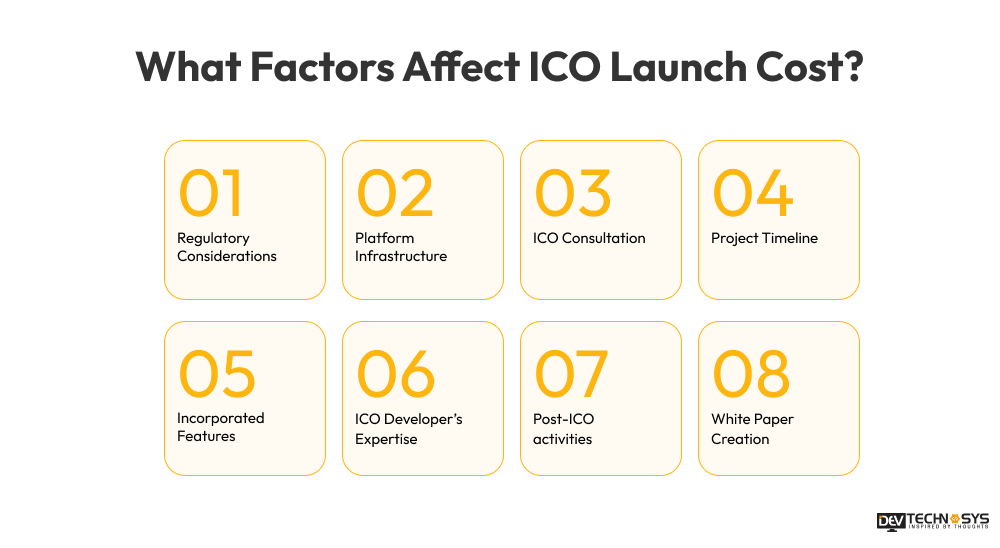
Now that we know how much does ICO development cost, let’s move on and talk about the factors that affect the cost to launch an ICO. There are various budget influencing factors, like ERC-20 token development, smart contract creation, whitepaper drafting, security audits, legal compliance, and community marketing. let’s learn about them in detail:
1. Regulatory Considerations
Before you start AI token development for ICOs, it is important to know about the regulatory requirements. They change from country to country, and you may need to acquire several licenses and pay compliance fees. Legal advice can also significantly increase the initial coin offering development cost.
Component |
Estimated Cost Impact |
Description |
| Legal Consultation | $1,000 – $5,000 | Token classification, jurisdiction advice |
| KYC/AML Setup | $1,500 – $6,000 | User verification compliance systems |
| Compliance Documentation | $500 – $2,500 | Terms, policies, legal structuring |
| Ongoing Regulatory Updates | $1,000 – $3,000 | Adapting to changing laws |
2. Platform Infrastructure
The ICO platform’s architecture will also have a strong say in the platform. The ICO platform development cost is fixed based on your chosen security protocols, planned features, and integrated functionalities. DeFi development services providers states that designing elements, your hosting servers, and other tech infrastructure might exceed your ICO project setup cost estimation.
Component |
Estimated Cost Impact |
Description |
| Blockchain Selection | $500 – $2,000 | Ethereum, BSC, Solana setup |
| Server & Hosting | $800 – $3,000 | Cloud infrastructure & scalability |
| Wallet Integration | $1,000 – $3,500 | Multi-wallet support systems |
| Backend Development | $2,000 – $6,000 | ICO platform architecture |
3. ICO Consultation
For a successful ICO development, a strong and expert consultation is required. These sessions will help you determine your business model, goals, and legal roadmap. Try connecting with a professional ICO token development company, which includes free consultation services in its package.
Component |
Estimated Cost Impact |
Description |
| Strategy Planning | $1,000 – $4,000 | ICO roadmap and tokenomics design |
| Technical Consulting | $1,500 – $5,000 | Blockchain architecture guidance |
| Marketing Advisory | $1,000 – $3,000 | Launch and growth strategy |
4. Project Timeline
The timeline would be different in ICO Vs IEO. The amount of time needed will have a big impact on how much it cost to build an ICO. It would take too much work for a quick launch. To do this, we would need to hire outside experts, make the development team bigger, and get a lot of outside help. The cost to build an ICO will increase if the deadline is short.
Timeline Factor |
Cost Impact |
Description |
| Short Timeline | +10% – 20% cost | Faster development increases resource load |
| Standard Timeline | Base cost | Balanced delivery schedule |
| Extended Timeline | +5% maintenance | Longer management and updates required |

5. Incorporated Features
The features you want to add will also affect how much it cost to develop an ICO platform. If you have a limited budget, start adding basic functions that don’t need much customization. After looking at how well the platform works, try adding unique and useful add-ons, which increase the cost to develop an ICO.
Feature Type |
Estimated Cost Impact |
Description |
| Basic Features | $1,000 – $3,000 | Token, ICO website, dashboard |
| Advanced Features | $3,000 – $8,000 | Staking, referral, analytics |
| Premium Features | $5,000 – $15,000 | AI tools, DeFi integration, governance |
6. ICO Developer’s Expertise
The process can go faster and be less risky if you hire an experienced ICO development company or certified ICO experts. Hiring expats will increase the cost to develop an ICO, but there are a lot of choices that won’t break the bank. So, make sure to hire a top Ethereum development company with the right fair prices, and that has the right tech skills
Developer Type |
Cost Impact |
Description |
| Junior Team | $8,000 – $15,000 | Basic ICO implementation |
| Mid-Level Team | $15,000 – $25,000 | Balanced quality & experience |
| Expert Blockchain Team | $25,000 – $50,000+ | High-security, scalable ICO systems |
7. Post-ICO activities
Even after launching the ICO platform into the live environment, you will still need help after the launch. The platform needs to be maintained and updated on a regular basis so that it works well. For this, your provider may charge extra, but it is an important step that you shouldn’t skip. Here’s the table highlighting the ICO maintenance cost in a clear and concise manner.
Activity |
Estimated Cost Impact |
Description |
| Exchange Listing | $2,000 – $10,000 | Token listing fees |
| Liquidity Management | $1,000 – $5,000 | Market support & stabilization |
| Community Management | $1,000 – $4,000 | Ongoing engagement |
| Maintenance & Upgrades | $2,000 – $6,000 | System improvements |
8. White Paper Creation
For the start of your ICO platform, the white paper is important. This will make your purpose, tokenomics, roadmap, and goals very clear. Tech writing, visual design, and legal disclaimers are all broken down in a professional white paper draft. ICO token development cost will change if you hire a skilled content writer.
Component |
Estimated Cost Impact |
Description |
| Basic Whitepaper | $500 – $1,500 | Simple project documentation |
| Professional Whitepaper | $1,500 – $3,500 | Detailed tokenomics & roadmap |
| Technical Whitepaper | $3,000 – $7,000 | Advanced blockchain & AI integration details |
Industry Insights:
According to CoinLaw ICO Statistics, more than 1,096 ICOs were launched globally in 2025, showing a recovery in blockchain fundraising activity after previous market slowdowns.
Why Businesses Should Consider Launching an ICO?
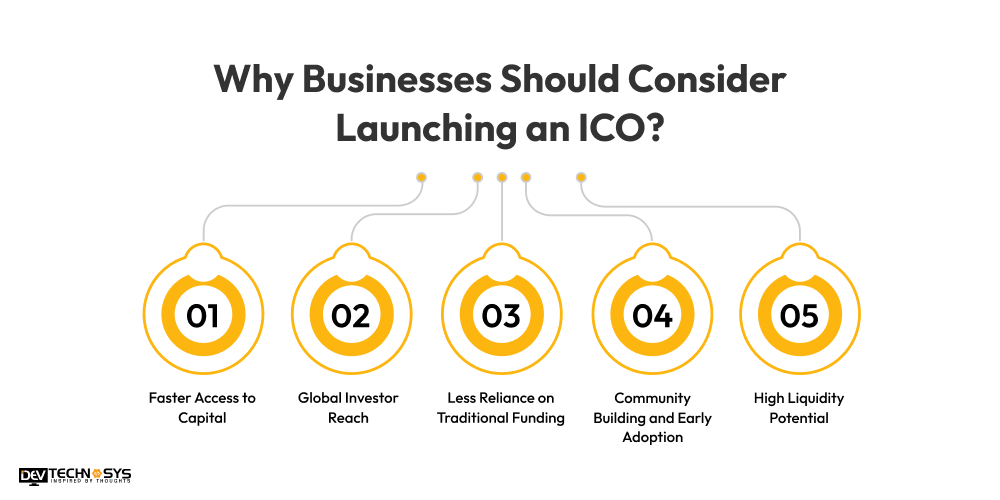
ICOs have transformed the way businesses raise capital in the digital era, offering a faster and more decentralized alternative to traditional crypto fundraising methods. Let’s check out some major reasons why businesses should consider launching an ICO:
1. Faster Access to Capital
Businesses wanting to launch an ETO token or ICO tokens can quickly raise funds through them without seeking help from venture capitalists or traditional banks. It speeds up the process of making products and getting them to market.
2. Global Investor Reach
Unlike traditional fundraisers, ICOs do not have any geographical limitations. Companies do not have to worry about geographical limits. They can freely expand their funding base and sell their products in international markets.
3. Less Reliance on Traditional Funding
ICOs get rid of the need for middlemen like banks and traditional trading firms. This gives businesses more control over the ways in which they raise money, distribute tokens, and set up their general finances.
4. Community Building and Early Adoption
When an ICO goes live, it helps companies build strong groups around their new product or platform. People who own tokens often become involved users and supporters, which helps the ecosystem grow and spread even before the product is fully mature.
5. High Liquidity Potential
Develop an ERC-4626 token through ICOs, which can be bought and sold on crypto exchanges, which gives buyers access to cash. This makes the project more appealing to backers and helps companies make a market for their digital assets after the start.
Why Budgeting is Essential for Your ICO Project?
It’s important for any ICO project budget to be well-thought-out. Why? because it helps blockchain development company make good use of their resources and stay out of financial trouble during development and launch. ICO costs a lot of money because you have to make smart contracts, ensure regulatory compliance, do security audits, run marketing campaigns, get listed on exchanges, and do maintenance after the start.
Without a clear budget plan, your ICO project could face delays, security risks, or lose promotion opportunities. Business owners with well-planned budgets are able to prioritize essential features, keep investors informed, and ensure the long-term success of the project in the rapidly growing crypto market.
Key Reasons:
- Stop spending too much and take financial risks
- Makes sure the project runs smoothly
- Manages the costs of marketing and compliance
- Increases openness and investor trust
- Helps businesses grow and expand over the long term
Planning a Stablecoin Project?
Get a tailored development cost estimate in a few simple steps.
- 3 quick steps
- 100% free
- Reply in 1 business day
2 Minutes Read
Types of ICOs With Their Launching Costs
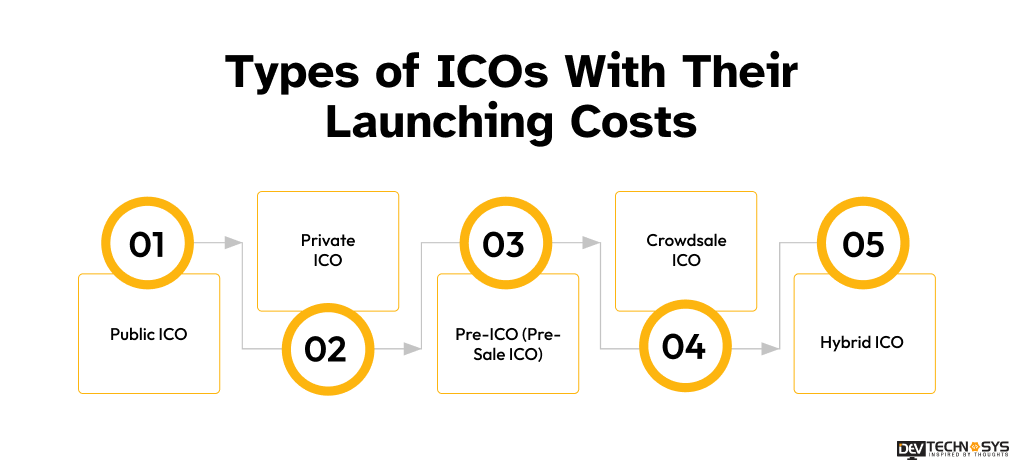
The cost to launch an ICO depends heavily on the ICO model type businesses choose. Different ICO types require different security levels, compliance, marketing, and infrastructure. It directly impacts the overall ICO development pricing.
1. Public ICO
Public ICO is available for all investors without any kind of limit. During the offering period, anyone can take part and buy tokens. It offers the biggest potential for fundraising but demands strong compliance, transparency, and marketing to gain the interest of the global audience.
2. Private ICO
A private ICO is only available to selected investors. It includes venture capital firms, institutional investors, or high-net-worth individuals. It normally generates funds prior to the public sale. It offers tokens at discounted rates for early financial backing and strategic support.
3. Pre-ICO (Pre-Sale ICO)
A Pre-ICO is held before the main ICO launch and is meant to raise initial funding for development and marketing purposes. Early supporters frequently purchase tokens at a discounted price. This helps to establish liquidity and create buzz for the impending public sale .
4. Crowdsale ICO
Crowdsale ICOs allow a bigger community of retail investors to be involved in the purchase of the tokens. It is sometimes used interchangeably with public ICOs but can contain structured phases, bonus tiers, or caps to manage demand and ensure equitable distribution.
5. Hybrid ICO
A hybrid ICO is a mix of the private and public ICO formats. It usually starts with a private sale to institutional investors, and then a public crowdsale, which combines early funding security with greater market participation and community involvement.
ICO Type |
Estimated Launch Cost |
Development Timeline |
| Public ICO | $12,000 – $30,000+ | 2 – 4 Months |
| Private ICO | $10,000 – $30,000+ | 1 – 3 Months |
| Pre-ICO (Pre-Sale ICO) | $8,000 – $25,000+ | 1 – 2 Months |
| Crowdsale ICO | $15,000 – $28,000+ | 2 – 4 Months |
| Hybrid ICO | $12,000 – $26,000+ | 3 – 6 Months |
Industry Insights:
Research and Markets – Web3 Market Report 2026 reports that the global Web3 market is expected to grow from $8.85 billion in 2025 to $12.61 billion in 2026.
Hidden Variables That Impact ICO Development Expenses
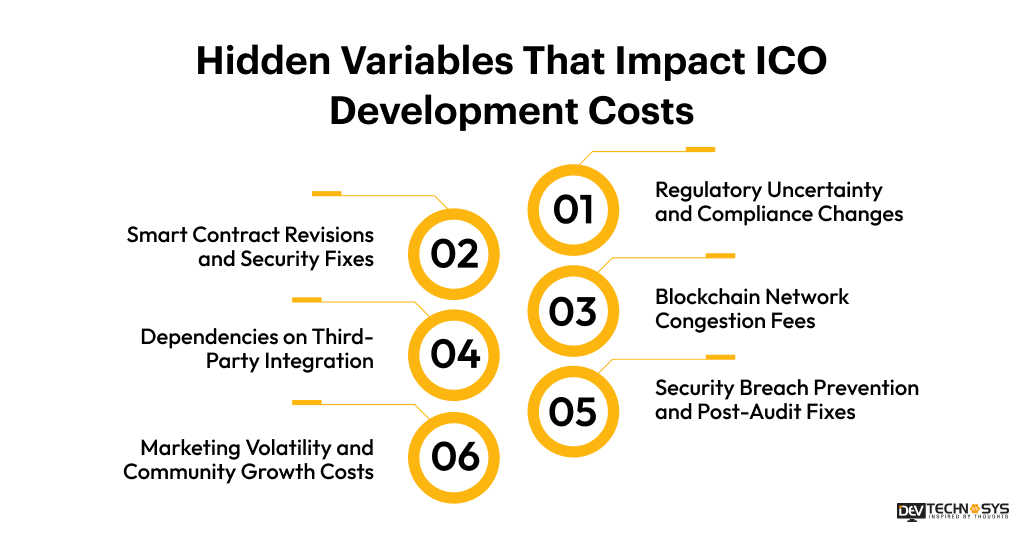
When businesses plan an ICO (Initial Coin Offering), they usually focus on upfront costs, like making a white paper, marketing, and developing smart contracts. Besides these costs, there are certain hidden factors that can greatly impact the custom ICO development costs and are often overlooked during planning stages.
1. Regulatory Uncertainty and Compliance Changes
Each country has its own ICO rules, which can change quickly and increase the level of legal complexity. Business owners may need to hire more legal consultants, keep their paperwork up to date, and make their KYC/AML systems better during or after the planning part of an ICO. These all add to the overall costs of development and compliance.
2. Smart Contract Revisions and Security Fixes
After deployment, the smart contracts often need to be updated more than once because of security flaws or audit findings. Every change adds more time and money to the project than was originally planned because it needs more testing, re-auditing, and worker hours.
3. Blockchain Network Congestion Fees
According to Binance Smart Chain development experts, when demand is high, gas fees for blockchain networks like Ethereum change all the time. Congestion costs make ICO launches much more expensive than planned when network traffic quickly goes up. This is because they affect deployment, testing, and transaction execution.
4. Dependencies on Third-Party Integration
There are often secret API costs and technical changes that need to be made in order to integrate wallets, exchanges, KYC providers, or oracle services. These dependencies may also need licensing fees and continued maintenance, which are often not taken into account when the budgeting and planning stages of an ICO are still early on.
5. Security Breach Prevention and Post-Audit Fixes
When launching Best ICO Token Apps, security must be constantly monitored alongside other audits to stop cyber frauds or hacks. Costs include penetration testing, bug bounty programs, and quick fixes after audits. All of these can add up to high ongoing costs for the lifetime of an ICO.
6. Marketing Volatility and Community Growth Costs
Because there is a lot of competition and celebrity demand, crypto marketing costs change quickly. Costs for community building, influencer marketing, and public relations campaigns can go up without warning, often going over initial budgets and having a big effect on total ICO launch spending.
Security and Compliance Considerations for Launching an ICO
Launching an ICO goes beyond just creating a token and getting investors on board. Prior to going live, the entrepreneurs must first put in place strong security measures, smart contract protections, investor safeguards, and make sure that they are complying with all regulations.
A properly constructed ICO framework helps reduce the financial risks involved, protect users’ data, and promote a good reputation among investors.
1. Security of Smart Contracts
Before the implementation of smart contracts, external verification must be conducted to ensure that vulnerabilities due to reentrancy, access control, overflow effects, oracle technology, and logic failings are not present.
The smart contract development lifecycle should incorporate secure coding practices, vulnerability assessments, penetration testing, and documented change-management procedures consistent with an ISO 27001-aligned information security framework.
2. Security of Wallets and Funds
The security of the investors’ funds and those of the project should be maintained by means of multisignature wallets, hardware wallets, transaction limits, and authorization according to the role one plays.
These functions should also ensure the separation between operating and reserve funds, limit administrative rights, and provide for emergencies.
3. KYC & AML Procedures
Have the necessary KYC and AML measures in place to confirm who the investors are, detect suspicious transactions, and comply with respective laws and regulations. Gather relevant data only, secure it with encryption and access restrictions, and preserve the records as required.
Because KYC and AML processes may involve collecting sensitive personal information, data handling should follow GDPR principles and other applicable privacy requirements
4. Regulatory Compliance
Analyze token categorization, distribution structure, promotion process, and qualifications of investors with the laws of each selected market. Before launching the project, consult professionals and provide the necessary disclosures, risk notices, and legal documentation.
Do not make any false statements about your potential profits, while PCI-DSS requirements may become relevant when payment-card data is handled.
5. Data & Privacy Security
Protect both user and investor data through data encryption, secure APIs, access control, vulnerability testing, and privacy-by-design methods. Make sure you have incident response protocols, backup strategies, and suspicious activity monitoring in place. Also, make sure your data collection, storage, retention, and sharing methods comply with privacy regulations and documented security procedures.
ICO Legal and Regulatory Costs by Region
The budget for legal and compliance requirements for an ICO depends on the jurisdiction where the business operates, the location of its investors, the type of token created, and the nature of the business’s operations, which means that any costs incurred in these areas must be treated as regulatory considerations instead of legal expenses by entrepreneurs.
1. United States
Cost depends on the classification of the token, the offering structure, and the eligibility of the investors in the USA. This might involve a securities-related legal analysis, as well as compliance with federal and state laws and related disclosures.
The costs can increase if the offering is of a complicated nature and consists of several jurisdictions or if any other regulatory requirements need to be fulfilled, and extensive documentation provided and support given.
2. European Union
The launch of an ICO in the EU involves the analysis of the MiCA requirements, which depends on the crypto-asset and the nature of the offering. This might impose certain costs, such as legal analysis, preparation of the white paper about the crypto-asset, notifications to the regulators, and preparation of compliant marketing materials.
3. United Kingdom
The ICO expenses in the UK vary based on regulatory compliance for financial promotions, token classification, legal assessment, and details about AML requirements, if applicable.
Entrepreneurs who are planning an ICO in the UK should determine the composition of their token sales and the nature of their marketing. The additional expenses may also include legal advice, marketing reviews, and compliance requirements for regulated cryptoasset dealings.
4. Singapore
In Singapore, ICO promoters should carry out a detailed assessment of their token and its operations before making any proposal. Depending on the configuration, some regulatory requirements on the payment system or financial services might apply to their project. The budget may also include costs for legal opinions, regulatory analyses, licenses, KYC/AML measures, and compliance papers.
5. UAE
In the UAE, the costs of ICO compliance depend on the emirate, the financial authority, the characteristics of the token, and the activities of the business.
Entrepreneurs may also need to pay for regulatory assessments and advice, licensing, legal structuring, KYC/AML measures, and compliance documents. Companies that plan to implement their project in Dubai should check the local VARA requirements and pay for related licensing and consulting activities.
6. India
ICO initiators in India need to look into taxation, how their tokens will be classified, and what AML/KYC responsibilities they will undertake. Some activities involving virtual assets might also imply that obligations arise according to applicable AML law.
Thus, consultations on legality and taxation, preparation of compliance documents, finding investors, monitoring transactions, and constant advisory support should be taken into consideration when budgeting for the launch of an ICO.
How Long Does it Take to Develop an ICO?
ICO development timeline can take anywhere from 1month to 6+months to complete, based on the complexity of the project. its security requirements, the blockchain platform it uses, and any compliance requirements that need to be met. An easy-to-use ICO with smart contracts and simple token creation can go live fast. More complex ICOs with custom features, exchange integrations, and lots of marketing need more time to develop.
ICO Development Stage |
Estimated Timeline |
Description |
| Market Research & Planning | 1 – 2 Weeks | Defining project goals, tokenomics, and business strategy |
| Whitepaper Creation | 1 – 3 Weeks | Preparing technical and business documentation |
| Token Development | 1 – 2 Weeks | Creating cryptocurrency tokens on blockchain networks |
| Smart Contract Development | 2 – 4 Weeks | Building and testing token sale smart contracts |
| ICO Website Development | 2 – 3 Weeks | Designing investor dashboards and landing pages |
| KYC/AML Integration | 1 – 2 Weeks | Implementing compliance and verification systems |
| Security Audit & Testing | 1 – 3 Weeks | Smart contract audits and vulnerability testing |
| Marketing & Community Building | 3 – 8 Weeks | Running PR, social campaigns, and investor outreach |
| Exchange Listing & Deployment | 1 – 2 Weeks | Token deployment and exchange integration |
What are the Effective Methods to Reduce the Cost of ICO Launch?
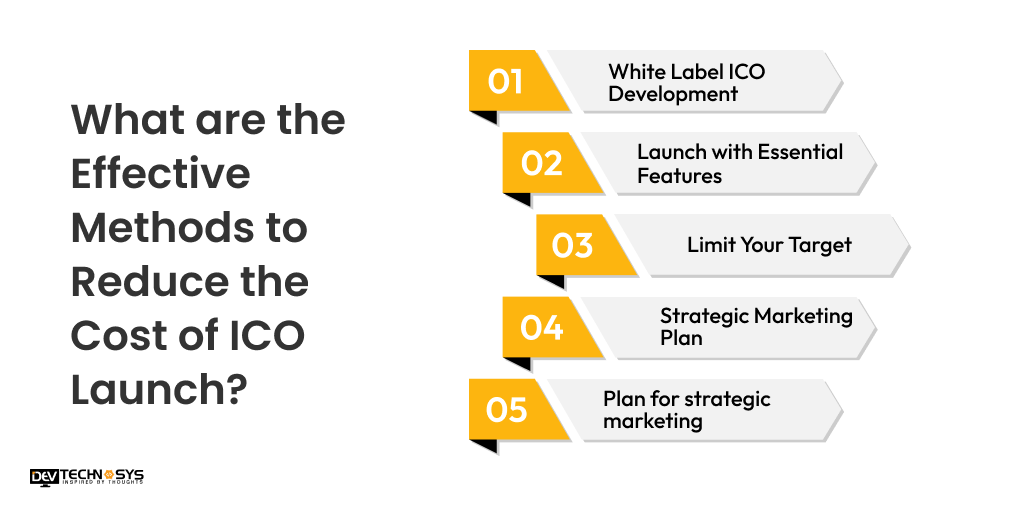
Planning out correctly at the pre-development phase will help you tighten your budgeting. To lower the costs of developing your ICO, here is a list of the best things you can do.
1. White Label ICO Development
If you want to launch an ICO at a reduced price, you can opt for white-label ICO software or a clone script. If these are pre-built software, you can start your ICO quickly and make changes as needed. You can customize these pre-written lines to fit your brand’s style. No matter how much money you have, this software is the most affordable way to start your ICO platform.
2. Launch with Essential Features
Use open-source blockchain platforms, tools, and pre-made templates that are ready to go instead of building everything from scratch. This will help businesses save on development time, money, and resources.
3. Limit Your Target
Make an MVP of your ICO app. To begin, the launch will include basic features such as wallet integration, investor dashboards, and tools for token sales. After that, add new features to the app in a planned way based on how many people are using it.
4. Strategic Marketing Plan
Instead of diving into the global market from the start, target your business on a certain niche or area. This lowers the costs of regulations, marketing, and following the rules in the initial stages. This approach also gives you more chances to build your brand.
5. Plan for strategic marketing
Instead of spending money on marketing activities without a strategy, try figuring out your target audience or market. Spend funds and resources on targeted marketing efforts. It includes building communities on Telegram, Reddit, and Twitter, where most crypto users are active.
Industry Insights:
According to Global Growth Insights, increasing blockchain fundraising activities and tokenization trends are influencing nearly 68% of early-stage blockchain venture financing.
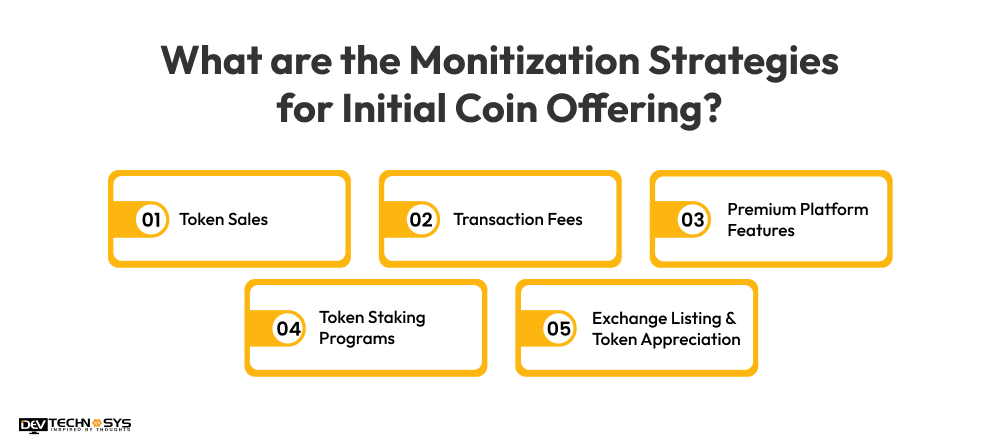
What are the Monitization Strategies for Initial Coin Offering?
ICOs give companies more ways to make money than just raising money. Let’s talk about some of the most common ways to monetize your ICO platform:
1. Token Sales
Token sales are how ICO projects make most of their money. Businesses get money by selling utility or security tokens to investors during a secret, pre-sale, or public ICO. This helps pay for marketing, development, infrastructure expansion, and the long-term growth of the ecosystem.
2. Transaction Fees
ICO platforms can make regular money by charging transaction fees for buying tokens, transferring wallets, or selling within the ecosystem. These fees help businesses keep the platform running and set up a way to make money that will last after the ICO ends.
3. Premium Platform Features
Businesses can make money from their ICO ecosystem by giving advanced analytics, staking access, governance involvement, AI-powered tools, or services that are only available to token holders or paid platform subscribers within the blockchain network.
4. Token Staking Programs
Token staking lets users lock up their assets in exchange for rewards. It also makes the environment more stable and liquid. Validator commissions, staking service fees, or higher token demand caused by long-term investor involvement and engagement can all help businesses make money.
5. Exchange Listing & Token Appreciation
As more people use ICO tokens and more of them are listed on cryptocurrency exchanges, companies benefit from higher token values, more tokens being available, and the ecosystem growing. A higher market capitalization can raise the value of a project and bring in more investors and key partners.
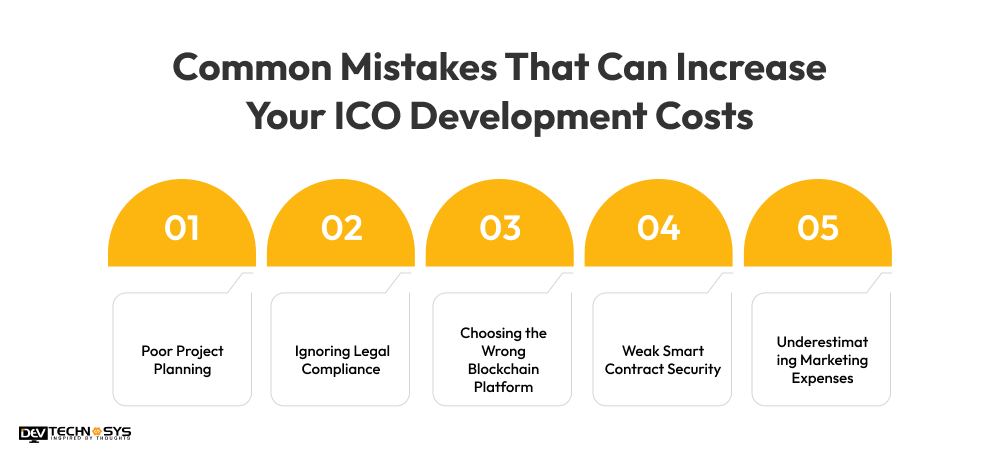
Common Mistakes That Can Increase Your ICO Development Costs
Many businesses underestimate the hidden challenges involved in ICO development, which can lead to unexpected expenses and project delays. Avoiding common mistakes early helps entrepreneurs reduce risks, control budgets, and ensure a smoother and more successful ICO launch process.
1. Poor Project Planning
Launching an ICO without a proper roadmap, budget strategy, or technical planning can lead to repeated modifications, development delays, and higher operational costs. Poor planning also affects resource allocation, making the overall ICO launch process more expensive and time-consuming.
2. Ignoring Legal Compliance
Overlooking KYC/AML regulations and legal requirements during ICO development can create serious compliance issues later. Businesses may face penalties, legal restructuring, and additional consultation costs, significantly increasing the total budget required for launching and maintaining the ICO platform.
3. Choosing the Wrong Blockchain Platform
Selecting the wrong blockchain network may result in higher gas fees, scalability limitations, and poor transaction performance. In some cases, businesses may need platform migration or redevelopment, which can drastically increase development time and overall project expenses.
4. Weak Smart Contract Security
Skipping smart contract audits or advanced security testing can expose the ICO platform to hacks and vulnerabilities. Fixing security breaches after launch often costs much more than preventive testing and can damage both business reputation and investor confidence.
5. Underestimating Marketing Expenses
Many startups fail to allocate sufficient funds for marketing, influencer campaigns, PR activities, and community building. As competition in the crypto industry grows, businesses often need additional promotional spending to attract investors and maintain visibility during the ICO launch.
Planning a Blockchain Project?
Get a tailored development cost estimate in a few simple steps.
- 3 quick steps
- 100% free
- Reply in 1 business day
2 Minutes Read
Conclusion
Launching an ICO can be a great way for businesses and startups to generate revenue, build blockchain communities, and grow their businesses faster in the digital market. Companies can launch their ICO projects more quickly and make the most of long-term growth possibilities in the changing crypto market if they know what the main cost drivers are and avoid making common development mistakes.
If you are a business looking for a top cryptocurrency exchange development company to build a secure, scalable, and feature-rich ICO platform, partner with Dev Technosys. With 15+ years of experience and 250+ technology experts, we deliver customized blockchain and ICO development solutions tailored to your business goals.
Frequently Asked Questions
Find answers to the most common questions related to this article.
Yes, launching an ICO can be very profitable if the project has strong utility, good marketing, and follows all legal guidelines. Businesses can raise money, build global communities, and make long-term money through token acceptance and ecosystem growth if their ICO is a success.
ICO legal compliance costs generally range from $2,000 to $20,000+, depending on jurisdiction and regulations. These expenses may include:
KYC/AML implementation
Legal consultation
Token classification
Licensing and documentation
Regulatory audits
Creating a crypto token typically costs between $1,000 and $10,000+, depending on blockchain selection, token features, smart contract complexity, and security requirements. Advanced tokens with staking, governance, or AI integrations may significantly increase the total development cost.
Popular blockchains for ICO development include Ethereum, BNB Chain, and Solana. Ethereum is preferred for strong smart contract support, BNB Chain offers lower transaction fees, while Solana provides high scalability and faster transaction processing for modern ICO platforms.
Yes, startups can launch a basic ICO with a limited budget by focusing on essential features such as token creation, simple smart contracts, and basic marketing. Businesses can later scale the platform with advanced features, stronger security, and larger promotional campaigns.