

















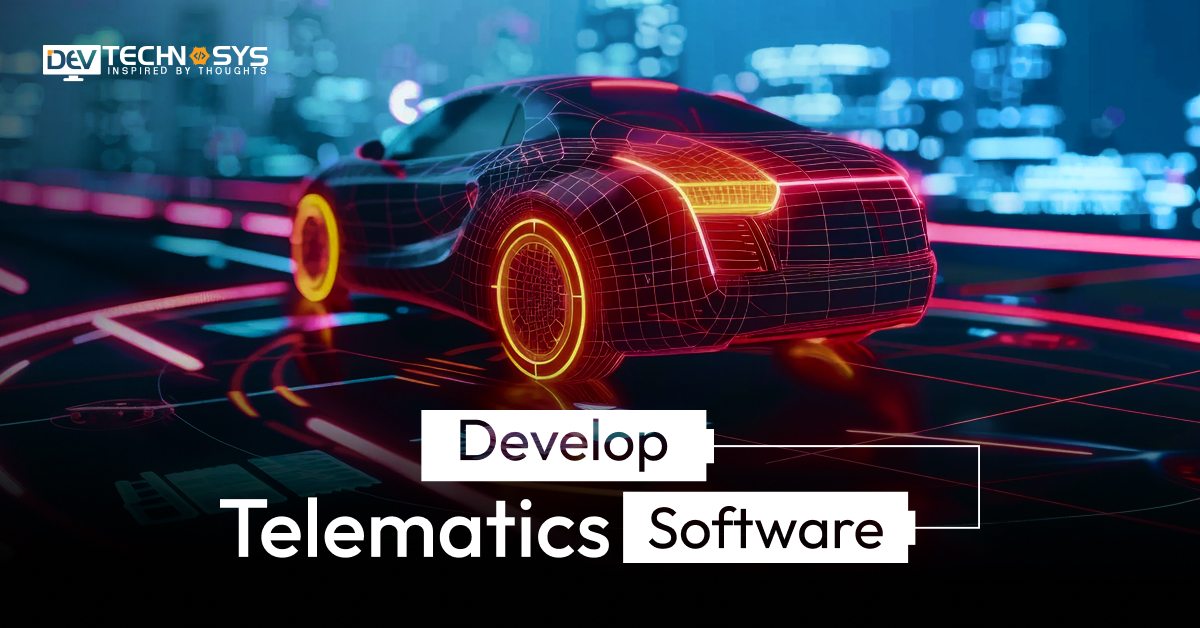
Have you ever wondered how cars today can talk to each other, send alerts, or even track your location?
That’s all thanks to something called telematics software!
It’s like the brain behind smart cars, helping them connect with the internet and other vehicles. Developing telematics software might sound super complex, but it’s actually a fun mix of technology, coding, and creativity.
In this guide, we’ll explore how to create powerful software that makes connected cars safer, smarter, and easier to use.
Whether it’s sending real-time traffic updates or helping parents keep track of their teen drivers, telematics is the future of driving.
As a curious entrepreneur, learning how this works can give you a head start in the world of smart technology.
So buckle up, let’s dive into the exciting journey to develop telematics software for connected cars!
What is Telematics Software for Connected Cars?
Telematics software for linked vehicles facilitates real-time data exchange between the automobile and external systems. It collects and transmits data including position, velocity, engine diagnostics, and driver conduct. Vehicle telematics software enables navigation, fleet management, remote diagnostics, and emergency services, therefore improving vehicle safety, efficiency, and user experience by connecting to cloud platforms, mobile apps, and service networks.
- GPS Tracking
- Vehicle Diagnostics
- Driver Behavior Monitoring
Market Statistics of Telematics Software for Connected Cars
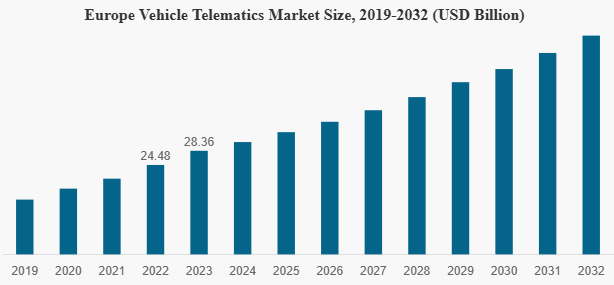
- According to Fortune Business Insights, it was worth USD 17 billion in 2023, and it’s going to be worth USD 170.35 billion by 2032.
- Over the course of the projected period, the market is anticipated to exhibit a CAGR of 9%.
- As per the ground-level study, Europe holds the highest share of telematics software for connected cars.
- According to the global study, in 2024, the passenger car sector dominated the market.
10 Best Telematics Software for Connected Cars
Discover the best connected car software that enhances vehicle tracking, safety, and performance with real-time data, remote diagnostics, driver insights, and seamless fleet management solutions.
| No. | Software | Special Feature | Launched Year | Platform Availability |
| 1 | Geotab | Advanced Driver Safety | 2000 | Web, iOS, Android |
| 2 | Samsara | Real-time Video Capture | 2015 | Web, iOS, Android |
| 3 | Verizon Connect | Fleet Optimization | 2016 | Web, iOS, Android |
| 4 | Fleet Complete | Asset Tracking | 2000 | Web, iOS, Android |
| 5 | Teletrac Navman | AI-based Analytics | 1988 | Web, iOS, Android |
| 6 | Mix Telematics | Driver Coaching | 2000 | Web, iOS, Android |
| 7 | TomTom Telematics | Route Optimization | 2005 | Web, iOS, Android |
| 8 | Zubie | Vehicle Health Alerts | 2011 | Web, iOS, Android |
| 9 | CalAmp | IoT Integration | 1981 | Web, iOS, Android |
| 10 | Azuga | Gamification for Drivers | 2011 | Web, iOS, Android |
Why Businesses Invest in Telematics Software Development?
Investing in telematics software development is no longer a nice-to-have; it’s a must for companies that want to cut costs, improve safety, and make customers happier.

- Improved Fleet Management and Efficiency
- Improved Safety and Compliance
- Cost Reduction and Maintenance Management
- Real-Time Tracking and Customer Support
- Data-driven Decision-Making
1. Improved Fleet Management and Efficiency
Telematics software delivers real-time information on vehicle whereabouts, routes, and usage trends. This enables firms to manage fleet operations by minimizing idle time, developing more effective routes, and increasing vehicle usage. As a consequence, businesses save on gasoline expenditures while increasing overall productivity.
2. Improved Safety and Compliance
Automotive telematics solutions enable companies to monitor driver behavior such as speeding, forceful braking, and quick acceleration. This information helps find drivers who are likely to do things that are dangerous and puts in place training programs to make driving safer.
Furthermore, telematics helps to maintain regulatory compliance by automating record-keeping for hours of service, vehicle inspections, and maintenance plans.
3. Cost Reduction and Maintenance Management
Telematics systems monitor vehicle health and usage, allowing for proactive maintenance before costly failures occur. Businesses save money and reduce downtime by scheduling maintenance based on real vehicle conditions rather than set intervals.
Fuel use is also constantly monitored, which helps to discover waste and enhance cost control.
4. Real-Time Tracking and Customer Support
Businesses may give clients reliable, real-time information about deliveries and service cars. This transparency increases consumer pleasure and confidence. Real-time tracking also enables faster response to unanticipated occurrences like as delays, accidents, or route adjustments, resulting in improved service dependability.
5. Data-driven Decision-Making
IoT fleet management solution creates massive volumes of data that organizations may use to obtain insights into operational inefficiencies, driver performance, and asset usage. These insights enable businesses to make more informed decisions, resulting in continual development, a competitive edge, and better resource allocation.
How Artificial Intelligence Helps Telematics Software for Connected Cars?
- AI analyzes real-time data to predict vehicle maintenance needs, preventing breakdowns and reducing costly repairs through proactive alerts.
- It enhances driver behavior monitoring by detecting risky patterns and offering personalized coaching to improve safety and reduce accidents.
- It enables advanced anomaly detection in-vehicle systems, quickly identifying faults or cyber threats to maintain vehicle security and performance.
- AI assists in customizing in-car experiences by learning driver preferences and adjusting settings like climate, entertainment, and navigation automatically.
- AI facilitates voice recognition and natural language processing, enabling safer, hands-free communication and control of vehicle functions while driving.
7 Steps to Develop Telematics Software for Connected Cars
Develop telematics software that can track cars in real time, analyze driving behavior, and plan repairs ahead of time to change the way connected cars work.
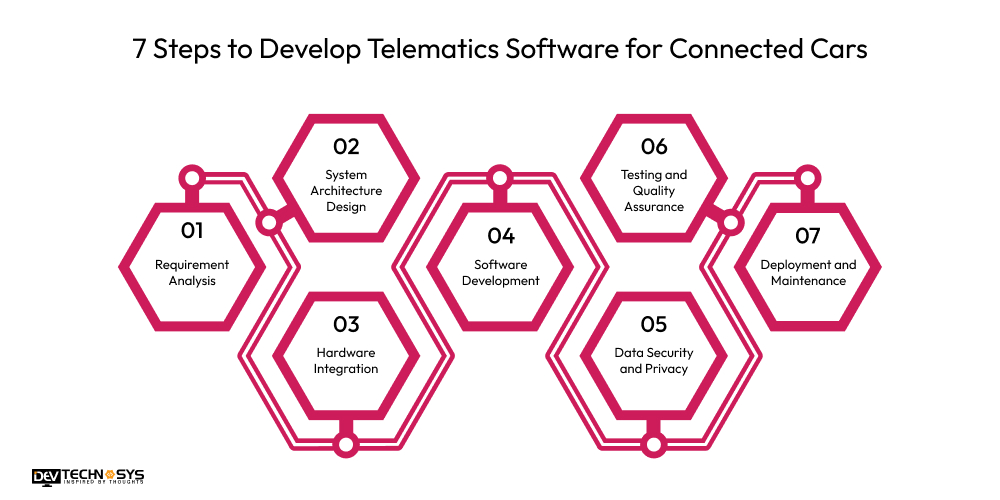
Enhance safety, efficiency, and user experience by integrating advanced hardware, secure data management, and intuitive interfaces for seamless vehicle connectivity and smarter fleet management solutions.
- Requirement Analysis
- System Architecture Design
- Hardware Integration
- Software Development
- Data Security and Privacy
- Testing and Quality Assurance
- Deployment and Maintenance
1. Requirement Analysis
In the first stage of telematics system development, identify the core features and goals of the telematics software, such as GPS tracking, driver behavior monitoring, and vehicle diagnostics.
Understand the target users and compliance needs. Analyze hardware compatibility and connectivity options to ensure seamless integration with vehicle systems and external platforms.
2. System Architecture Design
Design the overall architecture, including cloud infrastructure, data flow, and communication protocols. Decide on key components like onboard units, mobile apps, and backend servers. Plan for scalability, security, and real-time data processing to handle large volumes of telematics information efficiently.

3. Hardware Integration
Hire software developers to select and integrate appropriate hardware components like GPS modules, sensors, and OBD-II devices. Ensure reliable data acquisition from vehicle systems with minimal latency. Test hardware compatibility with different vehicle models and communication standards (e.g., Bluetooth, cellular, Wi-Fi).
4. Software Development
Make the program modules that will be used to gather, handle, and display data. Build user interfaces for mobile and web platforms to provide real-time insights. Set up APIs so that you can connect to third-party businesses and car manufacturers. Follow best coding practices to ensure performance and reliability.
5. Data Security and Privacy
You can hire experienced developers from a GPS tracking software development company, and implement strong encryption methods to protect data during transmission and storage. Make sure that data security laws (like GDPR) are followed. Set up user login and access control systems to keep private information safe and stop people from getting in without permission.
6. Testing and Quality Assurance
To find and fix bugs, you should do a lot of testing, such as unit, integration, and system testing. Perform field testing in real vehicles to validate performance under different conditions. Test security features and user experience thoroughlyf before deployment.
7. Deployment and Maintenance
Move to the last stage of telematics app development, deploy the software on cloud servers, and distribute mobile apps to users. Keep an eye on how the system is working and get comments from users to keep making it better. Regularly update the software to add features, fix issues, and maintain compatibility with new vehicle models and standards.
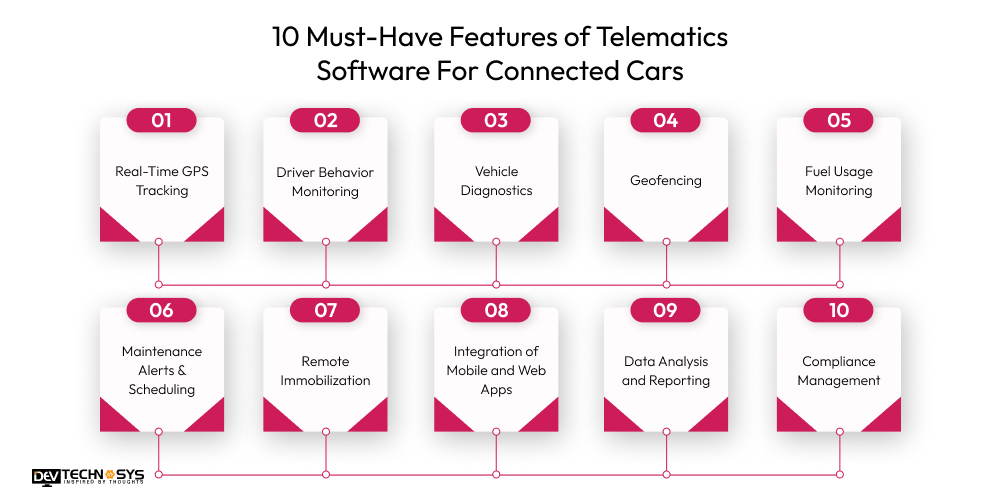
10 Must-Have Features of Telematics Software For Connected Cars
These features collectively empower businesses and drivers to improve safety, reduce costs, optimize operations, and enhance the overall connected car experience.
1. Real-Time GPS Tracking
Accurate vehicle position tracking in real-time is critical for route optimization, fleet management, and emergency response.
2. Driver Behavior Monitoring
Keep an eye on your speed, stopping, speeding up, and stalling to make driving safer and lower your risk of an accident.
3. Vehicle Diagnostics
Early detection of engine problems, battery state, and other vehicle concerns allows for preventative maintenance to be scheduled and breakdowns reduced.
4. Geofencing
To make security and operations management better, you can set virtual borders and get alerts when cars join or leave certain zones.
5. Fuel Usage Monitoring
To save money on gas, track your use and look for inefficient driving habits or illegal use.
6. Maintenance Alerts & Scheduling
Automate maintenance reminders based on mileage or diagnostic data to keep cars in top shape.
7. Remote Immobilization
If you build a logistics management software, it allows authorized users to remotely deactivate the car in the event of theft or misuse, increasing security.
8. Integration of Mobile and Web Apps
Allow consumers to easily access vehicle data via simple applications for real-time insights and management.
9. Data Analysis and Reporting
Create precise reports on fleet performance, driver behavior, and operational efficiency to support data-driven choices.
10. Compliance Management
Automated logging and reporting can help ensure compliance with regulatory requirements such as Hours of Service (HOS).
Want a chatbot demo or pricing? Fill the form and talk to our experts today.
Pick what you need below — you can select more than one — then tap Get detail to continue.
-
Chatbot demo dashboard
-
Cost to develop an app
-
Industry report
-
Case study
What is the Cost to Develop Telematics Software for Connected Cars?
The cost to build telematics software for connected cars varies widely based on complexity, features, and platform support. Basic solutions with GPS tracking and driver monitoring can start around $8,000, while advanced systems featuring real-time diagnostics, AI analytics, and cloud integration may exceed $25,000.
Factors affecting cost include development time, hardware integration, security measures, and testing. Upkeep and repairs that need to be done all the time also add to costs. Choosing scalable, modular development can help manage costs while delivering essential telematics functionality tailored to business needs.
Telematics Software Development Cost
| Development Stage | Estimated Cost (USD) |
| Basic Features Setup | $8,000 – $15,000 |
| Advanced Features (AI, Analytics) | $15,000 – $25,000 |
| Hardware Integration | $5,000 – $10,000 |
| Security Implementation | $10,000 – $15,000 |
| Testing & Quality Assurance | $7,000 – $12,000 |
| Deployment & Maintenance | $5,000 – $8,000/year |
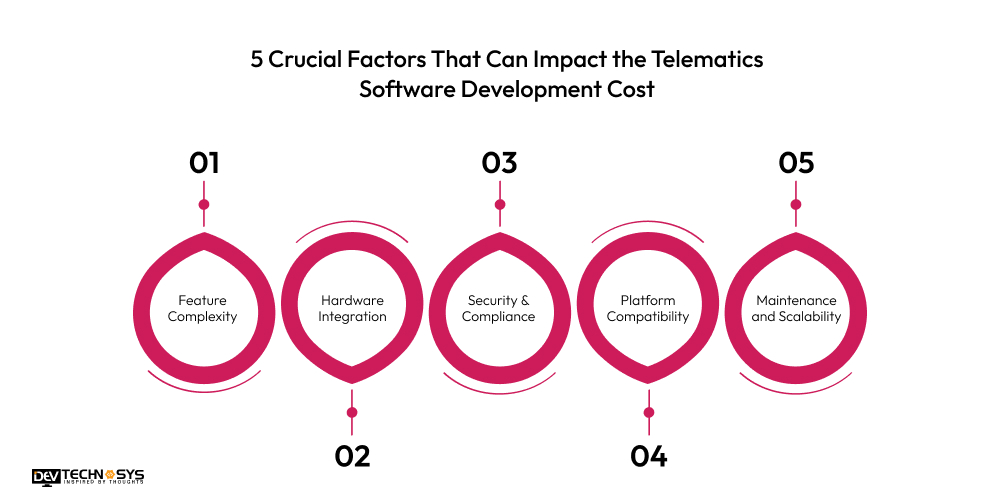
5 Crucial Factors That Can Impact the Telematics Software Development Cost
Several factors influence telematics software development costs, including feature complexity, hardware integration, security requirements, platform compatibility, data processing needs, and testing.
Additionally, ongoing maintenance, scalability, and regulatory compliance can significantly affect the overall investment for connected car solutions.
1. Feature Complexity
The cost is mostly determined by the amount and sophistication of features provided. Basic tracking is less expensive, however sophisticated features such as AI-driven analytics, driver behavior monitoring, predictive maintenance, and real-time video streaming demand more development time, experience, and testing.
Each new feature raises coding, integration, and quality assurance requirements, affecting the total automotive software development cost.
| Feature Level | Description | Estimated Cost (USD) |
| Basic Tracking | GPS location, speed, simple alerts | $5,000 – $10,000 |
| Driver Behavior Monitoring | Speeding, braking, acceleration analysis | $6,000 – $11,000 |
| Advanced Analytics & AI | Predictive maintenance, risk scoring | $10,000 – $15,000 |
| Real-Time Video Integration | Dashcam live streaming, video storage | $7,000 – $12,000 |
2. Hardware Integration
Integrating telematics gear like GPS modules, OBD-II devices, sensors, and communication units is difficult. Compatibility with various car types and communication protocols (Bluetooth, cellphone, and CAN bus) necessitates bespoke design and rigorous testing.
Because of the specific expertise and equipment required, hardware calibration and troubleshooting add to development schedules and expenses.
| Hardware Integration Type | Description | Estimated Cost (USD) |
| Basic GPS & OBD-II Device | Standard vehicle data capture | $10,000 – $16,000 |
| Multi-Sensor Integration | Accelerometers, fuel sensors, temp sensors | $15,000 – $20,000 |
| Complex Vehicle Systems Integration | CAN bus, custom protocols for various models | $18,000 – $22,000 |
3. Security & Compliance
Ensuring strong data security is crucial. Implementing end-to-end encryption, secure user authentication, and access restrictions necessitates more development time and resources.
Furthermore, compliance with privacy rules like as GDPR, HIPAA, or industry-specific standards necessitates meticulous data processing and documentation, which raises both development and legal expenses.
| Security Component | Description | Estimated Cost (USD) |
| Basic Encryption & Secure Login | SSL, password protection, two-factor auth | $10,000 – $12,000 |
| Data Privacy & Compliance | GDPR, HIPAA compliance, data anonymization | $13,000 – $20,000 |
| Advanced Security Features | Intrusion detection, secure API access | $15,000 – $23,000 |
4. Platform Compatibility
Creating software that is interoperable with many platforms—such as iOS, Android, and web browsers—requires additional effort. Each platform has its own development environment, design principles, and testing needs.
Ensuring a uniform user experience and functionality across devices increases the telematics software development cost.
| Platform Scope | Description | Estimated Cost (USD) |
| Single Platform (Web or Mobile) | Focus on either the mobile app or web interface | $10,000 – $15,000 |
| Dual Platform (iOS & Android) | Mobile apps for both major OS | $20,000 – $25,000 |
| Full Multi-Platform (Web + iOS + Android) | Complete cross-platform experience | $22,000 – $26,000+ |
5. Maintenance and Scalability
Post-launch costs include continuing maintenance, bug repairs, upgrades, and scalability for increasing user populations or more vehicles. Designing software architecture that facilitates simple scalability and modular upgrades necessitates an initial investment but lowers future rework costs, impacting the original and long-term development budgets.
| Maintenance Level | Description | Estimated Annual Cost (USD) |
| Basic Maintenance | Bug fixes, minor updates | $5,000 – $10,000 |
| Regular Updates & Support | Feature updates, customer support | $10,000 – $15,000 |
| Full Scalability & Performance | Load balancing, cloud scaling, performance tuning | $15,000 – $20,000+ |
How to Generate Money From Telematics Software for Connected Cars?
By leveraging these monetization strategies, companies can build sustainable business models around telematics software for connected cars while continuously enhancing their offerings.

- Subscription-Based Model
- Hardware Sales & Installation
- Data Monetization and Analytics Services
- Integration and Customization Services
- Advertising and Partnerships
1. Subscription-Based Model
One of the most popular income streams is charging consumers a membership charge to utilize the telematics platform. Businesses and individuals pay monthly or annual fees to access services like real-time tracking, driving analytics, and car diagnostics.
Tiered pricing options are available, with additional rates for premium services such as AI-driven insights, enhanced reporting, and greater fleet numbers.
2. Hardware Sales & Installation
Many telematics systems require specific hardware, such as GPS devices, OBD-II adapters, or sensors. Selling these gadgets and providing expert installation services might result in large upfront money.
Bundling hardware purchases with software subscriptions generates recurring revenue while guaranteeing that customers have the necessary equipment for the program to work properly.
3. Data Monetization and Analytics Services
Telematics systems capture massive volumes of information about driver behavior, vehicle health, and fleet performance. This information may be anonymized and pooled to give important insights to third parties like insurance companies, car manufacturers, and logistics organizations. Offering bespoke analytics reports or predictive maintenance services provides value and creates new income streams.
4. Integration and Customization Services
Businesses frequently demand telematics software that is suited to their unique processes, vehicles, or industry requirements. Providing professional services such as software customization, API connection with other company systems, and continuing technical support may be a profitable business. According to the software development company, customized solutions often require higher prices and longer-term contracts.

5. Advertising and Partnerships
Telematics systems with a big user base might make money through targeted advertising or collaborations. For example, giving promotions for gas stations, maintenance providers, or insurance savings within the app can benefit both customers and marketers. Strategic agreements with car service providers can also result in mutually advantageous income streams.
Conclusion
To develop telematics software for linked automobiles, you need to plan ahead, use innovative technology, and make sure the program is secure and can grow.
Collaborating with a fleet management software development company ensures access to expert guidance and tailored solutions that align with your evolving business requirements.
Your telematics software may change the way your fleet works and make driving safer by adding new features and making sure that all of your gear works with it.
Choosing the correct development method not only makes your business more efficient, but it also makes it a leader in the quickly increasing connected automobile ecosystem.
Frequently Asked Questions
1. How Much Does it Cost to Develop Telematics Software for Connected Cars?
The cost to build telematics software for connected cars typically costs between $8,000 and $25,000, depending on features, complexity, platform integration, security needs, and development time, including testing and maintenance phases.
2. How Long Does it Take to Create Telematics Software for Connected Cars?
To create telematics software for connected cars, it usually takes 3 to 6 months, depending on project scope, feature complexity, integration requirements, development team size, testing, and compliance with industry standards.
3. What Technology Stack is Suitable to Make Telematics Software for Connected Cars?
A suitable tech stack to make telematics software for connected cars includes embedded C/C++ for firmware, Java/Kotlin or Swift for mobile apps, cloud platforms like AWS or Azure, MQTT/HTTP protocols, GPS modules, and robust cybersecurity tools.
4. How To Set Up Telematics?
To set up telematics, install compatible hardware (GPS, sensors) in the vehicle, connect it to a telematics platform via cellular or satellite network, configure software for data collection, analytics, and real-time monitoring, ensuring security and compliance.
5. What Types Of Sensors And Hardware Are Required For Telematics?
Telematics requires GPS modules for location tracking, accelerometers for movement, gyroscopes for orientation, OBD-II adapters for vehicle diagnostics, cellular or satellite communication units, and sometimes cameras or RFID sensors for enhanced data and security.