















Key takeaways:
-
- Planning, designing, developing, testing, securing, deploying, and maintaining all of the components in order to develop a fitness app includes many different aspects.
- Fitness apps have exploded in popularity across the globe due to increasing AI-based customization and desire for enhanced digital wellness.
- Development process costs for building a fitness app vary between $20,000 and $150,000+ depending on features, level of complexity and technology used within the app.
- Sources of revenue generated by these types of applications can include subscriptions, in-app purchasing, freemium models, advertising, affiliate marketing, and premium coaching services.
As the popularity of fitness apps continues to grow, many individuals are turning towards digital methods to accomplish their health and wellness goals. The global fitness app market was valued at over $16 billion in 2025, with many experts predicting considerable growth over the next few years due to increased penetration of smartphones, growth of wearable devices, and demand for personalized fitness options.
Today’s fitness users want to be able to access customized workouts, nutrition recommendations, track their progress and receive coaching virtually. They want fitness apps integrated into their lives.
FitCoach is one of the top-rated fitness apps today and has been recognized for offering AI-driven workout recommendations, custom fitness programs, meal-planning features, and habit-tracking capabilities.
This blog was created specifically to help entrepreneurs, startups, and existing fitness businesses interested to build an app like Fitcoach by outlining necessary steps in the developmental process.
What Is a FitCoach App?
FitCoach is a fitness app that has been built on an AI platform and delivers the following features: personalized workout programs, meal planning, goal tracking system, and health assessments. Suitable for anyone who wants to be fit, FitCoach helps you reach your goal of losing weight, gaining strength or being healthy, through tailor-made workout programs and additional support.
Fitness Industry & FitCoach Market Statistics (2026)
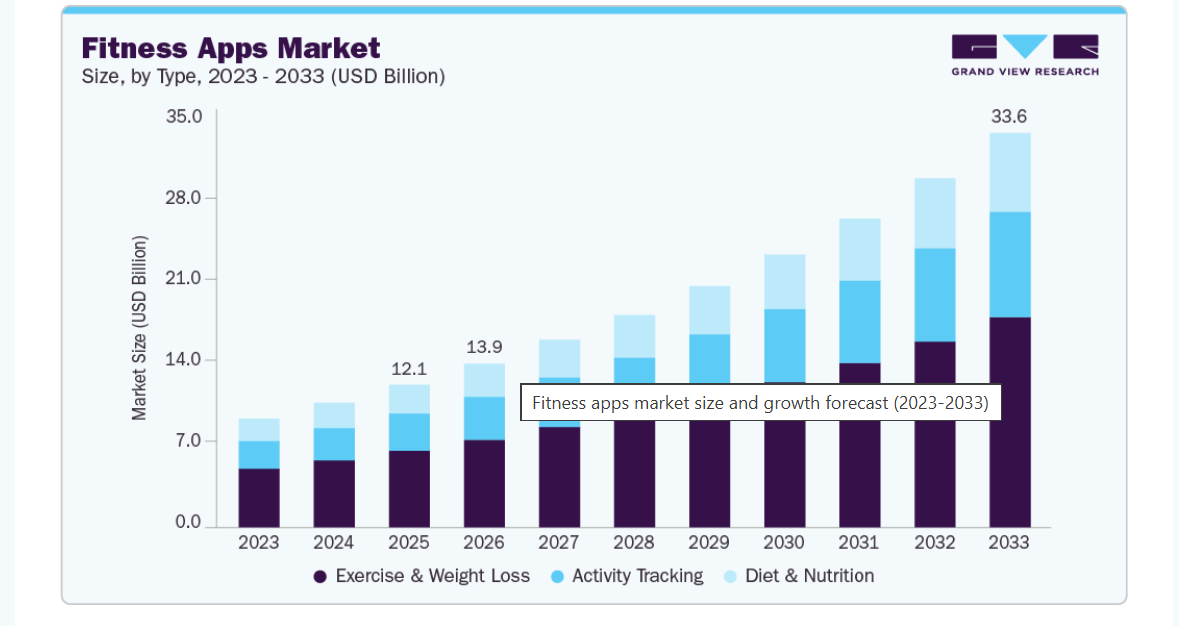
Source: https://www.grandviewresearch.com/industry-analysis/fitness-app-market
- As per a report, in 2025 the global fitness app industry will have a value of $12.12 billion and by 2033 the market size is expected to reach $33.58 Billion. This equates to a compound annual growth rate (CAGR) of 13.4%.
- In addition, fitness applications experienced over 850 million downloads globally in 2024, which indicates a continued demand from consumers for digitally based solutions that can help them achieve their overall well being.
- As of 2025, there were approximately 345 million users of fitness apps globally, with the majority of usage being by Smartphone users (over 81%).
- Furthermore, the health and fitness category of mobile apps has been downloaded over 3.6 billion times around the world; thus, making this category one of the fastest growing mobile application categories.
- The fitness app market in India is expected to increase from $521.06 million in 2025 to $2.91 billion in 2034 a CAGR of 18.69% in that timeframe.
- In India, the Android operating system has a dominant share (72.5%) of the fitness app marketplace due to widespread adoption of smartphones.
- In addition, more than 68.9% of users access fitness apps using smartphones. On the other hand, there has been a tremendous surge in the number of fitness apps that are connecting to wearables, exhibiting a growth rate of over 24% CAGR.
Planning a Fitness Project?
Get a tailored development cost estimate in a few simple steps.
- 3 quick steps
- 100% free
- Reply in 1 business day
2 Minutes Read
Competitor Analysis: Top Fitness Apps Similar to FitCoach
App |
Primary Focus |
Key Features |
| Strava | Running & Cycling Tracking | GPS tracking, route planning, performance analytics, social challenges |
| Fitbit | Health & Activity Monitoring | Step tracking, sleep analysis, heart rate monitoring, wearable integration |
| MyFitnessPal | Diet & Nutrition Management | Calorie tracking, food database, meal planning, macro tracking |
| Nike Training Club | Guided Fitness Training | On-demand workouts, fitness programs, expert coaching, wellness content |
| Freeletics | Personalized Fitness Coaching | AI workout plans, bodyweight exercises, progress tracking |
| Peloton | Interactive Fitness Classes | Live classes, on-demand workouts, trainer-led sessions, wearable integration |
| Noom | Weight Loss & Wellness Coaching | Psychology-based coaching, habit tracking, meal logging, personalized plans |
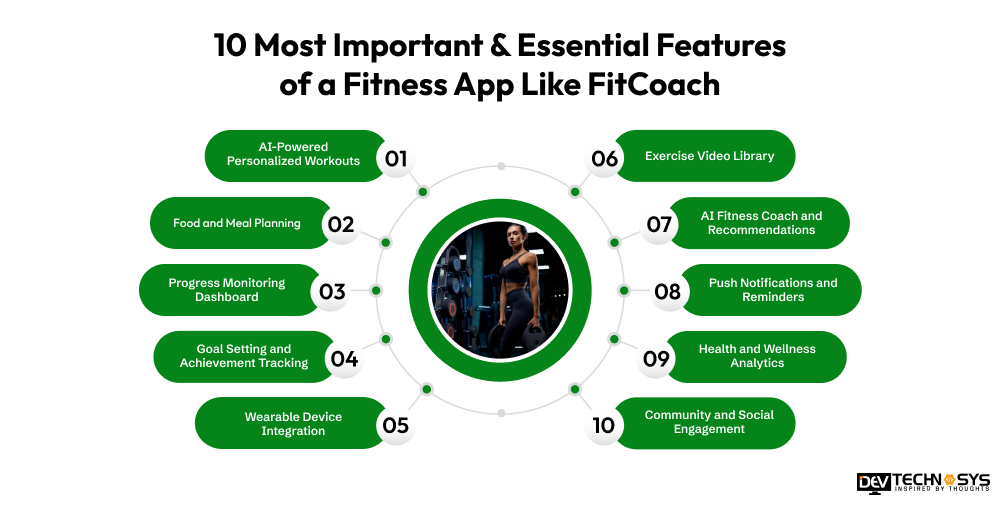
10 Most Important & Essential Features of a Fitness App Like FitCoach
A quality fitness application like FitCoach is required to provide personalised experiences, have effortless tracking capabilities and deliver entertaining wellness tools for the successful attainment of the user’s fitness objectives.
1. AI-Powered Personalized Workouts
AI-powered fitness apps create tailored workout schedules using users’ goals, fitness stages, body statistics, and their development for enhanced outcomes.
2. Food and Meal Planning
Hand out personalized meal plans, calorie goals, and nutritious recipes that support users’ workout aims.
3. Progress Monitoring Dashboard
Visualize workouts, calories burnt, weight variations, and fitness achievements through engaging graphics and data.
4. Goal Setting and Achievement Tracking
Let users pinpoint what they want to do in terms of fitness and give them the ability to see how they are doing with the help of motivating reminders and trophies.
5. Wearable Device Integration
FitCoach alternatives link up with fitness bands and smartwatches in order to get health, activity, and exercise data on a real-time basis.
6. Exercise Video Library
Fitness apps like Peloton provide viewers with well-prepared fitness sessions and exercise tutorials to learn the right postures and methods.
7. AI Fitness Coach and Recommendations
Use user results to provide real-time help, exercise ideas, and tailor-made fitness reports.
8. Push Notifications and Reminders
FitCoach clone apps deliver notifications for exercise times, water intake, and positive messages to keep up the pace of user involvement.
9. Health and Wellness Analytics
Give users insights based on their activity, calorie consumption, sleep duration, and the level of their overall fitness.
10. Community and Social Engagement
Facilitate competition, ranking, sharing of posts, and support from the community to enhance motivation and keep users coming back
6 Steps To Build A Fitness App Like FitCoach
Developing a fitness app like FitCoach requires a well-thought-out plan that includes market research, designing with the users in mind, using the latest technology, and ongoing improvement. Collaborating with a fitness app development company is a great way to produce an expandable and feature-packed platform that not only offers personalized fitness experiences but also keeps the users engaged over time.
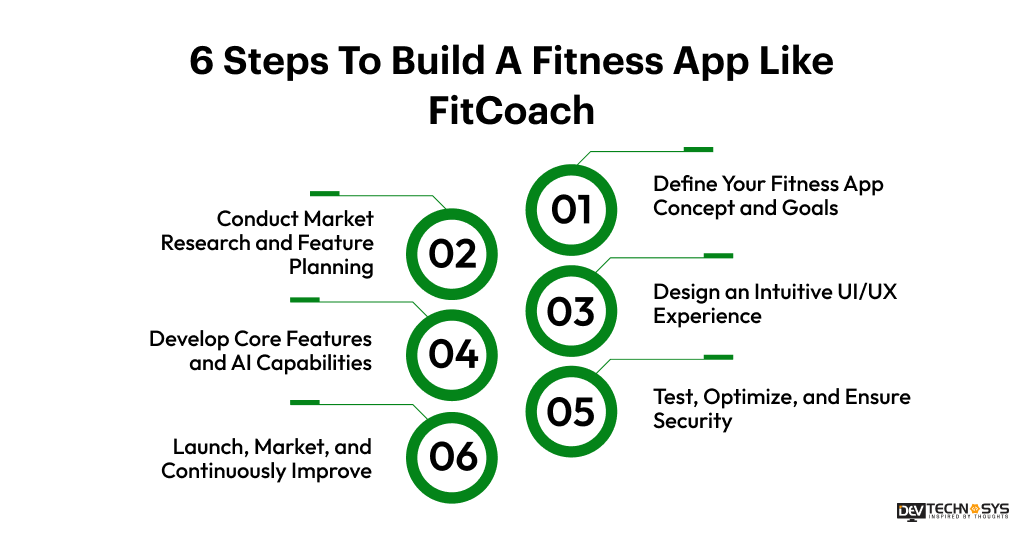
1. Define Your Fitness App Concept and Goals
In the beginning, define your target audience, business goals, and what makes you stand out. Decide if your app will be about losing weight, strength training, nutrition planning, or holistic health. With the help of a fitness app development company, you can get your idea tested, study your competitors, and develop a plan that fits the needs of the market and your users.
2. Conduct Market Research and Feature Planning
Look into top fitness apps like FitCoach, Strava, and MyFitnessPal to get familiar with the recent trends in the industry and what users like. Select main fitness app features such as workout logging, AI suggestions, meal prep, integration with wearables, and progress tracking. Good planning is the key to make sure that your app is useful to the customers and at the same time is a strong competitor in the fitness market.
3. Design an Intuitive UI/UX Experience
A simple and easy-to-use interface can be a great help when it comes to keeping fitness app users. The greater emphasis is on the smooth navigation, attractive dashboards, customized onboarding, and workout screens with good-looking graphics. Hire workout app development company from expert designers come up with a user-friendly design that makes physical fitness tracking easier and encourages users to keep being active and involved in their health journey.
4. Develop Core Features and AI Capabilities
Develop core features like personalized workout plans, activity logging, diet management, goal setting, and sending alerts. Using AI and machine learning makes it possible to offer instant suggestions based on the user’s actions, fitness level, and objectives. Such customization leads to higher user commitment and better app results.
5. Test, Optimize, and Ensure Security
Checking everything thoroughly during the final stages of custom fitness app development will help deliver a working and smooth fitness app on all devices and platforms. Pre-launch, you must scrutinize usability, performance, security, and compatibility.
Besides protecting user health data securely, it would help optimize the app speed and features to provide an uninterrupted experience for the users.

6. Launch, Market, and Continuously Improve
Once the app is live, the next step is to get new users through app store optimization, digital marketing, and social media promotions. Pay attention to user reviews, and study lead indicators, and then push periodic updates with new features and improvements. Keeping up with the times will not only help you stay in touch with the audience but also raise retention levels and aid long-term business development.
Real-World Case Study: FitConnect: A Virtual Fitness Platform
We developed a virtual fitness platform called FitConnect for a client that was looking to expand into the digital wellness market. After an initial MVP budget of $18K, we were able to create the platform to provide users with access to personalized workouts using virtual training sessions and AI- based recommendations for fitness routines.
The major challenges we faced while building FitConnect included creating a system capable of streaming high-quality video in real-time; integrating with third-party devices using application programming interfaces (APIs) and securing sensitive health-related data transmitted over the Internet.
Despite these challenges, we successfully delivered to our client a scalable, secure, and engaging fitness ecosystem that produced significantly higher levels of user engagement, retention rates, and growth in subscription revenues.
– Narayan Das( Project Manager)
Why Should Businesses Build a Fitness App Like FitCoach?
Opportunities for fitness-focused companies have drastically increased recently as more people are inclined towards digital health. For instance, creating a fitness program such as FitCoach is one of the ways for enterprises to derive revenue on a subscription basis, get their customers more involved, and also build a robust standing in the fast-growing health and wellness industry.
1. Capitalize on the Growing Fitness Market
More and more people choose digital health solutions, which brings about a continuous growth of the worldwide fitness app market. A On demand app development solutions can bring in new health-conscious customers who are always looking for personalized fitness experiences and promoting wellness.
2. Enhance User Engagement and Retention
By incorporating AI-powered suggestions, customized workout schedules, monitoring progress, and gamification features, users’ motivation to stay physically active on the platform is enhanced. Thus, heightened engagement also leads to more customer retention, stronger brand loyalty, and a rise of overall lifetime customer value.
3. Generate Recurring Revenue Streams
AI fitness apps like Fitbod are able to produce profits in various ways, such as through subscriptions, premium memberships, in-app purchases, and personalized coaching services. These recurring revenue models not only provide a steady flow of income but also contribute towards business growth and profitability in a highly competitive digital marketplace.
4. Leverage Data-Driven Personalization
Digital fitness solutions generate invaluable user data that helps companies provide customized workout programs, diet plans, and wellness tips. Customization results in delighted users, higher sales conversion, and has the potential to turn into a competitive edge for the firm in the fitness technology sector.
5. Build a Scalable Digital Wellness Ecosystem
Having a fitness app like BetterMe could be the base for ventures into other health-related areas such as telehealth, wearable-device integration, virtual coaching, nutrition consulting, and even corporate wellness programs, which would bring about new business openings and support sustainable long-term growth.
How Much Does It Cost to Build a Fitness App Like FitCoach?
The cost to develop a fitness app like FitCoach generally falls between $20, 000 and $150, 000+, depending upon the intricacy of the app, the features, the AI capabilities, integrations, design needs, and the development team location. Knowing the main factors that affect costs is a major help to companies in effectively budgeting their activities.
Cost Factor |
Cost Variation Impact |
| App Complexity & Features | $20,000 – $60,000+ |
| UI/UX Design Requirements | $5,000 – $25,000 |
| AI & Machine Learning Integration | $15,000 – $50,000+ |
| Platform Selection | $10,000 – $40,000+ |
| Third-Party API Integrations | $5,000 – $20,000+ |
| Backend Infrastructure & Security | $10,000 – $45,000+ |
| Development Team Location & Expertise | $20,000 – $80,000+ difference |
1. App Complexity and Features
The more and more complex features a product has, the higher the fitness app development costs will be. Simple fitness tracking apps are cheaper, whereas additional features such as AI coaching, smart workout planning, integration with wearable devices, and real-time analytics require more developer hours and lead to higher total FitCoach app development cost.
2. UI/UX Design Requirements
Coming up with a seamless and highly attractive user interface necessitates a lot of groundwork, from the research and wireframing to the prototyping and testing stages. The use of custom animations, interactive dashboards, personalized onboarding, and premium design elements also adds to the AI fitness app development cost.
3. AI and Machine Learning Integration
Artificial intelligence in the personal trainer app like FitCoach is a huge game-changer, both in terms of user experience and features. That includes use cases such as AI-powered workout recommendations, personalized meal plans, predictive analytics, virtual coaching, and other settings. However, building this kind of functionality takes a team of experts with experience in these areas, access to training datasets and advanced algorithms, which ultimately translates into significant additional costs.
4. Platform Selection
Focusing on one platform such as Android or iOS is usually the cheapest option. However, development efforts, testing demand, and maintenance complexity can double if you go cross-platform or native on multiple devices.
5. Third-Party API Integrations
Using third-party services such as Apple HealthKit, Google Fit, Fitbit APIs, payment gateways, analytics tools, or cloud services requires additional development time, licensing, and continuous support.
6. Backend Infrastructure and Security
A robust server-side platform is able to handle user management, data storage, analytics, and real-time synchronization. Total development costs comprise strong security measures, encryption protocols, compliance standards, and cloud infrastructure investments, and is therefore a very important contributor.
7. Development Team Location and Expertise
Hire a professional fitness app development company that specializes in AI, Cloud Computing, and Mobile Technologies if you want high quality, scalable, and quick delivery; therefore, it will be higher cost to build a fitness app like Centr.
Tech Stack for a Fitness App Like FitCoach
To develop a fitness app like FitCoach, you must use a technology stack that is scalable, secure, and capable of supporting high performance for many integrations (both for the app and the user’s wearable devices) and streams (data streams delivered at real time) to create a seamless user experience, which will drive user engagement across multiple channels.
Layer |
Technologies |
| Frontend (Mobile App) | Flutter, React Native, Swift (iOS), Kotlin (Android) |
| Backend Development | Node.js, Python, Django, Express.js, NestJS |
| Database | PostgreSQL, MySQL, MongoDB, Firebase Firestore |
| Cloud Infrastructure | AWS, Google Cloud Platform (GCP), Microsoft Azure |
| AI & Machine Learning | TensorFlow, PyTorch, OpenAI APIs, Scikit-learn |
| Wearable Integration | Apple HealthKit, Google Fit, Fitbit API, Garmin API |
| Real-Time Communication | WebSockets, Firebase Realtime Database |
| Authentication & Security | OAuth 2.0, JWT, Multi-Factor Authentication (MFA) |
| Payment Integration | Stripe, PayPal, Apple Pay, Google Pay |
| Push Notifications | Firebase Cloud Messaging (FCM), OneSignal |
| Analytics & Monitoring | Google Analytics, Mixpanel, Firebase Analytics |
| DevOps & CI/CD | Docker, Kubernetes, Jenkins, GitHub Actions |
Want a chatbot demo or pricing? Fill the form and talk to our experts today.
Pick what you need below — you can select more than one — then tap Get detail to continue.
-
Chatbot demo dashboard
-
Cost to develop an app
-
Industry report
-
Case study
AI & Personalization Integration in a Fitness App Like FitCoach
AI and Personalization are the key drivers behind the success of many apps, such as FitCoach. Based on a user’s fitness goals, activity history, and health information, Artificial Intelligence provides users with a custom based exercise program, nutrition plan and ongoing recommendations in real time based on results achieved through use of the app, therefore will drive more engagement from the user and deliver greater results.
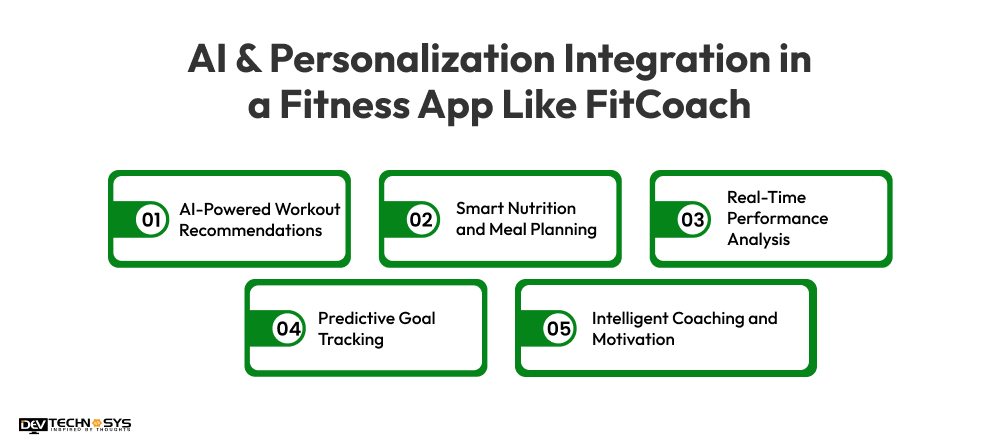
1. AI-Powered Workout Recommendations
AI analyzes user fitness levels, goals, workout history, and preferences to create personalized exercise plans that adapt continuously based on performance and progress.
2. Smart Nutrition and Meal Planning
AI automatically develops a custom meal plan, sets a calorie goal, and establishes a nutrition program for each user based on their health status, dietary preferences, and fitness goals.
3. Real-Time Performance Analysis
AI will continually track user performance, activity levels, and health metrics and provide the user with insights that will enable them to maximize their performance and achieve the desired results.
4. Predictive Goal Tracking
Machine Learning in apps like Freeletics will provide the user with an estimate of the date they will reach their fitness goal, obstacles that may delay achieving their goal, and changes to their exercise program to help them achieve their goal sooner than originally anticipated.
5. Intelligent Coaching and Motivation
Artificial intelligence-driven virtual coaches offer users custom-tailored feedback, reminders, support messages, and fitness suggestions that will motivate them and keep them coming back for more of their training and wellness experience.
Monetization Strategies for a Fitness App Like FitCoach
Besides offering value to users, a solid fitness app monetization strategy is a must for a fitness app to be really successful like FitCoach. By implementing even more ways to make money, enterprises can increase profits, increase users’ willingness to stay, and plan for future growth in an intensely competitive fitness market.
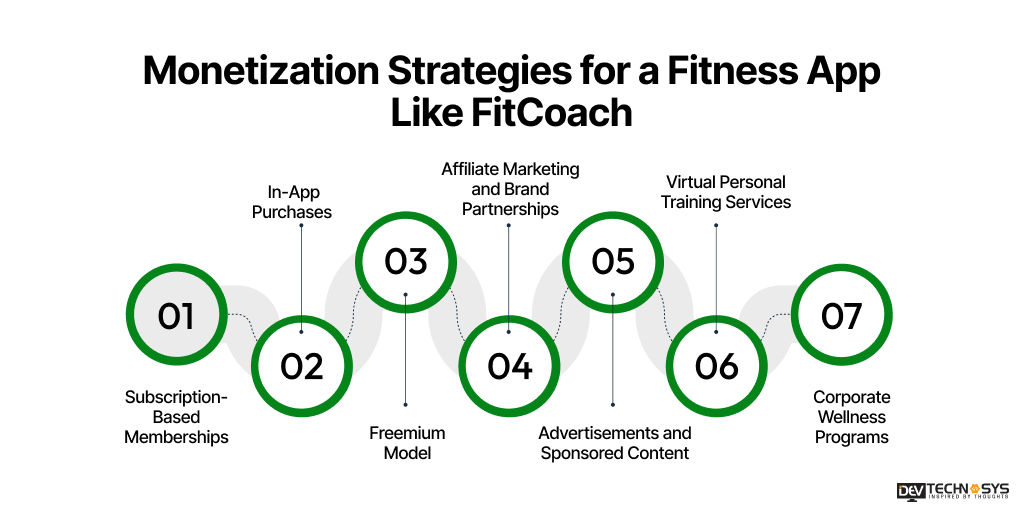
1. Subscription-Based Memberships
Subscriptions are a popular option for ongoing revenue. For example, you can offer monthly, quarterly, or yearly subscription options that give subscribers access to premium features like customized workout programs, AI coaching, meal planning, advanced analytics, motion tracking, and exclusive fitness content.
Not only DO subscriptions generate a steady revenue stream, but they ALSO encourage users to engage over longer periods of time.
2. In-App Purchases
The fitness on-demand app development solutions allow users to utilize workout plans, diet programs tailored to the individual, fitness challenges, virtual personal coaching sessions, premium fitness videos, and wellness guides. Besides providing users with the ability to select only those services they require and pay for, this approach generates additional sources of income for the company.
3. Freemium Model
Give away a simple fitness tracker, workout log, and a few elements of the app for free and then charge for the upgrade to the premium version. Premium users may receive customized suggestions, an ad-free environment, in-depth analysis, exclusive training programs, thereby converting free users into paying subscribers.
4. Affiliate Marketing and Brand Partnerships
Collaborate with fitness equipment producers, dietary supplement retailers, athletic apparel companies, wellness providers, and nutrition services, etc. Make money by referring through affiliate programs, product recommendations, sponsored listings, exclusive promotional partnerships embedded in the app.
5. Advertisements and Sponsored Content
By creating a variety of sources of income, you can improve the way your users interact with your product and maximize their experience. Through the placement of ads, you’ll generate revenue while ensuring your users’ interactions are as organic as possible without injecting interruptions into their experience.
6. Virtual Personal Training Services
By offering live consultations and one-on-one coaching sessions, users will receive personalized tutorial plans and receive professional fitness advice at an additional cost from certified trainers. As a result, each user will have access to a high-end revenue source.
7. Corporate Wellness Programs
Your company will work in collaboration with other organizations to develop an employee wellness strategy or incorporate fitness challenges into your company’s employee wellness program. The corporate subscription service will provide regular revenue and allow your company to support the development of a healthy workplace for employees.
Architecture & Security Compliance for a Fitness App Like FitCoach
A fitness app, such as FitCoach, collects personal user data that may include your health history, activity, payment information and profiles, among other things.
Therefore, it is critical to establish a reliable architecture and implement strong security measures to protect the data of your users while being able to scale and maintain reliability, protect data and adhere to industry regulations.
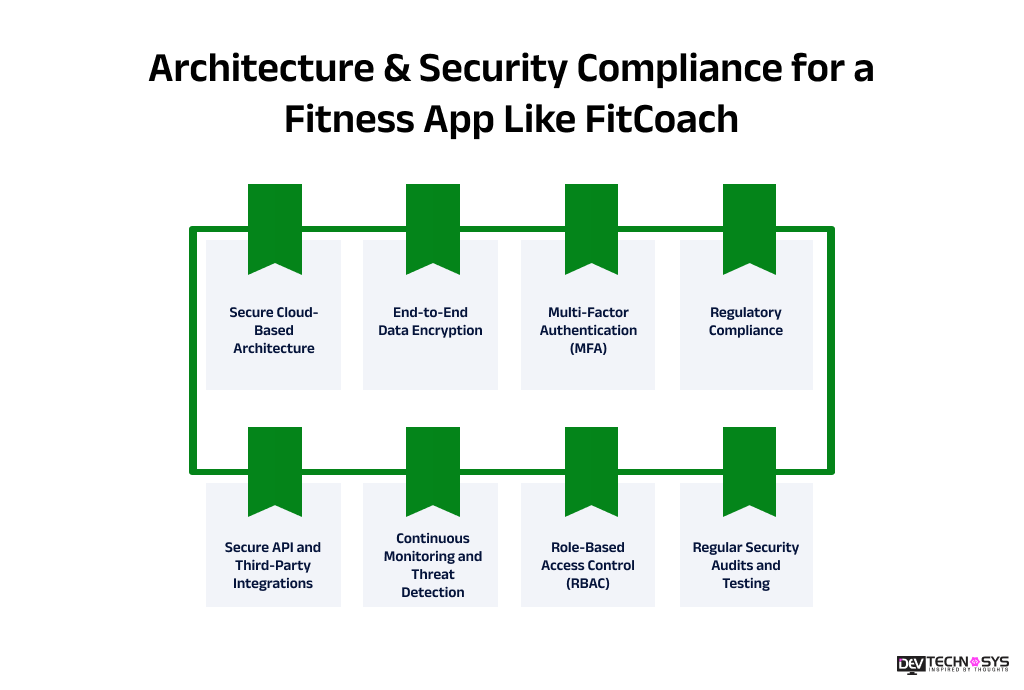
1. Secure Cloud-Based Architecture
Utilize one of the leading cloud service providers (Amazon Web Services, Microsoft Azure, or Google Cloud) to ensure the underlying architecture of your app can scale easily, perform at high availability, easily backup, and have a disaster recovery plan. The cloud-native architecture will provide you with the ability to process millions of users and large amounts of health-related data.
2. End-to-End Data Encryption
To protect the privacy of your users, encrypt your data during transmission and at rest with end-to-end encryption; implement SSL/TLS protocols, encrypted databases, and secure APIs to provide your users with protection against unauthorized access and keep their fitness and payment records secured and private.
3. Multi-Factor Authentication (MFA)
Employ multi-factor authentication, biometrics, and other advanced login techniques to extend the account security. The said security hurdles account for minimizing unauthorized access, therefore enhancing overall account security from cyber threats and credential-based attacks.
4. Regulatory Compliance
Make compliance with industry regulations such as HIPAA, GDPR, CCPA, and local data privacy laws a priority. Going by these rules and regulations, businesses will be able to manage user data responsibly and keep themselves from facing legal and financial sanctions.
5. Secure API and Third-Party Integrations
Use strong authentication methods, especially for IoTs like wearable devices, payment gateways, and health platforms. Making the APIs accessible only to authorized personnel and regular API monitoring are the best ways of preventing vulnerabilities and ensuring secure data transfer. In short, tightly control the accesses and monitor API.
6. Continuous Monitoring and Threat Detection
Integrate security monitoring tools, intrusion detection systems, and automated threat analysis to identify security vulnerabilities in real-time. Continuous monitoring reduces exposure to risks and helps maintain a secure application environment.
7. Role-Based Access Control (RBAC)
Control internal access to the level of information exposed by the roles and permissions of each user. By doing so, the security threats will be highly reduced, and at the same time, only authorized personnel will be the ones having access to the user, payment, or administrative data.
8. Regular Security Audits and Testing
Regularly performing penetration testing, vulnerability assessments, and security audits can uncover potential security weaknesses. Through regular testing, you can strengthen application security and ensure that your systems remain up-to-date with the latest cybersecurity standards.
Conclusion
Making a fitness app like FitCoach is a great way for businesses to jump on the health and wellness trend that is going digital. Starting from coming up with your app design and using Artificial Intelligence to make it more personal, choosing the right technological tools and ways of making the app pay for itself, each step is really important.
Going along with Dev Technosys, a top fitness app development services provider, is a way to get hold of expert knowledge, new tech, and solutions that are both capable and adjusted to your business needs.
Our team is at your service to convert your idea into a fully loaded fitness app that not only gets users involved the most but also increases your income & provides excellent wellness experiences.
Frequently Asked Questions
Find answers to the most common questions related to this article.
A fitness app development project like FitCoach usually takes a development timeline of 3 to 9 months to complete, depending on the feature complexity, AI integration, design demands, testing processes, and platform selection. More sophisticated apps may call for extra development and optimization time.
Main features are AI-generated workout suggestions, diet regimens, exercise tracking, synchronization with fitness devices, setting targets, being aware of your progress, reminders, data dashboards, and social sharing tools. These features directly enhance the users' experience, encourage them to keep coming back, and support their overall training results.
The cost to build a fitness app like FitCoach can range from $20, 000 to $150, 000 or even more, depending on the scope of the project. The complexity of the online personal trainer app, AI features, integration of third-party services, geographical factors, along with the requirement of customization are all the aspects that largely determine the final cost of the project.
By studying user behaviors, fitness objectives and performance data, AI significantly boosts personalization. It makes customized workout plans possible, provides smart diet recommendations, offers predictive analytics, and a virtual coach that guides users in achieving their goals. At the same time, it enhances user engagement and helps in gaining long-term customer retention.
Nike training club
Strava
Peloton
Fitbit
Hevy
Smart fitness applications present an excellent opportunity for generating substantial profits through subscription models, premium services, and digital wellness products. Increasingly, as people look to tailor their health and fitness experiences, businesses have the opportunity to reap recurring revenues, deepen customer loyalty, and build a strong market presence