















Key Takeaways:
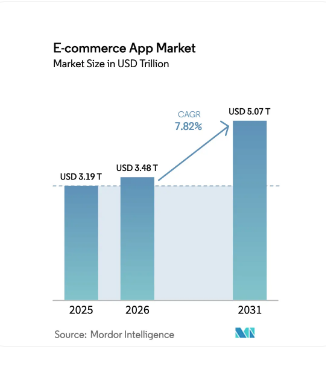
- The e-commerce app market size is projected to be USD 48 trillion in 2026 and reach USD 5.07 trillion by 2031.
- The cost to build app like letgo varies from $8,000 to $30,000+, depending on factors like features, complexity, and development location.
- The factors that affect the cost to build marketplace app like letgo include features, platform choice, development team location, UI/UX design, and more.
- Create an app like Letgo that generates revenue through multiple streams, like subscription and a freemium model, while keeping the platform attractive for buyers and sellers.
Ever looked at unused stuff in your home and thought, “This could make me money”? That’s exactly the idea behind apps like Letgo, turning clutter into cash with just a few taps. From vintage finds to everyday essentials, buy-and-sell marketplace apps have completely reshaped how people shop and sell locally.
The opportunity is massive; the global second-hand market is expected to surpass $350 billion by 2027, driven by affordability, sustainability, and digital adoption. Platforms like Letgo have proven that users love quick, location-based transactions with minimal friction.
For businesses, this means low inventory costs, high user engagement, and multiple revenue streams like ads, featured listings, and commissions. If you’re planning to build a similar platform, you’re entering a high-growth space where the right features and strategy can turn a simple idea into a scalable, profitable marketplace app.
What is the Letgo App?
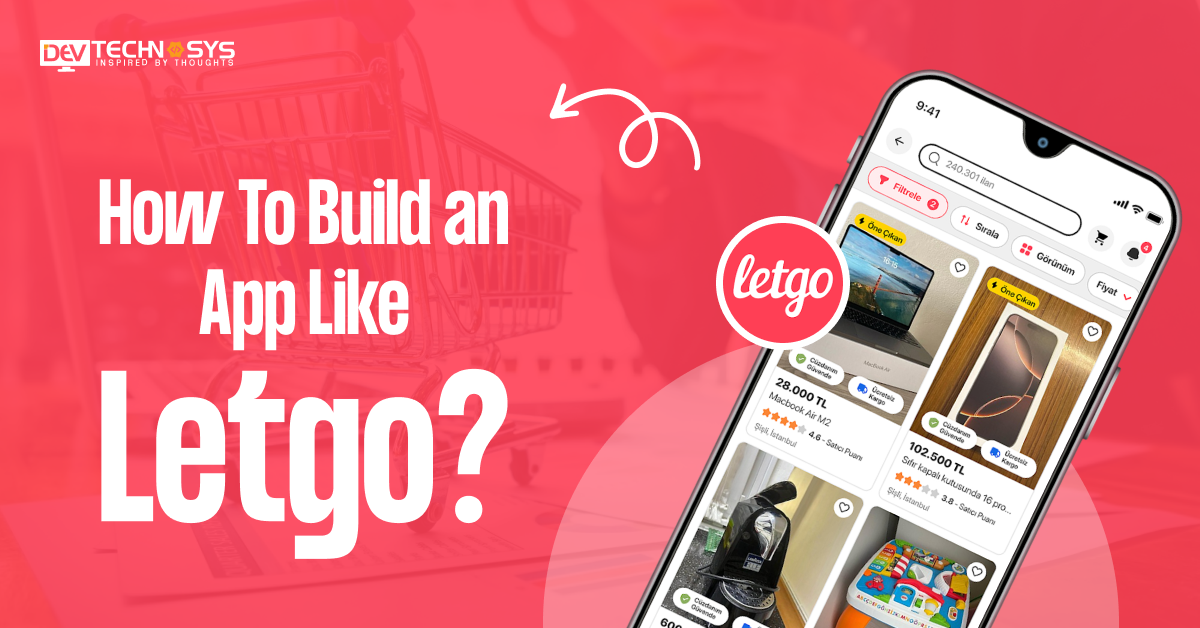
Letgo is a popular, free location-based mobile marketplace app designed for buying and selling second-hand goods locally, primarily focusing on electronics, furniture, cars, and clothing. It uses AI and photo recognition for fast listing, enabling users to chat, negotiate, and arrange in-person exchanges within their neighborhood. In 2020, Letgo merged its operations with OfferUp.
How Does the LetGo App Work?
The Letgo app is a local marketplace platform that connects buyers and sellers to trade second-hand items easily through a mobile interface. It simplifies the entire buying and selling process into a few quick steps.
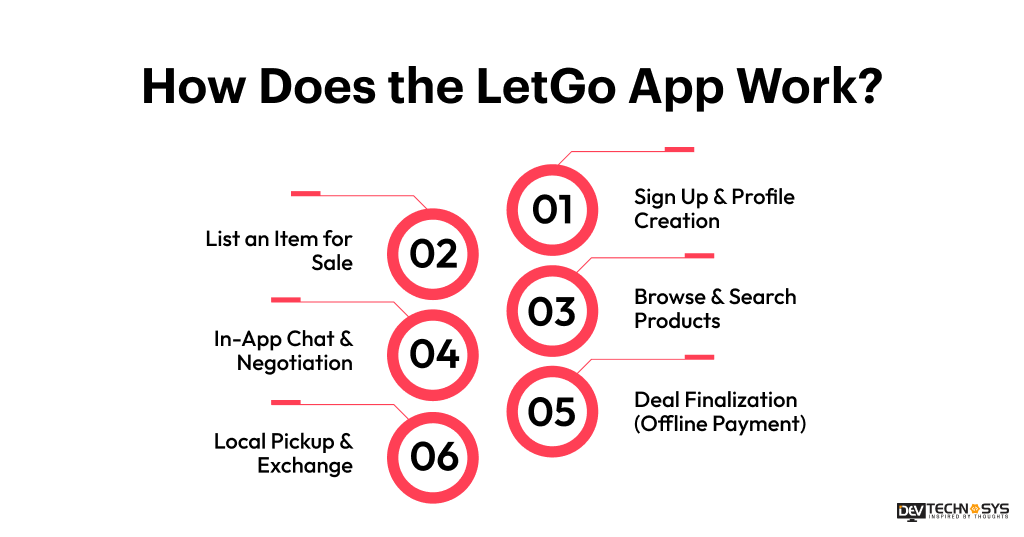
1. Sign Up & Profile Creation: Users create an account (or browse without login) and set their location. The app uses geolocation to show nearby listings, making local buying and selling easier.
2. List an Item for Sale: A real-time marketplace platform allows sellers to upload photos, add descriptions, set a price, and publish their listing. The app is designed for mobile-first use, making it quick to post items directly from a smartphone.
3. Browse & Search Products: Buyers can explore listings based on location, category, or keywords. The platform displays items with large images and filters to help users quickly find what they need nearby.
4. In-App Chat & Negotiation: Interested buyers can directly message sellers through the built-in chat system in their mobile trading app to ask questions, negotiate prices, or finalize deals.
5. Deal Finalization (Offline Payment): Once both parties agree, they typically meet locally to complete the transaction. The app itself does not handle payments, so users manage payments independently.
6. Local Pickup & Exchange: Most transactions happen face-to-face, ensuring quick delivery and no shipping hassles. This local model makes the process faster and more convenient for users.
Marketplace App Market Overview
- The e-commerce app market size is projected to be USD 3.48 trillion in 2026, and reach USD07 trillion by 2031, growing at a CAGR of 7.82% from 2026 to 2031.
- By type, transaction fees led with 34% revenue share in 2025 while subscription fees are forecast to expand at an 8.82% CAGR to 2031.
- By platform, super-app mini-programs post the highest projected CAGR at 24% through 2031.
- By business model, peer-to-peer resale is advancing at an41% CAGR through 2031.
What are the Different Types of Marketplace Apps?
Marketplace apps come in various types based on their business models, target audiences, and the kind of products or services they offer. Platforms like letgo have made peer-to-peer selling popular, but today’s digital marketplace ecosystem includes multiple categories designed to serve different industries and user needs.
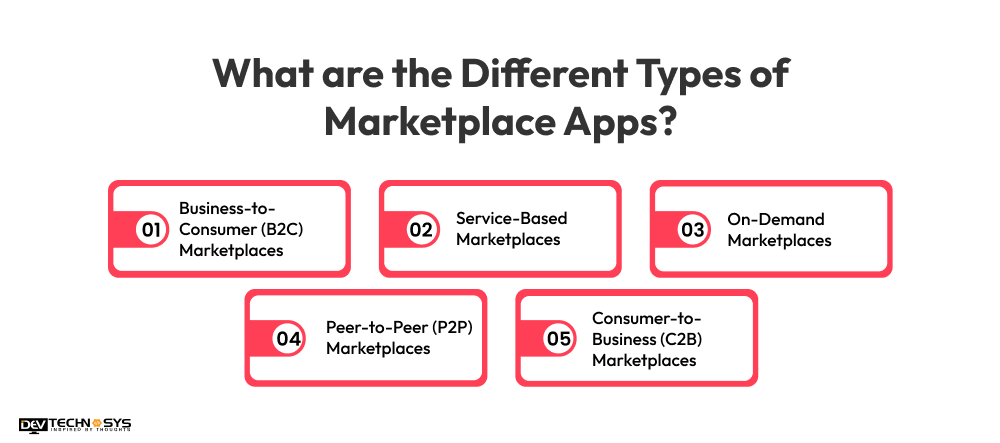
1. Peer-to-Peer (P2P) Marketplaces
These platforms connect individual buyers and sellers, enabling them to trade products directly without intermediaries. They include features like real-time chat integration, geolocation services (Google Maps API, Mapbox), payment gateway integration.
Users can list items, negotiate prices, and complete transactions locally or globally. Hire a top Android app development company to create a simple, cost-effective, and ideal P2P app for second-hand or personal goods trading.
Example: letgo
2. Business-to-Consumer (B2C) Marketplaces
B2C marketplaces allow businesses to sell products or services directly to end-users. These platforms typically include features like inventory management, payment integration, delivery systems, and customer support, making them highly scalable and suitable for large enterprises.
Example: Amazon
3. Consumer-to-Business (C2B) Marketplaces
In this model, individuals offer products or services to businesses. It is widely used in freelancing, influencer marketing, and content creation industries where companies hire individuals for specific tasks or projects.
Example: Upwork
4. Service-Based Marketplaces
These platforms connect users with service providers such as home services, healthcare professionals, or consultants. They usually include booking systems, scheduling tools, reviews, and secure payment options to ensure smooth service delivery.
Example: Urban Company
5. On-Demand Marketplaces
On-demand apps provide instant access to services like food delivery, transportation, or grocery delivery. These platforms focus on real-time service fulfillment, quick response times, and seamless user experience, making them highly popular in urban areas.
Example: Uber
How to Build a Marketplace App Like Letgo: Step-by-Step Guide
Building a marketplace app like letgo requires a well-planned strategy that combines business understanding, modern technology, and user-focused design. Below is a detailed step-by-step guide with deeper insights to help you build a scalable and successful marketplace platform.
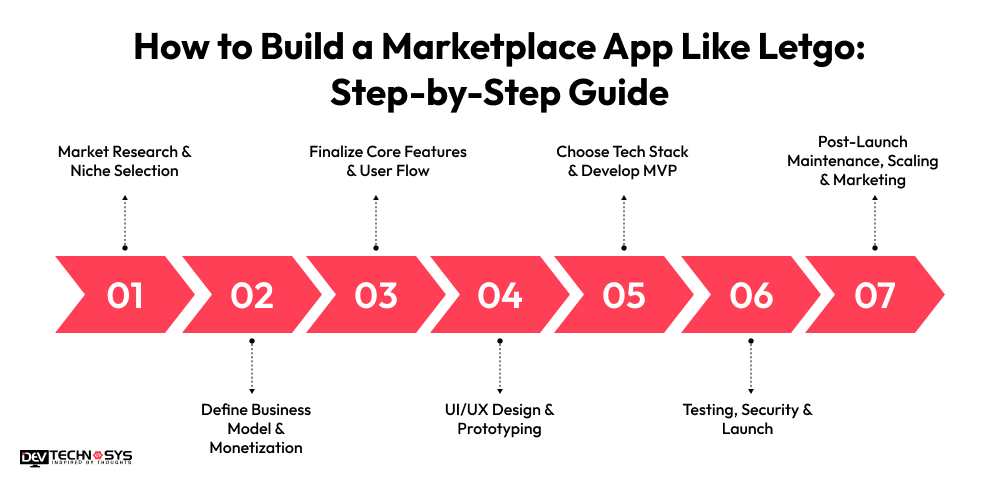
1. Market Research & Niche Selection
Begin your Letgo clone app development with in-depth market research to understand your target audience, competitors, and industry trends. Analyze platforms like Letgo, identify gaps in their offerings, and evaluate user pain points such as trust, pricing, or usability.
Decide whether you want a general marketplace or a niche-focused platform (e.g., electronics, real estate, or services). Defining a clear niche helps you position your app better, reduce competition, and attract a more relevant and engaged user base.
Industry Insights: According to Statista, C2C platforms dominate resale markets, especially among price-conscious users. Nearly 60%+ users prefer marketplaces for affordable products.
2. Define Business Model & Monetization
Your mobile app development company in USA will choose a monetization strategy that aligns with your business goals. Common models include commission per transaction, subscription plans, featured listings, and advertisement revenue.
To develop an app like Letgo, you can also combine multiple models to maximize earnings. Additionally, define pricing strategies, user incentives, and promotional offers. Planning monetization early ensures your platform remains profitable while delivering value to both buyers and sellers.
3. Finalize Core Features & User Flow
Letgo app development involves identifying and documenting all essential features required to make an app like Letgo. These include user registration, profile management, product listings, advanced search filters, in-app messaging, notifications, ratings, and reviews.
Define clear user journeys for both buyers and sellers to ensure smooth navigation and transactions. Creating detailed feature lists and workflows helps your mobile app development company build a structured and efficient application.
4. UI/UX Design & Prototyping
Design a user-friendly interface that is visually appealing and easy to navigate. Start peer-to-peer marketplace app development by designing wireframes and moving to high-fidelity prototypes to visualize the app experience before development begins.
To make an app like Letgo, focus on mobile app design services like intuitive navigation, fast loading screens, and minimal steps for completing actions like posting or purchasing items. A strong UI/UX design improves user satisfaction, reduces churn, and increases engagement and conversions.
5. Choose Tech Stack & Develop MVP
Your iPhone app development company will select the right technology stack based on your scalability and performance needs. Use Frontend Frameworks like Flutter, React Native, Swift, Kotlin for cross-platform development, and Node.js, Django, Ruby on Rails for backend development.
Start by building an MVP (Minimum Viable Product) with only core features. Your classified app development company will use this approach to reduce initial investment, speed up development, and allow you to test your concept in the real market before expanding.

6. Testing, Security & Launch
Your buy and sell app development company will perform comprehensive testing to ensure your app is bug-free and performs well across devices. Mobile app testing includes functional testing, usability testing, performance testing, and security testing.
Implement strong security measures such as data encryption, secure APIs, and authentication systems. Once testing is complete, launch your app on Google Play and Apple App Store while ensuring compliance with their policies and guidelines.
Industry Insights: Swell states that marketplace platforms face up to 70% cart abandonment, requiring smooth UX and testing.
7. Post-Launch Maintenance, Scaling & Marketing
After launch, continuously monitor app performance, fix bugs, and roll out updates based on user feedback. Introduce advanced features like AI-based recommendations, payment gateways, and analytics tools as your app grows.
Invest in marketing strategies such as SEO, social media campaigns, influencer partnerships, and referral programs to increase visibility and user acquisition. Scaling your infrastructure ensures your app can handle growing traffic and demand efficiently.
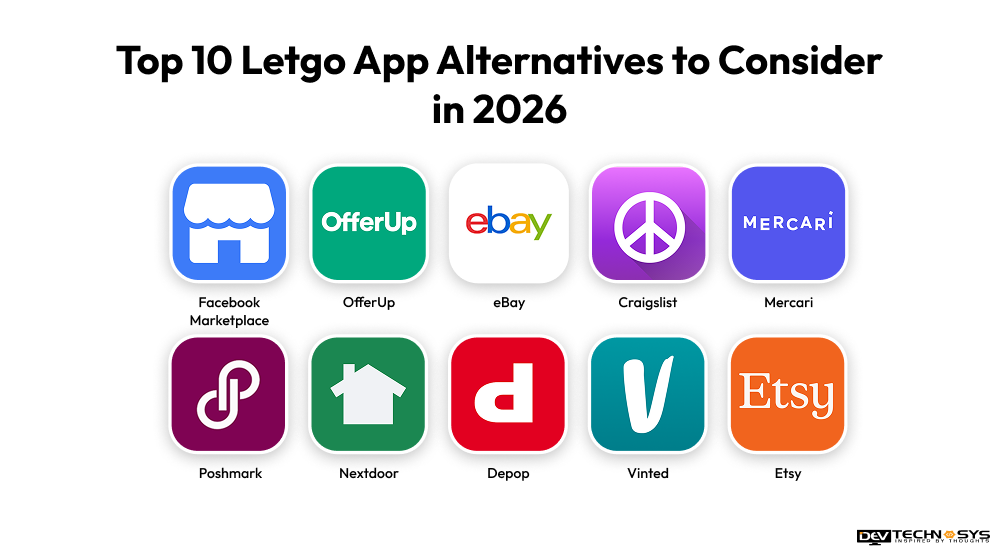
Top 10 Letgo App Alternatives to Consider in 2026
With the decline and merger of Letgo into other platforms, many powerful alternatives have emerged in 2026. These apps offer better features like AI recommendations, secure transactions, and wider reach, making them ideal for buying and selling online.
App |
Launch Year |
Ratings (Approx.) |
Platform Availability |
| OfferUp | 2011 | 4.6 | iOS, Android, Web |
| Facebook Marketplace | 2016 | 4.5+ | iOS, Android, Web |
| eBay | 1995 | 4.6 | iOS, Android, Web |
| Craigslist | 1995 | 4.8 | iOS, Android, Web |
| Mercari | 2013 | 4.7 | iOS, Android, Web |
| Nextdoor | 2011 | 4.7 | iOS, Android, Web |
| Poshmark | 2011 | 4.8 | iOS, Android, Web |
| Depop | 2011 | 4.5 | iOS, Android, Web |
| Vinted | 2008 | 4.5 | iOS, Android, Web |
| Etsy | 2005 | 4.7 | iOS, Android, Web |
1. OfferUp
OfferUp is a leading local marketplace in the U.S., allowing users to buy and sell items nearby or ship nationwide. It offers secure messaging, user ratings, and identity verification features, making transactions safer, faster, and more trustworthy compared to traditional classified platforms. To build an app like OfferUp, you need to take help from an experienced app development firm.
2. Facebook Marketplace
Facebook Marketplace leverages the massive user base of Facebook, enabling seamless local buying and selling. Users can view seller profiles, mutual connections, and ratings, which builds trust. Its integration with Facebook makes communication easy and increases visibility for listings significantly.
3. eBay
eBay is a global eCommerce platform that supports both auction-style and fixed-price listings. It is ideal for selling collectibles, electronics, and high-value items. With secure payments, buyer protection, and shipping options, it enables sellers to reach a wide audience beyond local markets.
4. Craigslist
Craigslist is one of the oldest online classifieds platforms, popular for local buying and selling across various categories. To develop a classified app like Craigslist, you need to offer free listings and simple navigation, making it accessible to everyone, although it lacks advanced features like secure payments or built-in user verification systems.
5. Mercari
Mercari is a user-friendly resale platform that allows individuals to sell items nationwide with built-in shipping options. It simplifies listing, pricing, and transactions while offering seller protection and easy payments, making it ideal for casual sellers looking for convenience and broader reach.
Industry Insights: Platforms like Facebook Marketplace have 1B+ monthly users, demonstrating scalability potential, according to Newswirejet.com.
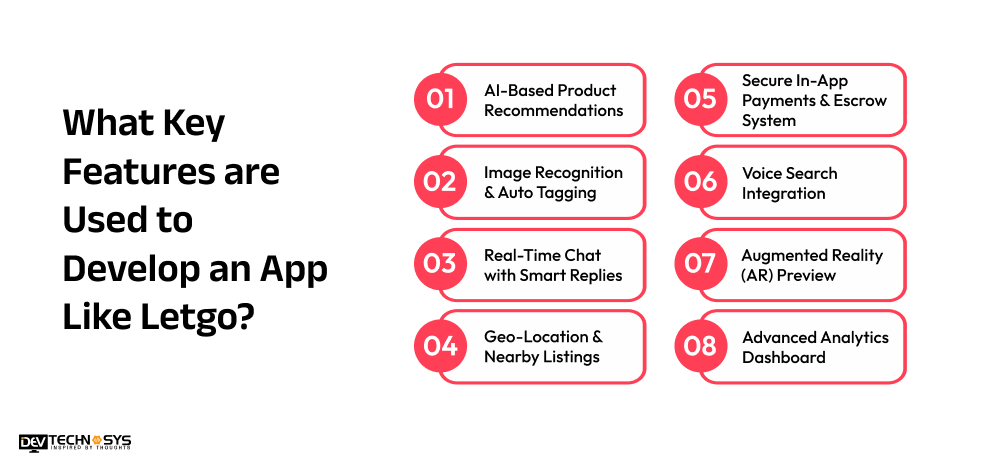
What Key Features are Used to Develop an App Like Letgo?
Here are the crucial features required to build an app like Letgo. All the features mentioned below enhance user experience, security, and scalability, making your marketplace app like letgo, more competitive and future-ready.
User Panel (Buyer) |
Seller Panel |
Admin Panel |
| User Registration/Login | Product Listing Management | Dashboard Overview |
| Profile Management | Add/Edit/Delete Listings | User Management |
| Advanced Search & Filters | Pricing & Inventory Control | Listing Moderation |
| Product Browsing | Order/Inquiry Management | Content Moderation |
| Wishlist/Favorites | Real-Time Chat with Buyers | Revenue Management |
| In-App Chat | Seller Analytics Dashboard | Reports & Analytics |
| Push Notifications | Profile Verification | Notification Control |
| Location-Based Search | Listing Performance Tracking | Dispute Management |
| Ratings & Reviews | Offer/Discount Management | Security & Access Control |
1. AI-Based Product Recommendations
To make an app like Letgo, use AI-powered algorithms to analyze user behavior, search history, and preferences to suggest relevant products. This improves personalization, enhances user experience, and increases conversion rates by showing users items they are more likely to purchase.
2. Image Recognition & Auto Tagging
Users can upload product images, and the app automatically detects objects, suggests categories, and generates tags. It reduces manual effort, speeds up listing creation, and improves search accuracy within the platform.
3. Real-Time Chat with Smart Replies
Develop an app like Wallapop with an advanced messaging system with AI-driven smart replies to enable faster communication between buyers and sellers. It also supports media sharing, quick responses, and enhances user engagement for smoother negotiations.
Want a chatbot demo or pricing? Fill the form and talk to our experts today.
Pick what you need below — you can select more than one — then tap Get detail to continue.
-
Chatbot demo dashboard
-
Cost to develop an app
-
Industry report
-
Case study
4. Geo-Location & Nearby Listings
This feature uses GPS tracking to display products available near the user’s location. It improves convenience, supports local transactions, and increases the chances of faster deal closures.
5. Secure In-App Payments & Escrow System
Integrated payment gateways with escrow services ensure secure transactions. Funds are held until both parties confirm the deal, reducing fraud risks and building trust among users.
6. Voice Search Integration
Mobile application development companies add voice-enabled search in their marketplace apps to allow users to find products using speech instead of typing. It enhances accessibility, speeds up search processes, and improves overall user convenience.
7. Augmented Reality (AR) Preview
Top app development companies use AR technology in their Letgo clone app to allow users to visualize products like furniture or décor in real-world environments before purchasing. It reduces uncertainty and improves buying decisions.
8. Advanced Analytics Dashboard
Provides sellers with insights into views, clicks, conversions, and user engagement. It helps sellers optimize listings, pricing, and marketing strategies for better performance. If you want to build an app like Olx, then adding this feature is crucial.
What is the Cost to Build an App Like Letgo?
The cost to build an app like Letgo varies from $8,000 to $30,000+, depending on factors like features, complexity, and development location. On average, a basic Letgo app development cost starts relatively low, around $8,000 to $15,000.
The mid-level apps with filters, notifications, and a seller dashboard can increase the cost to $15,000 to $22,000. However, advanced, scalable platforms can require a much larger investment, exceeding the total marketplace app development cost to $30,000+.
App Complexity |
Estimated Cost |
Features Included |
| Basic / MVP | $8,000 – $15,000 | User login, listings, search, chat, basic UI |
| Mid-Level App | $15,000 – $22,000 | Filters, notifications, ratings, seller dashboard |
| Advanced App | $22,000 – $30,000+ | AI recommendations, payments, analytics, scalability |
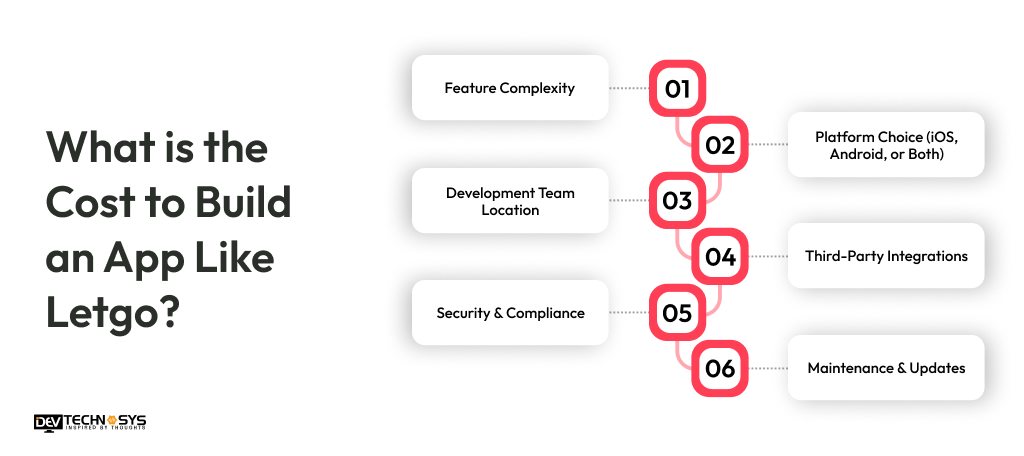
Now, let’s talk about the factors that affect the marketplace app development cost. These elements play a major role in determining your overall budget, timeline, and scalability, so understanding them early helps in better planning and cost optimization.
1. Feature Complexity
The number and type of features significantly impact the cost to develop an app like Letgo. Basic features like listings and chat are affordable, while advanced functionalities such as AI recommendations, real-time tracking, and secure payments increase both time and cost to build an app like Letgo.
Complexity Level |
Estimated Cost |
| Basic Features | $2,000 – $5,000 |
| Moderate Features | $5,000 – $8,000 |
| Advanced Features (AI, tracking) | $8,000 – $12,000+ |
2. Platform Choice (iOS, Android, or Both)
Building separate native apps for iOS and Android costs more compared to cross-platform development. Choosing frameworks like Flutter or React Native can reduce costs while maintaining performance across devices.
Platform Type |
Estimated Cost |
| Single Platform (Android/iOS) | $3,000 – $10,000 |
| Cross-Platform | $5,000 – $15,000 |
| Native (Both Platforms) | $15,000 – $20,000+ |
3. Development Team Location
If you hire dedicated developers from regions like the U.S., you have to spend more than outsourcing to countries like India or Eastern Europe. The hourly rates vary significantly, impacting the total project cost. Choosing the right team based on budget and expertise can help balance quality and affordability.
Region |
Estimated Cost Impact |
| USA/Canada | High ($20,000 – $27,000+) |
| Europe/UK | Medium-High ($12,000 – $22,000) |
| Asia (India, etc.) | Cost-effective ($8,000 – $18,000) |
4. Third-Party Integrations
Integrating APIs for payments, messaging, analytics, and location services adds to the classified app development cost. Some services charge per usage or monthly fees, increasing long-term expenses. Selecting scalable and cost-efficient APIs can help manage ongoing operational costs effectively.
Integration Type |
Estimated Cost |
| Payment Gateway | $1,000 – $3,000 |
| Maps & GPS | $1,500 – $4,000 |
| Notifications & Analytics | $1,000 – $3,000 |
| All Integrations Combined | $3,000 – $8,000+ |
5. Security & Compliance
Implementing data encryption, secure authentication, and compliance with regulations adds to the cost to develop an app like Letgo, especially for apps handling user data and transactions. Investing in strong security measures also helps build user trust and prevents potential legal issues.
Security Level |
Estimated Cost |
| Basic Security | $1,000 – $3,000 |
| Standard Security | $3,000 – $6,000 |
| Advanced Security (Encryption, Compliance) | $7,000 – $11,000+ |
6. Maintenance & Updates
Post-launch maintenance, bug fixes, and feature updates typically cost around 15% to 20% of the initial development cost annually, making it an important long-term expense. Regular updates also ensure better performance, improved user experience, and compatibility with new technologies.
Service Type |
Estimated Cost |
| Basic Maintenance | $1,000 – $2,000/year |
| Regular Updates & Support | $3,000 – $6,000/year |
| Advanced Maintenance | 12% to 20% of the total development cost/year |
Monetization Strategies for a Marketplace App Like Letgo
A successful marketplace app generates revenue through multiple streams while keeping the platform attractive for buyers and sellers. Below are the most effective marketplace app monetization strategies that top mobile marketplace app developers use in modern marketplace apps.
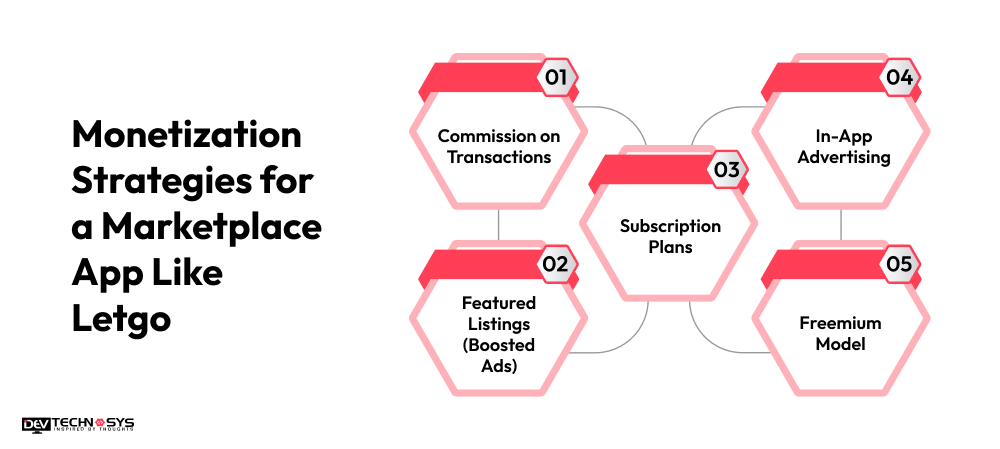
1. Commission on Transactions
The app earns revenue by charging a small percentage fee on every successful transaction between buyers and sellers. Commission model scales well as user activity increases, making it one of the most stable and long-term monetization strategies for marketplace platforms.
2. Featured Listings (Boosted Ads)
Sellers can pay to highlight their products at the top of search results or category pages. It improves visibility and helps items sell faster while generating consistent advertising revenue for the platform through premium placement options.
3. Subscription Plans
Users or sellers pay monthly or yearly fees to access premium features such as unlimited listings, advanced analytics, or priority support. Subscription model ensures steady recurring income and improves user retention through value-added services.
4. In-App Advertising
Third-party businesses display ads within the platform, generating revenue based on impressions or clicks. With high user traffic, this becomes a strong passive income source while keeping core marketplace features free for users.
5. Freemium Model
Basic features are offered for free, while advanced functionalities like enhanced visibility, priority messaging, or extra listings are locked behind paywalls. The freemium model encourages users to upgrade gradually as they engage more with the platform.
Future Trends in Buy & Sell Marketplace Apps
Marketplace apps like letgo are evolving rapidly with advanced technologies that improve user experience, trust, and transaction speed. In 2026, the focus will be on smarter automation, better personalization, and more secure digital ecosystems.
Future Trend |
Description |
| AI-Powered Personalization | AI will analyze user behavior and preferences to suggest relevant products. This helps users find items faster, improves engagement, and increases successful transactions by showing more accurate and personalized listings based on real-time activity. |
| Hyper-Local Marketplace Growth | GPS-based features will connect users within nearby areas for faster buying and selling. This enables quick pickups, same-day exchanges, and stronger local community interactions, making transactions more convenient and efficient. |
| Secure Digital Payments & Escrow | Advanced payment systems with escrow protection will ensure safe transactions. Funds are released only after confirmation, reducing fraud risks and building trust between buyers and sellers in the marketplace ecosystem. |
| AR-Based Product Visualization | Augmented Reality will allow users to preview products in real environments before purchasing. This improves decision-making, reduces uncertainty, and lowers return rates by offering a realistic shopping experience. |
| Social Commerce Integration | Marketplace apps will include social features like feeds, likes, and influencer content. This makes product discovery more engaging and interactive, turning shopping into a community-driven experience. |
Tech-Stack is Needed to Build an App Like Letgo
A marketplace app like letgo requires a robust full-stack architecture with real-time capabilities, secure payments, and cloud scalability to handle large-scale user interactions efficiently. Below is a structured breakdown of all major technologies used in building a Letgo-like app.
Layer |
Technology Used |
| Frontend (Mobile App) | Flutter / React Native / Swift / Kotlin |
| Backend Development | Node.js / Django / Laravel / Spring Boot |
| Database | MongoDB / MySQL / PostgreSQL / Firebase |
| Cloud & Hosting | AWS / Google Cloud / Microsoft Azure |
| Real-Time Chat | Socket.io / WebSockets / Firebase |
| Payment Gateway | Stripe / PayPal / Razorpay / Braintree |
| Maps & Location | Google Maps API / Mapbox |
| Security & Auth | JWT / OAuth 2.0 / SSL Encryption |
Why is Dev Technosys Your Trusted Partner Marketplace App Development Partner?
With a strong blend of experience, technology, and reliability, Dev Technosys is a trusted partner for building scalable marketplace apps like letgo that drive growth and user engagement. They offer:
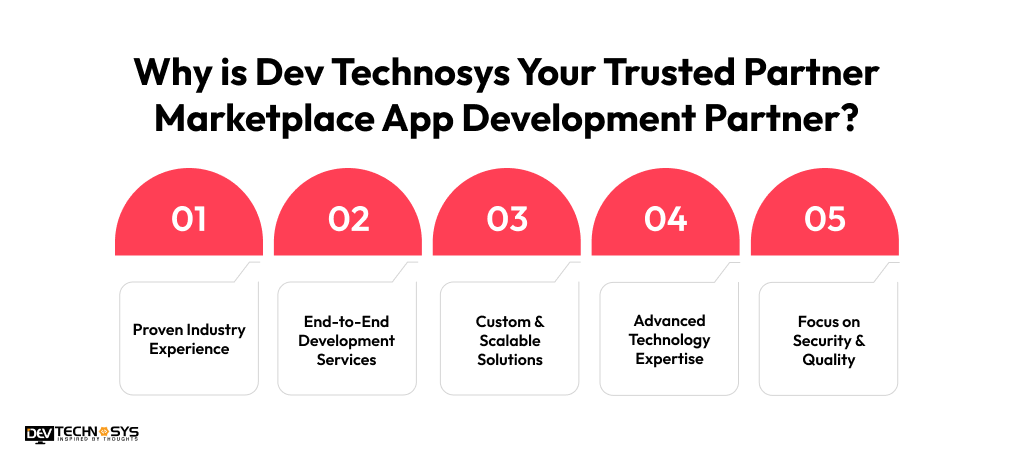
1. Proven Industry Experience: Dev Technosys has 15+ years of experience in developing marketplace, eCommerce, and on-demand applications. Their deep understanding of user behavior and market trends helps in building high-performing and scalable solutions for various sectors.
2. End-to-End Development Services: From idea validation and UI/UX design to development, testing, and deployment, they offer complete lifecycle services in 35+ countries. This ensures businesses get a fully functional and market-ready multi-vendor marketplace app without managing multiple vendors.
3. Custom & Scalable Solutions: They build highly customized apps tailored to business needs. Whether it’s a startup MVP or a large-scale platform, their solutions are designed to scale seamlessly as user demand grows.
4. Advanced Technology Expertise: Dev Technosys uses modern tech stacks like Flutter, React Native, Node.js, AI/ML, and cloud services. It ensures high performance, real-time functionality, and future-ready architecture.
5. Focus on Security & Quality: They implement strong security protocols, including data encryption, secure APIs, and compliance standards. Rigorous testing ensures bug-free, stable, and reliable applications.
You can reach out anytime; we are available 24/7. Our team provides a quick response.

Conclusion
Marketplace apps like letgo have transformed the way people buy and sell by offering convenience, speed, and local connectivity in one platform. With the rise of mobile-first users, AI-driven features, and secure payment systems, these apps are becoming more advanced and user-focused.
Building a successful marketplace app requires careful planning, the right tech stack, strong security, and a scalable business model. If you are a business looking for top-notch marketplace app development, contact Dev Technosys, a leading marketplace app development company in USA with 15+ years of expertise in creating future-ready marketplace solutions. Stay tuned for more updates.
Frequently Asked Questions
Find answers to the most common questions related to this article.
To build an app like Letgo, start with market research, define a business model, design UI/UX, choose a tech stack, and develop an MVP. Then integrate features like listings, chat, and payments before testing, launching, and scaling the platform.
The cost typically ranges from $8,000 to $30,000+, depending on features, design complexity, and development approach. Advanced apps with AI, real-time chat, and secure payments can cost significantly more based on scalability requirements.
Key features required in an app like letgo clone development include user registration, product listings, search filters, geolocation, in-app chat, push notifications, ratings, reviews, payment integration, and an admin dashboard for managing users and content efficiently.
Popular tech stacks include Flutter or React Native for frontend, Node.js or Django for backend, MongoDB or MySQL for databases, and AWS or Google Cloud for hosting and scalability.
Marketplace apps generate revenue through commissions, featured listings, subscriptions, in-app ads, payment processing fees, and premium seller profiles, creating multiple income streams for sustainable growth.