




















Key Takeaways:
Cost to develop a car rental app typically ranges from $8,000 to $30,000+, depending on features, complexity, platform choice, and scalability requirements. Basic MVP apps may cost $8,000 to $15,000, mid-level applications range from $15,000 to $22,000, while advanced, enterprise-grade car rental platforms can exceed $22,000 to $30,000+. The overall cost is influenced by features like real-time tracking, payment systems, and backend infrastructure.
Cost Breakdown by Development Complexity:
-
- Basic/MVP ($8,000 to $15,000): Includes essential features such as user registration, car listings, a booking system, basic payment integration, and a simple admin dashboard for managing rentals.
- Mid-Level ($15,000 to $22,000): Adds advanced features like GPS tracking, secure payment gateways, push notifications, user reviews, booking history, and third-party API integrations for enhanced functionality.
- Advanced ($22,000 to $30,000+): Enterprise-level apps include AI-based pricing, real-time fleet tracking, automated dispatch systems, advanced analytics, IoT integration, and scalable cloud infrastructure. It increases the cost of custom car rental app development.
Key Cost Drivers:
-
- App Type: Peer-to-peer rental apps cost more than simple fleet-based systems due to verification and trust features.
- Features & Integrations: Real-time tracking, AI pricing, and payment gateways significantly increase development cost.
- Platform Choice: Cross-platform development reduces cost, while native apps increase overall investment.
- UI/UX Design: Custom, high-end designs require more time and budget compared to basic interfaces.
Cost Based on Countries (Hourly Rates):
-
- United States: $50 to $100 per hour
- United Kingdom & Western Europe: $40 to $80 per hour
- Eastern Europe: $45 to $70 per hour
- Asia (India, Southeast Asia): $15 to $25+ per hour
- Australia: $35 to $70 per hour
Development Timeline:
-
- MVP App: 2 to 4+ months
- Mid-Level App: 4 to 7+ months
- Advanced App: 8 to 12+ months or more
The world has witnessed a high surge in the car rental industry in 2026. The credit of this transformation goes to the changing consumer preferences, and the changing consumer preference. From global giants such as Uber and Turo to regional startups, businesses are using mobile apps to offer a seamless car rental experience to users. Today’s smart users want transparency, convenience, and real-time access in hourly bookings, peer-to-peer car sharing, or subscription-based rentals.
For entrepreneurs and enterprises, investing in car rental app development is a profitable venture. But there’s one thing that every business must consider before moving forward with development: the COST.
This blog will walk you through the car rental app development cost 2026. We will discuss all the essentials, including factors affecting costs, factors to reduce development costs, monetization strategies, and more. We hope this taxi rental app development cost breakdown will help you make smarter and future-ready decisions.
Industry Insights:
The global car rental market was valued at ~USD 149.87 billion in 2024 and is projected to reach ~USD 278.03 billion by 2030, growing at a CAGR of ~10.5% (Grand View Research).
What is the Average Car Rental App Development Cost?
The cost to build a car rental app can be around $8,000 to $30,000, depending on various factors. It may include features, platform choice, tech-stack, development expertise, and location.
The basic car rental mobile app development cost will lie between $8,000 to $15,000. It will include basic features like user registration, car listings, search and filters, a booking system, and basic payment integration.
To build a budget car rental app with mid-level complexity, you may need to spend around $15,000 to $22,000. The cost increases due to added functionalities like GPS tracking & geolocation services, secure payment gateway integration, and push notifications.
App Type / Complexity Level |
Estimated Cost (USD) |
Estimated Time |
| Basic MVP Car Rental App | $8,000 – $15,000 | 2–3 months |
| Mid-Level Car Rental App | $15,000 – $22,000 | 3–5 months |
| Advanced Car Rental Platform | $22,000 – $30,000+ | 6 months+ |
The cost to build a car rental app with real-time data synchronization, AI-based pricing algorithms, and a microservices architecture can cost over $30,000.
There will be some distinctions between the car rental website development cost and the app development cost, so be clear on what exactly you want and approach the right developer.
What are the Factors Affecting the Car Rental App Development Cost?
There are various factors that affect the cost to develop a car rental app, as each element adds to the overall complexity, functionality, and scalability of the solution. Let’s discuss these cost affecting factors in detail:
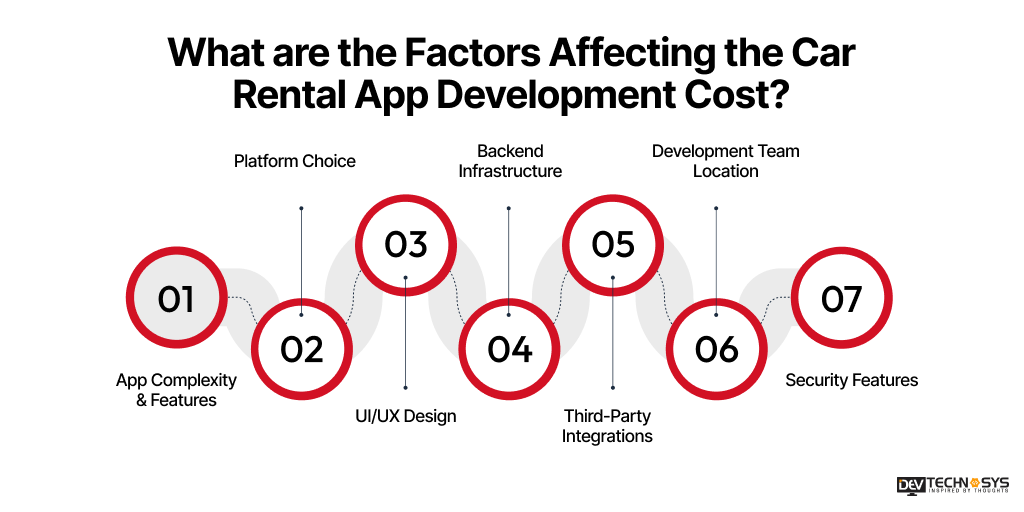
1. App Complexity & Features
The complexity of your car rental app and the number of features significantly impact development costs. Basic apps are more affordable. But if you want to build a car rental app like DiscoverCar with advanced features like real-time tracking, AI-based pricing algorithms, and multi-user systems, you will increase development time, technical effort, and overall budget requirements.
Complexity Level |
Estimated Cost Impact |
Key Features Included |
| Basic | $3,000 – $7,000 | User login, car listing, booking system |
| Medium | $6,000 – $8,000+ | Payments, notifications, reviews, tracking |
| Advanced | $8,000 – 10,000+ | AI pricing, real-time tracking, automation |
2. UI/UX Design
UI/UX design plays a crucial role in user engagement and retention. A simple interface is cost-effective, but custom designs with interactive elements, RESTful APIs / GraphQL APIs, animations, and seamless navigation require more time, expertise, and investment, ultimately increasing the overall development cost.
Design Level |
Estimated Cost Impact |
Description |
| Basic UI | $1,000 – $2,000 | Simple layout, minimal design elements |
| Standard UI | $2,000 – $4,000+ | Improved visuals, better navigation |
| Advanced UI/UX | $4,000 – $7,000+ | Custom animations, interactive design, premium UX |
3. Platform Choice
Choosing between iOS, Android, or both platforms affects development costs. Single-platform apps are more affordable, while multi-platform or native development increases expenses.
Cross-platform development (Flutter, React Native) can reduce car rental software development cost but may involve trade-offs in performance and scalability.
Integration Level |
Estimated Cost Impact |
Examples |
| Basic | $800 – $12,500 | Simple APIs, basic notifications |
| Moderate | $12,500 – $18,500 | Payments, maps, and GPS tracking |
| Advanced | $18,500 – $24,000+ | Multiple APIs, real-time services |
4. Third-Party Integrations
Integrating third-party services such as payment gateways, GPS tracking, maps, and notifications into car rental apps for Android and iOS Users can enhance functionality.
Experts who provide api development services states that adding these integrations increases development complexity and involve ongoing costs like subscription fees or usage-based charges, impacting the total budget over time.
Integration Level |
Estimated Cost Impact |
Examples |
| Basic | $500 – $1,500 | Simple APIs, basic notifications |
| Moderate | $1,500 – $3,500 | Payments, maps, and GPS tracking |
| Advanced | $3,500 – $6,000+ | Multiple APIs, real-time services |
5. Development Team Location
The geographical location of your dedicated development team significantly influences costs. Hiring developers in regions like North America or Western Europe is more expensive, while outsourcing to countries like India or Eastern Europe can reduce costs without compromising development quality. Here’s the taxi rental app development cost breakdown based on region
Industry Insights:
According to Statista, Around 79% of rental revenue in some markets is expected to come from online channels by 2030, showing strong mobile-first adoption (Statista – Car Rentals Outlook, India).
Region |
Estimated Cost Impact |
Hourly Rate |
| Asia (India, etc.) | Low | $15 – $25+/hr |
| Eastern Europe | Moderate | $40 – $70/hr |
| North America/Europe | High | $70 – $100+/hr |
6. Backend Infrastructure
A robust backend is essential for managing bookings, user data, and real-time updates. Building a scalable cloud-based infrastructure increases the initial peer-to-peer car rental app cost but ensures better performance, reliability, and the ability to handle growing user demand efficiently.
Infrastructure Level |
Estimated Cost Impact |
Description |
| Basic Backend | $1,000 – $3,000 | Simple database, limited users |
| Scalable Backend | $3,000 – $7,000 | Cloud hosting, moderate traffic |
| Enterprise Backend | $7,000 – $15,000+ | Microservices, real-time processing |
7. Security Features
Implementing security features such as data encryption, secure authentication, and safe payment processing is essential. These measures increase development costs but are necessary to protect user data, ensure compliance, and build trust among customers using the app.
Security Level |
Estimated Cost Impact |
Key Implementations |
| Basic Security | $500 – $1,500 | Simple login & password security |
| Standard Security | $1,500 – $3,500 | Encryption, OTP, secure APIs |
| Advanced Security | $3,500 – $8,000+ | MFA, fraud detection, full compliance |
Want a chatbot demo or pricing? Fill the form and talk to our experts today.
Pick what you need below — you can select more than one — then tap Get detail to continue.
-
Chatbot demo dashboard
-
Cost to develop an app
-
Industry report
-
Case study
Why Should Businesses Invest in Car Rental App Development?
Investing in car rental app development is a smart strategy for businesses aiming to expand in the growing digital mobility market. It helps streamline operations, improve customer experience, and create new revenue opportunities through technology-driven solutions.
- It enhances customer convenience with easy booking, payments, and real-time vehicle availability.
- Enhances fleet management through automation and live tracking systems.
- Increases revenue through commissions, subscriptions, and partnership models.
- Investing to build a car rental app like HiyaCar provides valuable user data and insights for better business decisions.
- Strengthens brand presence in the competitive transportation industry.
- Supports scalability as demand for on-demand mobility services continues to grow.
Why Budgeting is Essential for Your Car Rental App Success?
Budgeting plays a vital role in the success of a car rental app because it ensures smooth planning, controlled spending, and efficient resource utilization throughout the development process. A well-structured budget helps businesses avoid unexpected costs and build a scalable, feature-rich application.
- Ensures proper financial planning from start to finish
- Helps control development and operational costs effectively
- Supports prioritization of essential app features
- Enables better resource and technology allocation
- Reduces risks of overspending and project delays
- Ensures long-term sustainability with maintenance planning
5 Popular Car Rental Apps And Their Development Cost
The car rental industry has rapidly evolved with digital platforms offering seamless booking, vehicle access, and mobility solutions. Here are 5 popular car rental apps and their estimated development costs, along with timelines.
1. Turo
It is one of the most popular car rental apps, and private owners can rent out their vehicles through this online platform. A car rental app like Turo is an American-based peer-to-peer car rental service that offers a wide range of features, such as easy bookings, uploading documents, tracking, payment gateway options, and availability.
Complexity Level |
Estimated Cost |
Development Timeline |
| Basic | $10,000 – $16,000 | 2 – 4 weeks |
| Mid-Level | $16,000 – $22,000 | 4 – 8 weeks |
| Advanced | $22,000 – $28,000 | 8 – 12+ weeks |
Industry Insights:
According to Forbes, Turo has over 350,000 active vehicle listings and 3.5 million active guests. It operates as a major competitor in the travel rental market, despite shelving 2025 IPO plans.
2. Hertz
This platform is one of the most well-known car rental companies worldwide and has the largest network. A car rental app like Hertz allows users to easily book their vehicle from anywhere and schedule their booking according to their convenience.
It offers various types of vehicles, such as vans, trucks, buses, cars, and two-wheelers. The table below states the cost to build a car rental app like Hertz based on complexity level.
Complexity Level |
Estimated Cost |
Development Timeline |
| Basic | $12,000 – $18,000 | 3 – 5 weeks |
| Mid-Level | $18,000 – $24,000 | 5 – 9 weeks |
| Advanced | $24,000 – $30,000+ | 10 – 14+ weeks |
3. Ekar
It is one of the first or largest car rental apps in the Middle East. It offers users the ability to book instantly and drive with flexible options. A car rental app like Ekar offers various advanced features that can provide convenience or flexibility for the user, such as secure online payment options, biometric login, booking management, and driver assignment.
Complexity Level |
Estimated Cost |
Development Timeline |
| Basic | $11,000 – $18,000 | 3 – 6 weeks |
| Mid-Level | $18,000 – $24,000 | 6 – 10 weeks |
| Advanced | $24,000 – $30,000 | 10 – 14+ weeks |
4. Zipcar
It is the most secure and flexible car rental app. Rental services are provided to subscribed members only, and users pay monthly or yearly subscription fees to receive them efficiently. An app like Zipcar offers various services such as car reservations, searching nearby vehicles, hourly or daily rentals, and vehicle options.
Complexity Level |
Estimated Cost |
Development Timeline |
| Basic | $8,000 – $14,000 | 2 – 4 weeks |
| Mid-Level | $14,000 – $20,000 | 4 – 7 weeks |
| Advanced | $20,000 – $27,000 | 7 – 11+ weeks |
5. Cabify
This platform is the most used car rental service app. It was founded by Juan de Antonio in 2011 and operates in Latin America and Spain. An app like Cabify allows users to book vehicles instantly according to their requirements and ensures the safest or quickest car rental services. Cabify provides various vehicle options such as cars, vans, trucks, buses, etc.
Complexity Level |
Estimated Cost |
Development Timeline |
| Basic | $12,000 – $18,000 | 3 – 5 weeks |
| Mid-Level | $18,000 – $24,000 | 5 – 9 weeks |
| Advanced | $24,000 – $29,000 | 9 – 13+ weeks |

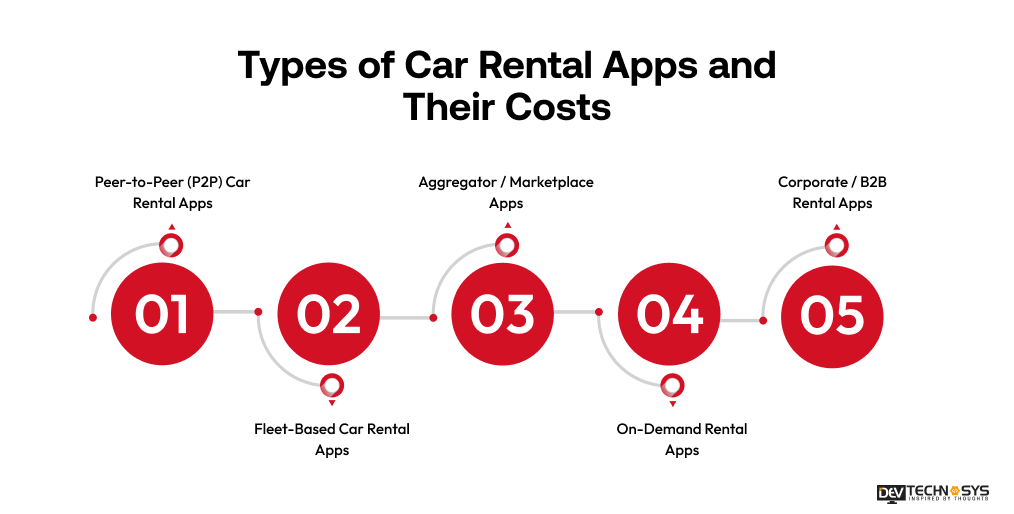
Types of Car Rental Apps and Their Costs
Car rental apps come in different types, each designed to serve specific business models and user needs. The cost to create a car rental app varies depending on the app type, feature complexity, and level of scalability required.
1. Peer-to-Peer (P2P) Car Rental Apps
These apps allow individuals to rent out their personal vehicles, requiring features like user verification, insurance integration, and secure payment systems. Due to complex trust mechanisms and multi-user interactions, development costs are higher.
Level |
Features |
Estimated Cost |
| Basic | User registration, listings, booking system | $12,000 – $18,000 |
| Standard | Reviews, payments, notifications, verification | $18,000 – $25,000 |
| Advanced | Insurance APIs, trust systems, analytics | $25,000 – $30,000+ |
2. Fleet-Based Car Rental Apps
Fleet-based apps are owned by businesses managing their own vehicles. They include features like real-time tracking, booking management, and admin dashboards. Development is moderately complex, focusing on operational efficiency and fleet control.
Level |
Features |
Estimated Cost |
| Basic | Vehicle listing, booking, admin panel | $8,000 – $14,000 |
| Standard | GPS tracking, payments, notifications | $14,000 – $22,000 |
| Advanced | Fleet analytics, dynamic pricing, dashboards | $22,000 – $30,000+ |
3. Aggregator / Marketplace Apps
These apps connect users with multiple car rental providers, offering comparisons, bookings, and reviews. They require complex APIs, multi-vendor management, and seamless user experience, making development more resource-intensive and costly.
Level |
Features |
Estimated Cost |
| Basic | Vendor listings, search, booking | $12,000 – $18,000 |
| Standard | Multi-vendor system, payments, reviews | $18,000 – $26,000 |
| Advanced | API integrations, analytics, scalability | $26,000 – $30,000+ |
4. On-Demand Rental Apps
On-demand apps enable instant bookings and short-term rentals with real-time availability and quick vehicle access. Features like GPS tracking and automated booking systems increase complexity, leading to moderate to high development costs.
Level |
Features |
Estimated Cost |
| Basic | Instant booking, availability display | $10,000 – $16,000 |
| Standard | GPS tracking, notifications, payments | $16,000 – $24,000 |
| Advanced | Real-time sync, automation, analytics | $24,000 – $30,000+ |
5. Corporate / B2B Rental Apps
These apps are designed for businesses to manage employee transportation, bookings, and billing. They include features like reporting dashboards, role-based access, and contract management, with moderate complexity and cost.
Level |
Features |
Estimated Cost |
| Basic | Booking system, user roles | $8,000 – $13,000 |
| Standard | Reporting, billing, dashboards | $13,000 – $20,000 |
| Advanced | Analytics, integrations, automation | $20,000 – $30,000+ |
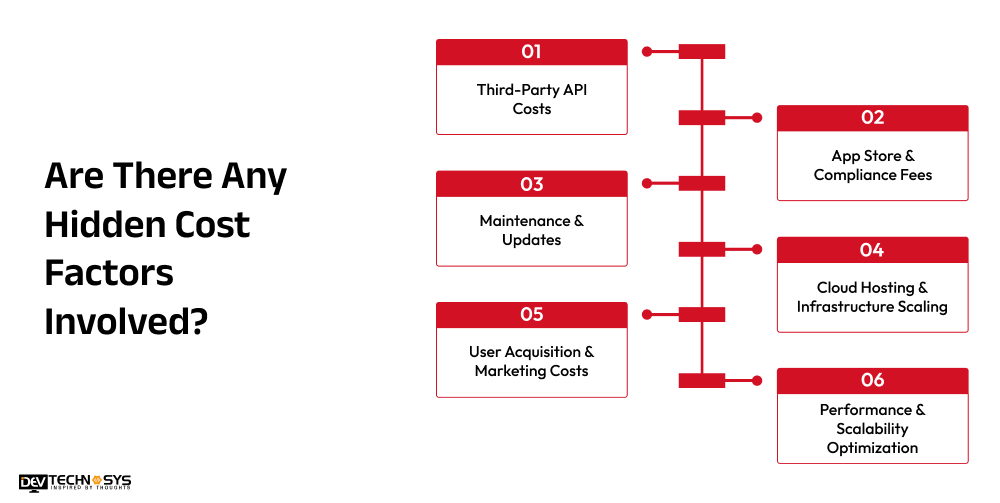
Are There Any Hidden Cost Factors Involved?
According to experts at a top car service app development company, there are several hidden cost factors involved in car rental app development that can significantly impact the overall budget if not planned properly.
1. Third-Party API Costs
Third-party APIs such as Google Maps, payment gateways, SMS services, and GPS tracking tools often charge based on usage. As the app scales and user activity increases, these recurring operational costs grow significantly, impacting the overall long-term budget of the car rental application.
2. App Store & Compliance Fees
Publishing a car rental app on platforms like Google Play and Apple App Store involves registration fees, policy compliance, and periodic updates. Additional costs may arise for meeting changing guidelines, security standards, and maintaining approval for continuous app availability and updates.
3. Maintenance & Updates
Post-launch maintenance includes bug fixes, performance optimization, feature enhancements, and security updates. Car rental app maintenance cost will be around 15% to 20% of the initial development cost annually. These ongoing expenses ensure the app remains stable, secure, and compatible with evolving technologies and user expectations.
4. Cloud Hosting & Infrastructure Scaling
Cloud infrastructure costs increase as user traffic grows. Expenses include server usage, storage, bandwidth, and load balancing. As the app scales globally, businesses must upgrade infrastructure regularly to ensure performance, reliability, and seamless real-time functionality, leading to higher recurring operational costs.
5. User Acquisition & Marketing Costs
Attracting users requires continuous investment in digital marketing, social media campaigns, paid ads, and SEO strategies. In competitive markets, retaining users is also costly, making marketing and customer acquisition a significant hidden expense in overall car rental app development.
6. Performance & Scalability Optimization
As the app grows, optimizing performance becomes essential to handle high traffic and real-time operations. Your logistics software development services provider wil include backend improvements, database optimization, and system upgrades to make it successful in the market.
These enhancements require additional development effort and infrastructure investment, increasing the overall cost to build a car rental software for the long term.
Car Rental App Development Timeline Explained
The development timeline of a car rental app depends on its complexity, features, design requirements, and third-party integrations. A basic MVP can be developed quickly for market validation.
But if you want to build a car rental app like Carla with real-time tracking, automation, and scalable architecture, you require more structured planning and longer execution time.
App Type |
Estimated Timeline |
Key Inclusions |
| Basic MVP | 2 – 4 weeks | User login, car listing, booking system, basic payment integration |
| Mid-Level App | 4 – 8 weeks | GPS tracking, notifications, advanced UI/UX, payment gateways, APIs |
| Advanced App | 8 – 12+ weeks | AI pricing, fleet management, real-time tracking, cloud scalability |
The timeline increases with feature complexity and the number of integrations. A well-planned development approach, clear requirements, and agile methodology help reduce delays while ensuring a high-quality, scalable car rental application.
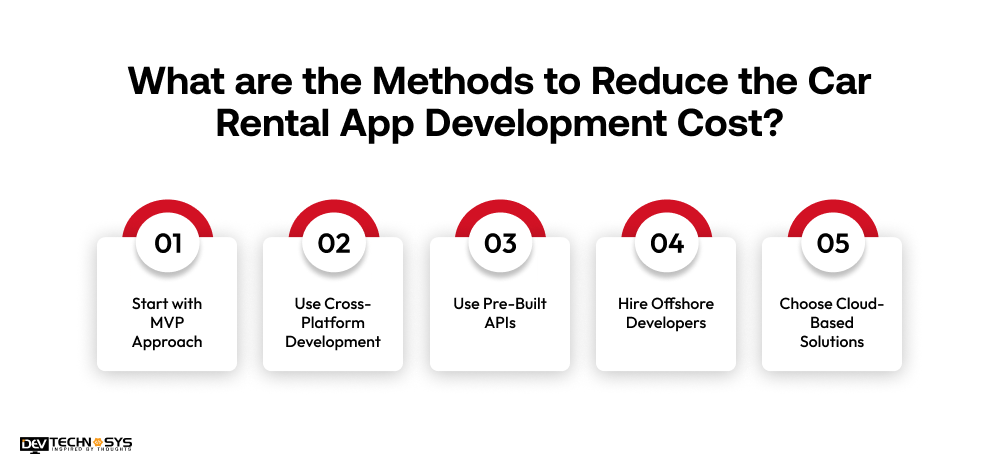
What are the Methods to Reduce the Car Rental App Development Cost?
Reducing white-label car rental app pricing requires smart planning, efficient technology choices, and strategic execution. By adopting the right development practices, businesses can build scalable and feature-rich apps without overspending.
1. Start with the MVP Approach
Developing a Minimum Viable Product reduces initial costs by focusing only on essential features like booking, user login, and payments. It enables faster launch, early validation, and real user feedback before investing in advanced functionalities.
2. Use Cross-Platform Development
Your AI software development company will use frameworks like Flutter or React Native to reduce cost. Using cross platform frameworks enables a single codebase for both iOS and Android. It saves development time, effort, and maintenance costs compared to building separate native applications.
3. Use Pre-Built APIs
Integrating third-party APIs for payments, maps, GPS tracking, and notifications reduces development effort and cost. It eliminates the need to build complex functionalities from scratch, helping businesses accelerate development and reduce expenses.
4. Hire Offshore Developers
Hiring developers from cost-effective regions like India or Eastern Europe significantly reduces hourly rates. Businesses can access skilled professionals at lower costs while maintaining quality, expertise, and efficient project delivery standards.
5. Choose Cloud-Based Solutions
Cloud platforms like AWS or Google Cloud reduce infrastructure costs using pay-as-you-go models. It eliminates heavy upfront investment and ensures scalability, flexibility, and better performance as the app user base grows.
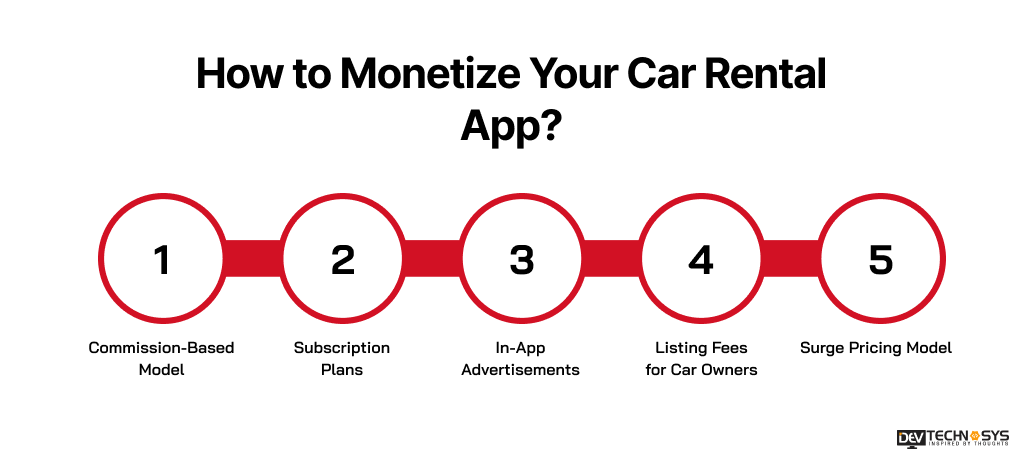
How to Monetize Your Car Rental App?
Monetizing a car rental app is essential for generating consistent revenue and ensuring long-term business sustainability. With the right strategy, businesses can turn their platform into a profitable mobility solution while delivering value to users and service providers.
1. Commission-Based Model
Earn revenue by charging a commission on every booking made through the platform. A fixed percentage is deducted from each completed rental transaction, making it one of the most widely used and scalable monetization strategies in car rental applications.
2. Subscription Plans
Offer subscription packages for users or car owners to access premium benefits such as discounted rentals, priority listings, or reduced commission rates. This model ensures recurring revenue while improving user loyalty and encouraging long-term engagement with the platform.
3. In-App Advertisements
Generate income by displaying third-party advertisements within the app. Businesses like insurance providers, travel agencies, and automotive brands can promote their services, allowing targeted advertising that increases engagement while providing an additional revenue stream for the platform.
4. Listing Fees for Car Owners
Charge car owners a fixed fee to list their vehicles on the platform. This model ensures steady revenue regardless of booking activity and encourages serious listings, improving platform quality and maintaining consistent income flow for the business.
5. Surge Pricing Model
Increase rental prices during peak demand periods such as weekends, holidays, or special events. This dynamic pricing strategy helps maximize revenue, balance supply and demand, and optimize profitability during high-traffic usage periods within the platform.
You can reach out anytime; we are available 24/7. Our team provides a quick response.

Conclusion
We hope the information we provided in this blog helped you learn more about car rental app development costs. Developing a car rental app required expertise and resources tailored to your specific requirements. It ensures a successful and efficient car rental business. When considering the car rental app development cost, we suggest hiring a professional app development company.
If you want to know more about the cost to make a car rental app, reach out to Dev Technosys, a leading car rental app development company. With 10+ years of experience and 180+ dedicated app developers, we deliver efficient or reliable car rental apps.
Frequently Asked Questions
Find answers to the most common questions related to this article.
The development of car rental software typically takes 2 to 8 months, depending on the app’s complexity, features, design requirements, and third-party integrations. A basic MVP can be built faster, while advanced, scalable platforms with real-time tracking and automation require more development time.
Hiring a car rental app developer usually costs around $15 to $25 per hour, depending on experience, skill level, and location. Senior developers or specialized experts may charge higher rates, especially for complex features like GPS tracking, payment integration, and scalable backend systems.
Incredible technologies are used in on-demand car rental app development; here is the list of the technologies:
Python
Java
PHP
Flutter
Kotlin
The cost to build a car pool app ranges between $8,000 and $25,000, depending on the app’s complexity, features, functions, size, infrastructure, and deployment platforms. The cost for simple apps costs around $8,000 to $15,000, while the cost to develop a car rental app with advanced features is over $30,000.
To reduce the car rental app development cost, here we provide some essential points:
Define clear requirements
Outsourcing development
Use open-source tools
Develop an MVP