









Key takeaways:
-
- To develop successful LGBTQ dating apps, prioritize diverse gender identities, pronouns, and orientations from day one.
- Features like profile verification, discreet modes, blocking/reporting systems, and location masking are essential to protect users.
- Beyond matching, elements like forums, events, and interest-based groups help create a sense of belonging and improve retention.
- Incorporating AI-driven compatibility, personality insights, and preference-based filters leads to better user satisfaction.
Looking for an innovative business concept with lower competition and a large number of potential customers, a LGBTQ dating app development is the one. There has been growing awareness of LGBTQ+ communities, leading to a dramatic shift in online dating apps. Conventional dating apps may fail to provide the security, respect, and flexibility that the LGBTQ+ community needs.
LGBTQ dating apps are safe spaces where individuals can express themselves authentically and connect with like-minded people. And creating an LGBTQ+ dating app is not only a bold move but also a great opportunity to run a successful business.
So, if you’re curious about how to build a truly LGBTQ dating app in 2026? Then this blog is for you. Here, we’ll discuss benefits, must-have features, costs, monetization models, and a complete development guide.
What is an LGBTQ+ Dating App?
A LGBTQ dating app is a platform designed specifically for the LGBTQ community that provides dating services. It caters to the social networking needs of gay, bisexual, and Queer users. Like any other dating app, users can find potential partners according to their preferences.
The main difference between traditional dating apps and LGBTQ dating apps is that sexual orientation is not limited to. Unlike traditional dating apps, these platforms prioritize inclusivity and user safety. These types of apps focus on building connections in a judgment-free environment with customizable features.
How Does a LGBTQ Dating App Work?
LGBTQ dating apps are designed to create safe, inclusive, and personalized spaces. An experienced mobile application development agency ensures these apps are user-friendly, secure, and tailored to diverse community needs.
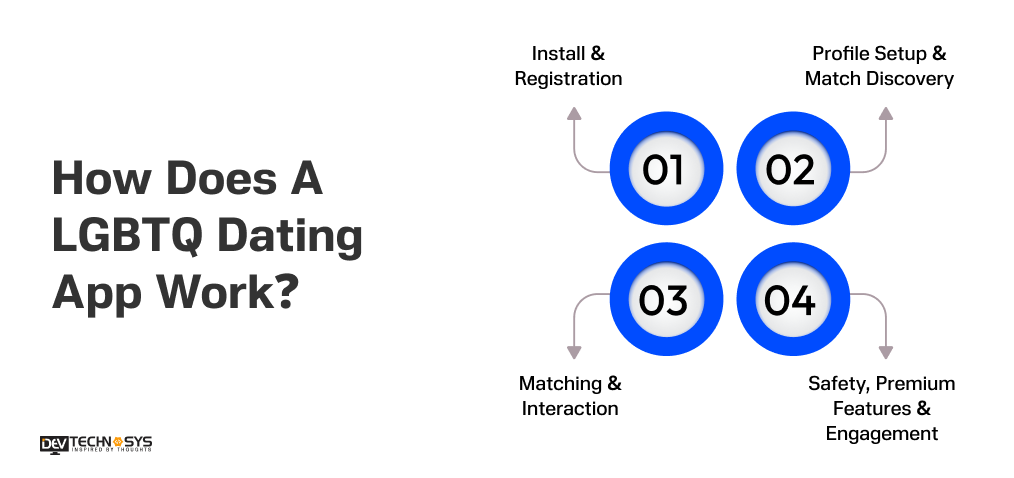
1. Install & Registration
First of all, install the LGBTQ dating app and register an account using phone numbers, email addresses, or social media platforms. Profile details like identity, preferences, and photos are added to personalize the experience and improve match suggestions.
2. Profile Setup & Match Discovery
Users explore profiles based on preferences such as gender identity, orientation, and location. The app suggests compatible matches, allowing users to like, swipe, or skip profiles, helping create meaningful connections through a personalized browsing experience.
3. Matching & Interaction
Once two users show mutual interest, a match is created, enabling messaging features. Users can chat, share media, and build connections while using in-app communication tools designed to encourage safe, respectful, and engaging conversations within the platform.
4. Safety, Premium Features & Engagement
Users access safety tools like blocking, reporting, and verification for secure interactions. Additional premium features, such as profile boosts, advanced filters, and unlimited swipes, enhance visibility, while feedback options help improve overall user experience and platform reliability.
Online Dating & Matchmaking Market Insights
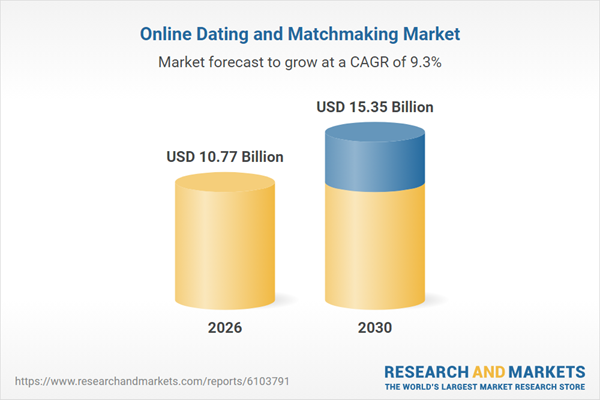
The growth in the market can be attributed to increasing adoption of immersive dating experiences, rising demand for privacy-centric platforms, and technological advancements. The rising adoption of virtual dating experiences is expected to propel the growth of the online dating and matchmaking market going forward. Below are some market statistics by ResearchAndMarkets.
- The global online dating and matchmaking market size is projected to grow from $9.85 billion in 2025 to $10.77 billion in 2026.
- The market is expected to continue expanding to $15.35 billion by 2030 at a compound annual growth rate CAGR of3%.
- North America was the largest regional market for online dating and matchmaking, holding the biggest share globally.
- Asia‑Pacific is forecasted to be the fastest‑growing regional market over the report’s projection period, reflecting rising adoption in emerging economies.
Some Statistics Of LGBTQ+ Dating Apps
Let’s look at some insights from the Pew Research Center.
- 51% of lesbian, gay, or bisexual adults in the U.S. have ever used online dating platforms, compared with 28% of straight adults.
- About 24% of partnered LGBTQ adults say they met their current significant other through a dating site or app.
- 61% of LGBTQ adults who have used online dating platforms report their experiences as very or somewhat positive.
- Dating is more prevalent among younger adults: 53% of U.S. adults ages 18–29 have ever used a dating site or app, compared with 37% of those ages 30–49.
What Are The 7 Steps To Develop A LGBTQ Dating App?
Each step plays a critical role in ensuring your app meets user expectations while standing out in a competitive market. For a strategic approach that balances technical innovation with community sensitivity, you can partner with a dating app development company in the USA.
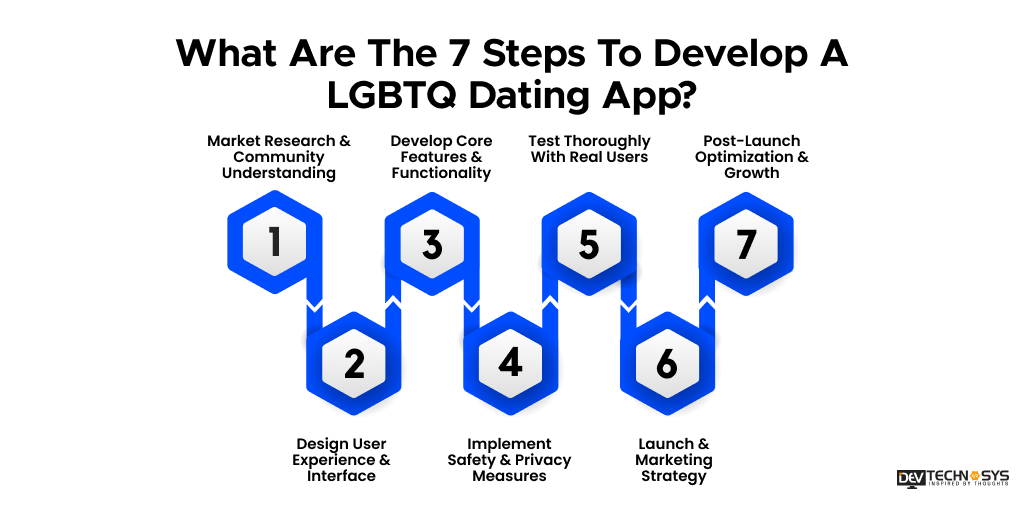
1. Market Research & Community Understanding
The first thing to do is to immerse yourself in LGBTQ+ community insights. Connect with potential users through surveys, focus groups, and community forums. Analyze existing bisexual dating apps to identify gaps and opportunities. Study user behavior patterns specific to LGBTQ+ dating preferences. This will help you understand the unique selling proposition.
2. Design User Experience & Interface
LGBTQ+ users value authenticity and inclusivity in design. For lesbian dating app development, create intuitive navigation that doesn’t overwhelm new users. Design profile creation flows that accommodate diverse gender identities and pronouns. Your UI/UX choices must communicate your app’s values before users even create profiles. Ensure accessibility features are built in from the beginning.
3. Develop Core Features & Functionality
Start with essential features that solve primary user problems. Build robust matching algorithms that consider complex relationship preferences. Develop profile verification processes that balance security with ease of use. Each feature you add in queer dating app development should serve the specific needs of LGBTQ+ users while maintaining technical excellence.
4. Implement Safety & Privacy Measures
In LGBTQ dating app development, safety isn’t optional; it’s fundamental to community app development success. Build end-to-end encryption for all communications. Implement OAuth 2.0 / JWT authentication, Two-factor authentication (2FA), and an anti-harassment / Reporting mechanism. For Data protection in dating apps, consider implementing Secure Sockets Layer (SSL / TLS) and Role-based access control (RBAC).
5. Test Thoroughly With Real Users
Beta testing with LGBTQ+ community members provides invaluable feedback. During the LGBTQ matchmaking app development process, conduct usability testing sessions with diverse user groups. Test across different devices, operating systems, and network conditions. Gather feedback on cultural sensitivity and inclusivity aspects. Identify and fix bugs that could compromise user safety or experience.
6. Launch & Marketing Strategy
Your launch strategy should authentically connect with LGBTQ+ communities. Partner with an Android app development firm for organic promotion. Participate in Pride events and community gatherings. Develop content marketing that educates while entertaining. Consider targeted social media campaigns that celebrate diversity. Build relationships with LGBTQ+ media outlets for coverage and reviews.
7. Post-Launch Optimization & Growth
Your queer dating app development process doesn’t end with the app’s launch. Successful apps evolve based on user feedback and changing needs. Monitor user behavior patterns and engagement metrics. Regularly update features based on community feedback. Expand to new markets while maintaining cultural sensitivity. Plan features of LGBTQ dating apps in roadmaps that keep users excited about your platform’s future.
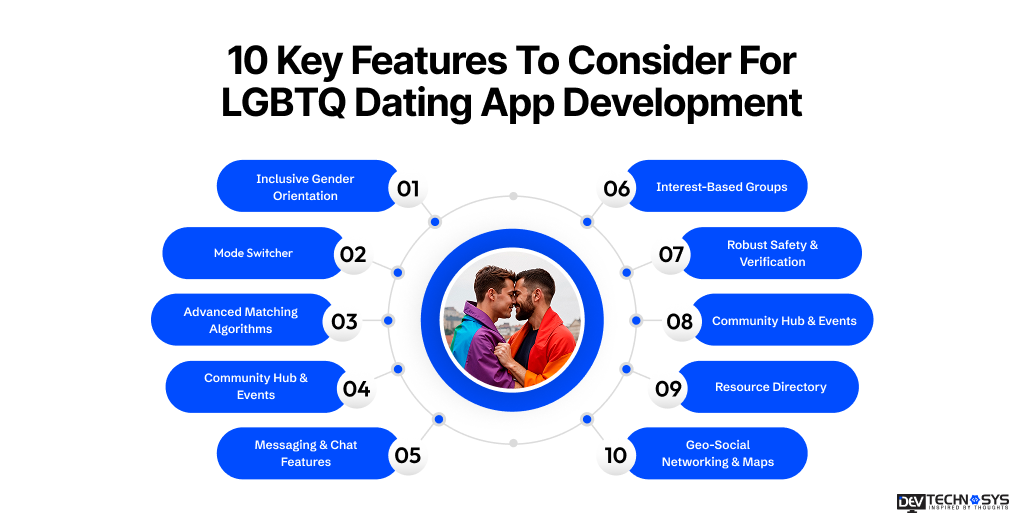
10 Key Features To Consider For LGBTQ Dating App Development
When planning LGBTQ social networking app development, focus on functionality that genuinely serves community needs. Each feature should enhance user safety, promote authentic connections, and celebrate diversity. Here’s an overview of dating app development features.
1. Inclusive Gender Orientation
Enhanced profiles allow users to specify a wide range of gender identities, pronouns, and sexual orientations, creating a space for authentic self-expression.
2. Mode Switcher
This feature in LGBTQ dating app development allows users to switch modes based on their preferences, such as gay, bisexual, transgender, etc.
3. Advanced Matching Algorithms
It can analyze the accuracy of information users provide and cater to results based on that data, which enables users to filter potential matches.
4. Messaging & Chat Features
A chat and messaging system can easily facilitate communication and keep users engaged. It can boost ad revenue and premium feature sales.
5. Educational Content & News
This feature keeps the community members engaged and knowledgeable. It provides a steady stream of relevant articles and community news.
6. Interest-Based Groups
Interest-based matching allows users to join groups based on shared hobbies, passions, and life experiences. It fosters more authentic connections.

7. Robust Safety & Verification
User safety and moderation help to minimize fake profiles and protect our community. It ensures every member feels seen and celebrated for their unique identity.
8. Community Hub & Events
Community hub features dedicated forums and groups for various interests, from gaming to activism. Users can easily discover and RSVP to local LGBTQ+ events.
9. Resource Directory
More than just an app, the LGBTQ+ dating app is a lifeline. A resource directory provides a curated list of trusted LGBTQ+ friendly services, ensuring that vital support is always accessible.
10. Geo-Social Networking & Maps
It allows users to see who is nearby and connect in real-time. This feature highlights verified LGBTQ+ friendly businesses, bars, and safe spaces.
Industry Insight: According to a Statista report, in the U.S.A 14% of online daters identify as LGBTQ, creating strong product-market fit opportunities.
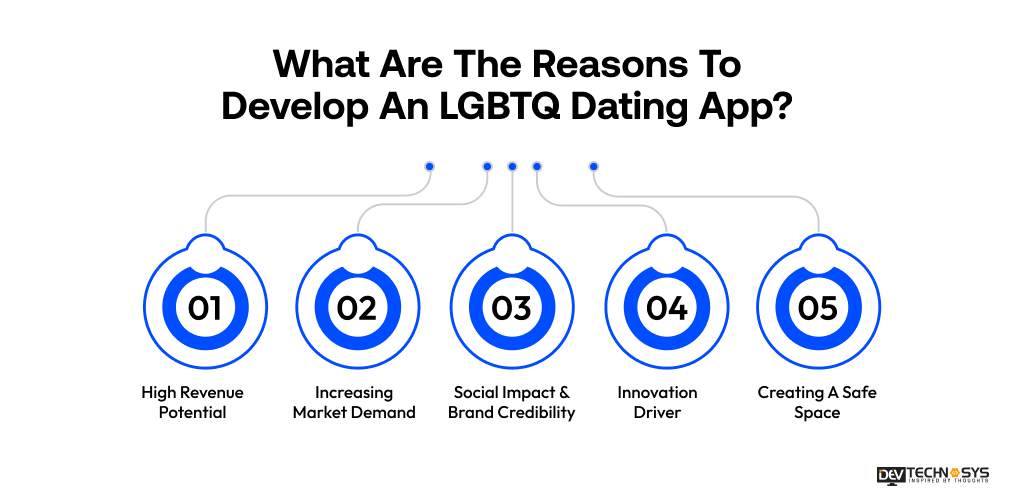
What Are The Reasons To Develop An LGBTQ Dating App?
Secure LGBTQ dating platform development isn’t just a commercial choice; it’s also an opportunity to profit from an underserved and growing market. Here is why it is the perfect time to invest and build a lesbian dating app by hiring on-demand app development solutions.
1. High Revenue Potential
LGBTQ dating apps usually have greater retention rates and engagement when compared with more mainstream apps. The revenue streams are premium subscriptions, in-app purchases, specific advertisements, and event sponsoring. Apps that provide value-added features like matchmaking information or safety tools could command more expensive subscription fees.
2. Increasing Market Demand
The LGBTQ dating app market is growing quickly. People are moving away from dating apps that don’t meet their individual demands. Many LGBTQ people prefer platforms that allow them to express their identity freely and feel comfortable. If you make an LGBTQ dating app, you will be able to fill this gap.
3. Social Impact & Brand Credibility
Investing in the development of an LGBTQ dating app shows your dedication to inclusion and equality. Brands that align with the user’s values, specifically in the LGBTQ space, typically get more loyalty and better advocacy. Making sure you create a safe, welcoming space for LGBTQ individuals can help increase your social standing.
4. Innovation Driver
The unique challenges to Dating App Development Cost in 2026: An Ultimate Guide
7 Steps to Build a Virtual Dating App in 2026
7 Easy Steps to Develop an App Like Badoo: A Dating App
How to Build An App Like Tinder?
How to Develop Different Types of Dating Apps: Step-by-Step Guide for 2025–26
Frequently Asked Questions
Find answers to the most common questions related to this article.
On traditional dating apps, the LGBTQ+ community faces issues related to bullying. It’s difficult for them to find potential matches compared to straight users. LGBTQIA+ dating apps mainly cater to the needs of the LGBTQ+ community, where they can express themselves freely and find possible matches.
The time period to create an LGBTQ dating app typically ranges from 2 to 6 months, depending on feature complexity. A basic MVP can be completed in 2-3 months, while comprehensive platforms with advanced safety features and AI matching require 6+ months for proper development and testing.
Essential safety features include end-to-end encryption, robust profile verification, location privacy controls, comprehensive reporting systems, emergency contact integration, and AI-powered content moderation. Photo verification and ID checking also help maintain authentic user communities.
Involve LGBTQ+ community members throughout development, offer extensive gender and pronoun options, accommodate diverse relationship structures, provide comprehensive privacy controls, and continuously gather feedback from actual users. Authenticity comes from genuine community engagement, not assumptions.
Premium subscriptions with enhanced safety and matching features perform well, as LGBTQ+ users prioritize quality experiences. Consider tiered subscriptions, community event features, and partnerships with queer-friendly businesses. Avoid aggressive advertising that compromises user experience or privacy.