




















Key takeaways:
-
- The custom mobile app development cost in Canada ranges from CAD 10,844 to CAD 40,665, depending on multiple factors.
- The number of features, design, location of the development team, security considerations, and tech stack determine the final development cost.
- Defining clear requirements and starting with an MVP can reduce the cost to build a mobile app in Canada.
Canada is a strong and stable country for tech innovation. In 2026, it is shifting its focus from general startup funding to AI-focused investment. Which makes it crucial to understand mobile app development rates in Canada before you start a project. Whether you’re creating a simple or enterprise-level app, understanding the cost will help you make smarter decisions.
If you’re planning to develop an app in Canada and want real-world budgets and hourly rates? This pricing guide will help you understand the actual cost to develop a mobile app in Canada. By the end, you will be able to estimate your custom app development budget.
How Much Does It Really Cost To Build A Mobile App In Canada?
The average app development cost in Canada usually falls between CAD 10844 and CAD 40665. But remember that the final mobile app development timeline and pricing depend on several factors. Factors affecting app development costs include design quality, platform choice, app type, and number of features.
Simple apps with basic features fall at the lower end of the price range. Advanced or custom apps with complex workflows quickly reach the high end of mobile app development rates in Canada. Let’s have a look at the cost breakdown.
| App Complexity | Estimated Cost (CAD) | Best For | Key Features Included |
| Basic App | CAD 10,844 – CAD 16,200 | Startups, MVPs, small businesses | Simple UI, limited screens, basic backend, minimal integrations |
| Moderate App | CAD 16,200 – CAD 28,450 | Growing businesses | Custom UI/UX, API integrations, user authentication, and real-time features |
| Advanced App | CAD 28,450 – CAD 40,665 | Enterprises, scalable platforms | AI capabilities, complex backend, third-party integrations, advanced security, high performance |
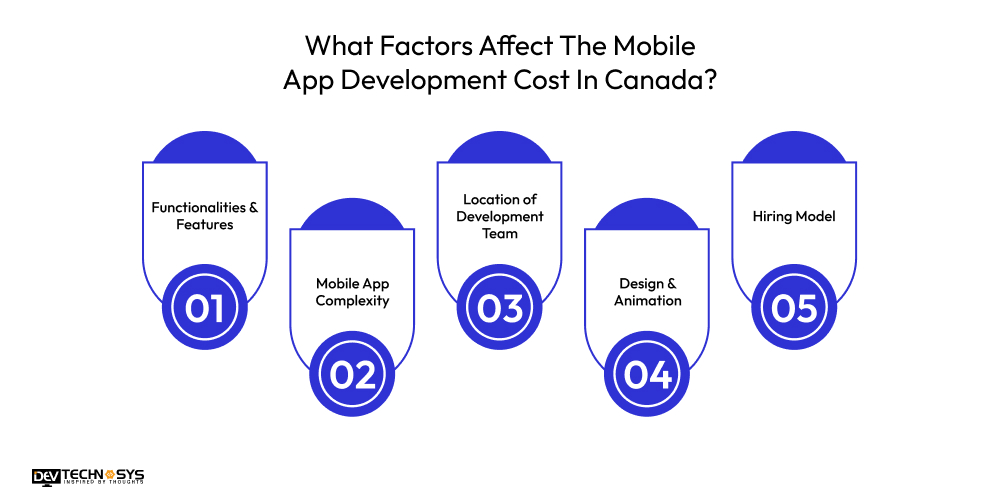
What Factors Affect The Mobile App Development Cost In Canada?
Numerous elements influence the mobile app development cost in France. Both initial and ongoing expenses are affected by these factors. Knowing the key cost-affecting factors will help you plan your investment better. Because when these factors are ignored, businesses face budget allocation issues.
1. Functionalities & Features
Functionality and features are the central factors that impact cross-platform app development cost in Canada. The scope of your mobile app is defined by the number of features included. Each feature raises the development cost. So focus only on essential features in the app’s earlier version.
| Feature Level | Estimated Cost (CAD) | What It Includes |
| Basic Features | 2,711 – 5,423 | User login, simple navigation, limited integrations |
| Moderate Features | 5,423 – 8,135 | Payment gateways, APIs, and real-time updates |
| Advanced Features | 8,135 – 10,847 | AI capabilities, complex integrations, and advanced security |
2. Mobile App Complexity
The app’s complexity influences the cost, timeline, and resources required. The complex backend database and advanced features further complicate the application. Thus, as app complexity increases, so does the cost of Android app development in Canada.
| App Complexity | Estimated Cost (CAD) | Best For |
| Simple App | 4,067 – 8,135 | MVPs and small business apps |
| Medium Complexity | 8,135 – 12,203 | Apps with custom UI and multiple features |
| High Complexity | 12,203 – 16,271 | Enterprise-grade, scalable applications |
3. Location of Development Team
The location of your development team is key to delivering your app on time and within budget. Based on location, there are four types of development teams: Offshore, Nearshore, Onshore, and Hybrid. Developer hourly rates vary across countries.
| Region | Estimated Cost Range (CAD) | Cost Advantage |
| Eastern Europe | 1,355 – 4,067 | Highly cost-effective with skilled developers |
| Middle East | 2,711 – 5,423 | Balanced pricing and growing tech expertise |
| Western Europe | 5,423 – 8,135 | Premium talent with higher operational costs |

4. Design & Animation
The design of the app greatly affects the mobile app development cost in Florida. Custom UI/UX design requires expert designers and more time, which increases the final cost. Animation and micro-transitions shape the UI/UX design cost for mobile apps.
| Design Level | Estimated Cost (CAD) | What It Covers |
| Basic Design | 4,067 – 6,779 | Standard UI with minimal animations |
| Custom UI/UX | 6,779 – 10,847 | Brand-focused design and interactive elements |
| Advanced Design & Animation | 10,847 – 13,559 | High-end visuals, micro-interactions, motion design |
5. Hiring Model
The way you hire a development team determines the Flutter app development cost in Canada. Hiring an in-house mobile application development company accelerates the final costs. Choosing the right hiring model depends on your app’s requirements.
| Hiring Option | Estimated Cost (CAD) | Best Use Case |
| Freelancers | 4,067 – 8,135 | Small projects, MVP development |
| In-House Team | 8,135 – 14,915 | Long-term projects requiring full control |
| Development Agency | 14,915 – 18,983 | End-to-end development with expert support |
What Are The Best Ways To Lower Mobile App Development Cost In Canada?
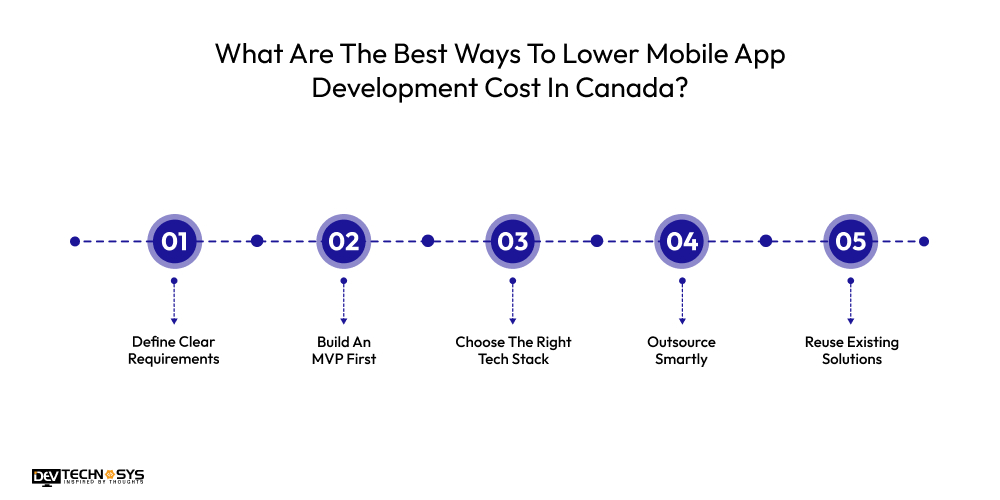
Experts believe that smart scoping is the key to reducing mobile app development cost in Colombia. The fact is, your MVP app development cost in Vancouver doesn’t need to be excessive. If you follow the right approach with proven strategies, you can reduce costs without cutting quality.
1. Define Clear Requirements
When building an app, incomplete requirements largely determine the app development cost per hour in Canada. Vague and unclear expectations result in rework, wasted time, and wasted resources. So write clear documentation and prioritize with MoSCoW. This helps to reduce risks and development costs.
2. Build An MVP First
An MVP is a powerful strategy to reduce the cross-platform app development cost in Canada. MVP enables real-world testing with lower cost. Include only essential features and identify the core metrics that guide the development process. MVP allows you to avoid costly missteps.
Industry Insights: MVP development can cut overall app costs by up to 60% compared to building a full-feature set at once, as per Mypcot.
3. Choose The Right Tech Stack
The choice of your technology stack can impact the cost to develop a mobile app in North America. Choose the tech stack that perfectly aligns with your app’s complexity and needs. Adopt tools with long-term vendor support and focus on scalability and flexibility.
4. Outsource Smartly
Outsourcing the non-core mobile app development services offers substantial cost savings. By smartly outsourcing, companies can optimize development costs and project quality. While outsourcing sets concrete deliverables and timelines to avoid cost overruns. Chose development agency with proven domain expertise.
5. Reuse Existing Solutions
The reuse of existing solutions and codes can significantly reduce the ecommerce app development cost in Canada. Utilize standardized UI modules to minimize repetitive coding. Mature reuse practices not only reduce the development cost but also increase the productivity of the development team.
How Can You Monetize Your Mobile App In The Canadian Market?
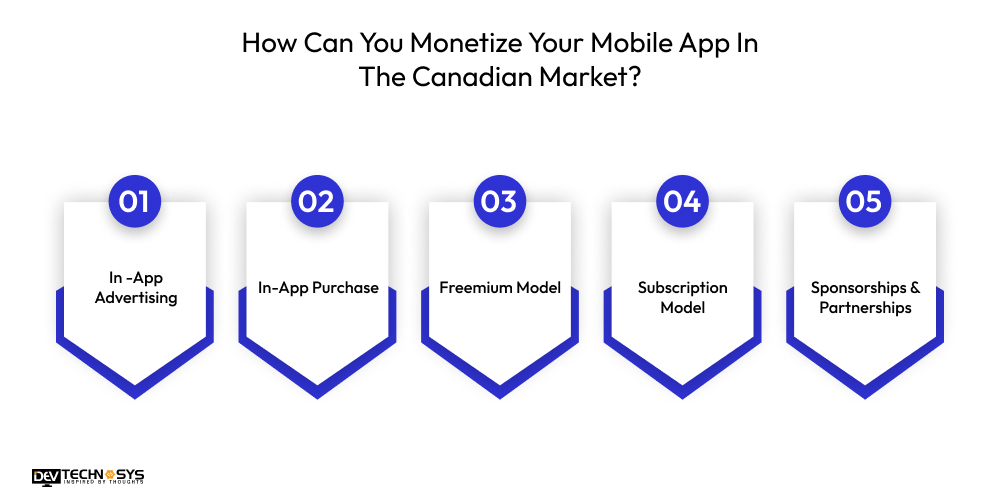
In-app purchases, in-app advertising, subscriptions, freemium, and hybrid models are popular monetization strategies in 2026. Without effective monetization, even top mobile apps struggle to achieve sustainable growth.
1. In -App Advertising
It is one of the most famous and lucrative monetization methods for web app development services. As per the Statista In-App Advertising report, mobile ad spend reached $390 billion in 2025. The app can display banner ads, reward ads, video ads, native ads, etc., to users.
2. In-App Purchase
In-App Purchase (IAP) enables users to purchase digital items, features, or services. IAPs come in three ways: Subscriptions, Consumables, and Non-Consumables. Dating apps, fitness apps, games, and e-commerce apps are popular categories that use this monetization strategy.
Industry Insight: Based on data from 42matters, Canadian developers use IAPs in about 17 % of apps, compared with 10 % globally.
3. Freemium Model
Apps with freemium models give their users a taste of the app’s basic functions and features. The premium features are accessible only after the payment. Spotify playlist with ads is one of the prime examples of the freemium model. The real value comes when users upgrade to access premium features.
4. Subscription Model
The subscription strategy provides stable, dependable app revenue. Another Statista report confirms that 82% of revenue from non-gaming apps came from subscription models. Disney+, YouTube Premium, and Netflix are the top examples of using this approach. Not all apps with this model achieve the same level of financial success.
5. Sponsorships & Partnerships
The benefits of sponsorship include increased exposure and cross-promotion for your application. Strategic partnerships with advertisers can open up multiple revenue streams. Integration partnerships, sponsored content, co-marketing partnerships, and digital licensing are ways to integrate your app partnership.
Plan Your App Budget
You can stop guessing now, as you have a realistic mobile app development cost in California. This blog offers a clear roadmap for app development pricing. Planning the cost is important as your mobile app budget is a long-term investment, not a fast expense. You can also take the help of an app development cost calculator in Canada to know the prices of your app idea. By following cost-saving tips, you can easily reduce the cost to develop a mobile app in Canada.
Most Searched Questions
1. What is the Custom Mobile App Development Cost in Canada?
Typically, iOS and Android app development costs in Canada range from CAD 10844 to CAD 40665. The final rates are determined by multiple factors. A simple application with limited features will cost less. While complex apps with real-time data and custom design requires higher cost.
2. How can Businesses Reduce Cost to Build a Mobile App in Canada?
By following tested strategies, businesses can keep the development costs under control. Some of the ways to reduce React Native app development cost in Canada without sacrificing app quality are:
- Defining clear requirements
- Building an MVP first
- Choosing the right tech stack
- Outsourcing smartly
- Reusing existing solutions
- Choosing cross-platform development
3. What Factors Affect Average App Development Cost in Canada?
There are multiple factors that directly influence the app development cost in Calgary. Knowing these factors will help you plan realistically and avoid unexpected expenses. The key factors are:
- Functionality and features
- Mobile app complexity
- Location of the development team
- Design & animation
- Hiring model
4. Is it Cheaper to Outsource App Development Than Hire an In-House Team in Canada?
Yes, outsourcing is a cost-effective strategy adopted by startups and enterprises in North America. Infrastructure, recruitment, and employee benefits expenses are all eliminated through outsourcing. You get access to global talent and flexible pricing models. However, the in-house team provides more control over the project.
5. What Are the Top Revenue Models for Mobile Apps in Canada?
Businesses use top revenue models to maximize profitability. Adopting the key revenue model is essential to generate sustainable revenue in Canada’s competitive digital market.
- In -App Adverstising
- In-App Purchase
- Freemium Model
- Subscription Model
- Sponsorships and Partnerships