




















The crypto world is changing rapidly, just like the means to store digital currencies. Regardless of whether you are a beginner or not, it is imperative for you to know how to store your Bitcoin.
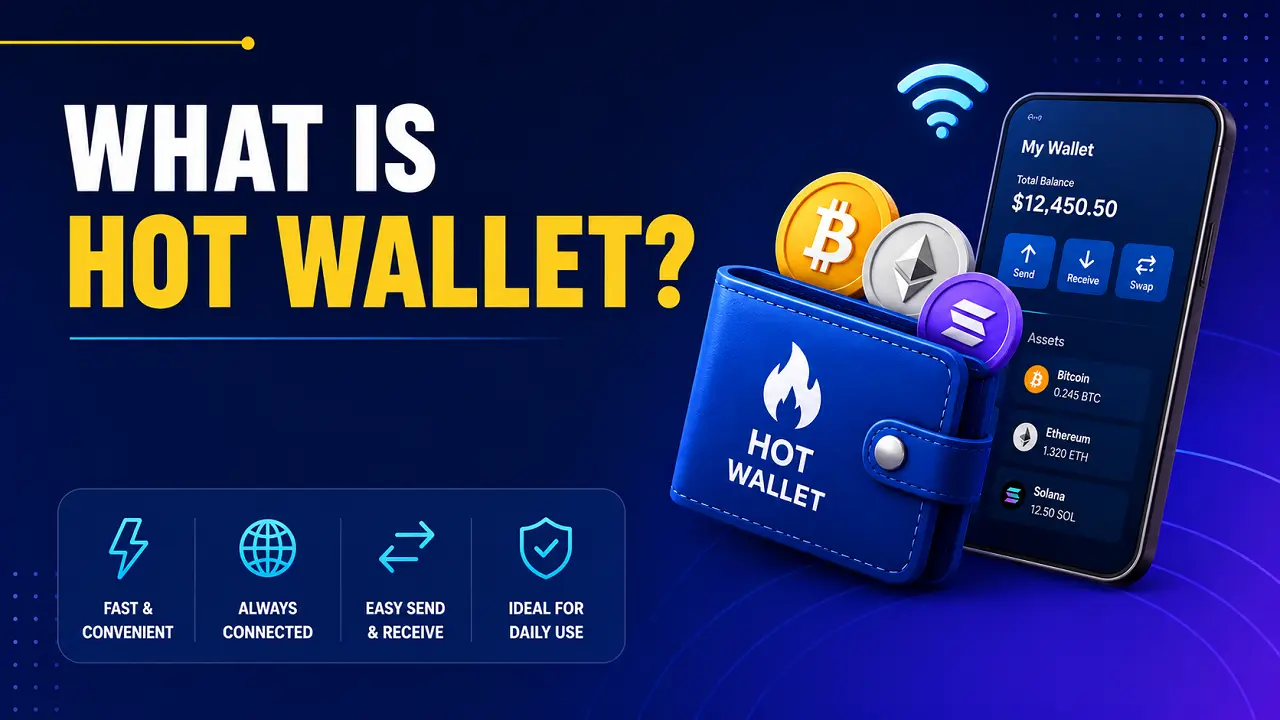
At present, one of the widely used methods in the cryptocurrency world is a hot wallet. This refers to an internet-connected crypto wallet that facilitates transactions in real time for sending and receiving cryptocurrencies. A hot wallet forms the backbone of practically all blockchain-related actions, be it trading in exchanges or using DeFi protocols.
But how does it actually work? Is it safe? And is it the right choice for you?
This article discusses everything there is to know regarding hot wallets, from the basics of their operation to different kinds of hot wallets that exist, associated dangers, and ways of using them safely.
What is Hot Wallet? A Simple Explanation
A hot wallet can be defined as a digital currency wallet that remains connected to the internet, wherein private keys remain online to allow you access to your cryptocurrencies whenever required.
It can be compared to a banking system that allows you to perform day-to-day activities. It is a blockchain wallet that supports not just Bitcoin but also Ethereum and a plethora of other cryptocurrencies.
Unlike a cold wallet, a hot wallet prioritizes speed and accessibility over offline security.
How Does a Hot Wallet Work?
The hot wallet creates and keeps your private keys stored in a connected-to-the-internet device, which could be your phone, browser, or computer software. And each time you perform any transactions, those keys are employed to validate your transactions on the blockchain via the wallet.
How Private Keys Are Managed Online?
Any online crypto wallet relies on the correct handling of private keys. Your keys are encrypted and stored either locally on your device, in the case of custodial wallets, or on the wallet provider’s server.
The Role of Seed Phrases & Wallet Encryption
You set up a hot wallet and get a seed phrase, a set of 12 to 24 words that are used to recover the wallet. This sentence is your master key. With the added protection of wallet encryption, you can rest assured that your assets are safe even if your device is at risk of being compromised.
Types of Hot Wallets
There is no single type of hot wallet; each type serves a different purpose depending on how you use crypto. Here are the most common types:’
1. Mobile Crypto Wallet Apps
A mobile crypto wallet is an app installed on your phone. It’s convenient, portable, and provides easy access to your funds on the road. Popular ones are Trust Wallet and MetaMask Mobile.
2. Web3 & Browser-Based Wallets
A web3 wallet is an extension to your browser. It acts seamlessly in collaboration with DeFi protocols, NFT marketplaces, and dApps, making it the wallet of choice for blockchain enthusiasts.
3. Custodial Wallets
A custodial wallet is handled by a third party, usually a crypto exchange. The provider stores your private keys for you, in exchange for control for convenience.
4. Non-Custodial Wallets
A non-custodial wallet provides you with complete control over your private keys. You are in control of your own funds, no middleman, no reliance on a 3rd party platform.
Hot Wallet vs Cold Wallet: Key Differences
When it comes to storage of crypto, a hot wallet or a cold wallet is the best choice, depending on your use and security needs.
Hot wallets are always linked to the internet; they are best for traders who make frequent transactions and for DeFi users. On the other side, a cold wallet is one that keeps your private keys completely offline. It is best for long-term holding.
Feature |
Hot Wallet |
Cold Wallet |
Internet Connection |
Always Online | Completely Offline |
| Accessibility | Instant Access | Requires Physical Device |
| Security Level | Moderate | High |
| Best For | Daily Transactions | Long-Term Storage |
| Cost | Free / Low Cost | $50–$200+ |
| Private Key Control | Custodial or Non-Custodial | Always Non-Custodial |
| Risk Level | Higher | Lower |
| Examples | MetaMask, Trust Wallet | Ledger, Trezor |
Many veteran crypto users carry both, with a secure crypto hot wallet for active trading and a cold wallet for storing greater holdings safely.
Hot Wallet Security Features You Should Know
The primary risk with any online cryptocurrency wallet is security. Luckily, current hot wallets are equipped with robust security safeguards to protect your digital assets.
Multi-Signature Wallet Protection
The multi-signature wallet will require several keys to validate the transaction process. In other words, no one can access the funds stored in such a wallet. It is commonly utilized in the building of crypto wallets for enterprises and large-value accounts.
Wallet Encryption & Authentication
Advanced wallet encryption is used by every respectable Bitcoin and Ethereum wallet to safeguard keys. Another layer of security is added by a wallet authentication system that requires biometrics, PINs,s or two-factor authentication before a transaction may be accepted.
Backup & Seed Phrase Recovery
A strong hot wallet security solution always has a secure backup. Your seed phrase is the ultimate recovery tool that restores complete access to your digital wallet instantaneously. If your device is lost or destroyed, you will need this phrase. Never keep it electronically or share it with anyone.
Real-Time Transaction Alerts
Today’s crypto hot wallets alert you to all transaction activity in real-time. This allows users to immediately see unwanted access and take action before money is moved. It is a key functionality for anyone dealing with token storage across several wallets.
Best Hot Wallets for Crypto in 2026
With so many possibilities, the best hot wallet for crypto depends on your demands, security, supported tokens, and usability. All these wallets are built with strong hot wallet security, easy web3 developer integrations, and support for a variety of digital asset management needs.
Here are the top picks for 2026:
Wallet |
Type |
Best For |
Supported Chains |
| MetaMask | Web3 & Mobile | DeFi & NFTs | Ethereum, EVM Chains |
| Trust Wallet | Mobile | Beginners & Multi-chain | 70+ Blockchains |
| Coinbase Wallet | Mobile & Web | Everyday Crypto Use | Ethereum, Solana & More |
| Phantom | Web3 & Mobile | Solana Ecosystem | Solana, Ethereum |
| Exodus | Desktop & Mobile | Portfolio Management | 260+ Assets |
Who Should Use a Hot Wallet?
A hot wallet is not a one-size-fits-all solution, but it fits a wide range of crypto users perfectly.
DeFi Users & NFT Holders
A top web3 hot wallet is a must if you actively utilize DeFi wallet protocols, swap tokens, or trade NFTs. It connects directly to decentralized platforms, which gives you the ability to integrate NFT wallets and engage with contracts in real-time.
Everyday Crypto Payments
For customers who make regular crypto payment solutions, whether dividing bills, paying merchants, or transferring funds, a mobile hot wallet app delivers the speed and simplicity that cold wallets just cannot match.
Conclusion
For individuals working within the cryptocurrency ecosystem, a crypto hot wallet is a mandatory tool to have. From trading to developing decentralized finance applications and NFTs or creating crypto payment solutions for daily life, you need a crypto hot wallet.
However, with convenience comes accountability. Wallet safety must be your primary focus. Make sure to activate 2FA, keep your seed phrase safe, and never store large sums of money in an online cryptocurrency wallet for prolonged periods of time.
If your goal is to implement a highly secure and scalable solution, then you need to hire the best experts in building crypto wallets. It will be the only way that you can be assured that your solution will provide maximum security and functionality.
Choose smart. Store safe. Stay ahead in the world of blockchain app development.