





















Key takeaways:
-
- With a 36.9% share, the U.S. leads the blockchain industry, owing to its powerful tech environment and widespread enterprise usage, according to Coherent Industry Insights.
- Governments should encourage unified global standards, recognition of smart contracts and privacy-preserving rules, balanced frameworks that spur innovation while ensuring security and accountability.
- A number of blockchain and stablecoin startups have moved operations to countries such as the UAE, Singapore, and Hong Kong as legislative clarity increases.
- The future of government blockchain use will come down to finding the proper mix between innovation, regulation, privacy, and public trust.
- Businesses and investors need to stay up to date with changing blockchain rules to mitigate compliance risks, pinpoint development possibilities, and make smart investment choices.
Blockchain technology has evolved far beyond its origins in cryptocurrency and is now emerging as a powerful tool for public-sector innovation. Governments worldwide are exploring how blockchain can improve transparency, strengthen data security, reduce fraud, and streamline administrative processes.
From digital identity systems and land registries to document verification and Central Bank Digital Currencies (CBDCs), blockchain adoption is reshaping how public services are delivered. However, adoption is not without challenges.
Regulatory uncertainty, privacy concerns, and interoperability issues continue to influence implementation strategies. Let’s dive in and explore how governments are responding to blockchain adoption and blockchain regulation, the policies they are introducing, and what the future holds for this transformative technology.
What is Blockchain?
Blockchain is a decentralized digital ledger that records transactions across a distributed network, ensuring transparency, security, and tamper resistance. Its ability to create a single, immutable source of truth makes it valuable for governments managing property records, digital identities, public benefits, and other critical data, helping reduce fraud, improve efficiency, and enhance trust in public services.
Why Governments Are Interested in Blockchain?
Before diving into the regulatory hurdles, it’s important to understand why governments should invest in blockchain and cryptocurrency development in the first place. Some key benefits include:
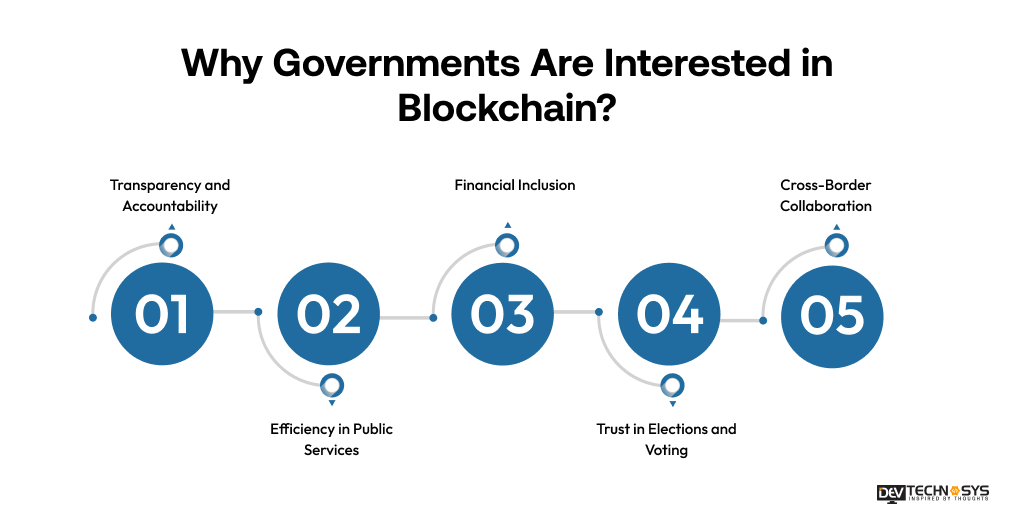
- Transparency and Accountability: Immutable ledgers make corruption and fraud harder to conceal.
- Efficiency in Public Services: Streamlined processes can reduce paperwork, speed up identity verification, and cut costs.
- Financial Inclusion: Blockchain-based systems can help unbanked populations access government benefits.
- Trust in Elections and Voting: Decentralized, tamper-proof systems promise a more secure voting infrastructure.
- Cross-Border Collaboration: Governments can use blockchain for trade agreements, customs, and taxation.
Despite these benefits, global blockchain regulation has been patchy. The core reason lies in one simple truth: blockchain is advancing faster than regulation.
The Current State of Global Blockchain Adoption
- The Blockchain Technology Market is estimated to be valued at USD 5,692.1 Mn in 2026 and is expected to reach USD 172,526.7 Mn in 2033.
- The market is exhibiting a compound annual growth rate (CAGR) of 62.8% from 2026 to 2033.
- Based on Region, North America is projected to continue leading the global blockchain technology market in 2026, with a market share of 47.0% in terms of value.
Planning a Smart Contract Project?
Get a tailored development cost estimate in a few simple steps.
- 3 quick steps
- 100% free
- Reply in 1 business day
2 Minutes Read
Policy Gaps and How They Slow Down Blockchain Adoption
According to a stablecoin development company, despite growing interest in blockchain, regulatory uncertainty and gaps in blockchain technology regulation continue to slow adoption across government sectors. Clear crypto legal frameworks, interoperability standards, and governance models are essential for unlocking blockchain’s full potential in public services.
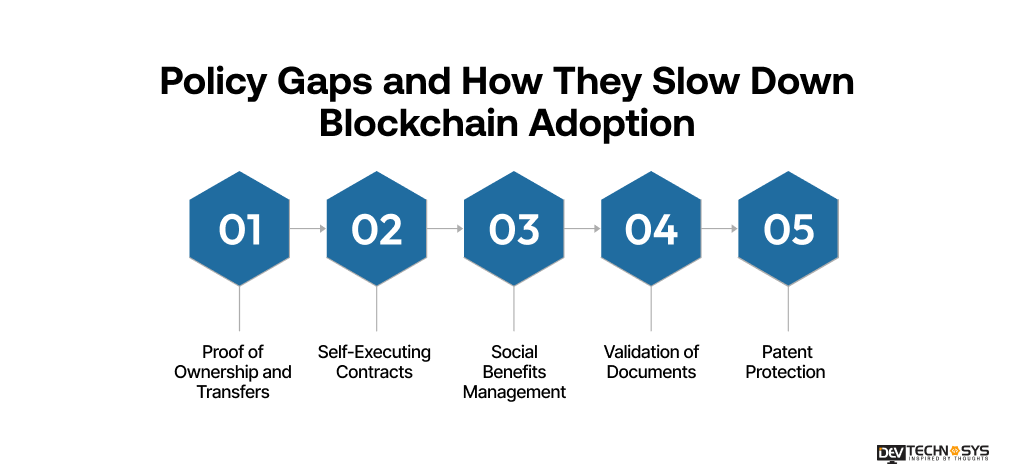
1. Proof of Ownership and Transfers
Global blockchain regulation can create immutable records for assets such as land titles, vehicles, and intellectual property. However, inconsistent legal recognition of blockchain records limits large-scale adoption.
2. Self-Executing Contracts
The legal enforceability of self-executing smart contracts remains one of the most important considerations for blockchain businesses. Smart contracts can automate agreements and government processes without intermediaries. Adoption remains slow due to unclear legal status and enforcement mechanisms in many jurisdictions. If you’re in need of smart contract development services, then it’s best to approach a reputable company.
3. Social Benefits Management
Governments can use blockchain to distribute welfare payments, subsidies, and benefits transparently. Government blockchain policy concerns around privacy, accessibility, and identity verification often delay implementation.
4. Validation of Documents
Blockchain enables secure verification of certificates, smart contract legal status, licenses, and public records, reducing fraud and administrative costs. However, the lack of standardized frameworks creates integration challenges.
5. Patent Protection
Blockchain can provide tamper-proof timestamps and ownership records for patents and intellectual property. Wider adoption depends on stronger legal recognition and cross-border regulatory alignment.
The Balance: Innovation vs. Regulation
The dilemma is clear: over-regulation kills innovation, but under-regulation creates uncertainty. Governments must find a middle ground that allows blockchain experimentation without compromising legal, financial, and privacy safeguards. Some possible solutions include:
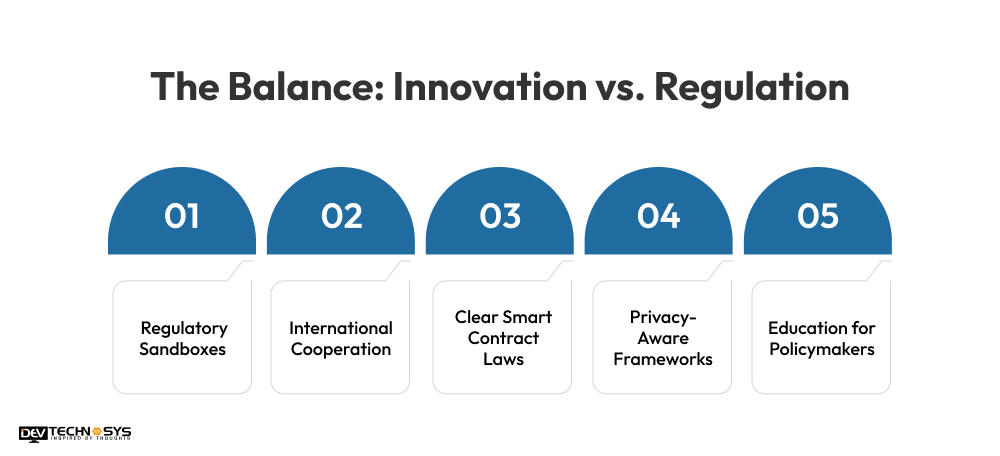
1. Regulatory Sandboxes
Countries like the UK and Singapore use sandboxes where blockchain projects can operate under relaxed regulations before scaling. This allows learning without legal risks.
Industry Insights: According to the World Bank Fintech & Regulatory Sandboxes Report, more than 70 jurisdictions worldwide have implemented sandbox programs to encourage fintech and blockchain innovation.
2. International Cooperation
Global standards through the OECD, UN, or G20 could harmonize blockchain policies across borders. Just as international accounting standards exist, blockchain governance could benefit from global alignment.
3. Clear Smart Contract Laws
As blockchain adoption grows, legal recognition of smart contracts is becoming essential for enterprise and government use cases. Several jurisdictions have already begun recognizing blockchain-based agreements as legally enforceable.
Industry Insight: According to the National Conference of State Legislatures (NCSL), the U.S. states, including Arizona and Tennessee, have enacted legislation recognizing smart contracts and blockchain records.

4. Privacy-Aware Frameworks
Governments must balance blockchain transparency with privacy regulations such as GDPR. Emerging technologies like zero-knowledge proofs (ZKPs) offer a way to verify transactions without exposing sensitive data.
5. Education for Policymakers
According to several Defi development services providers, many policymakers still associate blockchain primarily with cryptocurrency. Improving understanding of broader applications, such as digital identity, supply chain management, and public records, can lead to more effective regulation.
How Leading Countries Are Responding to Blockchain Adoption
Are you wondering how countries are regulating crypto? Well, leading economies are adopting blockchain through a mix of regulatory reforms, public-sector initiatives, and digital innovation programs. While some countries prioritize innovation and investment, others focus on compliance, governance, and secure digital infrastructure. Here, we present the blockchain and crypto regulation by country.
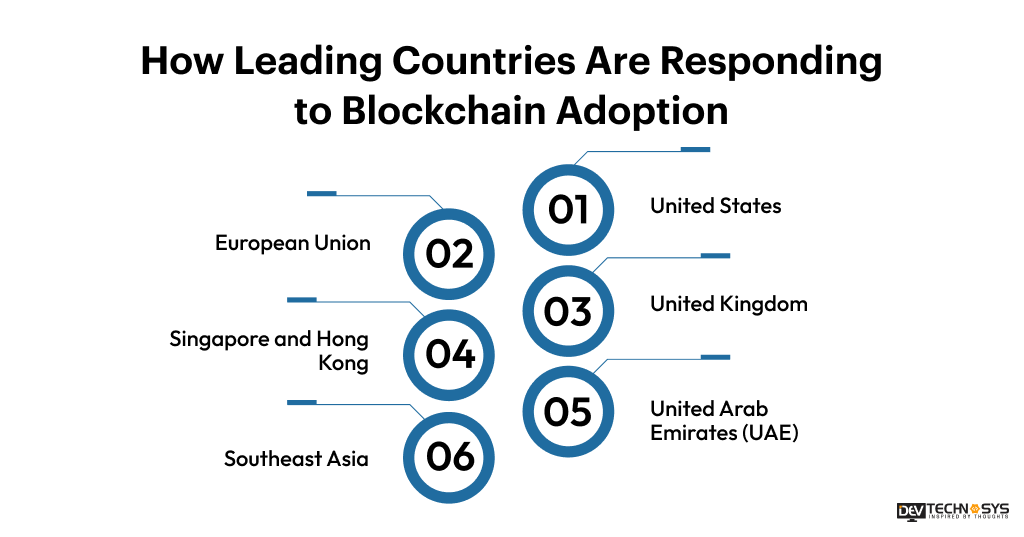
1. United States
The U.S. government is increasingly exploring blockchain to improve transparency and public-sector efficiency. For example, Baltimore introduced blockchain technology to monitor more than 15,000 vacant properties. Meanwhile, policymakers are focusing on US crypto regulation updates and advancing stablecoin legislation and digital asset market reforms, reflecting growing federal interest in regulating blockchain innovation.
2. European Union
As we know, the legal status of smart contracts in different countries varies a lot, so it’s important to know the specific country’s blockchain regulation laws before starting the business. Georgia has registered over 100,000 land titles using blockchain technology, while Estonia has integrated blockchain into its e-Estonia digital governance platform. These initiatives complement the EU’s MiCA framework, the world’s first comprehensive crypto regulatory regime.
3. United Kingdom
According to experts in NFT marketplace development, the UK is developing a digital asset regulatory roadmap through the FCA and HM Treasury. Its approach focuses on supporting innovation while maintaining strong consumer protection and market integrity standards.
Industry Insights: Mark Walport, chief scientific adviser to the UK government, said blockchain technology “has the potential to transform the delivery of public and private services.
4. Singapore and Hong Kong
Singapore and Hong Kong have emerged as leading blockchain and digital asset regulation hubs in Asia. Both jurisdictions have established licensing frameworks that provide regulatory clarity for blockchain businesses. Their innovation-friendly policies continue to attract Web3 startups, crypto exchanges, and institutional investors.
5. United Arab Emirates (UAE)
Similar to the US government’s policy on blockchain adoption, the city of Dubai has implemented blockchain-backed systems for property registration and land transactions. Combined with dedicated virtual asset regulations, these initiatives have helped position the UAE as a leading global Web3 hub.
6. Southeast Asia
According to reports by blockchain.gov.in, India’s DocumentChain platform supports the secure issuance and verification of government records. Across the region, governments are also exploring central bank digital currency CBDC as part of broader digital economy initiatives.
| Region | Government Focus | Key Development |
| United States | Regulation & Oversight | Stablecoin legislation |
| European Union | Unified Regulation | MiCA framework |
| United Kingdom | Innovation-Friendly Regulation | FCA roadmap |
| Singapore & Hong Kong | Blockchain Innovation | Licensing frameworks |
| UAE | Web3 legal framework adoption | Virtual asset regulations |
| Southeast Asia | Public-Sector Blockchain | CBDC exploration |
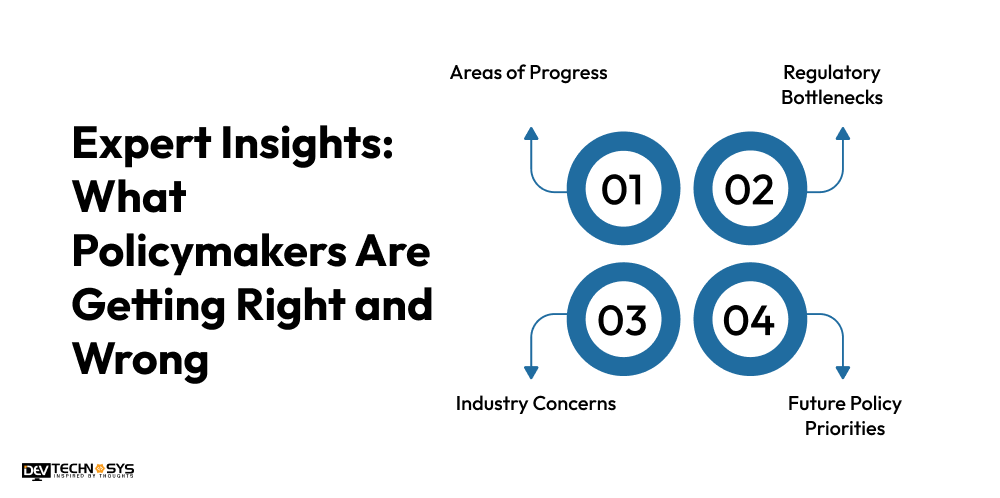
Expert Insights: What Policymakers Are Getting Right and Wrong
As blockchain adoption accelerates, governments are making progress in crypto exchange development and creating regulatory frameworks, but several challenges continue to slow innovation and large-scale implementation.
1. Areas of Progress
Policymakers are increasingly paying attention to blockchain regulation news and recognizing blockchain’s potential beyond cryptocurrencies. Regulatory sandboxes, CBDC initiatives, and clearer digital asset frameworks are helping foster innovation while improving consumer protection. Singapore’s regulatory sandbox and the EU’s MiCA framework have become leading examples of innovation-friendly blockchain regulation.
2. Regulatory Bottlenecks
Fragmented regulations, unclear compliance requirements, and inconsistent definitions of digital assets continue to create uncertainty for businesses operating across multiple jurisdictions. According to the Financial Stability Board (FSB), the regulatory fragmentation remains one of the largest barriers to cross-border blockchain adoption and investment.
3. Industry Concerns
Top web3 development company often cite regulatory ambiguity, licensing complexity, and evolving compliance obligations as major barriers to investment, product development, and market expansion. According to Deloitte surveys, regulatory uncertainty continues to be a leading concern among enterprise blockchain adopters.
4. Future Policy Priorities
Governments should focus on harmonized global standards, smart contract recognition, privacy-preserving regulations, and balanced frameworks that encourage innovation while maintaining security and accountability. The World Economic Forum identifies privacy-preserving technologies such as zero-knowledge proofs (ZKPs) as key to balancing compliance and data protection.
Looking Ahead: The Future of Blockchain in Government
Blockchain is expected to play a larger role in government operations over the coming years, especially in digital identity, public records, voting systems, healthcare, and welfare distribution. As regulatory frameworks mature and interoperability improves, governments will increasingly leverage blockchain to enhance transparency, reduce administrative costs, and improve service delivery.
Future Insight: According to the World Economic Forum, blockchain could store and manage up to 10% of global GDP by 2027, highlighting its growing importance in both public and private sectors.
Moving ahead, the next decade will likely see:
- Digital Identity Systems: Governments issuing blockchain-based citizen IDs.
- Blockchain Voting: Transparent elections resistant to fraud.
- Public Procurement: Open, traceable government contracts.
- Healthcare Records: Secure, interoperable medical data.
- Cross-Border Services: Harmonized tax, trade, and customs systems.
Final Verdict
Governments have responded slowly to blockchain because public administration is built around caution, continuity, and legal responsibility. This slow pace is understandable, but it also carries costs. Blockchain technology regulation can potentially improve transparency, efficiency, and trust in selected areas of governance, especially where shared records and auditability matter most.
For organizations looking to implement blockchain solutions, partnering with an experienced blockchain development company such as Dev Technosys can help navigate technical, regulatory, and operational challenges effectively.
Frequently Asked Questions
Find answers to the most common questions related to this article.
Yes, blockchain technology is legal in most countries. However, regulations governing cryptocurrencies, crypto securities regulations, digital assets, and blockchain applications vary significantly across jurisdictions.
Countries such as Singapore, the UAE, Switzerland, Hong Kong, and Estonia are widely recognized for their supportive regulations, SEC and similar body classifications, innovation programs, and blockchain-friendly business environments.
MiCA provides a unified regulatory framework across the European Union, offering greater legal clarity, compliance standards, and consumer protection requirements for blockchain and crypto businesses. EU MiCA regulation affects blockchain startups by creating both opportunities and responsibilities, by defining clear rules for operating within the EU crypto market.
Governments view Central Bank Digital Currencies (CBDCs) as a way to modernize payment systems, improve financial inclusion, enhance transaction efficiency, and strengthen monetary control.
Not necessarily. Clear and balanced blockchain regulations can increase investor confidence and encourage adoption, while overly restrictive policies may hinder innovation and market growth.
Governments are using blockchain regulation for digital identity management, land registries, document verification, Travel Rule (FATF), public records, supply chain tracking, and CBDC development to improve transparency and efficiency.