



-
The market for e-wallet applications was valued at around $124.60 billion in 2024; it is projected to grow to around $1120.65 billion by the end of 2035.
-
As per the recent study, the retail & e-commerce segment dominated with 33% market revenue share in 2023.
-
According to the global market, the QR code segment records 47% of revenue, and this can generate a value of around $78.48 billion.
-
The global e-wallet applications show a significant growth with a CAGR of 22.10% from 2025 to 2035.
-
In a recent survey, North America holds the largest share of the ewallet apps market in 2023, and it is expected to increase during the forecast period.
The Ultimate Guide to Monetizing Your eWallet App
Currently, eWallet apps are more advanced than just a convenient payment system. They are comprehensive ecosystems that are the focus of rapid financial innovation.
Although many people use eWallet apps daily, the total profit potential of these apps remains untapped by most app developers and businesses. The comprehensive guide to monetize ewallet app explains all the strategies necessary to make your eWallet app a reliable source of recurring profit.
Monetization strategies include profit-generating transaction fees, loyalty program structures, partnership programs based on profit-generating data, and embedded financial services. Transforming all taps and transactions into lasting value is key.
Whether scaling a current platform or launching a new fintech app, profitability begins here.
Let’s explore the guide to monetize eWallet app!
Global Market Overview of eWallet Applications

What is the eWallet App?
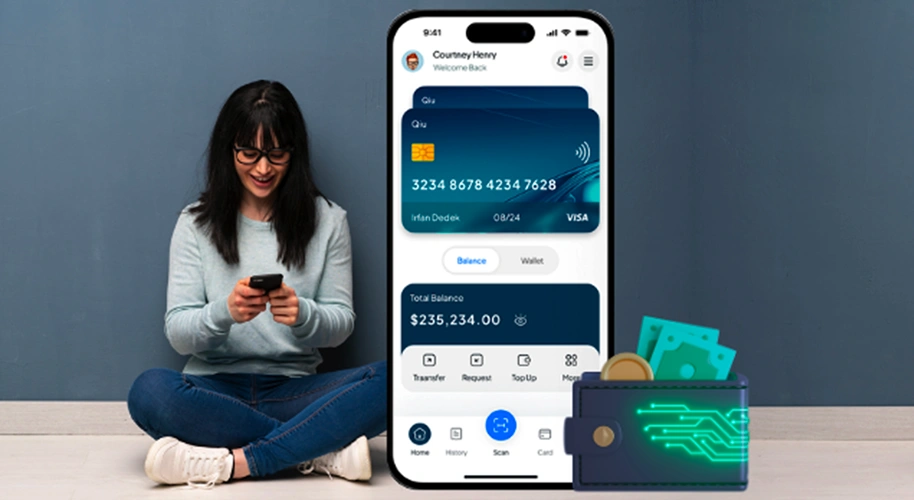
The eWallet applications are online platforms where users can store their financial information, such as debit or credit cards, to make online payments. These apps use QR codes and NFC for contactless payments through a mobile phone. Users can use it for online purchases, in-app purchases, and any other online transactions. Many custom mobile app development solutions support various types of payments, such as peer-to-peer transfers.
Different Types of eWallets
There is a wide variety of e-wallets with different functionalities and services. Let’s take a closer look at the ewallets:
-
1. Closed Wallets
The closed wallets are mainly offered by a single company, and users can make transactions within their ecosystem. Users can store their funds and purchase the company’s products and services. The refunds and returns are credited to the same wallet.
Example: Amazon Pay Balance.
-
2. Semi-Closed Wallets
Semi-closed wallets allow users to make payments or purchases at specific merchants or platforms that have contractual agreements with the wallet issuer. They don’t permit cash withdrawals or fund transfers to bank accounts.
Examples: Paytm, PhonePe.
-
3. Open Wallets
Open wallets are issued by banks or financial institutions and allow users to make purchases, transfer funds, and withdraw cash from ATMs or banks. They offer full transaction flexibility, both online and offline.
Examples: PayPal, Vodafone M-Pesa.
10 Proven Monetization Strategies for eWallet Apps
Discover effective ways to generate revenue from eWallet applications through transaction fees, merchant commissions, advertising, subscriptions, data analytics, and financial integrations. These proven strategies lead the way to guide to monetize ewallet app and what strategies are used:
-
1. Transaction Fees
Charge users or merchants a small fee for every successful transaction, such as bill payments, money transfers, or purchases. This steady income model works best with high transaction volumes and loyal users, ensuring consistent revenue while maintaining user trust through transparent, minimal charges.
-
2. Merchant Commissions
Partner with merchants and earn commissions on every payment made through the eWallet. This encourages business collaborations while generating a recurring revenue stream. Offering promotional visibility to merchants within the app can also create an incentive for them to partner and share a percentage of each sale.
-
3. Subscription Plans
Introduce premium subscription tiers that offer benefits like faster transfers, cashback, advanced analytics, or zero transaction fees. Subscriptions generate predictable monthly or yearly revenue while improving user loyalty by providing exclusive services and a more convenient, feature-rich digital payment experience.
-
4. Cashback and Reward Partnerships
Collaborate with brands to offer users cashback or reward points for transactions. Brands fund the offers, while the eWallet gains user engagement and repeat usage. Hire mobile app developer to boost transaction frequency and retention while promoting partner products and maintaining user satisfaction through attractive incentives.
-
5. In-App Advertising
Display targeted advertisements from third-party businesses within the eWallet app. Ads can appear as banners, videos, or sponsored listings. Proper ad placement and user segmentation ensure that promotions remain relevant, driving ad revenue without disrupting the payment experience or overwhelming users.
-
6. Affiliate Marketing
Promote third-party products or services, such as loans, insurance, or shopping deals, within the app. When users purchase through referral links, the eWallet earns a commission. It is one of the best eWallet app business models that diversifies income sources while enhancing user value by providing access to exclusive offers and relevant financial products.
-
7. Data Insights and Analytics Services
Aggregate and anonymize user transaction data to offer market insights to businesses. Companies can use these insights to understand customer behavior and improve their ewallet app marketing strategy. Ensure compliance with privacy regulations to maintain user trust while monetizing valuable data responsibly.
-
8. Financial Product Integration
If businesses create a mobile app for an e-wallet, it offers integrated financial services like microloans, mutual funds, or insurance directly through the app. Partner with banks or fintech firms to earn commissions or profit-sharing on each product sold. This transforms the eWallet into a full-service financial ecosystem, increasing user engagement and lifetime value.
-
8. Financial Product Integration
If businesses create a mobile app for an e-wallet, it offers integrated financial services like microloans, mutual funds, or insurance directly through the app. Partner with banks or fintech firms to earn commissions or profit-sharing on each product sold. This transforms the eWallet into a full-service financial ecosystem, increasing user engagement and lifetime value.
-
9. White-Label Solutions
License your eWallet technology to other businesses, allowing them to launch branded payment apps using your infrastructure. Charge setup fees or revenue-sharing percentages. This B2B model generates significant income and helps scale operations while building strong industry partnerships and technological reputation.
-
10. Cross-Border Payments and Forex Margins
This ewallet app revenue models enable international transfers and currency exchanges, charging users a small margin on conversion rates. As global transactions grow, this feature becomes highly profitable. It adds convenience for users making international payments and ensures consistent earnings through controlled foreign exchange spreads.
Case Studies: Successful eWallet Monetization Models
Explore how leading eWallets like Paytm, PayPal, Alipay, Venmo, and GCash achieved profitability through innovative monetization models. These case studies highlight effective strategies such as transaction fees, partnerships, financial services, and ecosystem integration, driving growth in the digital payment industry.
-
1. Paytm (India)
Paytm monetizes through transaction fees, merchant commissions, and financial services integration. By offering bill payments, investments, and insurance, it diversified its revenue streams. Its partnerships with retailers and cashback programs boosted user engagement, making Paytm one of India’s most profitable and widely used eWallet platforms.
-
2. PayPal (Global)
PayPal earns primarily from transaction fees, currency conversion margins, and merchant services. Its global trust, seamless integration with e-commerce, and strong B2B network helped it scale rapidly. Offering buyer protection and cross-border payment services established PayPal as a leader in secure digital payment monetization.
-
3. Alipay (China)
Alipay monetizes via merchant fees, wealth management, and lending services. Integrated with Alibaba’s ecosystem, it earns from business transactions, financial products, and advertising. Its super app model drives constant user engagement while creating multiple income streams through seamless integration of e-commerce, payments, and lifestyle services.
-
4. Venmo (USA)
Venmo, owned by PayPal, monetizes through instant transfer fees, merchant payments, and a branded debit card. The app’s social payment interface encourages frequent transactions. By combining peer-to-peer convenience with merchant services, Venmo turned casual payments into a profitable, community-driven financial experience appealing to younger users.
-
5. GCash (Philippines)
GCash generates revenue through transaction fees, remittance charges, and partnerships with financial institutions. If businesses build an ewallet app like GCash, which offers savings, insurance, and investments, it will transform into a full-service fintech platform. Its collaboration with merchants and integration with telecom services enabled rapid growth and sustainable monetization across the Philippine market.
Future Trends in eWallet Monetization
Digital wallet market trends include AI-driven personalized financial services, integration with cryptocurrencies, embedded lending, subscription-based models, advanced rewards programs, and cross-border payment innovations. It enables eWallet apps to diversify revenue streams and enhance user engagement effectively.
-
1. Integration with Blockchain Technology
Future eWallets will use blockchain for secure, transparent transactions and cross-border payments. Tokenization and decentralized finance (DeFi) integration will enable new revenue models through digital asset trading, crypto storage, and smart contract-based financial services, enhancing user trust and profitability.
-
2. AI-Driven Personalization
Artificial intelligence will analyze user behavior to deliver personalized offers, spending insights, and financial recommendations. This data-driven approach will increase engagement and monetization through targeted marketing, customized financial products, and predictive analytics, helping eWallet providers boost user retention and revenue growth.
-
3. Expansion into Digital Lending
eWallets will increasingly integrate digital lending, offering microloans, credit scoring, and “buy now, pay later” (BNPL) services. These features create new ewallet app income sources from interest and service fees, while improving financial inclusion for users lacking access to traditional banking systems.
-
4. Subscription-Based Premium Features
Future eWallets will introduce tiered subscription plans offering benefits like higher limits, zero transaction fees, and advanced analytics. According to the ewallet app development services provider, this model ensures predictable, recurring revenue and strengthens customer loyalty by providing value-added services tailored to premium users’ financial and lifestyle needs.
-
5. Embedded Finance Ecosystems
eWallets will evolve into all-in-one platforms, integrating services like insurance, investments, and bill payments. By becoming financial super apps, they’ll generate revenue through commissions, partnerships, and transaction fees while offering users a seamless, unified digital financial experience across multiple services.
-
6. Cross-Border Payment Innovation
Advancements in real-time global transfers will allow eWallets to monetize foreign exchange and international transaction fees. Collaborations with global payment networks will simplify remittances and international e-commerce, positioning eWallets as trusted facilitators of borderless digital finance.
-
7. Integration with IoT and Wearables
eWallets will integrate with IoT devices and wearables for contactless payments through smartwatches, cars, or home assistants. This convenience-driven model expands transaction volume and enables monetization through usage-based fees and partnerships with device manufacturers and service providers.
Conclusion
A guide to monetize ewallet app requires a strategic blend of user-centric features, secure transactions, and innovative revenue models, such as transaction fees, premium services, and merchant collaborations. A well-planned approach not only boosts profitability but also strengthens user trust and long-term engagement. Partnering with a professional eWallet app development company can help you design, implement, and scale these monetization strategies effectively. With the help of this guide to monetize eWallet app, it can evolve into a sustainable digital financial platform that meets user needs while driving consistent fintech business growth in the competitive finance landscape.
Frequently Asked Questions
-
1. What Does Monetizing an eWallet App Mean?
Monetizing an e-wallet means applying the various strategies and techniques that can generate new revenue streams and increase the overall valuation of the app. With the help of monetization strategies, the app can turn into a profitable ecosystem.
-
2. What are the Most Common Revenue Models for eWallet Apps?
There are various common ewallet app monetization tips that help businesses to generate new revenue streams:
- Subscription Plans
- Transaction Fees
- Freemium Model
- Advertisements
- In-App Purchase
- Partnerships & Collaborations
-
3. How to Monetize eWallet App From Transaction Fees?
The ewallet applications can charge a transaction fee for every transaction that is made through the app. Charge a fixed amount, like 3% to 5% of the total payment amount, and generate revenue on per transaction proceeds.
-
4. Can eWallet Apps Earn From Cross-Border Payments?
Yes, eWallet apps can earn from cross-border payments by charging foreign transaction fees, currency conversion fees, or service charges. Partnering with international banks and payment networks also allows them to generate additional revenue.
-
5. Are There Revenue Opportunities Through Microloans or Credit Offerings?
Yes, eWallet apps can generate revenue through microloans or credit offerings by charging interest, processing fees, or late payment penalties. They can also use credit data to offer personalized financial products, creating additional monetization streams.