




















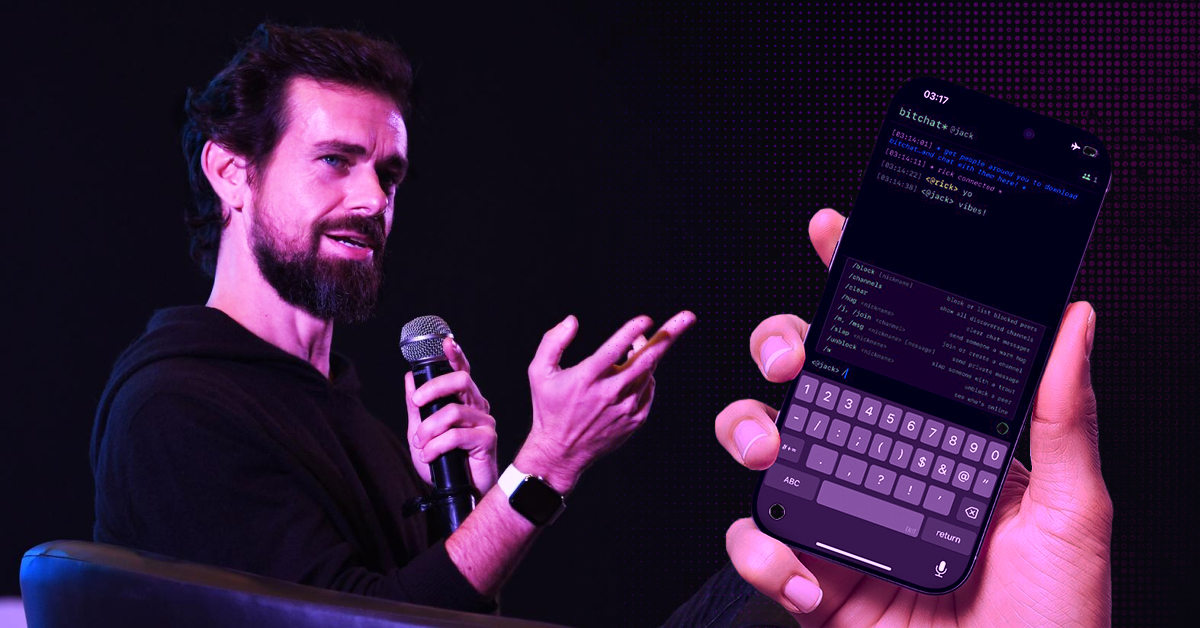
BitChat, a revolutionary offline messaging app developed by Twitter co-founder Jack Dorsey, is revolutionizing communication without the internet. BitChat launch 2025 enables users to communicate with one another over mesh networking and Bluetooth without the need for centralized servers or conventional networks.
Dorsey’s persistent advocacy for digital independence and open communication particularly in areas like censorship or emergency situations. BitChat is a decentralized messaging app that markets itself as a safe, reliable substitute for popular messaging services in the connected world of today.
What is BitChat?
Jack Dorsey, one of the co-founders of Twitter, launched BitChat, a decentralized offline messaging software. A BitChat messaging app uses peer-to-peer technologies like mesh networking and Bluetooth to allow users to connect without internet access.
It is made for safe, censorship-resistant communication in both routine and urgent situations, with privacy, resilience, and freedom in mind.
- Enables messaging without mobile data, Wi-Fi, or internet infrastructure.
- Ensures end-to-end encrypted, private, and secure communication.
- Functions in remote areas, disaster zones, and during internet shutdowns.
The Need & Rise of Offline Communication Tools
With infrastructural issues, digital restrictions, and frequent internet outages, this offline messaging app is becoming popular. With the Jack Dorsey new app users can maintain safe connections without depending on centralized networks.
Their expansion is indicative of a global trend toward decentralized communication, anonymity, and resilience.
- Bypass internet shutdowns and government censorship.
- Provide critical communication in disaster-hit or remote regions.
- Enable peer-to-peer networking without telecom dependency.
How BitChat Works Without the Internet?
It uses peer-to-peer communication to allow users to send and receive messages without an internet connection. It guarantees privacy, confidentiality, and continuous messaging, even in remote areas:
1. Device-to-Device Communication
It uses Wi-Fi Direct or Bluetooth to connect to nearby devices. This Twitter co-founder app enables direct message exchange between users without the need for Wi-Fi or mobile data.
2. Mesh Network Creation
Every BitChat user functions as a mesh network node. Messages can travel across several devices to reach recipients who are not in the sender’s direct vicinity.
3. Offline Message Relay
It saves the message and forwards it when a connecting path becomes available if the recipient is not in close proximity. The BitChat offline communication is managed with delay-tolerant delivery.
4. Encryption and Data Integrity
It protects messages from unwanted access by encrypting them from beginning to end. It guarantees that during multi-device transfer, content remains confidential and unchanged.
5. No Central Server Dependency
Internet servers are not necessary because all user communication takes place locally. This method avoids censorship or outside control while improving user privacy.
Key Features of BitChat
It is perfect for offline, private, and secure conversation. That functions even in the absence of internet connectivity. The BitChat features offer decentralization and user privacy at its core:
1. Offline Messaging
It is a privacy-focused messaging app that enables users to send and receive messages without the internet. It uses Bluetooth and mesh networking to keep communication alive in offline scenarios.
2. End-to-End Encryption
All messages are encrypted from sender to receiver, ensuring complete privacy. Even if a message passes through multiple devices, no one can read its content.
3. Decentralized Communication
There’s no central server as all messages are exchanged peer-to-peer. The app provides Secure offline messaging and eliminates risks of surveillance, censorship, or data breaches.
4. Real-Time Device Discovery
The app automatically detects nearby BitChat users. This allows instant connection and communication without needing manual pairing.
5. Minimal Battery Consumption
It is optimized to run efficiently using low-power technologies like Bluetooth LE. It ensures prolonged usage without significantly draining the device battery.
6. File and Media Sharing
Users can share documents, images, and audio files even without the internet. All file transfers are securely encrypted and work seamlessly offline.
7. Open-Source Architecture
It is expected to offer transparency through open-source code. This encourages community trust, security audits, and innovation from developers worldwide.
Major Use Cases of Offline Messaging Apps
In circumstances where traditional connectivity is restricted, unavailable, or prohibited, offline messaging tools like BitChat are crucial. They provide peer-to-peer and encrypted communication for following:
1. Disaster and Emergency Zones
BitChat is an offline chat app 2025 that enables victims and emergency personnel to communicate without the internet that facilitates coordination and the exchange of critical information.
Impact: It can operate even in isolated shelters or regions where traditional networks are unavailable.
2. Political Censorship and Protests
BitChat makes free speech and secure messaging possible in areas where there are internet blackouts or government control.
Impact: It is decentralized as well as difficult for authorities to regulate or block it.
3. Remote and Rural Communities
BitChat enables people to communicate and share updates in places with spotty or nonexistent connectivity.
Impact: It can be used by educational institutions and NGOs to deliver educational materials offline.
4. Large Events and Gatherings
Mobile networks frequently experience overload in congested locations such as conventions, stadiums, and festivals.
Impact: It can also facilitate real-time group communication and safety alerts.
BiChat vs. Traditional Messaging Apps
Unlike standard messaging programs that mostly rely on centralized servers and connection, BitChat redefines communication by doing away with the requirement for the internet. The following comparison shows the main distinctions between BitChat and popular apps like WhatsApp and Messenger:
| Aspect | BitChat | Traditional Messaging Apps (WhatsApp) |
| Internet Requirement | Works without internet | Requires internet or cellular data |
| Communication Model | Peer-to-peer, decentralized | Centralized client-server architecture |
| Privacy & Security | End-to-end encrypted with no central tracking | End-to-end encryption, may store metadata |
| Server Dependency | No servers; messages relay through nearby devices | Highly dependent on cloud servers |
| Use Cases | Emergencies, remote areas, protests | Daily social communication |
| Range Limitation | Limited to nearby or mesh network-enabled devices | Global via internet |
| Resistance to Censorship | Difficult to block or monitor | Susceptible to bans, surveillance, or takedowns |
Challenges for the Industry and Jack Dorsey’s Commitment
It is a step in the direction of offline messaging, but there are various challenges. Jack Dorsey’s dedication to freedom of speech, open technology, and privacy helped to overcome these obstacles:
1. Limited Communication Range
BitChat uses Bluetooth, which limits the communication range to short distances.
Solution: Incorporate satellite relay support or long-range mesh networking technology.
2. User Adoption and Education
Many users are not familiar with the working of offline messaging apps.
Solution: Introduce in-app onboarding, user-friendly lessons, and real-world use cases.
3. Security and Misinformation Risks
Misuse of public content is possible in the absence of central moderation.
Solution: Use community reporting tools to promote responsible use and self-regulate content.
Future Expectations from the App
It is anticipated that BitChat will push the limits of decentralized and offline communication. Improved technologies and a deeper integration with international digital ecosystems is the future:
1. Wider Range Extension
BitChat may use long-range radio technology like LoRa to get around the existing distance restrictions. This would make it possible to communicate without depending on infrastructure.
2. Blockchain Integration
Blockchain may be used in later iterations for token-based incentives, message verification, or decentralized identity (DID). This would improve platform openness, user privacy, and confidence.
3. Enterprise and NGO Use
BitChat can be used by organizations that operate in remote or disaster-prone places for safe offline coordination. It is perfect for humanitarian missions and field teams because of its network independence.
4. Community-Driven Innovation
BitChat is an open-source platform, so developers can add features, enhance security, and localize functionality. It guarantees that the software keeps its user focus while evolving quickly.
Conclusion!!
Jack Dorsey’s vision of freedom and privacy in the digital age is in line with BitChat’s daring move toward decentralized, internet-free communication. Jack Dorsey BitChat provides a safe solution that resolves censorship, surveillance, and connectivity issues.
This Jack Dorsey tech news may change our perspective on messages in both routine and emergency situations. BitChat is a contemporary innovation that has the potential to change our understanding of freedom, security, and digital resilience in the current period.