



-
Explosive Market Growth
The worldwide market for music production software is getting bigger at a fast pace. The factors contributing to this growth include innovations in AI, remote collaboration, and the subsequent emergence of a large number of independent artists. Entrepreneurs are viewing this as a long-term opportunity that will bring them good money while the number of customers grows.
-
Rising Creator Economy
If businesses develop a music streaming app like Pandora, YouTube, TikTok, and Spotify have opened the door to the global market for millions of creators. To make high-quality audio, these creators will require tools; thus, software companies have a huge and very loyal audience.
-
Subscription-Based Revenue
Music software mainly depends on subscription models for its success, including monthly plugins, cloud storage, a premium sound pack, or full DAW access. This is a way to have a predictable, recurrent revenue source and also a higher average customer lifetime value.
-
AI and Automation Opportunities
Users who want to get professional results fast are very much attracted by AI-powered features such as auto-mixing, instrument generation, mastering assistants, and smart sound suggestions. Entrepreneurs get the advantage of AI-powered music production software, in-demand features that can easily set their product apart.
-
Broader User Segments
The market for music production tools has been expanded to non-musicians. The producers can now target podcasters, filmmakers, advertisers, educators, and hobbyists. Hence, the business has diversified and become scalable.
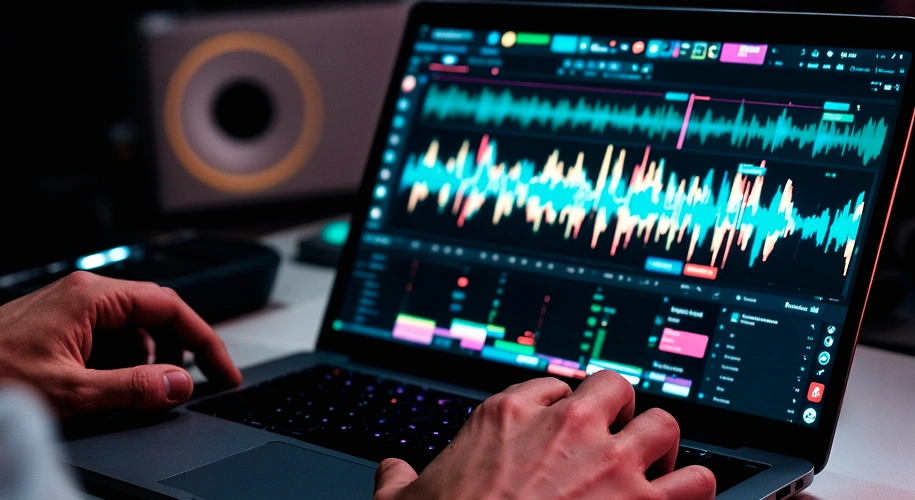
Guide to Build Music Production Software in 2026
Making music production software in 2026 is far beyond just writing code for new features. It involves building a fun and interactive platform where creativity, tech, and beat come together. According to predictions, the worldwide market for music production software will exceed 12 billion US dollars by 2030.
The need for more intelligent, quicker, and user-friendly tools is going up very high. In line with AI-powered features, cloud collaboration, and immersive audio are changing the face of the music industry, developers have the opportunity to design software that democratizes access to the music making process, thus empowering everyone from a simple bedroom producer to a professional sound engineer.
The question is not what you want to do but rather how. You can fabricate a DAW, a beat-making app, or an AI-driven mixing assistant. There are countless opportunities, and they are more significant and more exciting than ever before.
The guide will help you build music production software, the essentials of cutting-edge, user-friendly, powerful, and future-ready music production software.
What is Music Production Software?

Music production software refers to a set of digital tools that enable users to make, edit, mix, and master music using a computer or a mobile device. The best music production software incorporates various features such as audio recording, track arrangement, the addition of virtual instruments, sound processing, and sound quality enhancement. The software is a great aid for all musicians, from beginners to professional producers, as it helps in the easy conversion of musical ideas into final tracks. Be it beat-making, vocal editing, or full studio-level production, music production software offers all the necessary tools to produce high-quality music in one place.
Why Do Entrepreneurs Want To Invest In Music Production Software?
Entrepreneurs are becoming more and more enthusiastic about the music production software industry and are increasingly considering it as a high-potential investment option. The trend to make music production software more and more accessible and a routine has been a significant factor in this consideration. With artists, content creators, podcasters, and hobbyists all turning to online tools, the market demand couldn’t be stronger. These are the five compelling reasons why entrepreneurs are diving into this space:
How to Build Music Production Software?
Developing robust and user-friendly music production software necessitates a well-planned audio software development 2026 strategy, more so when collaborating with a professional music streaming app development company. Such companies assist technically, give industry inputs, and have the ready-made development processes to take your idea to a high-performing, scalable product. Here are the steps to build a music streaming app:
-
Discovery & Requirement Analysis
The first step in the process is understanding your vision, target market, and distinct features. The music mixing and mastering music production software development company works with you at this stage to decide on the main functionalities, for example, multi-track editing, AI mixing, virtual instruments, plugins, effects, and cloud collaboration. Besides making the product plan, they also study the competitor’s tools and the latest industry trends. At this point, a clear roadmap, technical specifications, and a feature list are drawn up.
-
Music Software UX/UI Design
In the second stage to build an online music learning platform, after setting the requirements, the designers focus on creating a user-friendly, visually attractive interface that will improve the user experience. It is everything from wireframes, user journeys, dashboards, track views, mixer panels, to plugin layouts. The aim is to come up with a seamless workflow that producers, beginners, and professionals will all find natural. The company also creates interactive prototypes that help stakeholders understand how the software will work visually before the actual real-time audio processing software development takes place.
-
Core Development & Integration
The real development takes place here. Audio production software development company work on backend architecture, audio engine, track management system, real-time editing tools, and cloud-sync capabilities. They also integrate sophisticated features, such as AI-driven mastering, virtual instruments, libraries of effects, and support for plugins. Hire software developers who make sure that the application runs smoothly on all the platforms-web, desktop, or mobile. Projects are executed through Agile methodology to manage the feature rollout in stages.
-
Testing & Quality Assurance
In the fourth stage of creating music production software has to go through an extensive testing procedure in order to avoid any minor bugs that may significantly impact the users' experience. The QA teams perform functional, performance, and stress testing as well as compatibility checks on different devices and formats. They also thoroughly check the audio quality, latency, real-time rendering, and plugin stability. The process of bug fixing and refinement is what makes the software reliable and studio-ready.
-
Deployment, Launch & Post-Launch Support
Upon finishing tests, the software gets installed on the platforms it was designed for with full security, hosting, and configuration. The software development company takes care of user onboarding, documentation, and the production of training materials. After implementation, they provide uninterrupted customer service, latest updates, performance tracking, and feature upgrade services to keep your software up-to-date with the market trends and prepared for the future.
Case Study
At Dev Technosys, we recently developed advanced music production software for a US-based client, inspired by modern DAWs. Our focus was on creating an intuitive UX, low-latency audio processing, AI-assisted beat creation, and seamless cloud project syncing. Challenges like low-latency playback, cross-device performance, and heavy audio file handling tested our expertise, but our music app development company delivered a fast, reliable, and creator-friendly solution.
-Pramod Jangid (CTO)
What Are the Essential Features of Music Production Software?
Having a list of basic functions to build music production software that is viral in 2026, you must go through the list of essential functions. So let's get this started.
-
Multi-Track Editing
Creates an environment where users have the ability to freely record, edit, and arrange multiple audio tracks simultaneously, thus granting them total dominion over intricate music compositions and arrangements.
-
Real-Time Audio Processing
Facilitates immediate performance of effects and alterations without any interruption, ensuring that the artists’ workflow remains fluid and music production is devoid of glitches.
-
Virtual Instruments & Synths
VR/AR music production software incorporates the likes of pianos, drums, synths, and bass, amongst other instruments, in order to empower users to produce sounds of professional quality without having to resort to external hardware equipment.
-
AI-Powered Mixing & Mastering
Implementation of artificial intelligence techniques allows the software to automatically perform tasks such as balancing tracks, improving audio quality, and issuing of the final polished, studio-standard sound thus saving the user a great deal of time and effort.
-
MIDI Support
AI-powered beat making software gives users of musical keyboards and other controllers the ability not only to compose melodies, but also to control instruments, automate parameters through digitally accurate music data, and thus have full command over the creative process.
-
Built-In Effects & Plugins
Provides a starting point of audio effects such as reverb, delay, EQ, and compression for the purposes of amplifying sonic characteristics, toning sounds, and crafting novel audio textures in an easy way.
-
Loop & Sample Library
The music production software for PC and Mac includes a variety of ready-made loops, beats, and samples with which users can drag and drop to build tracks quickly.
-
Cloud Storage & Collaboration
Cloud-based music production tools allow users to save projects online, collaborate with others in real-time, and access their music from any device, anytime.
-
Advanced Automation Tools
Users are allowed to automate volume, panning, filters, and effects parameters to make the music dynamic, evolving, and professional-sounding arrangements.
-
Export & File Format Support
It is possible to export projects in different audio quality such as MP3, WAV, and FLAC for the purpose of sharing, publishing, or distributing across platforms.
Advanced Functions of Music Production Software
Now that you know the essential feature of music production software development you should also get your hands on advanced functions in the world of AI. So grab these advanced features now!
-
AI-Driven Stem Separation
With the help of AI, the cloud DAW software 2026 separates vocals, drums, bass, and instruments from any audio track to facilitate advanced remixing and mastering tasks.
-
Adaptive Mastering Engine
By intelligent audio processing, the system analyzes the mix and on that basis applies mastering presets specific to the genre selected for studio-quality results that are polished, and professional.
-
Real-Time Pitch Correction (Auto-Tune)
The music collaboration software online helps to correct the pitch of the vocals right away while at the same time keeping the tone natural or making stylized vocal effects.
-
Advanced MIDI Mapping & Automation
The audio DSP programming allows the user to detail the automation of synthesizers, effects, and parameters on hardware controllers as well as virtual instruments.
-
3D & Spatial Audio Rendering
With these technologies, the program can deliver highly realistic audio environments like binaural, Dolby Atmos, or surround sound that can be mixed with greater flexibility.
-
GPU-Accelerated Audio Processing
To deal with large and complicated projects in real-time, the program employs GPU power that not only speeds up the rendering process but also reduces the latency and improves the performance.
-
Intelligent Noise Reduction
The system is designed in such a way that it features an automatic background noise removal mechanism that uses machine learning to deliver professional recordings that do not have noise, hums, or clicks.
-
Custom Plugin Hosting (VST/AU/AAX)
This cross-platform music production software accepts external plugins, thus giving the chance to have more extensive toolkits, effects, and instruments while working within the software environment.
-
Live Collaboration Mode
Several users can create, record, and mix a work at the same time from different places with the synchronization that is happening in real-time.
-
Advanced Audio Time-Stretching & Warping
The AI music composition software 2026 gives the option of changing tempo, pitch, and rhythm without causing any loss in audio quality, making it excellent for remixes or exact syncing of tracks.
Top 10 Music Production Softwares in 2026
If you are looking for the top music production softwares in 2026, then here is the list that you must go through. Check out this table with software names, launch date review, and popularity, which is a win-win for you.
| # | Software | Launch Date | Approx. User Rating | Review Sentiment | Popularity (High/Med/Low) |
|---|---|---|---|---|---|
| 1 | Ableton Live | 2001 | 4.8/5 | Very Positive | High |
| 2 | FL Studio | 1998 | 4.9/5 | Extremely Positive | High |
| 3 | Cubase | 1989 | 4.7/5 | Positive | High |
| 4 | Logic Pro | 1993 | 4.8/5 | Very Positive | High |
| 5 | Pro Tools | 1991 | 4.6/5 | Positive | High |
| 6 | Studio One | 2009 | 4.7/5 | Very Positive | Medium–High |
| 7 | Reaper | 2005 | 4.8/5 | Very Positive | Medium |
| 8 | Reason | 2000 | 4.6/5 | Positive | Medium |
| 9 | Bitwig Studio | 2014 | 4.5/5 | Positive | Medium |
| 10 | GarageBand | 2004 | 4.7/5 | Very Positive | High |
How Much Does It Cost To Build Music Production Software?
The cost to build a music streaming app or software falls within a range of $8,000 to $30,000 or even more, based on the technology stack, features, and complexity. The cost range is different for a beat maker aimed at beginners and a full-fledged DAW with AI features. Moreover, the final music production software development cost depends on several factors. Collaborating with a professional live streaming app development company is a way to ensure the correct budgeting and a final product of a high standard. The main cost to develop music production software influencing factors are:
| Cost Factor | Cost Range (USD) |
|---|---|
| Feature Complexity | $8,000 – $30,000+ |
| Platform & Technology | $8,000 – $25,000+ |
| UI/UX Design Requirements | $3,000 – $12,000 |
| Third-Party Integrations | $2,000 – $10,000+ |
| Development Team Expertise | $5,000 – $20,000+ |
-
Feature Complexity
Basic features like track editing, recording, and mixing cost significantly less than advanced capabilities such as AI-powered mastering, virtual instruments, plugin support, multi-track automation, and cloud collaboration. The more sophisticated the tools, the higher the music production software development cost.
-
Platform & Technology
Building for a single platform, web, desktop, or mobile is cheaper than developing cross-platform software. If you choose advanced tech frameworks, real-time audio engines, or machine learning models, the overall cost to build music production software increases due to higher expertise and time.
-
UI/UX Design Requirements
Music production tools require clean, intuitive, and highly interactive interfaces. Detailed visual elements like mixers, waveform displays, effect racks, and plugin windows demand extensive design hours, directly impacting the total software development cost.
-
Third-Party Integrations
If your software needs third-party tools with MIDI software integration, external plugins (VST/AU), cloud storage, audio libraries, or payment gateways, each integration adds extra music production software development cost.
-
Development Team Expertise
Hiring a specialized music app development company costs more than working with general developers, but it ensures better audio quality, lower latency, optimized memory usage, and smoother performance. This can directly impact the overall cost to develop music production software.
What Are the Ways to Monetize Music Production Software?
Monetizing live music production software development has never been more simple or more lucrative, in large part, due to the flourishing creator economy and the increasing need for digital studio tools. No matter if your software is aimed at beginners, professionals, or content creators, there are several income models you can use to maximize profits over time. Below are the top five ways to successfully monetize your music production platform:
-
Subscription-Based Model
Offering monthly or yearly subscription plans is the most popular strategy. Subscribers enjoy unlimited exports, premium tools, plugin libraries, storage in the cloud, and advanced features. Subscriptions are a way to ensure a recurring revenue stream of predictable amount, and the value of a customer over a period of time is high.
-
In-App Purchases (IAP)
Allow users to buy additional sound packs, effects, presets, sample libraries, virtual instruments, or AI tools directly within the software. This model is especially effective for beginners and hobbyists who want to gradually upgrade their toolkit while not having to commit to expensive plans.
-
Freemium Model
Provide a free version that has the basic features and leave the advanced features for a paid upgrade. With this approach, you can quickly attract a large user base, convert the most engaged users into paid customers, and gain brand awareness at a rapid pace. The transition from a freemium to a premium model is very effective for music applications.
-
Paid Plugins & Extensions
Construct an ecosystem of the exclusive plugins E.g., EQs, compressors, synthesizers as well as reverb packs, mastering suites, and AI-powered tools. Selling these extensions individually generates a consistent revenue stream and keeps your live music production software development relevant with constant add-ons.
-
Licensing & Enterprise Solutions
License the white-label or enterprise versions of your software to recording studios, music schools, production houses, or tech startups. Licensing agreements provide a large amount of revenue from one-time sales and B2B marketing partnerships in the long run, which broadens your income potential beyond individual users.
How Dev Technsoys Can Help You Build Music Production Software In 2026?
Make music production software in 2026 is an exhilarating experience and the team at Dev Technosys can be the creative partner that helps you realize your vision. Driven by innovation, futuristic in its approach, and understanding the creator's mindset, we help you turn daring ideas into strong digital experiences.
Regardless of whether you are envisioning AI-powered mixing tools, immersive sound engines, or future-gen collaboration features, we support you by providing strategy, clarity, and creativity. At Dev Technosys, we can build music production software that not only functions, it motivates, empowers, and facilitates the work of the creators who provide the magic.
With a music streaming app development company at your disposal, you are not only creating a product; you are defining the future of music production. How about turning your idea into the next big thing in the creative world!
People Also Searched!
-
Why Should Entrepreneurs Invest In Music Production Software Development In 2026?
Live music production software development is a very lucrative and future-ready investment that will continue to be in high demand due to rising creator demand, AI adoption, and subscription revenue models
-
How Long Does It Take To Build Music Production Software?
To create music production software, it usually takes between 4 and 12 months. However, it is dependent on factors such as the complexity of the idea, features, platforms, integrations, and the expertise of the music production software development company.
-
What Features Should Modern Music Production Software Include?
The list of essential features is multi-track editing, AI tools, virtual instruments, automation, plugins, real-time processing, and cloud collaboration.
-
How Much Does It Cost To Build Music Production Software?
The cost to develop music production software varies from $8,000 to $30,000, depending on the features, technology stack, platform, design complexity, and third-party integrations.
-
Why Is AI Important In Music Production Software?
AI technology brings efficiency to mixing, mastering, sound generation, noise reduction, and workflow automation, thus enabling creators to get professional results in less time.