




















The healthcare industry has improved a lot since COVID-19, and patients are also getting a good experience in healthcare services. A virtual nurse app is booming in today’s market. It helps patients easily access healthcare provider assistance remotely, and these apps use artificial intelligence, telemedicine, and IoT to monitor patients in real-time.
As per the global survey, the telehealth nursing apps will be valued at around $495.4 million in 2021. It is projected to increase to around $2.1 billion by the end of 2031 with a CAGR of 15.6%.
This collective data depicts that investing in virtual nurse app development is a generating opportunity for entrepreneurs to expand their business to the next level.
We will explore with you this blog about how to build a virtual nurse app, cost, benefits, premium features, and money-making techniques.
What is a Virtual Nurse App?
A Virtual Nurse App is a healthcare application that allows people to obtain nursing services via digital platforms. It usually includes symptom evaluation, medication reminders, health tracking, virtual consultations, and help in managing chronic diseases.
These apps employ AI, machine learning, and telemedicine to provide users with rapid advice, monitor their health, and make informed decisions, all from the comfort of their own homes. It is a useful tool for increasing healthcare access and efficiency.
- Symptom Checker
- Medication Management
- Virtual Consultations
- Personalized Health Advice
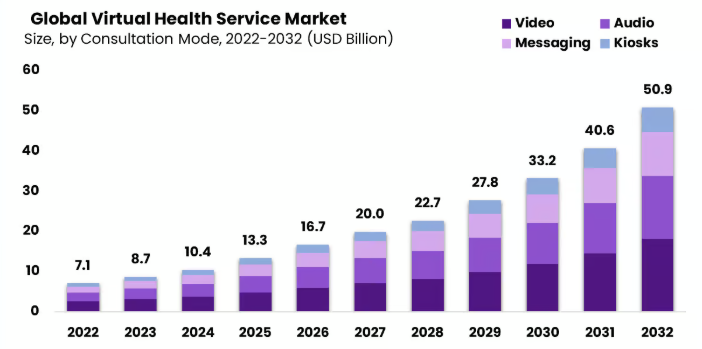
Market Analysis of Global Virtual Nurse Applications
- In 2021, the virtual nurse assistant apps are expected to be worth approximately $495.4 By the end of 2031, it is anticipated to rise to about $2.1 billion.
- According to the global market, telemedicine nursing apps are expected to increase around with a compound annual growth rate of6% from 2022 to 2031.
- CVS Health Payor Solution, McKesson Corp., Cardinal Health, Cigna Healthcare, and other significant businesses are some of the major participants in the virtual health services markets.
- With a market share of more than 2%, the patient segment was the most dominant of these.
- With up to 56% of total sales in 2024, the services and software segment held the largest share.
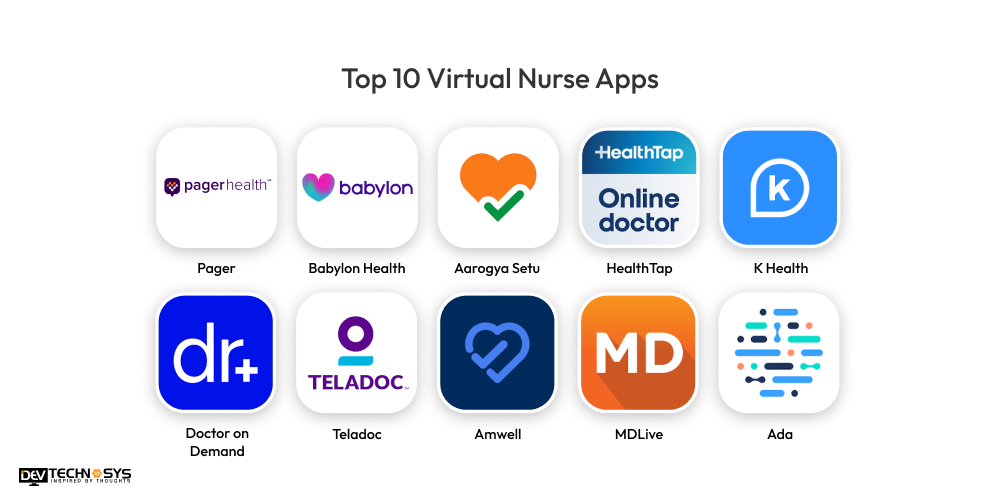
Top 10 Virtual Nurse Apps
Here’s a table summarizing 10 best appointment scheduling apps, including their download counts, ratings, launch years, and platform availability:
App Name |
Launch Year |
Platform Availability |
Key Features |
| Pager | 2014 | iOS, Android | On-demand medical consultations, prescriptions |
| Babylon Health | 2013 | iOS, Android | AI-powered symptom checker, virtual consultations |
| Aarogya Setu | 2020 | Android, iOS, KaiOS, IVRS | COVID-19 tracking, self-assessment, contact tracing |
| HealthTap | 2010 | iOS, Android, Web | Virtual doctor visits, online health advice |
| K Health | 2016 | Android, iOS | AI-based symptom checker, health insights |
| Doctor on Demand | 2013 | Android, iOS | Video consultations with doctors and therapists |
| Teladoc | 2002 | Android, iOS | 24/7 access to doctors, specialists, and mental health professionals |
| Amwell | 2016 | Android, iOS
|
Telehealth, virtual visits with doctors and nurses |
| MDLive | 2009 | Android, iOS | Online doctor consultations, mental health support |
| Ada | 2016 | Android, iOS | Symptom checking, medical AI assistant |
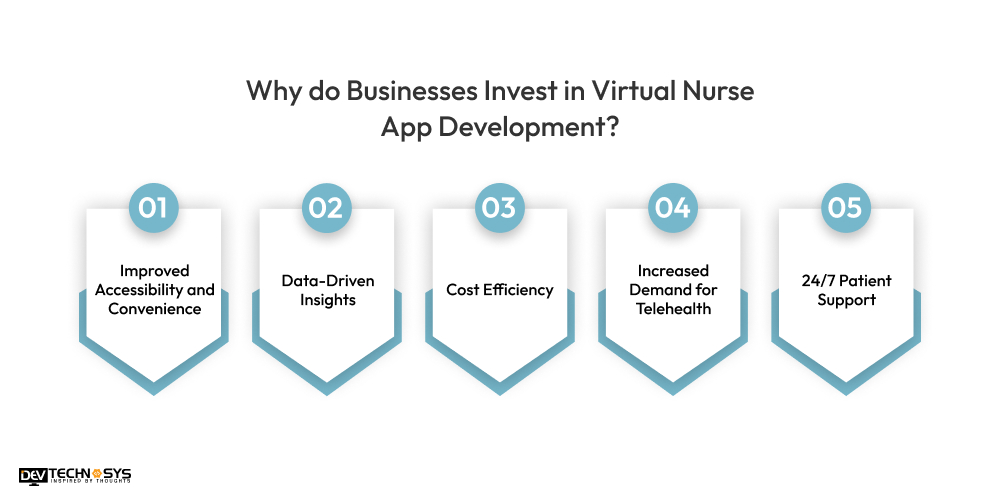
Why do Businesses Invest in Virtual Nurse App Development?
Businesses are expanding their investment in telemedicine app development for a variety of reasons, including increased healthcare industry demands, technology improvements, and patient expectations. Here are five primary reasons why businesses invest in virtual nurse app development services:
- Improved Accessibility and Convenience
- Data-Driven Insights
- Cost Efficiency
- Increased Demand for Telehealth
- 24/7 Patient Support
1. Improved Accessibility and Convenience
Nurse virtual assistant apps enable patients to receive healthcare services from the comfort of their own homes, removing the need for physical visits. This accessibility is critical for persons living in remote places, those with mobility challenges, and those who are unable to access traditional healthcare owing to time or financial constraints.
2. Data-Driven Insights
These apps may collect and analyze patient data, enabling businesses to provide more personalized treatment and improve health outcomes. Virtual nursing platforms can deliver personalized health recommendations, treatment plans, and preventive care guidance by leveraging artificial intelligence (AI) and Natural Language Processing(NLP), hence improving the patient experience.
3. Cost Efficiency
Healthcare services provided via remote nursing assistant apps can drastically lower the cost of in-person consultations, transportation, and infrastructure. Businesses see this as an opportunity to reduce operational costs while still providing necessary services, hence making healthcare more inexpensive for consumers and scalable for providers.
4. Increased Demand for Telehealth
The COVID-19 pandemic has expedited the adoption of telehealth services, and this trend is expected to continue. Virtual nurse monitoring apps enable businesses to capitalize on the growing demand for online healthcare services.
As we discussed earlier with virtual nurse website development company, the demand for virtual consultations, symptom checkers, and health monitoring systems is likely to rise.
5. 24/7 Patient Support
Virtual healthcare assistant apps provide round-the-clock help to patients, which is especially important in non-emergency situations or when people require advice outside of typical office hours. If you create a mobile app like Telehealth Nurse, it allows businesses to create a significant presence in the digital healthcare industry.
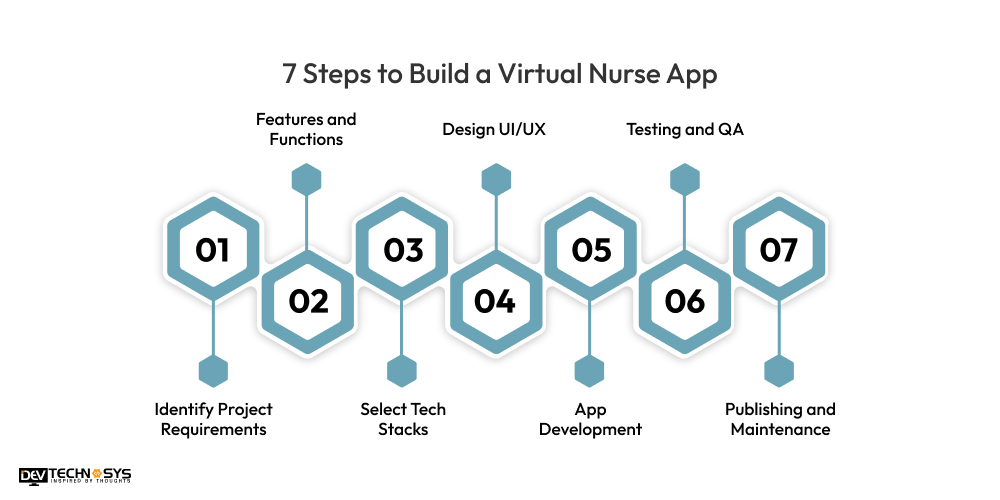
7 Robust Steps to Build a Virtual Nurse App
To build a virtual assistant app, define essential features like symptom checkers, AI-driven health advice, and medication reminders. Choose cross-platform development tools, integrate health tools like wearables, and ensure HIPAA compliance.
Collaborate with virtual nurse app development company for accuracy and test extensively to guarantee reliability and user experience.
- Identify Project Requirements
- Features and Functions
- Select Tech Stacks
- Design UI/UX
- App Development
- Testing and QA
- Publishing and Maintenance
1. Identify Project Requirements
Begin by defining the goals of the app. Understand the target audience, the medical features required (symptom checkers, consultations, medication reminders), and the compliance needs (HIPAA, GDPR). Conduct thorough research on market competitors and consult with healthcare professionals to refine your app’s core purpose and functionalities.
2. Features and Functions
Determine the key features your app will include. Some essential functions might be telemedicine (video consultations), health monitoring (vitals tracking), symptom checkers powered by AI, medication reminders, and emergency alerts. Hire dedicated developers to prioritize user needs and ensure all features align with regulatory standards and provide a seamless user experience.
3. Select Tech Stacks
Choose the right technologies to build the app. Commonly used tech stacks include mobile frameworks like React Native or Flutter for cross-platform compatibility, cloud computing solutions like AWS or Firebase for secure data storage, and APIs for integrating wearable devices. Consider AI tools for health analysis and telemedicine support tools.
4. Design UI/UX
Focus on a simple, user-friendly design tailored to your target audience. Hire experienced developers from a medicine delivery app development company to consider accessibility features such as large fonts and easy navigation for elderly users.
Prioritize intuitive layouts for seamless interactions with health tracking, consultations, and reminders. Wireframes and prototypes should undergo user testing before final design approval.
5. App Development
Develop the app in phases, starting with the back-end architecture, API integration, and database setup for secure data storage. Follow up with front-end development to ensure smooth navigation and interaction. Ensure integration with health devices or wearable apps. Apply security protocols like encryption to protect sensitive health data.

6. Testing and QA
In the sixth stage of pharmacy app development, conduct thorough testing to ensure the app functions correctly across various devices and platforms. Perform functional testing, usability testing, and security testing to ensure no bugs or vulnerabilities.
Test features such as video consultations, AI algorithms, and data syncing. Verify HIPAA compliance and ensure that patient data is securely handled.
7. Publishing and Maintenance
After testing, publish the app to app stores like Google Play and Apple App Store. Ensure the app complies with store guidelines and relevant healthcare regulations. Post-launch, maintain the app by regularly updating it for bug fixes, feature improvements, and adapting to new regulations or user feedback.
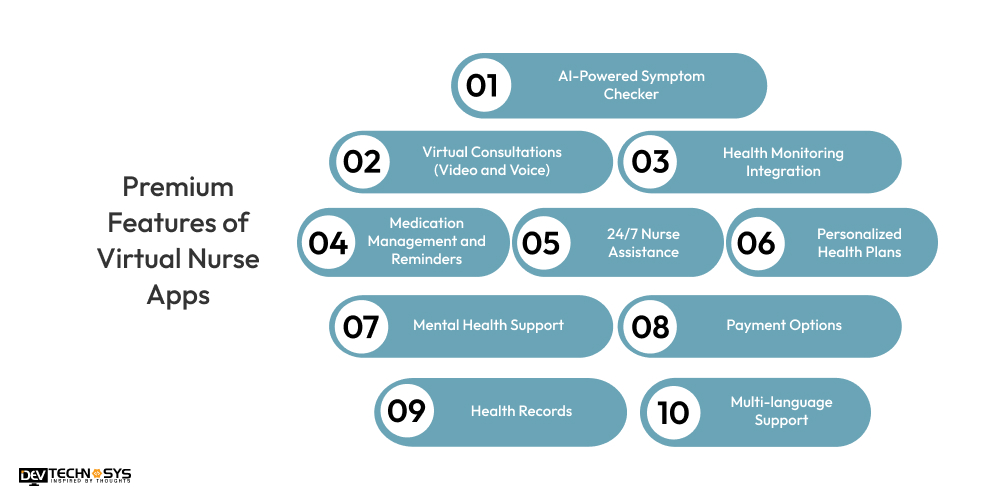
10 Must-Have Premium Features of Virtual Nurse Apps
To stand out in the competitive virtual healthcare market, premium smart nursing apps should offer advanced features that enhance the user experience and deliver high-quality care. Here are 10 must-have premium features:
1. AI-Powered Symptom Checker
A powerful AI-powered symptom checker can help users discover potential health issues based on their symptoms and provide timely advice before they see a doctor.
2. Virtual Consultations (Video and Voice)
On-demand consultations with healthcare professionals via video or phone call allow patients to receive real-time, individualized care from the comfort of their own homes.
3. Health Monitoring Integration
Integration with wearable devices like smartwatches enables continuous health monitoring and individualized guidance based on real-time information.
4. Medication Management and Reminders
Automated medication schedule reminders assist patients in staying on track with their medicines, hence boosting adherence to treatment plans.
5. 24/7 Nurse Assistance
Access to a live nurse for medical advice or urgent health questions provides around-the-clock support.
6. Personalized Health Plans
Users benefit from a more personalized healthcare experience when their health plans are tailored to their own medical history, lifestyle, and preferences.
7. Mental Health Support
Virtual mental health tools, including as therapy sessions, stress management techniques, and mood tracking, improve general well-being.
8. Payment Options
It includes various payment gateway integrations, such as credit or debit cards, net banking, bank transfers, and digital wallets.
9. Health Records
Secure digital storage of medical records, test findings, and prescriptions allows for easy access and sharing with healthcare professionals.
10. Multi-language Support
Support for several languages ensures that the app is available to a larger demographic, making it more diverse.
What is the Cost to Build a Virtual Nurse App?
The cost to build a virtual nurse app typically ranges from $8,000 to $25,000 or more, depending on factors like the app’s complexity, features, and platform availability.
Basic apps with essential features (like video consultations and medication reminders) tend to be on the lower end, while advanced apps with AI-powered symptom checkers, health monitoring integrations, and secure data storage may require a higher budget. Additional costs for design, development, testing, and ongoing maintenance also impact the total investment.
Virtual Nurse App Development |
Estimated Cost |
Time Frame |
Basic App Development
|
$8000 – $12000 | 2 to 5 Months |
Mid-Complex App Development
|
$14000 – $19000 | 6 to 8 Months |
High-Complex App Development
|
$25000+ | 9+ Months |
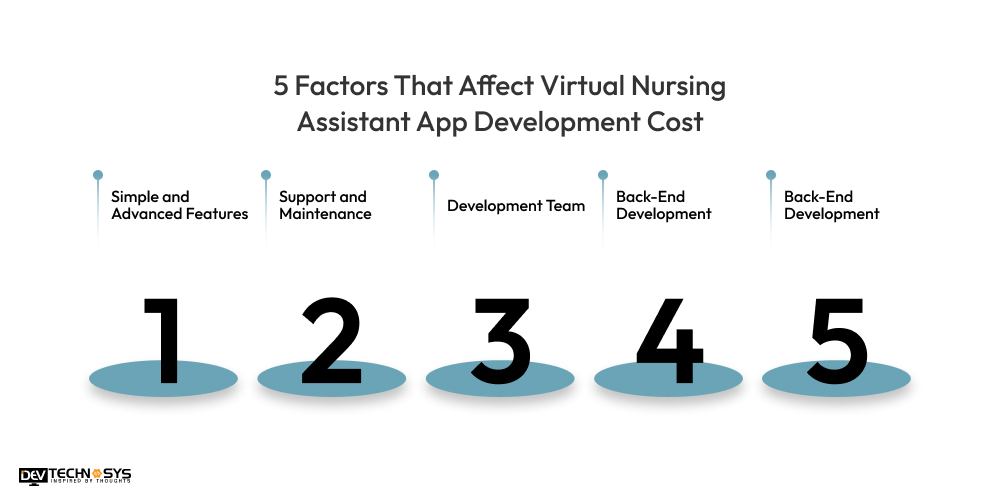
5 Factors That Affect Virtual Nursing Assistant App Development Cost?
The cost of developing a virtual nursing assistant app is influenced by factors such as complexity, features (AI, voice recognition), platform (iOS/Android), design quality, integration with healthcare systems, compliance with regulations (HIPAA), development team location, and project timeline. Ongoing maintenance and support also add to the cost.
1. Simple and Advanced Features
Simple services like appointment scheduling and prescription reminders are inexpensive, but adding advanced capabilities like AI-powered symptom checkers, telemedicine, and real-time health monitoring raises costs.
Advanced features necessitate more development time, greater complexity, constant testing, and integration with external platforms, all of which increase the overall mental health EHR software development cost.
Features |
Cost Estimation |
| Core Features(Appointment Scheduling and Prescription) | $8,000 – $10,000 |
| Advanced Features(AI-Powered Symptom Checkers & Telemedicine) | $13,000 – $19,000 |
2. Support and Maintenance
After launch, apps require frequent maintenance to guarantee optimal performance, security, and compliance with changing requirements. This comprises updates for operating system compatibility, bug fixes, security patches, and new feature releases.
Healthcare apps must also follow strict data privacy procedures, which may include regular audits and monitoring, adding to continuing operational costs.
Maintenance Phase |
Cost Estimation |
| Simple Maintenance Phase | $2,000 – $4,000/year |
| Complex Maintenance Phase | $7,000 – $9,000/year |
3. Development Team
The development team’s experience and location greatly influence the cost. Developers from regions with higher hourly rates, such as North America or Western Europe, will incur significant additional charges.
Furthermore, professional teams specializing in healthcare app development, data security, and HIPAA compliance will increase chatbot software development costs due to their particular skills.
Developer’s Experience Level |
Cost Estimation |
| Entry-Level Developer | $15 – $18/ Per Hour |
| Mid-Level Developer | $18 – $22/ Per Hour |
| Senior-Level Developer | $25+ / Per Hour |
4. Back-End Development
Back-end development entails designing a safe and scalable server architecture, storing data, and integrating it with third-party systems like telemedicine platforms or health equipment.
The complexity of managing sensitive medical data while adhering to healthcare rules (HIPAA, GDPR) can significantly increase expenses, as strong encryption, redundancy, and secure access mechanisms are required.
Backend Development |
Cost Estimation |
| Basic Backend Process | $10,000 – $18,000 |
| Premium Backend Process | $20,000 – $28,000 |
5. Application Design
Creating an intuitive and appealing design is crucial for increasing user engagement, particularly in healthcare. Custom UI/UX design increases the EMR/EHR software development cost, especially if the app has advanced features such as multi-device compatibility, responsive design, or complicated interactive parts. A clean, user-friendly interface is critical for elderly or less tech-savvy consumers, and may necessitate unique design considerations.
Design Quality |
Cost Estimation |
| Basic Design | $8,000 – $12,000 |
| Complex Design | $15,000 – $22,000 |

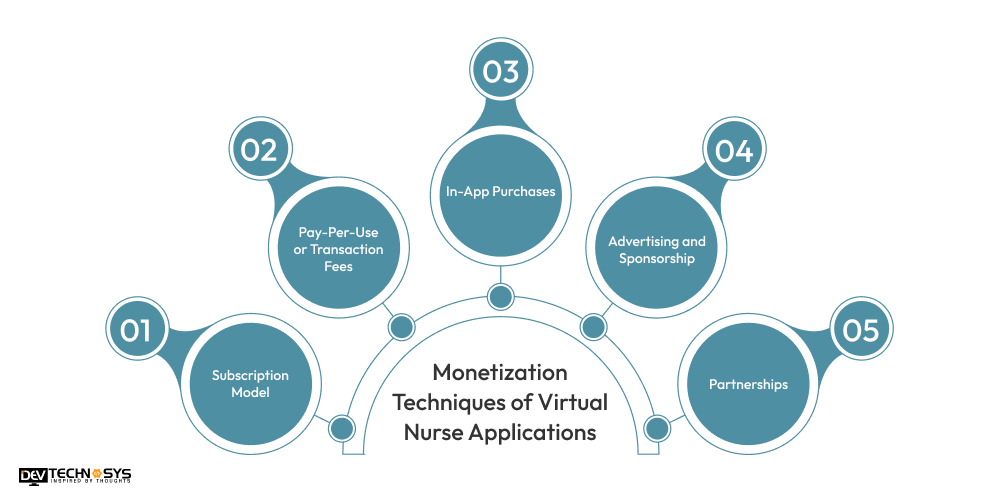
5 Monetization Techniques of Virtual Nurse Applications
Monetizing digital health assistant apps requires a strategic approach to balance user accessibility with profitability. These techniques can be combined or adapted depending on the app’s target audience and the features it offers. Here are five common monetization techniques:
- Subscription Model
- Pay-Per-Use or Transaction Fees
- In-App Purchases
- Advertising and Sponsorship
- Partnerships
1. Subscription Model
A subscription model requires consumers to pay a recurring cost (monthly or yearly) to gain access to premium services such as personalized health monitoring, 24/7 consultations, and sophisticated medical advice. Healthcare IT solutions generates consistent revenue and provides users with ongoing value through regular upgrades and support.
2. Pay-Per-Use or Transaction Fees
This model requires consumers to pay for each individual service, such as a consultation with a virtual nurse or a health evaluation. This is suitable for individuals who require medical assistance on an as-needed basis but do not wish to commit to a subscription. It’s adaptable and appealing to individuals who value price and convenience.
3. In-App Purchases
In-app purchases for virtual health consultant apps can include tailored workout plans, nutrition tracking, or full health reports. Users can purchase these services on demand, allowing them to personalize their experience and access advanced capabilities as needed, making it an excellent choice for individuals who like to pay as they go.
4. Advertising and Sponsorship
In-app advertising, particularly from health-related brands (such as pharmaceutical companies or wellness items), can provide a consistent cash source.
According to the wearable app development company, this can contain banner adverts or sponsored content, such as health advice and product suggestions. However, adverts should not be invasive in order to retain a favorable user experience.
5. Partnerships
Apps can work with healthcare practitioners or insurance companies to provide specific services such as appointment scheduling, prescription management, and preventive health initiatives. Providers may pay a price for user interaction, allowing the app to generate revenue while also improving its service offers.

Conclusion
Building an e-health nurse app requires careful planning, including defining core features like AI-driven health assessments, secure communication, and integration with healthcare systems. Focus on user-friendly design, compliance with regulations (e.g., HIPAA), and robust security.
Choose an appropriate development approach, either through in-house teams or outsourcing, and ensure continuous testing, feedback, and updates to improve the app’s functionality and user experience for long-term success. Ready to create a virtual nurse app? Consult with a healthcare app development company for expert advice and innovative development options.
Frequently Asked Questions
1. How Much Does It Cost To Build a Virtual Nurse App?
The cost to develop a Virtual Nurse App typically ranges from $8,000 to $25,000 or more, depending on features, platform choice, complexity, and the development team’s expertise and location.
2. How Much Time Does It Take To Create a Virtual Nurse App?
To make a virtual nurse app, it typically takes 3–6 months, depending on complexity, features (e.g., AI integration, user interface), team expertise, and testing. Development phases include planning, coding, testing, and deployment.
3. Can the Telemedicine Nursing App Integrate with Other Health Tools?
Yes, an AI health assistant app can integrate with health tools like wearables (Fitbit, Apple Watch), health tracking apps, and EHR systems, allowing for comprehensive health data tracking and personalized recommendations.
4. What Technologies Are Required to Build a Virtual Nurse App?
It includes robust technologies that are required to make a virtual nurse app, here is the list:
- Java
- Python
- C++
- PHP
- Flutter
5. How to Reduce the Healthcare Virtual Assistant App Development Cost?
To reduce online nursing assistant app development costs, focus on essential features, use cross-platform development, leverage existing APIs for AI and health data, and prioritize scalability to minimize long-term maintenance expenses.