











In 2026, the grocery delivery app development market is booming like never before, driven by changing consumer habits, rapid tech advancements, and the ongoing demand for convenience. As people continue to prioritize time-saving digital solutions, grocery delivery apps have become a must-have in everyday life.
From AI-powered recommendations to ultra-fast delivery and eco-friendly packaging, innovation is reshaping how groceries reach our doorsteps. Emerging trends like voice-assisted shopping, drone deliveries, and hyper-personalized experiences are not just futuristic; they’re here now. Businesses are racing to stay ahead by offering seamless user experiences, flexible payment options, and real-time inventory updates.
With growing investments and evolving customer expectations, 2026 marks a transformative year for the grocery delivery app industry.
Whether you’re a startup or an established brand, understanding these grocery delivery app development market trends is key to staying competitive.
Grocery Delivery App Market Analysis
- According to Statista, the grocery delivery market size was valued at approximately $342.81 billion in 2026.
- The grocery delivery app industry growth is expected to reach around $514.64 billion by the end of 2030.
- The revenue is projected to grow with a Compound Annual Growth Rate(CAGR) of 47% during the forecast period from 2026 to 2030.
- In the global comparison, the United States holds the highest revenue of around $327.72 billion in 2026.
- According to a recent study, the Average Revenue Per User(ARPU) in the grocery delivery market is around $1.90K in 2026.
- In 2026, the user penetration in the grocery delivery market is around 8%.
- According to the global study, the number of users in the grocery delivery market is expected to reach around3 million users by the end of 2030.
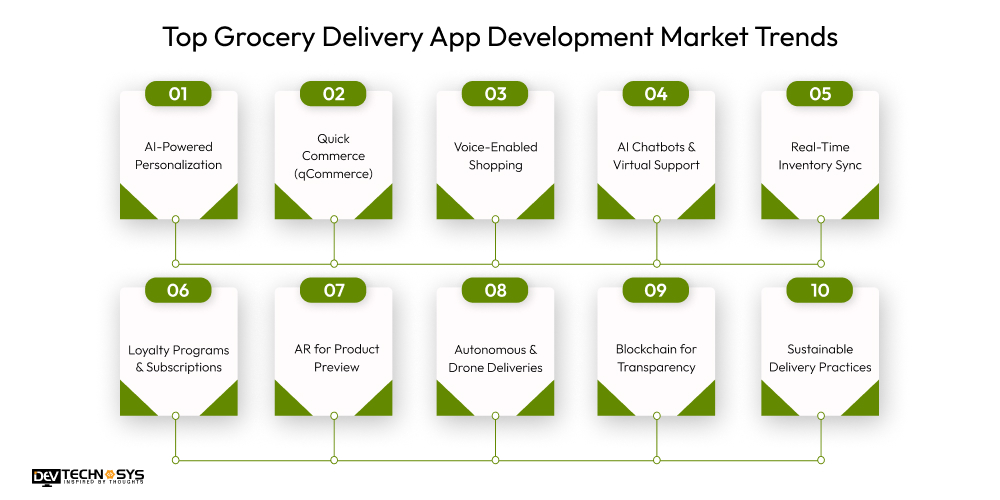
Top 10 Grocery Delivery App Development Market Trends
There are various popular market trends for grocery delivery app development, which help businesses to integrate advanced online grocery delivery trends to gain a competitive advantage. So, let’s take a look at the following points:
1. AI-Powered Personalization
With the help of AI-powered personalization, grocery delivery apps observe or analyze the users’ habits, purchasing patterns, behaviours, preferences, most searched items, and more. These grocery delivery app development insights help businesses to identify new improvement areas and offer personalized recommendations, which can increase sales and overall user engagement. If businesses develop a grocery delivery app like Blinkit, it can predict shopping needs based on past patterns and location, enabling timely reminders and one-click checkout.
2. Quick Commerce(qCommerce)
Most of the customers want faster grocery deliveries in 10 – 20 minutes. For that, use quick commerce that transforms logistics with micro warehouses and smart inventory management. It integrates delivery optimization algorithms and smaller geographic zones, ensuring lightning-fast delivery service. These integrations enable last-minute delivery service and increase the customers’ overall traffic rates and making it easy for urgent buyers.
3. Voice-Enabled Shopping
The voice-enabled shopping is on the rise in today’s generation because everyone wants convenience and flexibility. There are various voice-enabled assistants like Google Home and Alexa that enable users to do hands-free grocery shopping, and they mainly help in multitasking. For development, make sure the voice recognition accuracy, smart grocery list, smooth syncing, and auto-update cart system are all working properly.
4. AI Chatbots & Virtual Support
The AI chatbots and virtual support are one of the popular grocery delivery business trends. These AI assistants handle the customer concerns such as delivery issues, real-time order tracking, returns and refunds, and more. These AI chatbots use Natural Language Processing(NLP) to understand multiple languages and respond smoothly, which can reduce the human or manual intervention. Real-time support is a major factor in user satisfaction and retention, especially in urgent or failed delivery scenarios.
5. Real-Time Inventory Sync
Real-time inventory updates prevent order failures and out-of-stock frustrations. By syncing with store databases or point-of-sale systems, apps ensure that listed items are actually available. This enhances trust and reduces refund processing. If entrepreneurs develop an app like Coles, it provides features like alerts for restocks, substitutions, and more. This is primarily for large grocery organizations to maintain their stock in real-time, eliminating the need to cancel orders after they have been accepted.
6. Loyalty Programs & Subscriptions
In 2026, grocery delivery apps are leaning heavily on loyalty programs and subscription models to secure long-term customer engagement. Monthly memberships offering perks like unlimited free deliveries, early access to deals, and reward points are becoming standard. These strategies not only enhance user retention but also provide predictable revenue streams, helping platforms better manage logistics, inventory, and personalized customer experiences at scale.
7. AR for Product Preview
Augmented Reality (AR) is transforming how users interact with grocery apps. In 2026, customers can visualize fruits, vegetables, and packaged goods in real time before purchase. This enhances trust in product quality, especially for perishable items. AR also allows virtual pantry organization and meal planning, offering a more immersive and informative shopping experience that reduces returns and improves customer satisfaction in a competitive digital marketplace.
8. Autonomous & Drone Deliveries
Autonomous vehicles and drones are revolutionizing last-mile grocery delivery in 2026. With labor shortages and rising costs, many platforms are investing in robotic fleets and aerial drones to speed up delivery times, particularly in urban and suburban areas. These technologies reduce human error, operate around the clock, and support real-time tracking, making deliveries more efficient, contactless, and eco-friendly, while enhancing convenience for time-sensitive grocery purchases.
9. Blockchain for Transparency
Blockchain integration in grocery delivery apps offers greater transparency and traceability across the food supply chain. In 2026, customers can scan products to see origin, handling history, and certifications, ensuring food safety and authenticity. This immutable ledger system builds trust between brands and consumers, combats fraud, and supports ethical sourcing. It’s especially valuable for organic, imported, or high-value food items where provenance matters most.
10. Sustainable Delivery Practices
Environmental concerns are driving sustainable delivery practices in the 2026 grocery app ecosystem. Businesses are switching to electric vehicles, biodegradable packaging, and optimized delivery routes to minimize carbon emissions. Select a grocery delivery app development company that lets users track their carbon footprint per order. These efforts align with consumer demand for greener choices and help companies reduce environmental impact while appealing to socially conscious shoppers who value sustainability in daily purchases.
Conclusion
In 2026, the grocery delivery market is rapidly evolving with advanced technologies and user-centric innovations. Grocery delivery app development market trends like loyalty programs, AR previews, autonomous deliveries, blockchain transparency, and sustainable practices are reshaping customer expectations and business operations. To stay competitive, partnering with a forward-thinking grocery delivery app development company is essential. Such a company can integrate these grocery delivery app development market trends seamlessly, ensuring scalability, efficiency, and enhanced user engagement.
Frequently Asked Questions
Q1. What Are The Top Trends In Grocery Delivery App Development In 2026?
Key trends include loyalty programs, AR product previews, autonomous deliveries, blockchain transparency, and sustainable delivery practices.
Q2. Why Is The Grocery Delivery Market Growing So Rapidly In 2026?
Increased consumer demand for convenience, health safety, and time-saving services continues to fuel the growth of online grocery platforms.
Q3. How Has Consumer Behavior Changed In 2026 Regarding Grocery Shopping?
Consumers prefer faster, more personalized, and sustainable experiences, relying more on app-based recurring purchases and smart recommendations.
Q4. What Role Does AI Play In Grocery Delivery Apps In 2026?
AI powers personalized recommendations, demand forecasting, chatbots, and smart inventory management for seamless shopping experiences.
Q5. Are Drones And Autonomous Vehicles Widely Used In 2026?
Yes, many platforms use drones and self-driving delivery bots to optimize last-mile delivery, reduce costs, and minimize delivery times.