


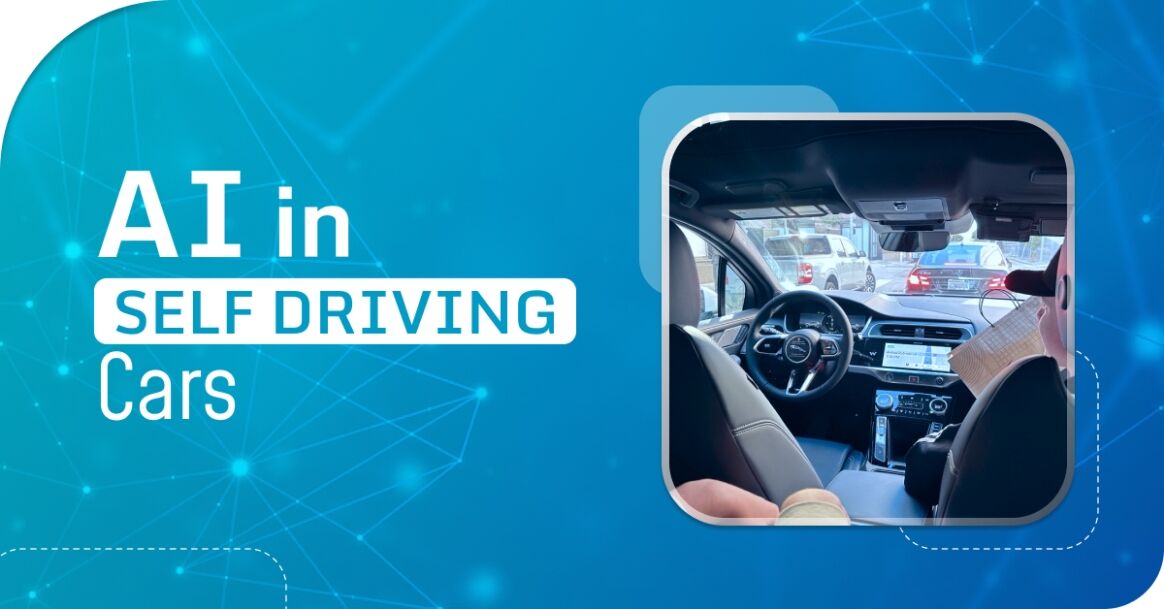
The world of transportation is undergoing a dramatic transformation, and at the heart of this revolution is artificial intelligence. AI in self-driving cars, once a futuristic dream, is now at the forefront of automotive innovation, promising to reshape how we think about travel, safety, and convenience.
As AI powers these autonomous vehicles, it’s not just about getting from point A to point B anymore. It’s about redefining the very essence of driving itself. As per Statista, in 2025, almost 60 percent of all new cars sold globally will have Level 2 autonomy and AI features
From machine learning algorithms that enable real-time decision-making to advanced sensors and deep learning, AI is making cars smarter, safer, and more efficient.
But the impact doesn’t stop there. The rise of AI-driven vehicles is accelerating developments in other areas, from electric vehicle technology to improved traffic management systems. Buckle up, this journey into the world of self-driving cars is set to revolutionize not only how we drive but how we live.
So, let’s begin!
The Role of AI in Self-Driving Cars
Artificial Intelligence plays a central role in the development and operation of self-driving cars. It enables vehicles to perceive their surroundings using sensors like cameras, radar, and LiDAR.
Through machine learning algorithms, AI interprets this data to identify objects, predict movements, and make real-time driving decisions. AI helps in tasks such as lane detection, obstacle avoidance, traffic sign recognition, and path planning.
As per the custom ai development company in USA, it constantly learns from real-world driving experiences, improving safety and performance over time. Additionally, AI autonomous cars ensure communication between vehicles and infrastructure, enhancing overall traffic efficiency.
By mimicking human decision-making, AI makes autonomous driving possible while reducing accidents caused by human error. As technology used in self driving cars, AI will continue to evolve, making self-driving cars safer, smarter, and more reliable for everyday use.
Core Functions Enabled by AI in Autonomous Vehicles
AI plays a central role in enabling autonomous vehicles to perceive, decide, and act in real-world environments. Below are the core functions powered by AI in autonomous vehicles:

1. Perception and Environment Understanding
AI in autonomous cars enables them to perceive and interpret their surroundings using data from sensors such as LiDAR, cameras, radar, and ultrasonic sensors. Advanced computer vision algorithms identify objects like pedestrians, vehicles, traffic signs, and lane markings.
AI models classify and track these objects in real time, enabling the vehicle to build a dynamic 3D map of its environment. This perception layer is critical for understanding road conditions, predicting behaviors, and ensuring safe navigation.
2. Localization and Mapping
Accurate localization is essential for autonomous driving AI. It processes data from GPS, IMU (Inertial Measurement Units), and sensor fusion to determine the vehicle’s precise location within a map.
Simultaneously, artificial intelligence in self driving cars helps in real-time map updates, recognizing changes such as construction zones or roadblocks. The machine learning development firm improves the accuracy and reliability of localization, even in areas where GPS signals are weak or unavailable, such as tunnels or urban canyons.
3. Path Planning and Decision Making
AI systems perform complex path planning by analyzing traffic conditions, speed limits, and potential obstacles. Reinforcement learning and probabilistic models are employed to make real-time driving decisions, like when to change lanes, yield, or overtake.
The AI and self driving cars weigh multiple possible outcomes and choose the safest and most efficient course of action, taking into account legal, ethical, and situational factors.
4. Control and Actuation
AI integrates perception and planning data to control vehicle functions such as acceleration, braking, and steering. Through feedback loops and predictive modeling, AI ensures smooth and responsive driving that mimics human-like behavior. These models adapt to varying road surfaces, weather conditions, and dynamic traffic flows.
5. Predictive Analytics and Driver Interaction
AI self driving cars anticipates the actions of other road users (pedestrians, cyclists, drivers) using behavioral prediction models. It also supports human-machine interaction, enabling the vehicle to communicate intentions and receive instructions. This enhances safety and user trust, especially in semi-autonomous systems.
AI Algorithms Used in Self-Driving Cars
Self-driving cars rely on a variety of AI algorithms to perceive their environment, make decisions, and control the vehicle. These algorithms span several domains of artificial intelligence and self driving cars, including computer vision, machine learning, sensor fusion, planning, and control systems. Here’s a breakdown of the main AI algorithms used in self-driving cars:
1. Convolutional Neural Networks
Used for image recognition and object detection, CNNs help autonomous vehicles identify pedestrians, traffic signs, lane markings, and other vehicles from camera inputs.
2. Reinforcement Learning
RL allows the car to learn optimal driving behavior through trial and error, helping in decision-making tasks like lane changing, merging, or parking.
3. Sensor Fusion Algorithms
As per the chatbots development services provider, these algorithms combine data from LiDAR, radar, cameras, and GPS to create an accurate and consistent understanding of the vehicle’s surroundings.
4. Path Planning Algorithms
Algorithms such as A*RRT (Rapidly-Exploring Random Trees), and Dijkstra’s algorithm help determine the best route while avoiding obstacles and ensuring passenger safety.
5. Kalman Filters and Particle Filters
Used for localization, these algorithms estimate the vehicle’s precise position on a map by processing noisy sensor data over time.
Use Cases of AI in Autonomous Vehicles
AI plays a pivotal role in autonomous vehicles, enabling them to perceive the environment, make decisions, and drive safely. Here are the key use cases of AI in autonomous vehicles:
1. Perception and Object Detection
AI enables autonomous vehicles to perceive their surroundings through sensor fusion, combining data from cameras, LiDAR, radar, and ultrasonic sensors. Machine learning and AI algorithms in self driving cars help identify and classify objects.
For example, pedestrians, other vehicles, road signs, and lane markings. This real-time understanding of the environment is critical for safe navigation and situational awareness, forming the foundation for all subsequent decision-making processes.
2. Path Planning and Decision Making
Autonomous vehicles rely on AI in self-driving cars for path planning, which involves determining the safest and most efficient route to a destination while responding to dynamic road conditions.
The AI use cases in automotive industry models evaluate multiple variables such as traffic flow, road obstructions, and driving regulations. Decision-making algorithms enable the vehicle to execute maneuvers like overtaking, merging, or yielding based on predictions of other road users’ behavior.
3. Driver and Occupant Monitoring
The use of AI in self driving cars is also used to enhance passenger safety and comfort through in-cabin monitoring systems. These systems track driver attention, drowsiness, and engagement levels in semi-autonomous vehicles.
The AI developer for hire ensures that the driver can take control when needed. In fully autonomous vehicles, AI monitors passengers to adjust climate, lighting, and infotainment settings, creating a personalized travel experience.
4. Predictive Maintenance and Diagnostics
AI-driven predictive maintenance helps reduce vehicle downtime and extend lifespan by analyzing data from vehicle sensors to detect wear and anomalies.
Machine learning models can forecast component failures or maintenance needs, allowing for proactive service scheduling. This minimizes unexpected breakdowns and enhances the reliability of autonomous fleets.
5. Traffic and Fleet Management
For companies operating fleets of autonomous vehicles, AI enables intelligent traffic and fleet management. The use of ai in automotive industry can optimize routes across vehicles to reduce congestion, fuel usage, and delivery times.
Self driving cars AI also supports real-time coordination among vehicles to avoid traffic bottlenecks and ensures optimal distribution of services in ride-hailing or delivery networks.
Want a chatbot demo or pricing? Fill the form and talk to our experts today.
Pick what you need below — you can select more than one — then tap Get detail to continue.
-
Chatbot demo dashboard
-
Cost to develop an app
-
Industry report
-
Case study
Benefits of AI in Autonomous Vehicles
AI plays a crucial role in the development and operation of autonomous vehicles, offering a wide range of benefits that improve safety, efficiency, and overall driving experience. As per the mobile app development company, here are some of the key benefits:
1. Enhanced Safety
One of the most significant benefits of AI in autonomous vehicle technology is the potential to vastly improve road safety. Human error is responsible for over 90% of road accidents globally, including distractions, fatigue, and impaired driving.
AI in driverless cars, however, do not suffer from such limitations. The deep learning development solution equipped with cameras, radar, lidar, and real-time data processing capabilities, AI-powered vehicles can detect and respond to their surroundings more quickly and accurately than humans.
They can identify potential hazards, predict the behavior of pedestrians and other vehicles, and make split-second decisions to avoid collisions. This technological precision can help prevent accidents and save lives.
2. Traffic Efficiency and Reduced Congestion
AI enables autonomous vehicles to communicate with each other and with traffic infrastructure, which helps in optimizing traffic flow. These vehicles can calculate the most efficient routes, anticipate traffic slowdowns, and adjust their speeds and routes accordingly.
Unlike human drivers who may brake suddenly or drive unpredictably, AI-driven vehicles can maintain optimal spacing and speed, contributing to smoother traffic patterns. This not only reduces congestion but also shortens travel times.
As vehicle-to-vehicle and vehicle-to-infrastructure communication technologies mature, AI will play a critical role in managing urban mobility more effectively.
3. Environmental Benefits
AI in autonomous vehicles contributes to sustainability and reduces environmental impact. You can create an AI app through real-time route optimization and efficient driving behaviors.
For example, smooth acceleration and braking, these vehicles consume less fuel or electricity compared to conventional human-driven cars. Moreover, traffic congestion and idling, major contributors to urban air pollution, can be significantly reduced with AI-enabled vehicle coordination.
Autonomous electric vehicles, guided by AI in self driving cars, further enhance this effect by integrating with smart grids to optimize charging during off-peak hours, thus supporting cleaner transportation ecosystems.
4. Increased Mobility for All
AI-powered autonomous vehicles have the potential to revolutionize mobility for people who are currently underserved by traditional transportation options. Elderly individuals, people with disabilities, and those unable to drive for medical or legal reasons can gain newfound independence through autonomous cars AI.
These vehicles can be programmed to accommodate specific user needs, such as providing voice-assisted interfaces, wheelchair access, or adaptive control systems. By removing the dependency on a human driver, AI and autonomous vehicles open up transportation access to millions, enhancing social inclusion and quality of life.
5. Data-Driven Improvements
AI continuously learns and evolves by processing vast amounts of driving data. This means that each autonomous vehicle benefits not only from its own experiences but also from the collective learning of all other connected vehicles. The natural language processing services shared intelligence helps improve navigation, decision-making, and risk assessment over time.
Manufacturers and city planners can also use this data to design safer roads, optimize traffic light timings, and develop policies for smarter urban planning. The iterative nature of AI ensures that autonomous vehicles become safer and more efficient with every mile driven.
Real-World Examples of AI in Self-Driving Cars
Artificial Intelligence (AI) plays a pivotal role in the development and operation of self-driving cars, revolutionizing the automotive industry by enabling vehicles to operate autonomously.
The use of AI in self-driving cars spans various technologies, from perception to decision-making. Below are five real-world examples of AI technology in self driving cars.
1. Computer Vision and Object Detection
AI-driven self-driving cars rely heavily on computer vision, a technology that enables the car to “see” its surroundings and understand its environment. Through the use of cameras, LiDAR (Light Detection and Ranging), and radar sensors, the car’s AI system can identify and classify objects such as pedestrians, other vehicles, traffic signals, road signs, and obstacles.
For example, Tesla’s Autopilot system uses cameras and neural networks to detect and track objects around the vehicle, making real-time decisions about when to change lanes, brake, or accelerate. This AI in automotive industry allows the car to interpret complex visual data from the road and act accordingly, improving safety and efficiency.
2. Predictive Analytics for Driver and Pedestrian Safety
AI in self-driving cars also employs predictive analytics to anticipate the actions of other road users. This allows the vehicle to react proactively to potential hazards. By analyzing historical and real-time data, AI systems can predict the movements of pedestrians, cyclists, and other vehicles.
For example, if a pedestrian is approaching a crosswalk, the AI can predict their movement and decide whether to slow down or stop before they cross. Similarly, AI can anticipate the actions of other drivers, such as a car suddenly changing lanes, and adjust the vehicle’s speed or path to avoid collisions.
This predictive capability enhances safety by enabling the vehicle to respond before an actual collision occurs, reducing the risk of accidents.
3. Sensor Fusion for Accurate Environmental Mapping
Self-driving cars use a combination of sensors, including LiDAR, radar, and cameras, to create a detailed and accurate 3D map of their surroundings. AI integrates data from these sensors to enhance the car’s perception of the environment, compensating for the limitations of each sensor.
For instance, LiDAR offers precise depth perception but can be affected by weather conditions like fog or rain, while radar excels in adverse weather but provides lower resolution.
AI algorithms process the data from these multiple sensors to generate a consistent and reliable view of the vehicle’s environment. Waymo, Google’s self-driving car project, uses this technology to navigate complex urban streets, ensuring the vehicle can detect pedestrians, cyclists, and other road users accurately.
4. Path Planning and Decision Making
AI and driverless cars make decisions based on their environment and goals. Path planning involves determining the best route and the optimal path to follow while considering dynamic elements such as traffic, road conditions, and obstacles.
According to the custom AI development service company, AI systems like Waymo’s self-driving software use sophisticated decision-making algorithms to continuously evaluate multiple potential actions and select the one that ensures safety and efficiency.
For example, if a self-driving car detects an obstacle in its path, the AI must decide whether to slow down, change lanes, or take another action based on a variety of factors, including legal and safety constraints.
5. Machine Learning for Continuous Improvement
AI in self-driving cars uses machine learning (ML) algorithms to continually improve vehicle performance over time. By collecting vast amounts of data from real-world driving experiences, these systems can learn and adapt to new scenarios.
For instance, Tesla collects data from its fleet of vehicles on the road and uses it to train its AI models to improve the car’s ability to recognize traffic patterns, road conditions, and driving behaviors.
Over time, this data allows the artificial intelligence driverless cars to make more informed decisions and handle more complex situations. This adaptive learning process is crucial for enhancing the autonomy and safety of self-driving vehicles as they encounter novel and previously unseen situations.

Future of AI in Self-Driving Cars
The future of AI in self-driving cars is poised to revolutionize the transportation industry. With advancements in machine learning, computer vision, and sensor technology, AI is becoming the backbone of autonomous driving systems.
AI enables vehicles to interpret vast amounts of data from sensors like cameras, radar, and lidar, allowing them to navigate complex environments safely. In the coming years, AI will improve decision-making processes, making autonomous vehicles more reliable in various driving conditions.
AI-driven systems will enhance vehicle-to-vehicle communication, reducing accidents and improving traffic flow. Furthermore, AI will facilitate a seamless integration of self-driving cars with smart cities, optimizing routes and minimizing congestion.
As AI continues to evolve, we can expect self-driving cars to become increasingly efficient, environmentally friendly, and accessible. However, challenges remain in regulatory frameworks, ethical considerations, and public trust.
Despite this, AI’s potential to transform mobility is undeniable, leading to safer, more efficient transportation systems in the near future.
Conclusion!
AI’s transformative role in self-driving cars is redefining the future of transportation. By enhancing safety, efficiency, and user experience, it’s driving innovation across the entire automotive industry.
As AI in self-driving cars continues to evolve, we can expect smarter, more sustainable vehicles that push the boundaries of what’s possible.
The road ahead is exciting, with endless possibilities for how technology will shape the cars of tomorrow, cars that not only drive themselves but also redefine how we think about mobility.
FAQs
Q1. How is AI Driving Innovation in the Automotive Industry?
AI drives automotive innovation by enabling autonomous driving, predictive maintenance, smart manufacturing, enhanced safety features, and personalized in-car experiences, transforming vehicle design, production, and user interaction for greater efficiency and convenience.
Q2. What Role Does AI Play in Self-Driving Cars?
AI enables self-driving cars to perceive their environment, make real-time decisions, navigate safely, and adapt to changing conditions using sensors, machine learning, computer vision, and advanced algorithms.
Q3. How Does AI Assist in Self-Driving Cars?
AI assists self-driving cars by processing sensor data, recognizing objects, predicting movements, and making real-time driving decisions to ensure safety, navigate routes, and adapt to changing traffic conditions.
Q4. Are AI-driven Self-Driving Cars Currently Legal and Widely Used?
Regulations vary by country and state. While fully autonomous vehicles (Level 5) aren’t yet common on public roads, AI-powered driver-assistance systems (Levels 2 and 3) like Tesla Autopilot or GM Super Cruise are widely available.
Q5. How Is AI Accelerating the Development of Electric and Connected Vehicles?
AI helps optimize battery performance, route planning, and energy efficiency in electric vehicles. It also enables vehicle-to-everything communication in connected cars, improving traffic flow and reducing emissions. By integrating with smart infrastructure, AI drives the shift toward more sustainable and intelligent transportation systems.


