
















Key Takeaways:
-
- The cloud kitchen management software market is expected to reach $141.08 billion by 2030, which shows its rapid growth rate.
- The cost to develop cloud kitchen management software is $8,000 to $25,000.
- Entrepreneurs have the opportunity to generate revenue through monetization strategies such as per-order commissions, affiliate partnerships, and add-on services.
Sick of constantly managing inventory, orders, and deliveries? Want to know what the secret is of top food brands running smooth, profitable operations behind the scenes?
Cloud kitchen management software is the secret ingredient for your virtual kitchen, helping you achieve profitable growth through the smart integration of technology.
Cloud kitchen software is defined as a powerful digital solution designed to optimise and streamline the operations of a delivery-only kitchen. This software helps to manage kitchen display systems, inventory, delivery integration, and staff scheduling.
The cloud kitchen market is expected to reach $154.9 billion by 2035, indicating the rapid growth of this business and attracting investor attention on a broader scale.
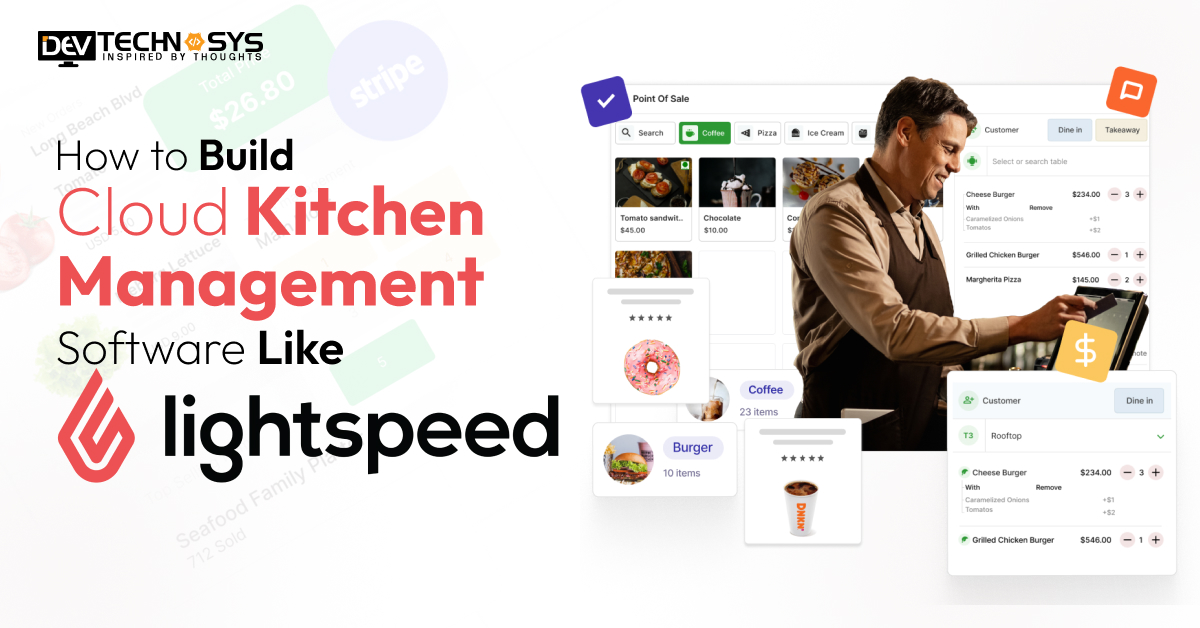
As an entrepreneur of an upcoming start-up, are you looking forward to build cloud kitchen management software like Lightspeed that enables seamless connections across different platforms?
If so, let’s dive into this blog, where you will find out about amazing features, steps, costs, and the tech stack required to build the software.
Current And Future Stats of The Cloud Kitchen Market
- The global cloud kitchen market was valued at approximately $73.18 billion in 2024.
- It is expected to grow rapidly, reaching approximately $141.08 billion by 2030, with an average annual growth rate of 9% between 2025 and 2030.
- In 2024, independent cloud kitchens accounted for the largest share of the market, generating approximately1% of the total revenue.
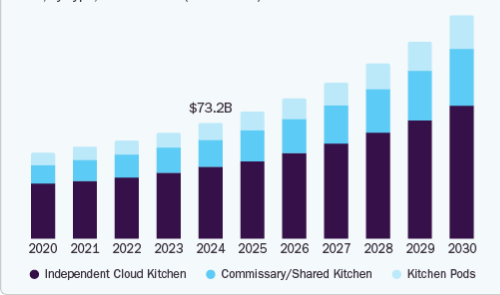
- The S. cloud kitchen market is expected to grow significantly, reaching approximately $27.5 billion by 2032, driven by the rising trend of food delivery and virtual restaurants.
- In 2024, the online food delivery market in the S. already reached $31.9 billion, demonstrating the growing popularity of ordering food online.
What is Lightspeed?
Lightspeed is a renowned cloud-based point-of-sale and commerce platform designed to support cloud kitchens, modern restaurants, and retailers. This software is primarily recognized for its features and user-friendly interface, including menu optimization, real-time order tracking, and seamless integration with other leading delivery apps.
Lightspeed also has built-in analytics, which enhances operations’ profitability and users’ satisfaction.
Reasons Investors Are Interested in Cloud Kitchen Management Software
The cloud kitchen management software market is experiencing rapid growth, presenting attractive opportunities for entrepreneurs to drive business expansion. Let’s analyse the main reasons that influence investors’ attention towards this market.
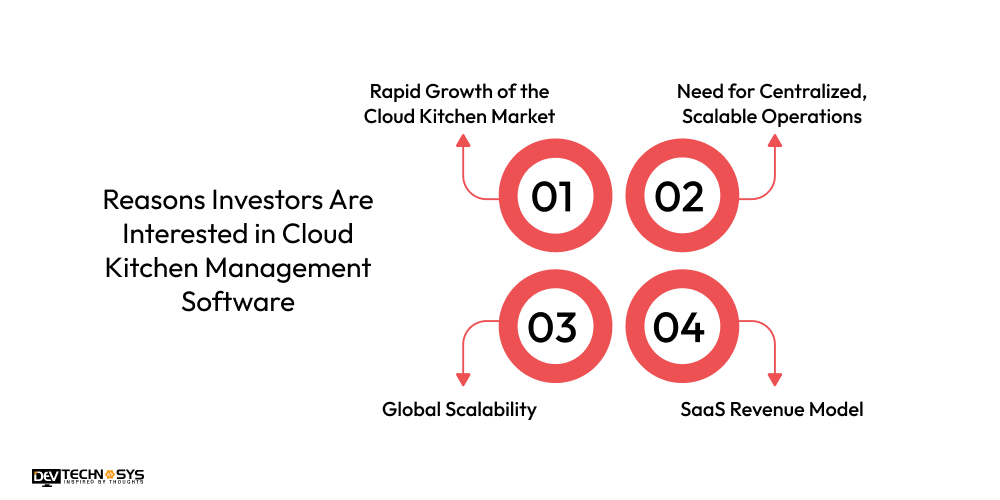
1. Rapid Growth of the Cloud Kitchen Market
Cloud kitchens have dramatically revolutionized the food delivery market by enhancing efficiency and reducing overhead. The market for cloud kitchens is booming at a rapid rate, attracting the attention of investors in management software.
2. Need for Centralized, Scalable Operations
Cloud kitchen operators manage different menus, brands, and delivery channels. Centralized management software has also streamlined workflow, which improves kitchen efficiency. This makes cloud kitchen management software a vital tool in the food-tech space.
3. Global Scalability
Businesses are interested in investing in the cloud kitchen software market as it is highly advanced and can be localised for international markets. With minimal operational expenses, investors can experience global growth from this software.
4. SaaS Revenue Model
The SaaS model is a crucial tool that enables cloud kitchen management software to operate. This generates recurring revenue, fosters strong customer retention, and offers high-margin opportunities for businesses. Cloud kitchen management software market provides predictable income streams, which is one of the main reasons that attracts the attention of investors.
The Role of Artificial Intelligence in Cloud Kitchen Management Software
- From innovative inventory management to automated order routing, Artificial intelligence is transforming the cloud kitchen market.
- AI tools help you to make more innovative, profitable, and faster decisions.
- AI-powered tools help in optimising tools, predicting demand, and providing suggestions on menus.
- AI is playing a crucial role by automating tasks such as delivery planning, order routing, and managing kitchen workflows.
- This helps in increasing cloud kitchen management software efficiency while reducing delays.
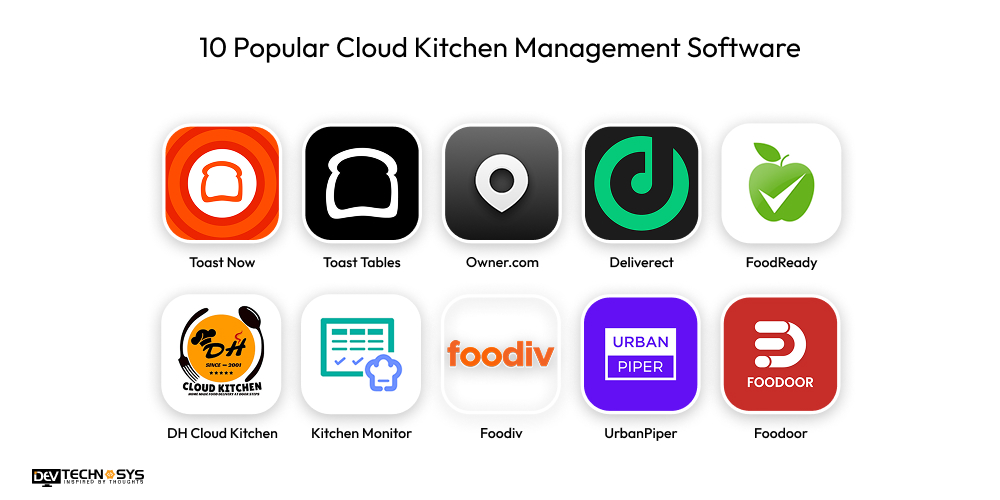
10 Popular Cloud Kitchen Management Software
As an entrepreneur looking to invest in the cloud kitchen management software market, it is essential to be aware of the leading players in the market.
App |
Platforms |
Downloads (Android) |
Rating (Android) |
Key Features |
Toast Now |
Android, iOS | 50+ | 4.8 | Real-time sales insights, manage delivery channels, and multi-location control |
Toast Tables |
Android, iOS | 10K+ | 3.0 | Waitlist/reservation management, server rotation, SMS guest notifications |
Owner.com |
Android, iOS | 100+ | 3.1 | Commission‑free online ordering, CRM, loyalty programs, app & website builder |
Deliverect |
Android, iOS | 10K+ | 4.1 | Delivery‑to‑POS integration, real‑time menu sync, centralized dashboard |
FoodReady |
Android, iOS | 5K+ | 3.8 | Power of software intelligence to get food safety documents ready and stay ready for any USDA, FDA, Local Health inspection or audit |
DH Cloud Kitchen |
Android, iOS | 500+ | 4.2 | The DH Cloud Kitchen app integrates React Native to ensure a responsive and high-performance mobile experience. |
Kitchen Monitor |
Android, iOS | 1K+ | 4.3 | Kitchen Monitor is the new solution created for the Cash in Cloud checkout system. |
Foodiv |
Android, iOS | 5K+ | 4.3 | Food ordering system apps and websites for food businesses, including Restaurants, hotels, cafés, food trucks, and sports bars. |
UrbanPiper |
Android, iOS | 50K+ | 4.5 | Multi‑channel order management, POS sync, menu updates |
Foodoor |
Android, iOS | 100K+ | 3.7 | Shared kitchen operations: bookings, billing, equipment tracking, compliance |
Why Users Love Cloud Kitchen Management Software?
Here, we have discussed why users are loving cloud kitchen management software. This will help you have clear view of the growing demand of this software in the market.
1. All Orders in One Place
Cloud kitchen management software enables users to utilize easy-to-use dashboards, which prevent further delays and confusion. It helps them to have everything organised and stress-free.
2. Faster, Smoother Operations
Users are loving cloud kitchen management software as it speeds up the workflow and offers real-time automated updates. With this software, users experience quicker delivery, even during peak hours.
3. Real-Time Inventory Tracking
With cloud kitchen management software, users do not have the relaxation of availability every ingredient. This helps avoid wastage and enables them to make informed decisions. Without the need for spreadsheets, this software helps in avoiding overbuying.
4. Saves Time & Reduces Errors
Cloud kitchen management software is becoming the most popular choice among users, as it automates the handling of routine tasks such as billing and order entry. This reduces human errors and helps in saving time.
5. Easy to Manage Multiple Brands
Users who run more than one brand from the same kitchen are widely praising this software. This helps in managing menus, each brand’s reports, and orders without complexity. This offer grants control and ease of usability.
How to Build a Cloud Kitchen Management Software?
Here, we are going to discuss the step-by-step guide to build cloud kitchen management software like Lightspeed. This will help businesses develop cloud kitchen management software like Lightspeed with a systematic approach.
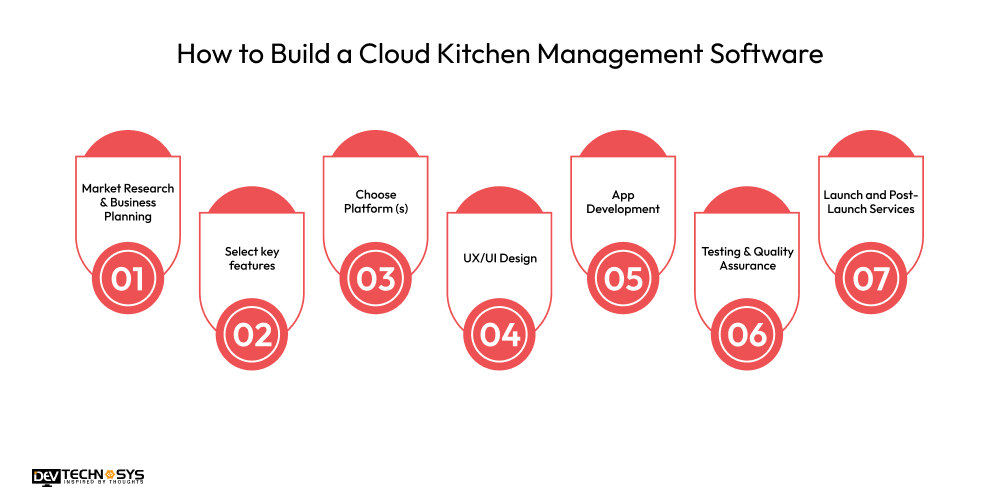
1. Market Research & Business Planning
To build software like Lightspeed, the process starts by understanding the cloud kitchen and food delivery industry. It helps you determine what users need and understand competitors’ strategies.
At this stage, you need to make a print and a business plan. Start a cloud kitchen with a robust business plan that helps you make your app different from others in the market.
2. Select key features
It is the stage of software development where picking the right features helps you to add real value to users. Businesses must integrate features like real-time analytics, staff scheduling, and inventory tracking.
You must focus on adding core features at the initial stage and then add new features as needed to support growth and user requests. This helps entrepreneurs to make cloud kitchen management software Like Lightspeed within budget.
3. Choose Platform (s)
Select the platform on which your cloud kitchen software will run: web, mobile, or both. Entrepreneurs must analyse the preferences of target users to choose the appropriate platform wisely.
A cloud kitchen management software development company helps you create highly responsive software that is easily accessible on both desktop and mobile devices. It is essential to recognize that platform selection has a significant impact on software development time and cost. Therefore, selecting the right platform that aligns with your budget and audience is crucial.

4. UX/UI Design
Software design is key to satisfying and attracting users’ attention. Entrepreneurs must create an intuitive, straightforward, and user-friendly interface for users, administrators, and chefs. This helps in satisfying all users. You must ensure to use efficient UX/UI to make your cloud kitchen management software easy to navigate.
Businesses need to focus on using wireframes to enhance the visual representation of their software. You must keep in mind that great design helps maintain user trust, which in turn increases the app’s scalability and reach.
5. Software Development
This is the stage to develop software with the help of code and frameworks like React.js. Hire software developers, including those with backend expertise like Node.js, to develop highly functional cloud kitchen software.
At this stage, entrepreneurs need to ensure that their software supports real-time updates for delivery and order tracking. Businesses must utilize APIs to facilitate third-party integrations, including those with payment gateways and mapping services.
6. Testing & Quality Assurance
Before launch, entrepreneurs must test everything and run the software on different devices. This helps to check performance and speed. This stage helps businesses identify and fix bugs, ensuring that every feature works effectively.
Entrepreneurs must conduct both automated and manual testing to verify the functionality of all features. Quality testing helps you to prevent major failures and create glitch-free cloud kitchen management software.
7. Launch and Post-Launch Services
Once you have a stable cloud kitchen management software, it’s time to launch it on web platforms and app stores. After launch, entrepreneurs need to provide continuous updates and 24/7 support to users.
You can also promote the software with the help of demos and digital marketing. Collect feedback and make improvements to the software based on user demand. Post-launch support plays a crucial role in helping businesses grow and retain users.
Must-Have Features for Cloud Kitchen Management Software
The table below will help you identify the essential features that your cloud kitchen management software must have.
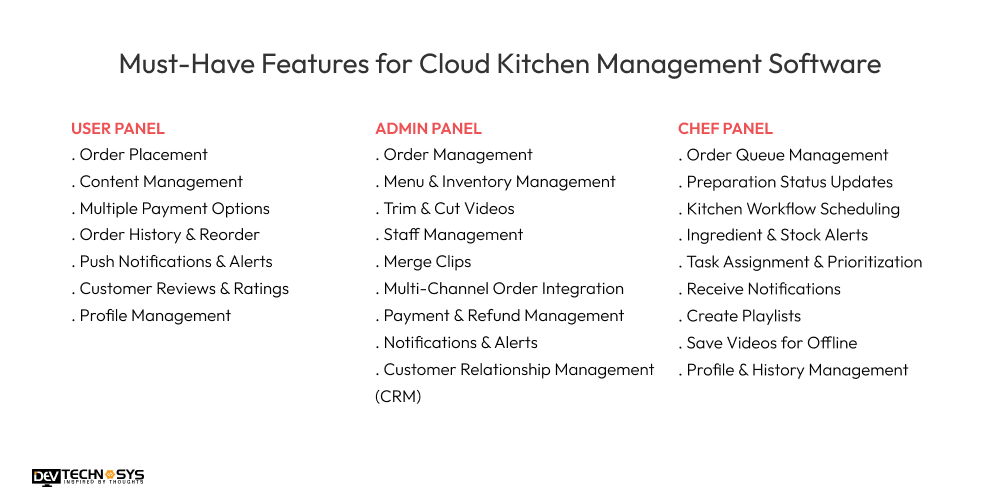
Panel |
Features |
User Panel |
|
Admin Panel |
|
Chef Panel |
|
Advanced Features for Cloud Kitchen Management Software
Have a look at some advanced features that help entrepreneurs to build a cloud kitchen platform like Kitopi.
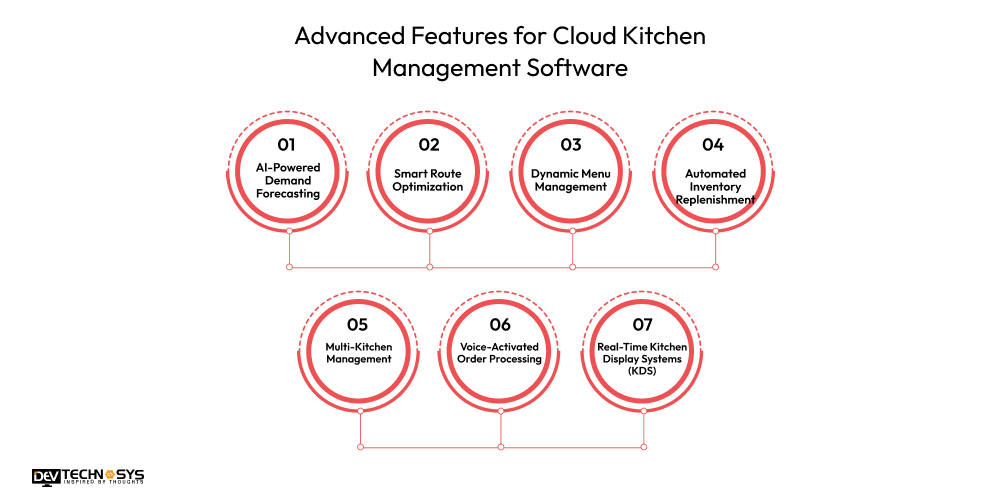
1. AI-Powered Demand Forecasting
Helps predict user demand using machine learning. This helps to optimise the efficiency of food preparation and improve stock planning.
2. Smart Route Optimization
Automatically identify the fastest delivery routes, which helps reduce fuel costs, delivery time, and ensures the offer of fresh food.
3. Dynamic Menu Management
Build a cloud kitchen platform like Kitchen United, featuring seamless integration of updated menus across multiple platforms in real-time, based on demand and inventory. This helps in increasing user engagement and sales.
4. Automated Inventory Replenishment
Helps track stock levels in real-time, preventing issues related to inventory shortages and keeping the kitchen running smoothly.
5. Multi-Kitchen Management
Entrepreneurs with these features can enable centralized operations for users across multiple cloud kitchens, while ensuring cross-location coordination and quality.
6. Voice-Activated Order Processing
Make software like Lightspeed with voice assistants that help in placing and managing orders hands-free. This helps in increasing operational efficiency and increase kitchen speed.
7. Real-Time Kitchen Display Systems (KDS)
Digitally display and update orders instantly in the kitchen, which helps improve food preparation accuracy, reduce delays, and minimize order handling errors.
The Cost to Develop Cloud Kitchen Management Software
The cost to develop cloud kitchen management software like Lightspeed is $8,000 to $25,000. The cost of app development varies depending on features, third-party integrations, UX/UI tools, and platform selection. The price can also increase based on the use of AI-powered tools and advanced features.
A software development company helps you choose the right technology and platform as per your budget. With this, you can also manage expenses like testing and maintenance of the cloud kitchen management software.
App Type |
Estimated Cost |
Development Time |
| Basic MVP App | $7,100 – $11,200 | 2 – 3 Months |
| Standard App | $12,200 – $19,200 | 3 – 5 Months |
| Feature-Rich App | $18,500 – $23,200 | 5 – 6 Months |
| Custom Enterprise-Grade App | $25,200 – $28,000 | 6 – 8 Months |
Top Factors That Affect the Cost of Cloud Kitchen Management Software
The final cost to build cloud kitchen management software like Lightspeed, depends on multiple factors, including features, platform selection, and third-party integration sources. Discover in more detail how various factors influence the cost of cloud kitchen management software.
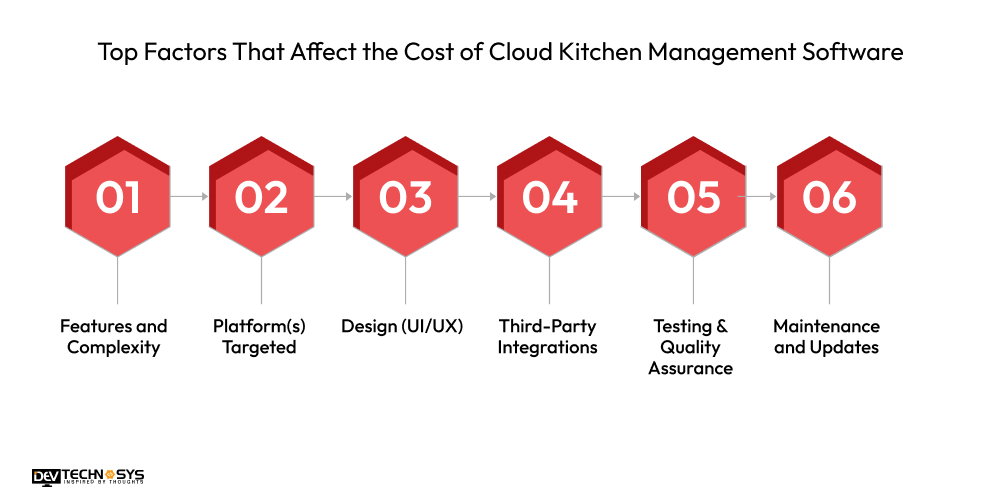
1. Features and Complexity
The more features businesses want for a cloud app, such as cloud kitchen management software, real-time analytics, order tracking, and inventory management, the higher the cost of app development becomes. Simple systems are generally less expensive compared to advanced AI tools.
Feature Complexity |
Cost |
Time |
| Basic Listings & Search | $2,200 – $4,200 | 1 – 1 Months |
| Intermediate (Chat, Filters, Profile) | $5,300 – $8,300 | 2 – 3 Months |
| Advanced (AI, AR, Blockchain) | $5,500 – $7,600 | 3 – 4 Months |
Pick what you need below — you can select more than one — then tap Get detail to continue.Want a chatbot demo or pricing? Fill the form and talk to our experts today.
Chatbot demo dashboard
Cost to develop an app
Industry report
Case study
2. Platform(s) Targeted
Creating software for the web is generally more cost-effective than developing multiple versions for Android, web, and iOS. Every platform has its own coding work and design. If businesses require more platforms for their website, then it automatically increases the budget and cost to build cloud kitchen management software like Lightspeed.
Platform Complexity |
Cost |
Time |
| iOS, Android only, and Web | $2,400 – $4,700 | 1 – 1 Months |
| All (Native) | $5,300 – $9,300 | 2 – 3 Months |
| Cross-Platform | $5,400 – $9,300 | 3 – 4 Months |
3. Design (UI/UX)
An attractive, clean, and easy-to-use design is essential for the cloud kitchen industry. Entrepreneurs can incorporate elements such as user-friendly interfaces, custom layouts, and interactive dashboards to create cloud kitchen management software like Lightspeed. However, better designs improve usability but increase the cost to develop software like Lightspeed.
UI/UX Complexity |
Cost |
Time |
| Basic UI | $1,500 – $2,400 | 2 – 3 Weeks |
| Custom & Responsive UI/UX | $2,500 – $4,800 | 1 – 1 Months |
| High-End Interactive Design | $5,300 – $7,300 | 2 Months |
4. Third-Party Integrations
Connecting cloud kitchen management software with other tools, such as payment gateways and food delivery apps, increases complexity. Every integration needs testing, coding, and future updates. The higher the number of integrations higher the cost to build cloud kitchen management software like Lightspeed.
Third-party integration Complexity |
Cost |
Time |
| Basic Backend (CRUD APIs) | $2,300 – $3,300 | 2 – 3 Weeks |
| Scalable Backend + DB | $4,800 – $7,300 | 1 – 1 Months |
| Third-party Integrations | $3,600 – $6,300 | 1 – 2 Months |
5. Testing & Quality Assurance
In today’s fast-paced kitchen environment, no one wants buggy software. With testing, you can ensure that your kitchen management software works smoothly across all devices. More features require more testing, which helps you to prevent issues in the future. However, testing increases the overall software development cost.
Testing Complexity |
Cost |
Time |
| Manual Testing Only | $9,300 – $1,900 | 2 Weeks |
| Manual + Automated Testing | $1,600 – $3,800 | 3 – 4 Weeks |
| Advanced Testing + Security Audits | $3,900 – $5,800 | 1 Month |
6. Maintenance and Updates
Even after the launch of cloud kitchen management software, entrepreneurs still need regular updates, server management, and bug fixes. According to user feedback, your software requires maintenance and updates, which increases the long-term budget for app development.
Maintenance Complexity |
Cost |
Time |
| Basic (Bug Fixes, Minor Updates) | $1,800 – $2,700 | Ongoing Monthly |
| Standard (Feature Updates, Monitoring) | $3,300 – $5,700 | Ongoing Monthly |
| Premium (24/7 Support) | $6,800 – $8,300 | Ongoing Monthly |
Best Tech Stack for Cloud Kitchen Management Software
The optimal tech stack to build cloud kitchen management software like Lightspeed includes React.js or Angular for the frontend, Node.js or Django for the backend, MongoDB or PostgreSQL for the database, and AWS or Google Cloud for scalable hosting.
Entrepreneurs can also integrate with third-party APIs like POS, delivery platforms, and payment gateways to create cloud kitchen management software like Lightspeed.
Component |
Recommended Technologies |
Frontend (Web/App) |
– React.js (Web) – Vue.js (Alternative) – Flutter / React Native (Mobile apps for both iOS & Android) |
Backend |
– Node.js – Django (Python) – Laravel (PHP) – Ruby on Rails |
Database |
– PostgreSQL (for structured data) – MongoDB (for flexible/noSQL data) |
Cloud & Hosting |
– AWS (Amazon Web Services) – Google Cloud Platform – Microsoft Azure |
APIs & Integrations |
– Stripe / Razorpay (Payments) – Twilio (SMS/Calls) – Google Maps API (Delivery routing) – POS System APIs |
Real-Time Features |
– Socket.io (Live order updates) – Firebase Realtime DB |
Admin Dashboard |
– React.js / Angular (with dashboards like AdminLTE or Material UI) |
Authentication |
– OAuth 2.0 – JWT (JSON Web Tokens) |
DevOps & CI/CD |
– Docker (containerization) – Kubernetes (scalability) – GitHub Actions / Jenkins (automation & deployment) |
Analytics & Reports |
– Google Analytics / Mixpanel – Metabase / Power BI (custom business reports) |
Notification System |
– Firebase Cloud Messaging (FCM) – OneSignal (Push notifications) |
How To Make Money From Cloud Kitchen Management Software?
Cloud kitchen management is not just about integrating features and tech stacks; it is a revenue engine that helps businesses earn more. Let’s find out how to build cloud kitchen management software like Lightspeed, through which you can generate revenue from multiple income streams.
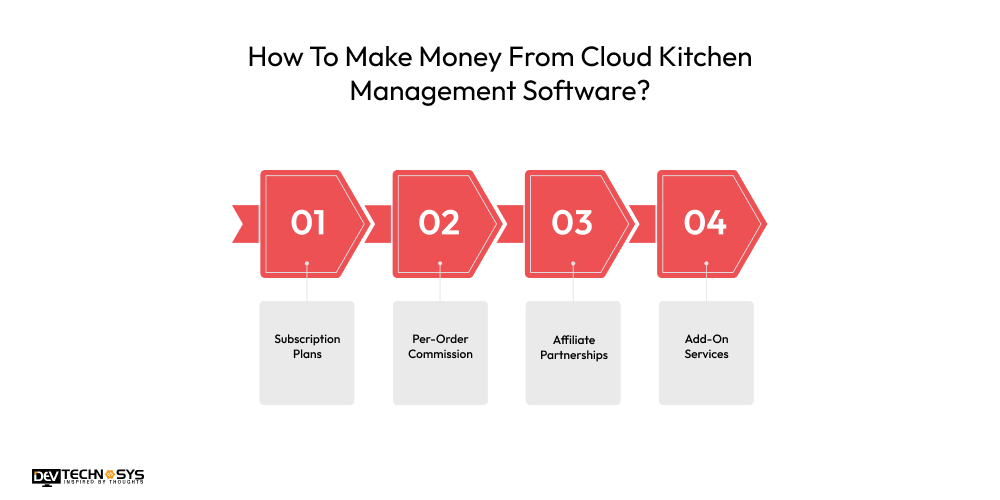
1. Subscription Plans
A software development company helps you to create a subscription model on a monthly or annual basis. This helps entrepreneurs attract all users. Subscription plans offer businesses a stable source of income.
2. Per-Order Commission
You can earn revenue by taking a certain percentage of commission on every order processed through the system. This is a unique monetisation model that helps businesses earn continuously.
3. Affiliate Partnerships
By partnering with suppliers and delivery services providers, you can earn from affiliate partnerships. By recommending their service, entrepreneurs have the opportunity to earn a commission. This is an attractive monetisation strategy to gain income from multiple revenue sources.
4. Add-On Services
Offer advanced features, including delivery optimization, AI reports, and marketing tools, by charging users an additional amount. Clients can easily upgrade services according to their needs. This monetization strategy enables entrepreneurs to earn more while enhancing user satisfaction.
Conclusion
Based on the above discussion, cloud kitchen management software is becoming a crucial aspect of the food segment. This software not only streamlines operations but also offers opportunities for businesses to earn through monetization strategies, such as subscription plans, per-order commissions, and affiliate partnerships.
A custom software development company helps you build cloud kitchen management software like Lightspeed, according to your budget. With their professional support, you can integrate features and launch your software successfully in the market.
Frequently Asked Questions
1. What is the Average Cost to Develop a Cloud Kitchen Management Software Like Lightspeed?
The cost to develop cloud kitchen management software ranges from $8,000 to $25,000. Based on feature selection. Platforms, third-party integrations, and tech stacks will increase these costs.
2. How Much Time Does it Take to Develop a Cloud Kitchen Management Software?
The time to create a cloud kitchen management software is between 3-4 months. The duration of this time will increase based on testing, bug fixes, and updates.
3. What Features Should a Cloud Kitchen Management Software Like Lightspeed Have?
The features build cloud kitchen management software like Lightspeed include:
- Real-Time Order Tracking
- Profile Management
- AI-Powered Demand Forecasting
- Smart Route Optimization
- Automated Inventory Replenishment
4. How Does a Cloud Kitchen Management Software Generate Revenue?
To earn extra money from cloud kitchen management software, you can consider monetisation strategies like:
- Subscription Plans
- Per-Order Commission
- Affiliate Partnerships
- Add-On Services
5. What is The Best Tech Stack For Building a Cloud Kitchen Management Software?
The best tech stack to make cloud kitchen management software like Lightspeed are:
- Frontend
- Backend
- Database
- Cloud & Hosting
- Notification System