
















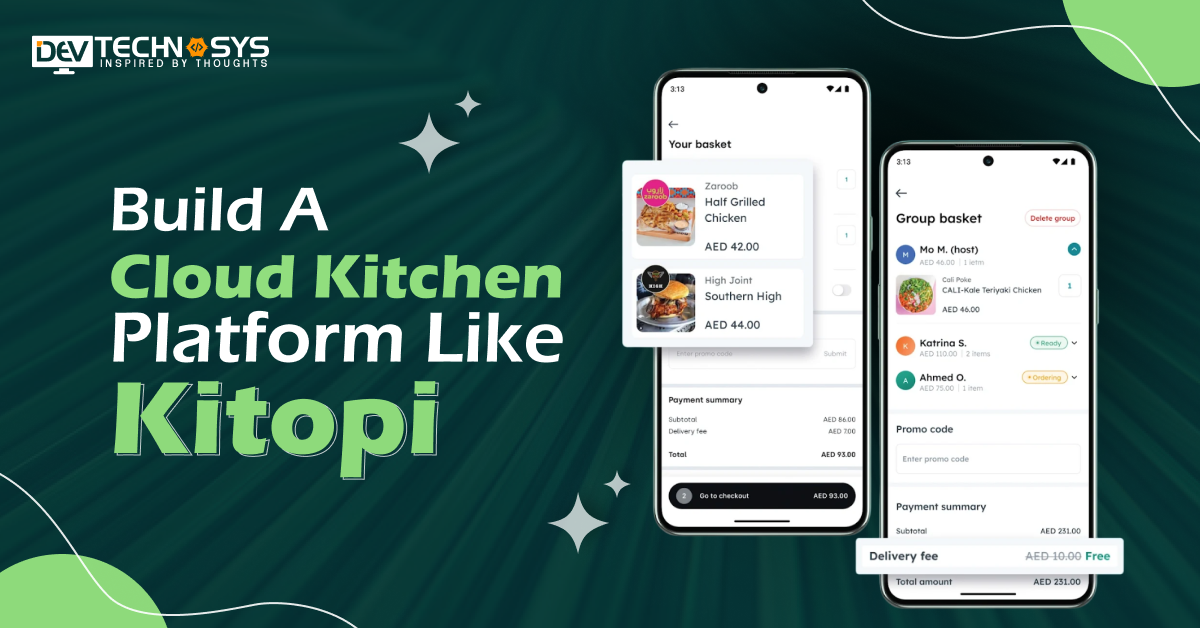
“Virtual menu, real flavor.”
In this fast-forward world, one such platform that is being heard a lot these days is Cloud Kitchen. It is a virtual platform that operates like a restaurant without a physical dining space. Instead, it focuses on preparing and delivering delicious meals to your doorstep, making it a convenient option for those who prefer to avoid cooking or dining out.
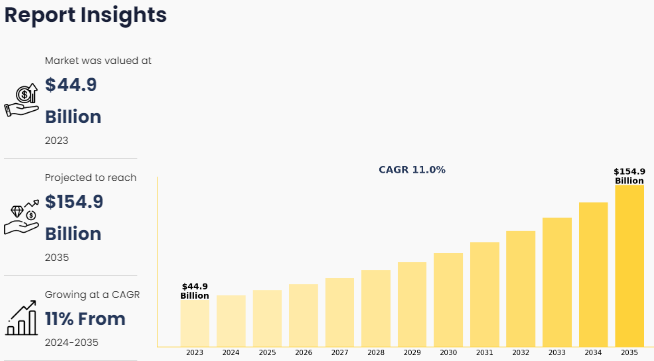
As per a recent study, the cloud kitchen market was valued at $44.9 billion in 2023, and it is projected to grow around $154.9 billion by the end of 2035 at a CAGR of 11%.
This data shows that a cloud kitchen like Kitopi is one of the most profitable opportunities for entrepreneurs to expand their business in the virtual market of the relevant industry.
This blog explores how to build a cloud kitchen platform like Kitopi and what robust features and services can make it successful and famous all over the world.
What is Kitopi?
Kitopi is an online cloud kitchen platform that helps restaurants increase their food delivery and reach a wider audience, increasing overall sales. It allows users to order food from an online food delivery platform and also provides a takeaway option. Kitopi mainly operates in various popular countries, such as the UAE, Qatar, Kuwait, Saudi Arabia, and Bahrain.
If any restaurant wants to use this platform’s food delivery services, then it charges 10% as a royalty. This is similar to an app like Too Good To Go and has similarities in working and functionality.
- This platform allows multiple brands to cook on one platform, and it provides real-time updates.
- Kitopi allows users to earn rewards and points and use them to pay bills for food ordering.
- A cloud kitchen platform like Kitopi offers various payment options, such as net banking, credit or debit cards, UPI, and bank transfer.
Market Analysis Of Cloud Kitchen Platform
- According to the global market, the cloud kitchen market was valued at $44.9 billion in 2023, and it is projected to grow around $154.9 billion by the end of 2035.
- According to the study, the cloud kitchen platform market revenue is expected to increase by 8% by the end of 2025.
- According to a report, 51% of the overall audience orders food using cloud kitchens or virtual restaurants.
- According to the global market, the compound annual growth rate of the cloud kitchen platform will increase rapidly to around 11% in 2035.
- According to a survey, Asia is the leading country in cloud kitchen platform users, with a market share of 60%.
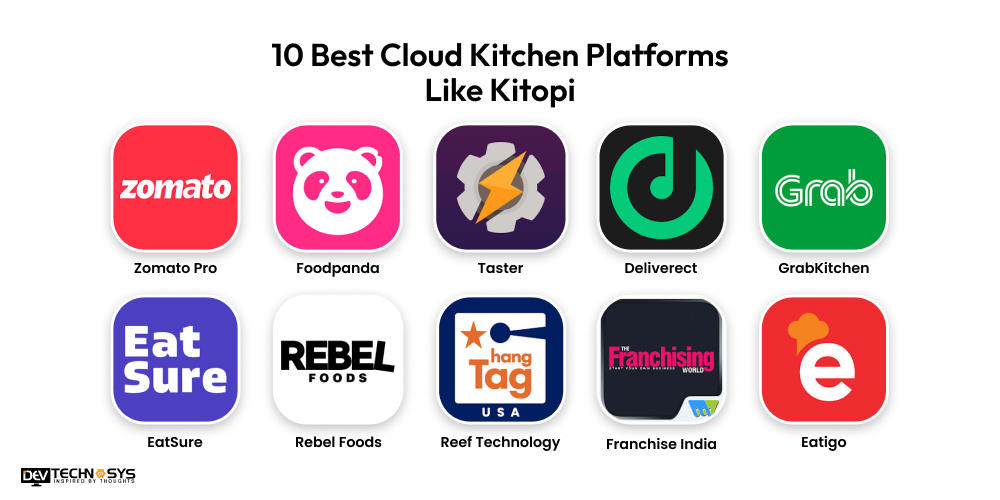
10 Best Cloud Kitchen Platforms Like Kitopi
If you are planning to build a cloud kitchen platform, you must first observe the existing popular Kitopi alternatives to understand their workings and functionality. So, here we provide the best food app ideas to start a robust cloud kitchen platform:
| App | Downloads | Ratings | Launch Year | Availability |
| Zomato Pro | 100M+ | 4.4 | 2018 | Android/iOS |
| Foodpanda | 1000M+ | 4.2 | 2012 | Android/iOS |
| Taster | 100M+ | 4.1 | 2017 | Android/iOS |
| Deliverect | 500K+ | 4.5 | 2018 | Android/iOS |
| GrabKitchen | 10M+ | 4.3 | 2018 | Android/iOS |
| EatSure | 10M+ | 4.1 | 2019 | Android/iOS |
| Rebel Foods | 100M+ | 4.2 | 2011 | Android/iOS |
| Reef Technology | 50K+ | 3.9 | 2013 | Android/iOS |
| Franchise India | 10M+ | 4.0 | 2006 | Android/iOS |
| Eatigo | 10M+ | 4.4 | 2013 | Android/iOS |
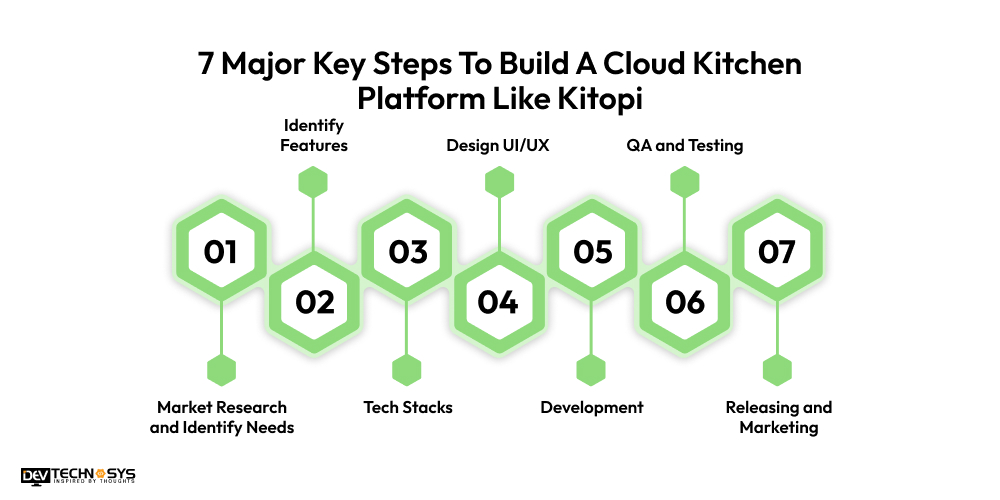
7 Major Key Steps To Build A Cloud Kitchen Platform Like Kitopi
To develop a cloud kitchen platform like Kitopi, consider the useful development steps that can enhance the developer’s or business development process. It allows businesses to understand the process in detail and be able to create a successful platform or app. So, here we provide the guide to start a cloud kitchen platform development process.
1. Market Research and Identify Needs
Let’s start the development process; before starting the development process, one should do market research to find out which type of app has more demand in the market. Observe the existing kitopi clone apps to understand their functionalities and workings to implement in your cloud kitchen platform. Identify your project’s requirements and needs so that the project can be implemented easily.
2. Identify Features
In this second stage of development, hire dedicated developers to identify the core features of your project that must be installed in your cloud kitchen platform. Observe the popular kitopi alternatives features and functions and find out which are best or most useful for your platform. Also, identify your platform’s primary and secondary users.
3. Tech Stacks
Let’s move to the third stage of development. Tech stacks are a crucial stage of the overall development process because they can change the app’s overview or functionality. It involves many advanced tech stacks such as frontend or backend programming languages, APIs, security measurements, testing, cloud storage, database, authorization, etc.
4. Design UI/UX
In this fourth stage of development, hire mobile app developers to design a user-friendly interface that allows users to interact easily with all app features. Designing is one of the most important stages of development because it is the first user appearance, and it can attract more users by showing their designs. It includes premium themes, layouts, and built-in plugins.
5. Development
In this development stage, we need to assemble a highly skilled development team with more experience implementing the functions and features into the platform. It involves integration with third-party applications, security restrictions, built-in features or functions, integrated modes, payment gateway integrations, and models.
6. QA and Testing
Coming to the sixth stage of development, hire professional developers from the mobile app development company to test your cloud kitchen platform under various operations. Ensure all features or functions work smoothly and fix bugs and errors. After testing, it’s time to check the app’s quality so that it can be decreased during the development stage.
7. Releasing and Marketing
Moving to the last stage of development, it’s time to release the cloud kitchen platform to selected platforms such as Android or iOS. After successfully publishing the app, we need to promote it to reach a wider audience. This includes many marketing strategies, such as email marketing, affiliate marketing, sharing on social media platforms, and content marketing.
Why Entrepreneurs Invest In The Cloud Kitchen Platform Like Kitopi?
Nowadays, cloud kitchen platforms are very popular to food delivery and takeaway options and offer various business models to generate new revenue streams to expand the business. So, here we provide the useful benefits that why most businesses invest in custom cloud kitchen management software development:
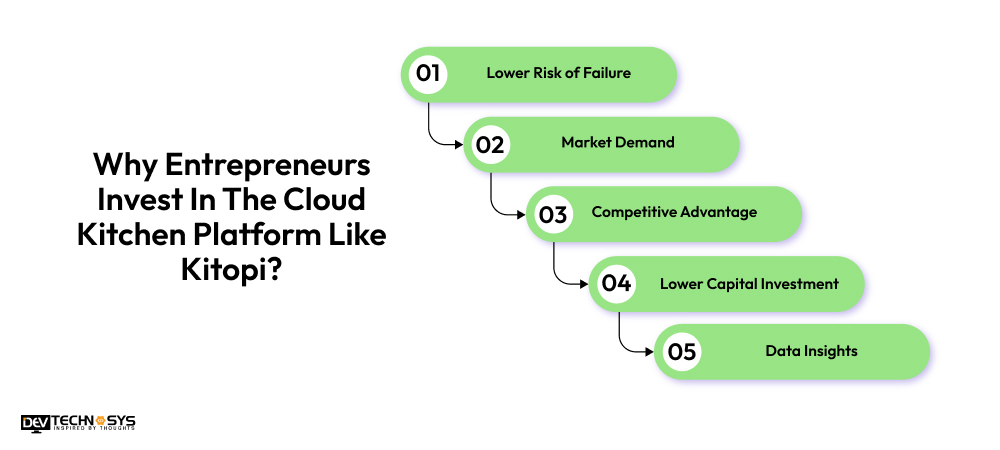
1. Lower Risk of Failure
In this first benefit, there is very little cost in starting a cloud kitchen and there are less chances of it failing because it provides flexible services. It allows businesses to integrate with various popular restaurants to provide them delivery services at cheaper prices to expand their sales and visibility.
2. Market Demand
Let’s move to the second benefit. Cloud kitchen platforms are in massive demand due to their functionality, flexibility, and user convenience. These allow users to order food and receive it at their doorsteps. Investing in food delivery app development can easily accelerate your business and reach new heights of success.
3. Competitive Advantage
Third, a cloud kitchen platform with unique or advanced functionalities can attract more users worldwide. The working process and services offered can generate a competitive advantage over other existing platforms in this market. So, building a cloud kitchen platform can easily reach a reputed position in the competitive market of the relevant industry.
4. Lower Capital Investment
Let’s move to the fourth benefit: The cloud kitchen platform requires little investment to start because it does not have a dining area; it just offers the option of food delivery or takeaway. Even a low-budget entrepreneur can start and expand his business easily with this platform. So, build a food ordering application can be a profit-generating opportunity for every business.
5. Data Insights
This last benefit allows the cloud kitchen platform to observe the customer’s habits, demographics, purchasing patterns, preferences, habits, and most used services. This collective data allows businesses to improve their products or service quality and identify new areas for improvement. Lastly, they offer users discounts and cashback benefits so they can use the platform more.

10 Must-Have Features To Build A Cloud Kitchen Platform Like Kitopi
Are you ready to develop an on-table restaurant ordering app? Then, firstly, you need to observe the Kitopi clones and their advanced features that can attract more users and easily make your cloud kitchen platform:
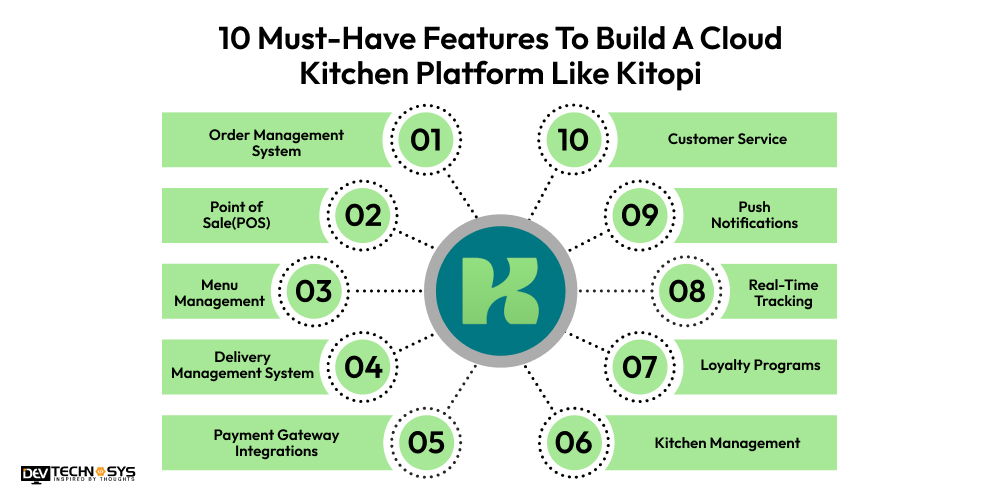
1. Order Management System
It is one of the most important features; it manages all the orders coming from third-party food delivery services like Uber Eats and Zomato.
2. Point of Sale(POS)
The POS integrates with payment gateway integrations and third-party apps to track and process orders easily. It also provides real-time order processing and multiple operations.
3. Menu Management
Menu Management allows cloud kitchen platforms to easily add, remove, edit, and modify food items and detailed descriptions of recipes.
4. Delivery Management System
The cloud kitchen delivery platform offers various delivery options, such as one-day and instant delivery. It can also manage delivery drivers and track their locations.
5. Payment Gateway Integrations
The cloud kitchen management software offers multiple payment options, such as credit or debit cards, net banking, bank transfers, and digital wallets.
6. Kitchen Management
It can track kitchen activities such as cooking timing, ingredient usage, and more. Contact a food donation app development company to integrate this feature into your platform.
7. Loyalty Programs
A Kitopi cloud kitchen platform allows users to earn cashback rewards from ordering daily foods and subscribing to premium plans.
8. Real-Time Tracking
A cloud kitchen software allows users to track their orders in real time with GPS integration and view the order status from preparation to delivery.
9. Push Notifications
It sends alert messages to users when an order is placed, prepared, sent out for delivery, or delivered.
10. Customer Service
The white label cloud kitchen delivery platform allows users to contact customer care if they face any issue regarding the delivery or other services.
The Cost to Build A Cloud Kitchen Platform Like Kitopi
The cost to create a cloud kitchen platform like Kitopi basically depends on crucial factors such as features, functions, size, complexity, infrastructure, and deployment platforms. It also includes additional expenses that can highly impact the overall development cost, such as development team, maintenance, security measurements, etc.
The restaurant mobile app development cost ranges from $8,000 to $25,000 and more. So, here we offer the cost table that explains the cost in-depth with the project’s complexity and approximate cost:
| Cloud Kitchen Platform Development | Estimated Cost | Time Frame |
| Simple Platform Development | $8000 – $13000 | 2 to 5 Months |
| Mid-Complex Platform Development | $13000 – $21000 | 5 to 8 Months |
| High-Complex Platform Development | $25000+ | 9+ Months |
Monetization Techniques To Make Money From A Cloud Kitchen Platform
You have built an advanced cloud kitchen platform. But now you have yet to learn how to make money from this app or whether you will get back whatever you have invested in it. We provide the top monetization techniques that can easily generate new revenue streams for business and increase the business valuation:
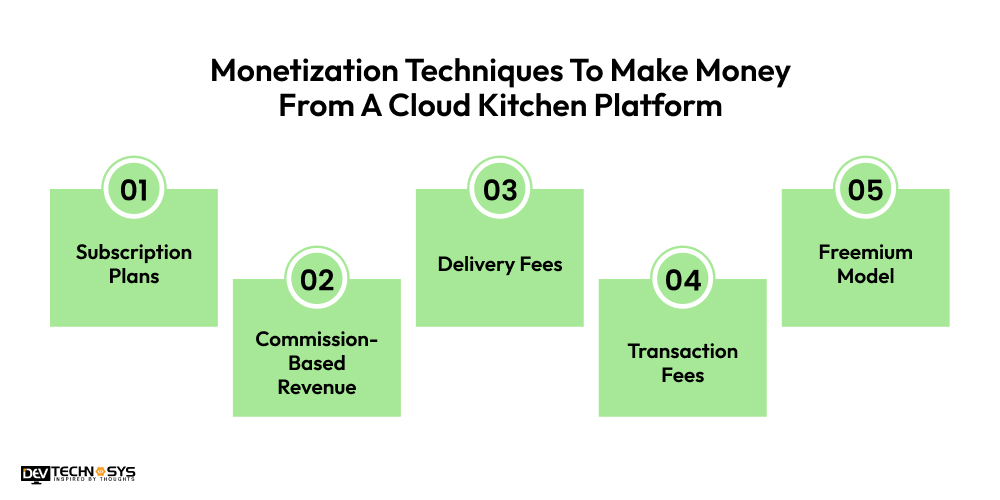
1. Subscription Plans
In this first monetization technique, the cloud kitchen platform provides various subscription plans, such as basic, premium, and enterprise. To access the full potential of the app or premium services, users have to purchase subscription plans, either yearly or monthly. So, these subscription plans can generate new revenue streams for businesses.
2. Commission-Based Revenue
Let’s move to the second monetization technique: charging a commission-based fee from partnership restaurants. For example, if restaurants sell their food items through your platform, then you have to charge 10% fees for every sale of their products. So, these commission-based fees can increase the overall company’s valuation.
3. Delivery Fees
In this third monetization technique, charge delivery fees for every food delivery order. Delivery fees can depend on various formats, such as delivery size, delivery time, location, and more. According to the custom software development company, these delivery fees can easily generate new business revenue streams and increase the user base.
4. Transaction Fees
Let’s come to the fourth stage. If a user purchases a subscription plan and additional fees, transaction fees will be included in the total cost at the checkout process. Charge transaction fees on every payment transaction made on your platform. So, these transaction fees can increase the business valuations and generate profit-making opportunities.
5. Freemium Model
In the last monetization technique, a cloud kitchen platform offers a basic version of the app with simple services or functions. The basic version allows users to access the app’s free features and limited services. If the user wants to access the premium features of the app, then they can purchase the additional features and subscription plans.

How Dev Technosys Will Help You?
In this blog, we talked about the cloud kitchen platform in detail and explained how it can be a turning point for businesses and accelerate your business. We hope that you have cleared all your doubts regarding the cloud kitchen software development. It offers various advanced operations that can benefit businesses and make it easy to perform these tasks.
So, in the end, investing in cloud kitchen software is extremely beneficial and will take your business forward.
Are you interested to build a cloud kitchen platform like Kitopi? Then, share your project requirements with Dev Technosys, a leading food delivery app development company, to deliver robust mobile apps and websites.
Frequently Asked Questions
Q1. How Much Does It Cost To Build A Cloud Kitchen Platform Like Kitopi?
The cloud kitchen kitopi platform development cost is ranges from $8,000 to $25,000. It depends on the various factors such as development team, deployment platforms, features, functions, size, and complexity.
Q2. How Long Does It Take To Build A Cloud Kitchen Platform Like Kitopi?
To build a cloud kitchen platform like Kitopi, basically it takes around 3 to 8 months for overall development. It depends on the project’s requirements, complexity, and developers working hours.
Q3. Why Do Businesses Invest In Cloud Kitchen Platform Development?
Businesses invest in cloud kitchen platforms because they provide a higher return on investment and lower risk of failure. So, here is the list of the benefits:
- Data Insights
- Brand Reputation
- Increased Sales
- Lower Investment
- Higher success rates
Q4. How To Build A Cloud Kitchen Platform?
There are various steps to build a cloud kitchen platform like Kitopi:
- Market Research
- Define Features
- Choose Tech Stacks
- Design UI/UX
- Development
- Testing and QA
- Publishing and Marketing
Q5. How Does Cloud Kitchen Work?
Here, we provide the robust working steps of the cloud kitchen platform:
- Restaurant onboarding and menu setup
- Order Placement
- Order Processing
- Packaging and quality check
- Delivery to users or customers