
















Key Takeaways:
-
- Generally, the cost to develop cold chain monitoring software may range from $6,000-$40,000. This depends on the type of software, including complexity, IoT integration, and monitoring requirements.
- Basic features of cold chain software are temperature tracking, shipment tracking, and receiving notifications. Advanced software applications offer predictive analytics and management of multiple locations.
- The main factor that increases the cold chain tracking software cost is the implementation of different IoT technologies, real-time data processing applications, cloud technology, and third-party integrations.
- Developing a Minimum Viable Product helps companies lower the initial cold chain software development cost.
- Another way to reduce the costs associated with maintenance and operations is to make sure that the architecture of the product is scalable and the technology is cloud-based.
It is highly important to maintain proper temperatures while transporting and storing goods in certain industries like pharmaceuticals, food and beverages, agriculture, and healthcare. Even small temperature changes that happen during the cold chain affect product quality and create financial losses and other problems.
Cold chain monitoring software solves these challenges by combining IoT sensors, GPS tracking, cloud technologies, and real-time analytics in one solution. Companies can monitor environmental conditions, track shipments, receive notifications, and store the necessary information about the cold chain transportation process in one place.
What is the price of developing this solution now? The cold chain monitoring software development cost vary from $6,000 to $40,000 depending on the system complexity, functions, connection of third-party hardware, and technologies used for building this system.
How Much Does Cold Chain Monitoring Software Development Cost?
Cold chain monitoring software development costs depend on the degree of functionality and extent of operations involved. Basic software for temperature monitoring does not require as much capital investment as the corporate system that operates several warehouses, integrates numerous devices, and carries out complex analysis.
Here is an estimated cost breakdown:
Software Type |
Estimated Development Cost |
Development Timeline |
| Basic Cold Chain Monitoring Software | $6,000–$12,000 | 2–3 months |
| Mid-Level Cold Chain Monitoring Software | $12,000–$25,000 | 3–4 months |
| Advanced Cold Chain Monitoring Software | $25,000–$40,000 | 4–5 months |
Basic Cold Chain Monitoring Software
A basic solution is appropriate for small enterprises and startups looking for basic shipment visibility and temperature tracking. It includes:
- Basic temperature and humidity monitoring
- Manual OR minimal device data collection.
- Shipment tracking.
- Alerting based on thresholds.
- Basic reporting and dashboard usage.
- Authentication and access management.
This solution provides companies with the opportunity to move away from manual monitoring by establishing a centralized digital monitoring system without having to purchase difficult infrastructure.
Mid-Level Cold Chain Monitoring Software
Mid-level software is designed specifically for logistics firms, food distributors, and pharmaceutical companies that handle numerous deliveries and storage locations. Its features may include the following:
- Real-time IoT sensor integration.
- GPS shipment tracking.
- Automated SMS, email, and push notifications.
- Historical temperature data.
- Warehouse and inventory control.
- Advanced business reporting and analytics.
- Third-party logistics integrations.
All these features will allow businesses to have a clearer picture of transportation and storage conditions and respond to temperature changes faster.
Advanced Cold Chain Monitoring Software
Sophisticated platforms are excellent for organizations that are managing extensive cold chain operations across several storage sites, distribution centers, and hauling networks.
Some of their major functions are:
- Multi-platform and multi-warehouse tracking.
- Sophisticated management of IoT devices.
- Predictive analytics and temperature forecasting.
- Automated reporting of compliance.
- Unusual activity detection with AI.
- Integration with ERP, WMS, and TMS systems.
- Controlled and secure access methods.
- Custom dashboards and operational analytics.
These innovations enable centralized management of sophisticated cold chain operations for enterprises aiming to achieve product security, operational excellence, and compliance with regulations.
Cold Chain Monitoring Software Development Cost Breakdown
Creating cold chain monitoring systems requires multiple steps such as planning cold chain monitoring system specifications, designing the interface, integrating IoT elements, and developing the back-end part of the solution until deployment. The development process includes all these stages in the budget analysis.
The following table provides an estimated breakdown:
Development Component |
Estimated Cost |
| Requirement Analysis and Planning | $500–$2,000 |
| UI/UX Design | $500–$2,500 |
| Frontend Development | $1,000–$4,000 |
| Backend Development | $1,500–$6,000 |
| IoT Sensor and Hardware Integration | $1,000–$5,000 |
| Real-Time Monitoring and Alerts | $500–$3,000 |
| Testing and Quality Assurance | $500–$2,500 |
| Deployment and Configuration | $500–$2,000 |
Let’s understand what each development stage involves.
Requirement Analysis and Planning
The first step is to identify the business needs and set the goals of the software. Developers learn the characteristics of monitored goods, including the required temperature limits, storage and transport conditions, and aspects of regulatory compliance. In this phase, IoT devices should be selected for the project, the method of data collection should be defined, and the system architecture should be planned.
UI/UX Design
The aim of the design team is to develop a convenient and user-friendly interface allowing users to control temperature readings, moisture levels, locations of shipments, and receive notifications. The dashboards should be easy to understand and clearly show the required information, especially when it comes to temperature deviations.
Frontend and Backend Development
The front-end part deals with the creation of dashboards, monitoring screens, reports, and control panels, whereas the back-end part takes care of all the business logic, user authentication, processing of sensor data, database management, and communication of different system components.
IoT Sensor and Hardware Integration
Integration of the Internet of Things links the temperature sensor, humidity sensor, GPS trackers, and other monitoring devices with the software to be used. Development of communication protocols such as MQTT, HTTP, and Bluetooth is carried out by developers while taking into account the connectivity and hardware needs.
Real-Time Monitoring and Alert System
Here, real-time data processing, along with automated alerts, is implemented. The system can detect some instances when the temperature or humidity indicators exceed the specified thresholds of temperature or humidity, and the relevant users are notified by means of email, SMS, or push notifications.
Testing and Deployment
Functional testing, performance testing, integration testing, and security testing of the software are conducted before the software is used. Developers also check the accuracy of sensors, reliability of data transmission, the delivery of alerts to the appropriate users, as well as the proper performance of the dashboard.
How Long Does It Take to Develop Cold Chain Monitoring Software?
The development timeline depends on software complexity, feature requirements, hardware integration, and testing needs.
Software Type |
Estimated Development Time |
| Basic Software | 2–3 Months |
| Mid-Level Software | 3–4 Months |
| Advanced Software | 4–5 Months |
The basic solution is a relatively fast process because of a lack of monitoring and reporting capabilities.
Medium-level platforms need additional implementation time for IoT development, automatic notifications, GPS tracking, and detailed dashboards.
Advanced solutions take longer since they are associated with the use of complex device management, predictive analytics, enterprise integration, security requirements, and thorough testing.
Furthermore, companies have to consider hardware acquisitions, device settings, and field testing, which may prolong the whole process.
Key Factors Affecting Cold Chain Monitoring Software Development Cost
Several technical and operational factors influence the final development budget. Understanding them helps businesses plan their investment more effectively.
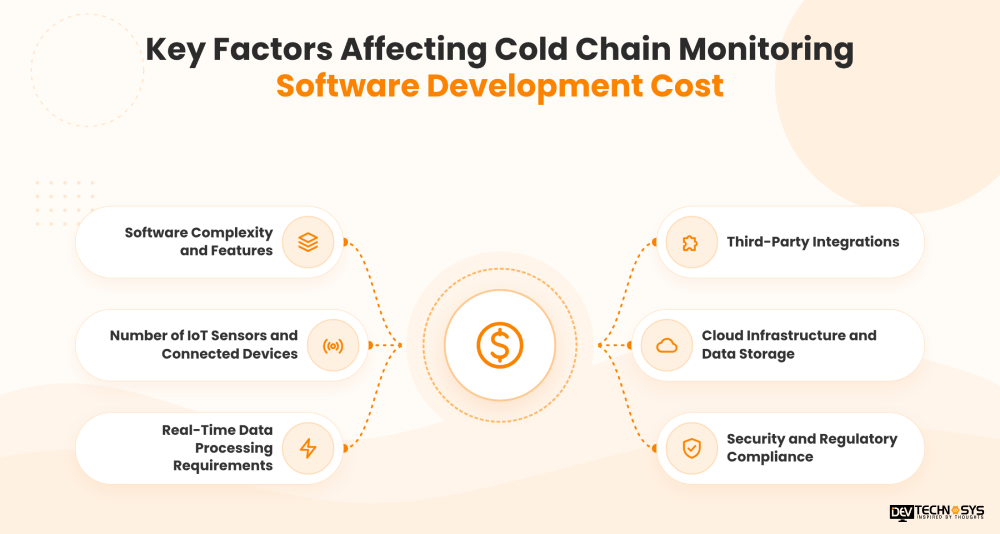
1. Software Complexity and Features
Development costs are directly influenced by the number of functionalities involved in the product development process. A basic temperature monitoring dashboard is much less complex to develop than a platform equipped with predictive analytics features, automated compliance reporting, and multi-warehouse management capabilities.
2. Number of IoT Sensors and Connected Devices
The number of devices that need to be integrated defines the complexity of the integration process, data processing and information management, and system architecture in general. For instance, monitoring 20 temperature sensors is quite different from keeping track of thousands of devices on various transport routes and warehouses.
3. Real-Time Data Processing Requirements
Companies that need continuous temperature updates, instant notifications, and real-time cargo monitoring have to invest in sophisticated data processing systems that can cope with the challenges of high-frequency data processing.
4. Third-Party Integrations
Integrating the system with ERP, WMS, TMS, GPS, and notification service providers increases development costs. Complexity and availability of third-party APIs affect the cost of integrations.
5. Cloud Infrastructure and Data Storage
The cold chain platform produces large quantities of sensor data, including temperature readings, humidity levels, location records, and compliance logs. The cloud provider, storage, data retention policies, and processing requirements will determine ongoing infrastructure costs.
6. Security and Regulatory Compliance
The software handling pharmaceutical and food supply chain information may need to adhere to certain industry and regional regulations. The availability of features such as encryption at rest, access control, audit logs, data retention, and reporting will increase development expenses.
Essential Features of Cold Chain Monitoring Software
Choosing the right features is important for building a functional cold chain monitoring platform without increasing development expenses unnecessarily.
Here are the essential features to consider:
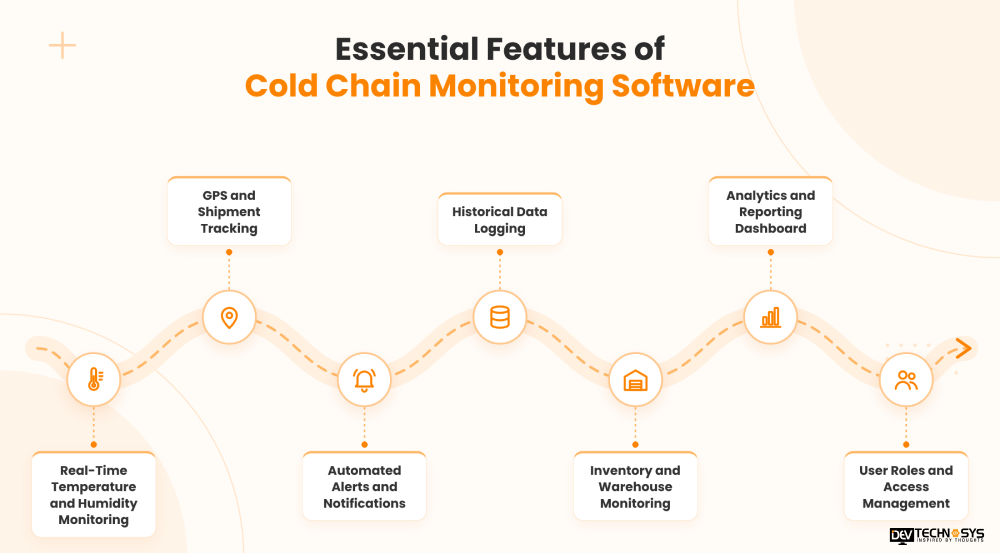
Real-Time Temperature and Humidity Monitoring
Using this function, it will be possible to gather temperature and humidity values taken from IoT sensors and display them in a single dashboard. With this feature, it will be possible to control the temperature in the warehouses, refrigerated trucks, and shipping containers to make sure that the products are kept safe.
GPS and Shipment Tracking
The use of GPS tracking data security helps in monitoring the location of the refrigerated trucks and shipments during transportation. This feature provides visibility into shipments, information about the route, and when the shipment can be expected to arrive, which improves logistics.
Automated Alerts and Notifications
Automated notifications inform users if the temperature, humidity, or other environmental parameters are beyond permissible levels. Notifications may be sent via SMS, email, or mobile push, making it easier for teams to take actions that prevent damage to products.
Historical Data Logging
The system keeps records of old sensor readings and environmental measurements for future use. The data is useful to businesses in the analysis of temperature fluctuations, the detection of frequent malfunctions, and documentation for audit purposes.
Inventory and Warehouse Monitoring
This feature helps in tracking the products stored in various warehouses as well as cold storage areas. The users can track storage conditions, quantities of inventory, type of products, and expiration dates from a single platform.
Analytics and Reporting Dashboard
The analytical tool converts raw sensor data into meaningful insights related to operations through reporting facilities like temperature changes, quality of deliveries, equipment capabilities, and recurrent anomalous environmental deviations.
User Roles and Access Management
With role-based access for admins, warehouse managers, drivers, and quality controllers for information access, this feature also helps maintain the confidentiality of sensitive operational data by limiting access to authorized individuals only.
Technology Stack for Cold Chain Monitoring Software Development
Selecting the right technology stack ensures that the software can process sensor data, support real-time monitoring, and scale as business operations grow.
Technology Layer |
Recommended Technologies |
| Frontend Development | React.js, Angular, Vue.js |
| Mobile App Development | Flutter, React Native |
| Backend Development | Node.js, Python, Java |
| Database | PostgreSQL, MongoDB, MySQL |
| IoT Connectivity | MQTT, HTTP, Bluetooth, LoRaWAN |
| Cloud Infrastructure | AWS, Microsoft Azure, Google Cloud |
| Data Analytics | Python, Power BI |
| APIs and Integrations | REST APIs, WebSockets |
Selecting the necessary technology depends on various criteria such as how many devices are connected, how data is processed, scalability expectations, and business processes.
An example of the technology to be applied is MQTT, which is suitable for seamless communication of IoT devices with cloud-based systems. As for WebSockets, they help with the real-time update of the dashboard’s information.
At the same time, services such as AWS IoT Core and Azure IoT help to monitor and manage connected devices, gather data from sensors, and build an effective, scalable monitoring environment.
How to Reduce Cold Chain Monitoring Software Development Costs
Businesses can control the cost to make cold chain monitoring software without compromising essential software functionality by following a few practical strategies.
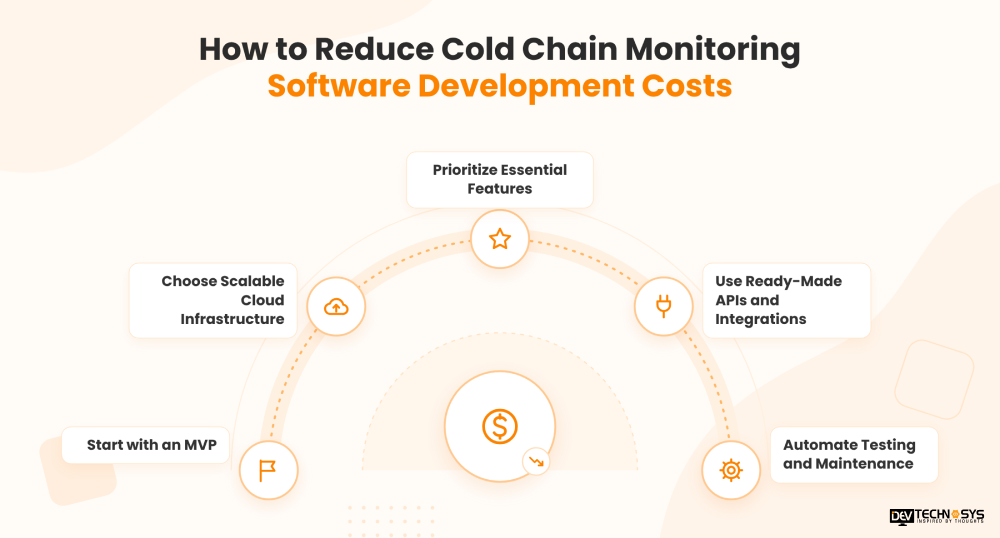
Start with an MVP
Rather than jumping straight in and creating a platform with lots of features, it is recommended to use a Minimum Viable Product (MVP). It is important to focus on necessary features: temperature monitoring, shipment tracking, automated alerts, basic reports, and so on. Other capabilities can be added later as business needs change.
Choose Scalable Cloud Infrastructure
Using cloud platforms lets companies adjust their computing and storage according to their current needs. Therefore, starting with a proper cloud configuration is a guarantee of avoiding any excess infrastructure costs while making plans for future growth.
Prioritize Essential Features
Determine which functionalities will specifically solve your operational problems while deferring the sophisticated capabilities you don’t need immediately. For example, you could take advantage of predictive analytics or AI-based forecasting only after gathering enough historical data.
Use Ready-Made APIs and Integrations
By utilizing available APIs for GPS tracking software development, notifications, mapping, and cloud connectivity, development time can be reduced. Any company must consider API costs, reliability, safety, and compatibility before starting to use any third-party services.
Automate Testing and Maintenance
Automated testing tools help identify issues in your software early and reduce the need for repetitive work. Regularly monitoring how your product operates and conducting preventative maintenance could also help eliminate costly technical issues after you release it.
Conclusion
Software to monitor cold chains is an asset to companies for maintaining product quality, gaining visibility on shipments, and reducing losses due to temperature changes. The ideal solution can be a simple temperature monitoring tool or a sophisticated IoT-enabled solution, which is determined by the needs and goals of the business.
Cold chain monitoring software development is estimated to cost somewhere between $6,000 and $40,000. The final cost is dependent on several factors, among which are the complexity of the solution, IoT implementation, cloud-based solution, security measures, and integration with third-party services.
Dev Technosys, one of the experienced cold chain monitoring software development companies, can help businesses develop safe and customized cold chain monitoring systems that meet both their current needs and future expansion plans.
Frequently Asked Questions
Find answers to the most common questions related to this article.
The cost to develop cold chain monitoring software lies approximately between $ 6,000 and $40,000. The actual price will depend on numerous issues, including the complexity of the software, integration of IoT sensors, the capability for real-time monitoring, integration with third-party services, and infrastructure needs.
The cost of software development depends on many important factors. They include the complexity of functionality, the number of IoT devices connected to the system, real-time processing requirements, cloud infrastructure, third-party services, security requirements, and compliance with legal regulations.
The costs of IoT integration range from $1,000 to $5,000. The final price depends on sensor compatibility, the number of connected devices, communication standards used, technical requirements, and complexity of data transfer.
If we speak about software development timeframes, basic applications will take around 2-3 months, mid-level platforms will be developed within 3-4 months, and complex enterprise solutions will require around 4-5 months to be created
Custom solutions are more flexible and allow for customization to meet specific business needs. Off-the-shelf options can be implemented faster but do not provide much room for alterations, scalability, or special functionality.