















Do you know people use apps on their phones every day?
Making mobile apps can be a fun way to earn money!
When you create an app that others like and use, you can get paid in different ways.
Some apps show ads, and you earn money every time someone watches them. Other apps let people buy things or special features inside the app, which is called “in-app purchases.”
You can also make apps for companies or sell your app idea to others.
Key takeaways:
-
-
- Creating useful or fun mobile apps can help you earn money through various monetization methods.
- Ads in apps generate income every time users view or click on them during app usage.
- In-app purchases let users buy extra features, boosting your earnings from engaged app users.
- Selling your app or working for companies helps you earn money without relying solely on your own app.
-
The best part?
You don’t need to be a grown-up or an expert right away. With practice, anyone can learn to build apps!
So, if you love phones and games, making your own app could be a great way to make money from mobile app development.
Quick Overview of the Mobile App Industry
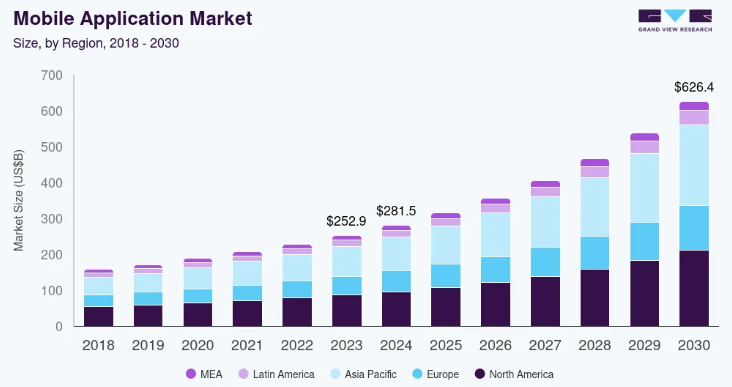
- In 2024, the world market for mobile apps was worth USD 89 billion. By 2030, it’s expected to be worth USD 626.39 billion.
- Within the mobile app market, the Asia-Pacific region led the way with over 0% of the revenue share in 2024.
- The market was led by Apple stores, which brought in more than8% of all world income in 2024.
- In 2025, the gaming application section of the market brought in more than 0% of all income.
- There will be 1% more mobile apps in the U.S. market from 2024 to 2030, according to a study.
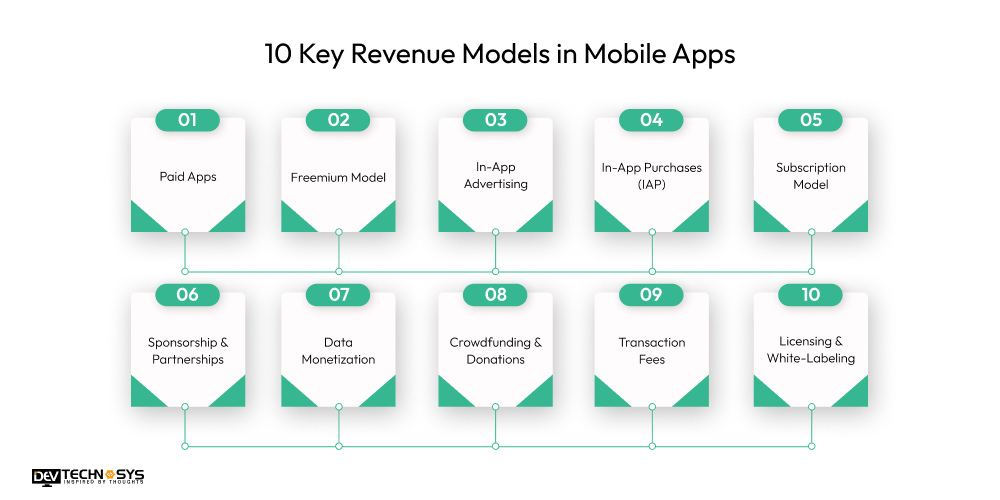
10 Key Revenue Models in Mobile Apps
Discover the top mobile app revenue models, paid apps, freemium, ads, subscriptions, in-app purchases, and more, to maximize your app’s earning potential and grow a successful business. So, here we offer ways to monetize mobile apps:
| Revenue Model | Pros | Cons | Best For |
| Paid Apps | Immediate income per download | Limits user acquisition | Premium or niche apps |
| Freemium | Large user base; scalable upselling | Requires ongoing feature development | Productivity, fitness, pro tools |
| In-App Advertising | Passive income; free for users | Can annoy users; impacts UX | Games, content-heavy apps |
| In-App Purchases (IAP) | High revenue potential | Needs compelling content | Games, customization apps |
| Subscription | Predictable, stable income | Requires consistent value; churn risk | Streaming, fitness, education |
| Sponsorship & Partnerships | High revenue; enhances brand credibility | Needs niche, sizable audience | Community and influencer apps |
| Data Monetization | Passive revenue | Privacy/legal concerns | Market research, analytics apps |
| Crowdfunding & Donations | Community-driven support | Unpredictable revenue | Indie, nonprofit, open-source apps |
| Transaction Fees | Scales with user transactions | Can deter users; complex payment systems | Marketplaces, booking, service apps |
| Licensing & White-Labeling | High B2B income; scalable | Requires support and flexible code | Enterprise and SaaS solutions |
1. Paid Apps
Paid applications necessitate consumers to remit a singular payment prior to downloading. This approach guarantees immediate revenue per download but can limit your user base because many prefer free apps.
It’s effective when your app offers unique, high-quality, or specialized services that users perceive as worth paying for upfront. Marketing and visibility on app stores become crucial to generate downloads.
Pros: Immediate income with each download; simple pricing.
Cons: High entry barrier; limits potential users.
Best for: Premium, specialized, or niche applications.
2. Freemium Model
Freemium apps offer basic features for free, enticing users to upgrade to paid versions for advanced functionalities. This model attracts a large audience by removing the initial payment barrier and monetizes through premium subscriptions or one-time upgrades. Success depends on providing enough value in free features to hook users while designing enticing premium options.
Pros: Large user acquisition; scalable revenue through upselling.
Cons: Continuous feature updates necessary; conversion rates can be low.
Best for: Productivity, fitness, and professional apps.
3. In-App Advertising
In-app advertising generates revenue by displaying ads within a free app, often using third-party ad networks like Google AdMob. This implementation is uncomplicated and is most effective for applications with substantial user bases, where regular involvement results in more ad impressions and clicks. Excessive or invasive advertisements can adversely affect user experience and make passive income with apps.
Pros: Generates steady revenue without charging users.
Cons: Can annoy users if overdone; reduces app enjoyment.
Best for: Games, news, and content-heavy apps.
4. In-App Purchases (IAP)
In-app purchases let users buy virtual goods, additional features, or content inside the app, commonly used in games for buying currency, skins, or levels. Hire mobile app developers to generate high revenue from a smaller group of engaged users willing to spend more. However, it requires compelling content and a carefully balanced economy to avoid frustrating users or creating “pay-to-win” scenarios.
Pros: High earning potential from engaged users.
Cons: Needs attractive content; potential user frustration.
Best for: Games and entertainment apps.
Want a chatbot demo or pricing? Fill the form and talk to our experts today.
Pick what you need below — you can select more than one — then tap Get detail to continue.
-
Chatbot demo dashboard
-
Cost to develop an app
-
Industry report
-
Case study
5. Subscription Model
Subscriptions charge users recurring fees for ongoing access to premium content, services, or features, providing predictable and steady revenue. This model suits apps offering continuously updated or fresh content, like streaming services, fitness programs, or educational tools.
To retain subscribers, apps must regularly deliver value and innovate. Poorly designed subscriptions risk high churn if users don’t perceive lasting benefits.
Pros: Recurring, stable income.
Cons: Requires ongoing value delivery; churn risk.
Best for: Streaming, fitness, education, and productivity apps.
6. Sponsorship & Partnerships
This strategy entails collaborating with companies to advertise their products or services within your application, including sponsored content, product placements, or exclusive promotions.
Sponsorships provide direct revenue without charging users but require a sizable and relevant user base to attract brands. Partnerships can enhance app credibility and easily make money from mobile app development.
Pros: Lucrative revenue; enhances app credibility.
Cons: Depends on relevant user base; may limit app freedom.
Best for: Niche communities and influencer-driven apps.
7. Data Monetization
Apps can monetize anonymized user data or analytics insights by selling them to third parties, market researchers, or advertisers. This approach provides a passive revenue stream but involves significant privacy and legal considerations. Adherence to data protection regulations such as GDPR and clear user permission is essential to mitigate reputational and legal concerns.
Pros: Passive income from analytics.
Cons: Privacy issues; regulatory challenges.
Best for: Market research and behavioral analytics apps.

8. Crowdfunding & Donations
Hire dedicated developers to raise funds through crowdfunding platforms or voluntary donations from their user community. This approach works well for independent developers, open-source projects, or nonprofit apps relying on dedicated user support. It avoids forcing monetization through ads or paywalls but provides an unpredictable and inconsistent income stream.
Pros: Engages loyal users; no intrusive ads.
Cons: Income is unpredictable and irregular.
Best for: Indie projects and nonprofit apps.
9. Transaction Fees
Applications that enable sales or reservations may impose a commission or fee for each transaction. This model correlates income with application utilization and expands in accordance with user base growth.
It requires smooth payment processing and transparent fee policies, as high fees might discourage users. It is popular in marketplaces, booking platforms, or service apps where users conduct transactions regularly.
Pros: Revenue scales with app activity.
Cons: Fees may deter users; complex integration.
Best for: Marketplaces, booking, and e-commerce apps.
10. Licensing & White-Labeling
Licensing your app’s code or technology to other businesses allows them to rebrand or customize it for their needs. White label mobile app solutions generate substantial upfront B2B revenue and can lead to long-term partnerships. However, it requires your app to be flexible and well-documented, with ongoing client support and customization services.
Pros: High upfront payments; steady B2B income.
Cons: Demands customization and support.
Best for: Enterprise and customizable apps.
How to Choose the Right Monetization Strategy?
Choosing the right mobile app monetization strategies depends on your app type, target audience, value proposition, and growth goals. Align your mobile app development agency revenue model with user behavior to maximize engagement and profitability. So,let’s explore how to make money from mobile app development:
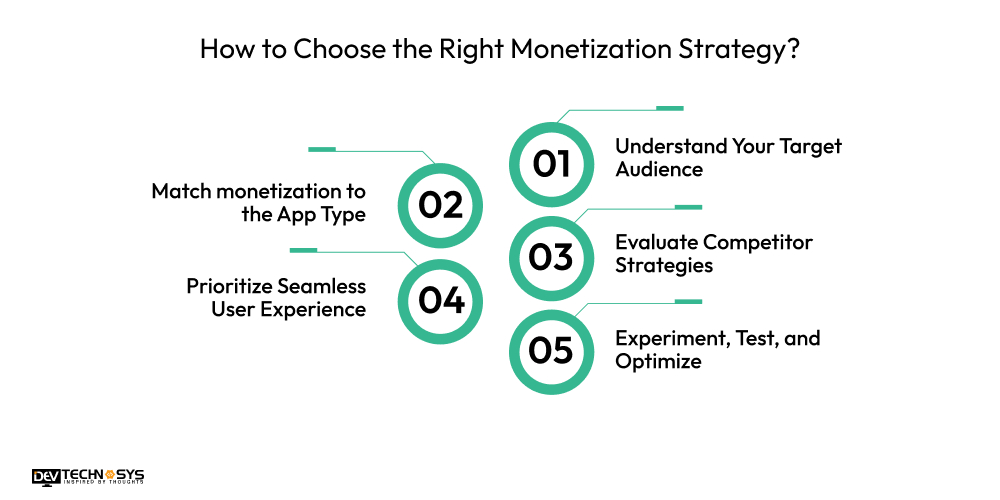
1. Understand Your Target Audience
Determine who your users are, their requirements, spending patterns, and how they engage with other apps. A thorough study of user behavior allows you to select a model that offers value without driving them away, assuring satisfaction and long-term income.
2. Match monetization to the App Type
Revenue techniques vary depending on the app category. Games, for example, benefit from in-app purchases, whereas subscription models are better suited to productivity or health applications. Aligning your monetization strategy with your app’s goal provides a better user experience and long-term profitability.
3. Evaluate Competitor Strategies
Investigate how the biggest rivals in your niche monetise their apps. Determine which models are effective and which encounter user pushback. This understanding allows you to avoid typical mistakes and implement tried-and-true approaches while also identifying spaces where you may stand out.
4. Prioritize Seamless User Experience
Monetization should never disturb the user experience. Avoid intrusive advertisements and paywalls that annoy users. Instead, include monetization elements organically into the app’s flow to improve usability and value. A seamless experience leads to improved engagement, positive ratings, and user retention.
5. Experiment, Test, and Optimize
Begin with a well-researched monetization strategy, but be adaptable. Conduct A/B testing, monitor performance data, and solicit user feedback. Continuous improvement based on real-world data enables you to maximize income while maintaining customer pleasure and loyalty.
Step-by-Step Guide to Making Money from Your App
Learn how to turn your mobile app into a profitable business with this step-by-step guide covering planning, monetization, marketing, optimization, and long-term growth strategies. So, here we provide the ways of earn money with app development:
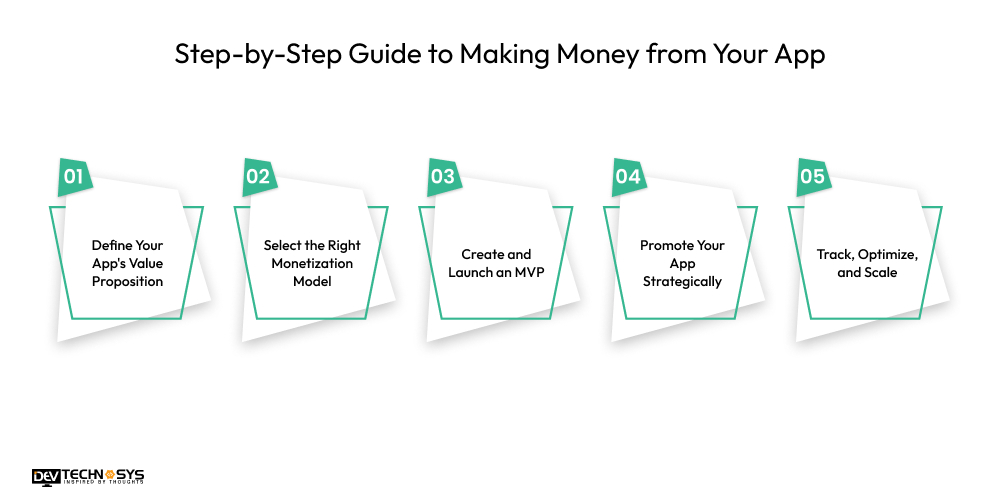
1. Define Your App’s Value Proposition
Explicitly delineate the principal issue that your program addresses and the distinctive value it offers. An compelling value proposition attracts users and establishes the foundation for successful monetization. To establish great market appeal, focus on usability, performance, and features that set your app apart from the competition.
2. Select the Right Monetization Model
Choose a mobile app revenue generation model that is appropriate for your app type and user behavior. Evaluate options including freemium models, subscription services, in-app purchases, and advertising.
The optimal approach strikes a compromise between user experience and revenue, boosting engagement and conversions while avoiding alienating your audience with invasive or poorly timed monetization efforts.

3. Create and Launch an MVP
Create a Minimum Viable Product (MVP) to validate your app concept with real consumers. Concentrate on the key functionality and basic monetization aspects.
Custom app development for businesses allows you to gather feedback, assess demand, and tweak your product and revenue plan before expanding up and investing substantially in growth.
4. Promote Your App Strategically
Engage your target audience through digital marketing avenues like social media, search engine optimization, influencer partnerships, and app store optimization.
Highlight your app’s distinct advantages and worth. Early traction is critical for commercial success; therefore, prioritize increasing awareness and downloads from the outset.
5. Track, Optimize, and Scale
Track performance measures, including retention, user engagement, and conversion rates. Use analytics tools to determine what works and where adjustments are required.
Hire Android app developers to continually refine your application and monetization approach based on data. Once verified, expand through marketing, upgrades, and strategic alliances.
Popular Mobile App Categories for Monetization
Explore the most profitable app ideas for monetization, including gaming, health, education, e-commerce, and productivity, to identify the best niche for your app’s success. There are various categories that provide ways to make money from mobile app development:
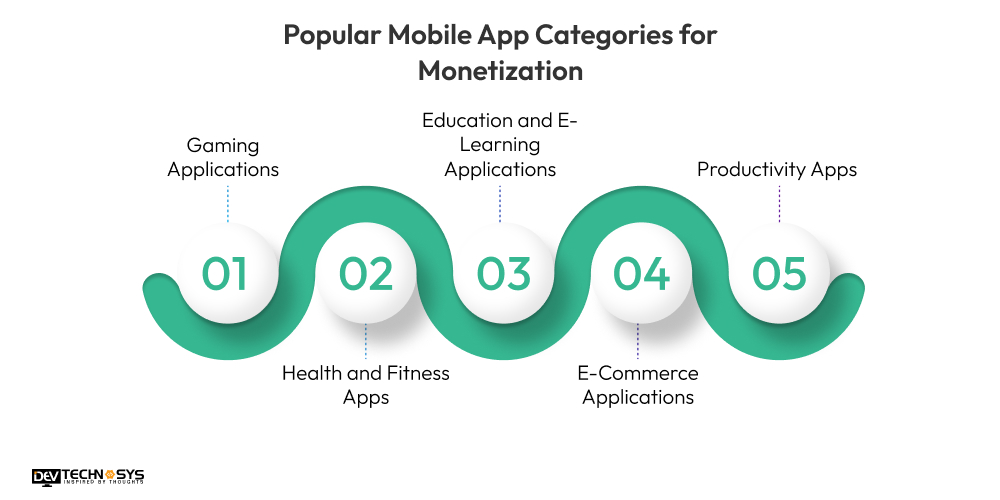
1. Gaming Applications
In-app purchases, advertisements, and subscriptions are the most common revenue methods for mobile games. Their high engagement and repeat usage generate significant income prospects, making gaming the most profitable area for developers targeting both casual and serious players.
2. Health and Fitness Apps
Subscription and freemium business models work well for health and fitness apps. With a rising emphasis on health, these apps include exercise routines, nutrition monitoring, and coaching, drawing loyal customers who are prepared to pay for continuous support and tailored experiences.
3. Education and E-Learning Applications
Educational applications generate revenue through subscriptions and in-app sales of courses or materials. Rising need for remote learning and skill development drives growth, making this category excellent for providing rich material and high-quality learning tools.
4. E-Commerce Applications
E-commerce applications make money through transaction fees and advertising. They provide ease for shopping and service appointments, with repeat customers producing steady sales and commissions, particularly in specialist markets or local business platforms.
5. Productivity Apps
Productivity applications frequently employ freemium and subscription models to provide critical features such as task management and collaboration. They appeal to professionals and enterprises looking for increased productivity, with users prepared to pay for more features and integrations.
Conclusion
In conclusion, if you want to make money from mobile app development, you need to pick the right monetization approach that fits the goal and audience of your app.
Whether you make money through ads, subscriptions, or in-app sales, your success relies on how well your users feel and how often you improve your app.
Working with a skilled mobile app development company can help you sort through these options, make great apps, and set up smart ways to make money so your app can keep growing over time.
Frequently Asked Questions
1. How to Generate Revenue From Apps?
Monetize via paid downloads, subscriptions, in-app purchases, ads, sponsorships, or selling anonymized user data for revenue.
2. How Do Subscription Models Work?
Users pay recurring fees for ongoing access to premium content or features, ensuring steady and predictable app revenue.
3. What Is The Duration Required To Begin Generating Revenue From An Application?
Earnings depend on app type, marketing, and user base growth; some monetize immediately, others may take months to scale.
4. Is It Possible To Monetize An Application Without Imposing Charges On Users?
Yes, by using in-app advertising, sponsorships, donations, or data monetization while keeping the app free for users.