



















Quick Summary:
-
- The university management system development cost depends on its features, complexity, and integration/hitch requirements.
- Basic modules comprise admission management and student information management, tracking student attendance, managing examination processes, processing tuition payments, and managing faculty/staff members.
- Using advanced features, such as AI and integrating LMS systems into the software and structuring automatic workflows, leads to increased costs.
- Choosing the right partner and technology at the very beginning helps to control the budget and provide security and scalability in the future.
- Creating a basic version of the software and developing other versions of the system at later stages is a way to manage the budget correctly.
Universities operate with thousands of students and faculty members, academic records, assessment processes, exams, admission procedures, and administrative activities. Efficiently managing academic processes manually or through disparate systems can lead to inefficiencies, increased workloads, and complexity in terms of knowledge and data security.
With more educational institutions choosing digital transformation, investing in tailored university management software is gaining importance. Nevertheless, knowing the cost to develop university management software before getting down to the process is vital.
The total cost includes the number of modules, complexity, and customization needs of the software, third-party integrations, and technology stack. This blog discusses the university management software development cost, the basic functionality, technology requirements, and possible budget optimization means for universities in 2026.
How Much Does It Cost to Build University Management Software?
The cost of university management software development generally ranges from $5,000 to $40,000+, depending on the institution’s requirements and software complexity.
Here is an estimated cost breakdown based on different development levels:
| Software Type | Estimated Development Cost ($) | Key Capabilities |
| Basic University Management Software | 5,000–10,000 | Student records, admissions, basic attendance |
| Mid-Level University Management Software | 10,000–20,000 | Examination, course, faculty, and fee management |
| Advanced University Management Software | 20,000–40,000+ | ERP integrations, analytics, automation, and advanced reporting |
Basic University Management System
This type of software is appropriate for small colleges or institutions looking for basic tools for academic operations. Basic systems typically allow for student registration, profile management, basic attendance, and academic record keeping.
Mid-Range University Management Software
This software is created for organizations that need sophisticated functionalities. It usually incorporates an exam management system, scheduling of courses and faculty, fee payment, and notifications.
Advanced University Management Software
This software is best for large universities that operate different departments and campuses and handle thousands of users. Features can include analytics, LMS integration, ERP compatibility, automated processes, and specific reports.
These figures are indicative and can vary according to the location of the online exam portal development team, the project you need, the integrations needed, and the infrastructure.
University Management Software Development Cost Breakdown
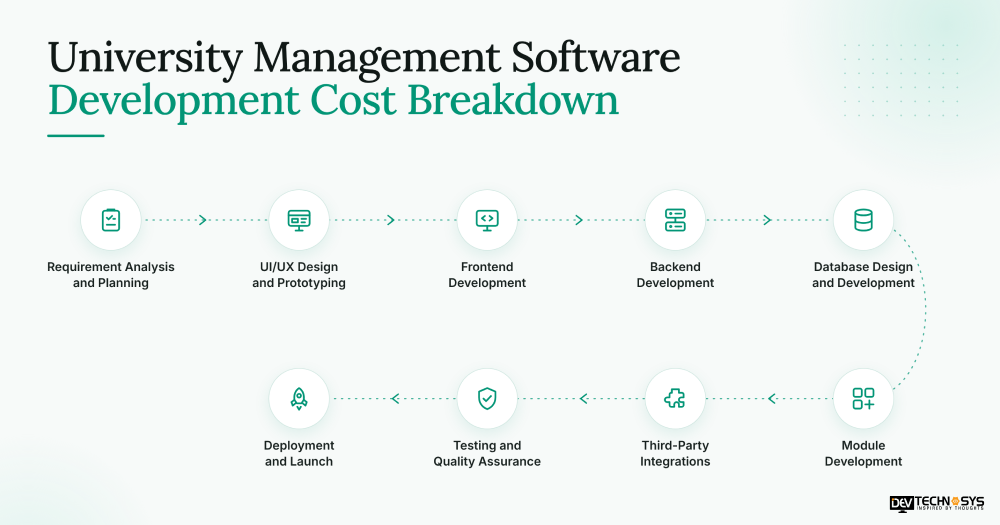
Developing university management software involves multiple stages, from requirement analysis to final deployment. Each stage contributes to the overall project budget.
The following table highlights the estimated expenses associated with different development activities.
| Development Stage | Estimated Cost |
| Requirement Analysis and Planning | 500–1,000 |
| UI/UX Design and Prototyping | 500–1,500 |
| Frontend Development | 1,000–3,000 |
| Backend Development | 1,500–4,000 |
| Database Design and Development | 500–1,500 |
| Module Development | 1,500–8,000 |
| Third-Party Integrations | 500–2,500 |
| Testing and Quality Assurance | 500–1,500 |
| Deployment and Launch | 300–1,000 |
Let’s understand the major development stages:
- Requirement Analysis and Planning: The process begins with developers collaborating with university stakeholders in order to establish operational requirements, determine necessary modules, define user roles, and set project goals. The outcome of this stage is a development path and a way to avoid incurring unnecessary costs.
- UI/UX Design and Prototyping: The next step is to design wireframes, prototypes, dashboards, and layouts of the application. The purpose at this stage is to create a user-friendly interface for students, faculty, and administrators.
- Frontend Development: Then, front-end developers create how users will see the application, including admission forms, student dashboards, attendance screens, and administration sections. The developers make sure that everything is responsive and works correctly on different devices.
- Backend Development: The next step is to develop server-side functionality, business logic, authentication, role-based access, and academic processes. This stage of development makes it possible for different modules to communicate with each other effectively and process university information adequately.
- Database Design and Development: To securely manage the information related to students, professors, attendance, various examinations, and finances, designers create databases. The implementation of correct database design allows quick access to data and proper organization of data.
- Module Development: Different modules such as admission management, examination management, fee payment, and attendance monitoring are created depending on the needs of educational institutions. The functionality of the modules affects the length of the process and the budget of the procedure.
- Third-Party Integrations: Software developers use Application Programming Interfaces (APIs) to connect the software with external services like payment systems, LMS, ERP, and communication services. The integrations allow the software to be more functional and to provide the exchange of information between different systems.
- Testing and Quality Assurance: Testing teams test the performance of the software and its ability to work in different environments and to be safe. Processes are carried out in order to find bugs, solve technical problems, or to ensure the stable operation of the system.
- Deployment and Launch: At the end, software is configured and implemented in the chosen hosting environment. Software developers carry out the final tests, configure the server, carry out the migration of data, and, finally, make the software ready for its implementation in educational institutions.
Factors Influencing University Management Software Development Costs
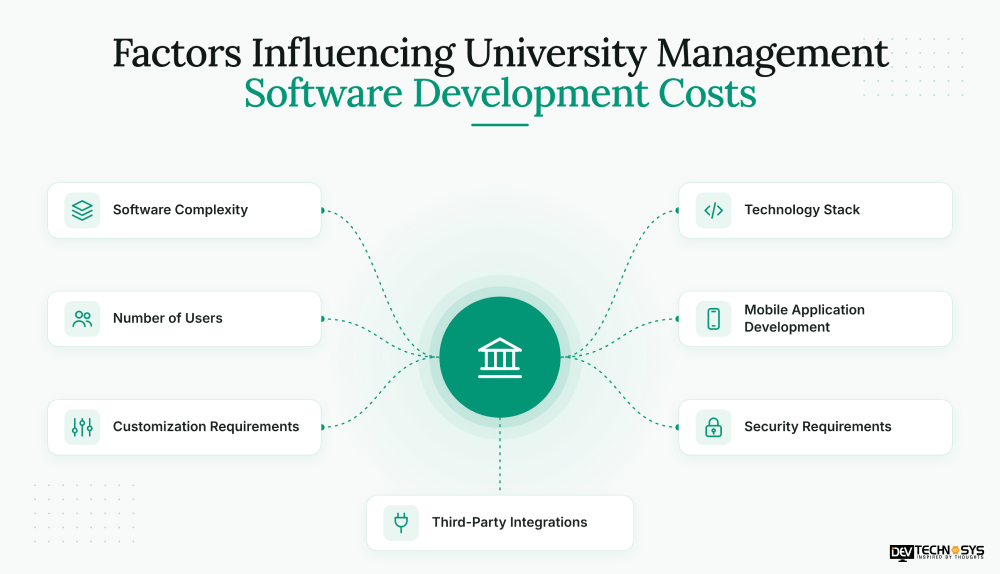
The total expense used to develop university management software is influenced by a number of technical and operational factors. Awareness of these factors allows universities to create a more precise budget for development.
Software Complexity
The education crm software development cost is directly related to the complexity of the software. Basic systems with minimum functionality require less investment than highly sophisticated software that includes automation, analytics, and multi-campus management.
Number of Users
The number of people who use the platform in real time is important since these numbers determine infrastructure expenses. To be able to provide service to many thousands of simultaneous users, the development team should create a well-functioning architecture using scalable servers and optimized databases.
Customization Requirements
Each university has its own specific workflows, processes, and reporting requirements. Therefore, creating the dashboards, modules, and functions needed is connected with additional expenses.
Third-Party Integrations
To incorporate external systems such as ERP applications, LMS technologies, payment processing solutions, and communication methods, one needs to create and test APIs. The quantity and complexity of integrations can have an impact on the time of development and expenses involved in it.

Security Requirements
The custom software used by the educational institution is capable of managing highly sensitive personal information of both students and employees, as well as financial data. The use of encryption, reliable authentication, strict access rights, and ongoing security tests makes increasing the costs of development worthwhile.
Mobile Application Development
The development of mobile applications for Android and iOS, in addition to the web platform, implies extra costs. The amount spent on it depends on the development method used, the functionality of the application, compatibility with devices, and requirements for synchronization.
Technology Stack
The choice of the programming language, framework, database, and cloud services has a big influence on the expenses of the project. In contrast, choosing the right technologies helps optimize the performance of the system and make technological maintenance easier and cheaper.
How to Reduce University Management Software Development Costs
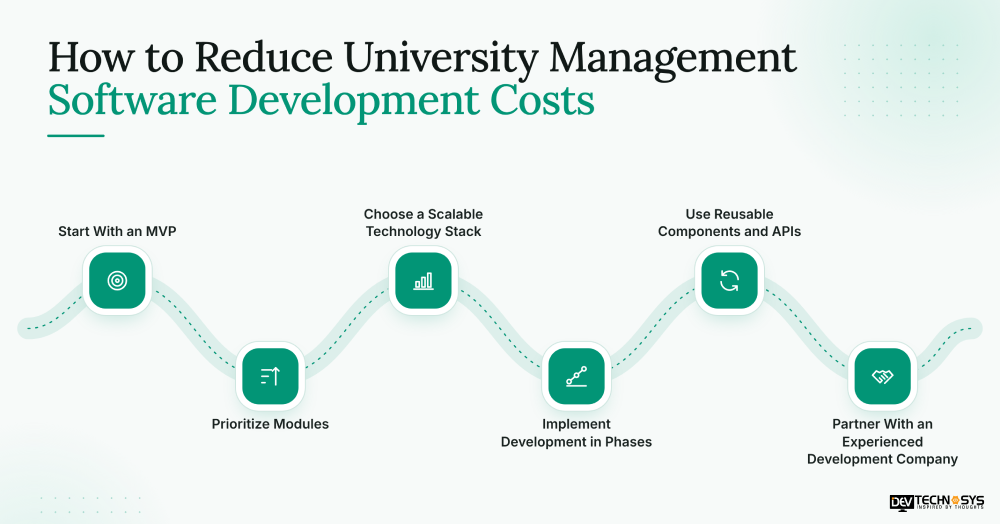
Universities can optimize their development budgets by following strategic approaches that reduce unnecessary expenses while maintaining software quality, performance, and scalability.
Start With an MVP
Start with a Minimum Viable Product (MVP), which is equipped with basic modules like student management, admissions, and attendance. Incorporate new modules over time according to the user requirements of the institution.
Prioritize Modules
Make a list of the most needed features for the daily operations of the university and work on developing necessary modules first. Delay work on features that are not important to save money.
Choose a Scalable Technology Stack
Choose technology that enables system scaling and expansion, along with the possibility of creating new integrations with the existing system.
Implement Development in Phases
Break the project into minor development stages, concentrating on specific modules at each of the stages. This method will allow expenses to be spread out over time, relieving the concern about testing and enabling universities to see whether certain features work as promised before investing in the project.
Use Reusable Components and APIs
Use existing frameworks and reusable UI components along with third-party APIs instead of creating every part of the application from scratch. This contributes to faster development, reduces redundancy, and helps keep costs down throughout the project as a whole.
Partner With an Experienced Development Company
Partner with a software development firm that provides university management software development services. Such a partner will be able to suggest appropriate technologies needed for your project, define the necessary scope of work, and avoid unnecessary expenses.
Conclusion
University management software allows colleges and universities to enhance educational procedures, automate administrative tasks, and increase access to information. The cost to develop university management software depends on the number of modules, complexity of the software, presence of integrations, technology stack, and customization level.
Before starting the development process, universities must define their operational needs, identify the essential modules they need, and prepare for future needs connected with scalability, security, and support.
In order to increase the efficiency of the development process, it is advisable to cooperate with university management software development companies. For example, Dev Technosys is able to help institutions of higher learning with the help of modern technologies, the use of a high-level solution architecture, and user-oriented functionality.
Frequently Asked Questions
Find answers to the most common questions related to this article.
The price to build university management software ranges from $5,000 to $40,000 or more. The total cost depends on the complexity of the software, the modules needed, and the skills of the development team.
Purchasing premade software generally means lower initial costs. However, custom software provides more flexibility and control. One choice may be better than the other based on institution specifics, customization requirements, licensing fees, and future maintenance costs.
Essential modules include student information management, admissions, course management, faculty management, attendance, examination and results, fee management, library management, and reporting and analytics.
Additional costs can be incurred in the form of cloud hosting, software maintenance, security audits, subscriptions from third parties, technical support, data backup, and software upgrades in the future. All the costs of the above-mentioned items should be taken into account when estimating the budget.