


















In this fast-forwarding world, everyone wants faster delivery to save time and utilize time to other complex work. Last-minute deliveries exist in every industry, such as food, retail, e-commerce, healthcare, furniture, and others.
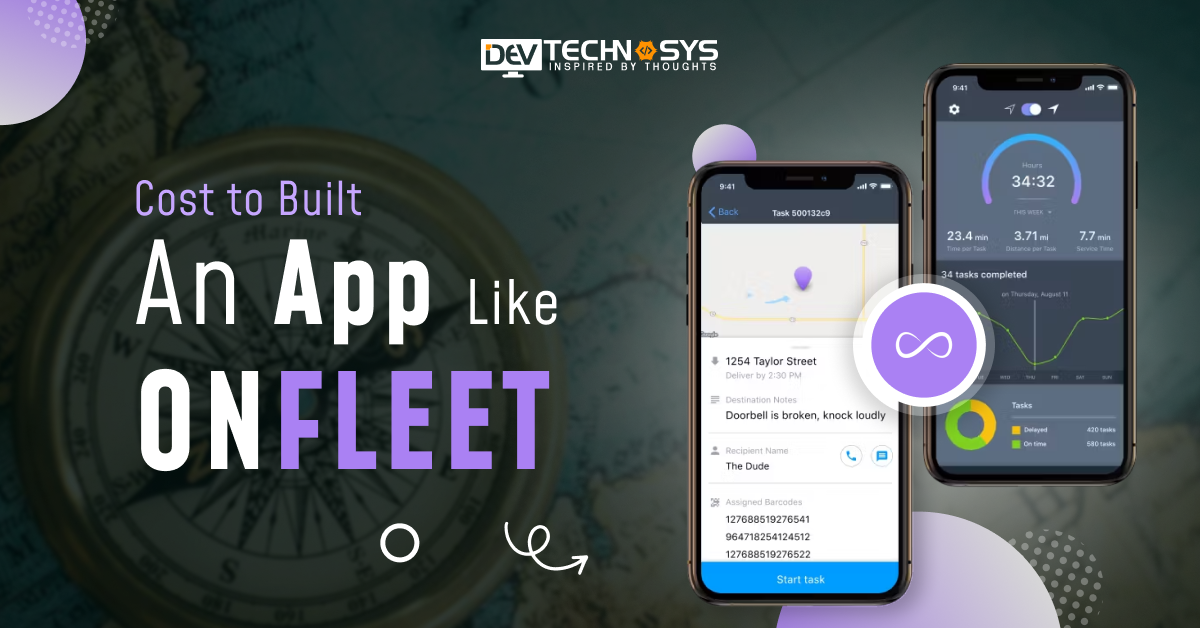
Where an app like OnFleet. It is one of the most popular delivery applications that helps businesses to manage their last-mile delivery operations and fulfill the user’s requirements and demands.
Most businesses or companies also rely on cost to build an app like OnFleet to handle their last-minute delivery tasks, but they do not have any idea about the cost.
Do not need to change the webpage; here, we provide detailed information about the development cost and what factors can impact the cost.
Let’s start to explore!
What Is OnFleet?
OnFleet is one of the most used online platforms; it offers last-minute delivery services to increase the user’s flexibility and convenience. It provides many advanced features such as schedule orders, real-time tracking, proof of delivery, route optimization, and more.
This platform provides services for many industries, such as retail, e-commerce, healthcare, food, and furniture. To build a similar app like Onfleet, you can contact the leading Android app development company to receive high-quality development solutions.
- Driver Management
- Analytics & Reporting
- Real-Time Communication
- Contactless signatures
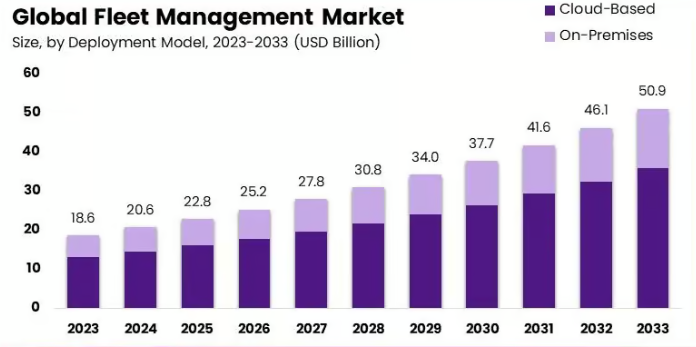
Market Analysis of Fleet Management Apps
- According to the global report, the fleet management apps were valued at around $23.69 billion in 2023. It is projected to grow around $116.56 billion by the end of 2032.
- As per the recent survey, fleet management applications will grow at a compound annual growth rate of 8% during the forecast period of 2024 to 2032.
- According to a study, cloud-based solutions are involved in fleet management platforms and grow automated operations.
- In the enterprise fleet management mobile apps, there are various key technologies such as 5G, IoT, Big Data, and Blockchain.
- As per the global market, North America holds the highest revenue or share of fleet management applications.
Top 10 Fleet Management Apps Like OnFleet
In this growing world, there are many advanced vehicle fleet management apps that help businesses manage their last-minute services. So, here we provide the best fleet management apps that are already gaining huge success:
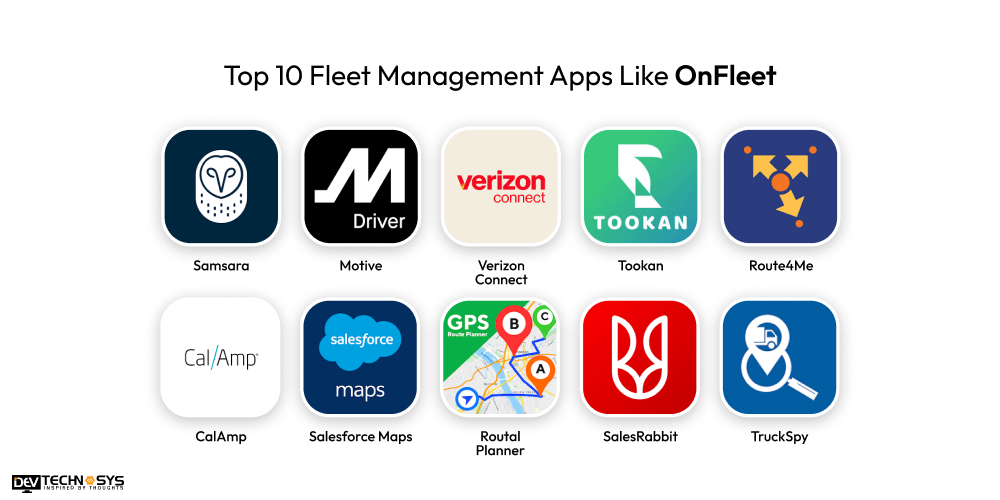
| Applications | Download Users | Stores Ratings | Apps Launched On | Platform Accessibility |
| Samsara | 1M+ | 4.6 | 2011 | Android, iOS, Web |
| Motive | 100K+ | 4.5 | 2013 | Android, iOS, Web |
| Verizon Connect | 500K+ | 4.2 | 2008 | Android, iOS, Web |
| Tookan | 1M+ | 4.5 | 2016 | Android, iOS, Web |
| Route4Me | 1M+ | 4.7 | 2009 | Android, iOS, Web |
| CalAmp | 500K+ | 4.3 | 2010 | Android, iOS, Web |
| Salesforce Maps | 100K+ | 4.2 | 2015 | Android, iOS, Web |
| Routal Planner | 100K+ | 4.6 | 2015 | Android, iOS, Web |
| SalesRabbit | 100K+ | 4.4 | 2013 | Android, iOS, Web |
| TruckSpy | 100K+ | 4.3 | 2015 | Android, iOS, Web |
Why do Businesses Invest In Fleet Management App Development?
Let’s start with the benefits, that is why businesses are ready to invest in commercial fleet management apps. As we show in the above sections, these fleet apps are growing and increasing their demands day by day.
Investing in vehicle fleet management software development is the most profit-making opportunity for businesses. Let’s take a look at the various benefits:
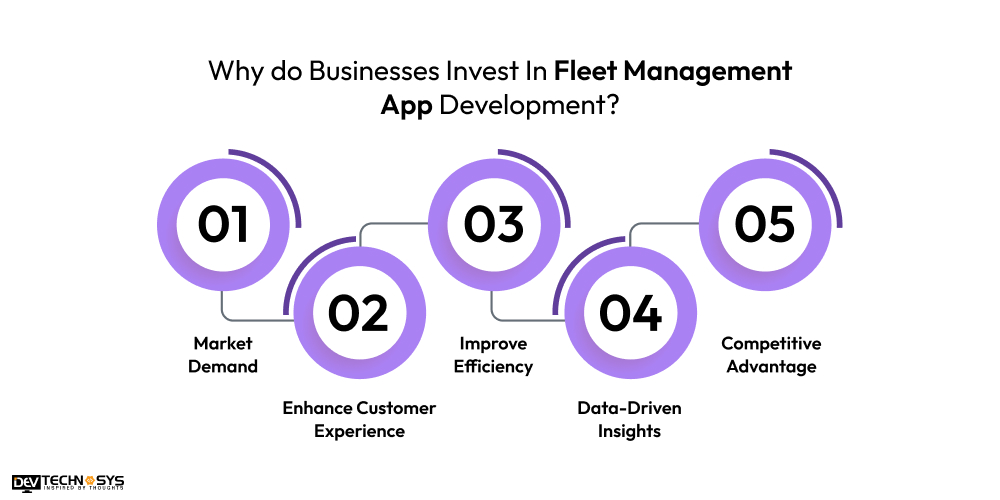
1. Market Demand
Begin the first benefit: over the last few years, the demand for fleet management applications has increased, and that’s why market demand has also increased.
Bonus Read: Build Fleet Scheduling Software
It includes various unique features that can enhance the business’s experience. So, at last, with the increasing market demands, businesses can easily generate higher revenue and profits.
2. Enhance Customer Experience
Let’s move to the second benefit: with the help of advanced features such as real-time tracking, personalized recommendations, and schedule delivery, users can enhance their experience. These functionalities make it easy for the users to track their delivery in real-time and receive the updates as push notifications.
3. Improve Efficiency
Connecting to the third benefit, these fleet management applications help businesses find the best route for faster delivery, and that can also reduce the overall fuel cost.
OnFleet alternatives include various services that improve efficiency, such as optimizing routes, user registrations, performance optimization, and more. So, it enables businesses to make more profits from these applications.
4. Data-Driven Insights
Entering the second last benefit, data-driven is one of the most used benefits by businesses to observe the user’s valuable data. It can analyze the user’s habits, behaviors, purchasing patterns, demographics, preferences, and most used services. This can allow businesses to identify new areas for improvement.
5. Competitive Advantage
Let’s finish the benefits: if you develop an app like Autosist with advanced functionalities, it can give you a competitive advantage in today’s digital market.
Onfleet alternatives have a user-friendly interface that allows users to interact easily with all its features and services. So, building an advanced enterprise fleet management app can easily give you a competitive advantage.
You can reach out anytime; we are available 24/7. Our team provides a quick response.

How To Develop a Fleet Management App Like OnFleet?
It’s the right time to start the robust app development process that can make it easy for businesses to understand each step in depth. With the help of these steps, businesses can easily build successful fleet management and integrate the unique functionalities as well. So, here is the fleet management mobile app development process:
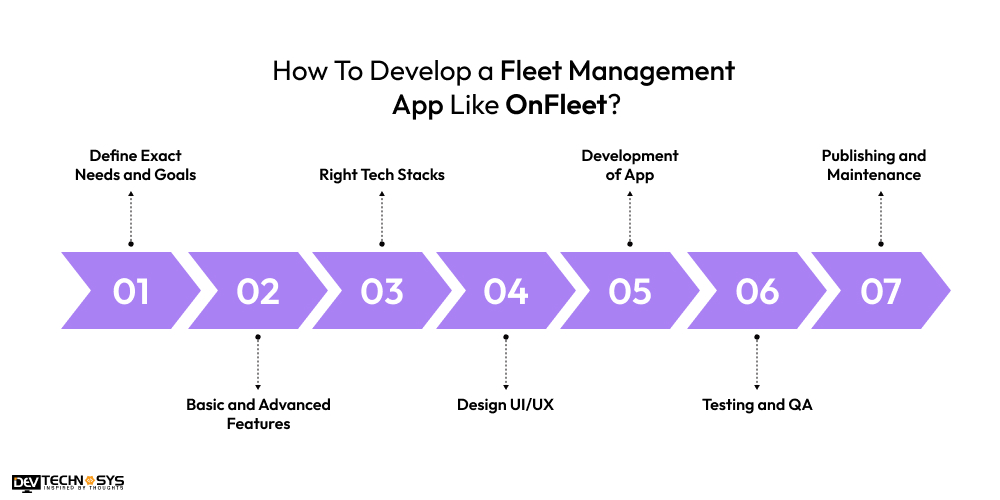
1. Define Exact Needs and Goals
Begin the first step of the development process, observe the demand for fleet management applications, and analyze the success and growth rate of existing apps. After that, you have to identify the exact requirements and needs of the project and define the future goals as well.
| What are your app’s basic or core requirements? |
| Define your app’s future goals. |
| Which fleet management apps are more successful in this competitive market? |
2. Basic and Advanced Features
Connecting to the second process of development, identify the basic and advanced features that you must have to integrate into your fleet management app. You can also hire dedicated developers to install the advanced or basic features and functions and identify the ideal users of your app.
| What are your app’s basic features and functions? |
| Observe the existing OnFleet clone apps for the best features. |
| Make an organized sheet of features and functions to reduce data redundancy. |
3. Right Tech Stacks
Moving to the third process of app development, tech stacks play a very crucial role in the overall app development process. It includes many advanced technologies such as security methods, testing techniques, front-end and back-end technologies, cloud storage, databases, and more.
| Which type of tech stacks are used in your mobile app development? |
| Define your scalability requirements. |
| Choose advanced or basic tech stacks. |

4. Design UI/UX
In the fourth stage of development, hire mobile app developers to design a user-friendly interface that lets users access all the functionalities of the platform. It includes many design resources such as layouts, premium themes, templates, high-quality images, and more.
| What are wireframes in UX design? |
| What tools do you use for prototyping? |
| How do you ensure a responsive design? |
5. Development of App
Connecting to the fifth step of development, you have to assemble a talented app development team to implement the various advanced resources in the app. This process involves third-party integrations, API integrations, features, functions, in-built libraries, modules, models, and more.
| Do you want to create hybrid or native apps? |
| Choose highly talented mobile app developers. |
| Integrate a high number of features and functions. |
6. Testing and QA
Before releasing the app in the live phase, hire an experienced mobile app development company to test the app under various testing techniques. After that, check the app’s quality and make sure that quality remains the same before the implementation process.
| Make sure that all features and functions are working properly |
| Use various testing methods, such as functional and unit testing. |
| Check the app’s security measurements. |
7. Publishing and Maintenance
Let’s complete the app development process to publish the app on the selected platforms, such as iOS and Android. After successfully publishing the app, start the post-maintenance services to check the overall app’s performance and update the outdated features and functions of the app for smooth running.
| Launch your app on selected platforms like Android and iOS. |
| Use the best marketing techniques. |
| Assign the post-maintenance phases to maintain the app’s performance. |
What is the Cost to Build An App Like Onfleet?
The fleet management mobile app development cost ranges from $8,000 to $25,000 or higher based on the business’s specific requirements. The cost is mainly depends on how complex features are integrated and what type of design selected. Additionally the fleet management app development cost is also based on the networking resources, infrastructure, size, development team, deployment platforms, and more.
So, in the below section, we provide a cost table that can explain the estimated cost of fleet management app with complexities:
| Fleet Management App Development | Estimated Cost | Time Frame |
| Basic App Development | $8000 – $13000 | 2 to 5 Months |
| Mid-Complex App Development | $14000 – $20000 | 6 to 8 Months |
| High-Complex App Development | $25000+ | 9+ Months |

5 Key Factors That Affect Fleet Management App Development Cost
There are various factors that have the ability to impact the overall cost to develop a fleet management app and change the budget of development. These factors can also help businesses to avoid these factors when developing a fleet management app. So, let’s take a look at the essential factors list:
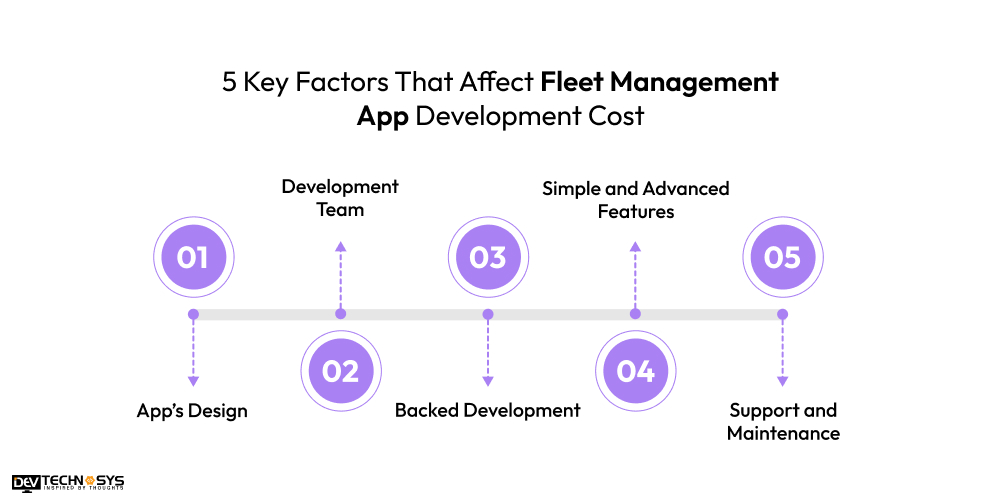
1. App’s Design
It is one of the most common factors that can easily affect the cost to create an app like OnFleet. There are many different types of design that are highly paid and many inbuilt templates that look very unique, but it can increase the cost of development. Using premium tools for designing, such as Sketch and Adobe XD, charges higher costs as compared to basic designing tools.
| Design Quality | Cost Estimation |
| Basic Design | $8,000 – $12,000 |
| Complex Design | $15,000 – $22,000 |
2. Development Team
The development team has the ability to change the fixed budget of development because highly experienced developers charge higher costs as compared to the average experienced developers. If a business project is more complex, then they need to hire more experienced developers to successfully integrate premium features, but the inventory management app development is increased.
| Developer’s Experience Level | Cost Estimation |
| Entry-Level Developer | $15 – $18/ Per Hour |
| Mid-Level Developer | $18 – $22/ Per Hour |
| Senior-Level Developer | $25+ / Per Hour |
3. Backed Development
For backend development, highly skilled developers are needed because backend processes are crucial. They involve many complex processes, such as integrating third-party tools, API integration, complex feature integration, server infrastructure, cloud-based services, and database administration. So, these backend services can easily increase the overall fleet or logistics app development cost.
| Backend Development | Cost Estimation |
| Basic Backend Process | $10,000 – $18,000 |
| Premium Backend Process | $20,000 – $28,000 |
4. Simple and Advanced Features
Let’s move to the fourth factor: advanced features are a concern that affects the cost because they charge higher costs than simple features. Features like real-time tracking, secure payment options, scheduled deliveries, and more are higher cost, and it increases the cost to make an app like OnFleet.
| Features | Cost Estimation |
| Core Features(Real-time tracking and Scheduling deliveries) | $8,000 – $10,000 |
| Advanced Features(Secure payment options and Communication channels) | $13,000 – $19,000 |
5. Support and Maintenance
Forward to the last cost-affecting factor, some maintenance services highly impact the cost, such as updating outdated features, fixing complex bugs or glitches, performing regular maintenance, and monitoring the overall performance.
Support services can also charge a higher cost to handle the business’s or users’ queries and solve them as soon as possible. So, these maintenance and support services can increase the fleet management app development cost.
| Maintenance Phase | Cost Estimation |
| Simple Maintenance Phase | $2,000 – $4,000/year |
| Complex Maintenance Phase | $7,000 – $9,000/year |
How to Reduce the Cost to Build an App Like OnFleet?
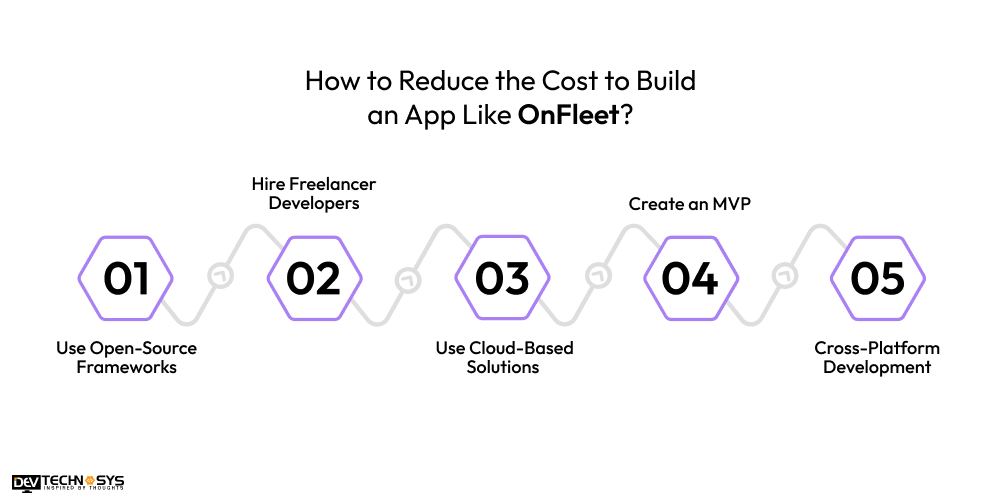
We provide many different ways to reduce the cost of creating an app like OnFleet, which helps businesses maintain their fixed development budget. It includes outsourcing frameworks and hiring developers as a freelancer. So, here we offer the robust ways to reduce the overall development cost:
1. Use Open-Source Frameworks
Open-source frameworks can reduce costs. They include free inbuilt libraries to access functions and services. They provide various types of frameworks, such as Django, React Native, Apache Spark, and more. With the help of these frameworks, businesses can easily build according to their requirements.
2. Hire Freelancer Developers
The best app for fleet management, you can hire experienced developers as freelancers from different countries and origins. Freelancer developers demand lower salary packages than professional app developers. So, hire developers according to your project requirements and make sure that your demands match the developers’ profiles.
3. Use Cloud-Based Solutions
Instead of physical data storage, you can use cloud storage to reduce the cost, and it can also provide instant accessibility from anywhere and anytime. It can also reduce the maintenance cost of physical servers, and businesses can also perform highly automated operations for quick access. So, these cloud-based solutions can decrease the cost to develop an app like OnFleet.
4. Create an MVP
Connect to the second last cost-reducing way. Minimum Viable Product(MVP) is mainly focused on the core features of the app that can easily fulfill the business’s specific requirements and needs. It includes real-time tracking, scheduled deliveries, user profiles, account management, online payment options, and more.
5. Cross-Platform Development
Moving to the last cost-reducing way, building separate apps for iOS and Android. You can use the Flutter and React Native frameworks to build cross-platform and use one single app on both platforms. This can reduce the overall fleet management on-demand app development cost, and it can also save time.
How To Make Money From Fleet Management Apps Like OnFleet?
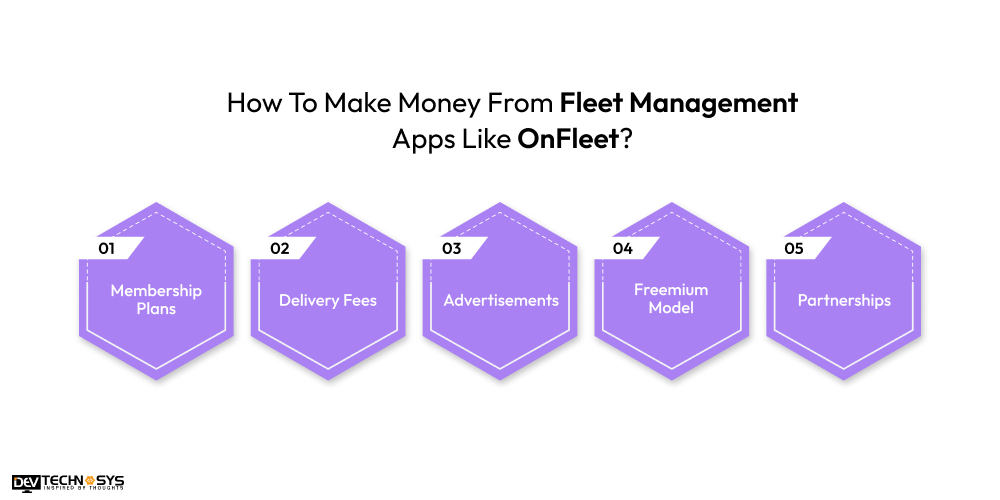
It’s good to create an app like Onfleet. But what about generating higher revenue streams? Don’t need to take any stress. We offer the best ways or techniques to generate profit-making opportunities. So, here we offer the advanced monetization techniques to help businesses to increase their valuations:
1. Membership Plans
Let’s begin the first money-making scheme. There are various paid membership plans to access premium features and functions. Users need to buy the subscription plans according to their requirements and needs.
These plans include basic, premium, and enterprise plans. According to the driver app development company, these plans can increase the company’s or business’s overall valuation.
2. Delivery Fees
Move to the second money-generating opportunity: delivery fees are one of the most used techniques to increase income sources. You can charge a fee for every delivery, and fees can be charged based on delivery type, order size, location, and more. So, it helps businesses generate revenue streams and expand their businesses.
3. Advertisements
The third profit-generating technique is allowing third-party agencies or companies to advertise their products and services in your app. This includes various types of advertisements, such as native ads, image ads, banner ads, video ads, and pop-up window ads. You can charge a fee for showing their products in your fleet management solutions.
4. Freemium Model
Coming to the second last monetization technique, OnFleet clone apps offer basic functionality to new users, who can only access limited services. They need to purchase additional features or subscription plans to unlock the premium functionality of the app. So, the freemium model can easily generate new income sources.
5. Partnerships
Let’s come to the last money-creating opportunity: partnership with other related agencies and vendors, and they can sell their services and products through your OnFleet clone app. You can charge a fee of around 10% to 12% for every product sold via your app. It is mainly a commission-based income.
Conclusion
It’s a long conversation; now the time comes to end this blog with final thoughts. We provide you with detailed information about how much it costs to build an app like OnFleet and which factors can impact the app development cost. We also offer the reducing cost ways to easily maintain the fixed development cost and explore various money-making techniques.
Fleet management applications offer various advanced services, such as real-time tracking and scheduling deliveries, to enhance the business and user experience.
So, if you are looking to create a fleet management app like OnFleet, you can go to the best fleet management app development solutions provider for better development ideas and solutions.
Frequently Asked Questions
Q1. How Much Does It Cost To Build An App Like OnFleet?
The cost to make an app like OnFleet is around $8,000 to $25,000 or more. The cost depends on various factors such as size, complexity, features, functions, and development team.
Q2. How Much Time Does It Take To Make A Fleet Management App Like OnFleet?
To develop a fleet management app like OnFleet, it takes around 3 to 9 months. The time is based on essential factors like developers working, specific requirements of the business, complex features, and the project’s size.
Q3. How to Create an App Like OnFleet?
There are many advanced steps to build a successful mobile app, here we provide the step-by-step guide:
- Define basic requirements
- Identify the features
- Tech stacks
- Design UI/UX
- Development
- QA and testing
- Launching and maintenance
Q4. What Factors That Affect The Onfleet Mobile App Development Cost?
There are many factors that affect the overall development, here is the list of factors:
- Developer’s team
- Backend development
- Basic and premium features
- Design of user-interface
- Support and maintenance