


















Key takeaways:
-
- The global sleep tracking devices market size is projected to reach USD 58.21 billion by 2030.
- North America is expected to be the largest market for sleep apps over the forecast period.
- Businesses are shifting towards sleep tracking app development due to high market potential and rising user demand.
- The cost to build a sleep tracker app is around $25,000 or higher depending on features, platform, and UI/UX design.
Needless to say, poor sleep quality and insufficient duration can have a negative impact on an individual’s health and well-being. Sleep deprivation can cause you more than just dark circles; it can become a serious issue if not taken seriously. According to the American Sleep Association, nearly 70 million people in America are suffering from a sleep disorder.
Thanks to the increasing awareness regarding the importance of sound sleep and healthy sleeping habits, today’s modern youth are seeking digital solutions like sleep tracking apps to deal with Insomnia and improve their sleeping habits.
Sleep tracking apps have firmly established themselves in the digital health market, enabling people to monitor their sleep schedules and enhance their sleeping experience. For businesses, it’s a great opportunity to enter the digital health market.
In this blog, we will discuss how to build a sleep tracking app for businesses and explore key factors in sleep tracking app development. Keep scrolling!
Sleep Tracking App Market Insights
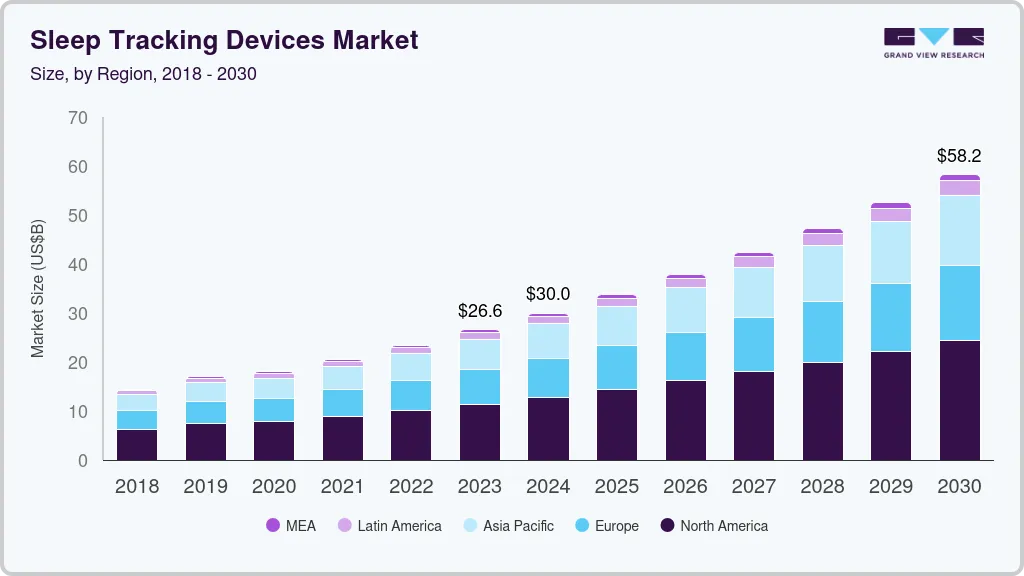
- The global sleep tracking devices market size was estimated at USD 26.6 billion in 2023 and is projected to reach USD 58.21 billion by 2030, growing at a CAGR of7% from 2024 to 2030.
- Insomnia is the most common sleep disorder, with 30% of adults experiencing short-term insomnia.
- North America is expected to be the largest market for sleep apps over the forecast period, accounting for over 3% of the market share in 2025.
- Leading companies, including Fitbit (Google), Apple Inc., Withings, and ResMed, collectively hold between 40% of the market share in the moderately consolidated global sleep tech devices industry.
What is a Sleep Tracking App?
A sleep tracking app is a mobile software designed to monitor, analyze, and improve your sleep patterns. A sleep tracker app serves as a bridge connecting technology with wellness.
It utilizes sensors in wearable devices, smartphones, or home equipment to collect data on your sleeping patterns, schedules, and habits. From sleep duration to heart rate and body movements during the night, it monitors all.
Why Should Businesses Invest in Sleep Tracking App Development?
The decision to build a sleep tracking app can be a profitable investment for businesses. Here are some of the reasons why businesses should invest to build a sleep tracking app.
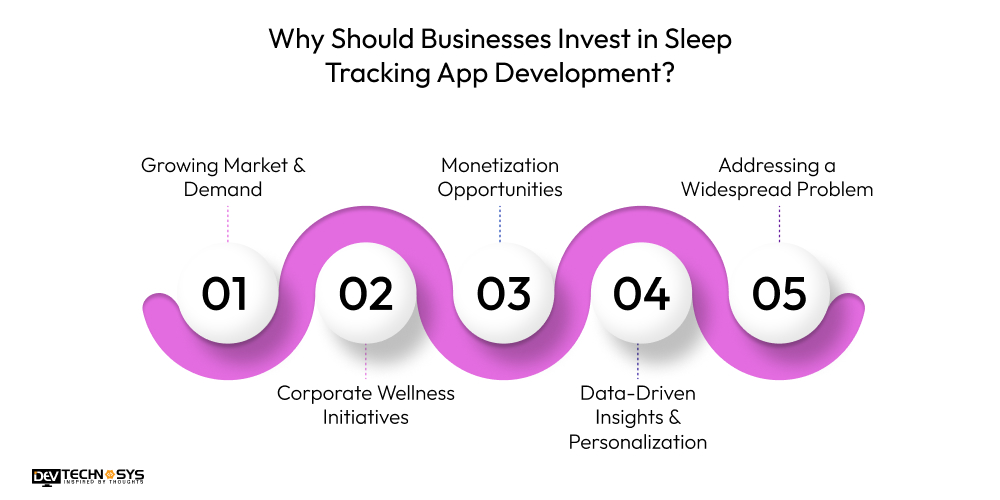
1. Growing Market & Demand:
One main reason to develop a sleep tracking app is the growing market demand. There is a significant, growing global market for wellness and health-tracking apps, with a large percentage of the population suffering from sleep-related issues, creating high demand for sleep-tracking solutions.
2. Corporate Wellness Initiatives:
Corporate wellness initiatives are one of the reasons for businesses to create a sleep tracking app. Companies can integrate sleep tracking apps into their wellness programs to enhance employee productivity, decrease absenteeism, and promote improved job performance by enabling staff to monitor and enhance their sleep habits.
3. Monetization Opportunities:
Businesses can generate revenue through various models, including freemium options, partnerships with health brands, and the sale or use of anonymized data for research or healthcare providers. It is a significant reason to make a sleep tracking app.
4. Data-Driven Insights & Personalization:
Sleep tracking apps collect data on sleep patterns, which can be used to provide users with data-driven insights and personalized feedback. Sleep tracking apps also provide tips for improved sleep hygiene and offer tailored therapeutic plans for sleep disorders like insomnia or sleep apnea.
5. Addressing a Widespread Problem:
Businesses should develop a sleep tracking app to address the fight against related issues. Lack of sleep can cause serious health problems, and sleep tracking apps offer a convenient, accessible, and often more efficient way for individuals to track their sleep patterns and receive personalized solutions.
Top 10 Sleep Tracking Apps to Explore in 2025
There are the 10 best sleep apps you can explore in 2025. These sleep tracking apps can help you improve your sleeping habits and behaviors.
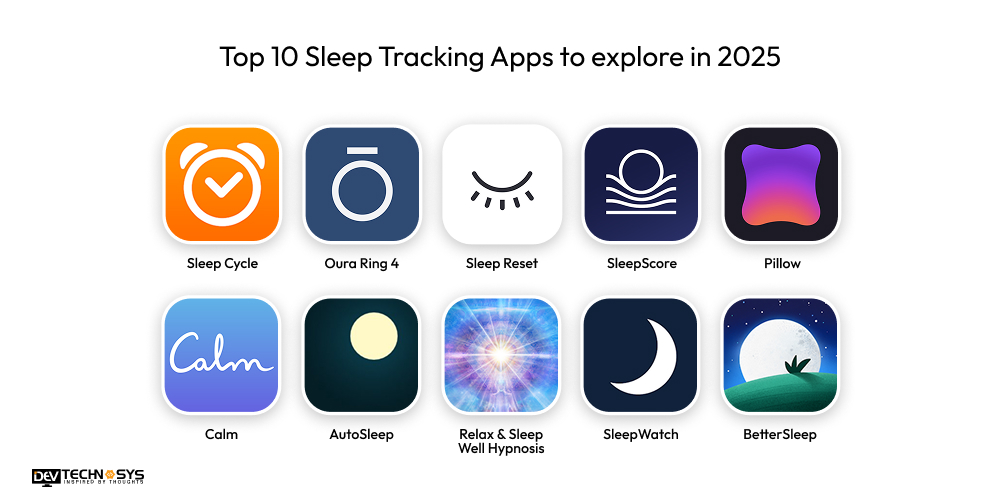
| App / Device | Launch Year | Rating | Platforms |
| Sleep Cycle | 2009 | 4.6★ | iOS, Android |
| Oura Ring 4 | 2024 | 4.9 | Wearable + iOS/Android app |
| Sleep Reset | 2022 | 3.8★ | iOS, Android |
| SleepScore | 2018 | 4.5★ | iOS, Android |
| Pillow | 2013 | 4.4★ | iOS, Apple Watch |
| Calm | 2012 | 4.8★ | iOS, Android |
| AutoSleep | 2016 | 4.7★ | iOS, Apple Watch |
| Relax & Sleep Well Hypnosis | 2009 | 4.8★ | iOS, Android |
| SleepWatch | 2014 | 4.5★ | iOS, Apple Watch |
| BetterSleep | 2009 | 4.8★ | iOS, Android |
Easy Steps to Develop Sleep Tracking Apps
To build a sleep tracking app, you need to hire dedicated developers from a top development company. To ensure a smooth and hassle-free sleep tracking app development process, follow the steps outlined below.
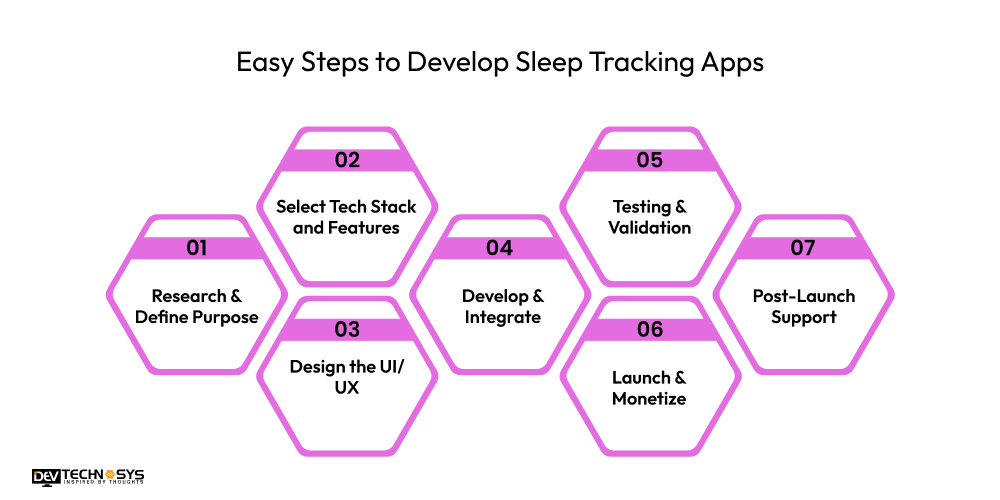
Step1. Research & Define Purpose
The first step to develop a sleep tracking app entails researching competitors and market trends. But before that, you need to decide the goals and purpose of creating a sleep tracking app.
Whether you want to focus on basic sleep tracking, relaxation content, or a full website suite. Then you need to do thorough market research and identify the target audience, see what others are doing right and what areas they lack, and decide your USP.
Step 2. Select Tech Stack and Features
According to an Android app development company, choosing the right tech stack is important to build a sleep tracking app. You need to decide on technologies for the frontend, backend, database, and APIs.
Frontend should focus on providing a smooth user experience, utilizing cross-platform tools like Flutter or React Native, or native options such as Swift (iOS) and Kotlin (Android). The backend must ensure scalability and security, where Node.js, Django, or Firebase are strong choices.
For more accurate sleep data, it is essential to integrate with Apple HealthKit, Google Fit, Oura API, and Fitbit API. Finally, secure cloud storage solutions like AWS or Firebase, combined with end-to-end encryption and compliance with regulations such as HIPAA/GDPR, ensure user trust and privacy.
| Layer | Recommended Options | Purpose |
| Frontend | Flutter, React Native, Swift (iOS), Kotlin (Android) | Build intuitive, responsive UI |
| Backend | Node.js, Django, Firebase | Manage data, APIs, and logic |
| Wearable Integration | Apple HealthKit, Google Fit, Oura API, Fitbit API | Collect biometric & sleep data |
| Data Storage & Security | AWS, Firebase + encryption | Secure, scalable storage with compliance |
Step 3: Design the UI/UX
To build a sleep tracking app, a clean and user-friendly UI/UX design is essential. Designing the UI/UX requires a calm, minimal, and intuitive development approach.
The UI should evoke a sense of relaxation while presenting clear insights into sleep. Soft color palettes (blues, purples, beige) with smooth transitions help users feel at ease. Navigation must be simple, with one-tap access to start/stop sleep tracking, view analytics, and set alarms.
- Calming Aesthetics
- Simple Onboarding
- Dashboard View
- Data Visualization
- Smart Alarm Setup
- Night Mode/Dark Theme
- Gamification (Optional)

Step 4: Develop & Integrate
Hire mobile app developers to develop your sleep tracker application. Implement sleep tracking algorithms (motion, sound, and HRV), integrate with wearables for real-time biometric data, add a smart alarm, and enable push notifications.
At this stage, you need to ensure that you add an offline mode for users without constant connectivity. The development checklist for the sleep tracking app includes:
| Area | Implementation |
| Frontend | Flutter, React Native, Swift, Kotlin |
| Backend | Node.js, Django, Firebase |
| Wearable Integration | HealthKit, Google Fit, Fitbit API, Oura API |
| Core Features | Sleep tracking, smart alarms, reports, relaxation sounds |
| Security | End-to-end encryption, GDPR/CCPA compliance |
| Offline Support | Local storage + sync when online |
Step 5: Testing & Validation
Testing is one of the most crucial steps of sleep monitoring app development. To create a sleep tracking app, you need to thoroughly test the app after completing its development. The testing team needs to test the sleep monitoring app across various devices and wearable devices.
Unit testing, testing, and performance testing are all crucial to ensure your sleep tracking app has no bugs and performs well on multiple devices without any issues or errors. Also, they need to run stress tests for performance and battery usage. Lastly, validate the accuracy of sleep data with beta users.
Step 6: Launch & Monetize
Once the process to build a sleep tracking app is complete and passed the testing phase, it is ready to be released on the iOS and Android stores. Plan a strategic launch on Apple store and Play store.
Use monetization strategies like premium subscription, freemium model, or on time purchase. Do marketing through App stores, collaborate with sleep therapists, and wellness blogs.
Step 7. Post-Launch Support
Your job is not over with post-launch, maintenance is equally important. Provide maintenance and support service including regular feature updates, bug fixes, security fixes, and collect user feedback. Also, your development service providers ensure data privacy (HIPAA/GDPR compliance).
Important FAQs
Q1. How Much Does It Cost To Build A Sleep Tracking App?
The cost to build a sleep tracking app ranges between $8,000 to $25,000. The final price depends on features, design complexity, wearable integrations, platform choice (iOS/Android), and developer expertise.
Q2. How Long Does It Take To Develop A Sleep Tracking App?
The development timeline typically ranges from 12 to 20 weeks. It includes planning, UI/UX design, backend setup, wearable integration, testing, and deployment. More advanced features, like AI coaching, may extend the timeframe.
Q3. What Technologies Are Used In Sleep Tracking Apps?
The technology stack sleep tracking apps usually include re:
- Frontend: Flutter, React Native, Swift, or Kotlin
- Backend: Node.js, Django, or Firebase
- Integrations: Apple HealthKit, Google Fit, Fitbit, Oura API
- Storage: Cloud with encryption
Cost Required to Build a Sleep Tracking App
The cost to build a sleep tracking app ranges from $8,000 to $25,000 or higher, depending on factors such as features, platform, and development expertise. A basic fitness tracking app development cost is somewhere around $18,000 or less.
However, the cost to build a sleep tracking app with advanced features and functionalities like circadian rhythm tracking, snore detection, and heartbeat analysis is around $25,000 or higher. The table below shows the sleep tracking app development cost with the development timeline. Take a look:
| Version | Features | Timeline | Estimated Cost |
| Basic (MVP) | Core sleep tracking, smart alarm, simple reports | 8–10 weeks | $8,000 – $12,000 |
| Mid-level | Wearable integration, push notifications, and offline mode | 12–16 weeks | $13,000 – $18,000 |
| Advanced | AI insights, premium sounds, analytics dashboard, full integrations | 16–20 weeks | $19,000 – $25,000 |
What Factors Can Affect the Cost to Build a Sleep Tracking App?
Now that we know the mobile app development cost, lets move on to factors that affect the cost to make a sleep tracking app. Here are some major factors that affect the cost to build a sleep tracking app. Take a look:
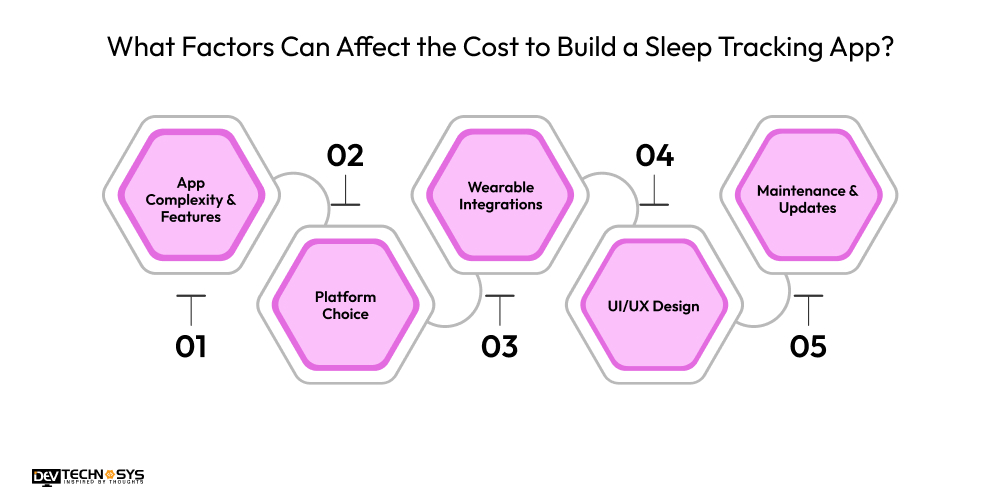
1. App Complexity & Features
According to a top sleep tracking app development company, features added in the app can also impact the cost to develop a sleep tracking app.
A basic app with only essential features can increase the sleep tracking app development cost. Adding advanced features like AI insights, relaxation sounds, and snore detection and analyses can raise the cost to build a sleep tracking app.
| Level | Timeline | Estimated Cost |
| Basic | 8–10 weeks | $8,000 – $12,000 |
| Mid-level | 12–14 weeks | $13,000 – $18,000 |
| Advanced | 16–20 weeks | $19,000 – $25,000 |
2. Platform Choice
The cost to develop a sleep tracking app can affect because of your choice of platform. The cost to create a sleep tracking app for a single platform is comparatively less than the cost to develop a sleep tracking app for a cross platform.
According to a top sleep tracking app development company, Native apps brings better performance but are more expensive than hybrid frameworks like Flutter or React Native
| Option | Timeline | Estimated Cost |
| Single Platform | 8–10 weeks | $8,000 – $12,000 |
| Cross-platform | 10–14 weeks | $12,000 – $18,000 |
| Native (Both) | 14–18 weeks | $18,000 – $25,000 |
3. Wearable Integrations
Wearable integration can increase the cost to create a sleep tracking app. Integrating wearables like Fitbit, Oura, and Apple Watch requires API integration, data syncing, and real-time tracking.
The more integrations added, the higher the complexity, increasing both the timeline and cost to create a sleep tracking app.
| Integration Level | Timeline | Estimated Cost |
| Basic | 2–3 weeks (add-on) | $1,500 – $3,000 |
| Standard | 3–4 weeks (add-on) | $3,000 – $5,000 |
| Advanced | 4–6 weeks (add-on) | $5,000 – $7,000 |

4. UI/UX Design
UI/UX design can also increase the cost to make a sleep tracking app. Simple layouts with essential features are budget-friendly. However, custom animations, dashboards, and personalized user journeys add design hours, increasing expenses. A well-designed UI/UX improves user engagement but comes with added design and development costs.
| Design Type | Timeline | Estimated Cost |
| Basic | 2–3 weeks | $1,200 – $3,000 |
| Mid-level | 3–4 weeks | $3,000 – $5,000 |
| Advanced | 4–6 weeks | $5,000 – $7,000 |
5. Maintenance & Updates
The cost to make a sleep tracking can affect due to post-launch and maintenance, the cost to maintain a sleep tracking app includes regular updates, bug fixes, feature enhancements, and server monitoring.
Ongoing maintenance ensures app stability, adapts to new wearable APIs, and keeps users engaged, ultimately contributing to long-term development expenses.
| Maintenance Level | Timeline (Post-launch) | Estimated Cost (Yearly) |
| Basic | Ongoing | $1,000 – $3,000 |
| Standard | Ongoing | $3,000 – $5,000 |
| Advanced | Ongoing | $5,000 – $7,000 |
Monetization Strategies For Sleep Tracking Apps
Here are some of the top monetization strategies businesses can use to monetize their sleep tracking app.
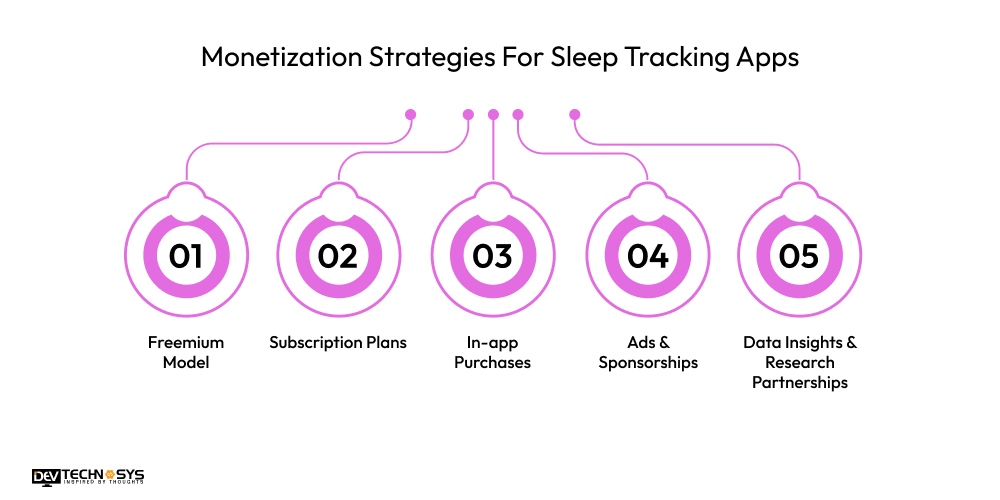
1. Freemium Model
Offer the app for free including basic features like sleep tracking and alarms. Charge extra fee for advanced features such as detailed sleep analytics, premium relaxation sounds, and AI-based sleep coaching through in-app purchases or subscriptions.
2. Subscription Plans
Introduce subscription tiers: monthly, quarterly, or yearly. Provide user benefits like personalised information, unlimited tracking history, exclusive wellness content, and multiple wearable integration. Using subscription strategy ensures recurring revenue and long-term user engagement.
3. In-app Purchases
Allow users to purchase add-ons like meditation guides, calming sound packs, bedtime stories, or sleep therapy programs. This agile methodology upgrades user experience while making extra income without having users buy a paid subscription.
4. Ads & Sponsorships
Integrate non-intrusive ads (banner or video) within the free version. Collaborate with wellness brands, sleep product companies, or healthcare providers to get sponsorship, affiliate marketing, and cross-promotional campaigns.
5. Data Insights & Research Partnerships
With user consent, anonymized sleep data can be shared with research institutions, healthcare companies, or universities for research purposes. Such partnerships support medical studies and provide another revenue channel while maintaining privacy compliance (GDPR/CCPA).
Want a chatbot demo or pricing? Fill the form and talk to our experts today.
Pick what you need below — you can select more than one — then tap Get detail to continue.
-
Chatbot demo dashboard
-
Cost to develop an app
-
Industry report
-
Case study
How AI Enhances Sleep Tracking App Development?
AI in sleep tracking apps enhances development by making sleep tracking more accurate, engaging, and tailored according to each person. AI algorithms analyze users’ motion in sleep, breathing patterns, and heart rate to identify sleep patterns and behaviours with accuracy.
Machine learning delivers tailored insights like right sleeping duration, tips to improve lifestyle, and wake-up schedules, while predictive analytics predict sleep quality on the basis of sleeping habits.
AI-powered smart alarms wake users during light sleep phases, which reduces grogginess. In summary, AI provides:
- Accurate detection of sleep stages (REM, deep, light)
- Personalized recommendations based on past data
- Smart alarms for refreshing wake-ups
- Detection of sleep anomalies and disorders
- Integration with wearables and IoT devices
- Predictive analytics for sleep quality forecasts
- AI chatbots for user guidance and engagement
Conclusion
The above provided details and information discusses how to build a sleep tracking app. We hope it clears any doubt or query you might have regarding sleep tracking app development.
With the right approach, you can build a feature-rich app that not only tracks sleep but also improves user well-being and engagement. If you are a business looking for a top mobile app development company to build your sleep tracking app, then Dev Technosys can be your best bet. Stay tuned for more informative updates.
FAQs
Q1. Can AI Improve Sleep Tracking Apps?
Yes, AI makes apps more accurate and personalized. It detects sleep stages, provides custom insights, powers smart alarms, predicts sleep quality, and engages users with AI chatbots and virtual coaching features.
Q2. Do Sleep Tracking Apps Need Wearable Integration?
Not always. Basic apps use smartphone sensors for motion and sound tracking, while advanced apps integrate with wearables for real-time biometric data, resulting in more accurate insights and better sleep analysis.
Q3. How Do Sleep Tracking Apps Make Money?
Popular monetization models recommended for a sleep tracking application include:
- Freemium with in-app upgrades
- Subscriptions (monthly/yearly)
- Paid relaxation content and sound packs
- Advertisements and sponsorships
- Corporate wellness programs
- Research partnerships with healthcare institutions
Q4. Is Data Privacy Important In Sleep Tracking Apps?
Yes. Since sleep apps collect sensitive health data, ensuring end-to-end encryption, GDPR/CCPA compliance, secure cloud storage, and user consent management is critical to protect privacy and build user trust.
Q5. Can I Build A Cross-Platform Sleep Tracking App?
Yes, cross-platform frameworks like Flutter and React Native allow you to build apps for both iOS and Android simultaneously, reducing development cost and time while still delivering a native-like performance.