


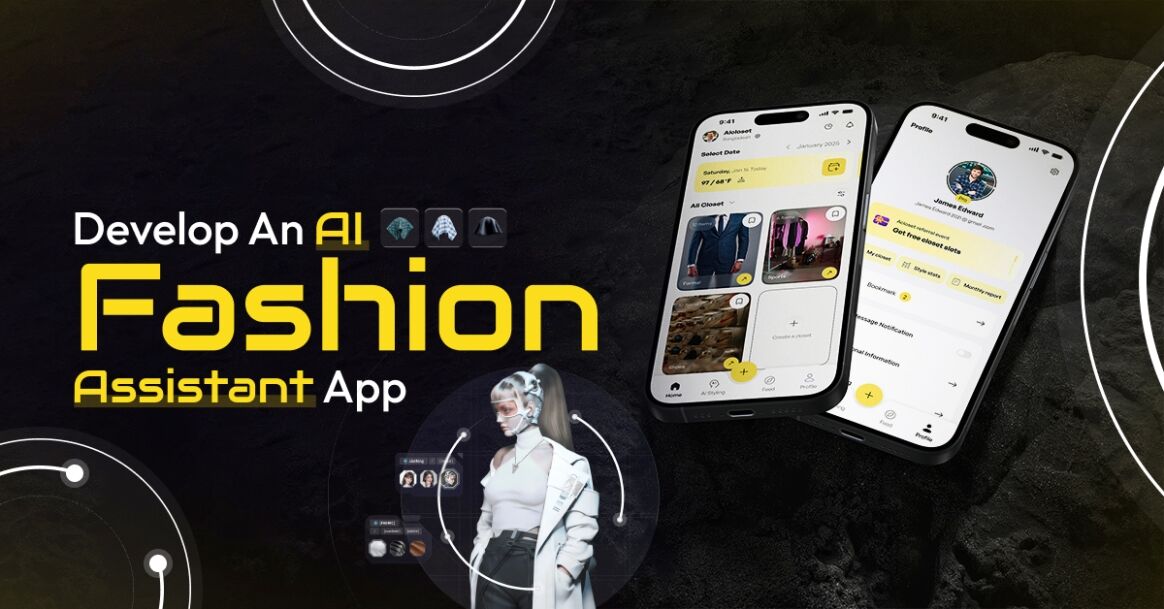
Fashion is no longer stitched just with threads; it’s woven with data, algorithms, and AI magic.
In 2025, the AI fashion market is booming at an estimated USD 2.91 billion globally, and reports forecast a nearly $76 billion industry by 2035, at an astounding CAGR of 38.6%.
The AI fashion revolution is changing how fashion consumers shop, style, and engage with fashion while ushering in new levels of hyper-personalization, virtual try-ons, and sustainability never seen before.
AI fashion assistant applications are the cutting edge of this revolution as they merge creativity with technology to provide fashion experiences that are smarter, faster, and more connected.
Whether designing workwear outfits or providing AR fitting rooms, the future is programmable, and the future is immersive. If a start-up or a brand wants to be a pioneering company in the fashion-tech revolution, first consider if you have the right features, the costs to build it, and what it will do for your company.
Reading this blog will help you learn how to develop an AI fashion assistant app that not only fits into the future of fashion but also allows you to have a hand in the way it will be established.
What is an AI Fashion Assistant App?
An AI Fashion Assistant App combines artificial intelligence with a style assistant to help users discover outfits that fit their style, their body type, and what is already hanging in their closet. In addition to personalized recommendations based on a user’s style profile, it also delivers outfit suggestions for each occasion, virtual try-ons of outfits or accessories, and keeps learning a user’s style through every interaction.
Finally, with an AI fashion assistant app, you can make a more efficient shopping experience, reduce returns, and improve customer satisfaction by making better and easier fashion choices.
Why Should Businesses Create an AI Fashion Assistant App?
Here are some amazing reasons that will make you think harder and want you to create an AI Fashion Assistant App in 2025! So let’s get this started.

1. Higher Conversion Rates And Sales:
AI-powered personalization is a major game-changer! If you can incorporate customer data, this app will provide highly relevant product recommendations, styling suggestions, and even offer “complete the look” bundles.
This personalization reduces buyer hesitation and shortens and simplifies the purchase process. As a result, businesses will see a significant increase in conversion rates and average order values.
2. Reduced Returns and Improved Profitability:
A primary obstacle that online apparel retailers experience is a high return rate. Virtual try-on experiences and reliable size and fit recommendations powered by AI boost customer confidence in their purchasing choices. This will lower the volume of items returned due to fit or style issues, thereby increasing profitability and reducing operational costs related to returns.
3. Increased Engagement and Customer Loyalty:
If entrepreneurs create an AI app, it offers a more interactive shopping experience. AI-assisted features such as virtual try-on, style quizzes, and shopping assistance 24/7 will develop stronger ties between the customer and the brand, leading to higher retention rates, increased repeat visits, and enhanced loyalty to the brand.
4. Data-Driven Analytics and Trend Forecasting:
The app captures customer preference data, browsing patterns, and purchasing data. The desire to understand their data can help businesses make better-informed decisions on things such as inventory, product design, and marketing.
AI can analyze multiple data sources, including everything related to fashion on social media and runway shows, to create trending fashion items, which provides the business with a considerable competitive advantage.
6 Stages to Develop An AI Fashion Assistant App
To create an AI Fashion Assistant App, you can be revolutionary in the way users shop, discover trends, and put together outfits. By teaming up with a seasoned AI development company, one will ensure cost-effectiveness and quality without the hassle of a complicated process.
1. Requirement Gathering & Market Research
The initial phase of the process is to comprehend your vision, target audience, and goals. In-depth research, competitor analysis, and user persona mapping are the techniques the AI development company applies to outline the app’s features that can be the solution to problems such as virtual try-on, style recommendations, and personalized shopping experiences.
2. App Concept & Feature Planning
Defining and conceptualizing the app, features, and workflows are the next steps to take after the research is complete. The milestone of the user experience journey is planning wireframes and storyboards.
It is up to the mobile app development company to make sure that AI features such as recommendation engines, computer vision (for outfit recognition), and natural language processing (for style queries) are flawlessly integrated.
3. AI Model Development & Training
AI stands as the central point of your fashion assistant app. It is vital to know that the hired AI developers will acquire and preprocess fashion-related data, take care of machine-learning models, and test algorithms. Planning to include clothes matching, style suggestion, or trend forecasting in your app will have your experts building corresponding models.
4. UI/UX Design & Prototyping
User experience is of supreme importance in fashion-oriented applications. Hire talented AI designers from an ecommerce app development company that works on AI to create user-friendly and attractive interfaces that consider the fluidity of navigation. Prototyping is a stage that helps to quickly validate the app for the target audience before any actual development is carried out.
5. App Development & Integration
The app development phase is coding, which is both clean and scalable, as well as integrating AI models into the app. Moreover, the developers might use APIs from a third party (such as e-commerce, payment gateways, etc.) to connect the app.
The AI fashion app development company, thus, guarantees the stability of the backend and the safety of the data regardless of whether it is a native app or a cross-platform solution.
6. Testing, Deployment & Maintenance
Last but not least, the stage to make an AI fashion assistant app that went through a hard testing process- functional, usability, and performance, to ensure smooth performance without bugs.
After the release, the AI app development company is still there, providing the service of regular maintenance, updates, and retraining of AI models to automatically adapt to fashion changes.
Key Benefits of Fashion Assistant AI App Development: For Users
AI fashion assistant applications provide a powerful, personalized, and efficient shopping Experience for users. Using technology advancements like machine learning, computer vision, and augmented reality, these applications can provide the following benefits:
1. Personal Styling And Recommendations
The AI engine analyzes the user’s style preferences, body type, purchase history, and even the weather/occasion to provide truly personalized outfit/product recommendations. This completely removes the guesswork of what to wear, and helps users find items they will actually love!
2. Virtual Try-Ons And Fit Confidence
Virtual try-on features allow users to see how clothes and accessories would look on their own bodies by using the camera on their smartphones. This enhances the online shopping experience and promotes true confidence in their purchase, thus reducing the chances of returning items because they did not fit or look good on the user.
3. Effortless Wardrobe Management
Users can digitize their own closet by uploading photos of their own clothing. The AI can then help them create new outfits from their wardrobe and suggest new items that complement what they already own, promoting a more sustainable and organized approach to fashion.
4. Intelligent Search and Discovery
Users might need an item that they saw a person wearing in a magazine or any other fashion reference, without using a specific keyword. They can just upload a photo to visual search, which makes it possible for users to quickly find a certain style, color, or pattern.
5. 24/7 Personal Stylist
The AI fashion assistant is like your very own personal stylist who is there to help with styling 24/7. Style advice, the perfect outfit for an event, or the solution to your fashion-related questions are just some of the things you can get at any time.
Middle FAQs
Q1. Can An AI Fashion Assistant Really Understand My Style?
Q2. Will An AI Fashion Assistant Save Me Time While Shopping?
Q3. Can I Try On The Outfits I Am Going To Buy Before I Actually Buy Them With the AI Fashion Assistant?
Q4. Are My Personal Data And Other Information Safe While Using the AI Fashion Assistant?
Most Essential Features for an AI Fashion Assistant App
Now that you know about the process to develop an AI fashion assistant app, it is crucial for you to learn about basic features. Here is the list of some of the essential features that are a must in an AI fashion assistant app in 2025-2030.
-
AI Chatbot Stylist
A conversational Assistant that provides personalized fashion tips, answers style inquiries, and interacts with users to help them decide on daily outfits.
-
Virtual Try-On
Virtually try clothes on their avatar using augmented reality, helping users feel more confident in fit before purchasing and reducing returns when shopping online.

-
Personalized Outfit Idea Recommendations
Recommends daily outfit ideas based on your style, preferences, and body profile, making dressing easier and instilling confidence.
-
Wardrobe Management
Digitally organizes and catalogs clothing items that users upload so they can plan outfits smartly and maximize their wardrobe.
-
Occasion-Based Recommendations
Provides outfit recommendations based on the occasion – considering location, weather, and calendar – to ensure proper styling for each event.
-
Visual Search Capability
The fashion assistant app allows users to search by uploading an image to instantly find similar clothing items, utilizing smart recognition technology to simplify shopping.
-
Style-Based Search
Allows users to search for clothing through text in images, simplifying finding and purchasing desired outfits.
-
Mood & Preference Learning
Learn from your preferences and feedback, and you gradually enhance the accuracy & personalization of fashion answers.
-
Trend Forecasting
Virtual fashion assistant app lets users know what upcoming styles & colors to expect based on AI models analyzing trends, so that their closet stays relevant.
-
Voice Search Integration
Supports user requests for hands-free styling and navigation through voice commands for optimal convenience.
Next Level Advanced Features of the AI Fashion Assistant App
So everything is going ahead, why not features? Yes, you’ve heard it right. In 2030, having basic functions doesn’t make your app successful; you need to look for advanced functionalities, which we have covered here. Here is the list of some of the incredible advances of an AI fashion assistant app.
-
Moodboard & Visual Styling Tool
Users can visually plan seasonal wardrobe items or put together style moodboards using a drag-and-drop feature, enhancing creative expression and experimentation with outfit combinations.
-
Voice Interface & Smart Assistant
A hands-free styling assistant in which users can ask for a quick opinion or outfit idea using natural speech commands for quick and convenient guidance on fashion choices.
-
Augmented Reality Try On
Virtually try on clothing using AR to see an overlay of realistic fit and style on your avatar or an image of yourself, improving your confidence to purchase clothing seen in a store or online.
-
Sustainability Tracker
The personal fashion assistant app tracks the carbon footprint of your wardrobe and promotes mindful choices with suggestions of environmentally conscious purchases, second-hand purchases, and sustainability recommendations, all embedded within the app.
-
Predictive Contextual Styling
Recommendations for outfits based on weather forecasts, calendar events, and lifestyle trends while providing thoughtful, smart context before the user even asks for assistance with clothing choices.
-
Social Style Feed
Discover real-time user-generated or influencer looks while mixing in trend-based recommendations, curated personally for your feed, connected to a larger community, and style creation together.
-
Virtual Closet with E-commerce Sync
Digital wardrobe data will sync to your shopping habits to discover new pieces in-store or online that you can purchase that have the potential to be worn with your closet items to help streamline fashion and provide smarter purchasing decisions.
-
Generative Outfit Suggestions
Generative AI in fashion allows users to enter their preferred mood or theme to receive AI-generated outfits that cater to their particular style, interests, and personality, yielding unique, customized looks.
-
Conversational Styling Agent
An advanced chatbot will allow users to ask questions about any occasion, trend, or style, providing contextual interactions that produce customized and focused advice with ‘ideal’ outfits.
-
Body Type Optimization
The artificial intelligence will analyze everything about body proportions and suggest customized outfits that are both flattering and boost confidence in style choices in day-to-day life.
-
Emotion-Aware Outfit Planning
An AI stylist and outfit generator will analyze user emotions and mood to create personalized outfit suggestions around how individuals felt, resulting in a greater emotional connection to, and satisfaction with, the style choices presented in a fashion experience.
-
AR-Enhanced Virtual Dressing Rooms
Augmented-reality presentations will allow users to feel immersed in virtual try-ons, giving realistic, free-fitting world languages in outfit experiences that will reduce returns and increase confidence while shopping online, restructuring our interactions with fashion in digital experiences.
-
AI-Powered Style Influencers
AI-generated digital influencers will establish trend-setting content within fashion, while personal training and advice are classified as style, utilizing the blending of technology and social influence to disrupt formation strategies of how marketing and community efforts should happen.
-
AI-Driven Sustainability
AI will aid brand operations by optimizing supply chains, minimizing waste, and supporting data-driven sustainability initiatives in the future, enabling brands to reach their environmental goals while maintaining an eco-conscious consumer base.
-
Agentic AI Assistants
Next-generation AI assistants have the potential to hold complex, thoughtful conversations that are natural and conversational, in addition to providing outfit recommendations and styling advice. Allowing users to interact with the app in a proactive, interactive way can improve engagement by acting as a friendly fashion companion.
You can reach out anytime; we are available 24/7. Our team provides a quick response.

Cost to Develop an AI Fashion Assistant App: 7 Key Factors That Affect Pricing
The cost to build an AI fashion assistant app typically lies between $8,000 and $30,000+. It depends on app complexity, features, and the AI development company’s expertise you hire.
These apps incorporate AI-powered recommendations, virtual try-on, and one-to-one shopping experiences, which are not easy to implement and require considerable funding. The reasons why the cost to develop an AI fashion assistant app varies so much are illustrated by the seven major factors.
1. App Complexity & Features
The cost to create a chatbot for a fashion assistant app will be higher with more advanced features you desire. An app that only provides suggestions for outfits will cost less than one with AR-based virtual try-on, real-time recommendations, and trend forecasting.
Basis | Description | Estimated Cost |
| Basic Features | Outfit suggestions, simple recommendations | $8,000 – $12,000 |
| Moderate Features | Chatbot, personalization, basic filters | $12,000 – $18,000 |
| Advanced Features | AR try-on, trend forecasting, real-time AI | $18,000 – $30,000+ |
2. AI Model Development & Training
AI is the heart of your fashion assistant. The AI fashion assistant app development cost depends on the types of AI models, the size of the dataset for training, and the complexity of the algorithms.
The process of building efficient recommendation engines and computer vision models concatenates the work, and thus, the budget of AI app development services increases.
Basis | Description | Estimated Cost |
| Basic AI | Pre-trained models, minimal training | $3,000 – $5,000 |
| Custom AI | Small datasets, simple recommendation engine | $5,000 – $8,000 |
| Advanced AI | Large datasets, computer vision, deep learning | $8,000 – $15,000+ |
3. Platform Selection (iOS, Android, or Cross-Platform)
It would be cheaper to just build the app for either iOS or Android. A cross-platform or hybrid app will have a larger audience, but it will still cost more because you have to write more code and do more optimization.
Lastly, these different types of platforms have different costs from each other, and it can directly impact the overall AI fashion assistant app development cost.
Basis | Description | Estimated Cost |
| Single Platform | Either iOS or Android | $6,000 – $10,000 |
| Dual Platform | Separate native apps for iOS & Android | $10,000 – $16,000 |
| Cross-Platform | Single codebase, wider reach | $12,000 – $18,000 |
4. UI/UX Design
Users of fashion applications want these applications to be designed with attractive, intuitive, and smooth features so that they become involved with the application. Just the use of features filled with custom animations, sleek layouts, and visually rich interfaces can attract the need for professional designers who will take a share of the overall cost to develop an AI fashion assistant app.
Basis | Description | Estimated Cost |
| Basic Design | Simple screens, minimal customization | $2,000 – $3,500 |
| Modern Design | Attractive UI, smooth navigation | $3,500 – $6,000 |
| Premium Design | Custom animations, branded look | $6,000 – $9,000 |
5. Third-Party Integrations
If your application requires integration with online e-commerce platforms, payment gateways, or external APIs to obtain product data, the shopping app development services cost will be increased. The process of these integrations should be safe and smooth to provide a good user experience.
Basis | Description | Estimated Cost |
| Basic | One or two APIs (e.g., payment gateway) | $1,500 – $3,000 |
| Moderate | E-commerce platform + payments | $3,000 – $5,000 |
| Complex | Multiple APIs, real-time sync | $5,000 – $8,000 |
6. Post-Launch Maintenance & Updates
Costs do not stop at the development phase. Continuously updating the AI model, adding new features, fixing errors, and regular server maintenance are all a part of the process that keeps your application up-to-date and efficient. A higher number of maintenance services can increase the cost to build an AI fashion assistant app.
Basis | Description | Estimated Cost (Yearly) |
| Basic | Bug fixes, minor updates | $2,000 – $3,500 |
| Moderate | Regular updates, performance monitoring | $3,500 – $5,000 |
| Advanced | AI retraining, major feature upgrades | $5,000 – $8,000+ |
7. Development Team Location & Expertise
The cost of hiring a Chatbot development company in the US or Europe is generally higher than outsourcing to a location like India. However, you will have the advantage of an experienced developer who will provide you with a high-quality product in less time; however, this can increase the final AI fashion assistant app development cost.
Basis | Description | Estimated Cost (Hourly) |
| Asia (India) | Affordable, skilled developers | $10 – $25/hr |
| Eastern Europe | Balanced cost & expertise | $40 – $60/hr |
| US/UK | Premium developers, fast delivery | $60 – $120/hr |
Spending on a top-notch AI fashion assistant app can really make a significant increase in user engagement and conversion rates. Knowing these AI fashion assistant app development cost factors will allow you to prepare a realistic budget and select the most suitable AI development company for the delivery of a successful solution.
Monetization Techniques for AI Fashion Assistant Apps
AI shopping assistants can be quite successful financially by employing one or more monetization strategies that align with the value they’re providing. We list some of the more common models below.
1. Affiliate Marketing:
The affiliate marketing model is the most common monetization model for online apps and is successful for a reason. In this model, the app recommends products (clothing) from various fashion retailers and brands, and if the user purchases an item using the app’s unique affiliate link, the app will receive a commission. The value is that the user gets great recommendations, and the app is able to monetize without holding any inventory.
2. Freemium Model, In-app Purchases:
The app can allow users to download a free app, but its functionality may be limited to providing outfit recommendations for a limited number of items.
Users will be incentivized to use the app and even pay a small purchase price to unlock unlimited virtual try-ons, style analytics, promote awareness of each stylist and their expertise, and present users with access to other stylists for a premium fee.
3. Subscription Model:
The subscription model works very well for apps that can provide consistent value, such as your proposed app. Users pay for the privilege of receiving premium service on a monthly or annual basis.
This may encompass a “personal stylist” chat option, first dibs on sales, exclusive content, or a completely ad-free experience. This adds a predictable, recurring revenue stream.
4. B2B Licensing and Partnerships:
The AI technology used in the app, virtual try-on, trend forecasting, or style recommendation engines can be licensed to fashion brands and retailers, allowing them to use the app features within their own e-commerce platform. There is B2B revenue here.
5. Data Monetization:
Nothing is more valuable to brands and market researchers than their aggregated and anonymized shopping habits, preferences, and popular trends. By selling, the user will have to agree (in compliance with the user’s privacy laws), this can present a considerable income stream.
Challenges in AI Fashion Assistant App Development: With Solutions
Developing new technology is full of complications, especially when it comes to creating a fashion assistant app. One should not only think about obstacles but also about strategic ways to overcome them.
1. Showing Model in a True Way:
Just like face filters, virtual try-on uses the same technology of computer vision and AR to put an image of an item on a user’s body. These marketplace app developments have a lot of problems that demand accurate realism, which includes not only the body shape and the light, but also how the fabric is coming in and moving on the user’s body to look good.
Solution:
Implementing sophisticated AR and computer vision SDKs, combined with the continuous adjustment of the algorithm based on user feedback. Obtain 3D representations of garments that are of the highest quality and employ intricate rendering to achieve more lifelike and seamless digital environments.
2. Data Privacy and Security Concerns:
The app in question is an extensive collector of sensitive personal data such as body measurements, pictures, and clothing preferences. Assuring security from unauthorized access and guaranteeing user privacy is of utmost importance.
Solution:
Implement security techniques such as data encryption, multi-factor authentication, and secure cloud storage. Strictly adhere to the data privacy regulations like GDPR and CCPA, and inform users precisely what data is being collected and for what purpose. Creating customer trust is very necessary, and that can only be done by asking for their consent to use the data.
3. Scalability and Performance:
In the case of the number of users increasing and the number of products becoming more extensive, the application should be able to continue operating without performance being sacrificed. The AI and other complex features can take up a large portion of resources, which then results in slow response and user dissatisfaction.
Solution:
From the very beginning, construct the application with a scalable architecture that utilizes the microservices approach. Pick the cloud computing services that can provide you with resources depending on the demand in real-time. The AI models and algorithms should always be re-optimized and updated to ensure that they are still effective and speedy when the app gets bigger.
Why is Dev Technosys the Right Partner to Develop An AI Fashion Assistant App?
The choice of selecting the appropriate technology partner who will be in charge of the fashion AI app is what decides whether the app will be successful or not. Among a lot of options, this is the reason to pick Dev Technosys:
1. Expert Knowledge in the Design of AI & ML
The team we have is highly skilled to create intricate AI and ML solutions that not only suggest your attire, but also forecast the trend and provide you with a tailored fashion experience.
2. Fashion-Tech Industry Knowledge
Our Android and iOS app development company has partnered with international fashion and eCommerce brands, turning the companies’ services digital, increasing the customer base, and improving revenue through the latest mobile applications.
3. Custom App Development Approach
We do not believe in the same solution for everything. Our virtual stylist, powered by AI, is not just one of many. It is a unique AI-powered personality for your brand that fits your brand identity, user base, and business goals for maximum impact.
4. Seamless UI/UX & Personalization
The design team we have will deliver a clean and user-friendly interface that will make your app real-time, hyper-personalized outfit suggestions while making it intuitive to use.
5. End-to-End Development & Support
Dev Technosys takes care of all the stages, starting from brainstorming and ending at the post-launch support, in which they also perform the AI model training, integration, and future updates, besides you being responsible for your business growth.

Conclusion: Be the Wave of AI in Fashion by 2030. The Future Starts with You!
Fashion is not simply being reinvented by AI, but it’s been designed with AI. AI-powered stylist apps are the talk of the town, giving brands the tools to offer the next level of the user experience: the “wow” factor.
AI selection assistants will have become a necessity and the main driver of fashion innovation rather than being a mere option by 2030. So the question is, are you going to be the one ahead of the wave or the one left behind?
By taking the path to launch an AI fashion assistant app today, you can turn your brand into a pioneer of this tech-driven era. With the perfect ecommerce app development partner at your side, you can combine creativity, technology, and personalization to maintain your position in the market and attract the style-conscious customers all over the globe.
The moment to jump on the fashion AI bandwagon has come, and there is no better time than now to change the way people shop in 2030. The world of fashion is not far away, let’s create it together!
Frequently Asked Questions On the AI Fashion Assistant App
Q1. What Improvements Does the AI Introduce In Fashion Shopping?
Fashion shopping has changed entirely with the help of AI, which gives the customer very-personalised suggestions for outfits, forecasts future trends, allows the customer to use his/her virtual image to try on clothes, and generally makes shopping easier through the use of data, which saves the customer’s time and makes them more satisfied.
Q2. How Much Does It Cost To Develop An AI Fashion Assistant App?
The cost to build an AI fashion assistant app ranges from $8,000 to $30,000; that price tag comes down to development complexities, chosen platform, AI integrations, and the desired level of personalization.
Q3. How Long Does It Take To Create An AI Fashion Assistant App?
Generally, to develop an AI fashion assistant app, it will require 4–8 months. Within that timeframe falls the ideation stage, wireframes, development of the actual app, AI model training, and testing to ensure the app runs smoothly and makes accurate recommendations.
Q4. Why Should Fashion Brands Invest In AI Today?
Fashion brands should invest in AI today to continually grow their businesses. The impact of AI on the fashion industry will continue to grow, and by 2030, this will be the forefront for tech-ready customers. Planning to implement AI within your business will put you ahead of trends that have yet to emerge within the digital fashion space.
Q5. What Are The Costs Incurred In Developing An AI Fashion Assistant App?
Launching an AI fashion assistant app depends on the size of your app, the complexity of the AI model, the quality of UI/UX design, the platform by which you choose to build the app, third-party services that may be incorporated with the app, any replacements, updates, or ongoing post-launch support.


