
















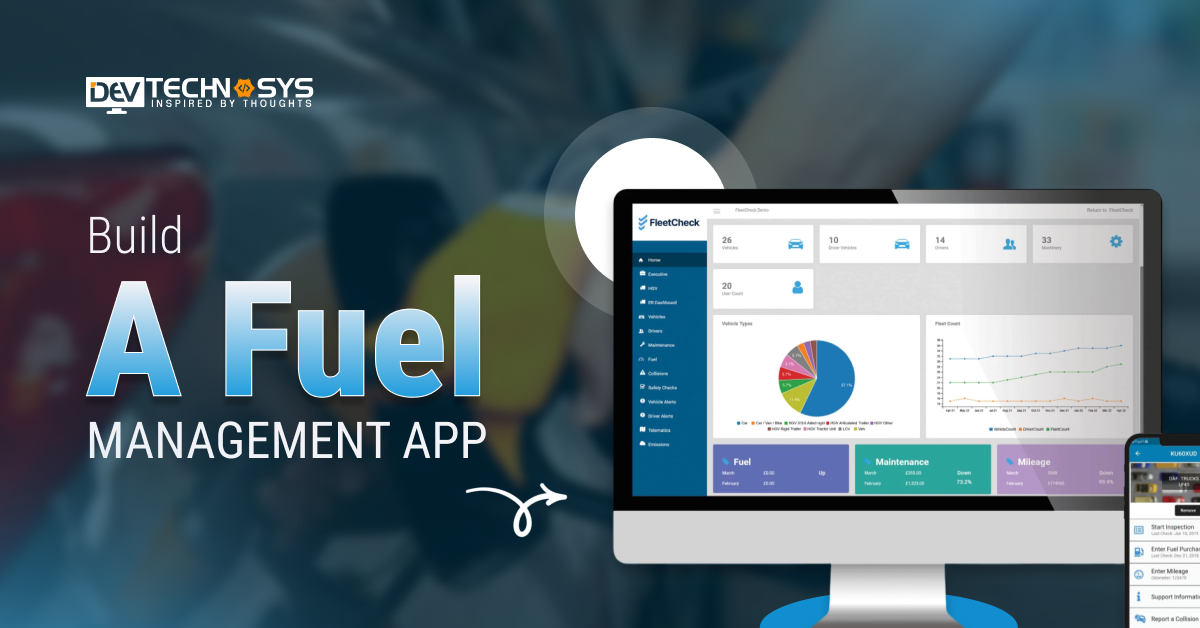
In this fast-progressing world, every industry wants to increase its sales and reduce operational and machinery costs. But nowadays, fuel management is one of the most crucial concerns for industries such as logistics, fleet operators, and individuals. Now, the concern is solved by the fuel management app. It helps businesses to track fuel consumption in real-time, reduce fuel wastage, track fuel inventory, optimize fuel usage, and more.
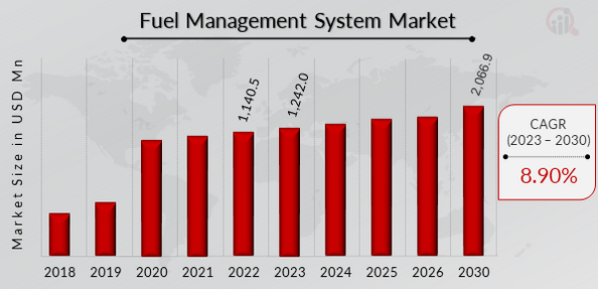
In a global survey, we found that the fuel management app was valued at around $1.24 billion in 2023. It is projected to grow by around $2.38 billion by the end of 2032.
This useful data reveals that investing in fuel management application development is an excellent opportunity for entrepreneurs to grow their businesses and generate higher sales.
In this blog, we will provide every tiny piece of information about how to build a fuel management app, premium features, cost, money-making opportunities, benefits, and more.
What is a Fuel Management App?
A fuel management app is a digital application that allows organizations and people to monitor, track, and optimize their fuel usage. It has capabilities like real-time fuel usage tracking, inventory management, cost analysis, and maintenance notifications. These apps are commonly used by fleet operators, logistics organizations, and industries that require fuel-powered equipment. A fuel management app assists in cost reduction, efficiency improvement, and fuel waste minimization by providing data-driven insights and automating fuel-related operations.
- Real-Time Fuel Monitoring
- Fuel Inventory Management
- Automated Reporting
- Vehicle & Equipment Integration
Market Analysis of Fuel Management Applications
- The global AI-powered fuel management system market was estimated at USD 1.24 billion in 2023, with a forecast value of USD 2.38 billion by 2032.
- As per the recent survey, the fuel tracking app is projected to grow with a compound annual growth rate of 7.52% from 2024 to 2032.
- According to the global market, North America dominates the fuel consumption app market.
- With deep research, we found that gasoline held the most market share in the market for fuel efficiency tracker apps.
- According to a study, logistics and transportation industries hold the largest share in fuel consumption apps.
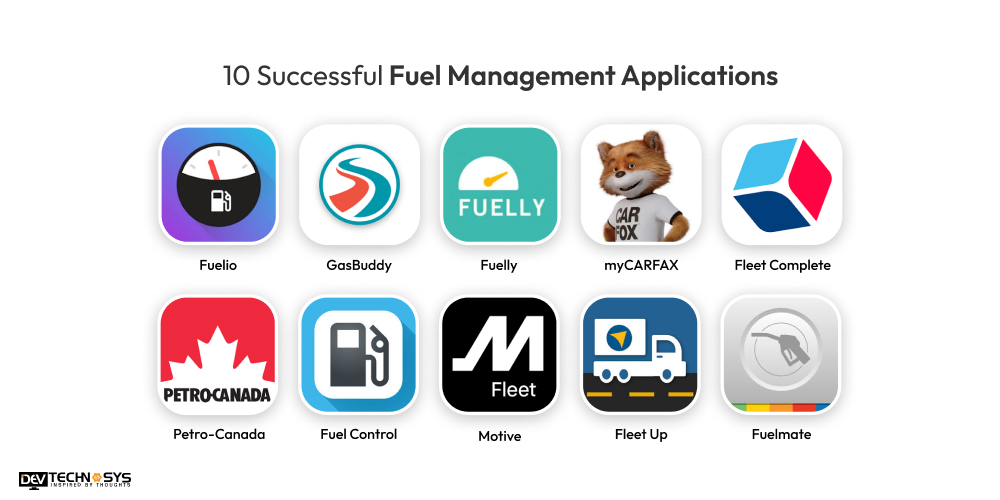
10 Successful Fuel Management Applications
These fuel-tracking applications, which are accessible on several platforms, address a range of requirements, including fleet management, personal fuel tracking, and fuel cost optimization.
Applications |
Download Users |
Stores Ratings |
Apps Launched On |
Platform Accessibility |
|
Fuelio |
1M+ |
4.5 |
2014 |
Android/iOS |
|
GasBuddy |
10M+ |
4.5 |
2000 |
Android/iOS |
|
Fuelly |
500K+ |
4.7 |
2009 |
Android/iOS |
|
myCARFAX |
1M+ |
4.8 |
2013 |
Android/iOS |
|
Fleet Complete |
100K+ |
4.3 |
2000 |
Android/iOS |
|
Petro-Canada |
500K+ |
4.7 |
2013 |
Android/iOS |
|
Fuel Control |
100K+ |
4.3 |
2015 |
Android/iOS |
|
Motive |
1M+ |
4.5 |
2011 |
Android/iOS |
|
Fleet Up |
50K+ |
4.5 |
2014 |
Android/iOS |
|
Fuelmate |
50K+ |
4.3 |
2014 |
Android/iOS |
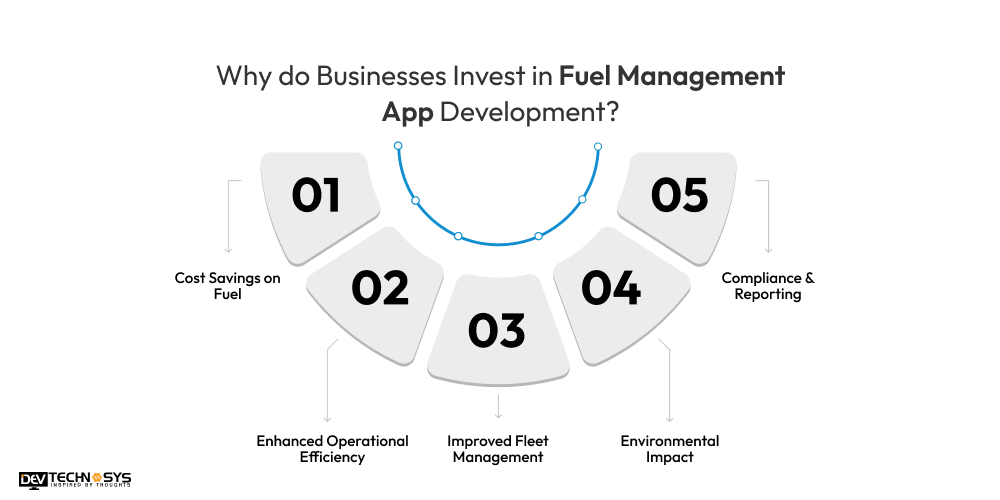
Why Do Businesses Invest in Fuel Management App Development?
Businesses invest in custom fuel management app development for various reasons, including increased efficiency, lower costs, and better operational performance. Here are five reasons why:
- Cost Savings on Fuel
- Enhanced Operational Efficiency
- Improved Fleet Management
- Environmental Impact
- Compliance & Reporting
1. Cost Savings on Fuel
Fuel is frequently one of the most expensive operational costs for enterprises, especially those with big fleets of cars or machines. GPS fuel monitoring system assist in tracking consumption, identifying inefficiencies, and optimizing routes to save fuel waste. Businesses that monitor gasoline usage in real-time can drastically reduce fuel expenditures, resulting in long-term benefits.
2. Enhanced Operational Efficiency
If you develop an app like Filld, it offers businesses the ability to automate fuel tracking and reporting. Instead of manually tracking fuel purchases or use, businesses may use the app to improve efficiency.
Real-time data on fuel consumption, vehicle performance, and driver behavior allows organizations to make data-driven decisions that improve the overall efficiency of their fleet or operations.
3. Improved Fleet Management
For businesses with a fleet of vehicles, regulating fuel usage and performance is critical. IoT-based fuel management solution work with vehicle tracking systems to provide insights into fuel efficiency, assisting fleet managers in identifying patterns or concerns such as excessive idling, inefficient routes, or underperforming cars. This leads to better fleet management, lower operational costs, and increased vehicle longevity.
4. Compliance & Reporting
gasoline management apps frequently contain tools for creating automated reporting and tracking gasoline data to ensure regulatory compliance. This is especially useful in industries where reporting fuel usage is mandated by law or for tax considerations.
As we discussed earlier with an on-demand app development company, businesses can simply handle compliance obligations without the need for human record-keeping.
5. Environmental Impact
With an increased emphasis on sustainability, businesses are seeking for ways to lower their carbon footprint. Smart fuel management system assist organizations in tracking fuel efficiency, encouraging drivers to adopt more environmentally friendly driving practices, and assuring optimal fuel consumption. Companies can reduce their environmental effect by lowering fuel usage, which aligns with green programs and corporate social responsibility objectives.
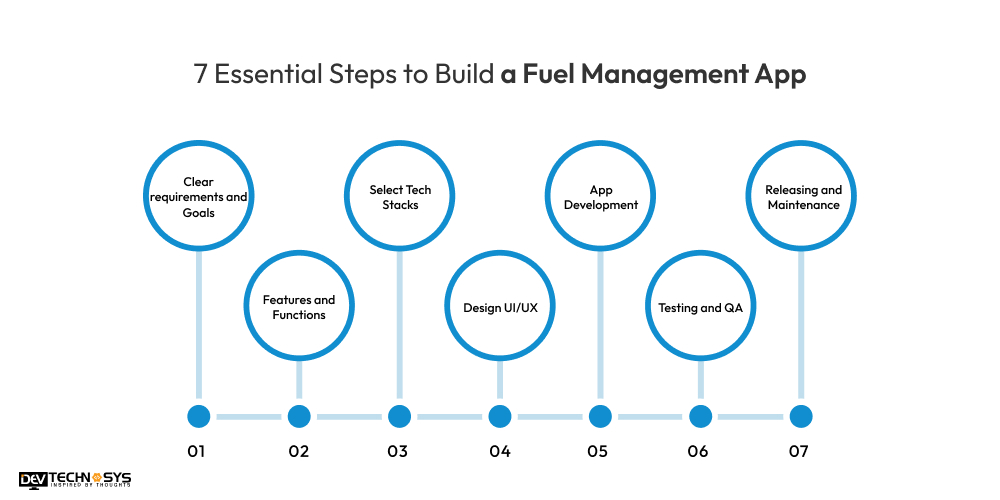
7 Essential Steps to Build a Fuel Management App
To create a fuel management app with full functionality, you need to observe the basic steps of development that can enhance the business or developers’ experience. So, here we provide the fuel management system development process:
- Clear requirements and Goals
- Features and Functions
- Select Tech Stacks
- Design UI/UX
- App Development
- Testing and QA
- Releasing and Maintenance
1. Clear Requirements and Goals
Let’s start the process of development; you need to identify your exact requirements and demands. After that, clear the goals and observe the existing fuel tracking system apps to understand their working process and success rates.
| What are your app’s basic or core requirements? |
| Clear your app’s future goals. |
| Which fuel optimization apps are more successful and trending in this competitive market? |
2. Features and Functions
In the second stage of development, hire mobile app developers to identify the simple and advanced features of your project. Make a proper list of features that can reduce confusion and data redundancy. You need to also identify the primary and secondary users of your project.
| What are your app’s basic and premium features? |
| Observe the existing fuel control apps for the best features. |
| Make an organized sheet of features and functions to reduce data redundancy. |
3. Select Tech Stacks
Let’s connect to the third stage of development; there are various tech stacks available to build a successful fuel-tracking app. It includes HTML, CSS, Python, Java, React Native, JavaScript, MongoDB, MYSQL, and more. So, choose the technologies according to fixed budget of development.
| Which type of tech stacks are used in your fuel economy app development? |
| Define your scalability requirements. |
| Choose advanced or basic tech stacks. |
4. Design UI/UX
Coming to the fourth stage of mobile app development, design a user-friendly or intuitive interface that enables users to easily interact with all the functionalities of the app. It includes various designing resources such as layouts, premium templates, themes, in-built plugins, and more.
| What are wireframes in UX design? |
| What tools do you use for prototyping? |
| How do you ensure a responsive design? |
5. App Development
Connect to the fifth stage of development and assemble a highly skilled development team to complete all the integration phases, such as third-party integrations, payment gateways, and more. In this stage, the real coding begins, and features and services are built through programming languages.
| Do you want to create hybrid or native apps? |
| Choose highly talented mobile app developers. |
| Integrate a high number of features and functions. |
6. Testing and QA
In the sixth stage of development, hire dedicated developers to conduct robust testing techniques such as unit, functional, integration, and security testing. These testing methods can easily fix the bugs and glitches. After that, make sure that all the functionalities and services are working correctly.
| Make sure that all features and functions are working properly |
| Use various testing methods, such as functional and usability testing. |
| Check the app’s security measurements. |
7. Releasing and Maintenance
In the last development process, publish the app on the selected platforms, such as Android and iOS. After that, maintenance services such as monitoring the overall performance, fixing errors and bugs, updating outdated features, adding new features, and regular ongoing maintenance.
| Launch your app on selected platforms like Android and iOS. |
| Use the best marketing techniques. |
| Assign the post-maintenance phases to maintain the app’s performance. |
10 Simple and Premium Features of the Fuel Management App
Here are ten premium fuel management software features that offer businesses and people sophisticated capabilities for managing gasoline usage and enhancing operational efficiency:
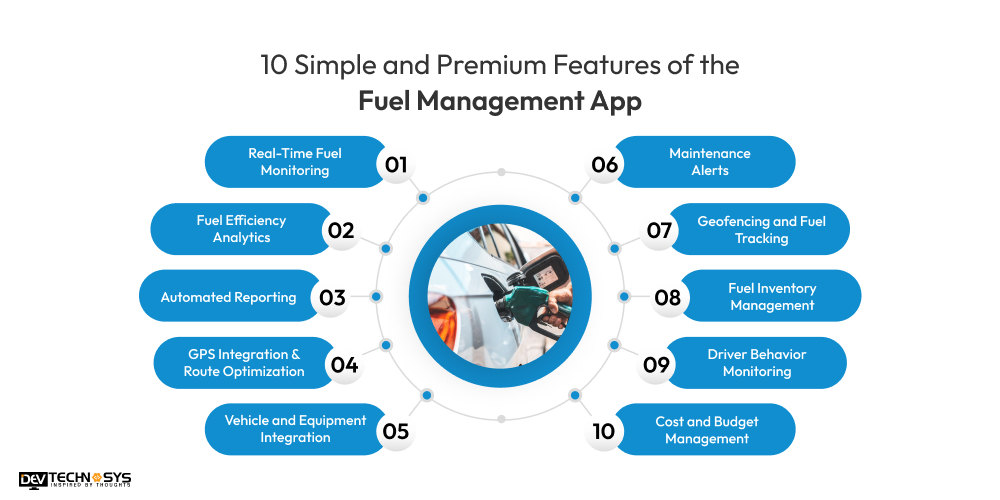
1. Real-Time Fuel Monitoring
Diesel and petrol tracking app tracks fuel consumption in real-time, providing businesses with immediate visibility into usage patterns across vehicles and equipment.
2. Fuel Efficiency Analytics
An app like GasBuddy provides detailed insights into fuel usage trends, identifying inefficiencies and opportunities for improvement in vehicle or fleet operations.
3. Automated Reporting
Automatically creates full reports on fuel usage, prices, and performance, removing the need for human tracking and providing useful information for decision-making.
4. GPS Integration & Route Optimization
Integrates with GPS systems to optimize driving routes, lowering fuel usage by cutting travel lengths and real-time fuel consumption tracker.
5. Vehicle and Equipment Integration
Fuel cost tracking app integrates seamlessly with existing fleet management systems, tracking fuel consumption by individual cars or equipment and providing accurate, granular statistics.
6. Maintenance Alerts
Vehicle fuel monitoring app sends automated reminders for periodic maintenance, reducing the need for costly repairs and ensuring that vehicles and equipment operate at peak fuel efficiency.
7. Geofencing and Fuel Tracking
Monitors fuel usage based on geographic location, allowing organizations to see how much gasoline is utilized in certain zones or regions.
8. Fuel Inventory Management
Users may control and track fuel inventory levels in real-time, ensuring that enterprises don’t run out of fuel and can manage supply effectively.
9. Driver Behavior Monitoring
Fuel efficiency tracking app monitors driver behavior, such as speed, acceleration, and idle, to encourage fuel-efficient driving and prevent wasteful fuel consumption.
10. Cost and Budget Management
Fleet fuel management software provides tools for creating and monitoring fuel budgets, warning organizations when fuel prices exceed certain limitations, and improving financial control.
What is the Cost to Build a Fuel Management App?
The cost to build a fuel management app can range from $8,000 to $25,000, depending on factors such as the app’s complexity, platform (iOS, Android, or both), features, and the development team’s location.
Basic apps with core features like fuel tracking and reporting will be on the lower end of the spectrum, while more advanced apps with GPS integration, real-time analytics, vehicle integration, and custom features may require a larger budget. Ongoing maintenance and updates are additional costs to consider post-launch.
Cost to Develop a Fuel Management App
|
Fuel Management App Development |
Approximate Cost |
Estimated Time |
| Normal App Development | $8000 – $12000 | 2 to 5 Months |
| Mid-Complex App Development | $14000 – $18000 | 5 to 8 Months |
| High-Complex App Development | $25000+ | 9+ Months |
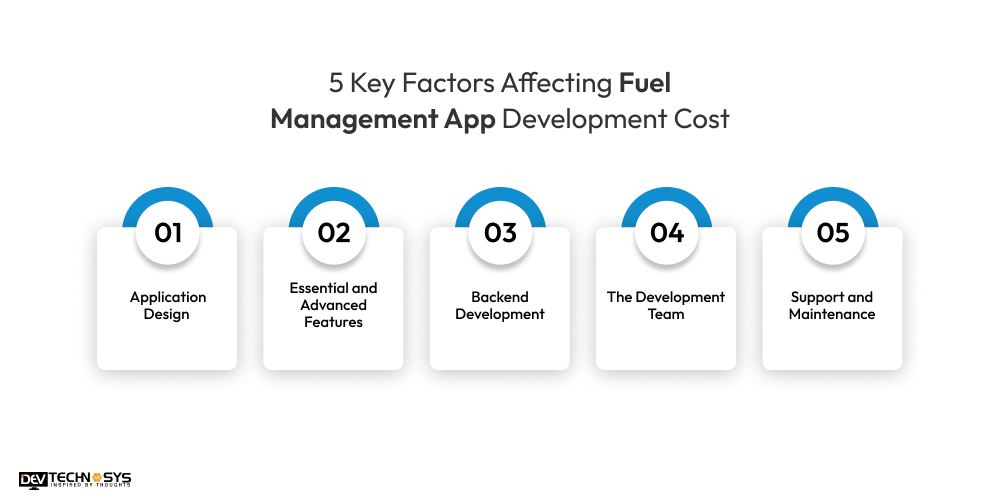
5 Key Factors Affecting Fuel Management App Development Cost
Developing a fuel management mobile app can vary significantly in cost depending on several factors. Overall, the complexity of the app, the development team’s location, and the features you choose will determine the total cost of building a fuel management mobile app. Below are the key factors that can impact the development cost:
1. Application Design
The application’s design has a significant impact on development expenses. A complicated, custom UI/UX is more expensive than a simple, minimalist design. Excellent designs that put the user experience first, such as smooth navigation and user-friendly interfaces, might raise the app’s total cost, particularly if sophisticated design tools are employed.
Design Quality |
Cost Estimation |
| Basic Design | $8,000 – $12,000 |
| Complex Design | $15,000 – $22,000 |
2. Essential and Advanced Features
The cost of development is directly impacted by feature complexity. While complex features like GPS integration, route optimization, real-time analytics, and gasoline inventory management need more development time and skill, which raises the cost, basic functionalities like fuel tracking and reporting are less expensive to execute. Higher mobile app development cost are also associated with more sophisticated algorithms.
Features |
Cost Estimation |
| Core Features(Fuel Tracking and Fuel Cost Calculation) | $8,000 – $10,000 |
| Advanced Features(Fuel Pricing Data and Fleet Management Integration) | $13,000 – $19,000 |
3. Backend Development
For a fuel management software to process, store, and integrate data, a strong backend architecture must be built. The costs of a scalable and secure backend that manages user accounts, real-time data, and cloud integration are high. The architecture of the backend influences overall development expenses by affecting the app’s performance, scalability, and maintenance.
Backend Development |
Cost Estimation |
| Basic Backend Process | $10,000 – $18,000 |
| Premium Backend Process | $20,000 – $28,000 |
4. The Development Team
Costs are greatly impacted by the development team selection. Premium fees may be charged by regional developers or highly skilled teams in fields like data security, GPS integration, and artificial intelligence. Costs can be cut by hiring an offshore crew, however there may be communication, time zone, and quality control issues. Better outcomes and quicker delivery are guaranteed by skilled developers.
Developer’s Experience Level |
Cost Estimation |
| Entry-Level Developer | $15 – $18/ Per Hour |
| Mid-Level Developer | $18 – $22/ Per Hour |
| Senior-Level Developer | $25+ / Per Hour |
5. Support and Maintenance
Long-term success depends on post-launch support, which includes problem patches, upgrades, and continuing upkeep. For a fuel management mobile app to function properly, be secure, and work with newer OS versions, it needs constant maintenance. The total cost is increased by regular upgrades and technical support, particularly if more features are wanted after the app’s original release.
Maintenance Phase |
Cost Estimation |
| Simple Maintenance Phase | $2,000 – $4,000/year |
| Complex Maintenance Phase | $7,000 – $9,000/year |
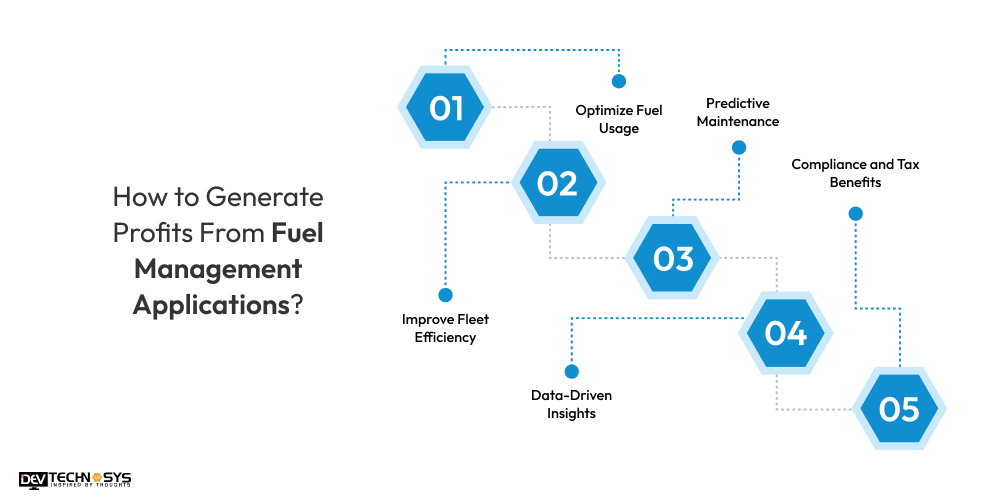
How to Generate Profits From Fuel Management Applications?
Profits from fuel management software necessitate a deliberate strategy to leverage the data, efficiency improvements, and cost-saving features that these apps provide. Here are five fundamental approaches to achieving profitability:
- Optimize Fuel Usage
- Improve Fleet Efficiency
- Predictive Maintenance
- Data-Driven Insights
- Compliance and Tax Benefits
1. Optimize Fuel Usage
Fuel management software monitors fuel consumption, usage patterns, and inefficiencies. Businesses can use these insights to improve their fuel purchases and reduce waste. This improvement results in direct cost reductions, which convert into higher earnings over time.
2. Improve Fleet Efficiency
Fuel management programs assist organizations that manage fleets by tracking routes, driving behavior, and fuel efficiency. By optimizing these parameters, businesses can reduce fuel consumption and increase the overall efficiency of their fleet operations, cutting fuel costs and increasing profitability.
3. Predictive Maintenance
These programs can monitor the health of vehicles and equipment, alerting users of potential maintenance issues before they become costly problems. Predicting and treating maintenance issues early minimizes downtime and repair costs while increasing asset usage and profit.
4. Data-Driven Insights
Fuel management systems provide meaningful facts to help businesses make decisions. Whether it’s identifying the best gasoline suppliers, assessing fuel usage trends, or calculating the ideal times to refuel, data-driven decisions improve operational efficiency, save costs, and increase profitability.
5. Compliance and Tax Benefits
Fuel expense management softwares can assist firms in meeting regulatory standards and taking advantage of fuel-related tax credits or refunds. According to the mobile app development company, ensuring compliance reduces the danger of fines while optimizing tax savings can result in increased profits.

Conclusion
In this dynamic blog, we talked in detail about how to build a fuel management app and the reasons why businesses invest in it. We also provide the best features that must be integrated into a fuel-tracking app to enable users to access all the services with just one tap.
However, investing in a fuel consumption monitoring app is a most profit-generating opportunity and drives higher success rates. It allows businesses to track fuel usage in real time, reduce fuel wastage, and make sure that vehicles are at their peak performance.
Are you planning to create a fuel management app? Then, share your project’s specific requirements and demands with a custom fuel delivery app development company to deliver robust development solutions.
Frequently Asked Questions
1. How Much Does It Cost To Build a Fuel Management App?
The cost to build a fuel management app can range from $8,000 to $25,000, depending on complexity, features, platform (iOS/Android), and development team location. Customization and integrations can increase costs.
2. How Much Time Does It Take To Make a Fuel Management App?
To develop a fuel management app, it mainly takes around 3 to 6 months, depending on the app’s complexity, features, platform (iOS/Android), and the development team’s size and experience.
3. Which Technologies are Used to Develop a Fuel Management App?
There are various advanced technologies that are used to make a fuel management app, here is the list:
- Java
- Python
- C++
- PHP
- Kotlin
4. Do I Need GPS Integration in My Fuel Consumption App?
Yes, GPS integration is required in fuel theft prevention software. It helps track vehicle routes, optimize fuel usage, monitor driver behavior, and collect real-time data, all of which increase fuel efficiency and fleet management.