
















Are you tense about managing your cash flow? Don’t you want to make your payment mode easy? Then you engaged in the right place. Revenue cycle management software is a great opportunity for businesses seeking streamlined financial operations. It can improve billing operations with automated tasks such as collections, track records, invoicing, and payment processing.
Revenue cycle management software development helps businesses improve customer satisfaction, provide faster billing processes, and gain valuable insights. Businesses invest in RCM software development to ensure the smooth flow of transactions and build a solid revenue stream.
Stay tuned to this blog for a comprehensive guide on revenue cycle management software development, providing you with all the detailed information you need.
Quick Summary: Learn how to build RCM software and the market analysis of RCM software. It will also explore the RCM software development costs, similar RCM softwares, monetization techniques, benefits, development steps, and features of RCM software.
What Is Revenue Cycle Management Software?
Revenue cycle management software creates computerized programs and software hubs for businesses. It streamlines all financial processes, such as billing and invoices, tracking payments, and ensuring a smooth flow of transactions.
RCM makes payment modes more accessible for users and saves them more time paying their bills. It can reduce administrative burdens and provide valuable data on business revenue streams. This software makes it easier to handle money-related operations and make more money quickly.
- It provides easily patient payment solutions to enhance customer satisfaction.
- Track invoices and the remainder for due bills, and manage user’s account efficiency.
- Accept different payment modes such as credit or debit cards, net banking, etc.
- RCM software provides various communication resources such as phone, chat, and email.
Market Analysis Of Revenue Cycle Management Software
- According to the global market, the size of RCM software was estimated to be $49.6B in 2023, and it is expected to reach $84B by the end year of 2028.
- According to the study, revenue is expected to show an annual growth of 35% by the end of 2029.
- In the global market comparison, most of the revenue generated in the United States will be US$45,110.00 m by the end of 2024.
- According to the global market, per-employee spending on RCM software will be US$25.08 by the end of 2024.
- The software market’s revenue is projected to reach US$704.10bn by the end of 2024.
Top 7 Revenue Cycle Management Software
Are you ready to build revenue cycle management software? So, with the help of a CRM development solution, you can choose the right RCM software for your business and take it to the next level. Here is the list of top revenue cycle management software:
1. Waystar
It is the best RCM software for healthcare. It includes many premium features like claim management, insurance verification, and patient billing.
- Integrated payment transactions process
- Automatic claim submission operation
- Real-time track record of patients information
2. R1 RCM
According to the software development life cycle, it is a leading service provider of RCM software. It includes:
- Track key performance indicators and improve collections
- Ensuring clean and right insurance claims are submitted
- Provide flexibility for the users
3. Change Healthcare
Healthcare technology provides a wide variety of RCM services. It is an established platform for tracking records efficiently.
- Flexible payment and deployment options
- Provides patient self-service tools to pay the bill
- Integrated services to provide timely claims
4. Meditech
It is one of the best electronic health record provider systems. It can also offer various RCM services that combine with the EHR platform. Contact POS development solution to create software like Meditech.
- Patient billing and collection operations.
- Insurance claims are quickly submitted.
- Provides the EHR for the better enhancement
5. Cerner Millennium
It is another EHR provider platform. It can also integrate with revenue cycle management services. It includes:
- Real-time verification insurance claim
- Automated invoicing and billing process
- Provides self-service tools for the patient
6. Epic Revenue Cycle Management
It is one of the leading EHR service providers and offers various revenue cycle management solutions. Epic revenue cycle management includes many features, such as:
- Patients automated billing process
- Claims management and follow-ups
- Charge capture and coding
7. Kareo
It is a cloud-based EHR and management system. It is specially designed for small physician practices. It includes:
- Individual portal for online payments
- Integrated billing process and coding
- Verify the insurance claims and follow-ups
If you are interested in learning more about Revenue cycle management software development, you should contact the software development trends company.
5 Benefits For Businesses Of Revenue Cycle Management Software Development
In digitization, more cash flow is crucial for every business. So, revenue cycle management software development provides a strategic solution for faster online payments and reducing errors. Here is the list of a multitude of benefits for businesses to the development of RCM software:
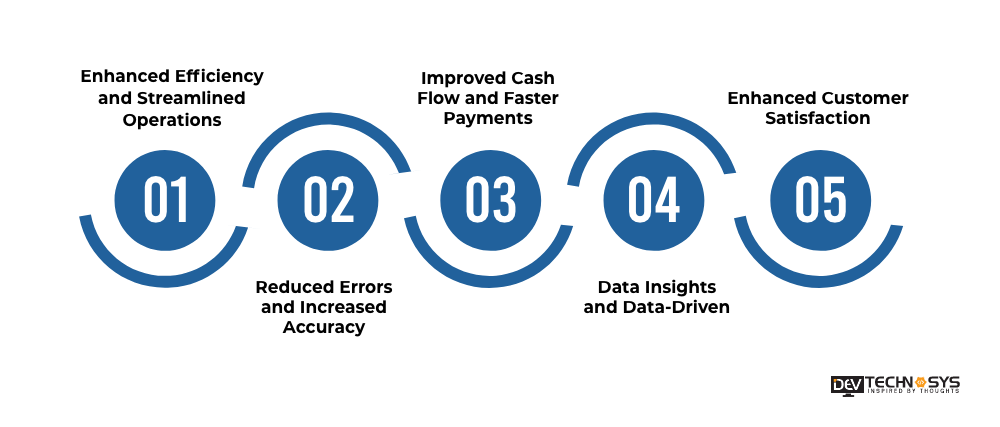
1. Enhanced Efficiency And Streamlined Operations
In this, RCM software denies manual data entry, automates the billing process, reduces errors, and automates tasks performed. It can save more time for staff members, focus on customer satisfaction, and increase sales. It facilitates a robust platform for all financial data or transactions and ensures all automated tasks run smoothly.
2. Reduced Errors And Increased Accuracy
With the help of RCM software digital entries, errors can be reduced during invoices, the billing process, and claim verification. Manual data entries cause errors and mistakes to be generated during the billing and claiming process. So, if you are looking to install these interfaces in your software, then consult a SAAS application development company.
3. Improved Cash Flow And Faster Payments
Cash flow can be a backward issue for businesses because they need a track record of specific transactions. Revenue cycle management software development offers various online payment modes, such as credit or debit cards, UPI, and net banking. Faster payments can increase business growth, improve cash flow, and build a solid financial record.
4. Data Insights And Data-Driven
In this, customer data analysis and profound observation are used to track customers’ habits regarding software changes. Valuable data insights can increase your company’s revenue streams by identifying new trends, observing collection rates, and more. So, IT consulting services can help you quickly make changes, such as improving resource billing operations and increasing profitability.
5. Enhanced Customer Satisfaction
Revenue cycle management software development offers simple billing operations, multiple payment options, and accurate invoices. It also allows customers to make quick online payments, track their payment history, and increase customer loyalty. So, investing in Revenue cycle management software development transforms your financial services and makes them efficient and reliable for the business.
7 Key Steps Of Revenue Cycle Management Software Development
In this virtual world, RCM software is most famous for online billing and provides many payment modes. So, a Revenue cycle management software development company offers various steps for the successful development of the software. Here is the list of the stages:
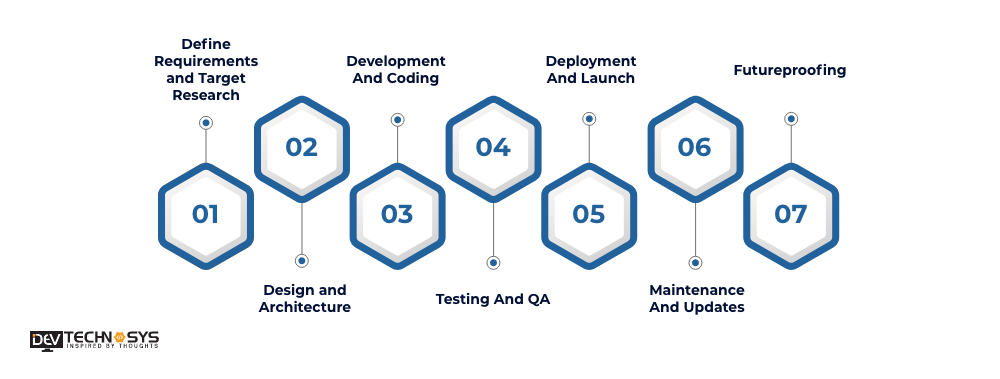
1. Define Requirements and Target Research
In this first step, observe the specific needs of your targeted market and identify your ideal customers. Discover existing RCM software to understand its strengths and weaknesses, develop successful software, and make it unique from the existing software. Ensures your software follows security restrictions according to the relevant industry.
2. Design and Architecture
In this second step, hire dedicated developers to design your user interface uniquely and make it easy for users to use and understand. Choose suitable programming languages, databases, and frameworks to handle your software’s demands smoothly. It includes a user-friendly UI, easy-to-navigate, and clear labeling to increase the user base.
3. Development And Coding
In this third step, the development team translates the design and architecture into functional code. In this stage, basic core features are added to build a strong base, and premium or rich features and functions are added. If you want to assemble a highly skilled development team for your project, you should contact a software product development company.
4. Testing And QA
Let’s move on to the testing phase, which includes unit testing, integration testing, white-box testing, and user acceptance testing. This phase ensures that the software is free of bugs and glitches and that all functions are smoothly processed. It also tests the security measurements for the user’s sensitive information.
5. Deployment And Launch
In this crucial step, choose the best deployment strategy based on your software needs and preferences for organizations with data security measurements. For the software’s launch, hire software developers to release the software successfully on various platforms such as IOS and Android. After this, build a market strategy to reach your target audience and generate revenue streams.

6. Maintenance And Updates
After publishing, it includes fixing bugs and glitches, updating outdated features, and checking regularly for user feedback. It also identifies new opportunities for the latest feature development. So, keep updated on changes according to the industry’s rules and ensure your software is updated with the latest requirements of target audiences.
7. Futureproofing
In this last step of development, create a long-term vision for your RCM software and keep it updated with the latest market trends. Also, observe the user reviews regarding your software, keep thinking about innovations, and install new features to follow the trend. Stay connected to emerging technologies to add extra features to make your software unique.
We previously worked with Dev Technosys, which gave us good results. We want to build a revenue cycle management software, so we contacted Dev Technosys again. They have 13+ years of experience creating efficient, flexible mobile apps or websites. They provide satisfactory mobile apps or websites with high-quality compositions, premium attributes, and passionate backend functions. Dev Technosys has delivered apps or websites within time and budget, giving us brilliant results.
_ Mark Waun
Features of Revenue Cycle Management Software
Do you want to learn about the premium features of RCM software? Then, we provide the best features of the RCM software and help access all the software features easily. Here is the list of features:
| Features | Description |
| Billing and Invoicing | This can generate automated billing processes and timely invoices electronically. It saves more time for users and also staff members. |
| Claim Management | It provides the claim process, verification, submission, and follow-up with the insurance companies. It allows users to access claims and provides easy-to-track claims. |
| Payment Processing | This provides different modes of payment, such as credit or debit cards, UPI, net banking, and other methods. It makes it easy for the user to pay bills. |
| Eligibility Verification | This ensures that the insurance covers the user before services are applied. It also avoids fake insurance claims by verifying the user’s eligibility. |
| Accounts Management | This feature tracks outstanding invoices, sends reminders for due bills, and securely manages a user’s account. It provides flexibility for the staff members and customers. |
| Registration And Appointment Schedule | It includes an easy registration process, manages appointments of users, collects information on insurance claims, etc. Use this feature in your software, contact the chatbot development company. |
| Security | It protects the user’s sensitive data from unauthorized access to the software and follows industry security rules and regulations. |
| Mobile friendly | It allows users to access the RCM software easily through mobile devices. It provides easy booking of an appointment, claims tracking, and communication. |
| User Engagement Tools | It includes communication with users, secure online payments, scheduling appointments, etc. It allows users to explore the software easily and navigate it easily. |
| Real-Time Reporting | It provides real-time data insights into your revenue cycle streams and allows you to modify reports such as collection and denial rates. |
Cost Analysis Of Revenue Cycle Management Software Development
The cost to build revenue cycle management software mainly depends on its features, size, functions, and complexity. It also depends on the development team how much it costs to develop RCM software. So, the software development cost is $8,000 to $30,000.
| Revenue Cycle Management Software Development
|
Estimated Cost | Time Frame |
| Simple Software Development
|
$8000 – $15000 | 3 to 5 Month |
| Medium-Complex Software Development | $15000 – $25000 | 5 to 8 Month |
| High-Complex Software Development
|
$30000+ | 10+ Month |
The cost of maintaining software is around 15% to 20% of the overall development cost of the software or website. It includes fixing bugs or glitches that are automatically created during the software’s operation. Keep regularly scanning your software for malware, vulnerabilities, and security threats.
Tech Stack for Revenue Cycle Management Software Development
Choose the best tech stack to develop successful software or websites. With the help of a custom software development company, you can add the best tech stack for your software to create reliable or flexible software for all platforms. Here is the list of the best tech stack:
| Layer | Technology | Focus |
| Frontend
|
Reactjs, HTML5,CSS3 | Overview of the front-end |
| Backend | Java, Python, nodejs | Security restrictions, data distributions |
| Database | Microsoft SQL Server, PostgreSQL | Easily stored the huge data securely |
| Version Control
|
Git | Version tracking and collaboration. |
| Testing
|
Unit testing, integration testing, security testing | Ensure code functionality and integrated features are working correctly. |
| Deployment
|
Microsoft Azure, AWS, GCP | Efficiently deploy in any of the platforms. |
How To Make Money With Revenue Cycle Management Software?
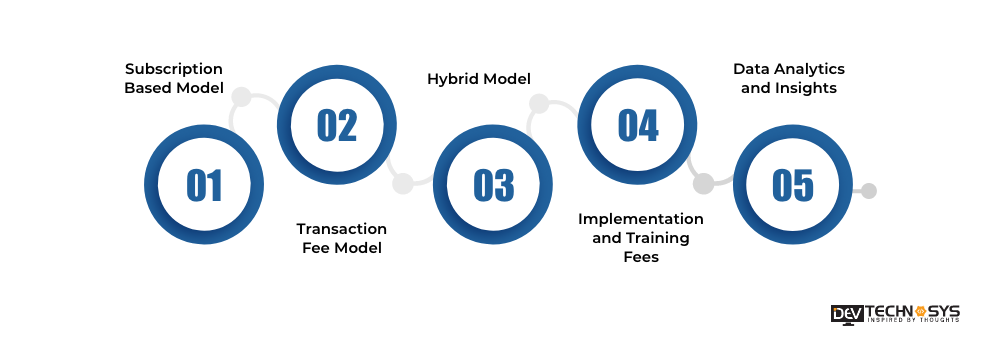
The custom revenue cycle management software development, but you don’t know how to make it profitable from the RCM software. So, developing RCM software presents a lucrative opportunity for businesses. So, here are the essential monetization techniques to help generate revenue from RCM software:
1. Subscription-Based Model
The base subscription plan does not allow users to access premium features and functions. So, users need to buy an intermediate subscription to have unlimited access to the software or app. In this, users must pay monthly or yearly fees for the subscription plans and generate a good revenue stream for the business.
2. Transaction Fee Model
In this monetization technique, the model charges users for using specific features or functions within the software. This would be a per-pay fee, and the user would pay for using individual software functions. If you want to integrate this technique into your software, consult a startup solutions development company.
3. Hybrid Model
In this hybrid model technique, users must pay for the base subscription plan to access only the core features, including transaction fees. Users can easily upgrade their subscription plan anytime with just one tap, and the transaction fee is only applicable once. This transaction fee can generate revenue streams for the business and take it to the next level.
4. Implementation and Training Fees
It includes one-time fees for access to core elements, implementation services, data migration services, and user training schedules. Any user interested in joining the training to understand the software’s functionalities must pay a one-time fee. This would provide more revenue streams and ensure the user’s smooth software onboarding.
5. Data Analytics and Insights
In this monetization technique, observe the users’ habits, learn how willingly they use the software, and discover their requirements. After that, it offers them a premium version of the software, and users have to pay monthly or yearly. This can generate additional revenue streams for the business and improve its revenue management cycle.
How Dev Technosys Will Help You?
This blog discussed how to develop revenue cycle management software and how it benefits businesses. RCM software automates operations such as billing processes and invoices, reduces errors, and provides valuable data insights.
It unlocks how to improve cash flow, increase efficiency, and manage financial transitions securely and accurately. Revenue cycle management software development can support your business as a leader in financial success for the business and touch new heights of success.
So, what are you waiting for? Share your project requirements with an enterprise product development company to provide sufficient software for your company within budget and time.
Frequently Asked Questions
1. How Much Does Revenue Cycle Management Software Development Cost?
Developing revenue cycle management software costs around $8,000 to $30,000, depending mainly on the software’s size, features, functionalities, and complexity. It also depends on the programmers how much software it costs to develop.
2. How Long Does It Take To Revenue Cycle Management Software Development?
Software development takes 5 to 10 months overall, depending on the developer’s working hours and the time it takes to develop the software.
3. Why Do Businesses Invest In Revenue Cycle Management Software?
The revenue cycle management software boosts efficiency in financial transactions and makes it easy for businesses to increase. Here are some essential points to describe this:
- Competitive edge
- Enhanced cash flow and faster payments
- Reduced errors and increased accuracy
- Globally reaching
- Great return on investment
4. What Are The Core Functionalities Of Revenue Cycle Management Software?
The core functionalities of the revenue cycle management software, here we provide the list of the significant basic functionalities of the app:
- Transaction Management
- Track Financial Records
- Insurance Verification
- Claims Processing
- Enhanced Accuracy
5. What Are The Ongoing Costs Of Maintaining RCM Software?
Here are some essential points of the ongoing cost of maintaining revenue cycle management software:
- Software updates and bug fixes
- Infrastructure costs
- Security measurements costs
- Complexity cost of RCM software
- User support costs
6. Which Technology Is Used To Develop RCM Software?
Software testing services provide many advanced technologies to build revenue cycle management software. Here is the list of best technologies:
- Reactjs
- Nodejs
- Python(Beeware/Kivy)
- Java
- Flutter
7. What Are The Benefits Of Revenue Cycle Management Software?
Here is a list of some crucial benefits of RCM software:
- Faster billing cycles
- Multiple payment mode options
- Improved data quality
- Minimized manual data entry
- Improved communication
8. How Much Cost To Hire A Developer To Build RCM Software?
Fintech app development company provides professional developers to build robust software for revenue cycle management. The average cost to hire a developer is $15 to $25.