














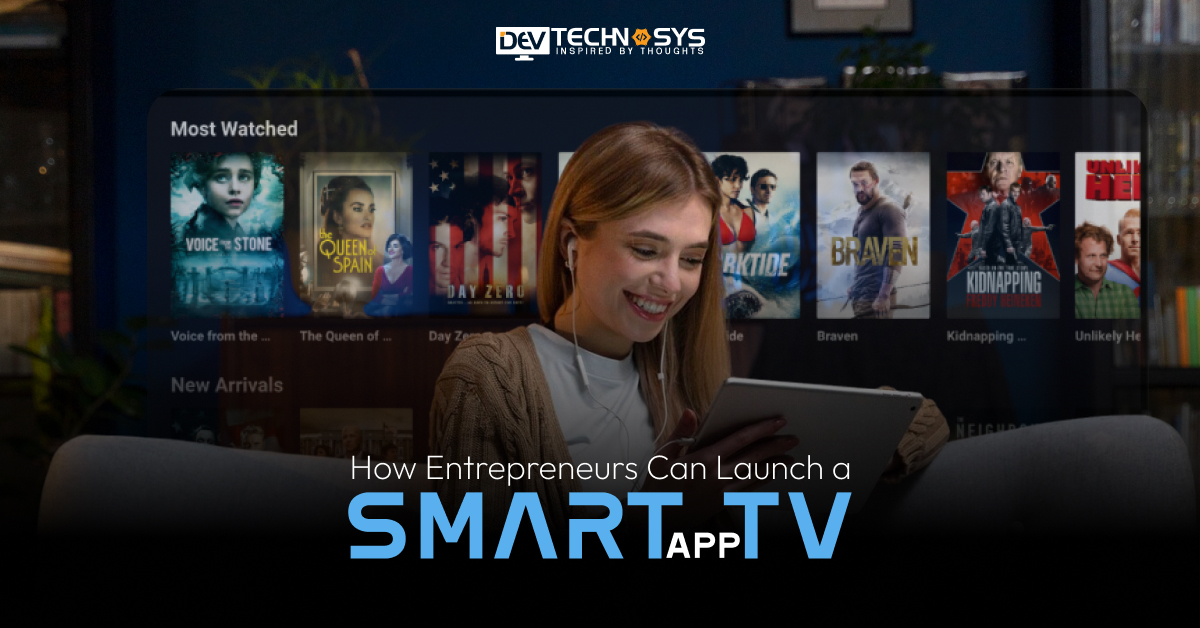
The rise of smart TV applications has opened a wide range of opportunities for entrepreneurs to reach audiences directly in their living rooms. Whether it’s streaming content, interactive learning, or e-commerce, a Budget-friendly OTT app development can be a game-changer for growing a business. However, many startups and small businesses face one major challenge: limited budgets.
The good news is that with careful planning, wise technology choices, and a focus on core features, it’s entirely possible to create a high-quality, engaging Smart TV app without breaking the bank.
This guide will discuss the process of smart TV app development for startups and walk entrepreneurs through strategies, cost-saving tips, and step-by-step approaches to bring their Smart TV app ideas to life efficiently and affordably.
Smart TV App Market Stats
- The global smart TV Market size was estimated at USD 227.52 billion in 2024 and is expected to reach USD 246.96 billion in 2025.
- The global smart TV Market is expected to grow at a compound annual growth rate of 12.8% from 2025 to 2030 to reach USD 451.26 billion by 2030.
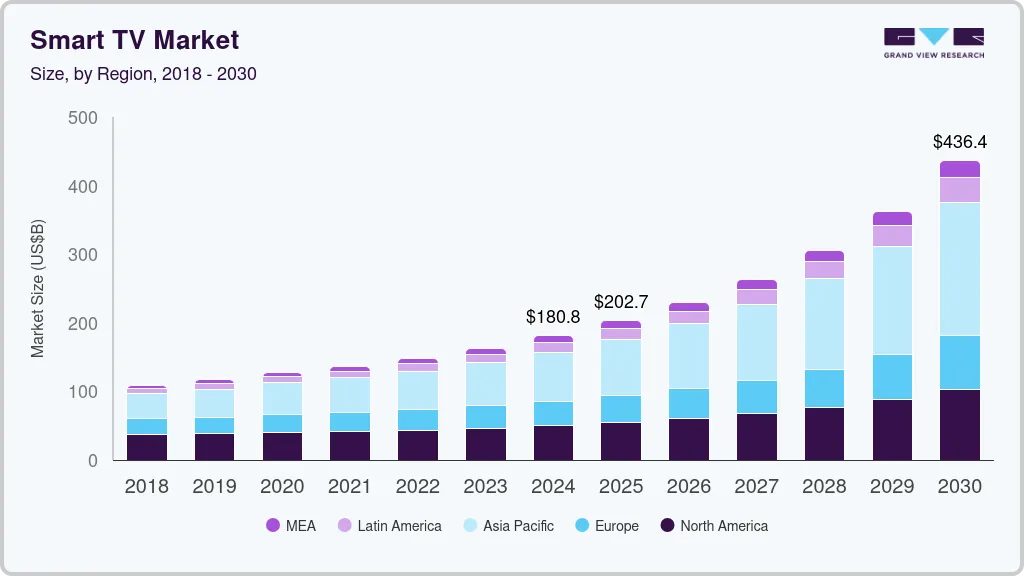
- The smart TV market in the Asia Pacific region accounted for a significant market share in 2024.
- Some of the key players operating in the smart TV Market include Haier Inc., Intex Technologies, Koninklijke Philips N.V., LG Electronics, Panasonic Corporation, Ltd, Sony Corporation, TCL Electronics Holdings Limited, and Toshiba Visual Solutions.
What is a Smart TV App?
A Smart TV app is software designed for internet-connected televisions that provides on-demand content, entertainment, and interactive features beyond traditional broadcasting.
Smart TV platforms let you access apps through a built-in app store and manage them with remote or voice commands, whether for Netflix, gaming, music (Spotify), news, or even smart home control. These apps integrate directly with the TV’s operating system (such as webOS, Tizen, or Android TV) for a seamless, large-screen experience.
What are the Benefits of Smart TV Apps for Your Business?
Before we dive into affordable smart TV app development, let’s move on and discuss the benefits of investing in smart TV apps for your business. Here are some of the major business benefits of smart TV apps.
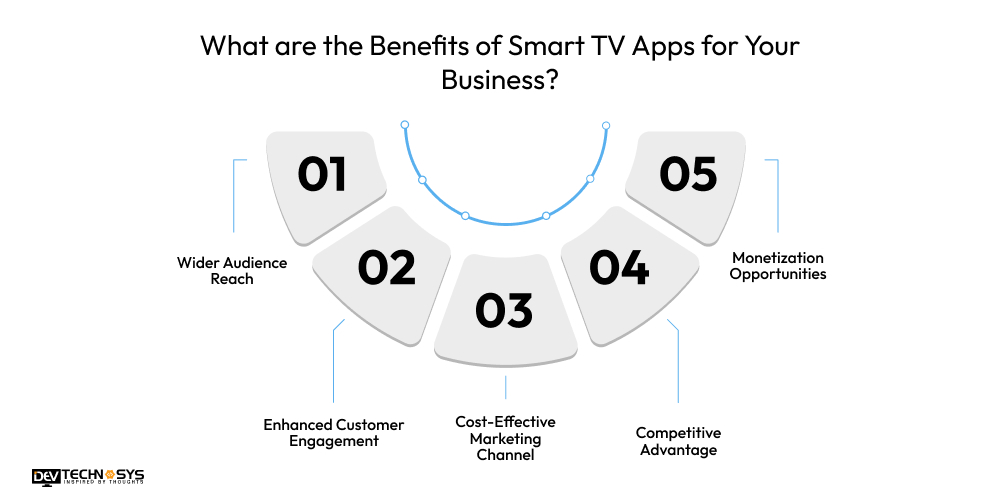
1. Wider Audience Reach
Businesses should invest in smart TV app development for startups to reach a broad audience directly in their living rooms, targeting users who prefer consuming content on large screens. This expands visibility, increases brand exposure, and taps into a growing segment of connected TV viewers.
2. Enhanced Customer Engagement
Interactive features, personalized content, and live streaming capabilities enable businesses to engage customers more effectively. Higher engagement encourages repeat usage, builds brand loyalty, and fosters stronger connections with the audience, driving long-term relationships and improved user satisfaction.
3. Cost-Effective Marketing Channel
Smart TV apps provide a direct marketing platform, reducing reliance on expensive external advertising. Businesses should invest in Android app development for smart TVs.
They help businesses showcase products, promotions, or content cost-effectively, reaching users in a controlled environment while maximizing return on investment compared to traditional or digital marketing campaigns.
4. Competitive Advantage
Few small businesses currently leverage the benefits of cheap smart TV app development, giving early adopters a strong edge. Offering innovative technology solutions positions a brand as modern and tech-savvy, helping differentiate from competitors while attracting tech-conscious audiences and new customer segments.
5. Monetization Opportunities
Businesses should create a mobile app with multiple revenue streams, including subscriptions, in-app purchases, advertisements, and sponsored content. These monetization options allow firms to diversify income beyond traditional sales while leveraging the platform to maximize profitability efficiently.
What are the Top 10 Smart TV Apps to Explore in 2026?
Before starting the process of smart TV app development for startups, let’s see the 10 best cost-effective smart TV apps you can explore in 2026. All the apps mentioned in the list offer impressive features and functionalities for the convenience of users.
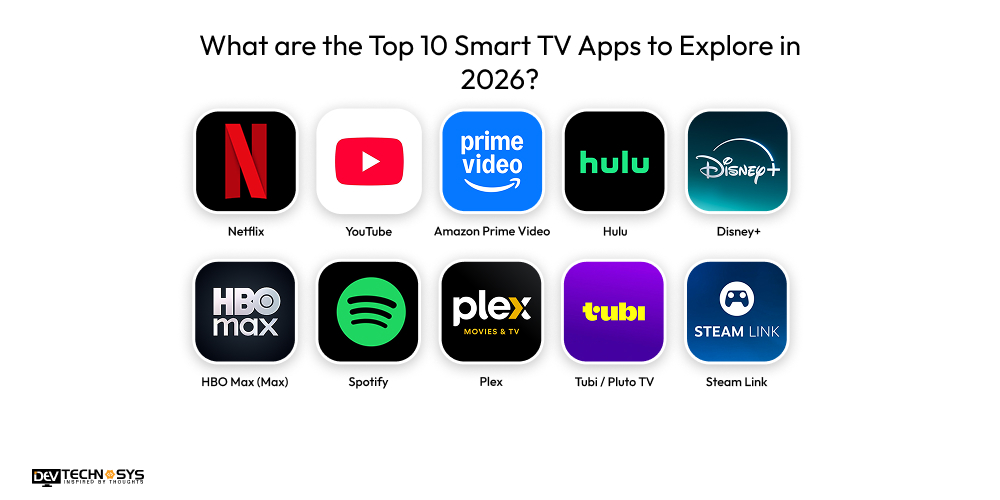
Smart TV App |
Launch Year |
Avg. Rating |
Platform Availability |
| Netflix | 2007 | 4.5 | Android TV, Fire TV, Roku, Apple TV, Tizen, WebOS |
| YouTube | 2005 | 4.4 | Android TV, Fire TV, Roku, Apple TV, Tizen, WebOS |
| Amazon Prime Video | 2011 | 4.3 | Android TV, Fire TV, Roku, Apple TV, Tizen, WebOS |
| Hulu | 2008 | 4.0 | Android TV, Fire TV, Roku, Apple TV, Tizen, WebOS |
| Disney+ | 2019 | 4.2 | Android TV, Fire TV, Roku, Apple TV, Tizen, WebOS |
| HBO Max (Max) | 2020 | 4.1 | Android TV, Fire TV, Roku, Apple TV, Tizen, WebOS |
| Spotify | 2008 | 4.2 | Android TV, Fire TV, Roku, Apple TV, Tizen |
| Plex | 2013 | 4.0 | Android TV, Fire TV, Roku, Apple TV, Smart TVs |
| Tubi / Pluto TV | 2014 | 4.2 | Android TV, Fire TV, Roku, Apple TV, Tizen, WebOS |
| Steam Link | 2018 | 4.0 | Android TV, Fire TV, NVIDIA Shield |
What are the Steps to Launch a Smart TV App with Limited Budget?
Now, let’s discuss the process of low-budget smart TV app development for startups. From Short drama app development services to features to development, this section covers every step. Let’s take a look:
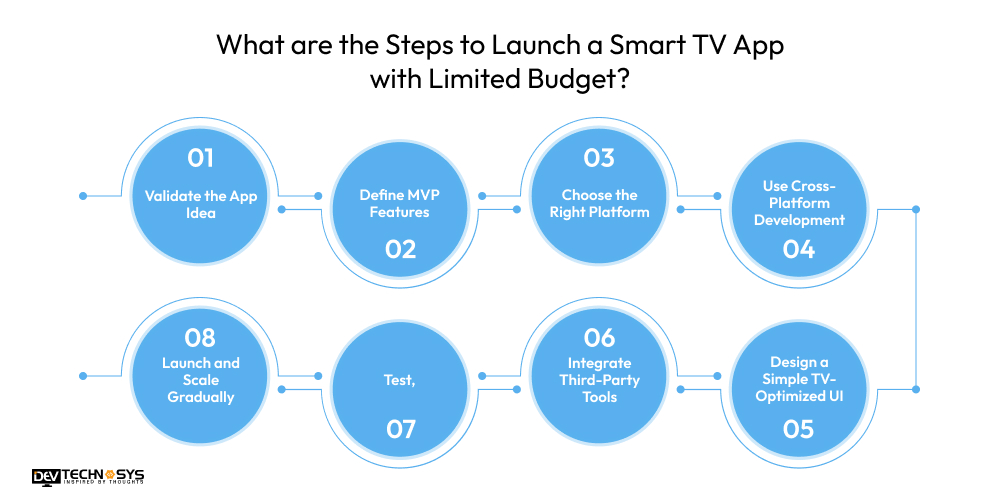
1. Validate the App Idea
In the first step, the experts who offer Android and iOS application development services will conduct research to identify the target audience and core problem your Smart TV app solves.
For smart TV app development for startups, an early in-depth analysis of competitors and user demand is necessary to avoid investing in features or platforms that won’t deliver real business value.
2. Define MVP Features
The cross-platform smart TV app development involves focusing on essential features like content playback, simple navigation, and basic user login.
Building a smart TV app MVP strategy for smart TV app feature prioritization reduces development time, lowers initial costs, and helps launch faster with minimal risk. Hire a top IPTV app development expert for the selection and implementation of advanced features like remote navigation optimization.
3. Choose the Right Platform
Choosing the right platform is the next step in affordable smart TV app development for startups. Selecting a platform for cross-platform smart TV app development entails starting with a selection of cost-effective platforms, such as Android TV or Fire TV.
Low cost Roku app development and launch on one platform first helps control development expenses while allowing you to test market response efficiently.
4. Use Cross-Platform Development
Developers who provide blockchain development services leverage reusable code, modern cross-platform frameworks, and shared business logic to streamline development.
This approach reduces engineering effort, accelerates deployment across multiple smart TV OS Ppatforms, simplifies updates, lowers long-term maintenance costs, and ensures consistent performance compared to building and managing separate native applications for each platform.
5. Design a Simple TV-Optimized UI
In this step, experts who provide smart TV app development for startups create a clean, remote-friendly interface with minimal animations. Simple UI/UX reduces design and development complexity while improving usability and user engagement on large screens. The smart TV app UI/UX for TV screens must be simple, engaging, and seamless for users.
6. Integrate Third-Party Tools
For smart TV app development for startups, you need to use ready-made APIs for streaming, analytics, ads, and payments. Third-party integrations eliminate the need for custom smart TV app development for small businesses. Integrating an API can also help in other ways, especially to reduce smart TV app development cost and speed up app delivery.
7. Test
After completing the smart TV app development on a budget, you need to test using emulators first, then launch on one platform. Testers will conduct unit testing, integration testing, system testing, user acceptance testing (UAT), performance testing, and regression testing. After the app passes testing, it can be sent for deployment.
8. Launch and Scale Gradually
In the final step of VOD app development, devise smart TV app monetization strategies, gather feedback, fix issues, and add features gradually, ensuring controlled spending and sustainable growth over time. For smart TV app development for entrepreneurs, this step is highly essential.
Want a chatbot demo or pricing? Fill the form and talk to our experts today.
Pick what you need below — you can select more than one — then tap Get detail to continue.
-
Chatbot demo dashboard
-
Cost to develop an app
-
Industry report
-
Case study
What Features Small Businesses Must Include to Launch a Smart TV App?
What features does a smart TV app have before it gets launched into the market? Don’t worry. This section will introduce you to the essential features a budget-friendly smart TV app needs.
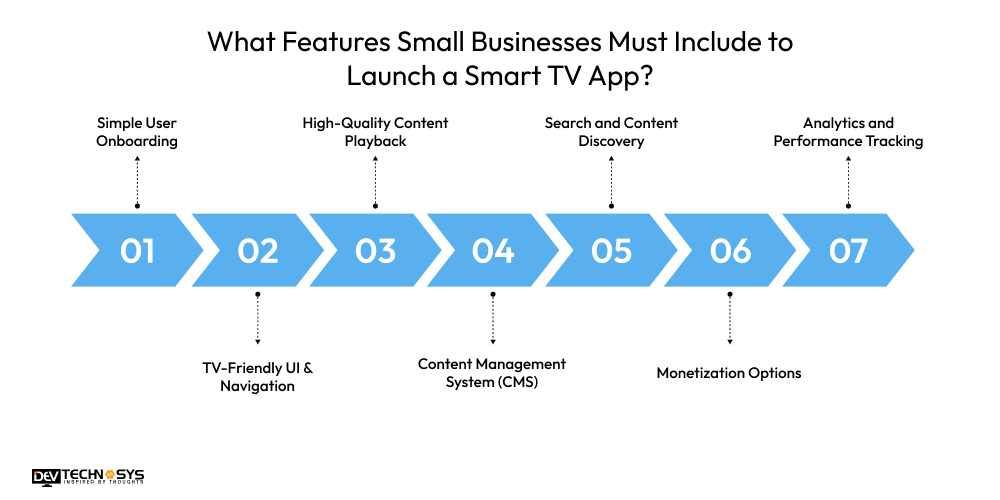
i. Simple User Onboarding
During smart TV Android TV app development, ensure easy onboarding with guest access or minimal login steps. A simplified sign-up process reduces user friction, improves first-time experience, and ensures users can start engaging with content immediately.
ii. TV-Friendly UI & Navigation
A clean, remote-friendly interface with large buttons, clear menus, and smooth navigation is essential. Optimizing UI for big screens enhances usability, reduces confusion, and keeps users engaged while browsing content effortlessly.
iii. High-Quality Content Playback
Start an online TV channel with reliable content playback and adaptive bitrate streaming to ensure smooth video or audio delivery across different internet speeds. This feature improves viewing quality, minimizes buffering issues, and enhances overall user satisfaction.
iv. Content Management System (CMS)
A backend CMS enables businesses to easily upload, update, and organize content without technical assistance. This reduces the app’s operational dependency on developers and helps keep the app’s content fresh and relevant.
v. Search and Content Discovery
Developers who provide AI chatbot development services will incorporate search, filters, and categorized content into the app. It will help users quickly find what they want. Better content discovery increases watch time, improves engagement, and enhances the overall browsing experience on Smart TV platforms.
vi. Monetization Options
Cheap smart TV app development should include monetization options like support ads, subscriptions, or access to premium content. Flexible monetization options allow small businesses to generate revenue while maintaining a balanced and enjoyable user experience.
vii. Analytics and Performance Tracking
According to providers of video streaming app development solutions, adding built-in analytics SDK tracks user behavior, viewing patterns, and engagement metrics. These insights help businesses refine content strategies, improve app performance, and make informed, data-driven decisions.
What is the Cost To Launch a Smart TV App with Limited Budget?
The cost to develop a mobile app for smart TV can range from $8,000 to $25,000. Because of how competitive the industry has become, it is better to start the smart TV app development for startups with a minimum viable product.
The minimum cost to build a smart TV app ranges from $8,000 to $12,000. The advanced Smart TV app with advanced features and functionalities can reach up to USD 25,000. Here is the table showcasing the cost to launch a Smart TV app with limited budget, with a development timeline.
Development Phase |
Timeline |
Estimated Cost (USD) |
| Planning & Requirement Analysis | 1–2 weeks | $800 – $2,000 |
| UI/UX Design | 2–3 weeks | $1,200 – $3,500 |
| Core App Development | 4–6 weeks | $3,500 – $10,000 |
| API & Third-Party Integrations | 1–2 weeks | $1,000 – $3,000 |
| Testing & QA | 1–2 weeks | $800 – $2,500 |
| Deployment & App Store Launch | 1 week | $700 – $2,000 |
| Total Estimated Cost | 8–12 weeks | $8,000 – $25,000 |
You can reach out anytime; we are available 24/7. Our team provides a quick response.

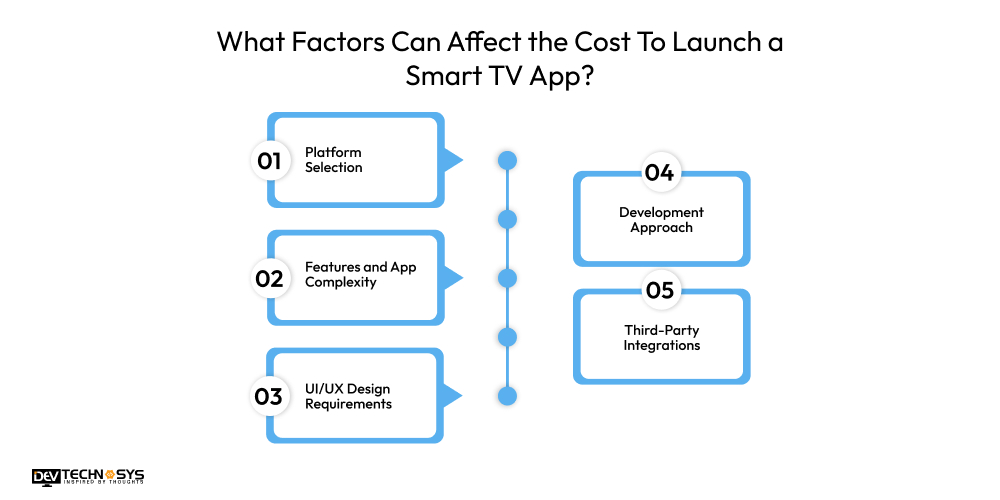
What Factors Can Affect the Cost To Launch a Smart TV App?
The smart TV app development cost can be affected by various factors. From features to platform choice, here we have discussed the major factors affecting the cost to launch a smart TV app for small businesses. Take a look:
1. Platform Selection
The choice of Smart TV platforms such as Android TV, Fire TV, Roku, Apple TV, or Samsung Tizen can affect the cost to launch a smart TV app for entrepreneurs.
Also Read: Smart TV App Development- Features, Cost, & Tech Stack
Smart TV app development for startups with multiple platforms requires separate configurations, platform-specific guidelines, additional testing, and higher maintenance, significantly increasing development time and budget compared to launching on a single platform initially.
Platform Scope |
Timeline |
Estimated Cost |
| Single Platform (Android TV / Fire TV) | 1–2 weeks | $1,500 – $4,000 |
| Two Platforms | 2–3 weeks | $3,500 – $7,000 |
| Multiple Platforms (3+) | 3–4 weeks | $6,000 – $9,000 |
2. Features and App Complexity
The scope and complexity of features directly influence the cost of smart TV app development. Low budget smart TV app development with simple content playback and navigation is affordable.
At the same time, advanced features such as live streaming, user profiles, AI-driven recommendations, multi-language support, parental controls, and in-app purchases increase technical complexity, development time, and integration costs.
Feature Scope |
Timeline |
Estimated Cost |
| Basic MVP | 3–4 weeks | $3,000 – $6,000 |
| Standard Features | 4–6 weeks | $6,000 – $10,000 |
| Advanced Features | 6–8 weeks | $10,000 – $15,000 |
3. UI/UX Design Requirements
Lean startup Smart TV app launch demand specialized UI/UX design optimized for large screens and remote-based navigation. Designing intuitive layouts, prototyping tools, readable typography, smooth transitions, accessibility features, and brand-specific visuals requires additional design iterations and usability testing, which increases the cost to develop a Smart TV App, compared to mobile or web applications.
Design Level |
Timeline |
Estimated Cost |
| Basic TV UI (Templates) | 1–2 weeks | $800 – $2,000 |
| Custom TV-Optimized Design | 2–3 weeks | $2,000 – $4,000 |
| Advanced UI + Branding | 3–4 weeks | $4,000 – $6,000 |
4. Development Approach
The on demand app development solutions, development approach, native or cross-platform you choose and utilize, has a substantial impact on budget and timelines.
Native development offers superior performance and platform-specific optimization but requires separate codebases and teams. Developing cross-platform TV apps for entrepreneurs reduces coding effort, speeds up deployment, and lowers costs, though with some performance trade-offs.
Approach |
Timeline |
Estimated Cost |
| Cross-Platform Development | 4–6 weeks | $4,000 – $9,000 |
| Native Development (Single Platform) | 5–7 weeks | $6,000 – $12,000 |
| Native (Multiple Platforms) | 7–10 weeks | $12,000 – $18,000 |
5. Third-Party Integrations
Integrating third-party services such as video streaming SDKs, ad networks, analytics platforms, payment gateways, cloud hosting, cloud storage integration, and DRM (Digital Rights Management) solutions increases the cost to develop a Smart TV App.
These integrations may involve licensing fees, usage-based charges, additional security configurations, and ongoing maintenance, increasing both initial and recurring expenses.
Integration Type |
Timeline |
Estimated Cost |
| Basic APIs (Analytics, Streaming) | 1–2 weeks | $800 – $2,000 |
| Ads / Payment Integration | 2–3 weeks | $2,000 – $4,000 |
| DRM + Advanced Services | 3–4 weeks | $4,000 – $6,000 |

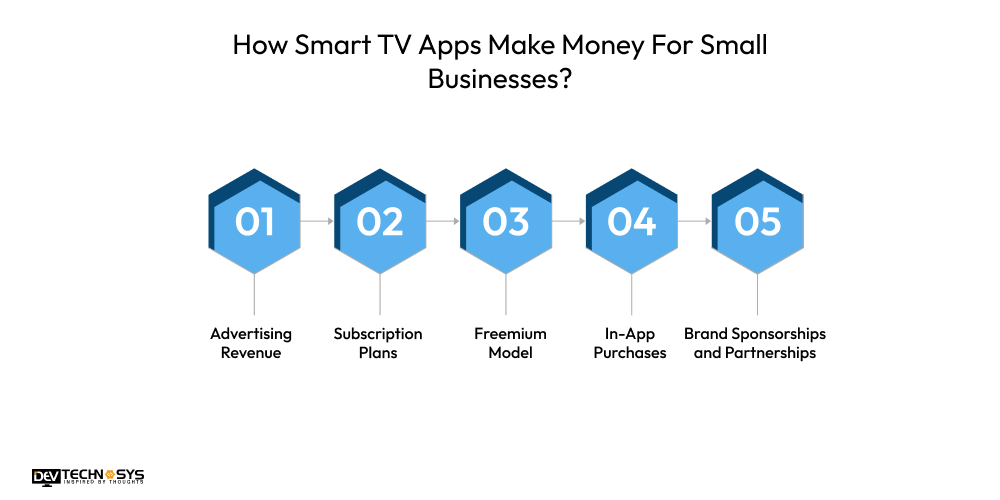
How Smart TV Apps Make Money For Small Businesses?
Launching a smart TV app is beneficial for businesses in many ways, including monetization. Entrepreneurs can generate money through this launch by integrating various strategies. Here are some of the top monetization strategies to consider.
1. Advertising Revenue
Smart TV apps generate consistent revenue by displaying video, banner, or sponsored placements during content playback. Large screens, longer viewing sessions, and higher user attention significantly improve ad performance. For small businesses, ad-supported models allow monetization without charging users, making the app more accessible and scalable.
2. Subscription Plans
Subscription-based monetization allows small businesses to charge monthly or yearly fees for premium, exclusive, or ad-free content. This model creates predictable recurring revenue, strengthens customer loyalty, and supports long-term financial stability. Subscriptions also make it easier to forecast growth and invest confidently in new content or features.
3. Freemium Model
The freemium model offers basic content and features for free while charging users for advanced MVP smart TV app development tools, exclusive shows, early access, or premium experiences. This approach attracts a larger user base, reduces entry barriers, and gradually converts engaged users into paying customers through value-driven upgrades.
4. In-App Purchases
In-app purchases enable users to buy premium videos, live event access, digital products, or additional services directly within the Smart TV app. This flexible model allows customers to spend based on their interests, increasing average revenue per user while maintaining a positive, personalized viewing experience.
5. Brand Sponsorships and Partnerships
Smart TV apps can generate revenue through partnerships with relevant brands by offering sponsored content, featured products, or co-branded experiences. These collaborations create new income streams, enhance content quality, and provide value to advertisers seeking targeted exposure on large-screen platforms.
Conclusion
Launching a Smart TV app no longer requires massive investment or large development teams. With the right strategy entrepreneurs can build and launch a high-quality Smart TV app while keeping costs under control.
If you are an entrepreneur looking for a smart TV app development for startups, then contact Dev Technosys, a leading smart TV app development company, and stay tuned for more updates.
Frequently Asked Questions
Find answers to the most common questions related to this article.
Small businesses can monetize Smart TV apps using advertising, subscriptions, freemium access, in-app purchases, brand sponsorships, and cross-promotion. Combining multiple revenue models helps maximize earnings while maintaining a smooth, engaging user experience.
Advertising works well due to longer viewing sessions and large screens, but it performs best when combined with subscriptions or premium content. A balanced monetization approach prevents user frustration while ensuring steady, sustainable revenue.
Smart TV apps can be profitable when built with clear goals, targeted content, and effective monetization strategies. They also deliver indirect value by increasing brand awareness, customer engagement, loyalty, and cross-channel sales opportunities.
Paid subscriptions are not mandatory for monetization. Smart TV apps can earn revenue through advertisements, sponsorships, in-app purchases, or one-time payments, depending on the audience, content type, and overall business objectives.
Revenue timelines depend on the chosen monetization model. Ad-based apps may earn immediately after launch, while subscription or freemium models typically take longer to build a stable and predictable income stream.