



















“Push your business growth forward by deploying a website for transportation and logistics.”
Suppose you are in the logistics business who manages different tasks like transportation, warehousing, inventory, and more with manual workforce. So, if you make investment in website development for the transportation industry, then all these processes will become easy and fast. Additionally, you will count money by just sitting on your chair. Quite amazing right!
Key takeaways:
-
-
- The global transportation market is projected to exceed $8.3 trillion by 2030, creating massive opportunities for digital platforms.
- Building a transportation website involves real-time tracking, route optimization, and secure payment integration for seamless user experience.
- Development costs vary widely, ranging from $8,000 to $30,000 depending on complexity, features, and team location.
- A well-developed transportation website streamlines logistics, enhances customer satisfaction, and boosts operational efficiency.
-
Businesses can experience transportation industry digital transformation due to the introduction of advanced technologies like AI and Blockchain. There are multiple things that an entrepreneur must consider before creating logistics websites.
You must know how to build a transportation company website by going through different topics. We have discussed it all in this blog.
The Growing Transportation Industry
Urbanization, the rise of e-commerce, and new technologies like AI and IoT are all making the transportation industry grow quickly. This rise is causing big investments and changing the way people and goods move around the world.
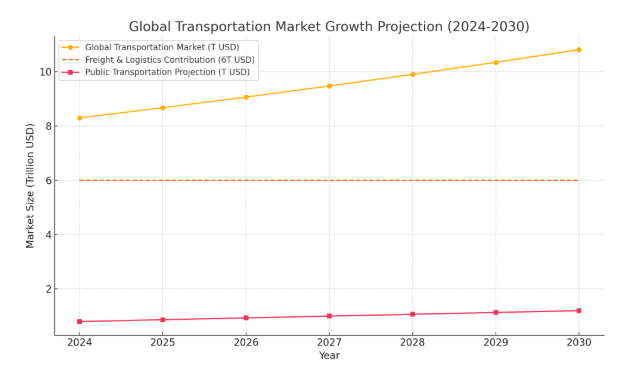
- Global transportation market size reached $8.3 Trillion in 2024 and is projected to grow further by 2030.
- The domain is expected to grow at a 5% CAGR rate from 2025 to 2030.
- The freight and logistics sector contributes nearly $6 Trillion to the global transportation market share.
- Public transportation is projected to reach $1.2 Trillion by 2028, driven by smart mobility initiatives.
- E-commerce-driven last-mile delivery market growing at over 8% CAGR rate worldwide.
Types of Transportation Websites
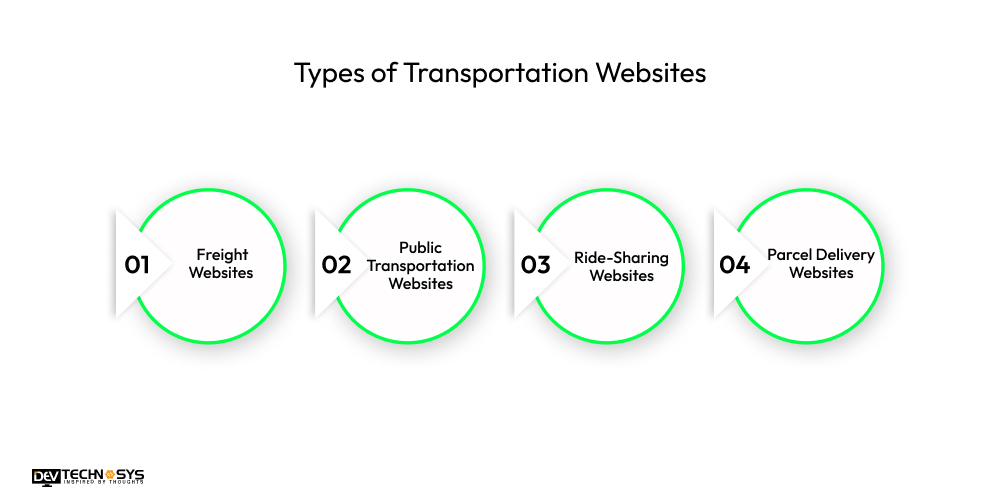
Websites for transportation serve a variety of industries, including passenger travel and cargo management. They offer features like booking, tracking, and cost estimation to users:
1. Freight Websites
These websites specialize in shipping things for both individuals and companies. They offer supply chain cost management, real-time tracking, and freight booking capabilities.
2. Public Transportation Websites
Websites for public transportation provide schedules, ticket buying, and route details. You should create a website from scratch with real-time updates to improve convenience and reduce wait times.
3. Ride-Sharing Websites
Drivers and riders can arrange private or shared rides using ride-sharing websites. These include cashless payment methods, live tracking, and fare calculators.
4. Parcel Delivery Websites
These websites are made for package delivery and courier services. For both people and companies, they offer cargo booking, tracking, and delivery status updates.
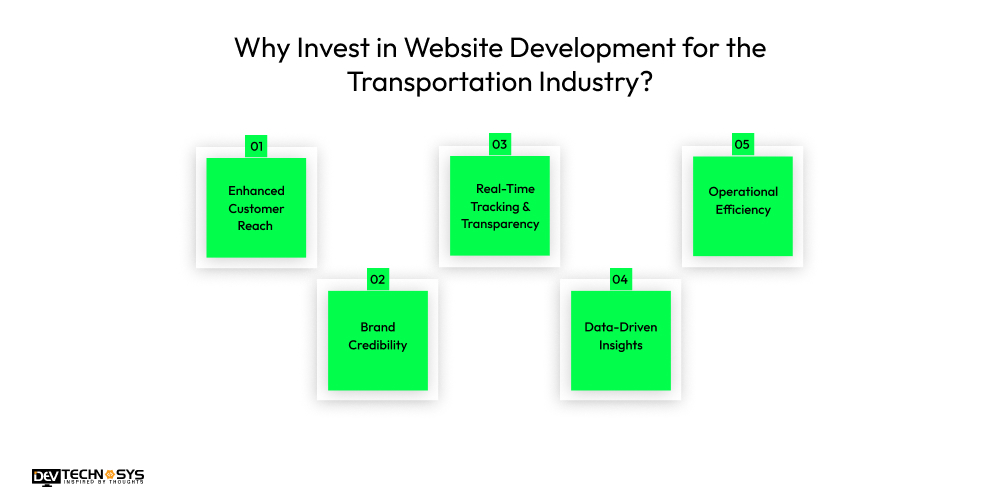
Why Invest in Website Development for the Transportation Industry?
Creating a website for transportation services guarantees improved usability and accessibility. It simplifies processes, assisting companies in maintaining their competitiveness in a rapidly expanding industry:
1. Enhanced Customer Reach
Investment of money in custom website development for freight companies increases market visibility outside of the local area. Online booking, management, and discovery of transportation services improves service accessibility for customers. Higher engagement and revenue growth result from this.
2. Real-Time Tracking & Transparency
Users can keep an eye on shipments or rides in real time by visiting websites with tracking capabilities. This openness reduces delivery status inquiries and increases consumer trust. By using transportation industry website development, you may increase loyalty and general satisfaction.
3. Operational Efficiency
Websites for transportation automate tasks including scheduling, billing, and routing. This lowers operating expenses, decreases manual labor, and boosts output. So, businesses must use freight management system software development services to guarantee quicker service delivery.
4. Brand Credibility
A well-designed website conveys to prospective customers professionalism and dependability. It builds trust, especially for freight or logistics companies that handle expensive items. In a crowded market, having a strong brand makes you stand out.
5. Data-Driven Insights
Websites gather useful information about user behavior and preferences. These insights can be used by businesses to improve their pricing, marketing, and route plans. Better decision-making and customer-focused enhancements result from transportation web development services.
Want a chatbot demo or pricing? Fill the form and talk to our experts today.
Pick what you need below — you can select more than one — then tap Get detail to continue.
-
Chatbot demo dashboard
-
Cost to develop an app
-
Industry report
-
Case study
Use of AI in Developing Transportation Sites
Artificial Intelligence (AI) is changing transportation websites by making them more efficient, personalized, and able to make better decisions. It lets businesses and users plan routes automatically, guess how traffic will flow, and make logistics operations run more smoothly.
A supply chain management software development company delivers real-time updates, lower costs, and better safety measures by using AI. This makes for a smooth digital experience and encourages smarter mobility solutions for the current transportation business.
- Real-time traffic prediction and route optimization.
- Automated freight and fleet management.
- Personalized user experience and travel recommendations.
- Predictive maintenance of vehicles and infrastructure.
- Intelligent demand forecasting for logistics and transportation.
Top 10 Transportation Websites in the USA
Leading businesses providing logistics, passenger travel, and ride-sharing services dominate the U.S. transportation industry. Millions of consumers utilize these websites for booking and customer service:
1. FedEx
Users can ship, track, and manage packages worldwide using FedEx’s website. This trucking company website design provides resources for pickups, estimating costs, and utilizing expedited delivery options.
- Track shipments globally with accurate delivery updates.
- Get instant cost estimates for domestic and international shipping.
2. UPS
UPS’s website offers a wide range of shipping and logistical services. Users get access to international shipping options, freight shipment management, and package tracking.
- Schedule pickups, returns, and bulk shipments easily.
- Personalized delivery alerts and rescheduling options for customers.
3. DHL
Global express courier and freight services are the focus of DHL’s website. It facilitates online reservations, real-time tracking, and customs data for shipments from overseas.
- Supports customs documentation and global delivery solutions.
- Provides same-day and time-definite delivery options.
4. Greyhound
The website of Greyhound is devoted to intercity bus service throughout the United States. It provides travelers with numerous fare options, timetable information, and ticket purchase.
- Search routes, compare fares, and purchase tickets online.
- Monitor bus schedules and estimated arrival times.
5. Amtrak
In the United States, Amtrak is the main railroad transit platform. The website offers information on reward programs, train schedules, route maps, and ticket buying.
- View train routes and plan intercity travel efficiently.
- Book and manage train tickets digitally.
6. Uber
Top logistics IT solutions like Uber links drivers and passengers for food delivery and ridesharing. The website offers corporate travel options, fare estimation, and transportation booking.
- Get upfront fare estimates and book rides instantly.
- In-app emergency assistance and ride tracking for security.
7. Lyft
In American cities, Lyft provides micro-mobility and ride-hailing services. Its website allows users to book rides, sign up as drivers, and access bike and rental options.
- Book rides, bikes, and scooters from one platform.
- Transparent review system for quality assurance.
8. XPO Logistics
Supply chain management and freight transportation are the areas of expertise for XPO Logistics. Their website offers freight management solutions, LTL services, and shipment tracking.
- Manage and monitor freight deliveries in real-time.
- Comprehensive tools for partial-load and last-mile shipping.
9. Old Dominion Freight Line
The main focus of Old Dominion’s website is less-than-truckload (LTL) freight transportation. It provides businesses with online quotations, shipping tracking, and logistical assistance.
- Track less-than-truckload shipments with precision.
- Instant freight rate calculation for business customers.
10. Yellow Corporation
Yellow Corporation offers logistics and freight services all throughout the country. Its website has facilities for tracking cargo, estimating rates, and requesting services.
- Provides shipment visibility from origin to destination.
- Tools for specialized trucking and logistics needs.
How to Develop a Website for the Transportation Industry?
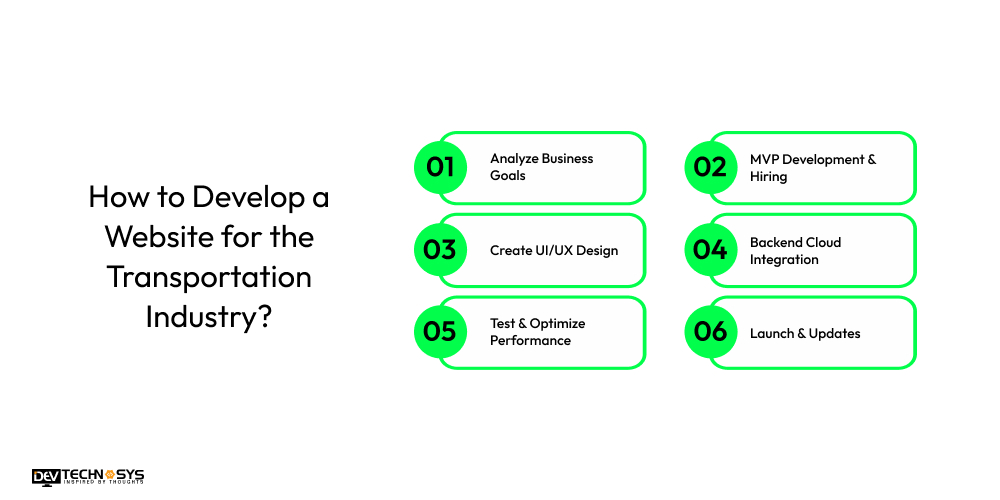
The process of website development for the transportation industry is quite difficult for modern entrepreneurs. So, in this section we will discuss all website building stages in detail:
1. Analyze Business Goals
The first step is to identify the primary function of transportation websites like freight management, ride-sharing, or logistics. Recognize your rivals, target market, and service offers for logistics website development. To find out what features users anticipate from your platform, examine market trends.
Select essential features such as payment systems, booking, and tracking. Establish precise KPIs to gauge success following launch. This guarantees that your website is in line with long-term corporate goals.
2.MVP Development & Hiring
Creating a Minimum Viable Product (MVP) enables you to collect feedback early on and launch with essential features. Give top priority to important tasks like cost estimation, shipping tracking, and booking. Select a development team or agency with expertise in transportation technology.
You must choose QA experts, backend engineers, and designers from a custom software development company in USA. Start with the most basic features and work your way up to more complex integrations.
3. Create UI/UX Design
In order to engage and retain customers, a user-friendly transportation website design is essential. Make sure your layout is responsive so it functions well on both desktop and mobile devices. Make navigation easier so that booking, tracking, and support can be accessed quickly.
Make use of clear visuals such as shipment status indicators and route maps. Make sure that various user groups, such as companies and individual clients, can access it.
4.Backend Cloud Integration
Booking logic, real-time tracking, and complicated data processing must all be effectively managed by the backend. For dependability, choose scalable cloud alternatives like AWS, Azure, or Google Cloud. Incorporate transportation website SEO best practices, GPS tracking, and payment gateway APIs.
Use encryption and compliance requirements such as PCI-DSS for payments to guarantee excellent security. To handle traffic spikes, turn on load balancing and automated data backups.
5.Test & Optimize Performance
Before launching, extensive testing is necessary to find errors and performance snags. Test each device’s functionality, usability, and security. Verify the accuracy of shipment tracking, payment processing, and booking flows for secure website development for logistics companies.
To guarantee quick load times and little downtime, use performance tools. Improve discoverability and organic traffic by optimizing for search engines.
6.Launch & Updates
Make sure your server, domain, and marketing initiatives are ready for launch. Use industry channels, social media, and email to promote the website. Track early performance indicators such as booking numbers and user sign-ups.
Respond promptly to comments in order to introduce desired features or fix usability problems. You must hire software developers to plan system updates on a regular basis and add new features.
Essential Features in an Online Logistics Site
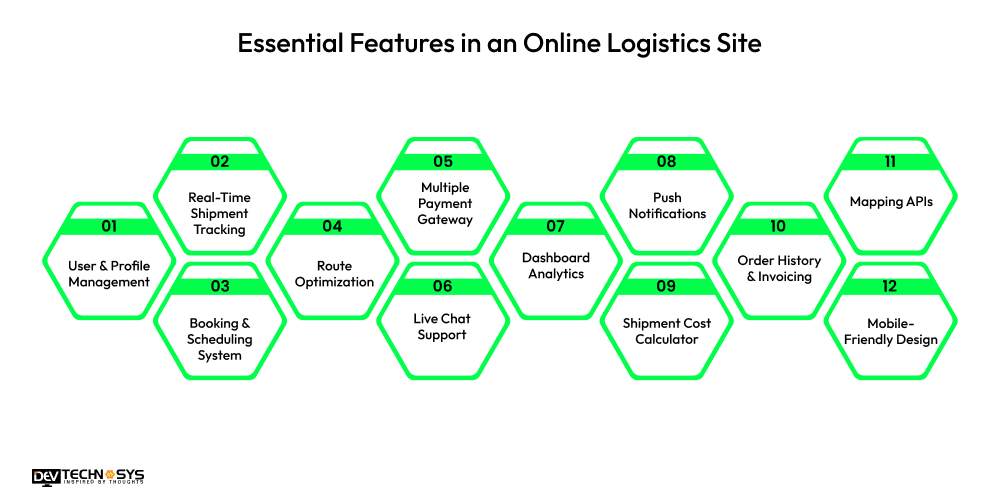
Strong transportation website features are necessary to guarantee smooth freight management and real-time tracking. These features increase client trust, operational effectiveness, and user convenience:
1. User & Profile Management
Allows users to register, manage personal or business profiles, and securely store shipment details. Enables quick re-booking and easy access to order history.
2. Real-Time Shipment Tracking
Provides live updates on shipment location and status. Enhances transparency and reduces customer inquiries about delivery progress.
3. Booking & Scheduling System
Facilitates online booking of freight or parcel deliveries with flexible scheduling options. The booking system integration for transportation websites improves service convenience for users.
4.Route Optimization
Calculates the most efficient delivery routes to save time and reduce costs. Essential for logistics companies managing large fleets.
5. Multiple Payment Gateway
Supports diverse payment options, including credit cards, UPI, and digital wallets. Ensures secure and hassle-free transactions for users worldwide.
6. Live Chat Support
Enables instant assistance for customer queries and complaints. You can build a logistics management software that may boost user satisfaction with real-time problem resolution.
7. Dashboard Analytics
Offers admin and user dashboards with key performance metrics. Helps businesses track shipments, revenues, and customer trends.
8. Push Notifications
Sends alerts about booking confirmations, delivery status, or promotions. Keeps customers engaged and informed throughout the shipment process.
9. Shipment Cost Calculator
Allows users to estimate delivery charges based on weight, distance, and service type. Provides pricing transparency before booking.
10. Order History & Invoicing
Stores all past shipments and downloadable invoices for easy reference. Useful for repeat customers and corporate clients managing bulk orders.
11. Mapping APIs
Integrates with Google Maps or similar APIs for accurate location tracking and routing. The best website features for transportation companies improves navigation for drivers and enhances delivery accuracy.
12. Mobile-Friendly Design
Various mobile-friendly transportation websites ensure seamless functionality on smartphones and tablets. Meets the growing demand for mobile-first logistics solutions.

FedEx: A User Case Study
FedEx is a world leader in logistics and transportation. They are known for being the first to offer overnight shipping and real-time package tracking. Its new way of doing things changed how supply chains work and still affects business around the world.
- Founded by Frederick W. Smith in 1971, FedEx began operations in 1973 with the aim to provide overnight delivery services in the U.S.
- The company’s goal was to ensure fast, reliable deliveries for businesses and individuals needing time-sensitive shipments.
- FedEx rapidly expanded in the 1980s, achieving multi-million-dollar revenues and becoming a leader in express shipping.
- Today, FedEx operates in 220+ countries and territories, managing millions of shipments daily with advanced logistics solutions.
- FedEx aims to integrate AI, automation, and sustainability to enhance efficiency and reduce environmental impact for global commerce.
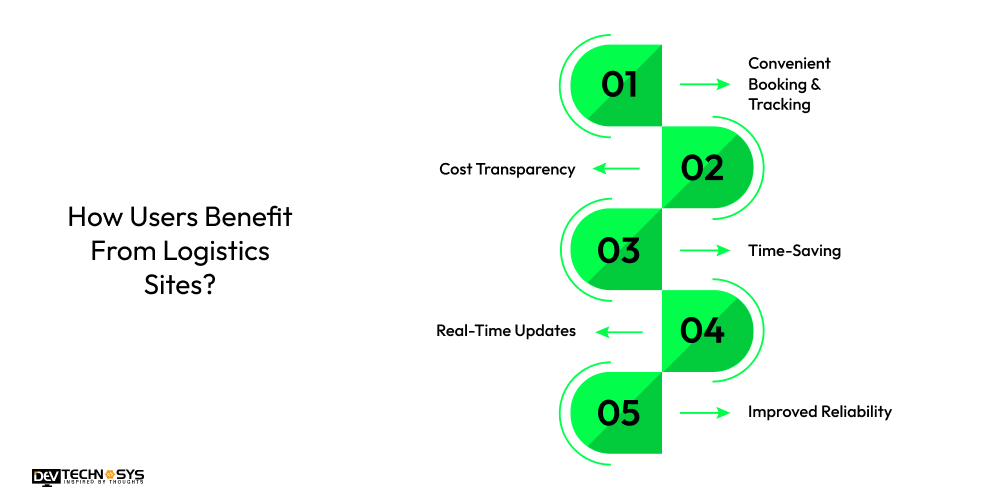
How Users Benefit From Logistics Sites?
By providing digital tools for tracking, booking, and cost estimation, logistics websites streamline shipping procedure. These advantages improve client happiness and increase user accessibility:
1. Convenient Booking & Tracking
Customers can conveniently schedule shipments online without having to go to actual offices. They can keep an eye on packages from shipment to delivery thanks to integrated tracking features. Repeat business and client loyalty are increased by this degree of convenience.
2. Cost Transparency
Using shipment calculators, logistics websites offer up-front cost estimations. Before confirming reservations, customers can compare rates, removing any hidden fees. For both individuals and corporations, this openness enhances decision-making and fosters trust.
3. Time-Saving
Logistics websites save users a great deal of time by automating bookings, invoicing, and shipment tracking. Confirming delivery status doesn’t require repeated phone calls or in-person visits. So businesses must invest in website development for the transportation industry for user benefits.
4. Real-Time Updates
Instant updates on cargo movements and delivery timetables are sent to customers. This guarantees they are aware of any delays and lessens their concern. Communication between users and service providers is improved by real-time updates.
5. Improved Reliability
Reliable services are ensured by websites using secure payment methods and recognized carriers. Customers become more confident in secure cargo handling and on-time delivery. This dependability aids in the development of enduring bonds between logistics firms and their customers.
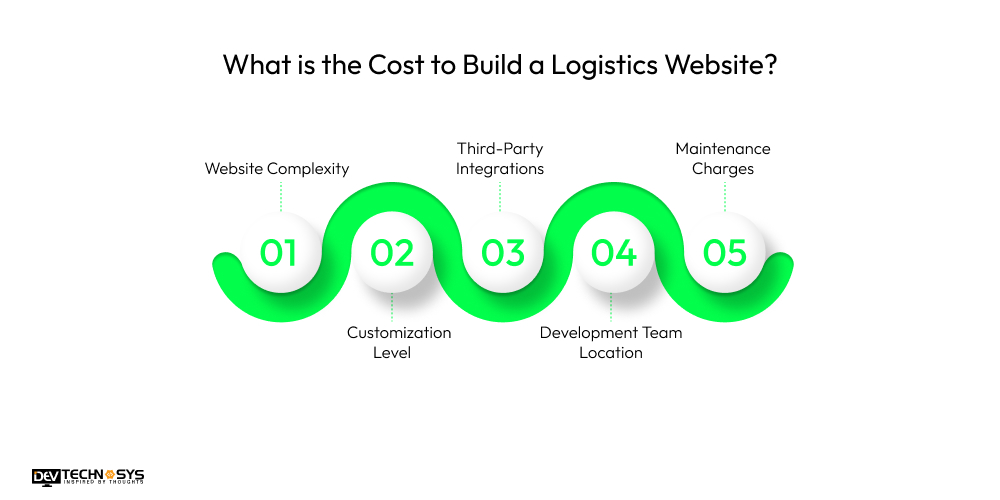
What is the Cost to Build a Logistics Website?
A number of factors affect the cost of website development for the transportation industry. The average website making cost is between $8,000 to $25,000 or more. The budget can be greatly impacted by factors like integrations, design complexity, and continuing support:
1. Website Complexity
A simple logistics website with fewer capabilities is less expensive than one with sophisticated features like dashboards and real-time tracking. More hours of work and specialized knowledge are needed for complex functionalities. The total cost increases as complexity increases.
| Component | Estimated Cost |
| Basic informational website | $5,000 – $8,000 |
| Mid-level with tracking & booking | $10,000 – $18,000 |
| Advanced portal with analytics & AI | $20,000 – $30,000 |
2. Customization Level
The cost of custom websites made to meet certain business requirements is more than that of template-based alternatives. Custom workflows, branding, and distinctive UI/UX are examples of personalization. Although it guarantees a competitive edge, this raises development costs.
| Component | Estimated Cost |
| Custom UI/UX design | $3,000 – $7,000 |
| Tailored workflow and dashboards | $4,000 – $10,000 |
| Multilingual and multi-currency support | $2,000 – $5,000 |
| Unique branding and animations | $2,000 – $4,000 |
3. Third-Party Integrations
The logistics management software development cost may go up if you integrate APIs. This includes carrier services, GPS tracking, mapping, or payment gateways. For smooth operation, testing and upkeep are necessary for every new integration.
| Component | Estimated Cost |
| Payment gateway integration | $1,500 – $3,000 |
| Map & geolocation services | $2,000 – $4,000 |
| ERP/CRM logistics software integration | $3,000 – $6,000 |
4. Development Team Location
The freight company website development cost is greatly impacted by the development team’s geographic location. Developers in the United States or Europe charge more than those in Asia. Costs can be decreased without sacrificing quality by outsourcing to economically viable locations.
| Location | Hourly Rate | Approx. Project Cost |
| North America | $80 – $150 | $25,000 – $30,000 |
| Western Europe | $70 – $120 | $22,000 – $25,000 |
| Eastern Europe | $40 – $70 | $20,000 – $22,000 |
| South Asia | $20 – $40 | $8,000 – $12,000 |
| Southeast Asia | $25 – $45 | $12,000 – $15,000 |
| Latin America | $30 – $50 | $15,000 – $18,000 |
| Middle East | $40 – $70 | $18,000 – $20,000 |
5. Maintenance Charges
Updates, bug patches, server hosting, and scalability enhancements are all included in post-launch maintenance. The overall real-time tracking website development cost is impacted by security and website operations. Setting up money for maintenance is essential to long-term business success.
| Component | Estimated Cost |
| Regular updates & bug fixes | $500 – $1,000/month |
| Hosting and server costs | $100 – $300/month |
| Security patches and monitoring | $300 – $700/month |

Important Tools & Technologies for Transportation Website Development
For fleet management software development, businesses need a mix of front-end, back-end, database, and cloud tools. Scalability, speed, and safe data handling are guaranteed when the appropriate technologies are used. The key elements and their frequently used tools are broken down below:
| Component | Popular Tools & Technologies |
| Front-End Frameworks | React.js, Angular, Vue.js |
| Back-End Frameworks | Node.js, Laravel, Django |
| Database Management | MySQL, PostgreSQL, MongoDB |
| Cloud Hosting & Storage | AWS, Microsoft Azure, Google Cloud |
| Payment Gateway Integration | Stripe, PayPal, Razorpay |
| Real-Time Tracking APIs | Google Maps API, Mapbox, HERE API |
| Authentication & Security | OAuth 2.0, JWT, Firebase Auth |
| DevOps & CI/CD Tools | Docker, Jenkins, GitHub Actions |
| Testing & QA Tools | Selenium, Jest, Postman |
| Analytics & Monitoring | Google Analytics, Mixpanel, New Relic |
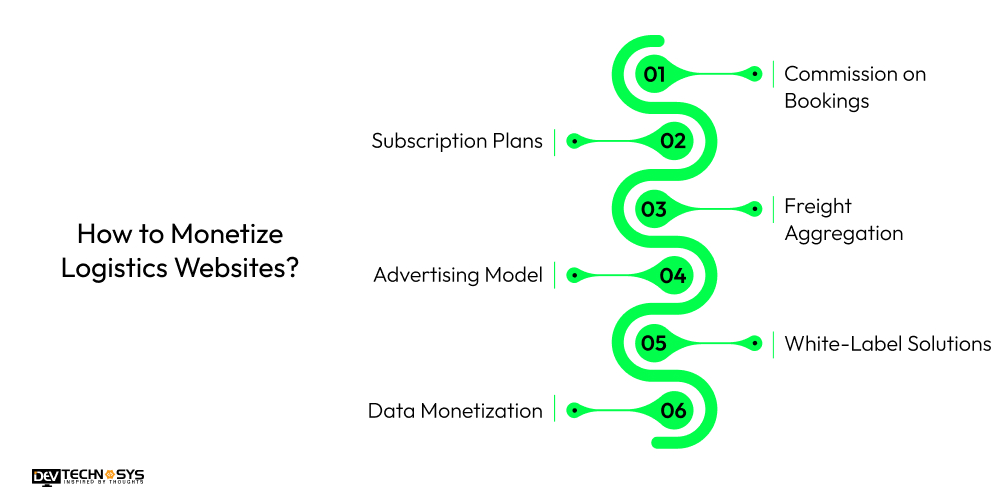
How to Monetize Logistics Websites?
Leveraging traffic, services, and data to create consistent revenue is the process of monetizing a logistics website. Different approaches maximize economic prospects by serving both B2B and B2C audiences:
1. Commission on Bookings
Charge a set amount or a percentage for each shipment that is scheduled using the platform. For markets that link shippers and carriers, this paradigm performs admirably. It guarantees revenue growth in line with the volume of transactions.
2. Subscription Plans
Provide tiers of membership packages that include premium services like bulk shipment savings or priority assistance. Companies can purchase sophisticated tools on a monthly or yearly basis. As a result, the platform generates consistent recurring revenue.
3. Freight Aggregation
transportation business website development
By combining freight services from several carriers, you can act as a middleman. Gain margins by negotiating lower costs and providing clients with competitive offers. With its greater efficiency, this strategy helps both shippers and carriers.
4. Advertising Model
Permit outside companies to promote logistics-related goods and services on your website. Advertisements may be pay-per-click, sponsored listings, or banner-based. This helps to decrease software development cost and adds another source of income without degrading user experience.
5. White-Label Solutions
Create scalable versions of your logistics platform and market them to other companies. Because of this, businesses can introduce their own branded solutions without starting from zero. It presents your platform as a software as a service (SaaS).
6. Data Monetization
Analyze anonymised logistics data to give academics, retailers, or manufacturers useful information. Promote patterns such as consumer preferences, cargo volumes, or route efficiency. While making money using analytics, be sure that data privacy regulations are followed.
In a Nutshell!!
To invest in website development for the transportation industry, you must first consult with a custom website development company like Dev Technosys. You will have the idea of the latest transportation website design trends 2025 by having a discussion with the experts. For making a website, you need:
- A reliable team of experienced and skilled developers.
- Affordable services from consulting to website maintenance.
- Insights on various business models available in the market.
- And, tips to make profits through service distribution.
Agencies like Dev Technosys provide similar kinds of benefits helping businesses to easily make AI-powered logistics websites. So, you can generate huge profit with higher user engagement.
FAQs
1. Why is Website Development for the Transportation Industry Important?
- Enables real-time tracking and route planning.
- Enhances operational efficiency for logistics companies.
- Builds brand credibility and expands market reach.
2. How Long Does it Take to Develop a Transportation Website?
- Basic transportation websites may take 2 to 3 months.
- Feature-rich logistics platforms require 4 to 6 months.
- The timeline varies based on complexity and custom features.
3. How to Maintain a Logistics Website?
- Regularly update content and route information for accuracy.
- Monitor website performance and security patches.
- Implement periodic backups and optimize loading speed.
4. Which Technologies are Used for Transportation Website Development?
- Frontend: React.js for responsive user interfaces.
- Backend: Node.js and Python for scalable logic.
- Databases & APIs: MySQL and Google Maps API for geolocation services.
5. How to Hire a Transportation Website Developer?
- Evaluate their portfolio for logistics experience.
- Check technical proficiency in web technologies.
- Choose developers offering post-launch maintenance services.
6. How Logistics Sites Ensure User Data Security?
- Use SSL encryption and secure authentication.
- Regular vulnerability assessments and compliance.
- Secure server architecture with firewalls.